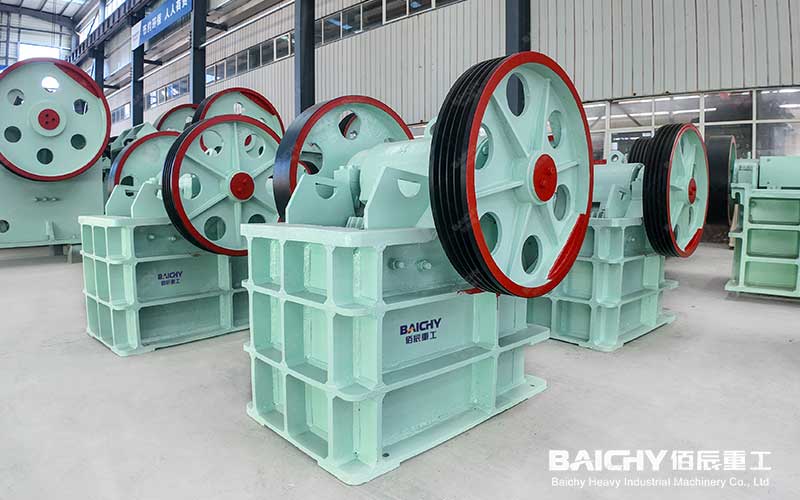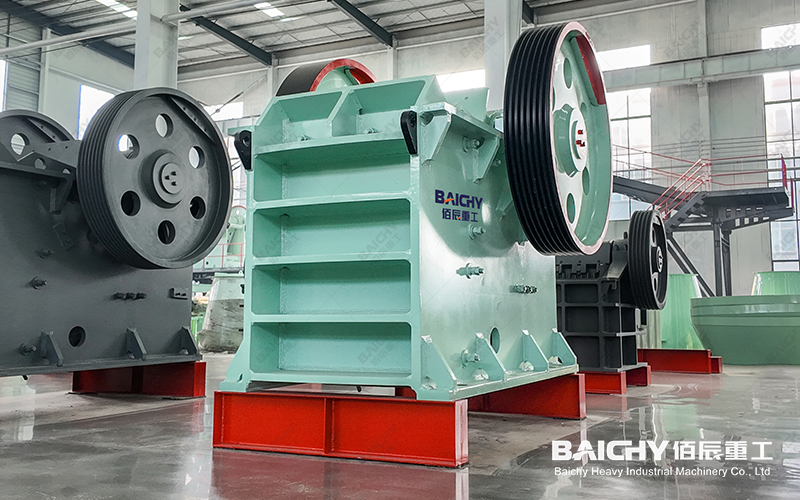
PE series Jaw Crusher
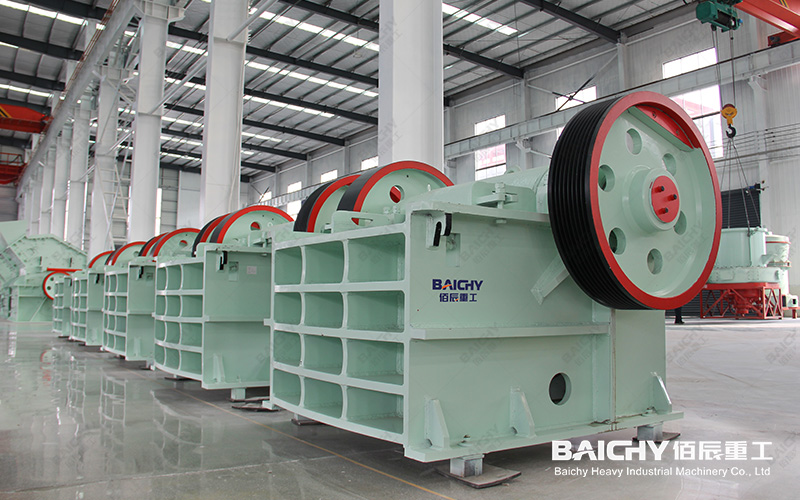
PEX series Jaw Crusher
The PE series consists of primary jaw crushers (first-stage crushing), while the PEX series consists of fine jaw crushers (second-stage crushing). Here is a simple way to remember the difference: PE models "swallow large rocks," while PEX models "produce fine material."
The choice between them is not an "either-or" scenario; rather, they form the most common "tandem" combination in fixed crushing lines—PE leads the way with primary crushing, and PEX follows to finish the job. Together, they determine the entire line's production capacity, output particle size, and cost per ton.
I. Pain Point Analysis: Why Buyers Struggle to Choose Between PE and PEX
In sales inquiries, we frequently encounter three main issues:
• Confusion over models: PE-600×900 vs. PEX-250×1200. A difference of just one letter in the prefix signifies a vast difference in price and crushing stage.
• High cost of mistakes: Using a PEX as a primary crusher results in jams because the feed opening is too small for large ore blocks. Conversely, using a PE as a fine crusher yields output that is too coarse (40–160mm) for downstream grinding mills or sand-making machines; this necessitates additional screening and material recirculation, slashing total line output by 30%.
• Misconceptions about combinations: Buyers often assume that using "one large jaw crusher for the entire process" is the most cost-effective approach. In reality, a two-stage crushing setup produces superior particle shapes and a higher proportion of fines compared to single-stage crushing, ultimately resulting in a lower cost per ton.
When purchasing this equipment, you aren't just buying a model number; you are paying for the optimal balance of three factors: feed opening size, output particle size, and electricity consumption per ton.
II. Core Differences: A Quick Comparison Table (PE vs. PEX)
Capacities listed are nominal figures based on medium-hard limestone (bulk density approx. 1.6 t/m³); for hard rocks like granite or basalt, adjust figures to 70–85% of the nominal capacity. Parameters may vary by manufacturer and operating conditions; the final technical agreement prevails.
| Comparison Dimension | PE Series (Coarse Jaw Crusher) | PEX Series (Fine Jaw Crusher) |
| Process Role | Primary crushing: Coarse, open-circuit | Secondary crushing: Fine/medium finishing |
| Typical Feed Size | ≤ 340–500 mm (Direct feed of blasted raw ore) | ≤ 210–250 mm (PE discharge or natural fines) |
| Discharge Size | 40–160 mm (Coarse) | 25–60 mm (Fine) |
| Crushing Chamber Structure | Shallow chamber, short parallel zone, large-pitch jaw plates | Deep chamber, long parallel zone, fine-tooth jaw plates |
| Single-Unit Capacity | High: 16–180 t/h | Medium-Low: 15–80 t/h |
| Reduction Ratio | 3-5 | 6-9 |
| Feed Opening Shape | Wide and short (Large-aperture feed) | Narrow and long (Fine-crushing deep chamber) |
| Typical Models | PE-250×400 / PE-400×600 / PE-500×750 / PE-600×900 | PEX-250×1000 / PEX-250×1200 / PEX-300×1300 |
| Typical Applications | Quarry primary crushing, mobile crushing station main unit, mineral processing primary stage | Fixed line secondary crushing, sand-making line feed, medium/fine crushing prior to ball milling |
Remember two rules for identification:
• Look at the feed opening: Wide/short opening = PE (Coarse crushing); Narrow/long opening = PEX (Fine crushing).
• Look at the model numbers: PE is often followed by "Width × Length" large-aperture specs like 400×600 or 600×900; PEX is often followed by narrow-opening/deep-chamber specs like 250×1000, 250×1200, or 300×1300.
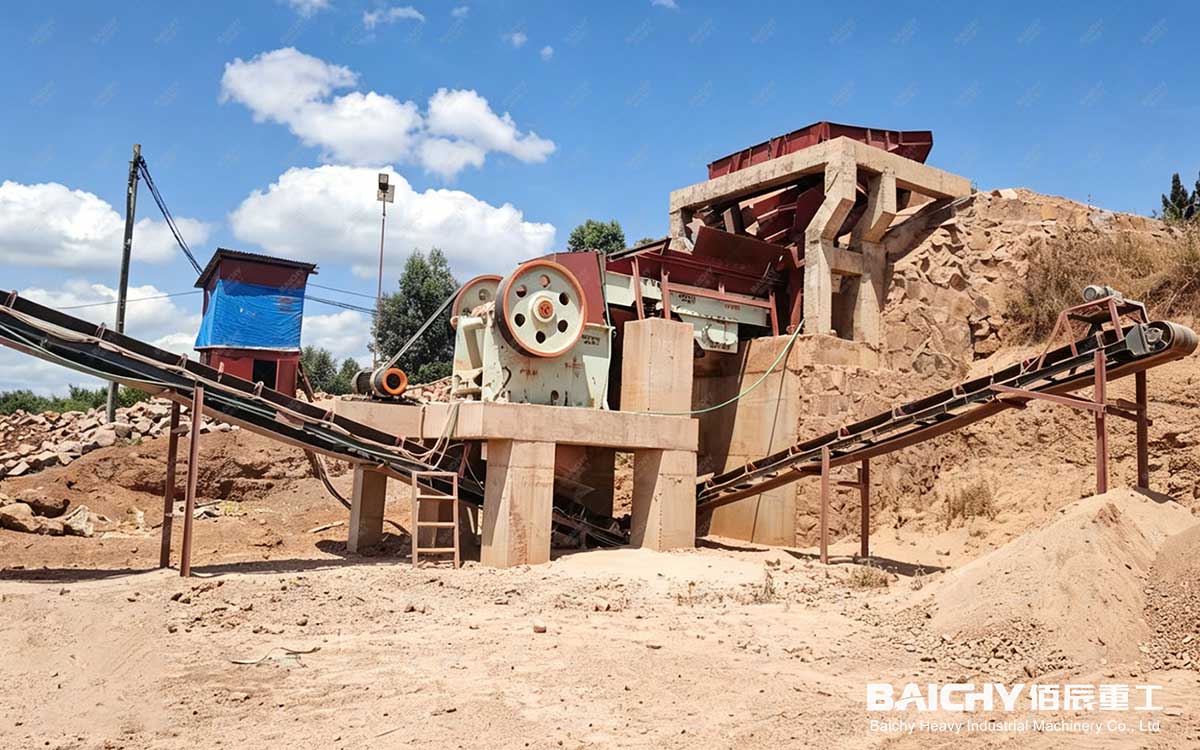
PE Series Jaw Crusher Customer Site
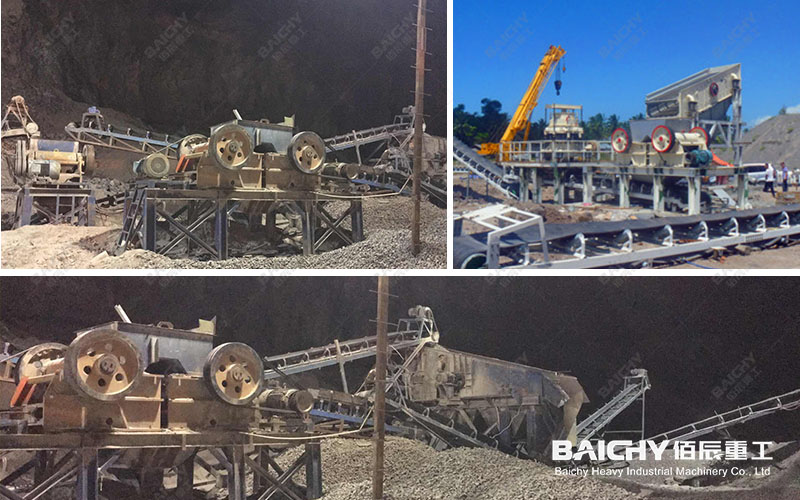
PEX Series Jaw Crusher Customer Site
III. Advantages of the Two Jaw Crusher Series
Technical specifications alone create no value; only the impact on the bottom line counts:
1. PE Series: Large Feed Opening → Savings on Blasting and Labor Costs. A feed size of ≤500mm means large blasted rocks can be fed directly into the machine, eliminating the need for secondary blasting or manual breaking of oversized material. For a 150 tph production line, the reduction in secondary blasting and manual labor translates to thousands of dollars in annual "hidden" cost savings.
2. PEX Series: Deep Crushing Chamber & Long Parallel Zone → Uniform Discharge & Higher Fines Yield. The fine-crushing jaw crusher features a longer parallel zone, allowing material to dwell longer in the chamber. This results in a more cubical particle shape and a stable proportion of material in the 25–60mm range. This directly improves feed quality for downstream equipment like cone crushers, sand makers, or ball mills: uniform particle size means less over-grinding in the mill and lower electricity consumption—a major component of the per-ton cost in mineral processing plants.
3. PE + PEX Two-Stage Combination → Distributed Crushing Ratio; Optimized Service Life and Energy Efficiency. By splitting the crushing ratio (e.g., 3–5 and 6–9) between two machines, each operates within its "sweet spot": slower jaw plate wear, less frequent discharge opening adjustments, and lower specific energy consumption. Compared to a "single large jaw crusher forcing the material through," the two-stage setup achieves higher actual throughput when processing hard rock and offers a superior 5-year Total Cost of Ownership (TCO).
4. Nominal Capacity vs. Actual Capacity → Matching Specs to Operating Conditions Before Quoting. We always provide both nominal capacity and actual capacity adjusted for hard rock (e.g., granite ×0.70–0.85) in our proposals. This prevents contractual disputes arising from "insufficient capacity upon delivery"—a common pitfall where low-price suppliers mislead customers regarding the PE/PEX combination setup.
IV. Selection Recommendations: When to Choose PE vs. PEX
| Your Requirements | Recommendation |
| Direct crushing of blasted run-of-mine ore; output size >40mm is acceptable | Single PE series unit (e.g., PE-400×600 / PE-600×900) |
| Primary crushing already exists; need to crush 40–160mm material down to 25–60mm for sand making or grinding | PEX series (e.g., PEX-250×1000 / PEX-250×1200) |
| New fixed production line (from raw ore to finished aggregate) | PE (primary stage) + PEX (secondary stage) (can be followed by a cone crusher or sand maker) |
| Mobile station / Short-term project | Prioritize PE series as the main unit; use PEX as a secondary stage in a fixed-line setup |
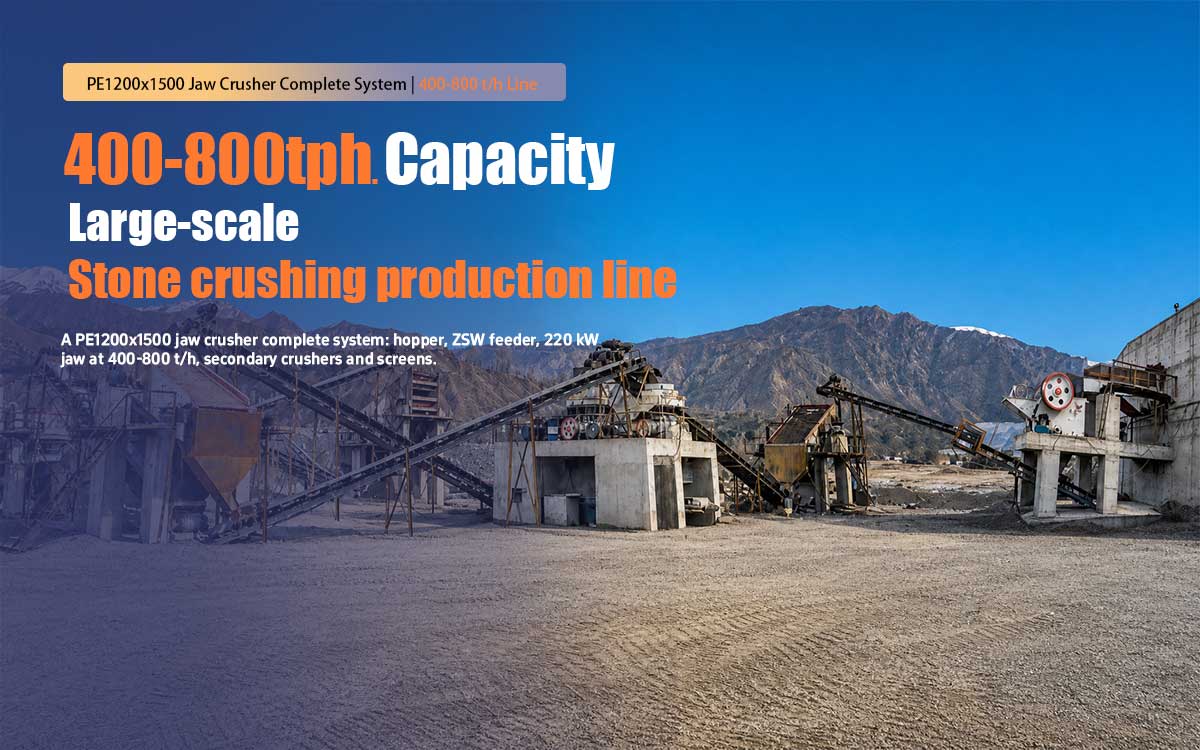
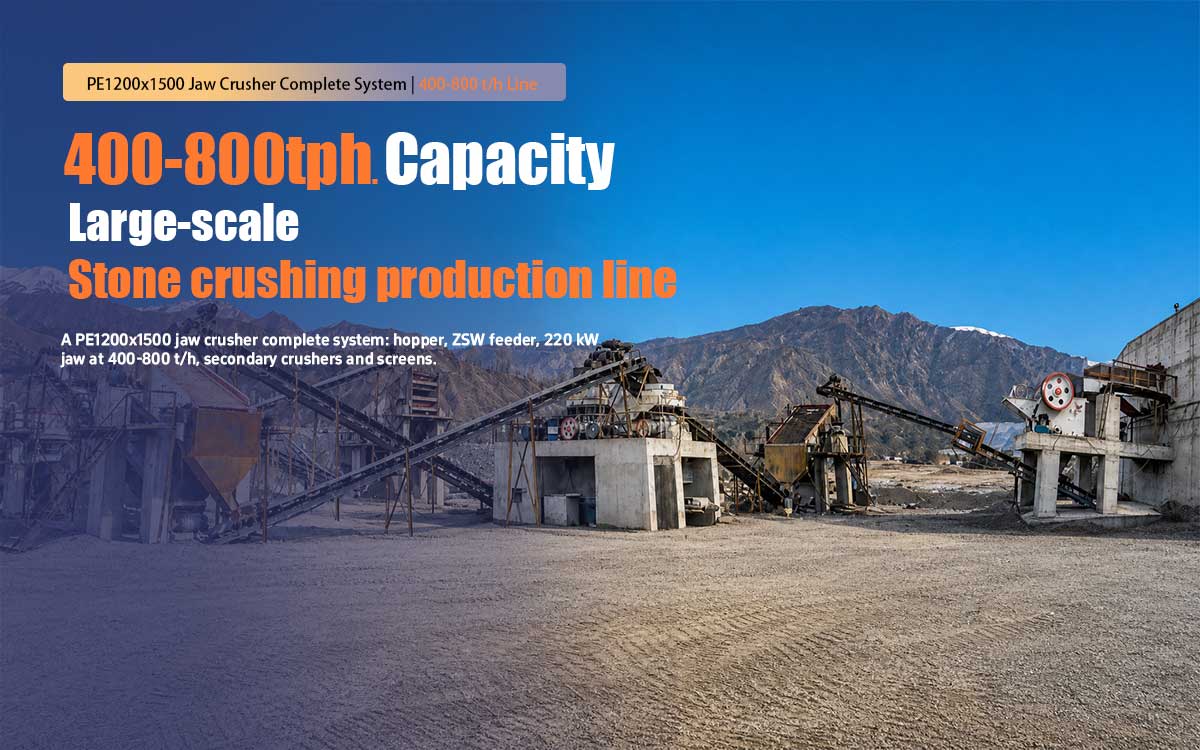
Practical Configuration Example: An infrastructure aggregate line in Mongolia uses a two-stage open-circuit setup with PE-600×900 (primary) and PEX-250×1200 (secondary). It processes 500mm run-of-mine ore into a stable 25–60mm product, directly supplying suitable feed to downstream CS cone crushers and VSI sand makers—this is the standard approach for PE/PEX combinations.
Pitfalls to Avoid:
• Do not use PEX for primary crushing—the narrow feed opening causes large rocks to jam, leading to abnormal wear on the jaw plates.
• Do not use PE for fine crushing—the coarse output requires excessive material recirculation downstream, wasting electricity.
• For hard rock applications, adjust the rated capacity to 70–85% before selecting a model; it is better to choose a larger unit than one that is too small.
V. FAQ
Q1: Can PE and PEX be used interchangeably?
No. PE crushers have wide, short feed openings and produce coarse output, whereas PEX crushers have narrow, long feed openings and produce fine output. Interchangeable use leads to blockages, capacity mismatches, or over-crushing. They are designed for different stages of the crushing process.
Q2: How can you tell at a glance whether a model is PE or PEX?
Look at the numerical specifications: Models designated "PE" typically feature large feed openings (wide and short), such as 250×400, 400×600, or 600×900; models designated "PEX" typically feature narrow openings and deep crushing chambers designed for fine crushing, such as 250×1000, 250×1200, or 300×1300.
Q3: How should PE and PEX crushers be combined in a production line?
Standard two-stage crushing: Run-of-mine ore → PE primary crushing (output: 40–160 mm) → Conveyor → PEX fine crushing (output: 25–60 mm) → Screening/downstream processing. A classic combination is the PE-600×900 paired with the PEX-250×1200.
Q4: Can PEX crushers replace cone crushers?
It depends on the operating conditions. For production lines with small-to-medium capacity, medium-hardness materials, and limited budgets, PEX crushers serve as an economical alternative to cone crushers. However, for large-scale lines or applications involving highly abrasive hard rock, cone crushers offer superior throughput and longer wear-part lifespan; a comparison of the 3–5 year Total Cost of Ownership (TCO) is recommended before making a decision.
Q5: Which three indicators are most critical during model selection?
Maximum feed size (determines the feed opening dimensions), target output particle size (determines the crushing chamber profile and discharge opening setting), and hourly production requirement (determines the machine specifications and motor power). Aligning these three factors ensures the correct choice of PE or PEX crusher.