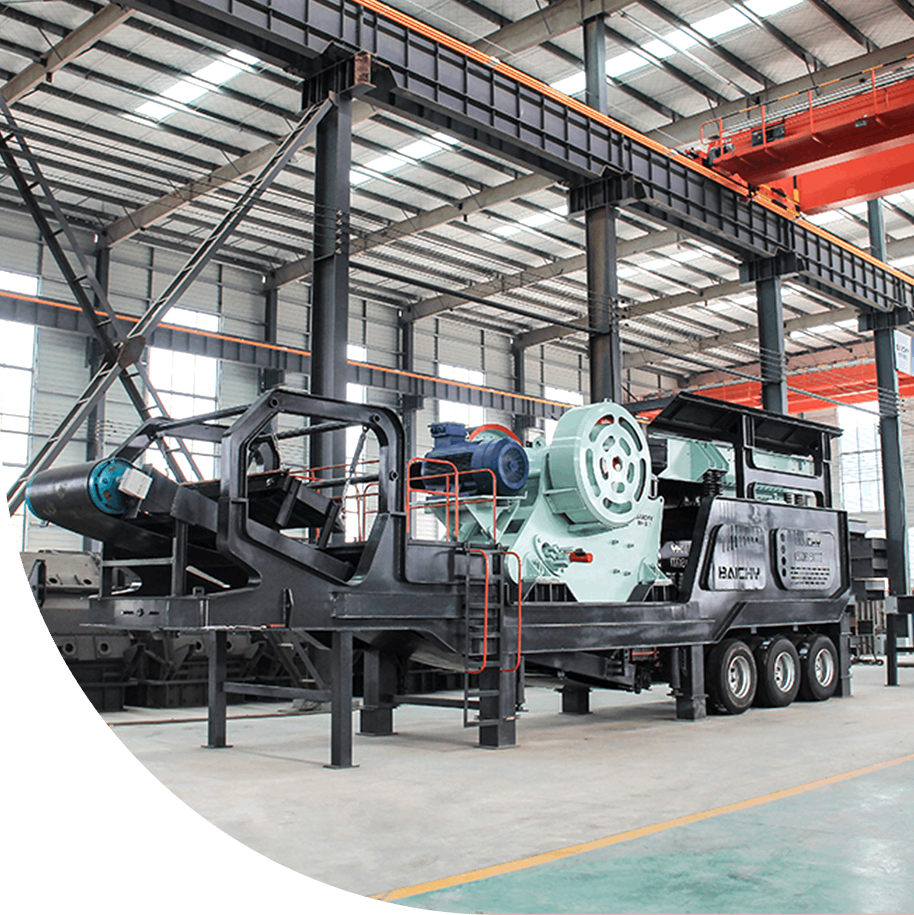

At the heart of a mining crushing production line, the jaw crusher plays an indispensable role in primary or secondary crushing. As a professional manufacturer of mining crushing equipment with 20 years of design and manufacturing experience, we deeply understand that correctly selecting the type of jaw crusher is crucial in determining the efficiency, finished product quality, and operating costs of the entire production line. Today, we will delve into the two most frequently compared mainstays of the jaw crusher family: the coarse jaw crusher (coarse jaw crusher for short) and the fine jaw crusher (fine jaw crusher for short).
I. Differences in Structure and Design Philosophy
Although both operate based on the compression principle of jaw plates, coarse and fine jaw crushers are designed to serve different process stages from the outset.
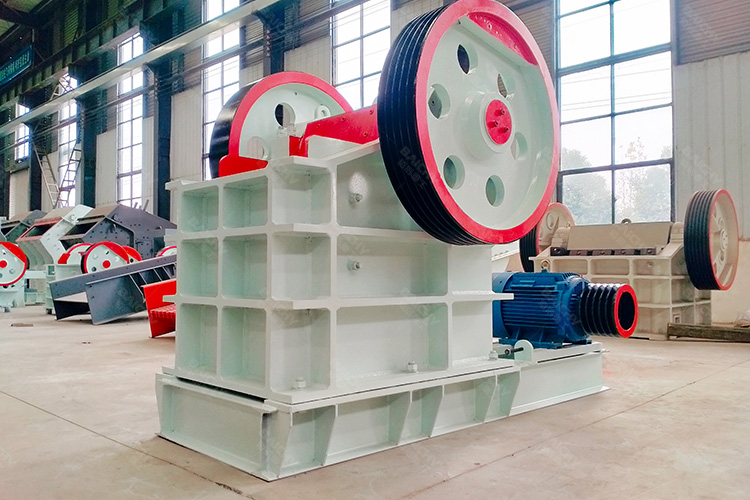
Coarse Jaw Crusher (common in the PE series)
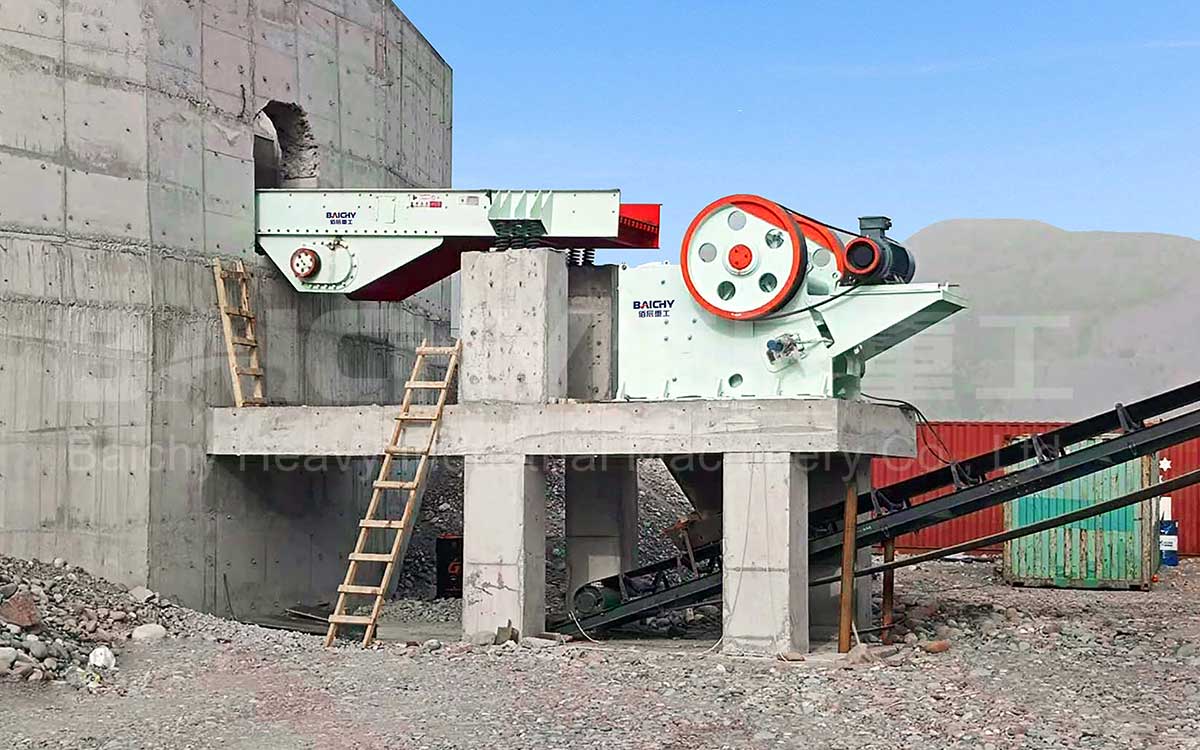
• Coarse Jaw Crusher (common in the PE series): Its core design goal is large cutting depth and high throughput. It has a huge feed opening, capable of easily swallowing large raw ore pieces with a diameter of 1 meter or even larger. The angle between the moving jaw and the fixed jaw is small, forming a deep crushing chamber to ensure effective clamping and crushing of large materials. Its structure is thicker and more robust to withstand the enormous impact and compressive forces from the raw materials. Simply put, the coarse jaw crusher is a powerful pathfinder.
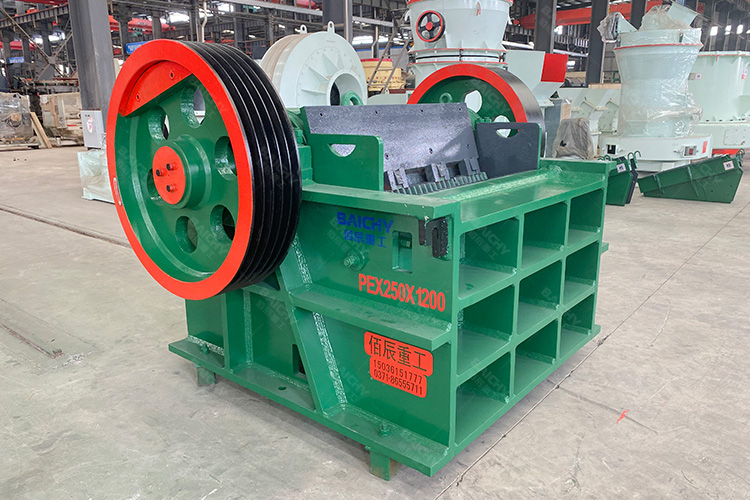
Fine jaw crusher (common in the PEX series)
• Fine jaw crusher (common in the PEX series): Its design philosophy shifts towards fine processing and particle size control. Its feed opening is relatively small, primarily used to handle medium-sized materials (typically <250mm) from coarse crushing. Its moving jaw has a longer stroke, a higher oscillation frequency, and optimized jaw plate teeth, subjecting the material to more repeated compression, grinding, and fracturing within the crushing chamber. The crushing chamber shape is also steeper to promote rapid discharge of crushed material and prevent over-crushing. Therefore, the fine jaw crusher is a skilled fine processor.
II. Performance Parameter Comparison:
| Characteristics | Coarse Jaw Crusher | Fine Jaw Crusher |
| Feed Size | Large, up to 1200mm or more | Small, usually <250mm |
| Discharge Size | Relatively coarse, generally adjustable from 150-350mm | Relatively fine, usually adjustable from 20-60mm, or even finer |
| Crushing Ratio | Relatively small (usually 3-5) | Huge (up to 10-25 or even higher) |
| Processing Capacity | High, focusing on output | Relatively low, focusing on particle shape |
| Core Application Stage | Primary Crushing (Head Crusher) | Secondary Crushing (Medium and Fine Crushing) |
| Jaw Plate Motion Characteristics | Primarily compression | Compression with grinding effect |
III. Practical Application Scenarios: How are they positioned in the production line?
Based on our 20 years of experience planning thousands of production lines for global clients, the roles of the two are very clear:
1. Application Scenarios of Coarse Jaw Crusher: As the first gate of the production line, it directly processes the raw ore transported from the mine. Its task is to crush irregularly shaped large pieces of ore to a uniform size suitable for subsequent intermediate crushing equipment (such as cone crushers and impact crushers). Its stability and high throughput are the foundation for ensuring high production output of the entire line.
2. Application Scenarios of Fine Jaw Crusher:
◦ Secondary Crushing: In small and medium-sized production lines or scenarios where the requirements for finished product particle size are not extremely stringent, it can be directly used as a secondary crushing device to further crush the material after coarse crushing to the ideal aggregate particle size.
◦ Sand Pretreatment: In manufactured sand production lines, it is often used to pretreat coarse aggregate, producing uniformly sized sandwiches, providing ideal feed for the sand making machine, thereby improving sand making efficiency and particle shape.
◦ Laboratory Crushing: Due to its excellent discharge control capabilities, a small fine jaw crusher is also an ideal device for mineral sample preparation in laboratories.
IV. How to Make the Right Decision Based on Needs?
Choosing between a coarse jaw crusher and a fine jaw crusher is not a simple either/or choice, but rather based on your overall process plan. Here are our expert recommendations:
• Consider the raw material: If your raw material is large rubble, a coarse jaw crusher is the only and essential starting point.
• Consider the output: If you are aiming for extremely high primary throughput, a large-scale coarse jaw crusher is key.
• Consider the finished product: If the final product is high-quality aggregate or manufactured sand for high-grade concrete, then a combination of coarse crusher + fine jaw crusher or coarse crusher + cone crusher + fine jaw crusher will provide better particle shape and gradation.
• Consider investment and space: For small to medium-sized projects with limited budgets or compact spaces, a large-scale fine jaw crusher can sometimes serve as a simplified one-crush-to-shape solution, but its capacity to handle large pieces of raw material is limited.
Coarse jaw crushers and fine jaw crushers are not competing to each other, but rather complementary and mutually reinforcing partners. As a manufacturer with two decades of experience in the industry, we offer not just inpidual units, but comprehensive crushing solutions based on your ore properties, capacity targets, and investment budget. From robust and durable coarse jaw crushers to meticulously crafted fine jaw crushers, we ensure that every piece of equipment embodies our profound understanding of the process and our unwavering pursuit of quality.