
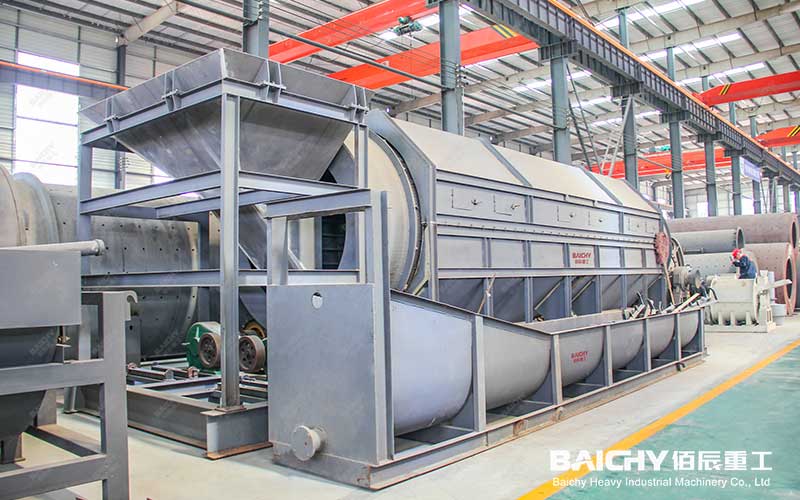
Trommel Screens
In mining crushing and grinding production lines, the screening of raw materials is a critical link that determines both the quality of the final product and overall production efficiency. Among the wide array of screening equipment available, the trommel screen—distinguished by its unique operating principle and exceptional adaptability—stands out as the ideal choice for processing wet, sticky, or easily clogging materials. It performs particularly well in the classification of medium-to-fine-grained materials. This article will provide an in-depth analysis of the trommel screen's operating mechanism and core advantages, while also exploring its applications in modern mining aggregate production.
Trommel Screen Overview: Operating Principles and Structural Features
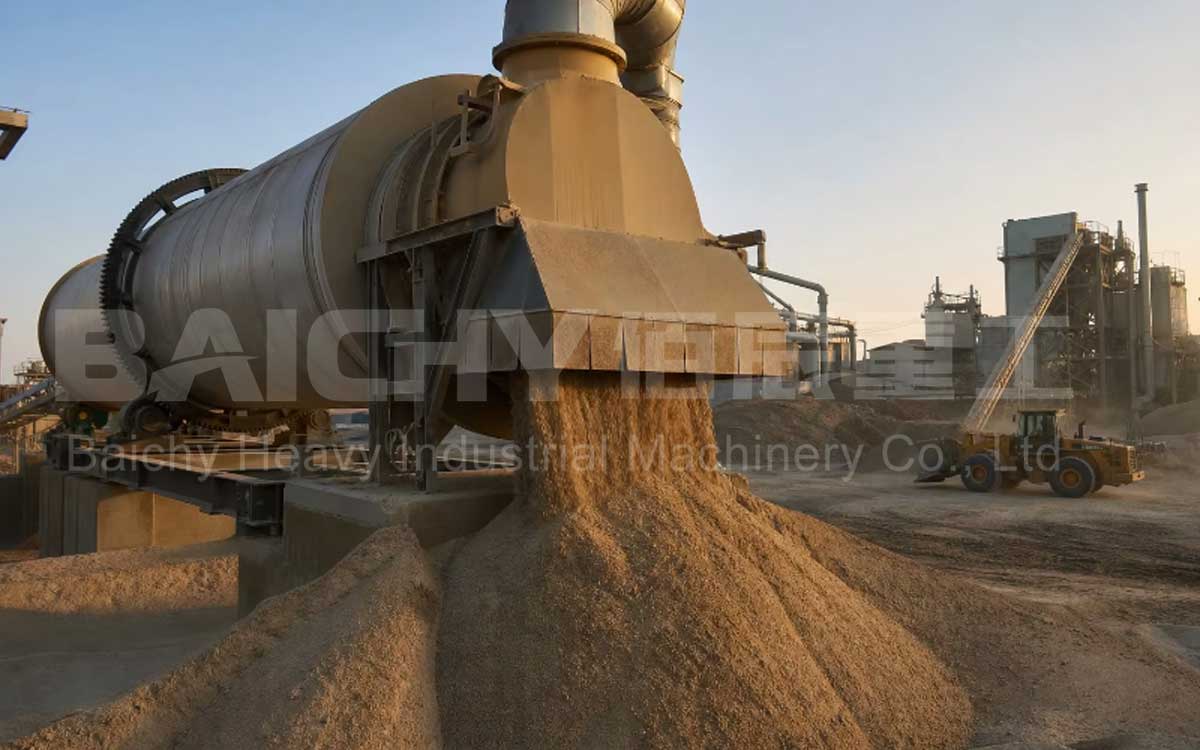
The trommel screen—also known as a rotary screen or rotary screening machine—centers around a cylindrical screen drum that is installed either at an incline or horizontally. Driven by a power unit, the screen drum rotates at a constant speed as the material to be screened enters the cylinder from the feed end. As the drum rotates, the material inside is lifted and tumbled, moving axially along the length of the drum under the influence of gravity. Particles smaller than the screen apertures pass through the mesh during this process, thereby achieving classification; conversely, materials larger than the apertures are discharged from the opposite end of the screen drum.
Key Structural Components
1. Screen Drum: The core working component, typically composed of modular screen sections with varying aperture sizes to facilitate multi-stage screening.
2. Support Mechanism: Comprising support rollers and riding rings, this system supports the screen drum and ensures its smooth, stable rotation.
3. Drive Unit: Typically consisting of an electric motor, a reducer (gearbox), and gears, this unit provides the rotational power required for operation.
4. Feed and Discharge Hoppers: These components guide the inflow of raw materials and direct the outflow of classified products of various grain sizes.
5. Frame and Enclosure: The structural framework supports the entire assembly, while the protective enclosure provides necessary sealing and dust containment.
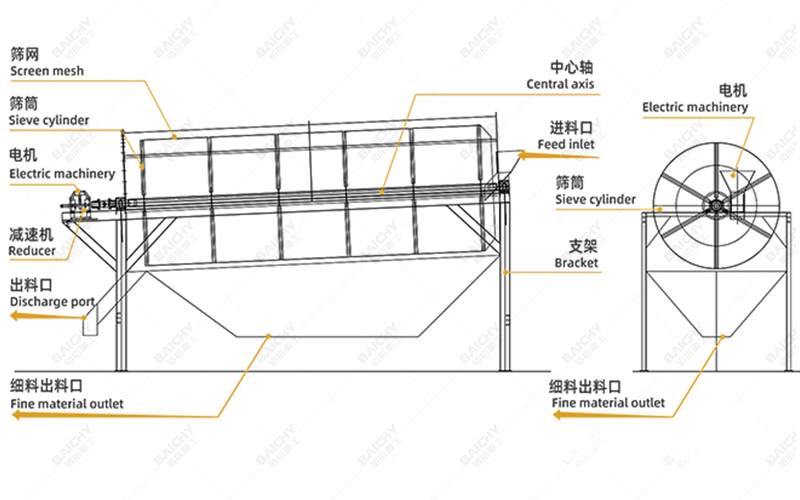
Structural Diagram of a Rotary Screen
Why Choose a Trommel Screen? Four Unparalleled Advantages
Compared to other screening devices—such as vibrating screens—the trommel screen demonstrates distinct advantages when processing specific types of materials. This is a primary reason why it has become a mainstream piece of equipment in industries such as mining, sand and gravel production, and construction waste processing.
1. Exceptional Anti-Clogging Capability
The rotation of the screen drum, combined with the tumbling motion of the material itself, effectively prevents wet or sticky materials from clogging the screen apertures, thereby ensuring consistently stable screening efficiency. This is crucial for screening stone materials with high clay content or sandy soils with high moisture levels.
2. Smooth Operation; Low Noise and Vibration
The trommel screen operates via continuous, gentle rotation rather than high-frequency vibration. Consequently, the equipment runs smoothly, generating significantly less noise and dynamic load compared to vibrating screens; this helps improve the working environment and minimizes structural impact on the foundation.
3. Precise Classification; High Product Purity
Materials remain inside the rotating drum for an extended period, undergoing thorough tumbling. This ensures that every particle has multiple opportunities to pass through the appropriate screen apertures, thereby enhancing classification accuracy and the purity of the finished products while minimizing material recirculation or cross-contamination.
4. Robust Structure; Easy Maintenance
The equipment features a relatively simple structure with durable, reliable primary moving parts. It requires few routine maintenance points, resulting in low maintenance costs. Additionally, the sealed design minimizes dust emission, ensuring greater compliance with environmental protection standards.
Typical Application Case: Trommel Screens in Mining Aggregate Production Lines
The following is a successful case study involving the integration of a trommel screen into a large-scale granite aggregate production line. The raw material for this line consists of a crushed granite mixture, which requires separation into four distinct finished product grades: 0–5 mm, 5–10 mm, 10–20 mm, and >20 mm.
| Project Parameters | Specific Details |
| Raw Material Characteristics | Crushed granite mixture; contains a small amount of stone dust; moisture content approx. 3–5% |
| Capacity Requirement | Throughput ≥ 200 tons per hour |
| Finished Product Specifications | Four aggregate grades: 0–5 mm, 5–10 mm, 10–20 mm, >20 mm |
| Selected Equipment | Model GTTS-1845 Three-Stage Trommel Screen (manufactured by our company) |
| Screen Drum Design | Three-stage configuration: Front section with 20 mm apertures; Middle section with 10 mm apertures; Rear section with 5 mm apertures |
Recommended Equipment: Building an Efficient Screening and Crushing System
An efficient trommel screen must work in perfect synergy with upstream and downstream equipment to deliver its maximum value. We recommend the following complementary equipment to help you construct a complete aggregate processing system:
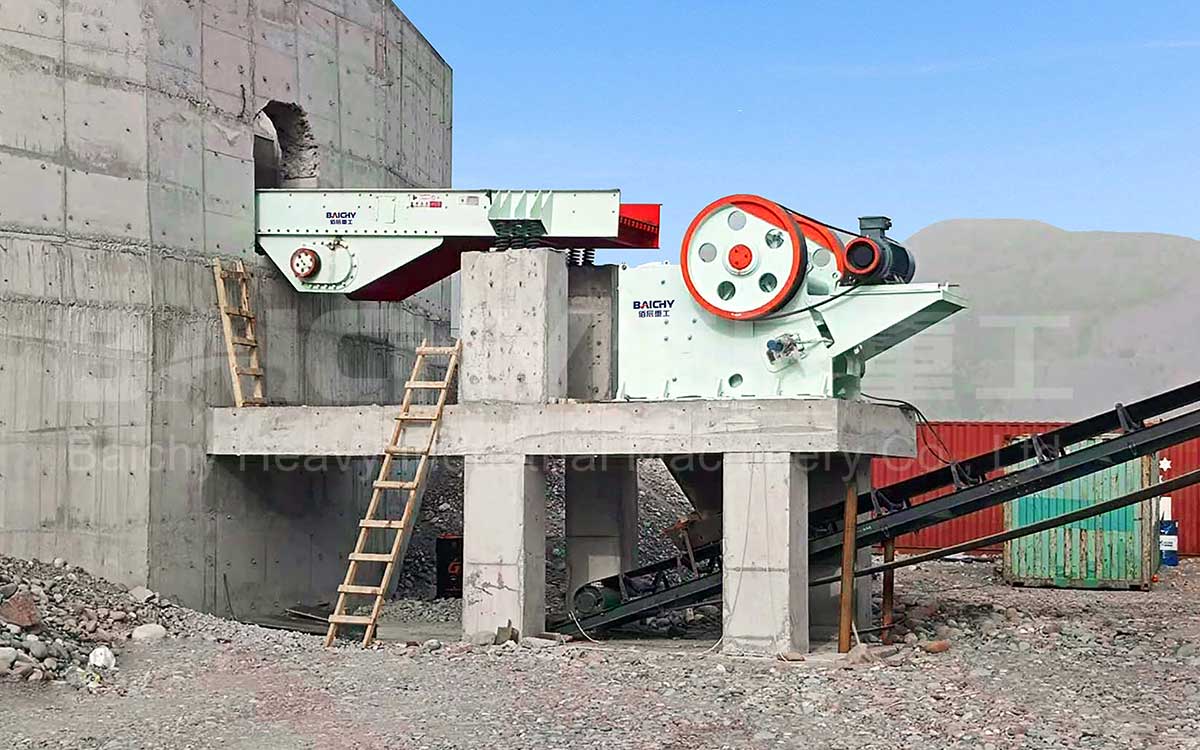
• Jaw Crusher (Primary Crushing): Acting as the primary crusher, it provides raw materials with the initial, qualified particle size required for subsequent screening and crushing stages.
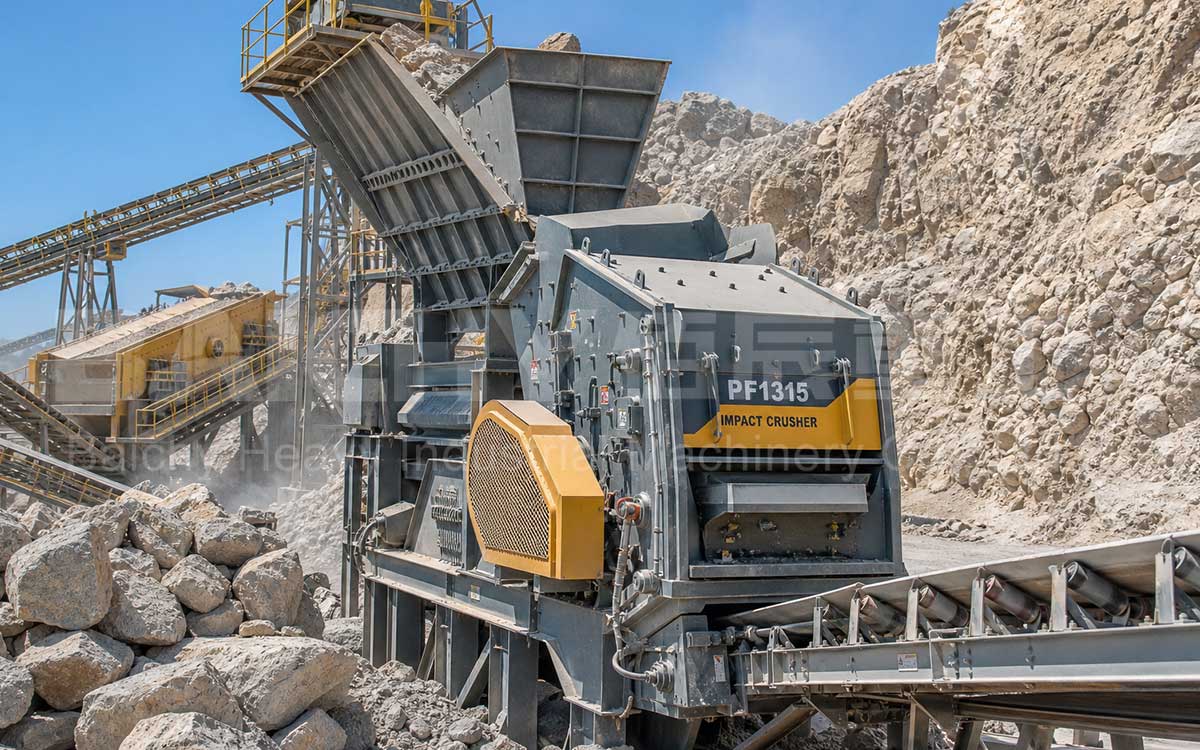
• Cone Crusher / Impact Crusher (Secondary/Tertiary Crushing): Used to re-crush oversized materials retained on the screen, creating a closed-circuit loop that optimizes the shape of the finished product.
• Belt Conveyor System: Responsible for connecting the various pieces of equipment and facilitating the automated flow of materials; it serves as the "artery" of the production line.
• Feeder: Ensures a uniform and controllable supply of material to the trommel screen—a prerequisite for guaranteeing screening efficiency.
Frequently Asked Questions (FAQ) about Trommel Screens
1. What are the main differences between a trommel screen and a vibrating screen, and how should one choose between them?
Answer: The core differences lie in their operating principles and applicable scenarios. A trommel screen relies on rotation and material gravity for screening; it excels at processing wet, sticky, or easily clogging materials and operates more quietly and smoothly. A vibrating screen relies on high-frequency vibration for screening; it offers high efficiency and throughput when processing dry, free-flowing materials, and provides a higher processing capacity per unit of floor space. When making a choice, the primary consideration should be the material characteristics: choose a trommel screen for wet or sticky materials, and a vibrating screen for dry or loose materials. Secondary considerations include site constraints, energy consumption, and investment budget.
2. What factors determine the screening efficiency and throughput of a trommel screen?
Answer: These are primarily determined by the following factors:
• Material Characteristics: Moisture content, stickiness, particle shape, and soil content.
• Equipment Parameters: Screen drum diameter and length, inclination angle, rotational speed, and screen mesh shape and size.
• Operating Conditions: The uniformity and speed of the material feed. Overfeeding will result in reduced screening efficiency.
3. What key points should be kept in mind regarding the daily maintenance of a trommel screen?
Answer: Routine maintenance primarily consists of inspection and cleaning:
• Regular Inspection: Periodically check the screen mesh for wear; if any damage is found, replace or repair it immediately. Inspect the drive unit (motor, reducer) for proper lubrication and temperature rise. Tighten all connecting bolts.
• Maintain Cleanliness: After shutting down the equipment, clear away any accumulated material from both the interior and exterior—particularly inside the screen drum—to prevent clogging over the long term.
• Proper Start-up and Shutdown: The equipment should be started up and shut down under no-load conditions.
About of Baichy Heavy Industry
Baichy Heavy Industry is a high-tech mining equipment company integrating R&D, manufacturing, sales, and after-sales service. Focusing on crushing, grinding, and mineral processing equipment, we provide professional solutions to our customers. We are ISO9001:2015 、certified, and our products include mobile crushing palnts, crawler crushing plant, construction waste crushing plants, jaw crushers, sand making machines, cone crushers, fine crushers, grinding mills, ball mills, etc., all with reliable performance to meet diverse project needs.
Our advantages:
• Professional pre-sales support: Free project design and comprehensive solutions to help you accurately select the right equipment;
• Comprehensive on-site service: Providing installation guidance and worker training to ensure smooth equipment commissioning;
• Reliable after-sales guarantee: A complete after-sales system, timely response to technical inquiries and equipment maintenance, ensuring long-term stable operation.
To protect your rights, please contact us through the following official channels for professional service:
Official Website Customer Service
https://wa.me/+8615093222637
Email: [email protected]
We are committed to providing high-quality equipment and full-cycle services to deliver comprehensive intelligent solutions for the global mining industry!