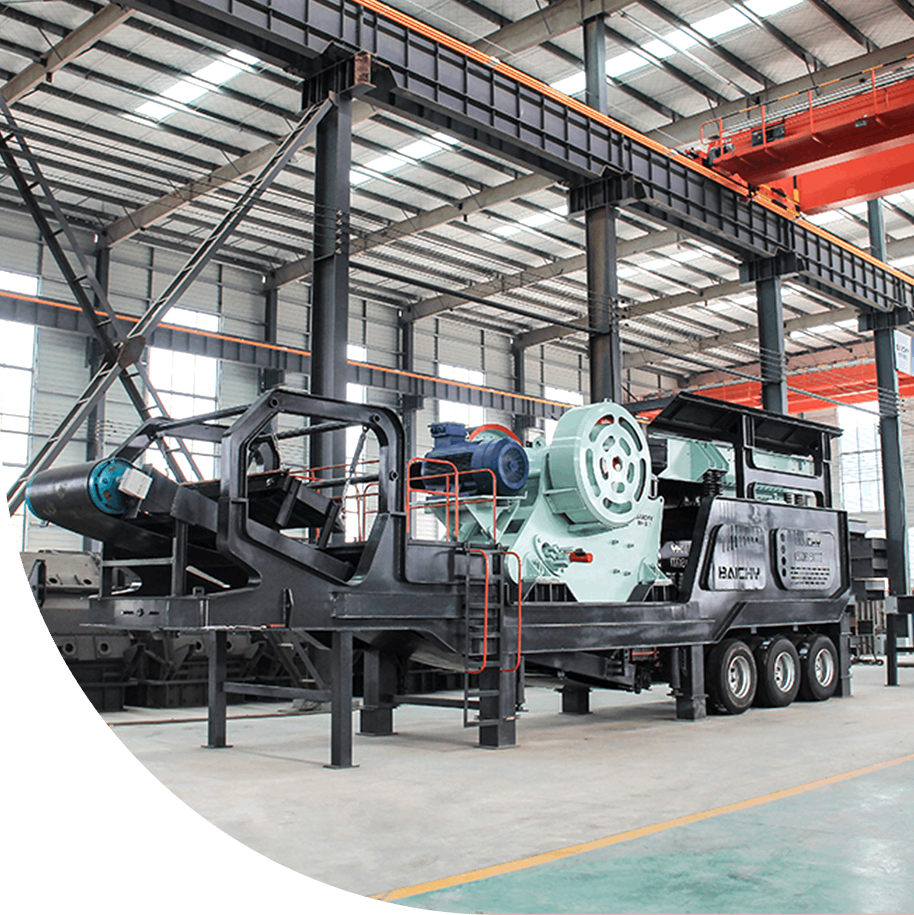

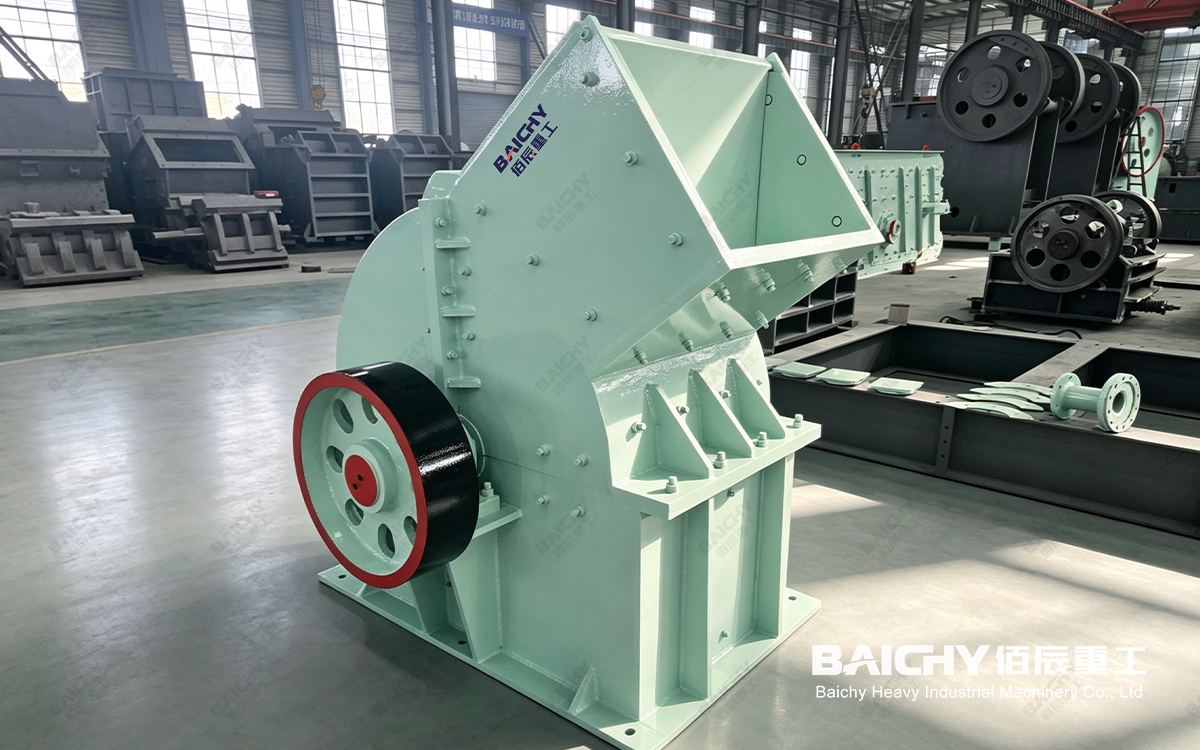
Hammer Mill Crusher
The hammer mill crusher is the lowest-investment way to reduce medium-soft rock (up to 150–200 MPa compressive strength) to a finished 0–50 mm product in a single pass. Feed it 350 mm lumps, take out saleable material — no secondary crusher, no extra screening loop, no two-stage conveyor train. For limestone, coal, gypsum, shale and slag producers, this one machine replaces an entire secondary crushing stage at roughly half the capital cost.
1. The hidden cost of two-stage crushing
Most operators don't add a secondary crusher because they want one — they add it because their primary jaw leaves oversized lumps that no downstream mill can swallow. That second machine brings along its own belt feeders, chutes, screens, foundations and an extra operator's worth of electricity and maintenance. Over a 5-year lifecycle, the per-ton cost of that stage often exceeds the primary itself.
A hammer mill eliminates the problem at the source: the rotor-mounted hammers strike, break and throw material against the breaker plate and grate bars in one continuous action, discharging only what fits through the grate. One machine. One footprint. One maintenance point.
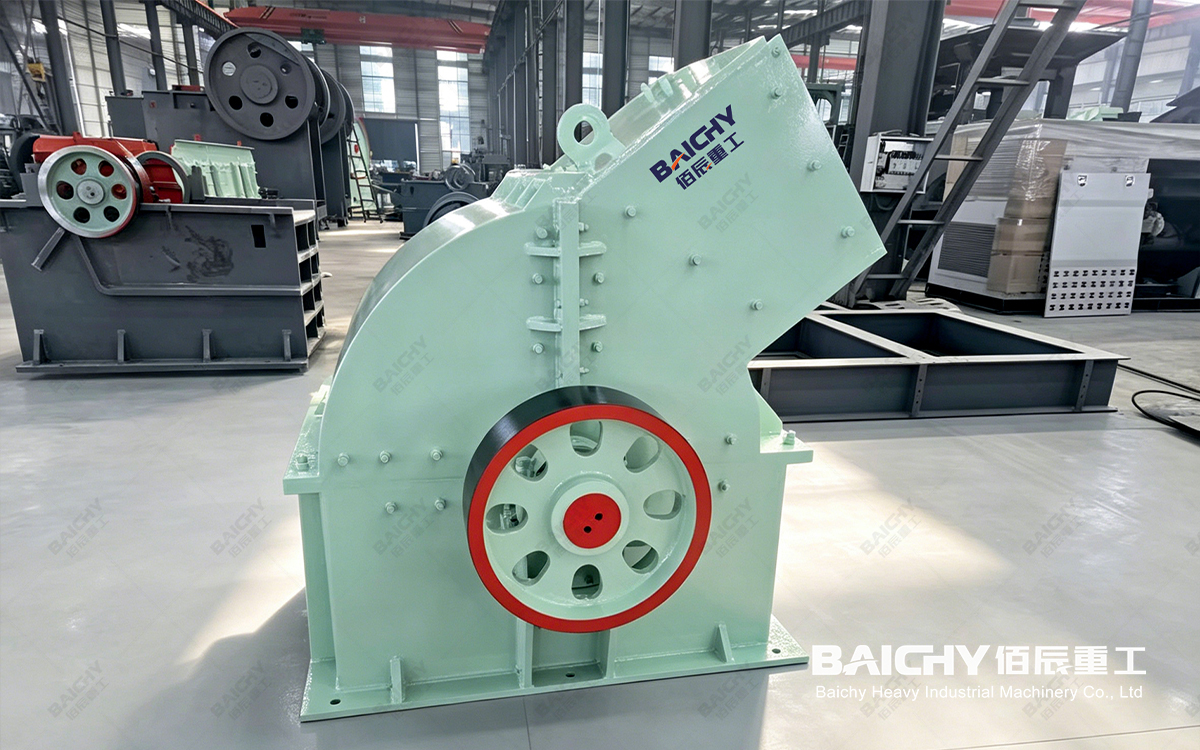
Hammer Mill Crusher
2. What that means in money terms
| Feature | Benefit translated |
| One-stage reduction (350 mm → 0–50 mm) | Eliminates the secondary crusher + its conveyors and screens — typically 30–50% lower CAPEX on the crushing section |
| Interchangeable sieve bars | Discharge size changed in minutes; stable, consistent product feeds ball mills and sand plants evenly, lifting downstream throughput |
| High-chrome hammers, material-matched | Hammer consumption of roughly 0.02–0.06 kg per ton on limestone — wear cost per ton meaningfully below an impact crusher doing the same job |
| Open-front housing, quick-access doors | Hammers and grates reached without rotor dismantling; a full hammer change takes hours, not days; typical uptime >90% |
| PC / PCK rotor options | Reversible (PCK) rotors wear both hammer edges evenly — hammer life extended 30–50% on abrasive or fine-product duty |
3. Core specifications
| Parameter | Range |
| Capacity | 5–350 t/h (rated on limestone, 1.6 t/m³) |
| Max feed size | 100–350 mm |
| Product size | 0–50 mm, grate-controlled |
| Motor | 22–630 kW |
| Configurations | Single-rotor PC; reversible PCK |
Capacity ratings assume limestone at 1.6 t/m³. For lighter feeds — coke, gypsum, coal — apply a conversion factor (coke ≈ 0.45–0.55) when sizing the machine.
4. What to crush — and what to avoid
Suitable: limestone, coal/coke, gypsum, shale, salt, slag, cement clinker, light C&D waste — anything with compressive strength up to 150–200 MPa.
Two hard limits:
• Moisture above 15% — wet fines blind the grate and stall throughput. Dry or air the feed first, or specify the heavy-hammer / wide-grate variant.
• Highly abrasive rock (quartzite, basalt) — the hammer mill will do the job, but hammer replacement frequency destroys the economics. That's a jaw + cone application.
Sizing traps to avoid:
1. Don't size on your material's raw density — always convert to the limestone baseline first.
2. Don't feed lumps larger than the rotor intake; oversized feed jams the rotor.
3. If you need fine product (<10 mm) as a routine duty, choose the reversible PCK — wear stays even and hammer life climbs.
5. FAQ
1. What materials can a hammer mill crusher handle?
Medium-soft materials up to 150–200 MPa compressive strength — limestone, coal, gypsum, shale, slag, salt. For hard rock (granite, basalt, quartzite), use a jaw or cone crusher instead.
2. How do you control the output size?
By changing the sieve bar aperture. Swap in a finer or coarser grate and the discharge follows — a 10–30 minute job on most frames.
3. Hammer mill vs impact crusher — what's the difference?
The hammer mill reduces coarse feed to finished product in one pass with lower capital cost; the impact crusher is better suited to medium-hard material and shaping duties where you keep the product in one size range.
4. Can it handle wet material?
Below ~15% moisture it runs clean. Above that, wet fines pack the grate — dry the feed first or order the heavy-hammer variant.
5. How long do the hammers last?
Typically 600–1,200 hours on limestone, depending on feed abrasiveness and product size setting. Reversible rotors push that toward the top of the range.