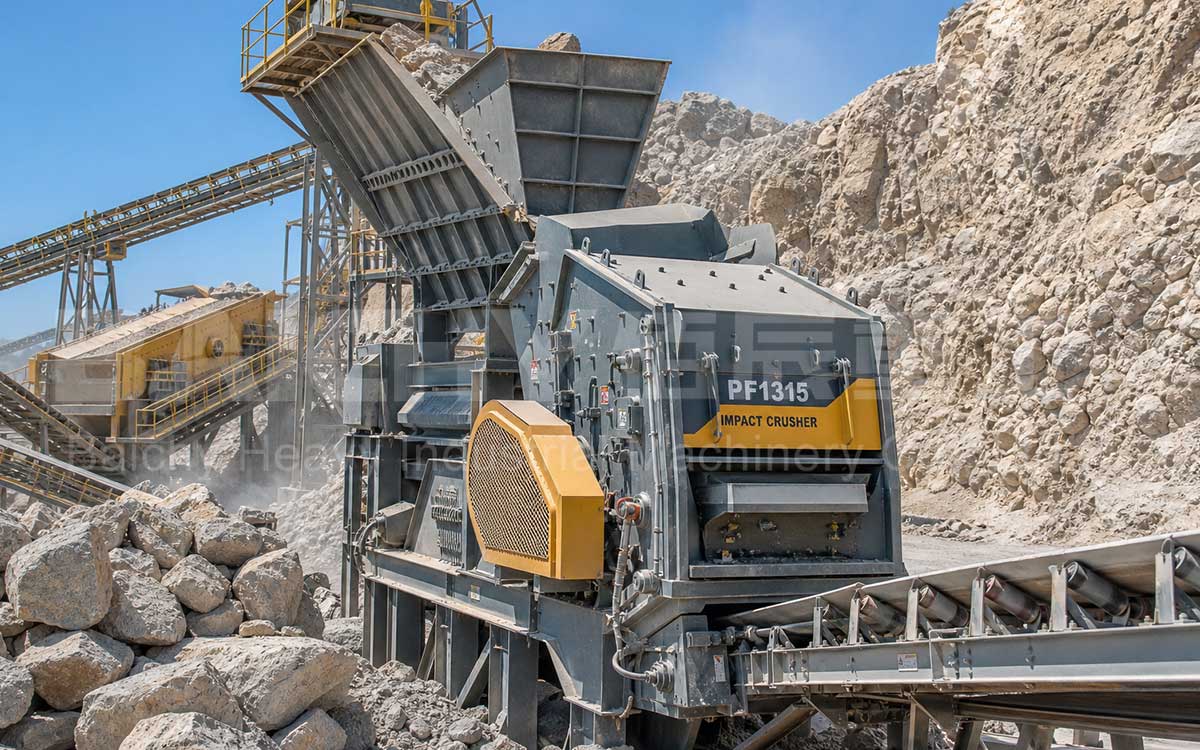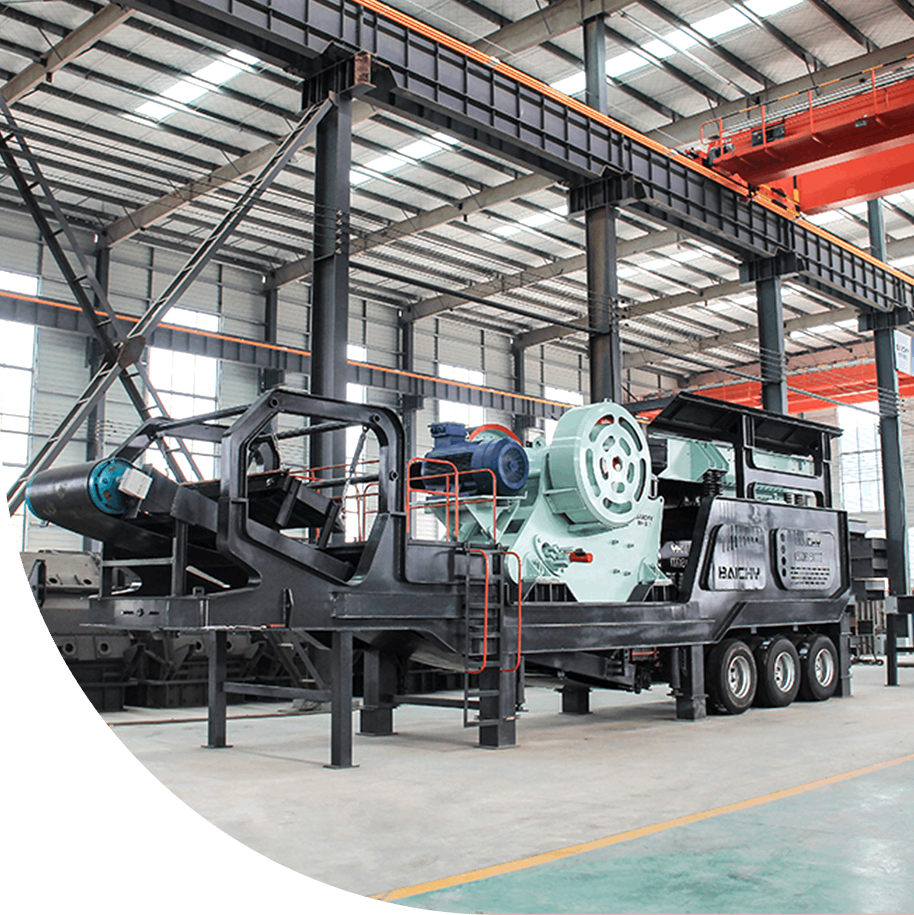


Heavy-duty hammer crusher
The heavy-duty hammer crusher is a primary piece of equipment designed for the "single-stage" crushing of medium-soft materials—such as limestone, dolomite, gypsum, coal gangue, shale, and construction waste. Provided the raw material meets specific criteria—compressive strength ≤200 MPa (corresponding to a Mohs hardness of approximately ≤5), moisture content ≤15%, and feed size ≤1000 mm—a single unit can crush the material to a discharge size of ≤75 mm, thereby eliminating the need for a secondary crushing stage. However, this equipment is unsuitable for hard materials exceeding these limits, such as granite, basalt, or quartzite; for those, a combination of jaw crushing and cone crushing is required. Baichy Heavy Industry is a professional manufacturer of mining crushing, ore grinding, and mineral processing equipment. Its PCZ series heavy-duty hammer crushers offer capacities ranging from 60 to 3000 t/h and are operating reliably in production lines for medium-to-low hardness materials across dozens of countries worldwide.
I. Overview: Three Key Criteria for Determining the Suitability of Heavy-Duty Hammer Crushers
The heavy-duty hammer crusher (PCZ series) consists of a heavy-duty rotor, high-chromium hammers, impact liners, and a grate screen. Upon entering the crushing chamber, large stone blocks are shattered by the impact of high-speed rotating hammers; the material then strikes the impact liners for secondary breakage, and the final discharge particle size is controlled by the grate screen. Compared to standard hammer crushers, this model features a larger rotor diameter and heavier hammers, allowing for a larger feed size (up to 1000 mm) and a higher crushing ratio (exceeding 20:1).
So, exactly which materials can a heavy-duty hammer crusher process? Suitability is determined not by the material's name, but by three key technical indicators:
Compressive strength: The upper limit for suitability is 200 MPa (corresponding to a Mohs hardness of around 5); exceeding this level leads to high wear rates.
Moisture content: Normal operation is possible at ≤15%; excessive moisture causes clogging of the grate screen and reduces production capacity.
Abrasiveness (silica content): Lower free silica content is more economical; excessively high silica content significantly accelerates hammer wear. If all three criteria are met, the heavy-duty hammer crusher represents the lowest-cost-per-ton solution for that specific crushing stage; however, if any criterion is exceeded, it is recommended to calculate the Total Cost of Ownership (TCO) before making a decision.
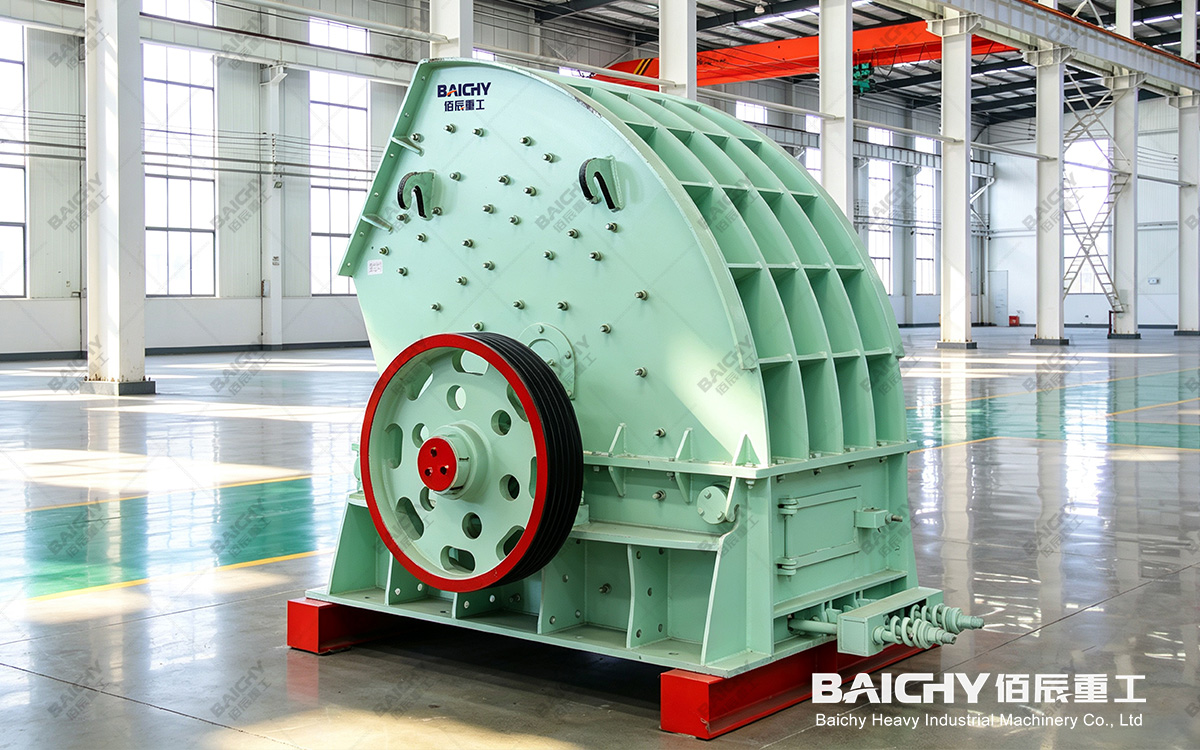
PCZ heavy-duty hammer crusher
II. Material Suitability Matrix: Assessment of 12 Material Categories
The table below outlines the suitability of common materials for heavy-duty hammer crushers (capacity and wear data represent typical industry ranges; specific figures depend on material analysis and process calculations):
| Material Category | Mohs Hardness | Compressive Strength (MPa) | Suitability | Key Notes |
|---|---|---|---|---|
| Limestone | 3 | 80–120 | Highly Suitable | Primary market; high-chrome hammer lifespan: 3–6 months |
| Dolomite | 3.5–4 | 100–150 | Highly Suitable | Wear part consumption slightly higher than limestone |
| Gypsum (incl. desulfurized) | 2 | 40–60 | Highly Suitable | Low hardness; high output; minimal wear |
| Coal Gangue | 2–4 | 60–100 | Suitable | Control moisture to prevent clogging/sticking |
| Coal/Coke | 1.5–2.5 | 20–40 | Suitable | Iron remover recommended; monitor sulfur-induced corrosion |
| Shale | 3 | 80–140 | Suitable | Pre-screening recommended if clay content is high |
| Construction Waste (Brick/Concrete) | — | 100–150 | Suitable | Iron removal essential; separate rebar beforehand |
| Phosphate Rock | 3–4 | 90–140 | Suitable | Use high-chrome hammers to extend lifespan |
| Salt/Fertilizer | 2–3 | 30–60 | Suitable | Corrosion-resistant materials required |
| Bauxite (Soft) | 2–3 | 60–100 | Conditionally Suitable | Highly abrasive; hammer cost analysis required |
| Granite | 6–7 | 150–250+ | Not Suitable | Switch to Jaw Crusher + Cone Crusher |
| Basalt | 6–7 | 200–300+ | Not Suitable | Excessive hammer wear; per-ton cost doubles |
Highly Suitable: Limestone, Dolomite, Gypsum, Coal Gangue
These four material categories represent the ideal application scope for heavy-duty hammer crushers. Taking limestone as an example: Run-of-mine ore (≤1000mm) is fed directly into the machine, and the output (≤75mm) proceeds to screening. A single unit replaces the traditional two-stage "jaw crusher + impact crusher" process, reducing total investment by approximately 40% and cutting electricity consumption per ton by over 40%. For limestone crushing in cement plants, aggregate production lines, and power plant desulfurization powder preparation projects, the heavy-duty hammer crusher is the solution with the most extensive field-proven track record.
Suitable for: Construction waste, shale, phosphate rock, and salts.
Construction waste requires an upstream iron remover to separate rebar; shale often has high clay content, so pre-screening is recommended during the rainy season; phosphate rock has moderate abrasiveness, so high-chrome alloy hammer heads are sufficient. These materials can certainly be crushed, but the process and wear-resistant parts require specific configurations to minimize the cost per ton.
Not suitable for: Hard materials such as granite and basalt.
For materials with a compressive strength exceeding 200 MPa, hammer head wear increases exponentially, making the crushing cost per ton far higher than that of a "jaw crusher + cone crusher" setup. For such materials, choose the classic "jaw crusher + cone crusher" configuration designed for hard rock to avoid investment errors.
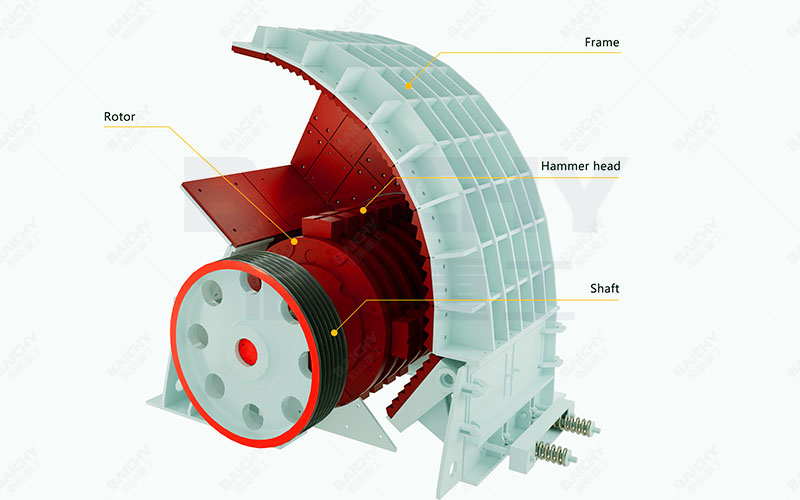
Structural diagram of a heavy-duty hammer crusher
III. Application Scenarios
Sand and Aggregate Production Lines
When establishing new 100–3000 t/h aggregate lines for limestone or dolomite mines, the heavy-duty hammer crusher achieves "single-stage crushing." The output (adjustable 0–40mm) feeds directly into a circular vibrating screen for classification. With its simple configuration and high capacity, it serves as the primary coarse crushing unit for large-scale aggregate projects and is the top choice for new production lines at major sand and gravel plants.
Cement Plants and Building Materials
A single heavy-duty hammer crusher can reduce run-of-mine ore (≤1000mm) to a product size of ≤75mm, feeding directly into the raw meal mill. Crushed gypsum (including desulfurization gypsum) serves as a cement additive, supporting energy-saving "crushing-instead-of-grinding" processes; this equipment is widely used in energy-efficiency upgrades for cement plants both domestically and internationally.
Construction Waste Recycling
Mobile heavy-duty hammer crusher units can crush demolition concrete and brick-concrete waste into recycled aggregate in a single pass. Their high reduction ratio and ability to produce well-shaped particles perfectly meet the requirements for recycled aggregate—whether for on-site backfilling or brick manufacturing—thereby eliminating off-site disposal costs. This makes them a mainstream primary crushing solution for urban solid waste disposal and circular economy projects.
Power Plants and Coal Industry
In primary crushing applications for coal gangue and power plant fuel coal, the heavy-duty hammer crusher’s low power consumption and high capacity align with the continuous operation requirements of power plants. Feed moisture content must be controlled (≤15%), and iron removal devices should be installed to protect the hammer heads and grate bars.
IV. Core Advantages
1. Single-stage shaping; one machine replaces two-stage crushing. Primary and secondary crushing are completed in one step, eliminating the need for an impact crusher, an intermediate conveyor belt, and a buffer hopper. This reduces both system investment and footprint, resulting in a more compact production line layout.
2. Large feed size and high reduction ratio. With a maximum feed size of 1000mm and a reduction ratio exceeding 20:1, mines can relax blasting fragmentation requirements—or even eliminate grizzly screens—directly lowering costs in the mining and feeding stages.
3. Over 40% electricity savings. A high-inertia rotor combined with an efficient crushing chamber design results in significantly lower electricity consumption per ton compared to two-stage crushing systems. For a 200 t/h limestone line, annual electricity cost savings can reach hundreds of thousands of yuan, offering clear long-term operational advantages.
4. Excellent product shape. The finished product is angular and multi-faceted with minimal flaky material, meeting strict aggregate shape requirements for projects such as highways and bridges, and allowing for direct use in commercial concrete plants.
5. Hammer material matched to the specific material. High-chromium alloy hammers are used for limestone applications, offering a lifespan of 3–6 months (corresponding to a production volume of approximately 100,000–200,000 tons). For abrasive materials, the specification can be upgraded to Cr20 or higher, or wear-resistant surfacing can be applied; the modular design allows for inpidual hammer replacement, minimizing downtime.
6. Compact structure and low maintenance requirements. Features a modular design and minimal requirements for civil engineering foundations; the casing is equipped with a hydraulic opening mechanism and an external oil pump lubrication system (with automatic shutdown protection for high oil temperatures); routine maintenance can be performed by general mechanics, making it ideal for overseas project sites.
V. Technical Specifications: PCZ Series Heavy-Duty Hammer Crusher
Production capacity is based on limestone (bulk density approx. 1.6 t/m³); capacity decreases accordingly as material hardness increases or moisture content rises (recommended moisture content ≤15%).
| Model | Rotor Diameter × Length (mm) | Feed Opening (mm) | Feed Particle Size (mm) | Capacity (t/h) | Motor Power (kW) |
|---|---|---|---|---|---|
| PCZ1308 | Φ1330×790 | 870×780 | ≤380 | 60–160 | 132 |
| PCZ1410 | Φ1400×1000 | 1060×740 | ≤450 | 80–210 | 2×90 |
| PCZ1610 | Φ1600×1000 | 1090×930 | ≤480 | 100–230 | 2×132 |
| PCZ1612 | Φ1600×1200 | 1340×1140 | ≤500 | 120–350 | 2×160 |
| PCZ1615 | Φ1600×1500 | 1570×1140 | ≤550 | 200–550 | 2×200 |
| PCZ1716 | Φ1700×1600 | 1420×1200 | ≤600 | 400–850 | 2×250 |
| PCZ1720 | Φ1700×2000 | 2030×1200 | ≤650 | 500–1000 | 2×400 |
| PCZ1920 | Φ1900×2000 | 1980×1210 | ≤750 | 800–1500 | 2×500 |
| PCZ2225 | Φ2200×2500 | 2530×1610 | ≤1000 | 1500–3000 | 1250 |
Quick Selection Guide: Choose PCZ1308 for 60–160 t/h; 200–550 t/h Select the PCZ1615 for 500–1000 t/h; the PCZ1720 for 500–1000 t/h; and the PCZ1920 or PCZ2225 for capacities exceeding 1000 t/h. When selecting a model, allow for a 10%–15% capacity margin; providing data on material Mohs hardness, moisture content, and feed particle size enables accurate estimates of production capacity and hammer service life.
VI. Application Cases
Case 1: 1000 t/h limestone aggregate line using PCZ1920 single-stage crushing.
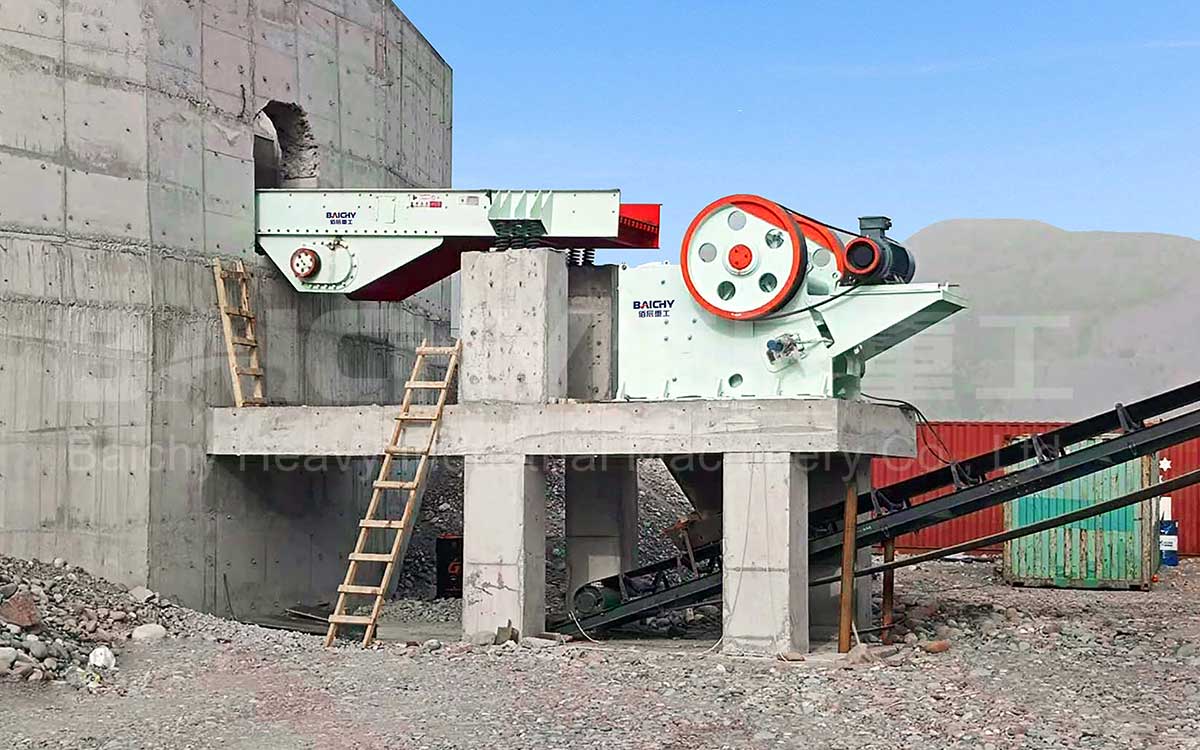
Configuration: ZSW600×130 vibrating feeder + PCZ1920 heavy-duty hammer crusher + YK3070 circular vibrating screen. Run-of-mine ore (≤750 mm) is fed directly into the crusher; the output (≤75 mm) is screened into three aggregate sizes: 0–5 mm, 5–15 mm, and 15–31.5 mm. Compared to a jaw crusher plus impact crusher setup of the same capacity, total investment is reduced by approximately 40%, and electricity consumption per ton drops by about 35%.
Case 2: 200 t/h mobile construction waste processing unit.
Configuration: Wheeled mobile station equipped with a PCZ1615 heavy-duty hammer crusher, an iron remover, and a double-deck vibrating screen. Demolished concrete blocks (containing rebar) undergo iron removal and are crushed in a single stage into recycled aggregate for on-site backfilling or brick making. This eliminates off-site disposal costs, and the project payback period is generally under two years.
Case 3: Limestone crushing system upgrade for a cement plant.
The capacity of the original two-stage crushing system had reached its limit. After upgrading to a PCZ1720 heavy-duty hammer crusher, the single-unit capacity reached 500–1000 t/h with a stable output size of ≤65 mm. The feed particle size for the raw meal mill became uniform, resulting in an increase in hourly production of approximately 8%–10%.
VII. Recommended Related Equipment
Heavy-duty hammer crushers are typically integrated into complete systems with the following equipment; Baichy Heavy Industry offers comprehensive production line solutions and process designs:
ZSW Series Vibrating Feeder: Ensures uniform feeding and buffers material impact to protect the crusher chamber;
YK/GTS Series Circular Vibrating Screen: Performs graded screening to precisely control the particle size of the finished product;
Impact Crusher: Used for secondary shaping in high-grade concrete projects;
Jaw Crusher: An alternative primary crushing option for high-hardness materials like granite and basalt;
VSI Sand-Making Machine: Used for sand making and shaping to improve the quality of fine aggregates;
Suspended Iron Remover: Essential for construction waste and coal applications; protects hammer heads and grate bars;
Pulse Bag Dust Collector: Ensures compliance with environmental emission standards and recovers fine powder;
Raymond Mill/Ball Mill: Directly connects to the heavy-duty hammer crusher for limestone powder production (e.g., for power plant desulfurization or calcium carbonate powder).
VIII. Frequently Asked Questions (FAQ)
Q1: What materials can the heavy-duty hammer crusher process?
A: It is suitable for medium-soft materials with a compressive strength of ≤200 MPa and a moisture content of ≤15%. Typical materials include limestone, dolomite, gypsum (including desulfurization gypsum), coal gangue, shale, construction waste, phosphate rock, and salts. It is not suitable for materials exceeding hardness limits, such as granite, basalt, or quartzite; a jaw crusher plus cone crusher configuration should be used instead.
Q2: Can granite and basalt be crushed using a heavy-duty hammer crusher?
A: It is not recommended. The design limit for heavy-duty hammer crushers is a compressive strength of ≤200 MPa, whereas granite and basalt often exceed 150–300 MPa. Forced crushing leads to an exponential increase in hammer head wear, resulting in a higher cost per ton compared to a jaw crusher plus cone crusher setup. If the project primarily involves high-hardness materials, please select a jaw crusher and cone crusher configuration.
Q3: Can materials with high moisture content be processed using a heavy-duty hammer crusher?
A: Normal operation is possible with a moisture content of ≤15%; if it exceeds 15%, the material tends to clog the grate screen, reducing production capacity. For rainy season operations, it is recommended to add pre-screening or drying equipment upstream, or to increase the grate gap by 2–3 mm to prevent clogging. For applications requiring fine crushing of high-moisture materials, the Baichy reversible hammer crusher solution is a suitable option.
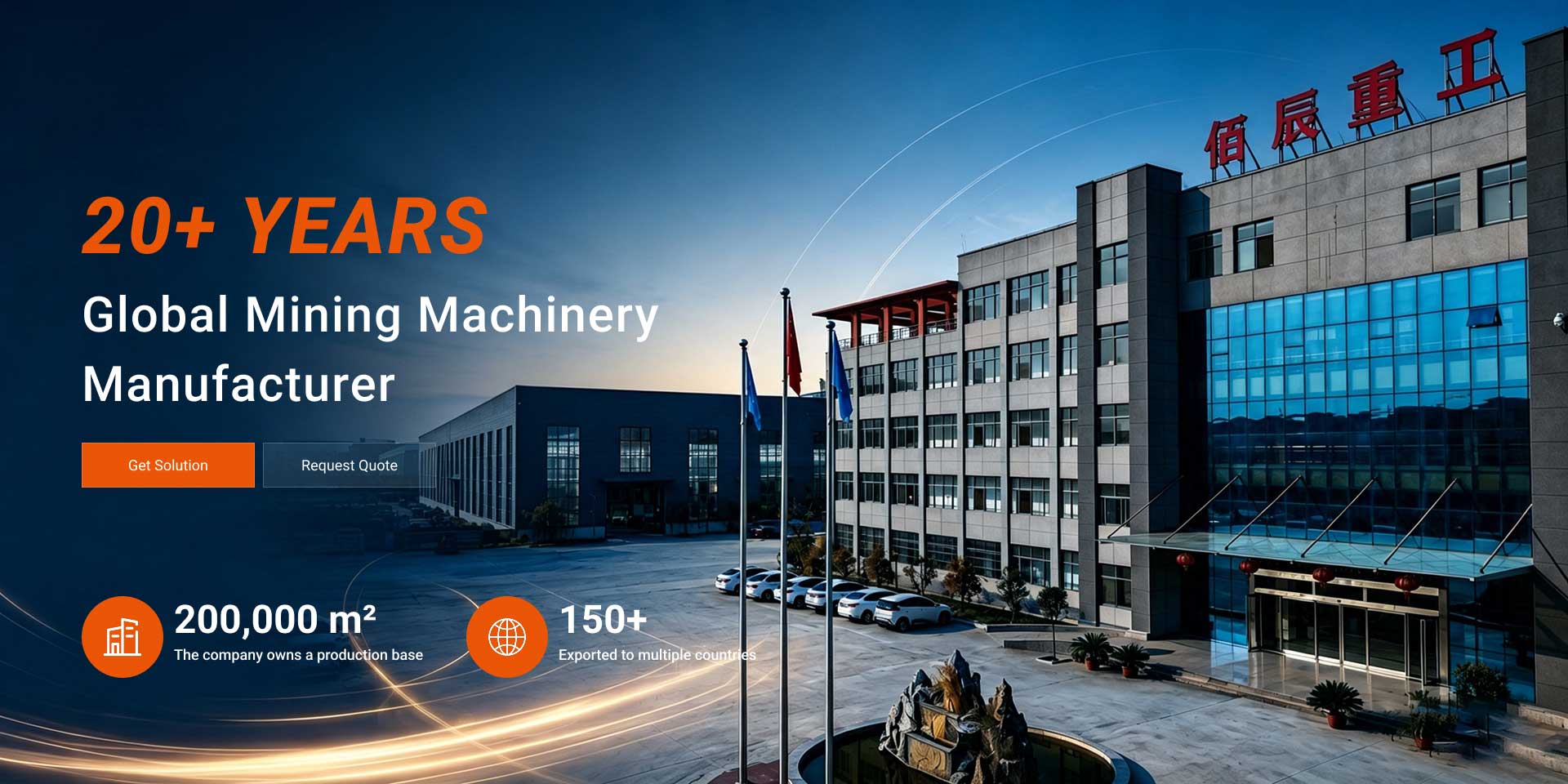
Baichy Heavy Industry
Baichy Heavy Industry is a high-tech mining equipment company integrating R&D, manufacturing, sales, and after-sales service. Focusing on crushing, grinding, and mineral processing equipment, we provide professional solutions to our customers. We are ISO9001:2015 、certified, and our products include mobile crushing palnts, crawler crushing plant, construction waste crushing plants, jaw crushers, sand making machines, cone crushers, fine crushers, grinding mills, ball mills, etc., all with reliable performance to meet diverse project needs.
Baichy Heavy Industry – Your Trusted Partner
To ensure optimal performance of your equipment, Baichy Heavy Industry offers:
- Professional on-site installation guidance
- Comprehensive operator training
- 24/7 technical support & maintenance services
Our complete after-sales service system guarantees long-term, stable operation of your machinery with minimal downtime.
Protect Your Rights – Only Use Official Channels
To avoid scams and ensure authentic support, contact us exclusively through:
• Official Website: www.baichychina.com
• WhatsApp: +8615093222637
• Email: [email protected]
Your satisfaction is our priority – expect prompt, professional service every time.
(Note: Beware of unauthorized third parties claiming to represent Baichy. Always verify through official contacts.)