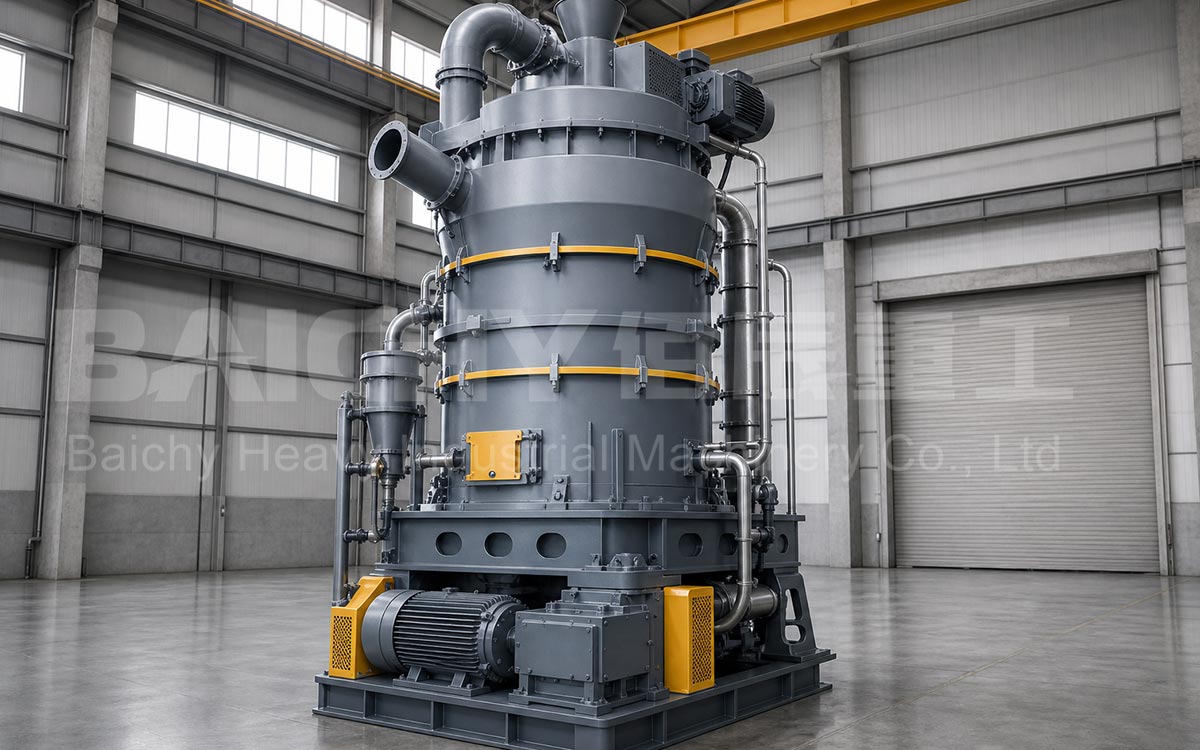
HGM80 Three-Ring Grinding Mill Production Line
For non-metallic mineral powder projects (such as ground calcium carbonate, kaolin, bentonite, talc, and barite) targeting a fineness of 800–2500 mesh, the HGM80 three-ring grinding mill line represents a mature, dry-processing solution offering the fastest return on investment in the 1–5 t/h capacity range. It utilizes 21 grinding rollers rolling against three grinding rings to reduce raw materials (≤25mm) to a fineness of D97 5–47μm in a single pass. This eliminates the need for external secondary classification, and for the same fineness, the electricity consumption per ton is 30–40% lower than the "Raymond mill + multi-stage classification" method. Its greater value lies in the ability of a single machine to cover the price brackets for both 325-mesh filler powder and 2500-mesh ultrafine powder; while the selling price of the ultrafine grade is typically 2–3 times that of the standard grade, the increase in grinding costs is far lower than the increase in selling price.
I. Why equipment upgrades are essential for fineness above 800 mesh: The economics of ultrafine powder
1.1 Price jumps with every step up in fineness
Take ground calcium carbonate as an example: the ex-factory price difference between 325-mesh filler powder and 1250-mesh ultrafine powder is often 2–3 times, whereas the difference in grinding costs is far smaller. Whoever first gains the capability to stably supply ultrafine powder captures the steepest segment of this price curve. The HGM80 is not about achieving a 30 t/h scale; rather, it uses a 1–5 t/h capacity to secure the "ticket to entry" for the stable production of D97 ultrafine powder.
1.2 Technical reasons why Raymond mills cannot produce ultrafine powder
Raymond mills rely on the centrifugal rolling action of grinding rollers. Their pulverization mechanism results in a precipitous drop in capacity and severe over-grinding when targeting fineness above 600 mesh; furthermore, the efficiency of the built-in air classification is insufficient, leading to high circulating loads of returned material. When forced to grind to 1250 mesh, the electricity consumption per ton is often more than 1.5 times that of the three-ring mill system, and the resulting wide particle size distribution makes the product prone to rejection by downstream customers. This isn't something that can be solved by mere "fine-tuning"—the HGM80’s three-ring structure and independent variable-frequency classifier are specifically engineered for processing requirements exceeding 800 mesh.

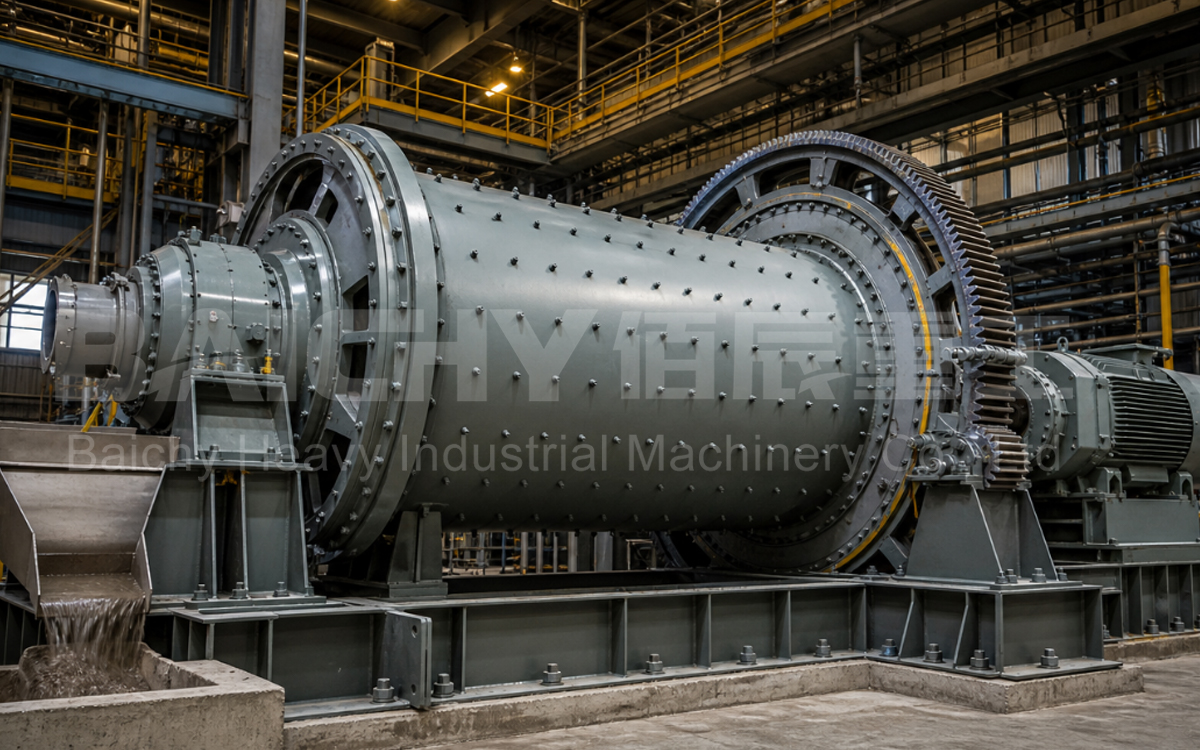
Three-Ring Grinding Mill
II. 21 Rollers and Three Rings: Deconstructing the HGM80 Mill’s Working Principle
2.1 A Grinding Configuration of Three Rings × 7 Rollers Each
The core of the HGM80 is its "three-ring" design: the main unit houses three grinding rings, each paired with seven grinding rollers, totaling 21 grinding units. Material is continuously thrown by shovels into the gaps between the rollers and rings; the three-ring setup effectively breaks a single grinding process into three sequential stages, resulting in more uniform powder—delivering significantly higher grinding efficiency than single-ring Raymond mills for the same target fineness.
2.2 Variable-Frequency Classifier: The Key to Controlling D97 Fineness
Finished product fineness is determined by the classifier's rotational speed, not the mill's speed. Equipped with a variable-frequency turbine classifier, the HGM80 allows for switching between 325 and 2500 mesh simply by adjusting the speed on the control panel—enabling, for instance, the production of 600-mesh construction filler powder in the morning and 2000-mesh plastic masterbatch raw material in the afternoon without stopping the machine or changing parts. Coarse particles are thrown back into the grinding chamber for further processing, while only powder meeting specifications proceeds to the collection stage—ensuring a narrow particle size distribution and consistent batch quality.
2.3 Negative-Pressure Air Circuit: Balancing High Output with Environmental Compliance
The entire air circuit operates as a negative-pressure closed loop: qualified powder is carried by the airflow to a cyclone collector, while exhaust gas is filtered through a pulse-jet bag filter before discharge, achieving a product recovery rate of ≥99%. The ultrafine powder captured by the dust collector is itself a marketable product—a design that simultaneously addresses the challenges of meeting emission standards and minimizing powder loss.
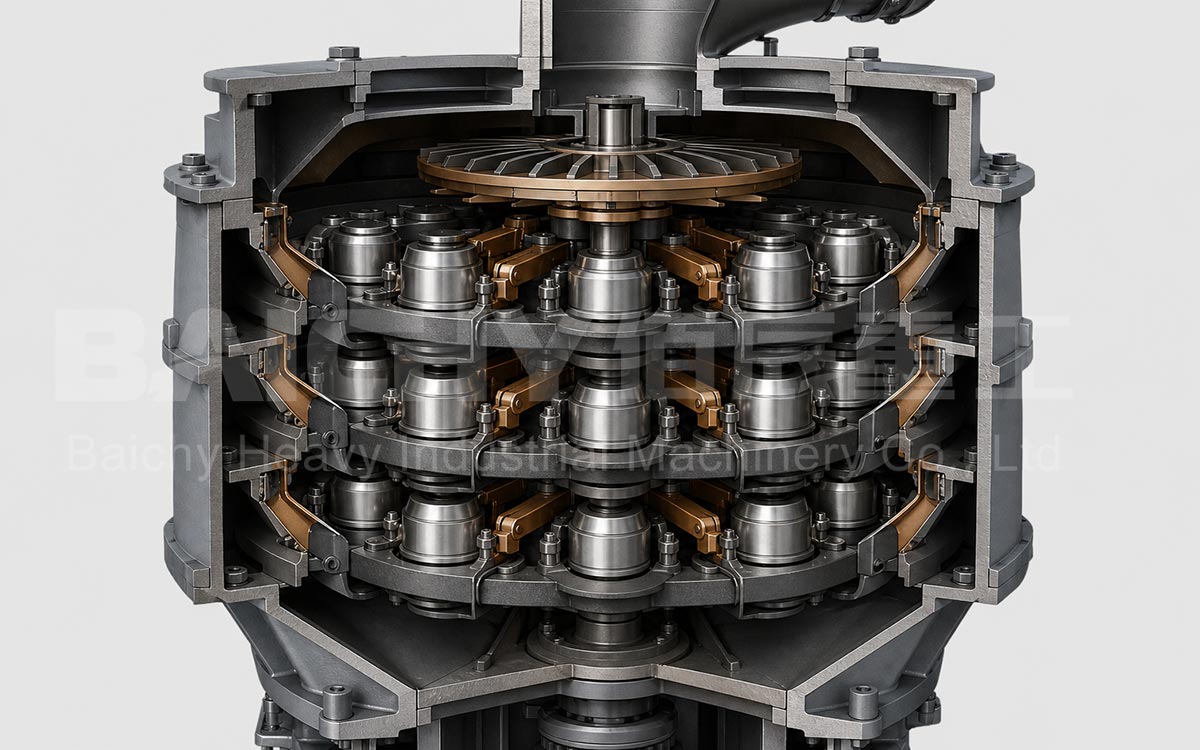
21-Roller Mill
III. HGM80 Three-Ring Grinding Mill: Key Specifications
Specifications are based on typical operating conditions for calcium carbonate (Mohs hardness 3); suitable for over 100 types of non-metallic minerals with Mohs hardness <6 (e.g., calcite, kaolin, bentonite, talc, barite, gypsum, dolomite, wollastonite).
Final specifications are subject to the signed technical agreement and material test report.
| Parameter Item | HGM80 Typical Specifications |
|---|---|
| Number of Grinding Rollers | 21 (3 grinding rings × 7 rollers per ring) |
| Feed Particle Size | ≤25 mm (recommended ≤20 mm) |
| Finished Product Fineness | Adjustable 150–3000 mesh (D97 5–47 μm); standard production range 325–2500 mesh |
| Typical Capacity | 1–5 t/h (based on calcium carbonate; output decreases as target mesh size increases) |
| Main Unit Power | 75–90 kW |
| Classification Method | Variable-frequency turbine classifier (online fineness adjustment) |
| Dust Collection System | Cyclone collector + pulse-jet bag filter; recovery rate ≥99% |
| Wear Part Lifespan | 8000–12000 hours (CaCO₃ application, Mn13Cr2 material) |
| Power Supply | 380V/50Hz, 400V/50Hz, or 440V/60Hz (customizable) |
IV. HGM80 Grinding Mill Production Line: Standard Configuration from Raw Ore to Finished Product Bags
A single grinding mill cannot be put into operation in isolation. The complete process chain for the HGM80 three-ring grinding mill production line is outlined below—this also serves as a checklist to verify if any items are missing from a price quote:
| Process Step | Equipment Unit | Function Description |
|---|---|---|
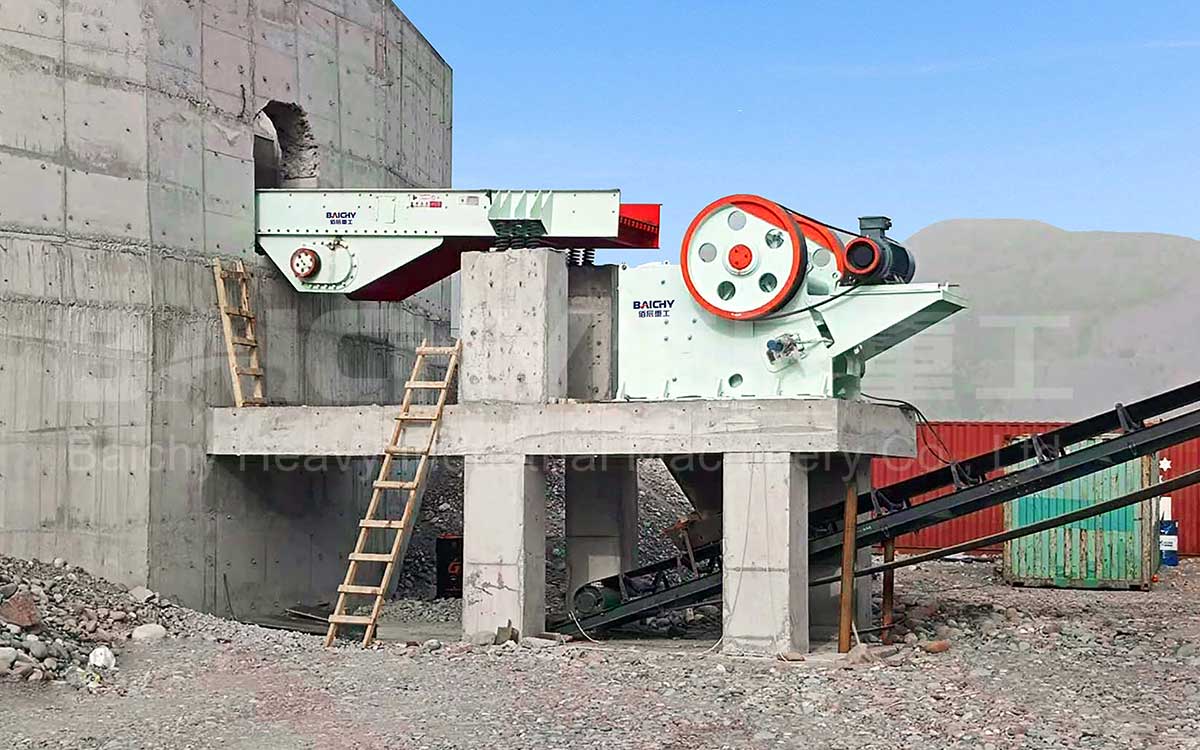
| ① Coarse Crushing | Jaw Crusher (PE250×400 class) | Crushes raw ore to ≤20–25mm |
| ② Elevating | Bucket Elevator | Vertically conveys crushed material to the storage hopper |
| ③ Storage & Feeding | Hopper + Electromagnetic Vibrating Feeder | Buffers material and ensures uniform, metered feeding |
| ④ Grinding | HGM80 Main Grinding Unit | 21-roller three-ring grinding system; the primary grinding unit |
| ⑤ Classification | Variable-Frequency Turbo Classifier | Controls finished product D97 size; returns coarse powder for re-grinding |
| ⑥ Powder Collection | Cyclone Collector | Collects qualified finished powder |
| ⑦ Dust Removal | Pulse-Jet Bag Filter | Purifies exhaust gas to meet emission standards |
| ⑧ Conveying & Packaging | Screw Conveyor / Pneumatic Conveying + Packaging Machine | Moves finished product to storage or directly into bags |
| ⑨ Electrical Control | PLC Central Control Cabinet | Manages system-wide coordinated start/stop and protection functions |
Procurement Pitfall #1: The dust collector and variable-frequency classifier are not optional extras. Low-ball quotes often "slim down" by cutting these two items—only during on-site commissioning do buyers discover that emissions fail to meet standards or fineness cannot be adjusted, resulting in rework costs that far exceed the initial savings.
Procurement Pitfall #2: Distinguish between nominal capacity and actual operational capacity. The HGM80’s rated capacity of 1–5 t/h is based on calcium carbonate; actual output fluctuates depending on material hardness, feed particle size, and target mesh size. Before signing a contract, be sure to lock in the "guaranteed capacity at the target mesh size" and require the manufacturer to provide free material grinding tests and D97 particle size analysis reports.
V. Selection Boundaries: HGM80 vs. Raymond Mill vs. Ball Mill
| Comparison Dimension | HGM80 Three-Ring Mill | Raymond Mill (YGM/5R Series) | Ball Mill (Dry Ultrafine) |
|---|---|---|---|
| Economical Fineness Range | 800–2500 mesh (can go down to 325 mesh) | 60–600 mesh | 325–1250 mesh (requires separate classifier for ultrafine) |
| Particle Size Distribution | Narrow D97; batch stability | Wide distribution; low compliance rate | Moderate distribution; requires multiple classification stages for ultrafine |
| Energy Consumption (Same Fineness) | Baseline (30–40% lower) | >1.5x that of HGM for >800 mesh | High; significant energy loss from media grinding |
| Footprint & Civil Works | Compact; single-level layout | Similar | Large; requires heavy-duty foundation |
| Noise Level | Low (rolling/crushing + air classification) | Moderate | High (steel ball impact) |
| Target User | Small/medium powder plants upgrading to ultrafine | Mass production of standard 80–600 mesh filler powders | Large-scale plants processing materials with a wide range of hardness |
Selection Summary: Choose the Raymond Mill for budget-sensitive mass production of standard powders below 600 mesh; choose the HGM80 Three-Ring Mill line for ultrafine powders above 800 mesh and the flexibility to cover two price tiers with one machine. For hard minerals (Mohs hardness ≥6 or SiO₂ >3%), switch to a ball mill + classifier or ultrafine vertical mill route to avoid excessive wear on grinding components.
VI. Capacity Conversion and Operating Costs: Crunch the Numbers Before Signing
6.1 Capacity decay relative to fineness is exponential
Using HGM80 processing calcium carbonate as a reference: capacity at 600 mesh is approximately 3–5 times that at 2500 mesh. If a quote lists capacity based on 325 mesh but the actual requirement is 1250 mesh, the effective capacity will drop immediately upon commissioning.
The correct sequence is: determine product fineness first, calculate required capacity based on that, and finally select the machine.
6.2 Three types of raw materials unsuitable for direct feeding into the mill
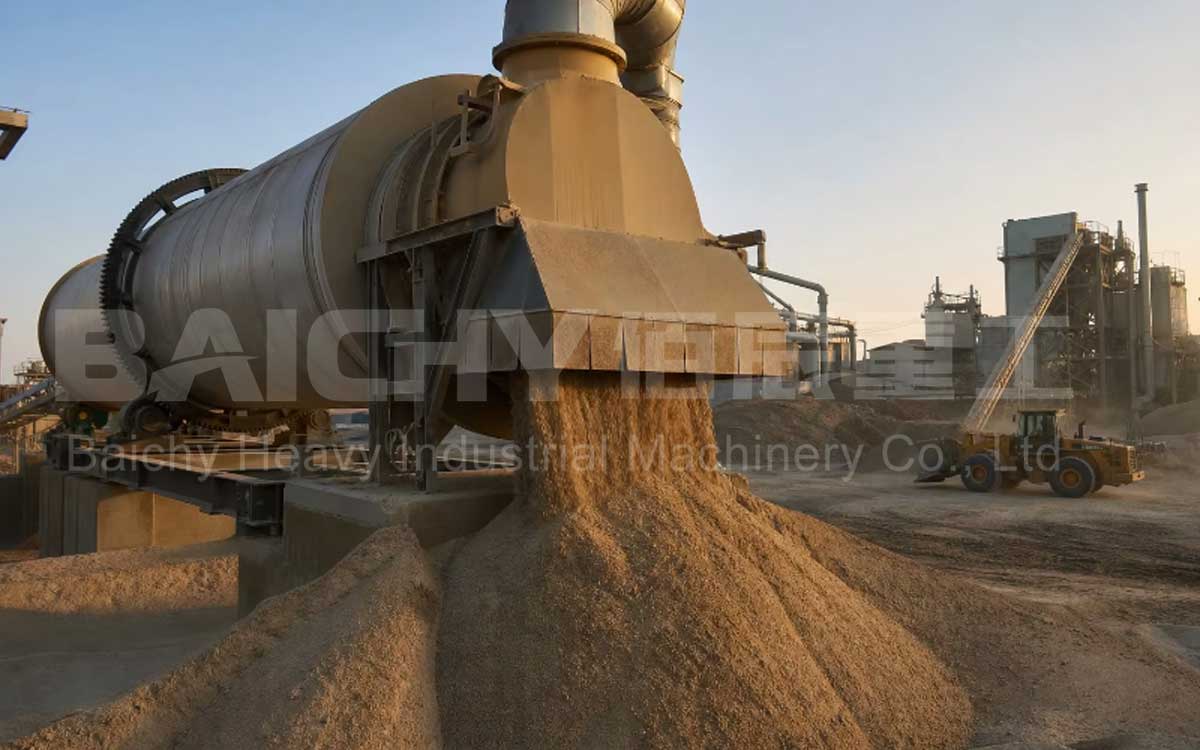
• Wet materials with a moisture content >5% require pre-drying (compatible with Baichy rotary or triple-pass dryers); otherwise, grinding rollers will become clogged, causing a drastic drop in yield.
• Hard minerals with Mohs hardness ≥6 or SiO₂ content >3% cause excessive wear on grinding rollers and rings, doubling the cost of wear parts per ton of product.
• Large lumps with a feed size >25mm can impact the grinding roller assembly; therefore, a proper primary crushing stage is essential.
6.3 Electricity and wear-part cost analysis
Based on continuous production at 3 t/h and 6,000 operating hours per year, the three-ring mill system saves approximately 150,000–180,000 kWh of electricity annually compared to the Raymond mill process; at a rate of 0.6 RMB/kWh, this results in annual savings of 90,000–110,000 RMB. Mn13Cr2 grinding rollers and rings have a service life of 8,000–12,000 hours when processing calcium carbonate; with a 20-hour daily operation schedule, replacement is required every 1.5–2 years. Spare part costs are over 40% lower than those of imported machines with equivalent capacity, and domestic stock is readily available—allowing maintenance expenses to be included in the annual budget and avoiding the reactive scenario of "sudden shutdowns and emergency procurement."
VII. FAQ: Top 3 questions from customers
Q1: How should I choose between the HGM80 three-ring mill and the Raymond mill?
A1: Use 800 mesh as the piding line. For standard filler powders below 600 mesh, the Raymond mill (YGM series) offers a lower cost per ton. For the ultrafine range above 800 mesh—specifically 1,250–2,500 mesh—the HGM80 three-ring mill is the mature, mainstream solution; it produces the target powder in a single step with stable D97 particle size distribution and consumes 30–40% less energy for the same fineness. If a factory supplies both standard 325-mesh powder and ultrafine powder, a single HGM80 unit equipped with a variable-frequency classifier can cover the entire range, eliminating the need to maintain two separate systems.
Q2: What are the production capacities of the HGM80 mill when grinding to 325 mesh and 2500 mesh?
A2: Based on calcium carbonate: 325–600 mesh is approximately 3–5 t/h; 1250 mesh is approximately 1.5–2.5 t/h; and 2500 mesh (D97 ≈ 5μm) is approximately 0.6–1.2 t/h. Essentially, for every step up in fineness, capacity drops to between one-half and one-third of the previous level. Specific output depends on raw material hardness and feed particle size. Baichy offers free pre-contract grinding tests, providing D97 particle size reports and guaranteed capacity figures for the target mesh size, thereby preventing the deceptive practice of using 325-mesh performance data to market 2500-mesh capabilities.
Q3: What are the approximate investment costs and site requirements for an HGM80 grinding production line?
A3: A complete production line comprises nine stages: coarse crushing, elevating, feeding, the main mill unit, classifying, powder collection, dust removal, and electrical control. The main mill unit has a compact footprint and can be installed in a single-story layout. Regarding the total investment, the main mill accounts for about 60%, while auxiliary systems account for 40%—cutting corners on auxiliary equipment often leads to doubled costs during the commissioning phase. Power supply options include customized 380V/50Hz, 400V/50Hz, and 440V/60Hz configurations; for 60Hz markets (such as Latin America and the Middle East), the entire system is configured to match local voltage and frequency, eliminating the need for on-site modifications. We recommend providing raw material samples and target fineness specifications so Baichy can generate a layout plan, an installed capacity list, and a capacity guarantee proposal before you make a decision.
Baichy Heavy Industry
Baichy Heavy Industry is a high-tech mining equipment company integrating R&D, manufacturing, sales, and after-sales service. Focusing on crushing, grinding, and mineral processing equipment, we provide professional solutions to our customers. We are ISO9001:2015 、certified, and our products include mobile crushing palnts, crawler crushing plant, construction waste crushing plants, jaw crushers, sand making machines, cone crushers, fine crushers, grinding mills, ball mills, etc., all with reliable performance to meet diverse project needs.
Baichy Heavy Industry – Your Trusted Partner
To ensure optimal performance of your equipment, Baichy Heavy Industry offers:
- Professional on-site installation guidance
- Comprehensive operator training
- 24/7 technical support & maintenance services
Our complete after-sales service system guarantees long-term, stable operation of your machinery with minimal downtime.
Protect Your Rights – Only Use Official Channels
To avoid scams and ensure authentic support, contact us exclusively through:
• Official Website: www.baichychina.com
• WhatsApp: +8615093222637
• Email: [email protected]
Your satisfaction is our priority – expect prompt, professional service every time.
(Note: Beware of unauthorized third parties claiming to represent Baichy. Always verify through official contacts.)