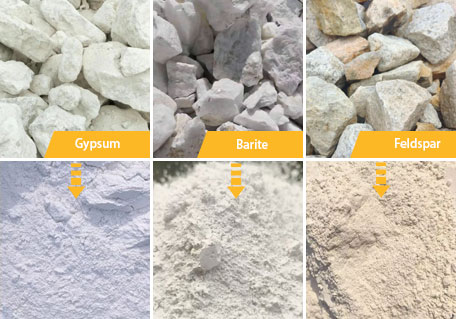
dolomite (CaMg(CO₃)₂
When selecting equipment for grinding dolomite (CaMg(CO₃)₂), the first question should be "Who is the buyer?" followed by "Which machine should I buy?" Agricultural-grade coarse powder (80–200 mesh) destined for the soil amendment market and ultra-fine filler powder (1250 mesh) sold to plastic masterbatch and rubber manufacturers follow completely different pricing trajectories: the former relies on high volume, while the latter relies on premium pricing.
Baichy Heavy Industry covers the entire spectrum with two types of equipment: the YGM High-Pressure Suspension Mill (80–425 mesh; 0.5–16 t/h per unit) targets the agricultural and conventional industrial filler markets, while the HGM Ultra-fine Mill (150–3000 mesh; 0.5–45 t/h across the series) tackles the high-end segment (1250 mesh and above). With the right machine, dolomite powder becomes a goldmine for "dual calcium and magnesium supplementation": agricultural clients pay for magnesium content, while industrial clients pay for consistent fineness.
I. Critical Pain Points: Four Common Mistakes Made by Dolomite Processing Plants
1.1 Selecting equipment for dolomite as if it were calcite.
Dolomite has a Mohs hardness of 3.5–4, which is higher than calcite’s rating of 3. Basing a dolomite project on the capacity charts of standard calcium carbonate mills often leads to disappointing results upon startup, such as reduced output and excessive wear on grinding components. Dolomite processing capacity must be calculated separately; for the same equipment model and fineness, dolomite output is typically around 90% of that for calcite (an estimate subject to material grinding tests), and the lifespan of grinding parts is correspondingly shorter.
1.2 Using equipment designed for 325-mesh filler to produce agricultural soil amendment powder.
Agricultural-grade dolomite powder (80–200 mesh) has a low unit price and requires high sales volume, with profits driven by tonnage and logistics efficiency; using a fine-grinding process intended for high-quality fillers to produce coarse powder wastes electricity and accelerates wear on parts for a low-value-added product. Conversely, attempting to grind dolomite to a fineness of 1250 mesh using equipment designed for coarser powders results in a precipitous drop in production capacity and a failure to meet classification standards, leading to direct rejection of the product by downstream customers.
1.3 Comparing only the price of the main unit while overlooking necessary system components.
A fully operational dolomite grinding line requires far more than just the main unit; essential components include a jaw crusher for primary crushing, a bucket elevator, a feeder, a variable-frequency classifier, a cyclone collector, a pulse-jet bag filter, and a blower. Low-priced quotations often "omit" the dust collector and variable-frequency classifier; issues such as failure to meet emission standards or inability to achieve the required fineness are only discovered during delivery and commissioning—a common pitfall in international procurement.
1.4 Ignoring wear-related costs specific to dolomite processing conditions.
Dolomite is harder than limestone, leading to naturally faster wear on grinding rollers and rings. Low-quality castings may fail within just one month under these conditions, whereas grinding parts made of high-manganese steel (Mn13Cr2) can operate for 1,500–2,000 hours (estimated). An accurate cost assessment requires comparing the "wear cost per ton of powder produced" rather than the "unit price of the parts."
II. Key Specifications: Comparison Table for Dolomite Powder Grinding Solutions
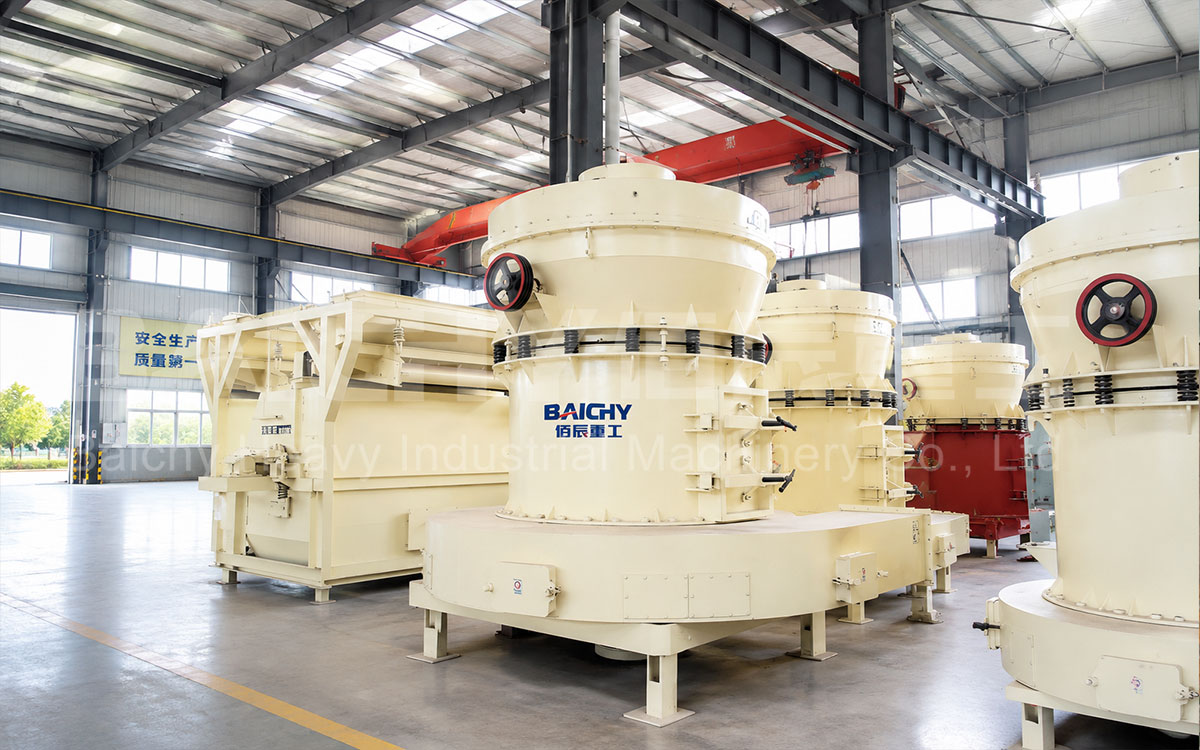
Option A: YGM High-Pressure Suspension Grinding Mill (Agricultural grade + standard industrial fillers, 80–425 mesh)
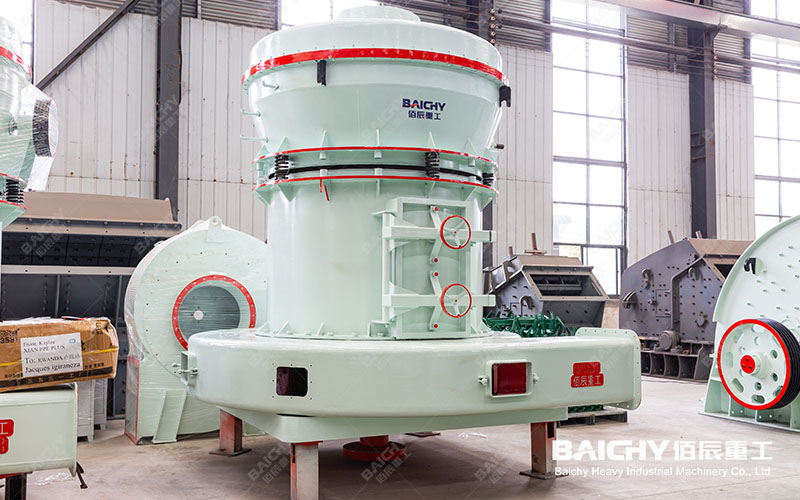
dolomite grinding mill
| Model | No. of Grinding Rollers | Max. Feed Size | Finished Product Fineness | Typical Capacity (t/h)* | Main Motor Power |
| YGM83 (Small) | 3 rollers | ≤ 20 mm | 80–425 mesh | 0.5 – 2.5 | 37 kW |
| YGM95 (Medium) | 4 rollers | ≤ 25 mm | 80–425 mesh | 1.5 – 5 | 75 kW |
| YGM130 (Large) | 5 rollers | ≤ 30 mm | 80–425 mesh | 4 – 10 | 110 kW |
| YGM160 (Flagship) | 6 rollers | ≤ 35 mm | 80–425 mesh | 8 – 16 | 132 kW |
Option B: HGM Ultrafine Grinding Mill (High-end fillers, 150–3000 mesh / D97 5–47μm)
| Model | No. of Grinding Rollers | Main Unit Power | Typical Capacity (t/h)* | Finished Product Fineness (D97) |
| HGM80 | 21 (3 grinding rings, Ø0.8m) | 75–90 kW | 1 – 5 | 150–3000 mesh (5–47μm) |
| HGM90 | 27 | 90–110 kW | 0.6 – 6.5 | Same as above |
| HGM100 / 100A | 30 | 110–132 kW | 0.8 – 8 | Same as above |
| HGM125 | 36 | 185–220 kW | 1.5 – 14 | Same as above |
| HGM1680 | 42 | 315–400 kW | 2–30 (45 for the full series) | Same as above |
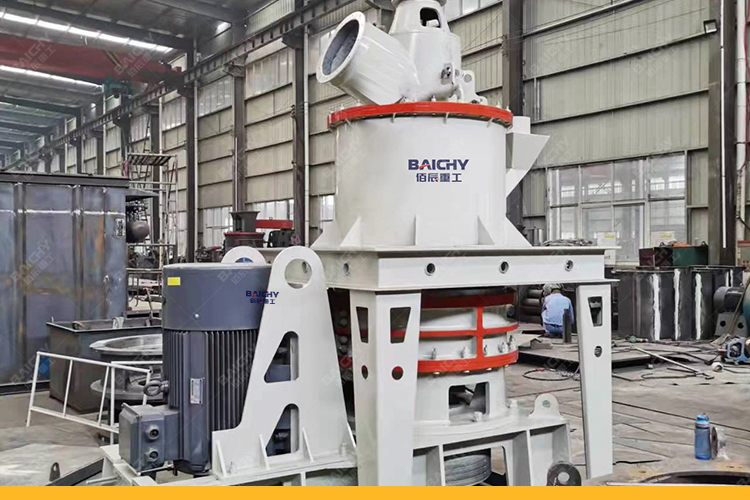
HGM-Micro-powder-Grinding-Mill
*Note: The capacities listed above are baseline figures based on calcium carbonate processing. For dolomite (Mohs hardness 3.5–4), capacity is typically around 90% of the baseline (estimated) and varies based on feed size and target mesh size; for instance, at the same fineness level, capacity for 200-mesh powder is approximately 1.5 times that of 325-mesh, while capacity for 600-mesh is roughly 3–5 times that of 2500-mesh (estimates). We provide free material grinding tests, particle size analysis reports, and guaranteed capacity figures prior to contract signing. The final specifications are subject to the signed technical agreement.
III. Model Selection Recommendations
Recommended for:
• Dolomite mine owners looking to extend their value chain from raw ore sales to dolomite powder production—select the model based on the target market: choose YGM95/130 for the agricultural soil amendment market, or YGM130/160 / HGM100/125 for the industrial filler market;
• Powder processing plants requiring a perse product range, including agricultural-grade (80–200 mesh) and industrial-grade (325–1250 mesh) powders—a single YGM unit equipped with a variable-frequency classifier can cover both market segments;
• Formalized processing plants that have passed environmental pre-assessment and require a negative-pressure, closed-circuit system to ensure emissions compliance. Not recommended for:
• Facilities targeting fineness levels below 800 mesh and primarily producing standard fillers or agricultural powders—the YGM Raymond mill offers lower per-ton costs in this range, whereas the HGM excels in the ultrafine segment; there is no need to pay for a level of fineness you do not require.
• Dolomite ores with high silica content (SiO₂ > 3%)—such materials require a preliminary beneficiation step to remove silica or a switch to a ball mill plus classifier setup to prevent excessive wear on grinding components.
• Wet materials with moisture content >5% fed directly into the mill—pre-drying is essential (Baichy rotary or triple-pass dryers can be supplied); otherwise, grinding rollers will become clogged, and yield will plummet.
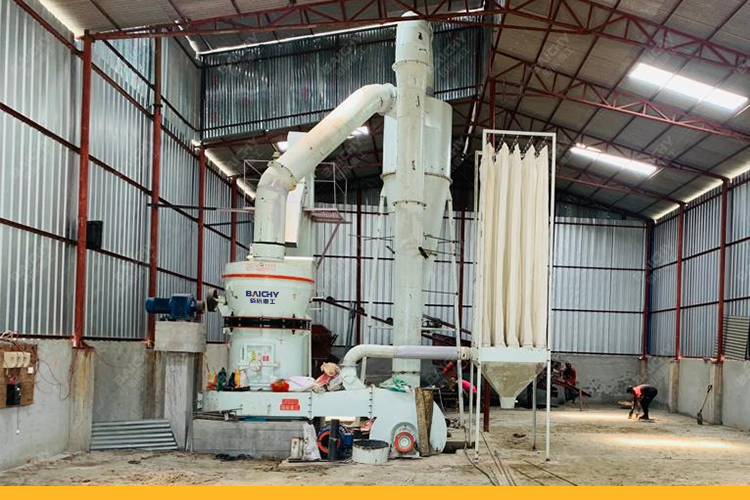
Dolomite Grinding Production Line – Customer Site
IV. FAQ
Q1: How does grinding dolomite differ from grinding limestone or calcite?
A1: Dolomite (CaMg(CO₃)₂) has a Mohs hardness of 3.5–4, which is higher than calcite (hardness 3), and it contains magnesium oxide. The differences manifest in three ways: for the same equipment model, dolomite processing capacity is typically about 90% of that for calcium carbonate (estimated value); the service life of grinding rollers and rings is correspondingly shorter; and product positioning differs—in the agricultural market, dolomite powder is marketed for its dual calcium and magnesium supplementation benefits, while in the industrial market, it is valued for heat resistance and chemical stability, making it suitable for refractories, glass/ceramics, and filler applications.
Q2: Can the same equipment produce both agricultural-grade dolomite powder (80–200 mesh) and industrial-grade filler powder (325–1250 mesh)?
A2: Yes. The YGM series comes standard with a variable-frequency classifier; fineness can be continuously adjusted within the 80–425 mesh range by altering the impeller speed. Settings can be switched via the control panel in 10 seconds without stopping the machine or changing parts—allowing for the production of agricultural-grade coarse powder in the morning and industrial-grade fine powder in the afternoon, with a single production line covering both market segments. If you require ultrafine powder exceeding 1250 mesh, we recommend selecting the HGM ultrafine mill directly or adding a dedicated ultrafine processing unit to avoid the production losses associated with frequent equipment reconfiguration.
Q3: Does dolomite require pre-crushing before milling? Are there specific moisture content requirements?
A3: Yes, it does. The standard process flow is: Jaw crusher (coarse crushing to ≤20–35 mm, depending on the specific model's feed requirements) → Bucket elevator → Electromagnetic feeder → Main milling unit → Variable-frequency classifier → Cyclone collector → Pulse dust collector. Dolomite with surface moisture below 5% can be fed directly into the mill (the hot air circulation within the grinding chamber provides inherent drying capabilities); materials with higher moisture content require pre-drying.
Q4: How often do the grinding rollers and rings need to be replaced when processing dolomite?
A4: When processing pure dolomite (Mohs hardness 3.5–4) with low SiO₂ content, the service life of Mn13Cr2 high-manganese steel grinding rollers and rings is approximately 1,500–2,000 hours (an estimate lower than the 1,800–2,400 hours seen with calcite). Based on 10 hours of daily operation, replacement is required roughly every 5–7 months. We recommend calculating costs based on "wear cost per ton of powder produced"—typically US$0.40–1.00 per ton—which is far lower than the cost of downtime. Spare parts are available from domestic stock, ensuring shorter lead times compared to imported models.
Q5: Can the system operate stably on a 60Hz / 440V power grid?
A6: Yes. The entire system (main motor, blower, classifier, and feeder) is customized to local voltage and frequency specifications. We do not use compromise solutions—such as pairing 50Hz motors with variable frequency drives—which can lead to airflow imbalances, reduced production capacity, and motor overheating. We have successfully delivered projects using this series of mills in Mexico, Chile, Colombia, Indonesia, and Vietnam, and can arrange remote factory inspections or on-site visits.
Q6: What is the approximate production capacity for dolomite powder? How do we ensure the accuracy of our capacity ratings?
A6: Take the YGM130 as an example: its operational capacity is approximately 4–8 t/h for 200-mesh agricultural-grade dolomite powder and about 3–6 t/h for 325-mesh industrial-grade powder (estimated figures). Since actual output fluctuates based on fineness, feed particle size, and raw material hardness, we conduct free grinding tests on your materials prior to contract signing. We then provide a particle size analysis report and a guaranteed capacity figure—thereby eliminating the practice of inflating specifications by using the output rate of a coarse grade (e.g., 200-mesh) to represent that of a fine grade (e.g., 1250-mesh).