
Small Portable Jaw Crusher
In numerous fields such as mining, building demolition, and road construction the efficient and convenient primary crushing of stone materials has long been a core challenge. While stationary crushing lines offer high throughput, they lack flexibility and are ill-suited for dispersed and ever-changing work sites. In this context, small-scale portable jaw crushers stand out due to their exceptional mobility and powerful crushing capabilities, emerging as a pivotal component in mobile crushing solutions. Integrating feeding, crushing, and conveying functions into a single unit, these machines can be deployed directly to material sources or construction sites, enabling on-site material processing. This approach significantly reduces material transport costs and boosts overall operational efficiency.
I. In-Depth Product Analysis
1.1 Equipment Overview
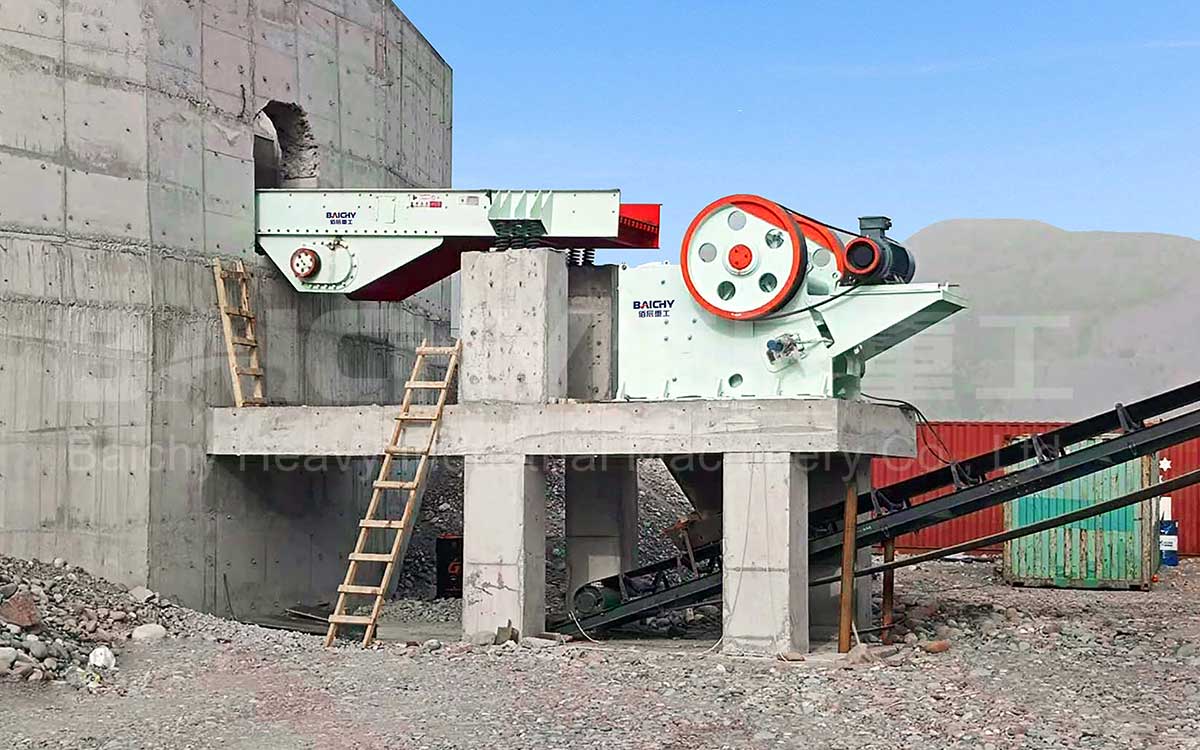
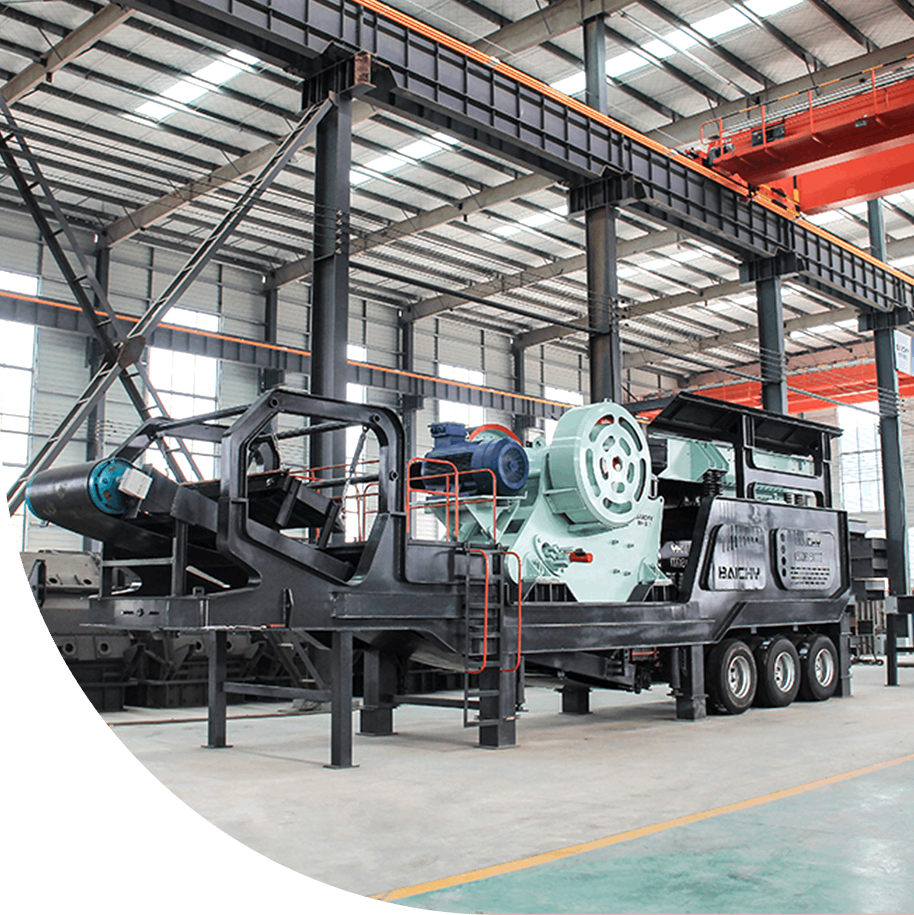
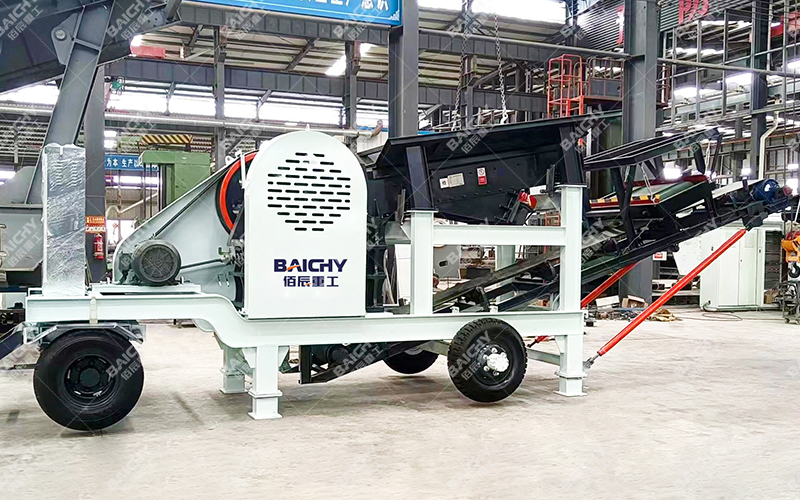
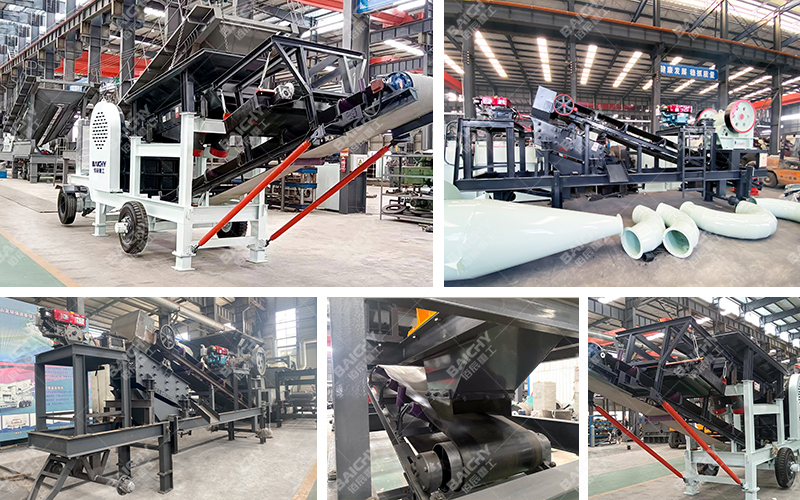
Essentially, the small-scale portable jaw crusher integrates the core jaw crusher unit, feeder, vibrating screen, and conveying system onto a single mobile chassis. Its core crushing mechanism the crushing chamber formed by a movable jaw and a fixed jaw crushes materials through the periodic compressive motion of the movable jaw. Compared to traditional stationary jaw crushers, the portable nature of this equipment is primarily manifested in the following two common configurations:
• Wheel-Mounted (Tire-Type): Towed by a truck tractor, this configuration features a small turning radius and is street-legal for travel on public roads. It offers highly convenient site-to-site relocation and is ideal for projects involving flat terrain or those requiring frequent site changes.
• Track-Mounted (Crawler-Type): Utilizing a fully hydraulic crawler drive system, this configuration boasts superior off-road capabilities, enabling it to navigate rugged, slippery, and complex terrains. It even supports remote-controlled movement for precise positioning, though its initial purchase price and maintenance costs are relatively higher.
Small Portable Jaw Crusher
1.2 Core Advantages and Features
The distinct advantages of small-scale portable jaw crushers make them indispensable for small-to-medium-scale crushing operations:
• Exceptional Mobility Ready for Immediate Use: The equipment features a self-propulsion system, eliminating the need for cumbersome foundation piling or complex installation procedures. It can be put into production almost immediately upon arrival at the site, making it particularly well-suited for equipment rental businesses and short-term engineering projects.
• Integrated Unit Space and Cost Savings: By compactly integrating the components of an entire production line into a single unit, the system minimizes the footprint required for inter-equipment connections and reduces installation costs. Furthermore, the entire crushing process can be controlled by a single operator.
• Direct Deployment to the Site Crushing at the Source: Capable of operating directly at mining faces or adjacent to construction waste piles, this equipment eliminates the substantial transportation costs and energy consumption associated with hauling large volumes of raw material over long distances to a fixed crushing plant.
• Flexible Application Versatile Functionality: By swapping out jaw plates of different specifications and adjusting the discharge opening gap, the machine can process a wide variety of materials including rocks of varying hardness and construction concrete to produce finished aggregates of different grain sizes.
• Eco-friendly and Energy-Efficient Reduced Dust and Noise: Modern models are typically equipped with water-spraying dust suppression systems and noise control modules. Furthermore, by operating directly at the source, the need for frequent truck transport is minimized, thereby achieving an overall reduction in dust and noise pollution.
II. Typical Application Scenarios and Case Studies
The inherent flexibility of this equipment allows it to excel across a Perse range of industries.
2.1 Recycling and Processing of Construction Waste
In urban redevelopment and demolition projects, the equipment can be deployed directly to the demolition site to crush construction waste such as discarded concrete blocks, bricks, tiles, and asphalt chunks into recycled aggregates. These aggregates can then be utilized for roadbed construction or the manufacture of recycled bricks, effectively transforming waste into wealth and establishing an eco-friendly closed-loop cycle.
Case Study: A municipal construction firm undertook an old-town redevelopment project. They deployed a compact crawler-mounted jaw crusher to the site, where it directly crushed the reinforced concrete debris generated by demolition down to a size of less than 40mm. The resulting recycled aggregates were immediately used as a base layer for the roads within the new residential complex, resulting in savings of over 30% on raw material procurement and waste disposal costs.
2.2 Small-Scale Mines and Quarries
For mining sites involving granite, limestone, or river pebbles particularly those with dispersed reserves or limited scale investing in a fixed production line is often economically unviable. A portable jaw crusher, however, can advance alongside the mining face to perform the primary crushing of ore, thereby feeding the downstream secondary and tertiary crushing equipment.
2.3 Infrastructure Construction
In the extension phases of highway and railway construction projects, substantial quantities of roadbed fill material are required. Portable jaw crushers enable on-site material sourcing by crushing local rock formations or river pebbles into aggregates meeting the required specifications; these materials can then be directly utilized for roadbed filling, significantly accelerating the overall construction schedule.
III. Comparison of Key Technical Parameters
Different models of small, portable jaw crushers are suited to varying production capacity requirements. The following table presents a comparison of the parameters for common models:
| Model | Jaw Crusher Feed Opening Size (mm) | Max. Feed Size (mm) | Processing Capacity (tons/hour) | Discharge Opening Adjustment Range (mm) | Power Configuration (Diesel/Electric) |
| PE-250x400 | Mobile Type 250x400 | 210 | 5-20 | 20-80 | Diesel Engine / Optional Electric Motor |
| PE-400x600 | Mobile Type 400x600 | 340 | 15-60 | 40-100 | Diesel Engine / Optional Electric Motor |
| PE-500x750 | Mobile Type 500x750 | 425 | 40-110 | 50-100 | Primarily Diesel Engine |
Note: The parameters listed above are reference values based on standard configurations; actual output may vary depending on factors such as material hardness, moisture content, and feeding method.
IV. Recommended Related Equipment
A complete mobile crushing solution often requires the coordinated operation of multiple machines. In addition to the portable jaw crusher which serves as the pioneer for coarse crushing we recommend the following complementary equipment to establish an efficient processing line:
• Mobile Cone Crusher: If you need to process high-hardness rocks (such as granite or basalt) and are seeking finer finished aggregates with superior particle shape, the mobile cone crusher is the ideal choice for medium-to-fine crushing. Its principle of laminated crushing produces a higher proportion of cubical particles.
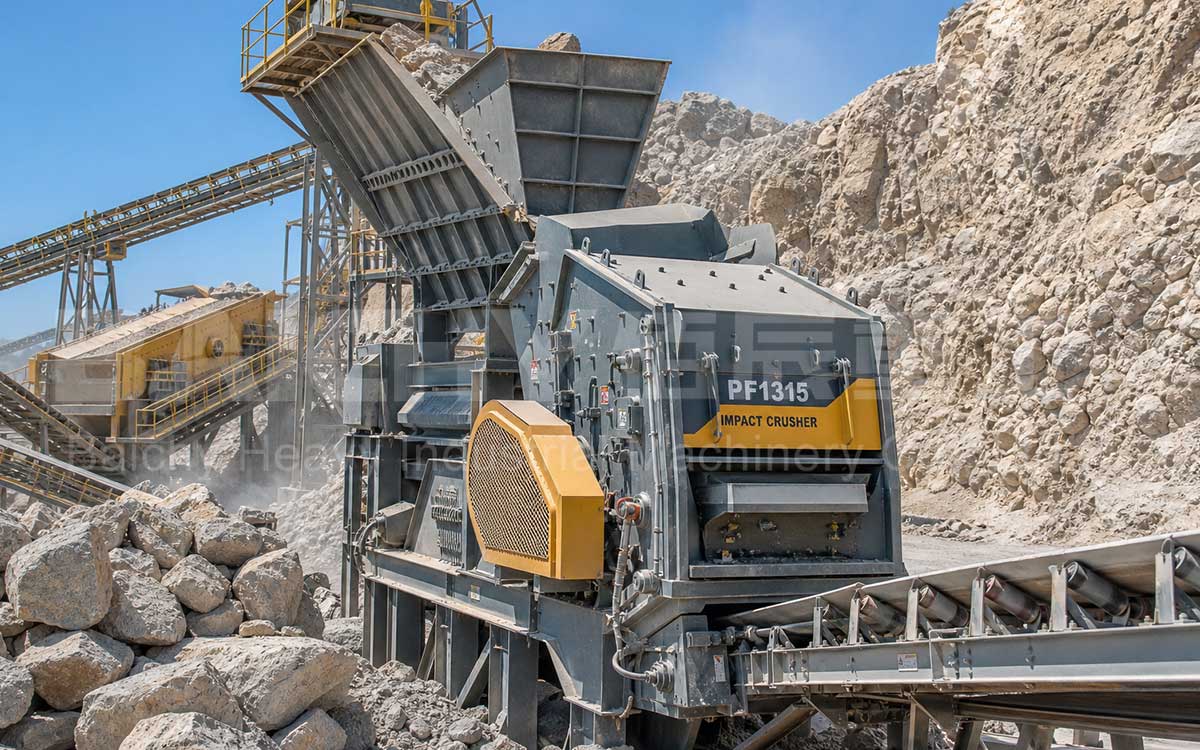
• Mobile Impact Crusher: Suitable for the medium-to-fine crushing of materials with medium-to-low hardness (such as limestone or construction waste). Its impact crushing mechanism results in finished aggregates with excellent particle shape, making it highly suitable for the production of high-standard concrete aggregates.
• Mobile Screening Station: Operating either independently or in conjunction with a crusher, this unit grades and screens the crushed mixture, precisely separating it into finished products of various specifications. It is a key piece of equipment for enhancing product added value and market adaptability.
V. Frequently Asked Questions (FAQ)
Q1: Can small, portable jaw crushers run on mains electricity?
A1: Yes. Although the standard configuration typically features a diesel engine drive ensuring complete operational autonomy in areas without access to mains power the vast majority of models offer an optional external electric motor drive system. When a stable mains power supply is available at the job site, utilizing an electric motor can significantly reduce long-term operating costs while offering a more eco-friendly and quieter operation.
Q2: Can it really process rebar found in construction waste?
A2: Yes. Professional-grade small, portable jaw crushers are designed with this specific application in mind. Their crushing chamber structure and jaw plate materials are engineered to withstand the shearing and compressive forces exerted by rebar. During the crushing process, the concrete and rebar are separated; the crushed rebar remains mixed within the material stream. Typically, a suspended iron remover (magnetic separator) is installed on the downstream conveyor belt to extract the rebar, thereby achieving the complete separation and recovery of the steel from the concrete aggregate.
Q3: Is equipment maintenance and upkeep complicated? How does it compare to stationary units?
A3: Maintenance for the core crushing unit is fundamentally the same as that for a stationary jaw crusher, primarily involving regular lubrication and periodic inspections of wear parts, such as the jaw plates. The integrated design of the portable unit centralizes most maintenance points; however, additional attention must be paid to the maintenance of the mobility system (e.g., tires, tracks, axles). Thanks to its modular design, the inspection and replacement of key components are often more convenient than with stationary crushers. We provide detailed operation and maintenance manuals, along with training, to ensure that our customers can easily master the necessary procedures.