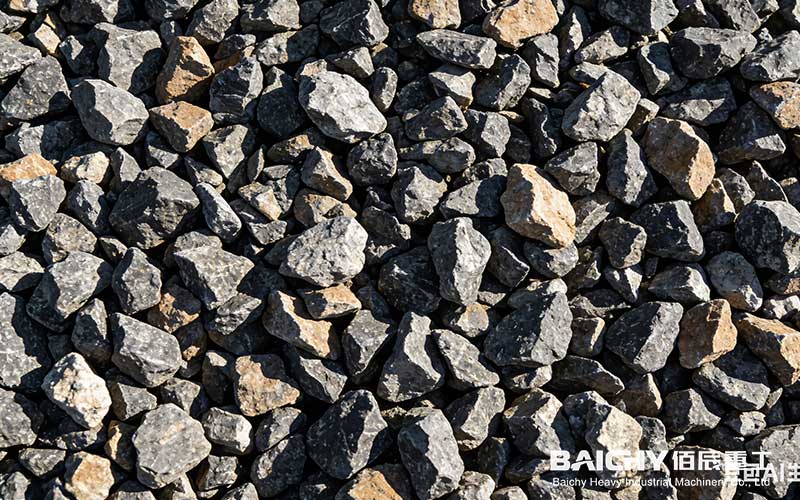
Limestone Crushing
In sand and aggregate production lines, limestone stands out as one of the primary raw materials due to its widespread distribution and ease of crushing. However, achieving a high output of 250–300 tons per hour—while precisely processing large raw blocks of up to 400 mm down to a finished product size of 19 mm—poses a formidable challenge for core crushing equipment. The specialized cone crusher for limestone is the ideal solution, specifically engineered to meet such high-standard, high-efficiency production demands. This article delves into the performance characteristics, advantages, and applications of this equipment, helping you select the right machinery to enhance the efficiency of your limestone processing operations.
I. Equipment Overview: Meeting High-Output and Precise Discharge Requirements
This cone crusher is a robust piece of machinery specifically designed for the secondary and tertiary crushing of medium-hard to hard ores (such as limestone, granite, and basalt). Its core design principle centers on the use of "inter-particle crushing" (or lamination crushing); this mechanism ensures excellent product shape and uniform particle size while simultaneously achieving high throughput.
1.1 Analysis of Core Design Parameters
• Processing Capacity: 250–300 tons/hour. This output range makes the equipment highly suitable for medium-to-large-scale sand and aggregate production lines or construction material processing projects, capable of meeting continuous and stable supply demands.
• Maximum Feed Size: 400 mm. This capability allows the equipment to directly accept material that has undergone preliminary crushing by a jaw crusher, thereby reducing intermediate transfer stages and simplifying the overall process flow.
• Discharge Size: 19 mm (Adjustable). 19 mm is a standard specification for high-quality aggregates used in various applications, including general construction, concrete production, and roadbed layering. The equipment features a hydraulic discharge opening adjustment system, allowing for flexible control over the final product size to meet the Perse requirements of different clients.
II. Core Advantages: Why Choose This Cone Crusher?
Compared to traditional crushing equipment, this cone crusher—optimized specifically for limestone processing—offers significant advantages in terms of efficiency, finished product quality, and operational reliability.
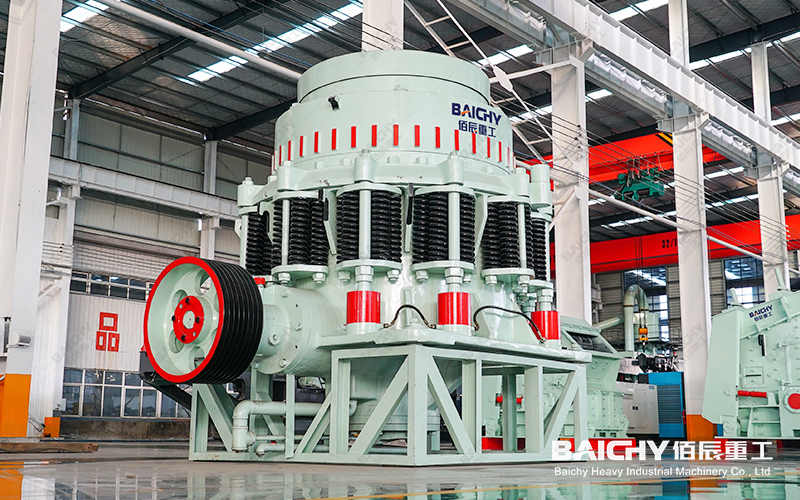
Hydraulic Cone Crusher
2.1 Dual Enhancement: Efficiency and Energy Savings
The equipment employs an optimized combination of high gyratory frequency and large stroke amplitude. This design results in a high crushing ratio, allowing the machine to process a greater volume of material per unit of time, thereby directly boosting single-unit output while simultaneously reducing energy consumption per ton of processed material. Equipped with an advanced hydraulic system and an iron-passing protection device, the machine automatically releases pressure and rapidly resets when encountering unbreakable foreign objects. This significantly reduces downtime and ensures the continuous, efficient operation of the production line.
2.2 Excellent Product Particle Shape
The principle of laminated crushing subjects the material to multiple cycles of compression and impact within the crushing chamber. This process results in a low content of needle-like and flaky particles; instead, the product consists predominantly of cubic particles with a full, well-formed shape. Such high-quality aggregate significantly enhances the strength and stability of concrete, thereby commanding a higher market value.
2.3 Stable Operation and Convenient Maintenance
The main structure is robust, and critical components—such as the movable cone and fixed cone liners—are manufactured from high-strength, wear-resistant materials, ensuring a long service life. The hydraulic chamber-clearing system allows for one-touch operation to quickly clear the crushing chamber, making routine maintenance and inspections more convenient and efficient while lowering long-term operating costs.
III. Typical Configurations and Case Studies
The following is an example of a typical limestone crushing production line configuration centered around this specific model of cone crusher, provided for your reference.
| Process Stage | Equipment Name | Model Example | Primary Function |
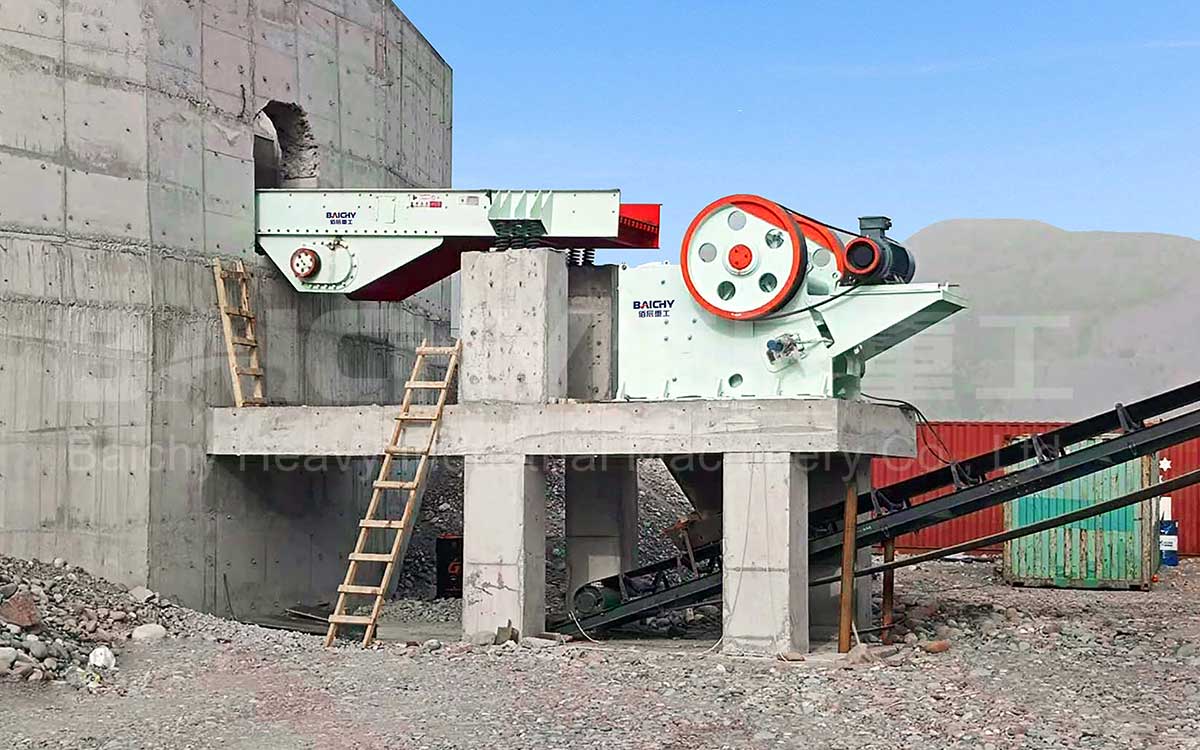
| Feeding | Vibrating Feeder | GZD-1500×6000 | Feeds material to the jaw crusher uniformly and continuously, while screening out impurities such as soil. |
| Coarse Crushing | Jaw Crusher | PE-900×1200 | Performs primary crushing of raw ore (≤750mm) down to a particle size of ≤400mm. |
| Medium & Fine Crushing | Cone Crusher | (The Subject of This Article) | Crushes material of ≤400mm down to a particle size of ≤19mm. |
| Screening | Vibrating Screen | 3YK3070 | Classifies the output from the cone crusher; qualified particle sizes (e.g., 0–5mm, 5–19mm) are screened out, while oversized material is returned to the cone crusher or directed to the next stage of crushing. |
| Conveying | Belt Conveyor | Multiple Units | Connects the various pieces of equipment to facilitate material transport. |
Case Brief: A major building materials group in East China adopted this specific model of cone crusher as the core component for secondary crushing in its limestone aggregate production line, which boasts an annual output of 5 million tons. Once the production line achieved stable operation, actual output consistently exceeded 280 tons per hour. The discharge size was controlled within the 18–20 mm range, and the product exhibited excellent particle shape, with a needle-and-flaky content of less than 8%. These results fully met the high-quality aggregate requirements for key local infrastructure projects, delivering significant economic benefits to the client.
IV. Recommended Ancillary Equipment
To maximize the efficiency of this cone crusher, we recommend pairing it with the following upstream equipment to create a seamless production line:
1. Jaw Crusher (Primary Crushing): We recommend a model with a feed opening of ≥1000 × 1200 mm to ensure a stable supply of raw materials sized ≤400 mm.
2. Heavy-Duty Vibrating Feeder: Ensures a uniform and controlled feed to the jaw crusher, preventing the equipment from running empty or becoming overloaded.
3. Circular Vibrating Screen (Multi-layer): Used for the precise classification of the cone crusher's output, separating it into various finished product specifications and facilitating a closed-circuit loop to enhance overall efficiency.
V. Frequently Asked Questions (FAQ)
Q1: Can this cone crusher be used to crush granite or basalt?
A1: Absolutely. This model is specifically designed for medium-hard ores and above; its robust structure and wear-resistant materials make it equally suitable for crushing hard materials such as granite, basalt, river pebbles, and similar rocks. However, depending on the abrasiveness of the specific rock type, the wear-resistance grade of the liners may need to be adjusted accordingly to ensure optimal service life.
Q2: Can the discharge size be adjusted to be finer—for instance, 10 mm or less?
A2: Yes, it can be adjusted. However, please note that when the discharge opening is set to a smaller size (e.g., 10 mm), the equipment's hourly throughput may decrease correspondingly. If large-scale production of fine aggregates (under 10 mm) is required, we recommend a multi-stage configuration involving a "Cone Crusher + Shaping Sand Maker" setup, which offers superior efficiency and economic viability.
Q3: What is the level of automation for this equipment? Does it require a dedicated operator on duty?
A3: The equipment is equipped with advanced hydraulic adjustment systems, cavity-clearing mechanisms, and overload protection, offering a high degree of automation. Through a central control room, operating parameters—such as spindle temperature, oil pressure, and current—can be monitored remotely, and the discharge opening can be adjusted with a single click. Typically, the entire production line requires only a small team of roving inspectors, eliminating the need for dedicated personnel to stand guard at each inPidual machine.
VI. Conclusion
Selecting a cone crusher with performance capabilities that precisely match your requirements is a decisive step in establishing an efficient and profitable limestone aggregate production line. With an hourly output of 250–300 tons, the ability to effortlessly process 400mm feed material, and the capacity to produce high-quality 19mm aggregates, this equipment is undoubtedly a reliable partner for achieving high-yield, high-quality, and stable production.