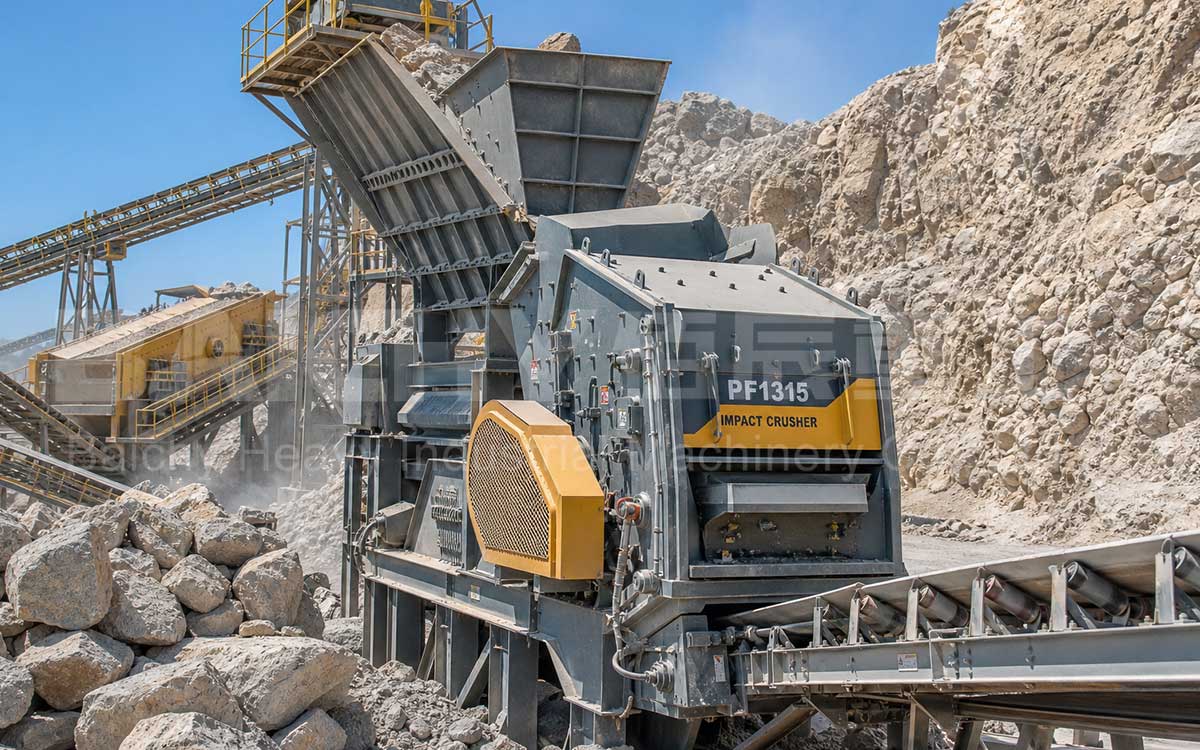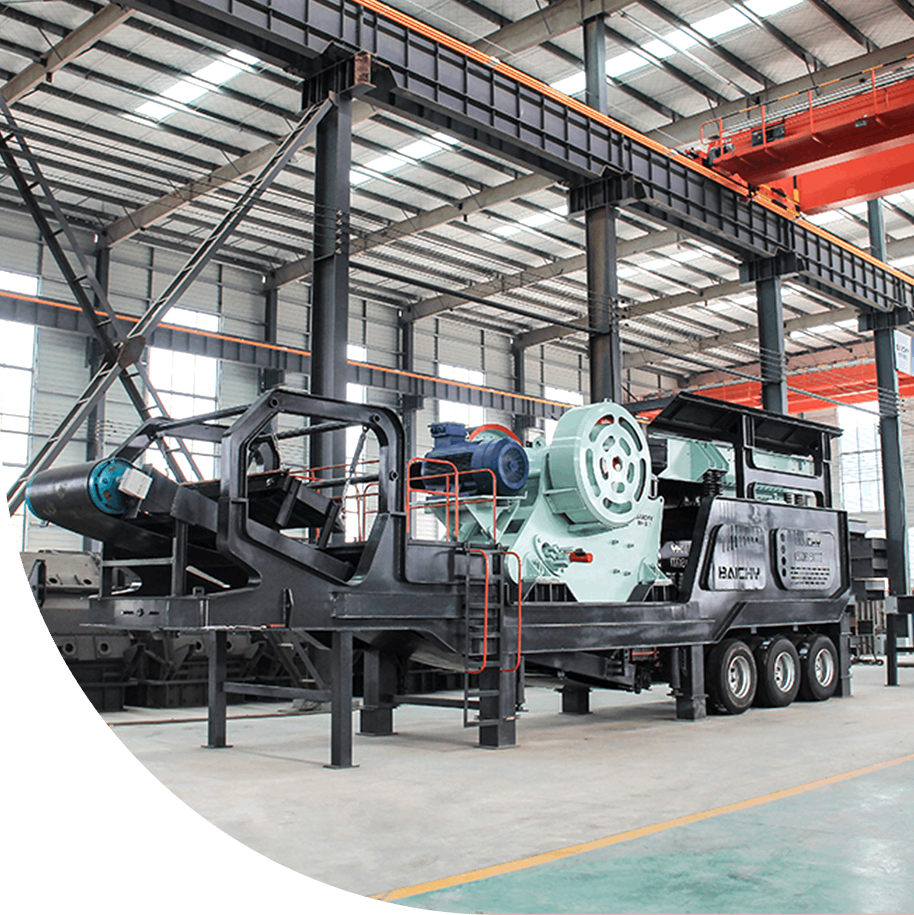

The primary crusher is the "bottleneck" of the entire production line: its maximum capacity dictates the capacity limit of the whole line, while its electricity consumption and wear costs per ton determine the product's unit cost. Choosing the wrong primary crusher means that every subsequent piece of equipment will continue to pay the price for that mistake.
There are only three golden rules for selecting primary crushing equipment:
| Material Type | Selection Conclusion | Rationale |
| High-abrasion hard rock (granite, basalt, iron ore, river pebbles) | PE / C Series Jaw Crusher | Compression crushing; long wear-part lifespan; low failure rate |
| Medium-soft materials (limestone, gypsum, construction waste) | PF Impact Crusher | Produces "cubic" particle shapes in a single pass; saves on secondary crushing investment |
| High-volume brittle materials (cement plant limestone, coal, gypsum) | 2PC Double-Rotor Hammer Crusher | Crushes to ≤25mm in one pass; single unit replaces a two-stage process |
I. Pain Point Analysis: Why is your production line "starved of feed yet sluggish in output"?
Inefficiency in the primary crushing stage usually stems not from the operators, but from a mismatch between the equipment and the material:
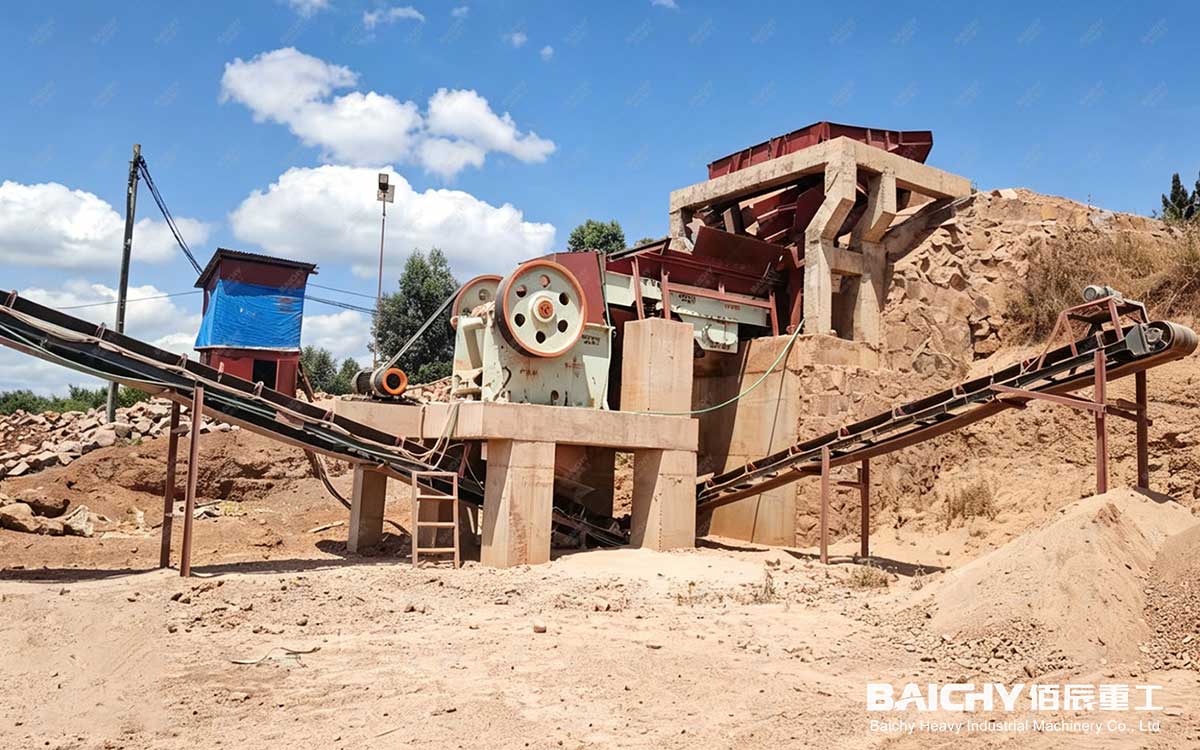
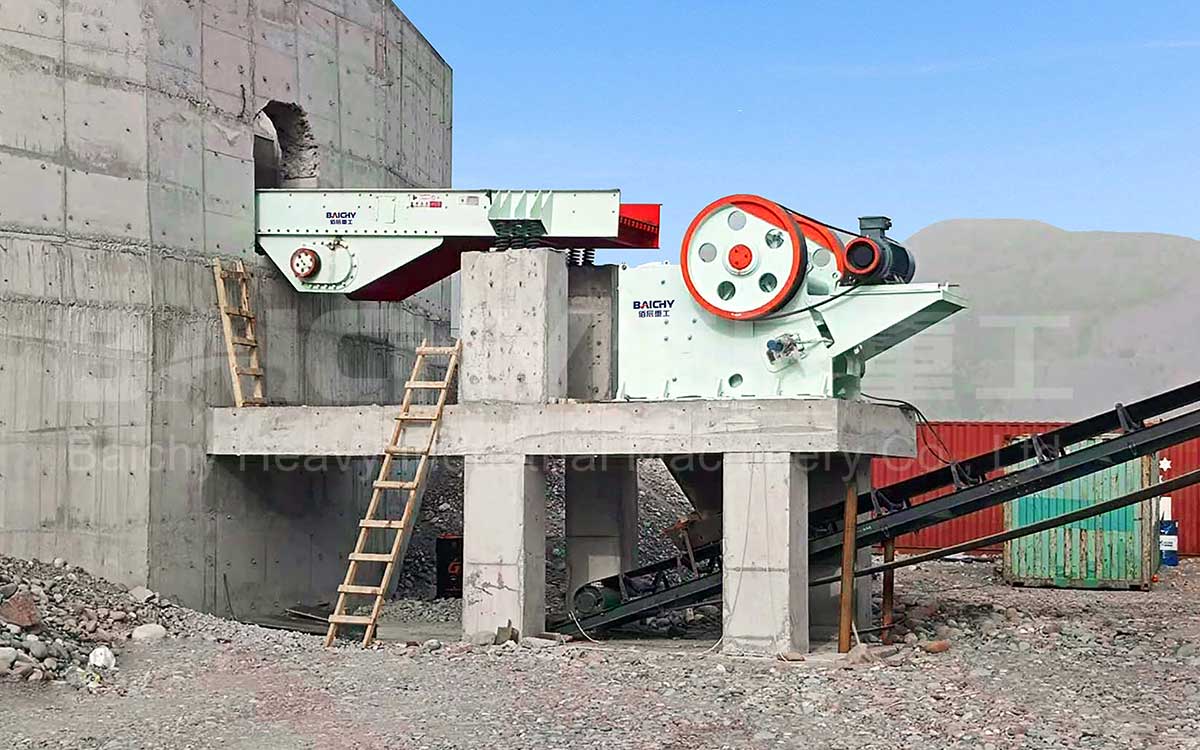
Primary Crushing Production Line
1. Feed size exceeds limits, causing frequent jams—The feed opening was undersized; large chunks get stuck, causing 20 minutes of downtime per hour and slashing annual capacity by 20%.
2. Uncontrolled output size leads to excessive recirculation—Oversized primary output overloads secondary crushing and screening; the recirculation loop consumes capacity that should have been realized as final product.
3. Nominal capacity ≠ Actual capacity—Most equipment is rated based on limestone (1.6 t/m³); actual output drops significantly when crushing denser materials (like iron ore). Failure to adjust for this before purchase leads to immediate disappointment upon commissioning.
4. Short wear-part lifespan and spiraling maintenance costs—The lifespan of jaw plates, blow bars, and liners is directly linked to material abrasiveness; using the wrong machine for hard rock doubles the frequency of wear-part replacement.
5. High power consumption drives up cost-per-ton—Unreasonable crushing ratio allocation results in a "small horse pulling a heavy cart" scenario in primary crushing, causing electricity consumption per ton to far exceed design specifications.
6. The essence of primary crushing equipment selection is not simply choosing a machine that "can crush," but selecting a solution that delivers the "lowest cost-per-ton for the entire production line."
II. Translating Specifications into Benefits: How Parameters Become Your Profit
| Technical Parameter | Significance to You (Benefit Translation) |
| Feed Opening Size (e.g., PE600×900, feed size ≤500mm) | Directly determines the ability to accept material from mining trucks/feeders; avoids extra costs associated with secondary blasting or manual breaking of oversized rocks. |
| Nominal Capacity vs. Actual Capacity | True capacity is what remains achievable after adjusting for material density (e.g., iron ore ×0.7–0.8; hard basalt ×0.85–0.9). |
| Discharge Size Range (e.g., 65–160mm) | The closer the discharge size is to the requirements of the secondary crushing stage, the lower the recirculation rate and the lighter the load on screening and secondary crushing equipment. |
| Crushing Ratio (typically 4:1–6:1 for primary crushers) | A higher single-machine crushing ratio allows for fewer crushing stages, saving on investments in conveyors, plant structures, and foundations. |
| Wedge/Hydraulic Discharge Setting Adjustment | Adjustments can be completed within 10 minutes when switching materials, reducing downtime from hours to minutes. |
| Wear Part Lifespan (Jaw plates: 800–3,000 hrs, depending on material abrasiveness) | Wear parts typically account for 30–40% of total crushing costs; a 30% increase in lifespan translates to a cost reduction of over 10% per ton. |
For a 150 tph production line, if improper primary crusher selection limits actual capacity to 120 tph, the annual production loss amounts to 90,000 tons (based on 300 operating days/year and 10 hours/day). At an average market price of 40–60 RMB/ton for manufactured sand and aggregate, the lost output value ranges from 3.6 to 5.4 million RMB annually—excluding additional costs from downtime for maintenance and excessive power consumption.
III. Core Parameter Comparison Table (Calibrated for limestone at 1.6 t/m³)
| Equipment Series | Representative Mode | Max. Feed Size (mm) | Discharge Size (mm) | Capacity (t/h) | Suitable Materials | Key Advantages |
| PE Jaw Crusher (Primary Coarse Crushing) | PE400×600 | ≤340 | 40–100 | 16–64 | Various hard rocks | Simple structure, low maintenance cost; top choice for primary crushing; best cost-performance ratio |
| PE500×750 | ≤425 | 50–100 | 45–100 | Various hard rocks | Standard for small-to-medium production lines; high reduction ratio; direct connection to belt conveyors | |
| PE600×900 | ≤500 | 65–160 | 50–160 | Various hard rocks | Mainstream international model; suitable for 100–150 tph production lines | |
| PE750×1060 | ≤630 | 80–180 | 100–230 | Various hard rocks | Large feed opening; accepts direct feed from 50–80t mining trucks | |
| C-Series European-style Jaw Crusher (High-efficiency Coarse Crushing) | C90 | ≤450 | 40–160 | 60–190 | Highly abrasive hard rock, non-ferrous metal ore | Wedge-style discharge adjustment; deep crushing chamber; 15–20% higher single-unit output than PE series |
| C110 | ≤700 | 70–200 | 150–350 | Highly abrasive hard rock, non-ferrous metal ore | Primary crusher for large fixed production lines/mines; hydraulic-assisted discharge | |
| PF Impact Crusher (Coarse Crushing for Medium-Soft Materials) | PF1214 | ≤350 | 30–90 | 90–170 | Limestone, gypsum, concrete blocks | Produces ideal aggregate particle shapes in a single pass with a high yield of cubic products; eliminates the need for secondary crushing. |
| PF1315 | ≤350 | 30–100 | 130–250 | Limestone, gypsum, concrete blocks | Large crushing chamber; commonly used as the primary crusher in construction waste recycling lines | |
| 2PC Dual-Rotor Hammer Crusher (Coarse crushing of brittle materials) | 2PC1213 | ≤400 | ≤25 | 150–200 | Limestone, coal, gypsum (moisture content ≤15%) | Crushes material to under 25mm in a single pass; directly replaces the two-stage "Jaw Crusher + Impact Crusher" process. |
IV. Selection Recommendations and Pitfall Avoidance Checklist
4.1 Matching Equipment to Operating Conditions
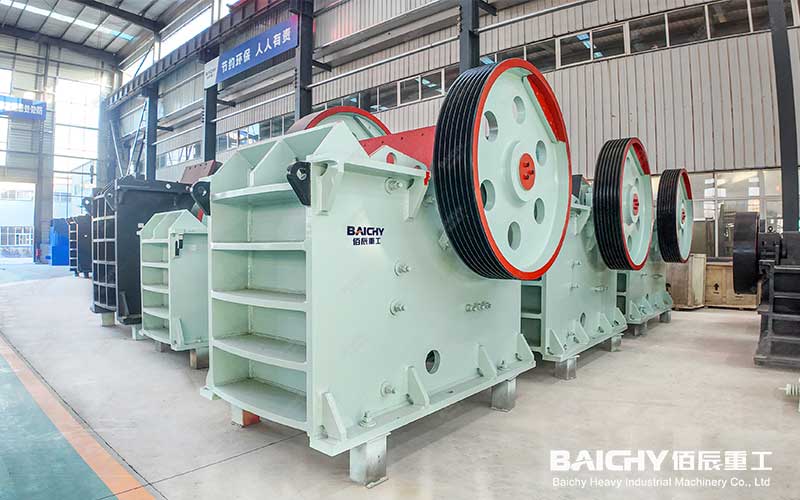
PE series Jaw Crusher
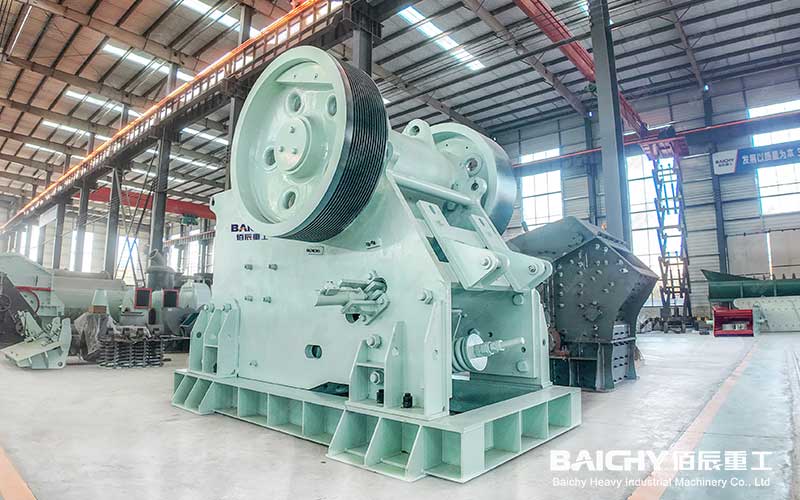
C series Jaw Crusher
• Hard rock, highly abrasive materials (granite/basalt/iron ore/river pebbles) → PE or C-Series Jaw Crusher. Jaw crushers utilize the principle of compression crushing, offering superior adaptability to highly abrasive materials; jaw plate lifespan far exceeds that of impact crusher blow bars, resulting in the lowest cost-per-ton over the equipment's lifecycle. Choose the PE series for budget sensitivity, or the C-series for high output.
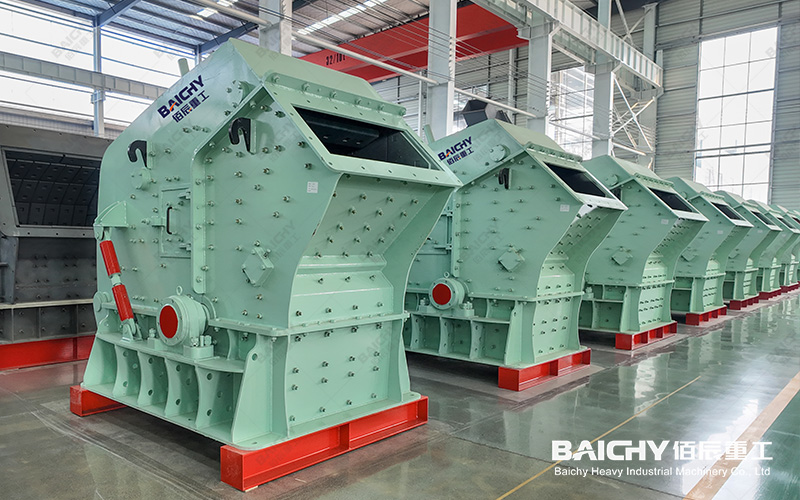
PF series Impact Crusher
• Medium-soft materials, construction waste recycling (limestone/gypsum/concrete blocks) → PF Impact Crusher. The impact crushing action of the blow bars produces cubic-shaped aggregates with low flakiness and elongation indices—a key selling point for premium pricing in the aggregate market. Additionally, it achieves the required particle size for secondary screening in a single pass, eliminating the investment cost of a jaw crusher.
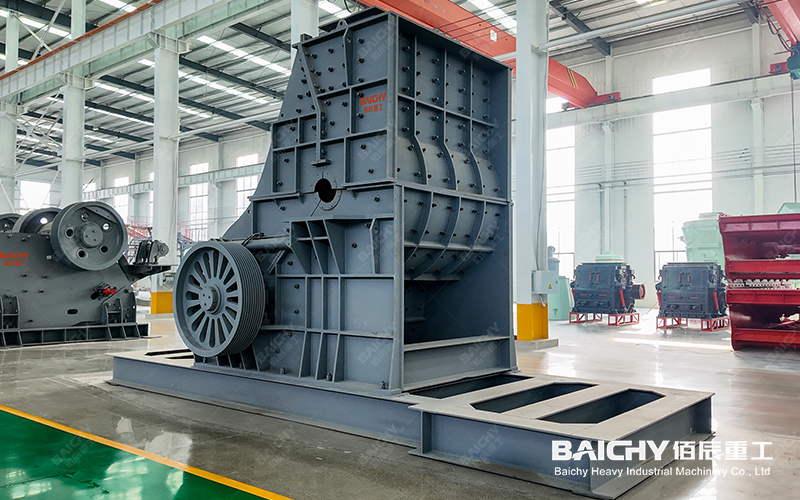
2PC Dual-Rotor Hammer Crusher
• Brittle materials, high-volume output (cement plant limestone/coal) → 2PC Dual-Rotor Hammer Crusher. Reduces feed sizes of ≤400mm to ≤25mm in a single pass, directly replacing the two-stage "Jaw Crusher + Impact Crusher" process; this reduces the number of machines, plant footprint, power consumption, and total investment by approximately 40%.
4.2 Five Pitfalls to Avoid
1. Don't rely solely on nominal capacity—clarify the material type, density, and discharge particle size used for the rating, and ask for a conversion based on your specific material density;
2. Don't overlook moisture content—sticky materials with >15% moisture can clog the crushing chamber and discharge outlet; 2PC hammer crushers are particularly sensitive to this, so operations during the rainy season require careful assessment;
3. Don't skip measuring actual feed lump size—the feed opening must be at least 20% larger than the maximum incoming lump size; otherwise, jams and shutdowns will negate any capacity advantages;
4. Don't ignore the distribution of crushing ratios—properly allocate ratios across the primary, secondary, and tertiary stages (typically 4:1–6:1 / 4:1–5:1 / 3:1–4:1) to prevent overloading the primary crusher (avoiding the "small horse pulling a heavy cart" scenario);
5. Don't look only at the purchase price; consider TCO (Total Cost of Ownership)—the true cost is the sum of the purchase price, 3 years' worth of wear parts, electricity consumption, and losses due to downtime. Wear parts typically account for 30–40% of total crushing operation costs.
V. FAQ
Q1: How do I choose a primary crusher? What are the differences between jaw crushers, impact crushers, and hammer crushers?
A: Choose based on material hardness—for hard rock (granite/basalt/iron ore), choose a jaw crusher (uses compression, wear-resistant, low failure rate); for medium-soft materials (limestone/construction waste), choose an impact crusher (produces good particle shape, can eliminate the need for secondary crushing); for high-volume brittle materials (e.g., limestone for cement plants), choose a double-rotor hammer crusher (achieves final sizing in one pass, saving investment costs for two stages). Choosing the wrong model can cause wear part and electricity costs to skyrocket.
Q2: Why do nominal capacity and actual capacity differ?
A: Most equipment capacities are rated based on limestone with a bulk density of 1.6 t/m³. When crushing materials with higher densities, capacity figures must be adjusted proportionally: multiply by approximately 0.7–0.8 for iron ore and 0.85–0.9 for hard basalt. Before purchasing, ask the manufacturer to recalculate based on your specific material density to avoid falling short of production targets upon startup.
Q3: How do I choose between the PE series and C series jaw crushers?
A: For the same size class, the C-series European-style jaw crusher features a deeper crushing chamber and a wedge-based discharge setting system; it offers 15–20% higher single-unit output than the PE series and allows for faster discharge opening adjustments (completed within 10 minutes), making it ideal for production lines requiring high output and the flexibility to switch between different materials. For small-to-medium production lines with a fixed application and a priority on budget, the PE series offers the best cost-performance ratio.
Q4: How often do wear parts on the primary crusher need replacing, and what percentage of the cost do they represent?
A: It depends on the abrasiveness of the material—jaw plate lifespan is approximately 2,000–3,000 hours for limestone applications and 800–1,500 hours for granite or basalt. Wear parts typically account for 30–40% of total crushing operation costs; selecting wear-resistant materials (such as high-manganese steel or alloy steel) can extend service life by over 30%, directly reducing the cost per ton.
Q5: How should the primary crusher be selected for a 100–150 tph hard rock production line?
A: The standard configuration uses a PE600×900 jaw crusher (feed size ≤500mm, capacity 50–160 t/h) for primary crushing, followed by a PF1214/PF1315 impact crusher or a cone crusher for secondary crushing, and finally a vibrating screen for classification. If the feed size is up to 630mm, the PE750×1060 model can be selected instead. For a complete system design, please provide details on material lithology, maximum feed size, and target capacity; Baichy can then generate a comprehensive equipment selection plan that includes CAPEX and OPEX estimates.