I. What is a Jaw Crushing Plants?
The bottom line: A jaw crushing Plants is a complete system featuring a jaw crusher as the primary crushing unit. Its core value lies in reducing raw ore (with an input size of ≤750mm) in a single pass to a transportable size of 40–165mm, thereby preparing the material for subsequent stages such as secondary/fine crushing, sand making, or grinding. Unlike a standalone machine, this Plants integrates five key modules—feeding, crushing, conveying, screening, and electrical control—forming a "turnkey" crushing unit.
They are categorized into two types based on configuration:
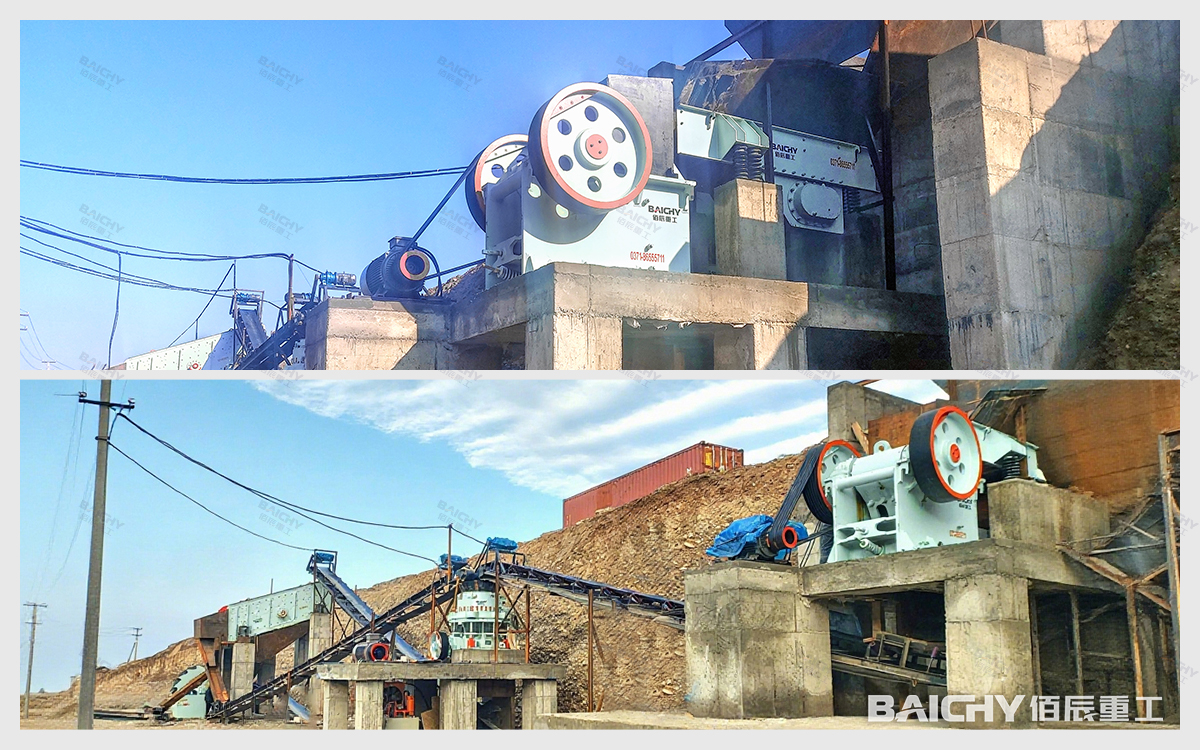
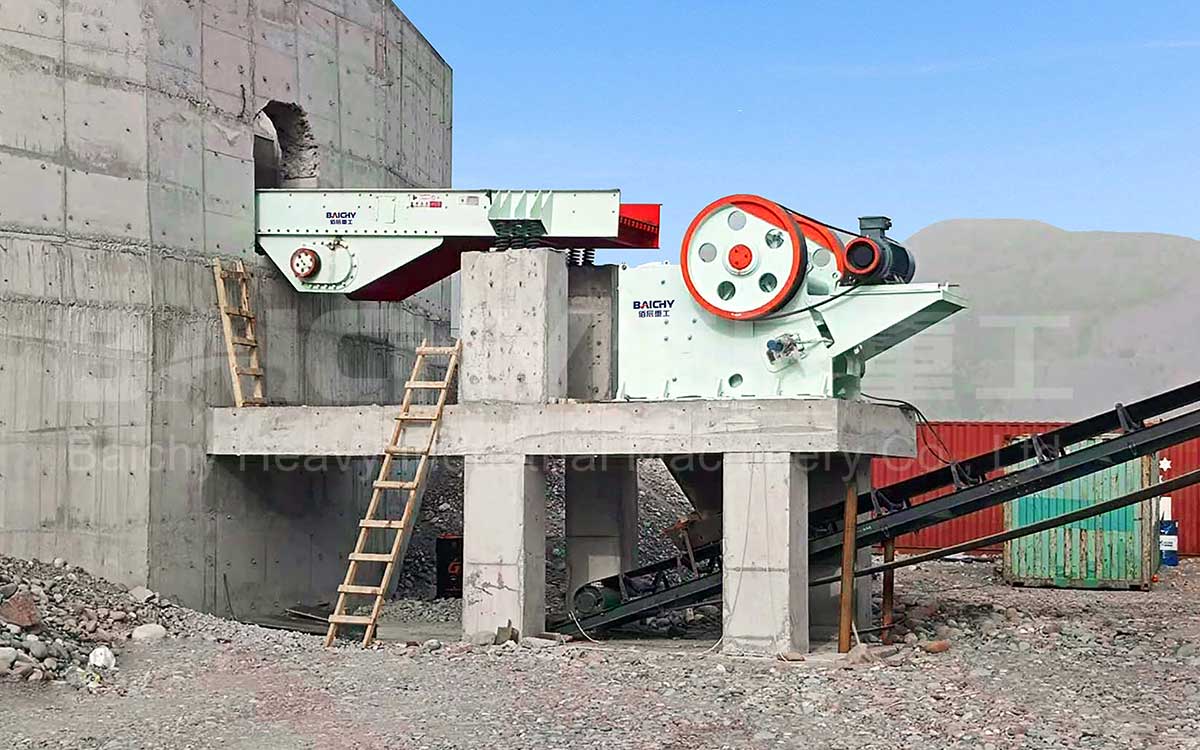
1. Plantsary Crushing Plants: Requires a poured concrete foundation and is designed for long-term service. It is suitable for mining operations with a lifespan exceeding five years and centralized material sources, offering a lower cost per ton.
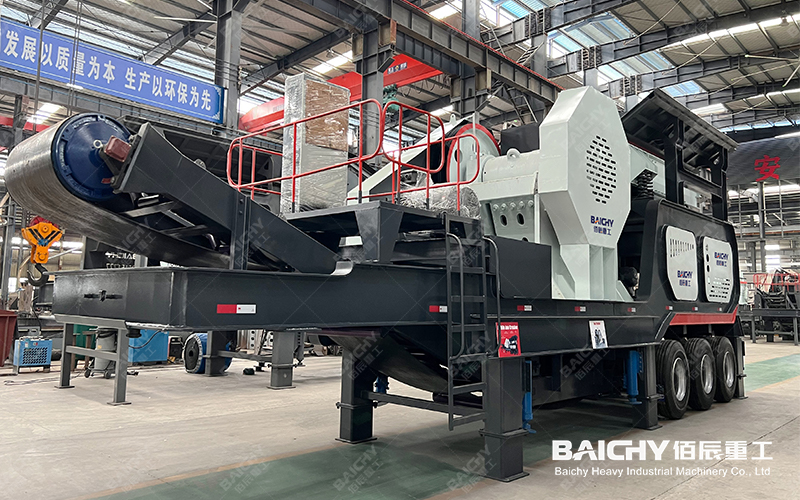
Mobile jaw crusher
2. Mobile Crushing Plants: Mounted on a wheeled or tracked chassis, it requires no civil engineering or lengthy approval processes. It can be put into operation within 2–3 days of arrival, making it ideal for temporary projects with dispersed material sources and tight schedules; in contrast, Plantsary Plantss often require 1–2 months just for civil works and installation.
3. There is only one criterion for selection: choose a Plantsary Plants for stable material sources and long-term mining; choose a mobile Plants for short project durations and frequent site relocations.
II. Application Scenarios
1. Primary crushing in metal mines and quarries. Hard rocks such as granite, basalt, and iron ore (with compressive strengths of 150–300 MPa) are the primary domain for jaw crushers. According to USGS estimates, global annual production of sand and gravel aggregates exceeds 50 billion tons, and the vast majority of production lines utilize a jaw crusher as the primary unit.
2. Construction waste and urban renewal. Concrete blocks and brick debris often contain complex components, including rebar. Mobile crushing Plantss can move directly onto demolition sites to crush material on the spot; the resulting recycled aggregates can be reused for roadbed backfilling, creating a closed-loop circular economy.
3. Highway, railway, and hydropower projects. These projects often require large volumes of aggregate but rely on dispersed material sources. Mobile Plantss can relocate alongside the construction site, avoiding the repeated civil engineering investments required for Plantsary Plantss.
4. Primary stage of sand and gravel aggregate lines (using crushing to replace grinding). In river stone and pebble sand-making operations, a jaw crushing Plants performs initial coarse crushing and volume reduction before feeding into a cone crusher or VSI sand-making machine. This setup replaces traditional "crushing plus rod milling" processes, reducing electricity consumption per ton by approximately 30%.
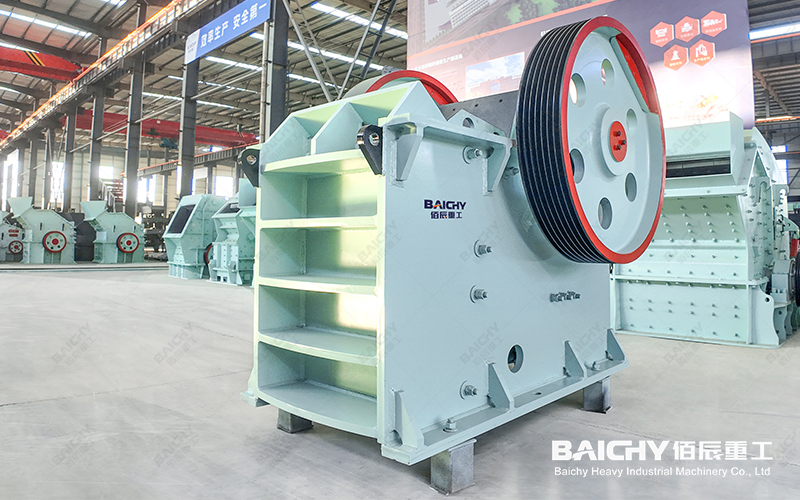
Jaw Crusher
III. Core Advantages
1. Industry-leading adaptability to hard rock. Compression crushing results in wear-part costs that are only 1/2 to 1/3 of those associated with impact-style equipment; this advantage is particularly pronounced when processing high-silica river stones.
2. Rapid commissioning. Mobile Plantss eliminate the need for civil engineering works or complex grid connection applications; production can begin just 2–3 days after arrival on-site. Starting production a month earlier translates to recovering tens of thousands of dollars in revenue sooner.
3. Modular scalability. Units can operate independently or be combined with cone crushers, impact crushers, and sand-making machines to form multi-stage production lines, allowing for seamless capacity scaling from 16 t/h up to 450 t/h.
4. Transparent operating costs. Electricity consumption per ton is predictable; jaw plate lifespan typically reaches 300–500 hours under medium-hardness operating conditions, while spare parts offer high interchangeability and short procurement lead times.
5. Compatibility with global power standards. Customization is available for 380V/50Hz, 400V/50Hz, and 440V/60Hz configurations to handle challenging operating environments, such as power rationing by ESKOM in South Africa or grid instability in Latin America.
IV. Specifications Overview
Standard configuration specifications for the YDPZ series mobile crushing Plants (capacity rated based on medium-hard rock with a bulk density of 1.6 t/m³ and compressive strength ≤200 MPa):
| Model | Primary Jaw Crusher | Max. Feed Size (mm) | Capacity (t/h) | Total Power (kW) | Recommended Application |
|---|---|---|---|---|---|
| YDPZ-600 | PE400×600 | 340 | 16–60 | Approx. 65 | Small-scale projects, construction waste |
| YDPZ-750 | PE500×750 | 425 | 45–100 | Approx. 95 | Medium-scale crushing lines |
| YDPZ-900 | PE600×900 | 500 | 60–160 | Approx. 115 | Standard configuration for mines and aggregate lines |
| YDPZ-1060 | PE750×1060 | 630 | 110–320 | Approx. 165 | Large-scale mines, high-capacity requirements |
| YDPZ-1200 | PE900×1200 | 750 | 220–450 | Approx. 230 | Primary crushing stage for 10-million-ton class mines |
* Capacity rated for medium-hard rock with bulk density 1.6 t/m³ and compressive strength ≤ 200 MPa. Adjust by factor 0.85–0.9 for dense granite and 0.8–0.9 for river gravel.
Capacity Conversion Note: Estimate capacity at 0.85–0.9 of the nameplate rating for dense granite and 0.8–0.9 for river stone; if clay content is high, a grizzly screen must be installed at the feed end, otherwise actual output will fall below expectations.
V. Related Case Studies
Case Study 1: Mobile river stone crushing project in South America (Venezuela).
Due to dispersed material sources and the highly abrasive nature of the river stone, the client selected a mobile jaw crushing Plants to link with a cone crusher and sand-making machine, forming a complete production line. Motors were customized for the local 60Hz power grid; measured output exceeded 85% of the nameplate rating, and the timeline from contract signing to material discharge was just three weeks.
Case Study 2: Plantsary river stone/cobble production line in the Philippines.
The client utilizes a C90 Plantsary crushing Plants to fulfill a long-term aggregate supply contract. By integrating the Plantsary Plants with storage bins and conveyor systems for continuous production, the cost per ton is reduced by an additional 15–20% compared to mobile solutions, allowing for a return on investment within two years.
Case Study 3: A four-unit mobile Plants configuration in Mexico.
Featuring the PE500×750 jaw crusher as the primary unit, this setup achieves a fully mobile configuration encompassing feeding, primary crushing, secondary crushing, and screening. The entire production line can be re-established after a single relocation, meeting aggregate supply needs across multiple infrastructure project sections.
VI. Recommended Auxiliary Equipment
123456
VII. FAQ
1. How do I choose between Plantsary and mobile jaw crushing Plantss?
Consider three factors: stability of the material source, service duration, and relocation frequency. Choose a Plantsary Plants for mining operations lasting over 5 years to benefit from lower costs per ton. Choose a mobile Plants for temporary projects—such as highway construction, hydropower, or construction waste processing—to eliminate the need for civil engineering works and enable production within 2–3 days. For projects with limited capital, a refurbished second-hand primary crusher option is available, reducing upfront investment by over 40%.
2. Can the crushing Plants handle high-hardness materials like granite or river stone?
Yes; this is a key strength of the jaw crusher. Its compression-based crushing principle handles rock with compressive strengths up to 300 MPa. When processing high-silica river stone, the cost of wear parts is only 1/2 to 1/3 that of an impact crusher. Note capacity adjustments: estimate output at 85–90% of rated capacity for granite and 80–90% for river stone, and install a grizzly screen at the feed end to control input particle size.
3. Why is the actual capacity lower than the nameplate specifications?
The nameplate rating is based on medium-hard rock with a bulk density of 1.6 t/m³; however, actual performance is influenced by five factors: material hardness, bulk density, moisture content, feed particle size, and feeding continuity. Countermeasures include: calculating capacity based on material properties; installing a variable-frequency feeder to ensure continuous, full-load feeding; setting the discharge opening according to finished product requirements; and selecting a main unit with a capacity margin of 1.2 times the actual required output.
Baichy Heavy Industry
Baichy Heavy Industry is a high-tech mining equipment company integrating R&D, manufacturing, sales, and after-sales service. Focusing on crushing, grinding, and mineral processing equipment, we provide professional solutions to our customers. We are ISO9001:2015 、certified, and our products include mobile crushing palnts, crawler crushing plant, construction waste crushing plants, jaw crushers, sand making machines, cone crushers, fine crushers, grinding mills, ball mills, etc., all with reliable performance to meet diverse project needs.
Baichy Heavy Industry – Your Trusted Partner
To ensure optimal performance of your equipment, Baichy Heavy Industry offers:
- Professional on-site installation guidance
- Comprehensive operator training
- 24/7 technical support & maintenance services
Our complete after-sales service system guarantees long-term, stable operation of your machinery with minimal downtime.
Protect Your Rights – Only Use Official Channels
To avoid scams and ensure authentic support, contact us exclusively through:
• Official Website: www.baichychina.com
• WhatsApp: +8615093222637
• Email: [email protected]
Your satisfaction is our priority – expect prompt, professional service every time.
(Note: Beware of unauthorized third parties claiming to represent Baichy. Always verify through official contacts.)