
Iron Ore Crushing Production Line A Comprehensive Equipment
Iron ore serves as the fundamental raw material for the global steel industry, with annual production consistently exceeding 2.5 billion tonnes. Australia, Brazil, India, and China collectively account for approximately 2 billion tonnes of this total (USGS, 2025: Australia 980 million tonnes, Brazil 420 million tonnes, India 310 million tonnes, and China 290 million tonnes). For mining operations and processing plants, the core value of an iron ore crushing line lies not merely in "breaking the ore," but in producing mill-ready feed—characterized by compliant particle size and stable grade—at the lowest possible cost per tonne. Reducing over-grinding (excessive fines generation) by just 1% during the crushing stage can lower electricity consumption in the subsequent grinding stage by 3%–5%. This article outlines the complete process configuration, equipment selection, and investment considerations.
I. Overview of Iron Ore Crushing Production Lines
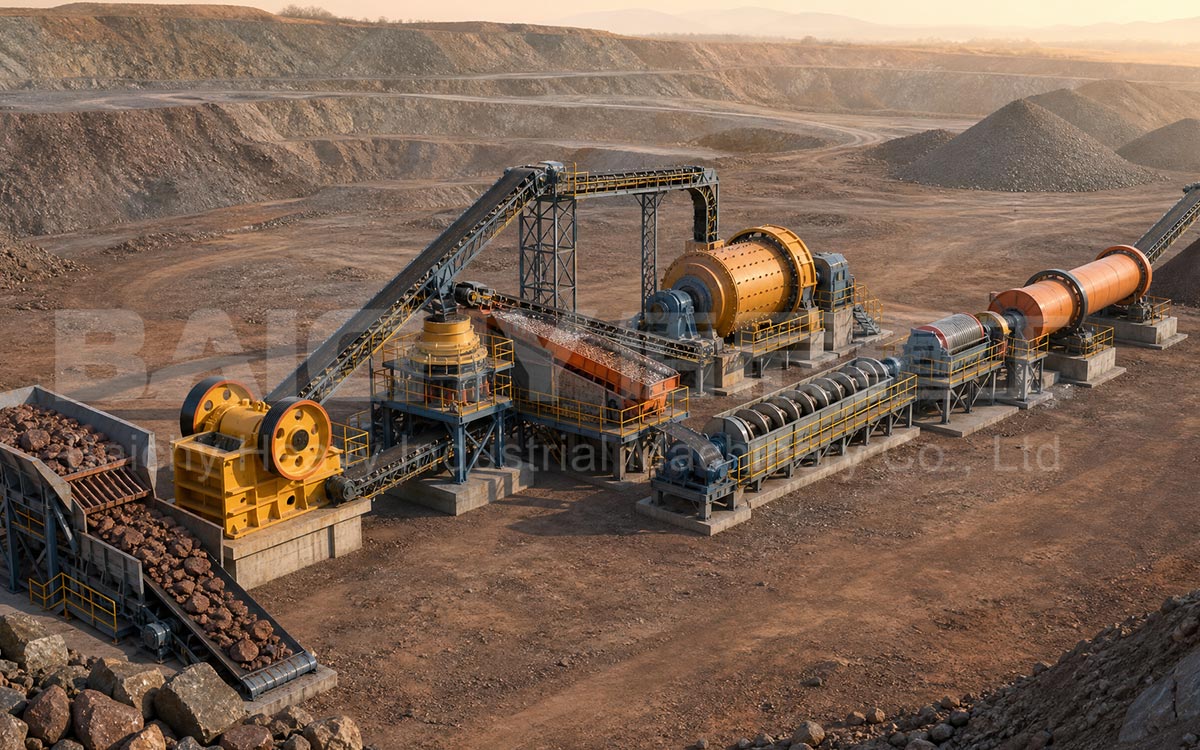
Standard iron ore crushing lines adhere to the principle of "crushing more and grinding less." The process involves progressive size reduction: run-of-mine ore undergoes primary crushing (jaw crusher) → secondary crushing (cone crusher) → closed-circuit screening → grinding → magnetic separation. Given that iron ore has a Mohs hardness of 5.5–6.5 and high abrasiveness, jaw crushers and cone crushers are the preferred choices for primary and secondary crushing stages, rather than impact crushers. Impact crushers suffer from excessive blow bar wear under these conditions, with wear-part costs per tonne potentially reaching two to three times those of cone crushers.
Unlike production lines for soft rock, iron ore lines are primarily evaluated based on three key metrics: stability of mill feed particle size (≤12–15 mm), the rate of over-grinding (fines generation), and equipment availability. These three factors directly determine electricity consumption and steel ball usage, serving as the primary variables influencing the processing plant's cost per tonne.
II. Typical Application Scenarios
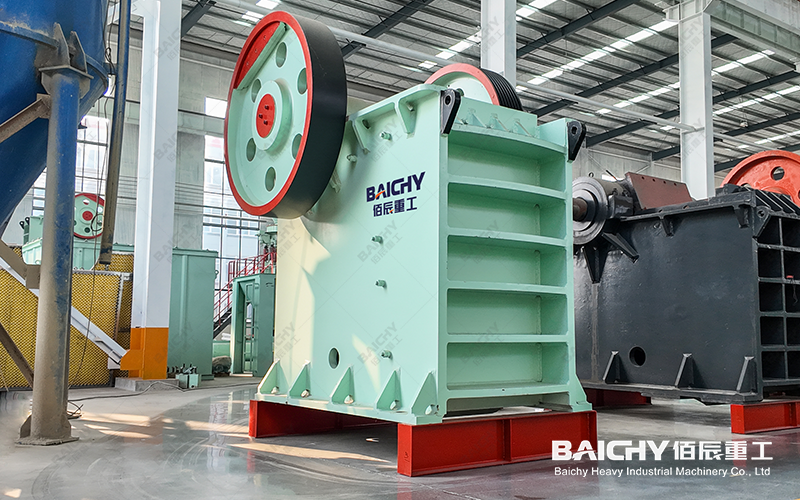
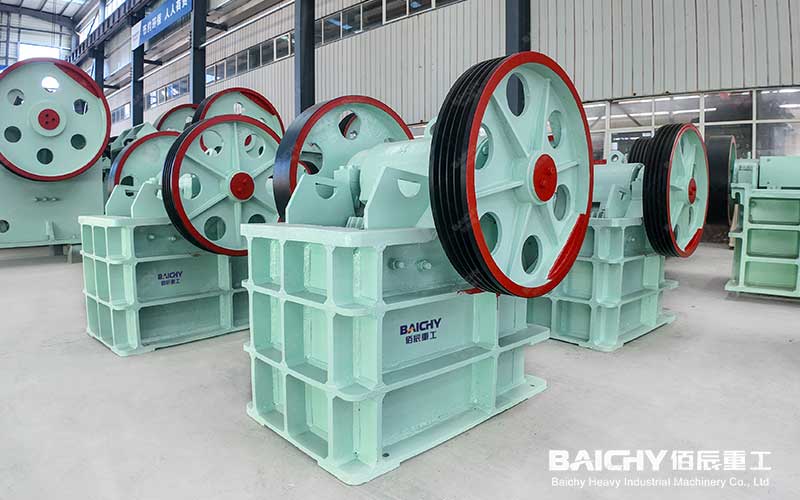
PE750x1060 Jaw Crusher
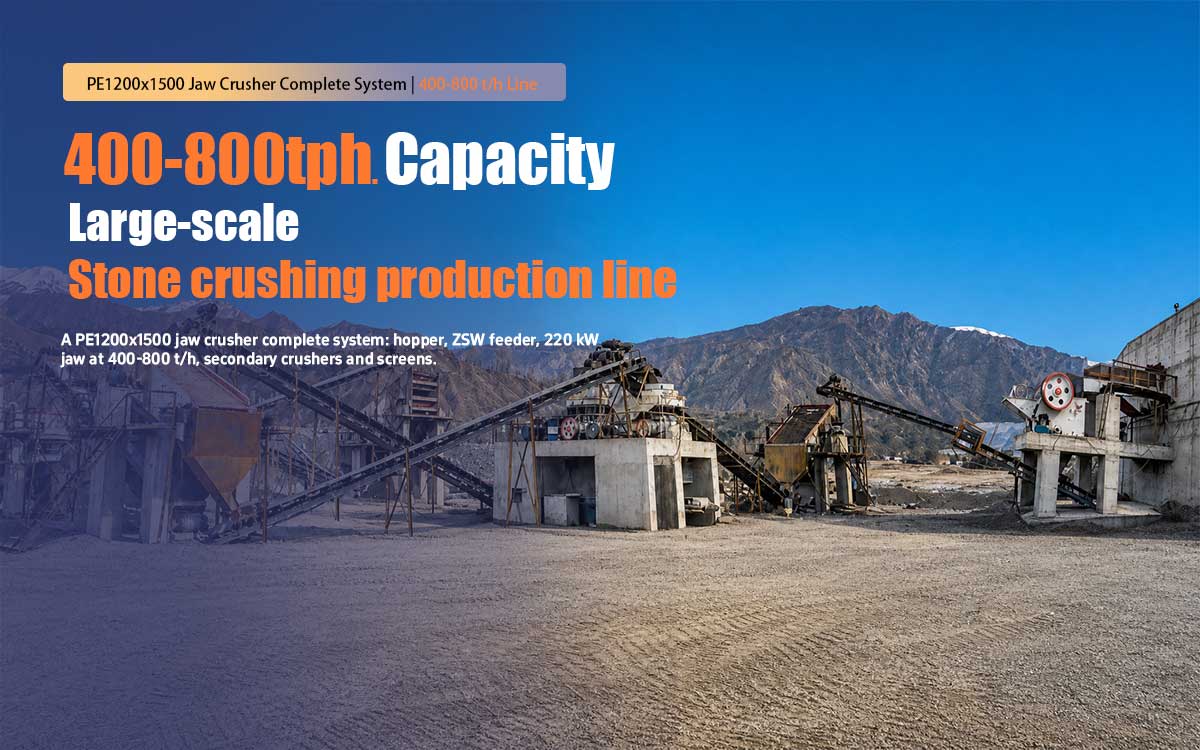
1. Stationary Primary Crushing Station for Open-Pit Mines: Designed for large-scale mines processing over 1 million tonnes annually. A jaw crusher (model PE750×1060 or larger) located at the pit mouth directly accepts run-of-mine ore (600–800 mm). Belt conveyors replace truck haulage, significantly reducing energy consumption associated with transport.
2. Small-to-medium-sized magnetite processing plants (200–2,000 tpd): The mainstream model for privately owned mines, featuring a closed-circuit configuration of a PE600×900 jaw crusher, a PYB1200 cone crusher, and a vibrating screen; offers controllable investment costs and rapid returns.
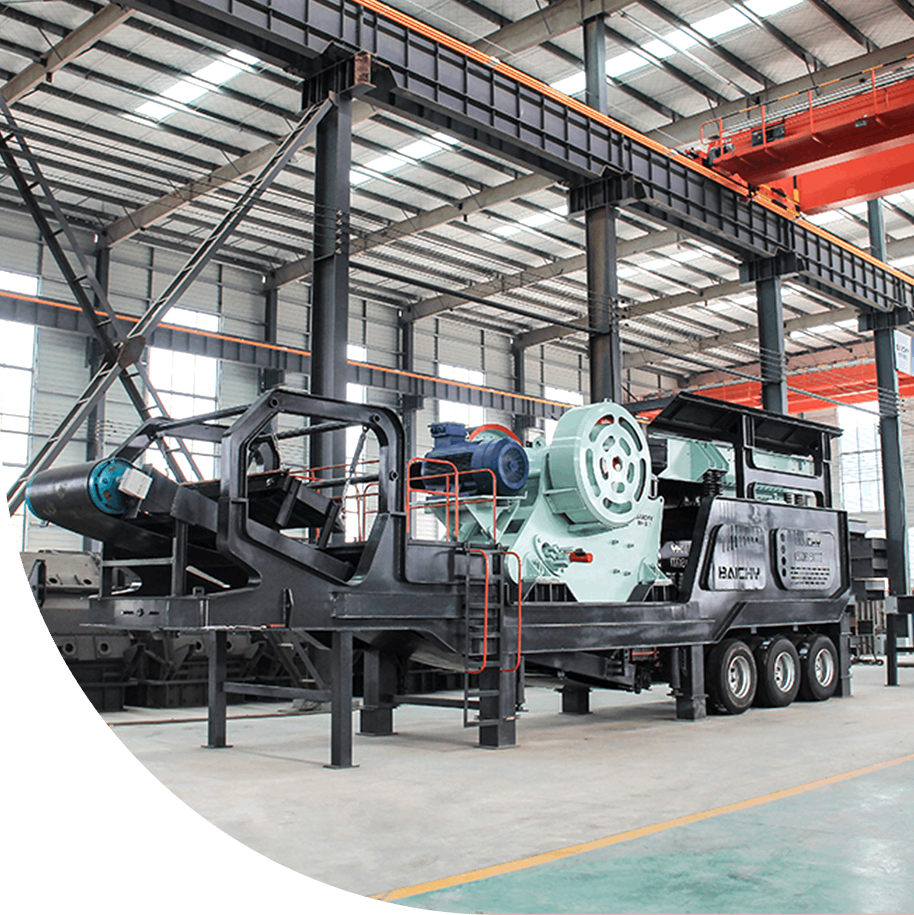
3. Mobile production lines (for exploration phases or rotational mining across multiple sites): YDPZ mobile units allow for immediate operation without civil engineering works, reducing site-transfer time from three months to one week—ideal for emerging mining regions in West Africa and Southeast Asia.
4. Pre-concentration of low-grade ore: Ore with 15%–25% TFe undergoes crushing followed by wet magnetic separation to discard tailings; this reduces the grinding load by 30%–40%, directly lowering the cost per ton of concentrate.
III. Core Process and Equipment Configuration Parameters
The table below outlines the standard configuration for a 200–300 tpd magnetite processing plant (based on run-of-mine ore with 25% TFe and a mill feed size of ≤15 mm):
| Process Step | Recommended Equipment | Specification Example | Feed Size | Capacity | Discharge Size |
| Feeding | ZSW Vibrating Feeder | ZSW490×110 | ≤500 mm | 8–12 t/h | -- |
| Primary Crushing | PE Jaw Crusher | PE600×900 | ≤500 mm | 50–100 t/h | ≤150 mm |
| Secondary Crushing | PYB Cone Crusher | PYB1200 | ≤150 mm | 40–90 t/h | ≤30 mm |
| Closed-circuit Screening | YK Circular Vibrating Screen | 3YK1860 | ≤30 mm | 60–120 t/h | ≤15 mm |
| Grinding Overflow | Ball Mill 1500×4500 | ≤15 mm | 5–10 t/h | 65% passing | -200 mesh |
| Magnetic Separation | Wet Magnetic Separator | CTB Series | -- | -- | Concentrate TFe 64%–67% |
Capacity is calculated based on an ore density of 2.6–3.2 t/m³. For hematite (which has higher hardness), it is recommended to upgrade the secondary crusher to a CS/HP hydraulic cone crusher for more stable discharge and longer liner service life.
IV. Equipment Advantages
1. Primary Crushing: PE Jaw Crusher—Superior Wear Resistance. Features a deep crushing chamber and high reduction ratio (4–6:1); high-manganese steel jaw plates offer a service life of 8,000–12,000 hours per set; hydraulic discharge opening adjustment takes only 5 minutes.
2. Secondary Crushing: Cone crusher inter-particle (layer) crushing yields uniform particle shapes and low fines content; combined with closed-circuit screening, it ensures a stable mill feed size of ≤15mm. This results in a 10%–15% increase in ball mill hourly throughput and an 8%–12% reduction in consumption per ton of steel—representing the direct profit gains of the "crush more, grind less" strategy.
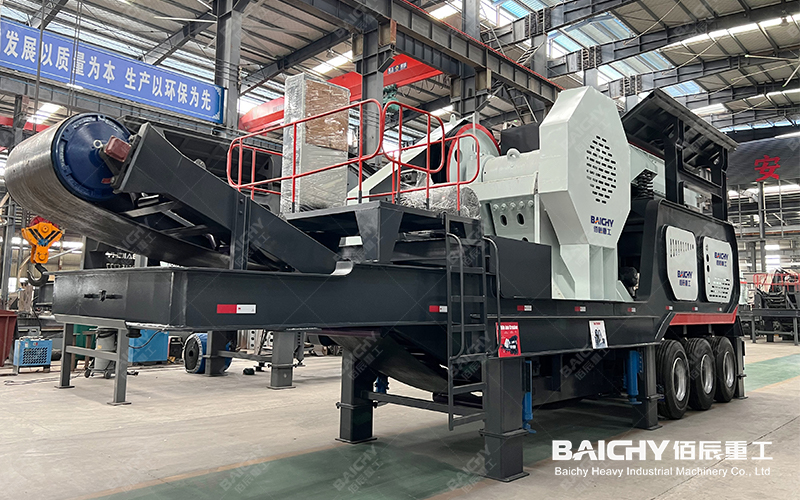
Mobile jaw crusher
3. Mobile Station: YDPZ units offer immediate ROI—no concrete foundation required, with output starting just 7 days after arrival. Dual diesel-electric drives ensure compatibility with 50/60Hz grids and off-grid mining sites; for multi-site projects, the comprehensive cost is 20% lower than that of fixed stations.
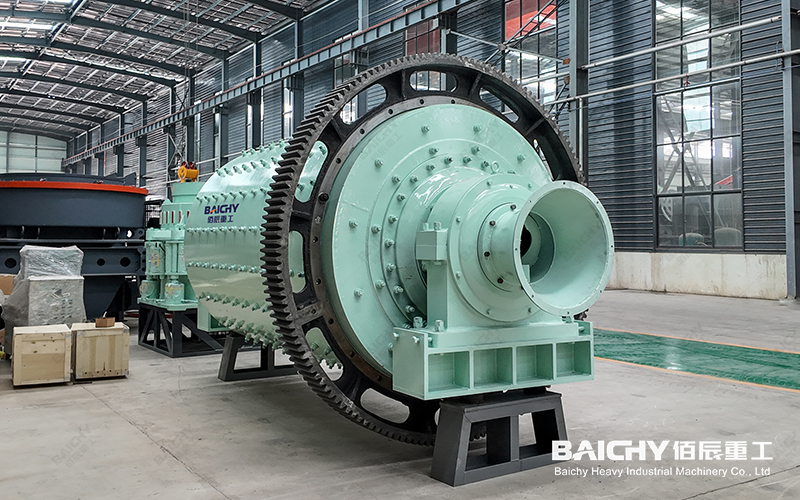
4. End-to-End One-Stop Delivery: Integrated supply of ball mills, wet magnetic separators, and spiral ore washers. The crushing and beneficiation stages are designed and coordinated by the same team, eliminating hidden losses caused by equipment vendors shifting responsibility to one another.
V. Typical Case Study
Baichy Heavy Industry Magnetite Beneficiation Plant (200–300 tpd) – Standard Configuration
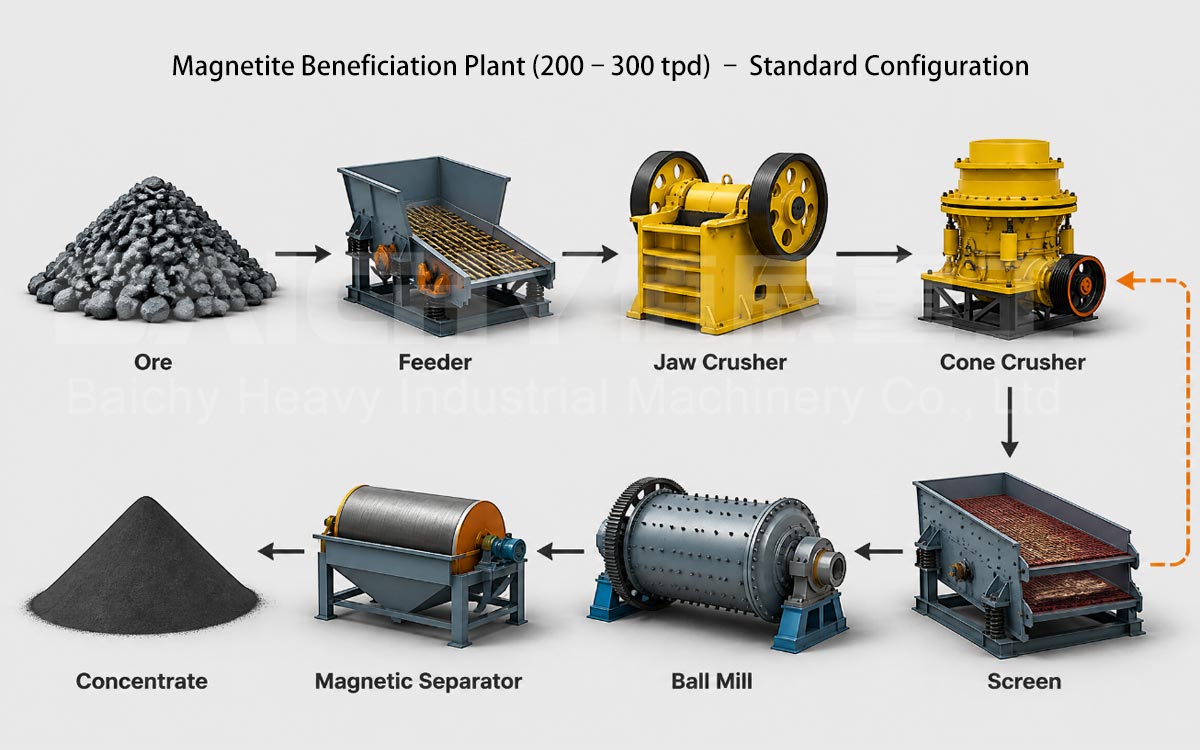
Magnetite Beneficiation Plant (200–300 tpd) – Standard Configuration
Process Flow: Run-of-mine ore (≤500mm) → ZSW490×110 Feeder → PE600×900 Primary Crushing (≤150mm) → PYB1200 Secondary Crushing (≤30mm) → 3YK1860 Closed-circuit Screening (≤15mm) → Stage 1 Grinding & Magnetic Separation → Stage 2 Grinding & Magnetic Separation → Dewatered Concentrate
Design Metrics: Concentrate grade (TFe) 64%–67%; Iron recovery rate 82%–90%; Daily concentrate output 85–170t
ROI: Total equipment investment $250k–$380k; Processing cost per ton of concentrate $4.1–$5.0; Based on iron concentrate price of $90–$120/t, monthly gross profit is $140k–$280k; Payback period 10–16 months
Key Insight: For the crushing stage, it is better to "upsize" the equipment—maintaining a 20% capacity margin to handle fluctuations in ore hardness and prevent bottlenecks across the entire line.
VI. Recommended Equipment List
| Stage | Recommended Models Applicable | Capacity |
| Primary Crushing | PE600×900 / PE750×1060 / PE900×1200 | 100–600 tph |
| Secondary Crushing | PYB900/PYB1200, CS160 Hydraulic Cone Crusher | 40–300 tph |
| Fine Crushing | HP Multi-cylinder Hydraulic Cone Crusher | 60–350 tph |
| Screening/Feeding | YK Circular Vibrating Screen, ZSW Vibrating Feeder | -- |
| Beneficiation Auxiliaries | Overflow Ball Mill, CTB Wet Magnetic Separator | 200–3000 tpd |
| Mobile Solution | YDPZ Jaw Crushing Station + Mobile Cone Crushing Station | -- |
Related Reading: 7 Golden Rules for Selecting Stationary Crushing Lines; TCO Analysis of Jaw Crushers; Complete Magnetite Beneficiation Process Flow.
FAQ
Q1: Why aren't impact crushers used for iron ore crushing?
Iron ore is highly abrasive; impact crusher blow bars wear out quickly, resulting in wear-part costs per ton that are roughly 2–3 times higher than those of cone crushers, alongside a high rate of over-crushing (excessive fines). It is industry consensus to use jaw crushers for primary crushing and cone crushers for secondary/fine crushing when processing hard rock; impact crushers are suitable only for low-abrasion soft rock or sand shaping.
Q2: What is the investment cost for a 200 tpd iron ore crushing line?
In Baichy Heavy Industry’s 200–300 tpd magnetite solution, the equipment investment for the complete line (crushing, grinding, and magnetic separation) is approximately 250,000–380,000 USD, requiring a footprint of 3,000–4,000 m²; purchasing only the crushing and screening section costs about half of the total line price. Actual quotes depend on ore hardness, power standards (50/60 Hz), and whether a mobile solution is adopted.
Q3: Under what circumstances are mobile crushing stations suitable?
They are suitable for three types of scenarios: operations involving scattered ore bodies that require rotating mining across multiple sites; projects with short service lives (3–5 years); and mining areas lacking electricity or the infrastructure for civil engineering works. Mobile stations require no civil construction and can be put into operation within seven days of arrival, though the crushing cost per ton is 10–15% higher than that of fixed stations; for service periods exceeding eight years, installing a fixed production line is recommended.