
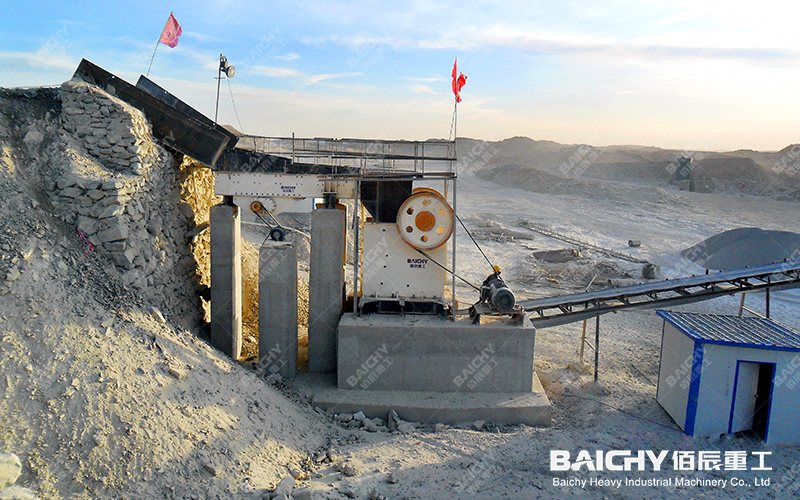
80–100 TPH Granite Crushing Plant in Mali
A quarry project in Mali requires a dependable solution for processing granite and other hard rocks at 80–100 tons per hour (TPH). The proposed materials include granite, quartzite, and gabbro. Because these rocks are strong and abrasive, the plant must provide stable feeding, staged crushing, efficient screening, wear management, and practical maintenance.
A typical solution includes a vibrating feeder, jaw crusher, cone crusher, vibrating screen, return conveyor, and finished-product conveyors. A VSI crusher can be added when the customer needs improved aggregate shape or manufactured sand. This article explains the complete process and the main factors to confirm before final equipment selection.
Customer Requirements for the Mali Quarry
The confirmed project information is:
• Location: Mali
• Materials: Granite, quartzite, and gabbro
• Target capacity: 80–100 TPH
• Application: Aggregate production, with the final use to be confirmed
Capacity alone does not determine the final plant. The customer should also confirm the maximum feed size after blasting, required product sizes, moisture and clay content, operating hours, power supply, site area, and aggregate-shape requirements.
Road-base production may prioritize stable capacity and top-size control. Asphalt and higher-grade concrete may require better particle shape and fewer flaky particles. These differences affect crusher settings, screen arrangement, and whether a VSI stage is needed.
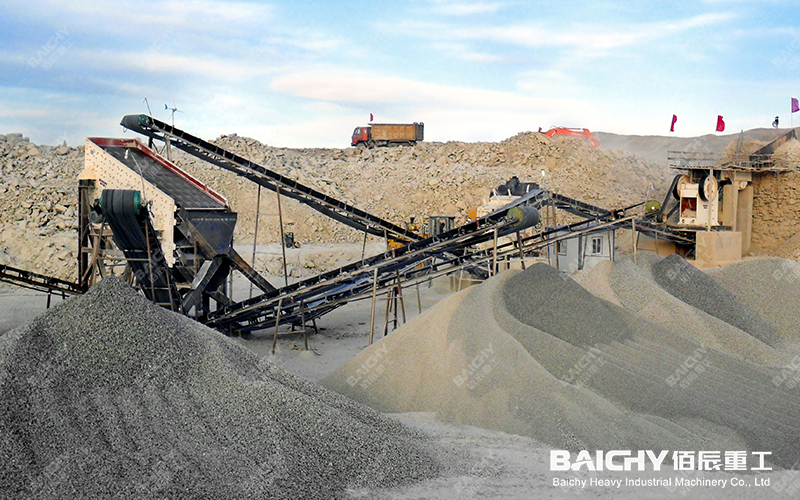
80–100 TPH Granite Crushing Plant in Mali
Why Hard Rock Needs a Dedicated Crushing Circuit?
Granite, quartzite, and gabbro require substantial crushing energy and can accelerate wear on jaw plates, cone liners, screen media, and conveyor components. Quartz-rich rock may be especially abrasive, while changes in fracture pattern and weathering can affect product size and shape.
The circuit should therefore consider the primary crusher feed opening, staged size reduction, wear-part availability, closed-circuit control, screen capacity, power supply, and lubrication. For many 80–100 TPH applications, a jaw-and-cone circuit is a practical starting point. A VSI should be selected only when the product specification justifies its additional cost, power use, and wear requirements.
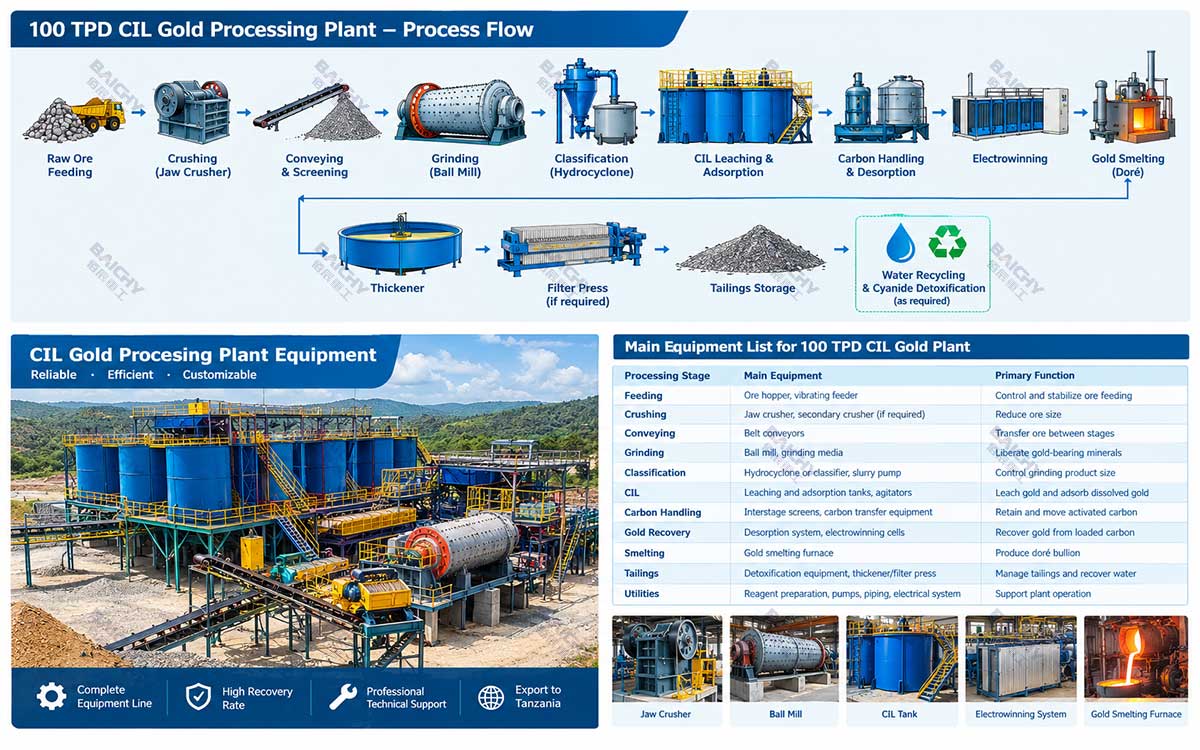
Complete 80–100 TPH Crushing Process
Run-of-mine rock → Feed hopper → Vibrating feeder with optional grizzly → Jaw crusher → Cone crusher → Vibrating screen → Finished products and oversize return
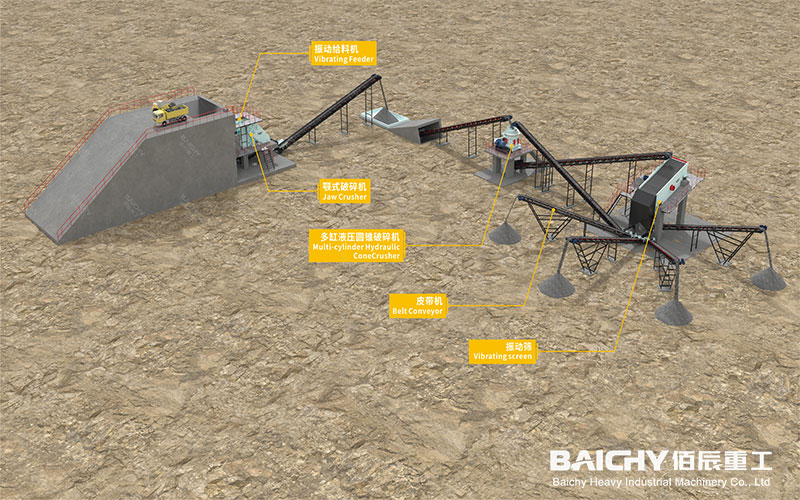
Complete 80–100 TPH Crushing Process
1. Feed Hopper and Vibrating Feeder
After drilling, blasting, loading, and hauling, raw material enters the feed hopper. The maximum rock size should be checked before commissioning. Oversized rocks may require a hydraulic breaker before entering the hopper.
The hopper buffers loader operation and the crushing line. The vibrating feeder delivers material at a controlled rate. A grizzly or pre-screening section can remove soil, fines, and weathered material before primary crushing, reducing the jaw crusher load. Its suitability depends on feed moisture and clay content.
2. Jaw Crusher for Primary Crushing
The jaw crusher performs the first major size reduction. It accepts large hard rock and produces a manageable product for the cone crusher. Stable feeding is essential: irregular feeding reduces output, while overfeeding increases power draw and wear.
Operators should monitor the feed opening, discharge setting, vibration, jaw-plate condition, and power draw. The jaw discharge setting should be selected together with the cone crusher and screen rather than adjusted separately.
3. Cone Crusher for Secondary Crushing
The cone crusher reduces the jaw-crusher product and produces a controlled aggregate size. It is suitable for hard and abrasive materials when the chamber, liner profile, closed-side setting, feed distribution, and lubrication system are correctly matched.
The cone crusher normally works in a closed circuit with the vibrating screen. Correctly sized material passes through the screen as finished product, while oversize returns for further crushing. This controls the top size and improves product consistency. The circulating load depends on feed gradation, crusher setting, screen efficiency, and product specifications.
4. Vibrating Screen and Conveyors
A multi-deck vibrating screen separates the crushed rock into the required product sizes. Performance is affected by feed rate, moisture, particle shape, screen media, inclination, and circulating load.
Separate conveyors transfer each accepted product to its own stockpile. The return conveyor sends oversize back to the cone crusher. Conveyors should include guarding, emergency pull-wire switches, belt-alignment protection, and safe inspection access. Transfer chutes should reduce spillage and dust.
| Process stage | Recommended equipment | Main function | Key considerations |
|---|---|---|---|
| Feeding | Vibrating feeder with optional grizzly | Controls feed and removes fines | Hopper volume, feed size, moisture |
| Primary crushing | Jaw crusher | Reduces large hard rock | Feed opening, setting, jaw wear |
| Secondary crushing | Cone crusher | Produces controlled aggregate | Chamber, liner, setting, lubrication |
| Classification | Multi-deck vibrating screen | Separates product sizes | Deck area, apertures, blinding risk |
| Transfer | Return and product conveyors | Circulates oversize and moves products | Incline, guarding, dust control |
| Optional shaping | VSI crusher | Improves shape or makes sand | Product use, power, wear cost |
| Site power | Grid or diesel generator | Supplies the complete plant | Total load, starting current, fuel |
This is a preliminary configuration, not a final equipment quotation. Exact models, motor power, screen area, and conveyor dimensions require confirmed feed and product data.
Product Sizes and Optional VSI
The screen can produce fine, medium, and coarse aggregate. Exact size ranges depend on screen apertures, crusher settings, feed gradation, and customer specifications. Final output ratios should not be guaranteed before material testing or detailed engineering.
A VSI can be installed after cone crushing and before final screening when the project requires better particle shape, reduced flaky particles, or manufactured sand. If the project mainly produces road base or general crushed stone, the jaw-and-cone circuit may be more economical and easier to maintain.
Important Considerations for a Mali Project
Power and fuel
The customer should confirm whether reliable grid electricity is available. If not, a diesel generator may supply the feeder, crushers, screen, conveyors, lubrication systems, dust-control equipment, and auxiliaries. Generator selection must consider total operating load and motor starting requirements.
Wear parts and spare parts
Hard and abrasive feed can increase consumption of jaw plates, cone liners, screen media, belts, and other components. A spare-parts plan should be prepared before commissioning. For a remote quarry, keeping critical wear parts on site can reduce downtime caused by transport delays or limited local supply.
Dust, heat, and maintenance access
Dust may occur at the hopper, crusher discharge, screen, transfer points, and stockpiles. Water sprays or dry dust-control equipment can be selected according to local requirements, water availability, climate, and feed moisture. Electrical cabinets, bearings, motors, and lubrication systems should be protected from heat and dust.
The layout must reserve space for liner replacement, screen maintenance, belt adjustment, lifting, and inspection. Transportation routes, foundations, drainage, and lifting equipment should be reviewed before choosing a fixed, semi-mobile, or mobile layout.
Installation and Maintenance Plan
Installation should begin with verified foundations, correct equipment leveling, and aligned conveyors and chutes. Before feeding rock, test the complete line without load, including the feeder, jaw crusher, cone crusher, screen, conveyors, lubrication, controls, guards, and emergency stops.
During loaded commissioning, increase the feed gradually. Record power draw, vibration, bearing temperature, lubrication pressure, belt tracking, screen performance, and product gradation. Then adjust the feeder rate, jaw setting, cone setting, and screen arrangement to approach the required 80–100 TPH range.
Daily maintenance should include inspection of wear parts, bolts, belts, screen media, guards, lubrication levels, and transfer points. Recording operating hours and wear-part changes helps identify abnormal wear and plan future spares.
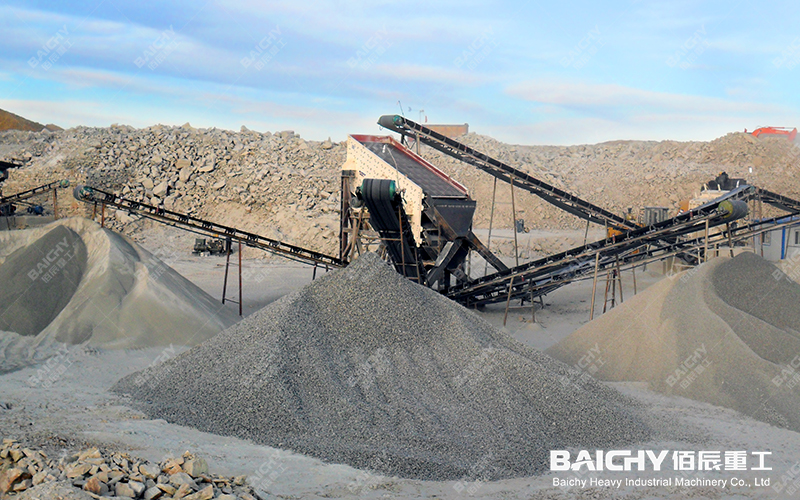
80–100 TPH Granite Crushing Plant in Mali
Frequently Asked Questions
1. What is the best crusher for granite in an 80–100 TPH plant?
A jaw crusher is commonly used for primary crushing, followed by a cone crusher for secondary or fine crushing. The final selection depends on feed size, product requirements, abrasiveness, and circuit design.
2. Can the same plant process quartzite and gabbro?
Yes. A properly designed hard-rock circuit can process granite, quartzite, and gabbro. Differences in hardness, abrasiveness, fracture pattern, moisture, and feed gradation may affect throughput, settings, product shape, and wear consumption.
3. Is a cone crusher necessary for hard and abrasive rock?
A cone crusher is often a practical choice for secondary crushing when the project needs controlled product size and closed-circuit operation. The final design should be checked against the material and target products.
4. What product sizes can this plant produce?
A multi-deck screen can separate several fine, medium, and coarse products. Exact sizes depend on the selected apertures, crusher settings, feed gradation, and customer specifications.
5. Does the Mali project need a diesel generator?
Only if reliable grid power is unavailable or insufficient. The generator must cover the complete plant load, motor starting requirements, fuel logistics, and local maintenance conditions.
Baichy Heavy Industry
Baichy Heavy Industry is a high-tech mining equipment company integrating R&D, manufacturing, sales, and after-sales service. Focusing on crushing, grinding, and mineral processing equipment, we provide professional solutions to our customers. We are ISO9001:2015 Certified, and our products include mobile crushing palnts, crawler crushing plant, construction waste crushing plants, jaw crushers, sand making machines, cone crushers, fine crushers, grinding mills, ball mills, etc., all with reliable performance to meet diverse project needs.
Baichy Heavy Industry – Your Trusted Partner
To ensure optimal performance of your equipment, Baichy Heavy Industry offers:
- Professional on-site installation guidance
- Comprehensive operator training
- 24/7 technical support & maintenance services
Our complete after-sales service system guarantees long-term, stable operation of your machinery with minimal downtime.
Protect Your Rights – Only Use Official Channels
To avoid scams and ensure authentic support, contact us exclusively through:
• Official Website: www.baichychina.com
• WhatsApp: +8615093222637
• Email: [email protected]
Your satisfaction is our priority – expect prompt, professional service every time.
(Note: Beware of unauthorized third parties claiming to represent Baichy. Always verify through official contacts.)