
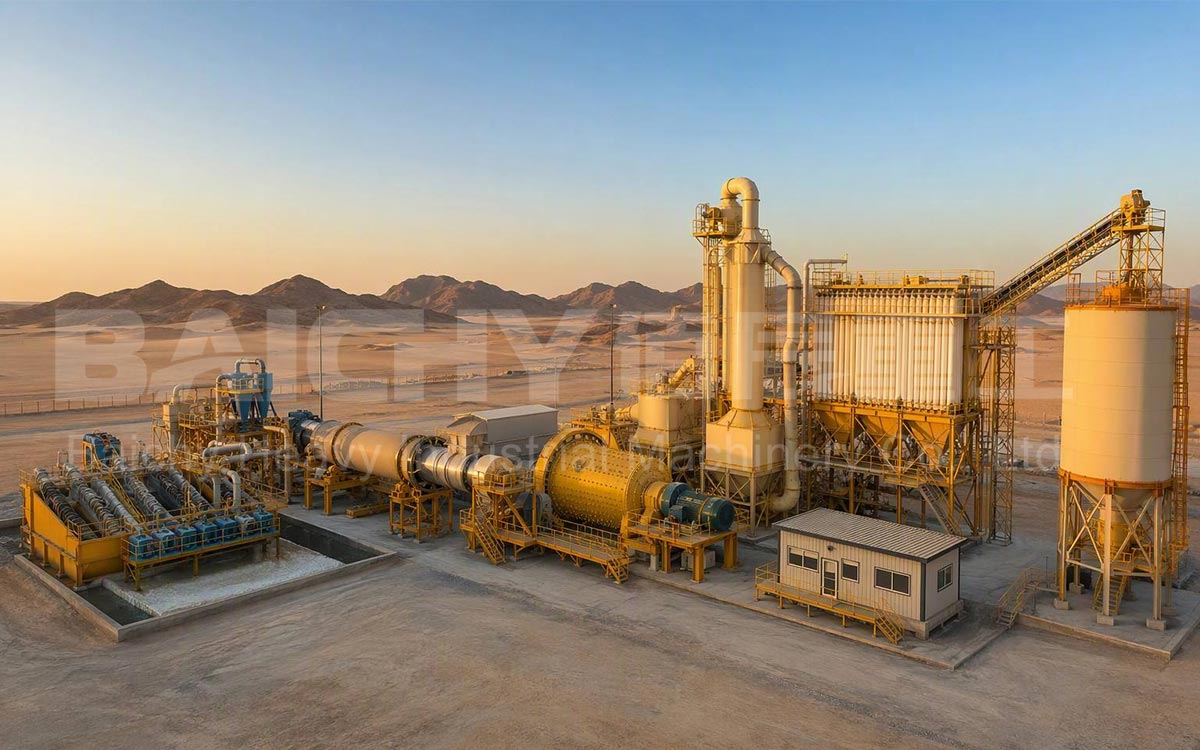
Complete process flow sand washing - drying - dry grinding - classification - dust removal - finished product storage
Baichy Heavy Industry confirms it can engineer and supply a complete 50 TPH net-capacity, zero-iron-contamination silica sand line — washing, drying and dry-grinding high-purity industrial silica sand from F80 < 20 mm to P80 = 75 μm (200 mesh) — delivered CIF Jeddah Islamic Port.
This proposal is built around the three parameters that decide whether your product wins the Saudi premium-sand market: purity, fineness control, and net capacity at continuous operation.
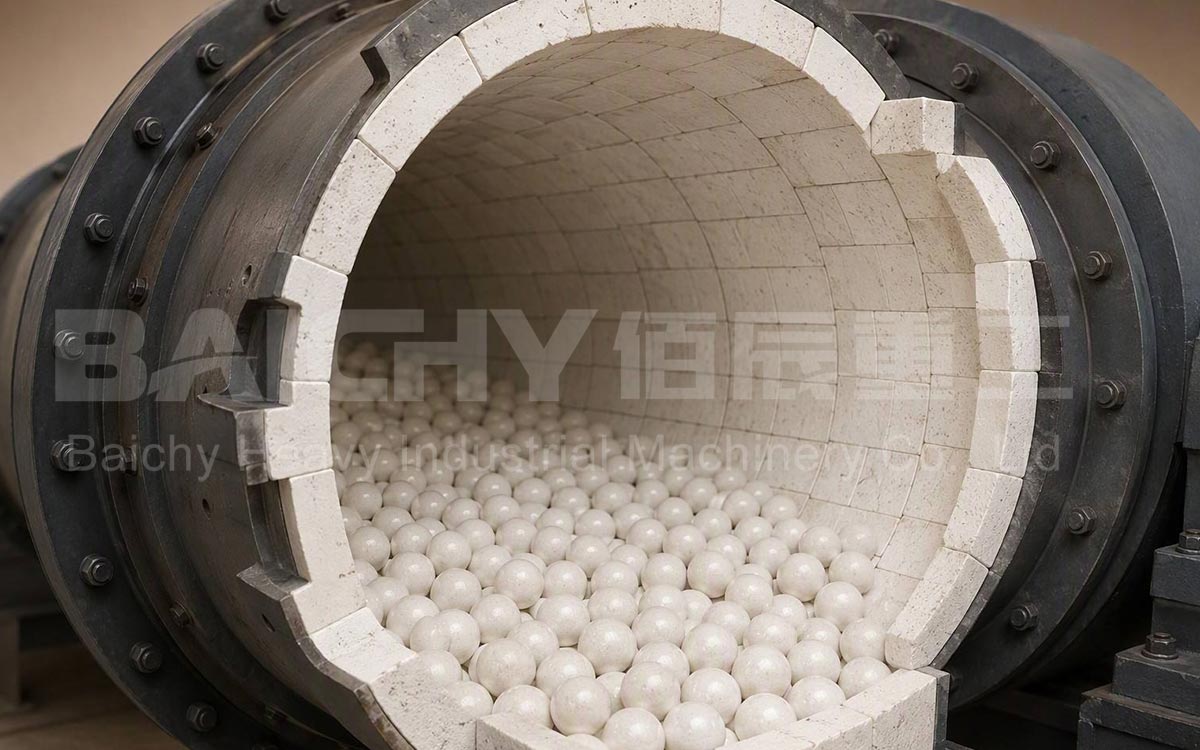
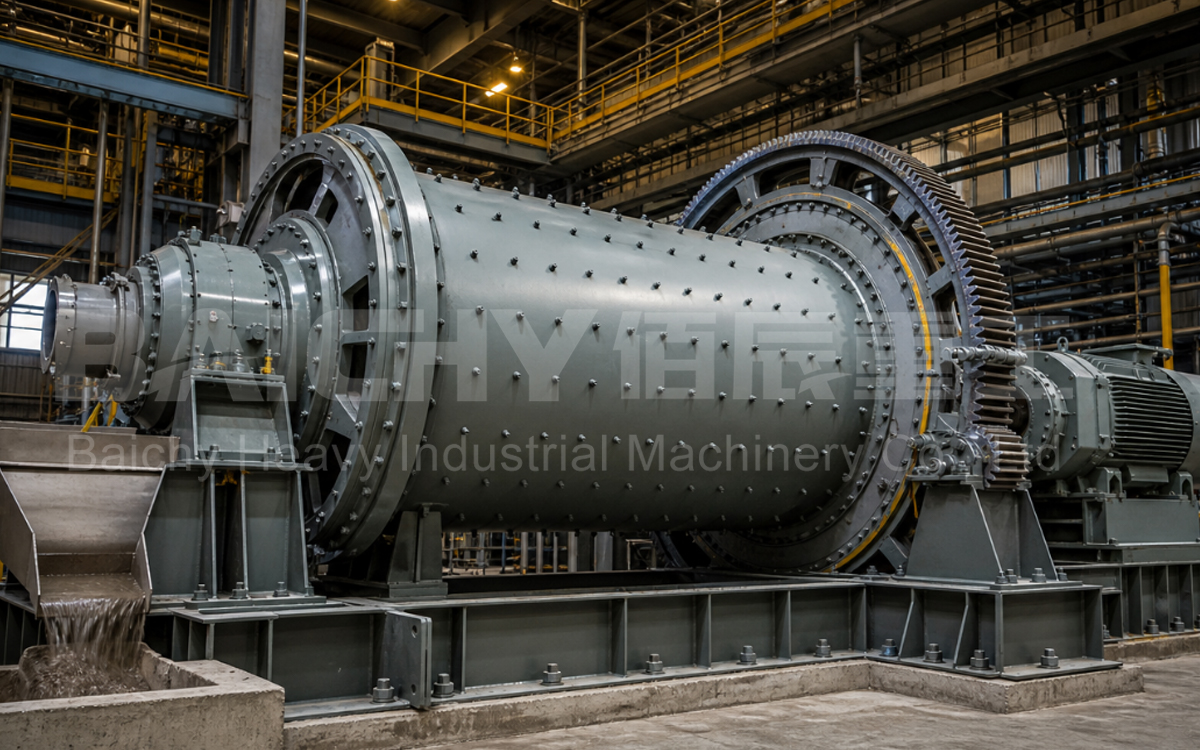
Interior of a ceramic-lined ball mill
1. Purity. The grinding chamber contains no steel at all — high-alumina ceramic liners (Al₂O₃ ≥ 92%) and alumina grinding balls throughout, with iron-contact points eliminated upstream of the mill. Fe₂O₃ pickup is held to trace levels, protecting your downstream value chain (photovoltaic glass, float glass, foundry and fracturing sand buyers all pay a premium for iron discipline).
2. Fineness. A closed-circuit dry-grinding system with a dynamic air classifier holds P80 at 75 μm (200 mesh) with a tight distribution — not "roughly 200 mesh", but a spec you can guarantee to buyers.
3. Capacity. Every section is sized for ≥ 50 TPH net output at 7×24 continuous operation, with 10–15% design margin above the nameplate so real-world tonnage (clay surges, moisture peaks) never drops below contract.
Why this matters in your market: Saudi Arabia's silica sand market reached ~758 thousand metric tons in 2025 and is projected to grow at a 6.30% CAGR to ~1,396 KMT by 2035 (Saudi Mining Consulting). The Kingdom's 58.7 GW renewable-energy target for 2030 — including 40 GW of solar PV — is creating structural demand for high-purity silica for photovoltaic glass (IMARC). A 50 TPH line running 6,000 h/yr at 90% availability yields roughly 270,000 metric tons of saleable product per year — a position in the premium segment, not the commodity segment.
1. Specification & Performance Commitment
| Parameter | Your requirement | Baichy commitment |
| Feed size (F80) | < 20 mm | Accepted as-is; plant receives 0–20 mm directly, no crusher in scope |
| Finished fineness | P80 = 75 μm (200 mesh) | Closed-circuit dry ball mill + dynamic air classifier, P80 75 μm ± 5 μm |
| Net capacity | ≥ 50 TPH | Every section designed at ≥ 55 TPH → ≥ 50 TPH net, 7×24 continuous |
| Iron contamination | No steel media/liners | High-alumina ceramic liners (Al₂O₃ ≥ 92%) + alumina grinding balls; no steel contact in grinding chamber |
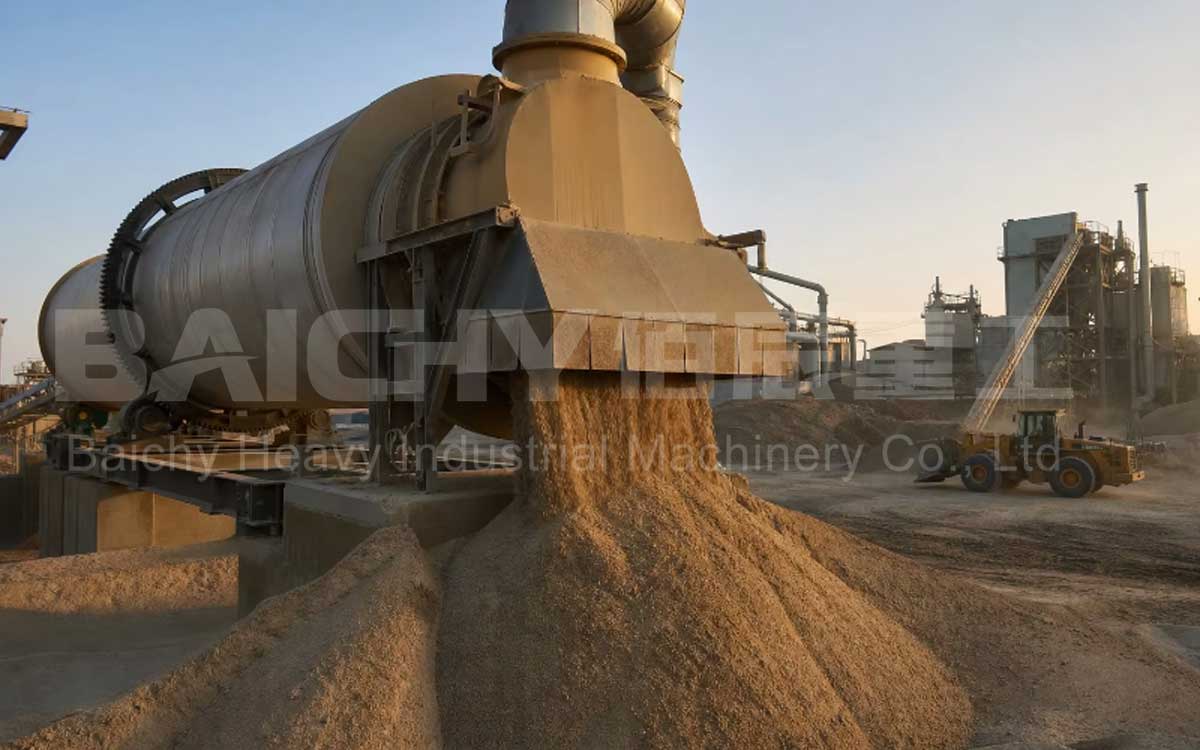
| Product moisture | < 0.5% | Rotary drum dryer: 15–18% inlet moisture → < 0.5% outlet |
| Water recovery | Maximize | Clarifier + filter press package, recovery > 90%; fresh make-up only 10–15 m³/h |
| Electrical supply | KSA standard | All motors & MCC for 400 V / 60 Hz; centralized PLC + HMI |
| Plant footprint | To be provided | ~80 m × 60 m process layout incl. feed stockpile & product silo (drawing in offer) |
| Delivery & erection | CIF Jeddah | 14–16 wks manufacturing + 4–6 wks sea freight; erection & commissioning 6–8 wks on site |
2. Process Flow
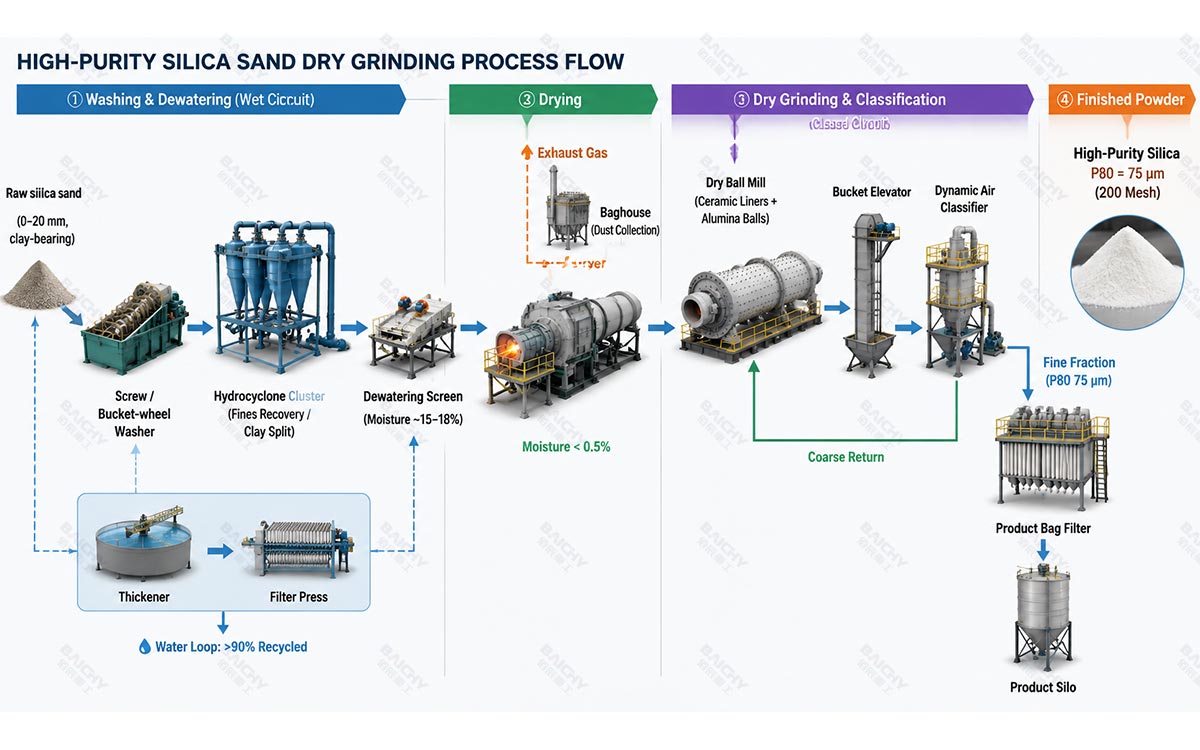
HIGH-PURITY SILICA SAND DRY GRINDING PROCESS FLOW
Closed-loop logic: classifier rejects recycle to the mill — nothing is wasted. Water from the wash circuit is clarified and returned; sludge cake from the filter press is the only solid reject stream. Dust collected at every point returns to product or is disposed as sludge — air emissions stay within Saudi ambient standards.
3. Contamination Control Protocol
This section protects your product's price per ton.
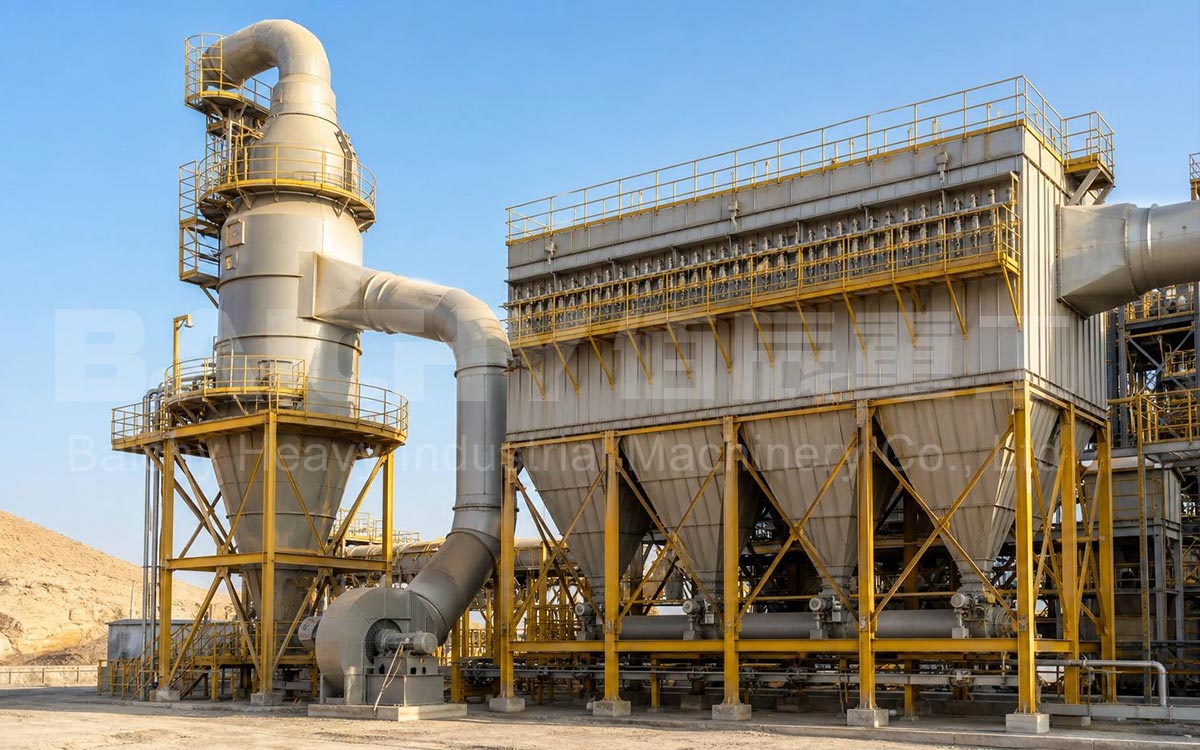
Dynamic Classifier + Pulse-Jet Bag Dust Collector
• Mill interior: high-alumina ceramic liners (Al₂O₃ ≥ 92%) and alumina grinding balls. Zero steel or cast-iron media inside the grinding chamber.
• Feed path: feed chute, mill inlet housing and outlet spouts lined or rubber-coated to prevent abrasion-generated iron pickup before and after the mill.
• Classifier & conveying: classifier rotor and contact surfaces in wear-resistant non-ferrous or lined configuration; steel screws/elevators available with rubber or ceramic lining on request.
• Verification: lining/media material certificates supplied; recommended commissioning protocol includes Fe₂O₃ analysis of mill discharge at 0, 48 and 120 h so iron pickup is documented, not assumed.
• The commercial logic: photovoltaic and float-glass buyers routinely reject silica with Fe₂O₃ above 100–150 ppm depending on grade. A 50 TPH line that protects purity holds its premium; a line that contaminates it loses the sale before it starts.
4. Commercial Terms
• Incoterm: CIF Jeddah Islamic Port, Saudi Arabia — sea freight and marine insurance included to port of discharge.
• Documentation included with the offer:
① process flow sheet (PFD);
② general arrangement layout with footprint dimensions;
③ water balance and power consumption schedule;
④ manufacturing, delivery and erection timeline;
⑤ detailed commercial quotation (equipment list, unit prices, total CIF value);
⑥ lining/media certificates and first-year spare-parts list.
• Payment terms: standard export terms — 30% T/T advance, 70% before shipment, or L/C at sight (to be agreed).
• After-sales: commissioning engineer dispatch, operator training, 12-month warranty on supplied equipment.
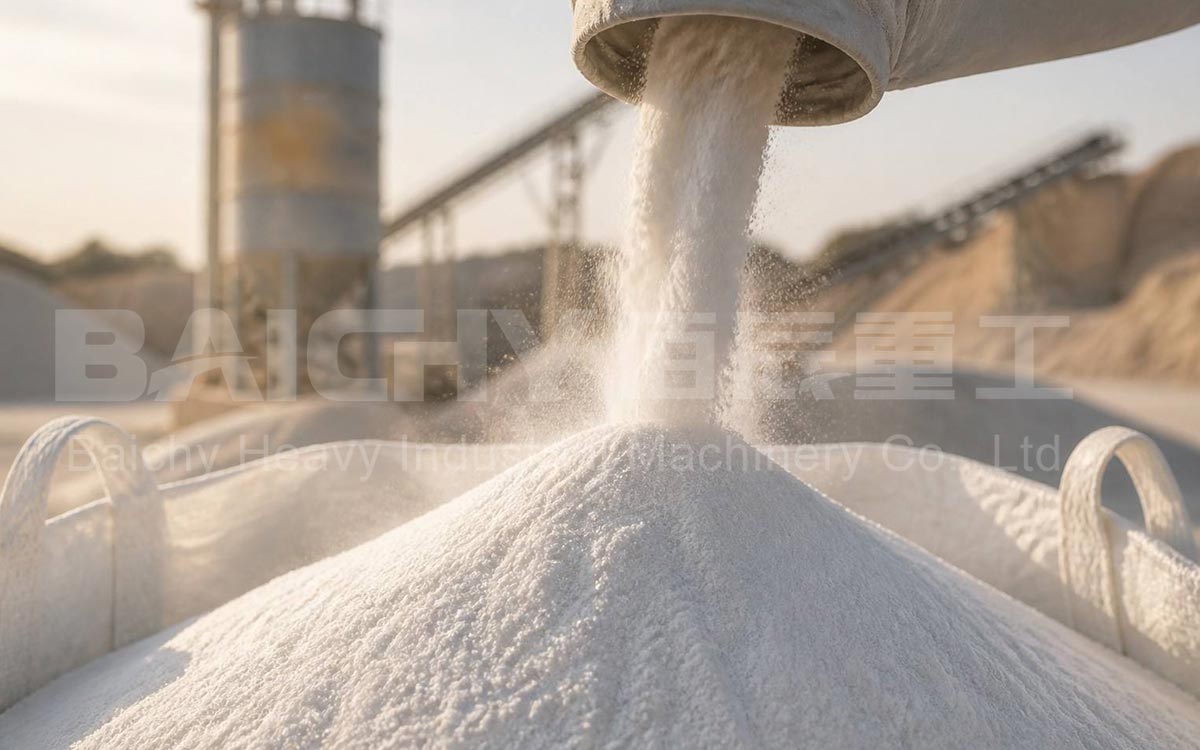
Finished high-purity silica sand powder
5. FAQ
Q1: How do you guarantee zero iron contamination in dry grinding?
A1: The grinding chamber uses high-alumina ceramic liners (Al₂O₃ ≥ 92%) and alumina balls only. All product-contact points outside the mill are lined or rubber-coated, and commissioning includes on-site Fe₂O₃ sampling of mill discharge at 0/48/120 h. Typical alumina-media systems hold Fe₂O₃ pickup to trace levels (sub-50 ppm dependent on feed), documented with certificates and test data.
Q2: What is the actual water consumption at 50 TPH?
A2: The wash circuit circulates roughly 120–150 m³/h, with fresh make-up of only 10–15 m³/h because the thickener + filter press package recovers > 90% of process water. Sludge leaves as filter cake (20–25% moisture) for dry stacking.
Q3: Can the plant run on Saudi electricity standards?
A3: Yes. All motors and electrical equipment are specified for 400 V / 60 Hz (Saudi standard) unless you specify otherwise; the PLC cabinet and MCC are built to match your site supply.
Q4: What is the delivery time to Jeddah?
A4: Approximately 14–16 weeks of manufacturing after design approval, plus 4–6 weeks sea freight CIF to Jeddah Islamic Port. Erection and commissioning take 6–8 weeks on site with Baichy supervision.
Q5: Why a dynamic air classifier instead of a screen for 200 mesh?
A5: At 75 μm, screening becomes inefficient and blinding-prone. A dynamic (rotor) air classifier gives a precise, adjustable cut with a narrow particle-size distribution, returns oversize to the mill automatically, and is the industry-standard solution for 200-mesh silica powder in closed circuit.