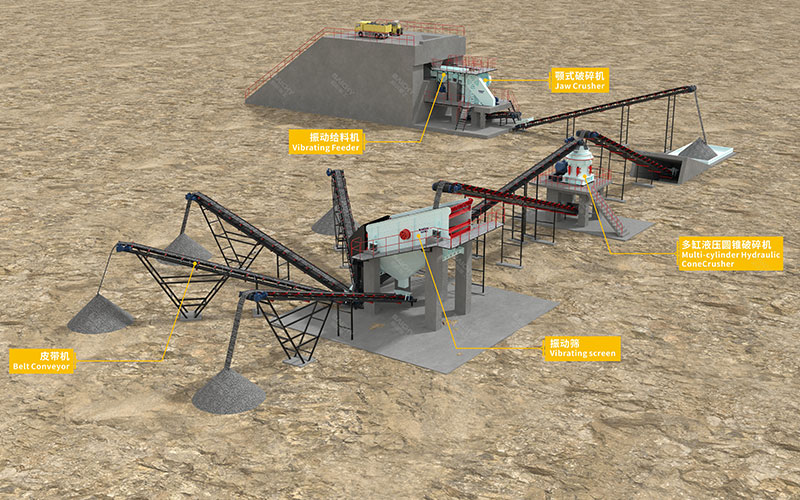
200tph limestone crushing plant
The Hidden Costs of Improper Configuration in Limestone Production Lines: Downtime and Over-Crushing
In a poorly designed 200 t/h limestone crushing line—specifically where an incompatible machine model is selected for secondary crushing or the screen configuration is incorrect—common consequences arise: the impact crusher may experience material blockages, resulting in an average of 2 to 3 hours of daily downtime (equivalent to a daily production loss of 400 to 600 tons); alternatively, the proportion of stone powder (0–5 mm) in the finished product may spiral out of control, exceeding 40%, thereby necessitating the addition of extra cementitious materials in concrete mixes and indirectly driving up the client's production costs by 3 to 5 RMB per ton. Drawing upon data from projects successfully delivered by Baichy Heavy Industry in Honduras (180–200 t/h) and Malaysia (200 t/h, including sand making), this article presents a standard "two-stage crushing, one-stage screening" closed-circuit solution, accompanied by the quantitative rationale supporting its design.
Recommended Standard Configuration: Two-Stage Closed-Circuit Crushing (Medium-to-Low Silica Limestone)
For typical limestone with a Mohs hardness of 3–4 and a feed size of ≤500–630 mm, Baichy Heavy Industry recommends the following classic "Jaw Crusher + Impact Crusher + Screening" closed-circuit process, which balances both finished product particle shape and operational economics:
| Process Step | Equipment Model | Key Parameters | Function Description |
| Feeding | ZSW1142 Vibrating Feeder | Feed size ≤500 mm; Motor: 15 kW | Removes soil/fines + ensures uniform feeding; prevents jaw crusher clogging |
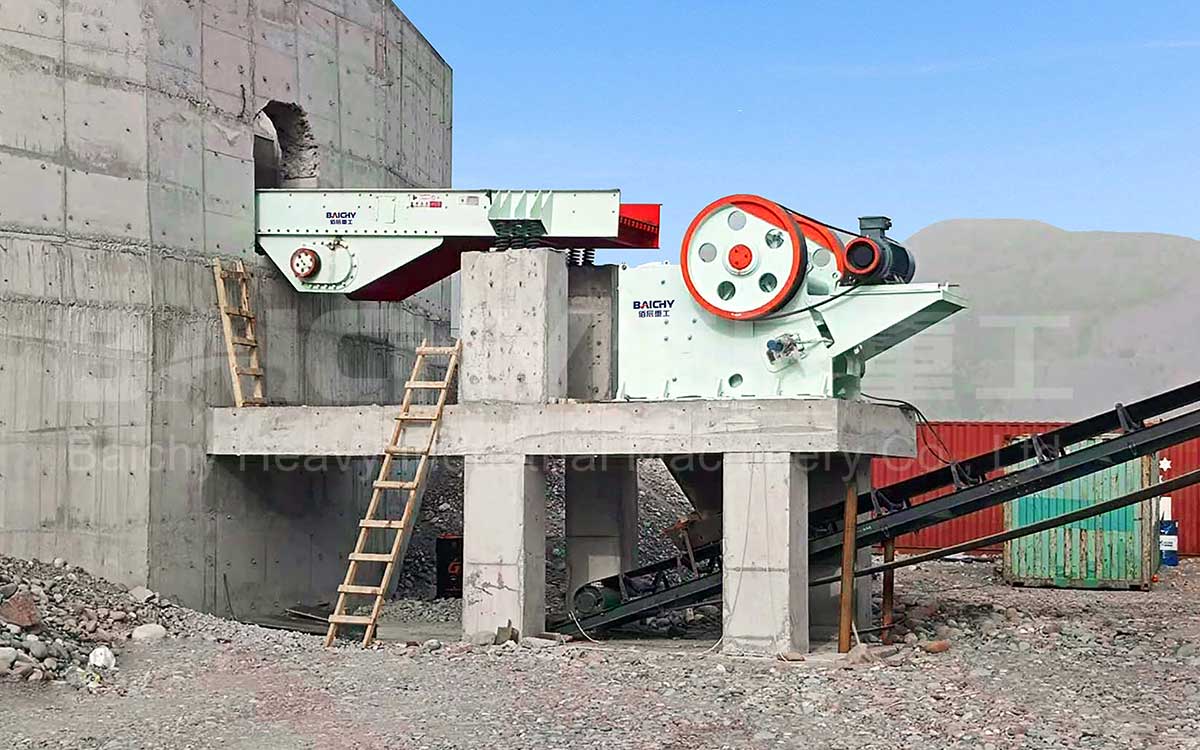
| Coarse Crushing (Stage 1) | PE750×1060 Jaw Crusher | Feed size ≤630 mm; Discharge opening: 80–140 mm (adjustable); Motor: 90 kW | Crushes large limestone blocks down to <150 mm |
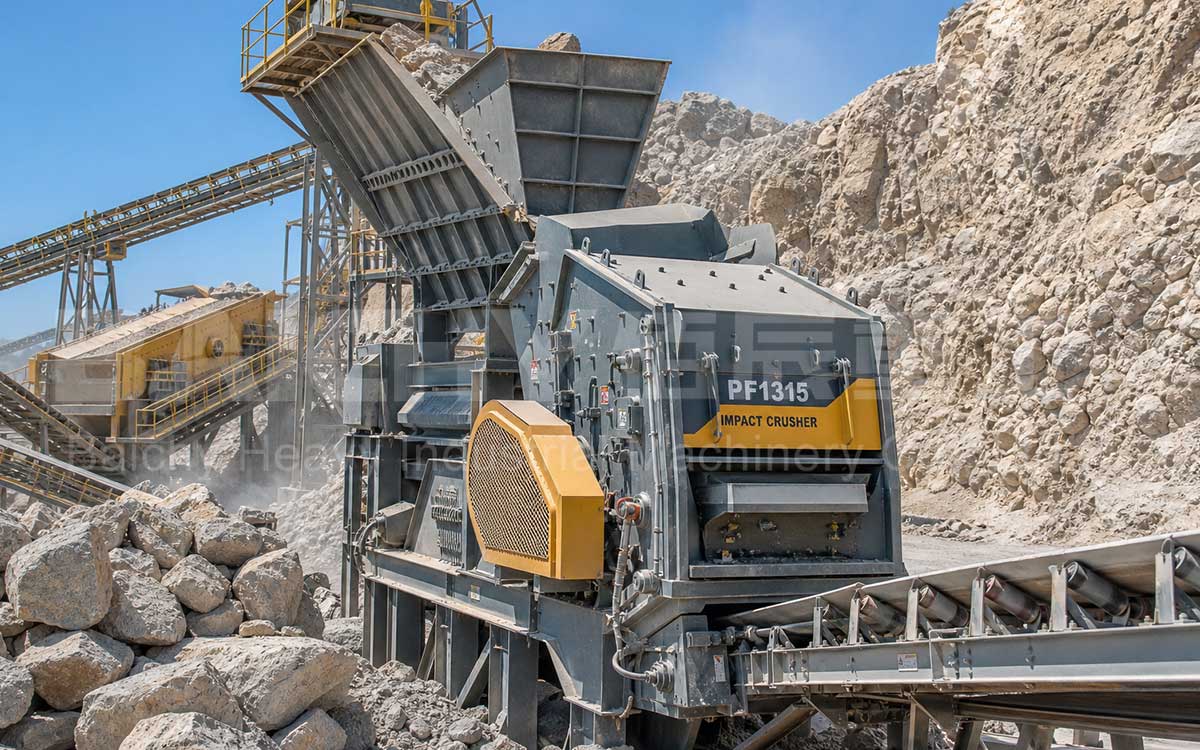
| Medium/Fine Crushing (Stage 2) | PF1315 / PF1320 Impact Crusher | Rotor: Φ1300 × (1500/2000) mm; Motor: 200–250 kW | Specialized shaping for limestone; produces cubical aggregates |
| Screening | 4YK2460 / 4YK2160 Circular Vibrating Screen | 4-deck screens; Motor: 30 kW | Classifies sizes: 0–5 mm, 5–10 mm, 10–20 mm, 20–40 mm |
| Conveying | B800 / B1000 Trough Belt Conveyor | Total length customized to site requirements | Closed-circuit return of oversized material to the impact crusher for re-crushing |
| Electrical Control | PLC Centralized Control Cabinet + Soft Starter | - | Overload protection; One-touch start/stop functionality |
What This Means for the Customer: Total installed power is approximately 340–380 kW, with a theoretical energy consumption of 1.7–2.0 kWh per ton. Compared to cone crusher solutions, the impact crusher—when processing limestone—yields a finished product with a needle-and-flaky particle content of ≤12% (surpassing the requirements of the GB/T 14685 standard), making it ideally suited for use as aggregate in commercial concrete and asphalt pavement surface layers.
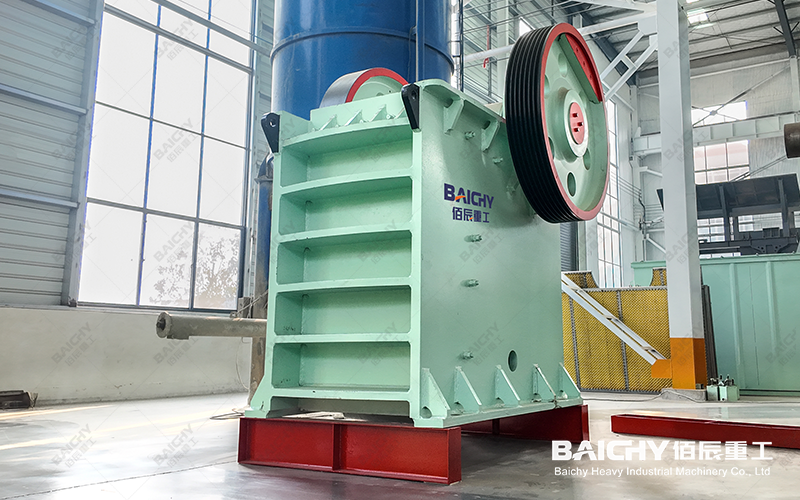
pe750x1060 jaw crusher
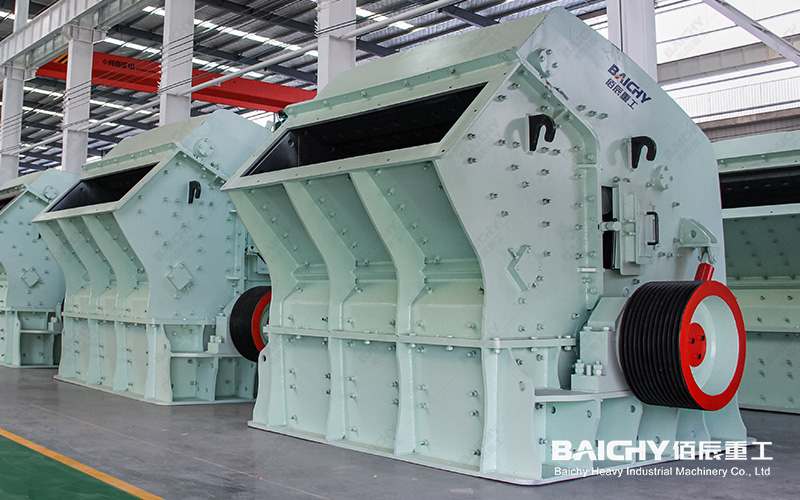
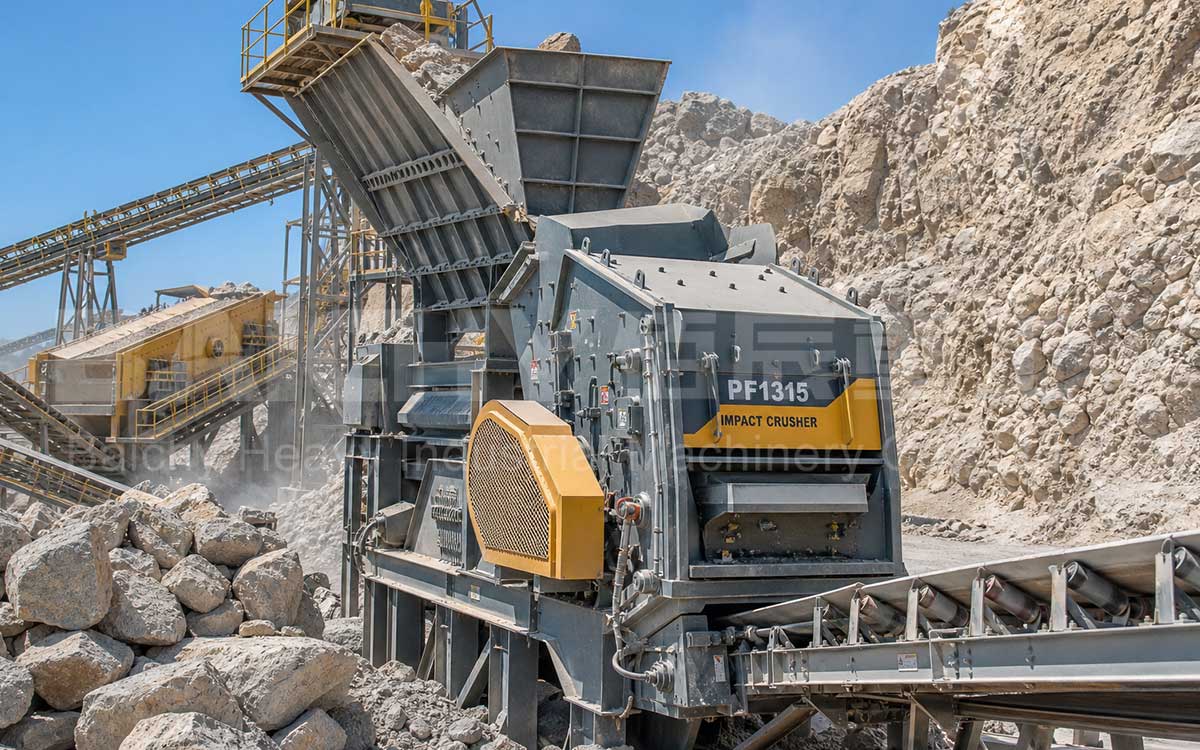
PF1315 impact crusher
Process Flow and Capacity Assurance Logic
1. Raw Ore → ZSW1142 Feeder → PE750×1060 Primary Crushing: Large blocks of limestone undergo initial high-stress crushing via a jaw crusher. The discharge size is controlled within the 100–150 mm range, thereby reducing the load on the secondary crushing stage.
2. → PF1315 Impact Crusher (Medium & Fine Crushing): Utilizing a combination of impact plates and blow bars, medium-hardness limestone undergoes a "stone-on-stone" and "stone-on-iron" compound crushing process, simultaneously achieving effective particle shaping.
3. → 4YK2460 Multi-layer Screening: The material is separated into finished product fractions of 0–5 mm, 5–10 mm, 10–20 mm, and 20–40 mm. Oversize material (>40 mm) is returned to the impact crusher to form a closed-circuit loop, ensuring the entire production line consistently achieves a stable output of 200 t/h (±5%).
4. Dust Removal & Noise Reduction (Optional): Spraying systems or pulse-jet bag filters are installed at feeding and transfer points. Boundary noise levels are maintained at ≤85 dB(A), satisfying the environmental impact assessment requirements of most countries.
Operating Costs and Wear Parts Expectations (Typical Limestone Conditions)
| Cost Item | Value/Cycle | Description |
| Total Installed Power | ≈350–380 kW | Includes feeding, crushing, screening, and conveying |
| Specific Power Consumption | 1.7–2.0 kWh/t | Grid electricity rates calculated based on local tariffs |
| Jaw Plate Lifespan | Processes 800,000–1,200,000 tons | High-manganese steel (ZGMn13); varies based on limestone abrasiveness |
| Impact Crusher Blow Bar Lifespan | 600–900 operating hours (≈3–4 months) | Use upper range for low-silica limestone; reduce to 400–500 hours for high-silica material |
| Screen Mesh Lifespan | 6–12 months | Adjustable based on material clay content and vibration amplitude |
| Operating Personnel | 1–2 persons/shift | PLC automated control; duties primarily involve routine inspections and sampling |
What This Means for the Customer: Based on a typical electricity rate of $0.10/kWh in Africa or Southeast Asia, electricity costs for the crushing section alone amount to approximately $0.17–$0.20 per ton. The annual replacement cost for blow bars is controllable within 2–3% of the initial equipment investment, resulting in an overall Operating TCO (Total Cost of Ownership) that is significantly lower than that of non-standard, custom-configured lines requiring frequent modifications.
Verified Project References
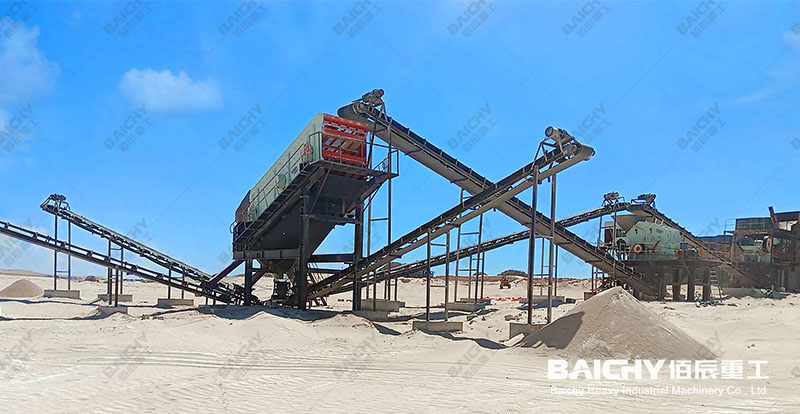
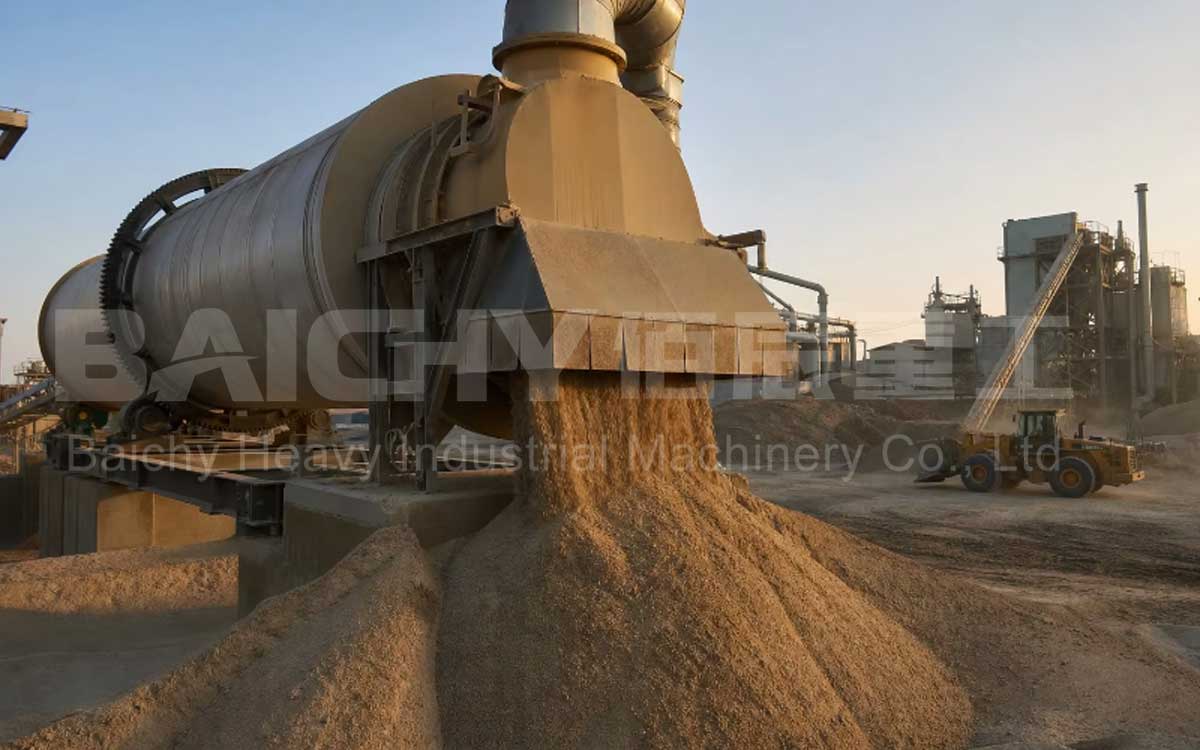
Honduras Limestone Crushing Production Line Site
• Honduras Limestone Project: Feed size <600 mm, hardness 3–4. Configuration: ZSW + PE750×1060 + HP Multi-cylinder Cone Crusher (optional) + 4YK Screen. Actual output achieved: 180–200 t/h. Finished product specifications: 0–5 mm, 5–10 mm, 10–20 mm, 20–40 mm. Continuous operation availability: >95%.
• Malaysia 200 t/h Limestone + Sand Making Project: Includes an additional VSI1145 Vertical Shaft Impact (VSI) sand making machine. The manufactured sand produced has a Fineness Modulus (FM) of 2.6–2.8, meeting the quality standards required by local ready-mix concrete plants.
Selection Recommendations & Next Steps
• Opt for the Standard Jaw Crusher + Impact Crusher Solution: Choose this option if your limestone contains <2% SiO₂ and lacks highly abrasive interlayers. This approach prioritizes optimal product shape and lower initial investment costs.
• Consider the Jaw Crusher + Hydraulic Cone Crusher Solution: Select this option if your raw feed contains high-silica flint interlayers, or if you prioritize exceptionally long service life for wear parts and are willing to accept slightly higher CAPEX (capital expenditure).
• For Sand Making Requirements: If a sand-making module is needed, you can add a VSI series sand-making machine to establish a three-stage crushing process.
Need a free plant layout diagram and a detailed quotation? Please contact our engineers at Baichy Heavy Industry. Provide your raw material size, desired finished product specifications, and site dimensions, and we will generate a customized process flowchart and equipment list for you.
Frequently Asked Questions (FAQ)
Q1: How much space is typically required for a limestone crushing production line with a capacity of 200 tons per hour (tph)?
A1: A stationary layout typically requires a flat, hardened surface area of approximately 1,000 to 1,500 square meters (excluding the finished product stockpile area). Mobile crushing units can reduce this footprint to 600 to 800 square meters and do not require extensive civil engineering foundations.
Q2: Can a PE750×1060 jaw crusher paired with a PF1315 impact crusher consistently produce 200 tons per hour?
A2: Yes, it can. The PE750×1060 has a rated capacity of 150–280 tph, while the PF1315 is rated at 200–320 tph. This pairing is well-balanced; with a closed-circuit screening system, the line can consistently maintain an output of 200 tph (±5%), provided that the feed is uniform and the screening area is sufficiently large (we recommend a ≥4YK2460 screen or a dual-screen setup).
Q3: Which is better for crushing limestone: an impact crusher or a cone crusher?
A3: For pure limestone (low silica content, medium-to-low hardness), an impact crusher is the preferred choice, as it yields a superior product shape and involves lower investment costs. However, if your limestone contains high-silica flint interlayers—or if you plan to process granite or basalt in the future—we recommend opting for a multi-cylinder hydraulic cone crusher to extend the service life of wear parts.
Q4: What is the approximate total power consumption for a 200 tph limestone crushing line? What is the hourly power consumption?
A4: The total installed power capacity for the entire line is approximately 350–380 kW. During continuous operation, the actual load factor ranges from 70% to 85%, translating to a specific energy consumption of 1.7–2.0 kWh per ton (kWh/t)—meaning the hourly electricity consumption is approximately 300–340 kWh.
Q5: How often do the blow bars on the impact crusher need to be replaced in a limestone processing line?
A5: Under typical operating conditions involving low-silica limestone, replacement is required every 600–900 operating hours (equivalent to approximately 2–3 months, assuming 10 hours of operation per day). For high-silica limestone or material with high clay content, this interval is shortened to 400–500 hours. The blow bars are secured via bolts, and the replacement process typically takes 2–4 hours.
Q6: Can this production line from Baichy Heavy Industry be equipped with sand-making capabilities?
A6: Yes, it can. By utilizing a bypass for the 0–5 mm undersize fraction from the screen, or by installing a dedicated VSI sand-making machine (such as the VSI1145 or VSI5X1263), the line can simultaneously produce manufactured sand (with an adjustable fineness modulus of 2.2–3.0) and classified coarse aggregates.
Q7: Does the production line include dust removal and environmental protection measures?
A7: The standard configuration includes a water-spraying dust suppression system. An optional pulse bag filter dust removal system is also available; this system allows dust emission concentrations to be controlled at ≤30 mg/m³ (or ≤10 mg/m³ for certain models), thereby meeting China's GB standards as well as most environmental assessment standards in Southeast Asia and the Middle East.