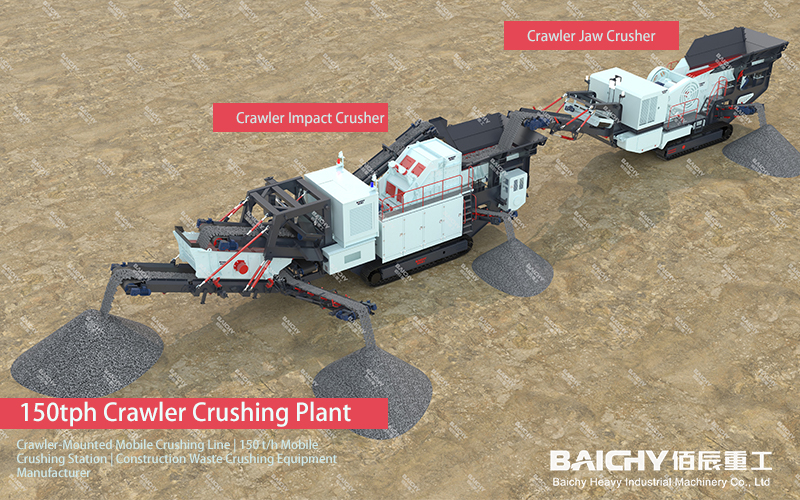
150 t/h Crawler-Mounted Crushing Station Configuration
150-ton/hour Track-Mounted Mobile Crushing Line: A High-Quality Aggregate Solution with Flexible Deployment
In the fields of engineering construction and resource recycling, a fundamental dilemma persists: how does one balance investment efficiency, finished product quality, and project mobility? While traditional stationary production lines offer stability, their high infrastructure costs and site constraints render them cumbersome in dynamic environments; conversely, standalone mobile stations, though flexible, are often constrained by bottlenecks in crushing efficiency and finished aggregate shape. It is precisely this industry pain point that has driven the development of a mobile crushing solution comprising track-mounted jaw crushers and impact crushers—not merely a set of equipment, but a "mobile factory" that redefines the production logic for short-to-medium-term projects.

Crawler Crusher PDF,Download ↓↓↓
I. System Architecture: Dual-Machine Synergy, Breaking Efficiency Barriers
1. Track-Mounted Jaw Crushing Station: The Powerful Vanguard
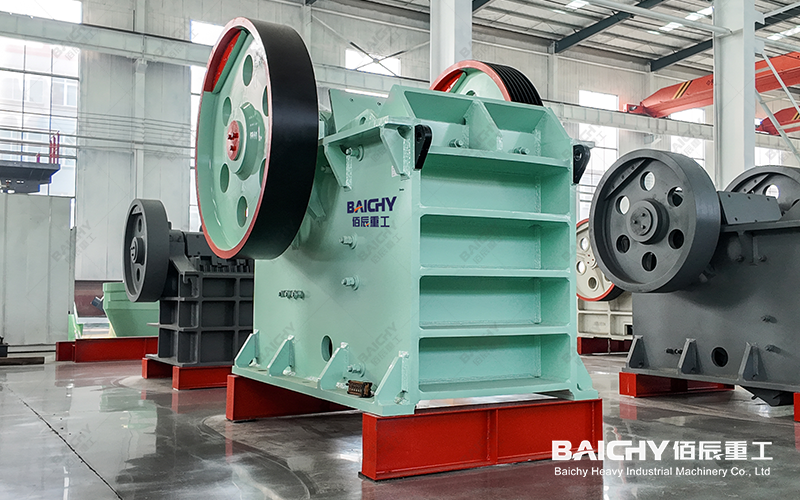
As the core component of primary crushing, this track-mounted jaw crusher specializes in the initial breakdown of raw materials. Its deep-cavity jaw structure achieves a crushing ratio of 6:1 to 8:1, performing exceptionally well when processing construction waste—even concrete blocks with a strength rating of C50 can be easily processed with a maximum feed size of up to 650 mm, while the discharge size is consistently controlled within 200 mm. Of particular note is its heavy-duty design and hydraulic adjustment system, which endow it with robust adaptability: even when the feed material contains small amounts of mixed rebar, the unit maintains stable crushing operations, providing critical technical support for the resource utilization of construction waste.
2. Track-Mounted Impact Crushing Station: The Precision Finisher
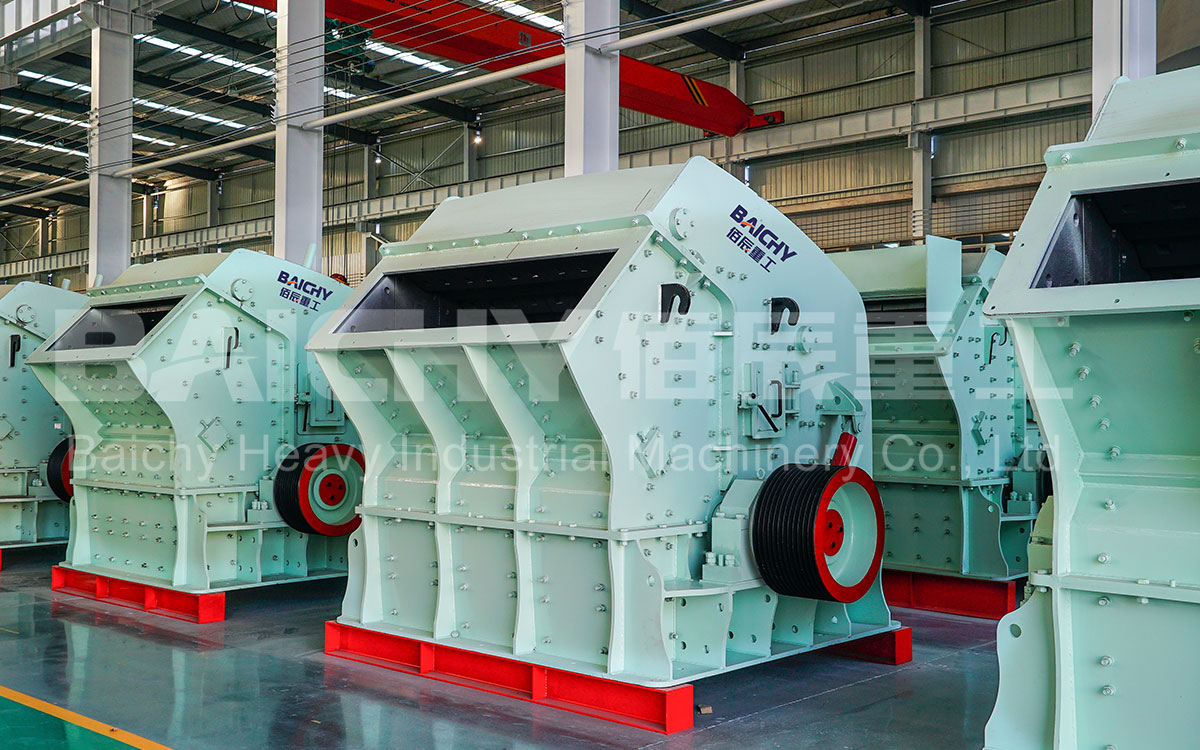
Following closely behind, the impact crusher assumes the role of the "precision finisher." Based on a composite crushing principle involving both "stone-on-stone" and "stone-on-metal" impact, it generates impact velocities reaching 40–50 meters per second. This high-speed impact not only achieves further comminution of the material but, more importantly, significantly improves the shape of the finished aggregates. Data from actual applications demonstrates that, following processing by this unit, the cubic content of the finished aggregates typically rises to over 90%, while the proportion of needle-like and flaky particles is effectively controlled within 10%. Through monitoring and tracking across numerous limestone processing projects, we have observed that this optimization enhances the aggregate's crushing index by approximately 15%, resulting in a marked improvement in the workability and performance of the resulting concrete.
II. Workflow: An Autonomous and Controlled Industrial Journey
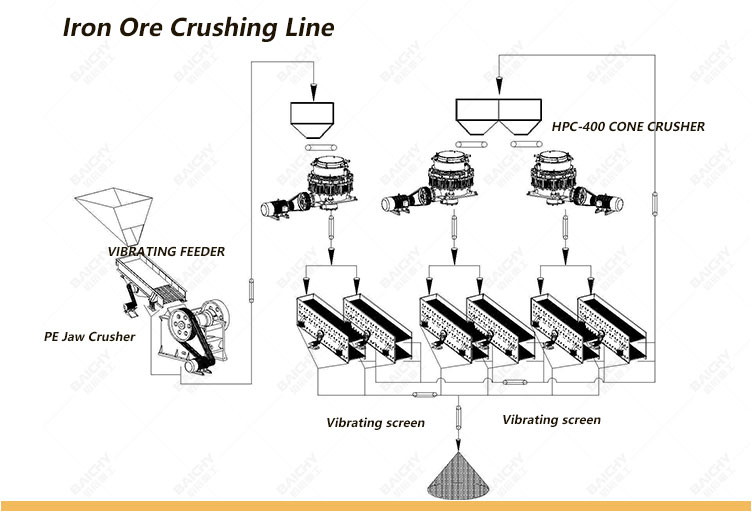
The transformation from raw materials to finished products on this production line unfolds as a precise industrial journey: Raw Material Preparation → Uniform Feeding → Primary Coarse Crushing → Intermediate Transfer → Secondary Fine Crushing → Screening and Grading → Finished Product Output. Each stage has been meticulously designed to ensure a perfect balance between efficiency and quality.
During the feeding and primary crushing stages, the amplitude and frequency of the vibrating feeders can be flexibly adjusted based on the moisture content and viscosity of the raw materials, thereby creating stable conditions for subsequent crushing operations. The jaw crusher’s hydraulic overload protection system acts like a vigilant guardian; it automatically releases pressure upon encountering uncrushable objects, effectively preventing damage to the equipment. According to actual operational data, energy consumption during this stage accounts for approximately 35–40% of the entire line's total energy usage, making it the primary energy-intensive point within the entire system.
The intermediate transfer stage may appear simple, yet it involves sophisticated engineering. The short-distance conveyors—featuring a belt width of 800–1000 millimeters—have their incline angles strictly controlled within 18 degrees; this specific angle ensures the smooth conveyance of materials while preventing backflow or spillage. Each transfer point is equipped with high-efficiency dust removal devices capable of maintaining dust concentrations below 20 mg/m³, a level significantly lower than the requirements mandated by environmental protection standards.
Upon entering the fine crushing and shaping stage, the impact crusher begins to demonstrate its technical prowess. Utilizing blow bars made from high-chromium alloy, the machine boasts a service life of 3,000 to 5,000 hours, thereby substantially reducing the frequency of maintenance. By adjusting the rotor speed and the gap between the impact plates, operators can precisely control the output particle size within a range of 5 to 40 millimeters. Furthermore, the unique hydraulic opening mechanism reduces maintenance time by over 60%, resulting in a substantial increase in equipment utilization rates.
The final stages—screening and finished product management—employ a three-layer vibrating screen configuration capable of simultaneously producing four different product specifications. Screening efficiency consistently remains above 90%, and when combined with a material return system to form a closed-loop cycle, it ensures the maximization of resource utilization. Each discharge port is fitted with a spray-based dust suppression system, guaranteeing that the entire operational process complies with the most stringent environmental protection and construction standards.
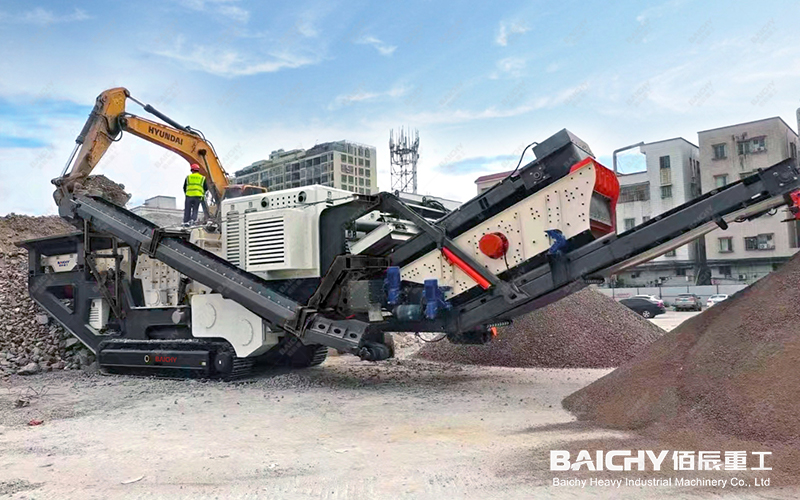
Track-Mounted Impact Crushing Station — Customer Site
III. Core Advantages: Redefining the Value of Mobile Crushing
Economic Breakthroughs
Compared to fixed production lines, this mobile solution offers distinct economic advantages. Fixed lines require an initial investment of 800,000 to 1.2 million RMB for infrastructure and another 500,000 to 800,000 RMB for steel-structure conveyor corridors; furthermore, their installation takes a lengthy 30 to 45 days, and disposing of the equipment's residual value once a project concludes can be challenging. In contrast, the mobile solution requires only a leveled site to commence operations; auxiliary facility investment is a mere 100,000 to 150,000 RMB, installation and commissioning can be completed within 2 to 3 days, and the equipment retains over 70% of its residual value. This disparity is particularly pronounced in short-term projects.
Reimagined Flexibility
Relocation efficiency constitutes another core competitive advantage of this mobile solution. The transition from shutdown to full operation at a new site can take as little as 72 hours—a level of mobility that significantly boosts equipment utilization rates. In terms of site adaptability, the system requires a minimum operating area of just 2,000 square meters and performs effectively on terrain with slopes of up to 8 degrees. Even more commendable is its configurable nature: depending on the specific characteristics of the raw materials, operators can quickly swap screen specifications or adjust the crushing chamber profile—a level of flexibility that fixed production lines simply cannot match.
Quality Assurance System
Through the tracking and monitoring of numerous projects, we have confirmed that the aggregates produced by this system exhibit exceptional stability. The aggregate gradation demonstrates excellent continuity, with the fineness modulus consistently maintained within the ideal range of 2.6 to 3.0. The silt content remains below 1.5%—surpassing national standard requirements—while the content of needle-like and flaky particles does not exceed 10%, a figure far superior to the typical 15–20% range seen in conventional mobile crushing operations. Behind these impressive statistics lie the precision of the system's design and the rigor of its process controls.
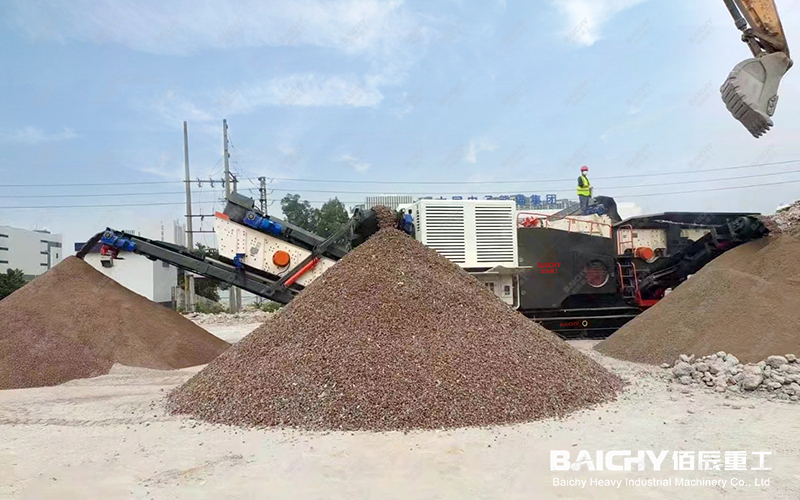
Track-Mounted Impact Crushing Station — Customer Site
IV. Deep Adaptation to Application Scenarios
Urban Construction Waste Recycling
In a specific urban demolition and redevelopment project, this system demonstrated remarkable adaptability. Faced with raw materials consisting of C30–C50 grade concrete blocks and brick-and-concrete structural debris, the system consistently maintained a processing throughput of 120 to 140 tons per hour. The resulting aggregates were subsequently utilized directly as the water-stabilized base layer for road construction and as raw material for manufacturing recycled bricks. Significant Economic Benefits: This solution saves 45 yuan per ton on the cost of purchasing external aggregates and reduces construction waste disposal fees by 60 yuan per ton, resulting in total savings of approximately 8 million yuan over the entire project lifecycle. From a social perspective, it minimizes land occupation, lowers carbon emissions, and realizes a truly circular economy.
Self-Built Aggregate Yards for Key Infrastructure Projects
For linear infrastructure projects—such as highways, railways, and water conservancy systems—this solution offers a revolutionary approach to material supply. A typical implementation involves establishing a mobile crushing station every 20 to 30 kilometers, thereby creating a distributed supply network. Compared to purchasing external aggregates, this model reduces costs by 30–40%; more importantly, it grants complete control over the supply chain, shielding the project budget from the impact of market price fluctuations. In numerous key infrastructure projects, this "self-built aggregate yard" model has proven to be an effective strategy for controlling costs and ensuring project timelines are met.
Development of Small-to-Medium-Scale Mining Sites
Traditional mining site development often presents a dilemma: constructing a fixed processing plant requires substantial capital investment and a lengthy construction period, whereas relying solely on basic crushing methods makes it difficult to guarantee product quality. This mobile solution offers a third path. For dispersed mining sites with reserves ranging from 500,000 to 2 million tons, the adoption of a "mobile-and-adaptive" model—where crushing operations move in tandem with mining activities—significantly lowers the initial investment threshold and allows operations to continuously advance alongside the excavation face. The proportion of transportation costs drops from 40% in traditional models to less than 15%, resulting in a substantial improvement in overall economic efficiency. Furthermore, once a mining site's resources are depleted, the equipment can be rapidly relocated to a new site, thereby preventing the waste of resources caused by idle machinery.
V. Investment Return Analysis
Based on an hourly output of 150 tons and an annual operating duration of 2,000 hours, the investment model presents a clear financial outlook. The initial capital outlay is approximately 3.5 to 4 million yuan, covering the jaw crushing station, impact crushing station, and auxiliary equipment. Regarding operating costs, energy consumption amounts to approximately 0.8–1.2 yuan per ton, while the wear and tear on consumable parts costs 0.5–0.8 yuan per ton; when combined with labor and maintenance expenses, the total operating cost averages approximately 1.8–2.5 yuan per ton.
With an annual production capacity reaching 300,000 tons—and assuming an average aggregate selling price of 60 yuan per ton—the annual revenue stands at 18 million yuan, yielding an annual gross profit of approximately 12 to 14 million yuan. Under this revenue model, the investment payback period typically falls within 6 to 10 months—representing a remarkably attractive return on investment for medium-scale engineering projects.
VI. Technological Development Trends and Upgrade Potential
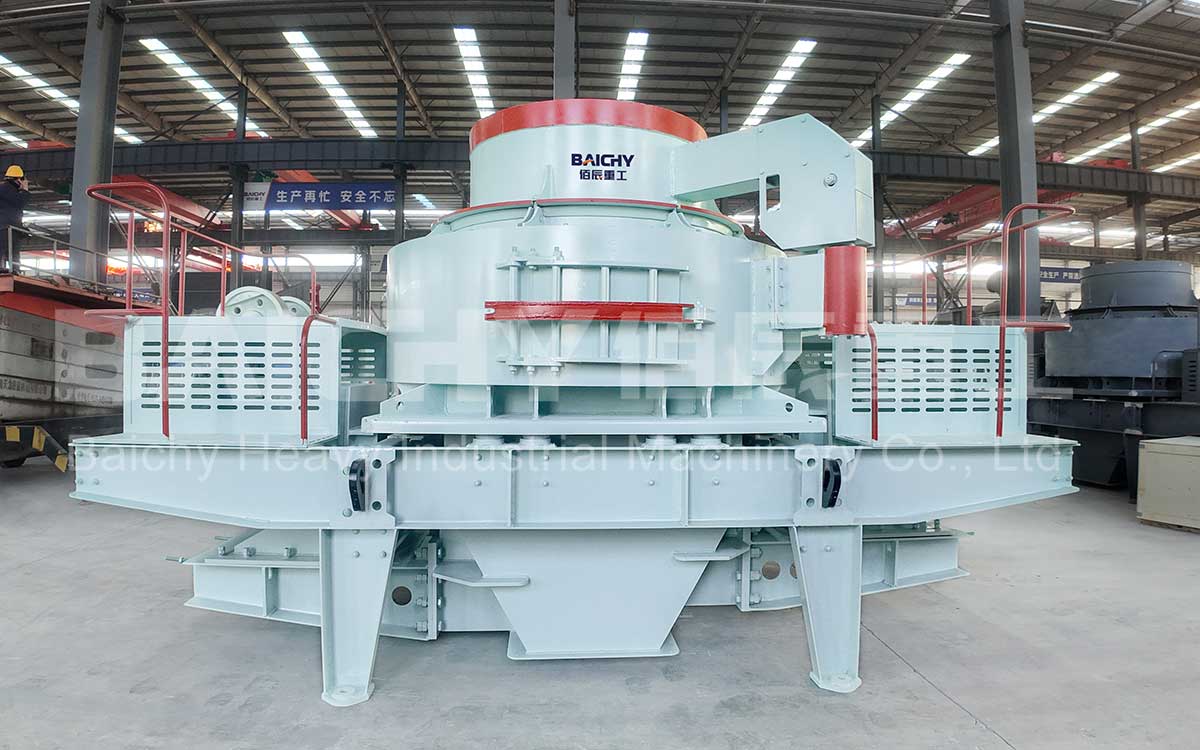
Currently, this production line is rapidly evolving toward greater intelligence. Leveraging IoT technology, remote monitoring systems enable managers to track critical data—such as output volume, energy consumption, and component wear status—in real time. Furthermore, automated adjustment functions intelligently fine-tune crushing parameters based on the characteristics of the input material, thereby achieving superior energy efficiency. In certain regions, a dual diesel-electric power version has already been introduced; offering energy savings of over 20%, it presents a compelling new option for areas subject to stringent environmental regulations. Moreover, the modular design reserves ample room for future upgrades—allowing for rapid expansion to a three-stage crushing configuration or the addition of sand-making modules as needed—thereby extending the equipment's technical lifecycle.
Conclusion: More Than Just Equipment—An Innovation in Production Philosophy
At its core, this 150-ton/hour crawler-mounted mobile crushing production line embodies a new logic for organizing production: packaging processing capacity into standardized, mobile units. It liberates high-quality aggregate production from geographical constraints, grants small-to-medium-scale investments access to the process sophistication typically associated with large-scale projects, and shifts resource recycling from centralized processing toward distributed, on-site transformation.
In today's environment—characterized by increasingly strict environmental mandates, ever-shortening project timelines, and the need for increasingly precise cost controls—the value of this "mobile factory" model stands out more than ever. It represents not merely a combination of machinery, but a powerful tool for navigating uncertainty, enhancing investment flexibility, and realizing the principles of a circular economy. For project owners with an annual processing volume of 200,000 to 500,000 tons and a project duration of 1 to 3 years, this may well be the most technically and economically optimal choice currently available—striking a precise balance between flexibility and professional-grade performance.
Note: The data presented in this article is based on industry averages and typical project case studies; actual application parameters must be adjusted according to specific material characteristics, local regulations, and operational conditions. Equipment selection recommendations should be finalized following an on-site survey conducted by professional engineers.
About of Baichy Heavy Industry
Baichy Heavy Industry is a high-tech mining equipment company integrating R&D, manufacturing, sales, and after-sales service. Focusing on crushing, grinding, and mineral processing equipment, we provide professional solutions to our customers. We are ISO9001:2015 、certified, and our products include mobile crushing palnts, crawler crushing plant, construction waste crushing plants, jaw crushers, sand making machines, cone crushers, fine crushers, grinding mills, ball mills, etc., all with reliable performance to meet diverse project needs.
Our advantages:
• Professional pre-sales support: Free project design and comprehensive solutions to help you accurately select the right equipment;
• Comprehensive on-site service: Providing installation guidance and worker training to ensure smooth equipment commissioning;
• Reliable after-sales guarantee: A complete after-sales system, timely response to technical inquiries and equipment maintenance, ensuring long-term stable operation.
To protect your rights, please contact us through the following official channels for professional service:
Official Website Customer Service
https://wa.me/+8615093222637
Email: [email protected]
We are committed to providing high-quality equipment and full-cycle services to deliver comprehensive intelligent solutions for the global mining industry!
Frequently Asked Questions (FAQ)
1. What types of materials are suitable for processing with the 150-ton/hour crawler-mounted mobile crushing production line?
It is ideally suited for processing materials of medium hardness or lower, including: construction waste (such as concrete and bricks), natural river pebbles, limestone, and medium-to-low hardness ores (such as bluestone and dolomite). For raw materials with high soil content or significant stickiness, it is recommended to install a pre-screening grizzly or feeder upstream to ensure optimal crushing efficiency and the cleanliness of the finished product.
2. How long does it take for the entire production line to go from site arrival to full-scale operation?
Thanks to its fully tracked mobile design, the deployment of this production line is exceptionally rapid. Provided that the site has been leveled and prepared, it typically takes only 1 to 3 days to complete unloading, positioning, connection, and commissioning before the line is ready for production. This saves a significant amount of time compared to constructing a stationary production line (which typically requires 1 to 2 months), making it particularly suitable for projects with tight deadlines or temporary operational requirements.
3. What are the equipment's energy consumption and maintenance costs?
Energy Consumption: This configuration features a highly efficient and energy-saving design. The average comprehensive electricity consumption per ton of crushed material (for the electric version) is approximately 1.2 to 1.8 kWh; for the diesel version, fuel consumption is approximately 5 to 7 liters per ton. Actual figures may vary slightly depending on material hardness, moisture content, and specific requirements for the finished product.
Maintenance: The primary maintenance costs are associated with the periodic replacement of wear parts (such as jaw plates, blow bars, and side liners). When processing medium-hardness limestone, the service life of these wear parts typically ranges from 2,000 to 4,000 hours. Routine lubrication and regular inspections are crucial for ensuring the stable operation of the equipment and minimizing long-term operating costs.