
100 TPH Soft Rock Crushing Plant Setup Guide
A fixed crushing plant with a capacity of approximately 100 tons per hour can be a practical solution for a small or medium-sized quarry producing construction aggregates. When the feed material is soft rock, such as low-abrasion limestone, marl, weathered rock or similar quarry material, the plant should be designed around more than capacity alone. Moisture, clay content, feed size, product requirements and the desired percentage of fines all influence the final configuration.
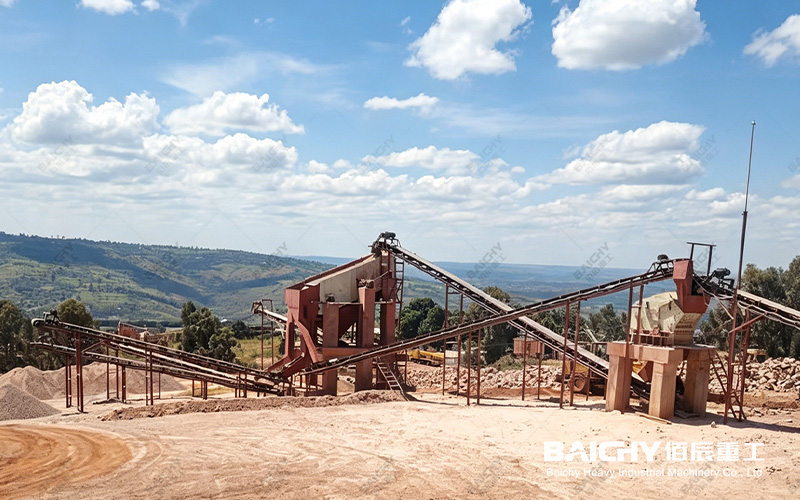
A typical 100 TPH soft rock crushing plant uses controlled feeding, primary crushing, secondary impact crushing, screening and product conveying. This arrangement can produce several aggregate sizes while returning oversize material to the crusher. It also leaves room for pre-screening, dust suppression or washing equipment when the quarry conditions require additional treatment.
This guide explains the main equipment, process flow, layout considerations and operating points for a fixed soft rock crushing line. The final selection should always be checked against a material test and the required product gradation.
100 tph soft rock crushing plant
Design Basis for a 100 TPH Quarry Plant
The expression “100 TPH” normally refers to the design processing capacity under defined operating conditions. It does not necessarily mean that every finished product will be produced at 100 tons per hour. Actual output depends on the feed gradation, crusher settings, screen efficiency, circulating load, material moisture and operating hours.
Before selecting equipment, the quarry owner should confirm the following information:
• Maximum feed size after blasting or excavating
• Rock type, compressive strength and abrasiveness
• Moisture level and the amount of clay or soil attached to the rock
• Required products, such as 0–5 mm, 5–10 mm, 10–20 mm or 20–31.5 mm
• Required working hours per day and days per month
• Whether manufactured sand or a high percentage of fines is needed
• Available site area, elevation differences and power supply
• Local requirements for dust, noise, water use and drainage
These details help determine whether the plant should use a simple two-stage circuit or include pre-screening, washing, shaping or additional fines recovery.
Recommended Process Flow
A common process flow for low-abrasion soft rock is:
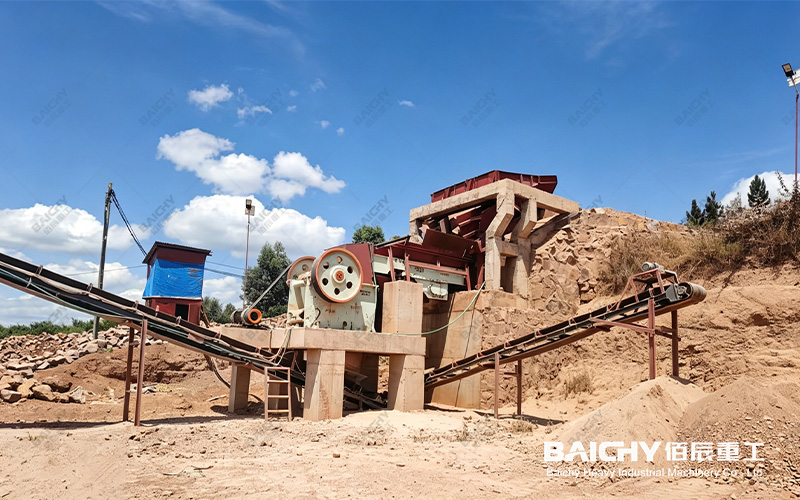
Raw material hopper → vibrating feeder → jaw crusher → impact crusher → vibrating screen → finished product piles
fixed crushing plant for quarry
The vibrating feeder provides a steady feed to the primary crusher. If it includes a grizzly or pre-screening section, soil and small natural fines can be removed before the main crushing stage. This can reduce the load on the jaw crusher and help improve plant stability when the raw material contains clay.
The jaw crusher reduces large rocks to a size suitable for secondary crushing. The impact crusher then performs further reduction and can improve the shape of the aggregate. After secondary crushing, the vibrating screen separates the material into the required size fractions. Oversize material is conveyed back to the impact crusher through a return conveyor, while correctly sized products are sent to separate stockpiles.
The exact arrangement can be adjusted according to the required product mix. For example, a quarry focused on 10–20 mm aggregate may use different screen openings from a quarry that needs a larger share of 0–5 mm material.
Main Equipment Configuration
| Process stage | Typical equipment | Main function | Key selection points |
|---|---|---|---|
| Storage and feeding | Raw material hopper and vibrating feeder | Buffer and regulate the feed | Hopper volume, opening size, feeder capacity and pre-screening area |
| Primary crushing | Jaw crusher | Reduce large soft rock to a manageable size | Feed opening, discharge setting, jaw plate design and maintenance access |
| Secondary crushing | Impact crusher | Produce smaller aggregate and improve particle shape | Rotor size, feed opening, wear parts and hydraulic adjustment |
| Classification | Vibrating screen | Separate products by size | Deck area, number of decks, aperture size and screening efficiency |
| Conveying | Belt conveyors | Transfer material and return oversize | Belt width, transfer points, incline, guarding and dust covers |
| Environmental control | Spray system or dust collector | Reduce airborne dust | Water availability, enclosure design and local requirements |
| Control | Electrical control cabinet | Coordinate start-up, shutdown and interlocks | Safety protection, monitoring, emergency stops and automation level |
The equipment list is a planning framework rather than a universal bill of materials. Model selection should be based on the actual feed size and desired product distribution. A plant handling wet, sticky material may need a larger feeder and stronger pre-screening arrangement than a plant processing clean, dry limestone.
Why Use a Jaw Crusher and Impact Crusher?
For many low-abrasion soft rock applications, a jaw crusher followed by an impact crusher is a logical combination. The jaw crusher is used for primary size reduction, while the impact crusher handles secondary reduction and aggregate shaping. This layout can be suitable for limestone and similar materials where excessive wear is not expected.
The impact crusher can help produce a useful particle shape for concrete aggregate, road base and general construction materials. It may also provide a shorter route to the target sizes when compared with a circuit designed only for compression crushing. However, it is not automatically the right choice for every soft rock quarry.
High moisture, high clay content, hidden hard inclusions or abrasive mineral zones can change the wear pattern and cause blockages. If the feed contains a significant amount of sticky fines, pre-screening and material testing become especially important. If the rock is harder or more abrasive than initially expected, a cone crusher or another secondary-crushing option may need to be evaluated.
Typical Finished Products
A multi-deck vibrating screen can pide the crushed material into several saleable fractions. A possible product arrangement includes:
• 0–5 mm: fines, manufactured-sand feed or filling material, depending on grading and local use
• 5–10 mm: small aggregate for selected concrete or construction applications
• 10–20 mm: commonly requested aggregate for concrete and precast production
• 20–31.5 mm: larger aggregate for road base, foundations or general construction
• Oversize: returned to the secondary crusher for further reduction
The actual production ratio should not be assumed before testing. Increasing the percentage of fine material can raise the circulating load and change the screen performance. Likewise, a narrow product specification may reduce the total saleable output compared with a broader grading range.
For this reason, the final plant design should define both total feed capacity and the expected tonnage of each finished product. A sample feed analysis and trial calculation can help identify whether the proposed screen area and crusher settings are adequate.
Site Layout and Foundation Planning
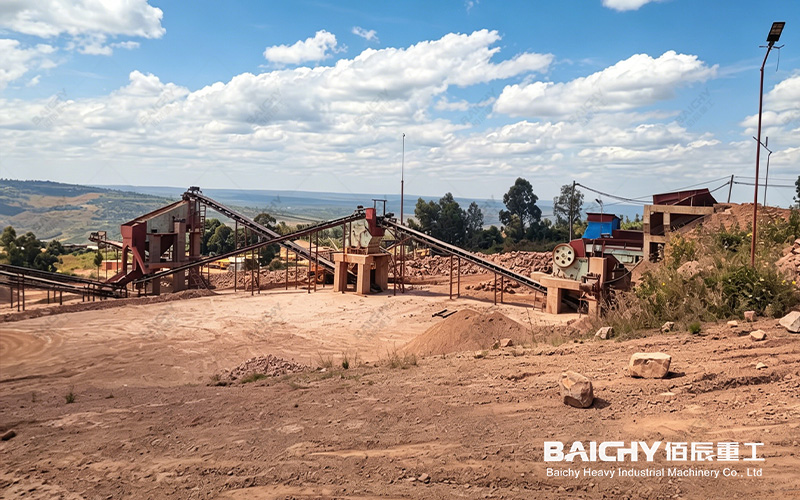
A fixed plant needs a layout that supports continuous material flow, safe maintenance and efficient stockpiling. The main areas normally include the raw material unloading zone, hopper and feeder, primary crusher, secondary crusher, screen, return conveyor, finished-product conveyors, stockpiles, electrical room and maintenance access.
The site should provide enough separation between stockpiles and the crushing equipment for loaders and trucks to operate safely. Conveyor transfer points should be accessible for inspection and should include guarding and dust-control measures. The layout should also avoid unnecessary changes in direction, excessive conveyor length and steep transfer points that may cause spillage.
Concrete foundations must be designed for the equipment weight, vibration and local ground conditions. The jaw crusher, vibrating screen and other high-vibration machines require particular attention. Foundation drawings should be completed before construction, and drainage should be included in areas exposed to rain or wash water. A reliable drainage plan can help prevent mud accumulation around feeders, conveyors and product piles.
Dust, Noise and Water Management
Dust may be generated at the hopper, crusher inlets and outlets, screen discharge points, conveyor transfers and stockpiles. Practical control measures include enclosed transfer points, water sprays, dust collectors, regular road maintenance and appropriate stockpile management. The most suitable combination depends on the material moisture, local climate and applicable environmental requirements.
If the soft rock contains clay or a high level of unwanted soil, the plant may require washing or additional screening. Washing can improve product cleanliness, but it also introduces water consumption, slurry handling and settling requirements. The plant design should therefore include drainage channels, a sedimentation arrangement and a plan for managing wet fines before equipment is ordered.
Noise control should be considered during layout planning. Locating the plant away from sensitive boundaries, using suitable enclosures and maintaining bearings, belts and impact components can help reduce unnecessary noise. All measures should be checked against the regulations that apply at the quarry site.
Installation and Commissioning Checklist
A structured installation process reduces the risk of early stoppages. The main steps are:
1. Complete site preparation and verify concrete foundation dimensions.
2. Install the hopper, feeder and primary crushing equipment.
3. Position the impact crusher, screen and return conveyor.
4. Install product conveyors, guards, covers and access platforms.
5. Connect the control cabinet, motors, sensors and emergency stops.
6. Check belt alignment, lubrication points, fasteners and wear parts.
7. Run the plant without material to check vibration, rotation and interlocks.
8. Introduce material gradually and adjust the feeder and crusher settings.
9. Measure product sizes, circulating load, motor current and material flow.
10. Record the final settings and establish an inspection schedule.
During commissioning, operators should watch for screen blinding, belt tracking problems, excessive return load, unusual vibration and dust escaping from transfer points. The first production runs are also a good time to confirm whether the actual product split matches the customer’s sales plan.
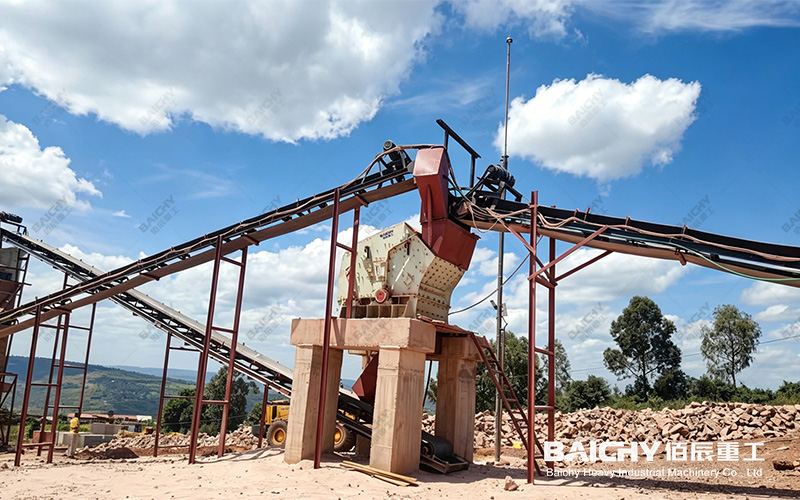
100 tph quarry crusher plant
Frequently Asked Questions
1. What equipment is normally included in a 100 TPH soft rock plant?
A typical configuration includes a raw material hopper, vibrating feeder, jaw crusher, impact crusher, vibrating screen and belt conveyors. Dust-control or washing equipment may be added if the raw material contains excessive fines, clay or moisture.
2. Is an impact crusher suitable for soft rock?
An impact crusher can be suitable for low-abrasion soft rock because it provides secondary reduction and can improve aggregate shape. The choice should be confirmed by testing the rock’s hardness, abrasiveness, moisture and feed size. Sticky or highly abrasive material may require another arrangement.
3. Can the plant produce several aggregate sizes?
Yes. A multi-deck vibrating screen can separate the crushed material into products such as 0–5 mm, 5–10 mm, 10–20 mm and 20–31.5 mm. The screen openings and product ratios should be selected according to the quarry’s sales requirements.
4. How should high clay content be handled?
A feeder with a pre-screening section can remove part of the soil and natural fines before primary crushing. If the feed is very wet or sticky, the plant may need additional washing, drainage and slurry-management equipment.
5. Does 100 TPH mean the plant will always produce 100 tons per hour of finished products?
No. It is normally a design capacity under specified conditions. Actual saleable output varies with feed gradation, moisture, crusher settings, screen efficiency, circulating load, operating time and maintenance stoppages.
Baichy Heavy Industry
Baichy Heavy Industry is a high-tech mining equipment company integrating R&D, manufacturing, sales, and after-sales service. Focusing on crushing, grinding, and mineral processing equipment, we provide professional solutions to our customers. We are ISO9001:2015 Certified, and our products include mobile crushing palnts, crawler crushing plant, construction waste crushing plants, jaw crushers, sand making machines, cone crushers, fine crushers, grinding mills, ball mills, etc., all with reliable performance to meet diverse project needs.
Baichy Heavy Industry – Your Trusted Partner
To ensure optimal performance of your equipment, Baichy Heavy Industry offers:
- Professional on-site installation guidance
- Comprehensive operator training
- 24/7 technical support & maintenance services
Our complete after-sales service system guarantees long-term, stable operation of your machinery with minimal downtime.
Protect Your Rights – Only Use Official Channels
To avoid scams and ensure authentic support, contact us exclusively through:
• Official Website: www.baichychina.com
• WhatsApp: +8615093222637
• Email: [email protected]
Your satisfaction is our priority – expect prompt, professional service every time.
(Note: Beware of unauthorized third parties claiming to represent Baichy. Always verify through official contacts.)