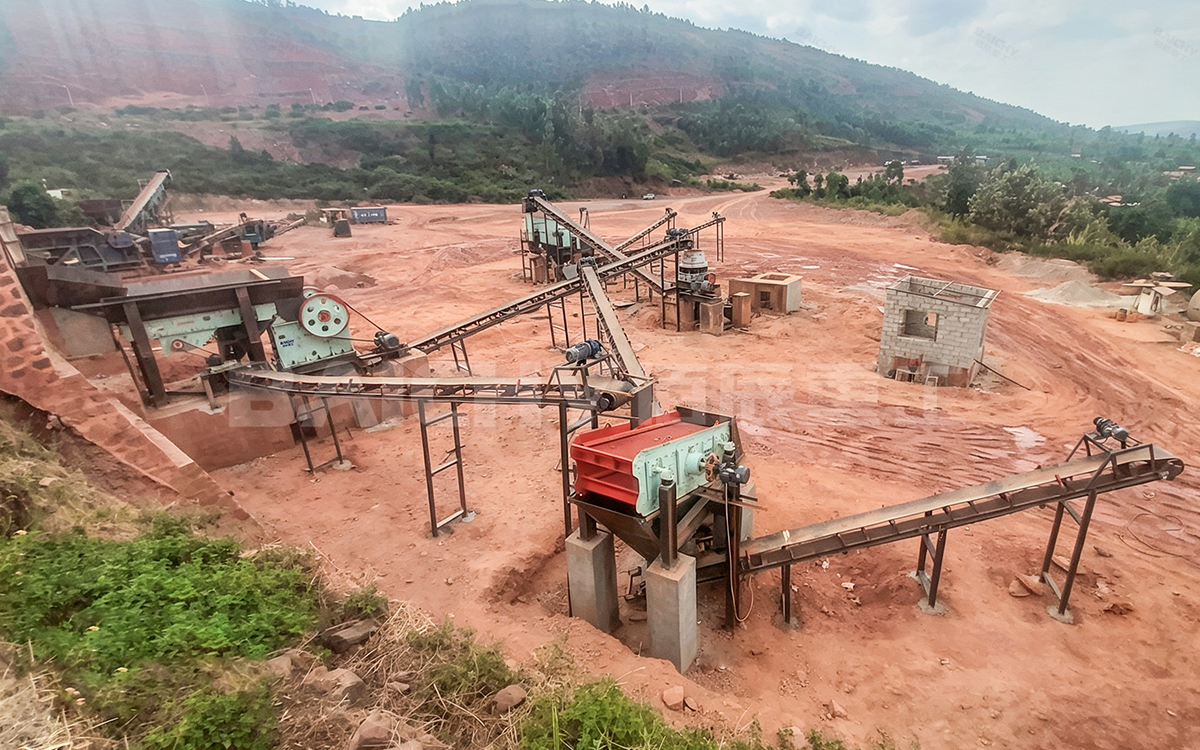

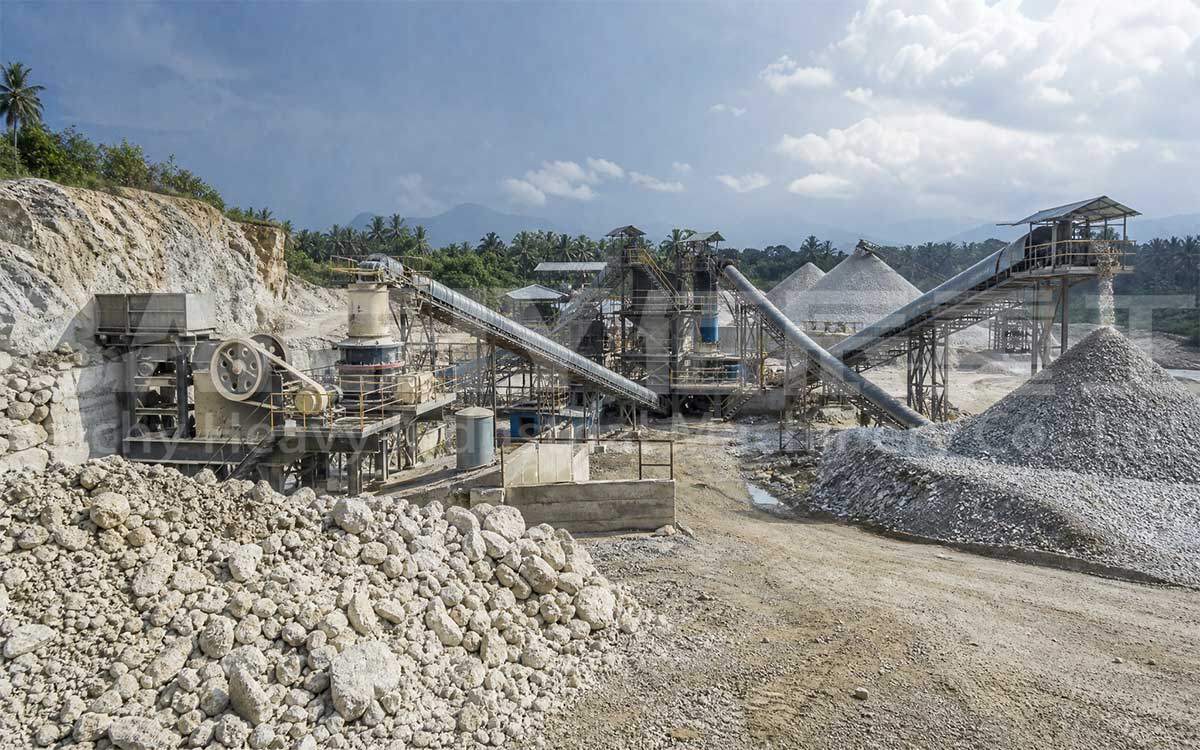
100 TPH Dolomite Plant Design for Indonesia
Indonesia has a growing demand for dependable mineral-processing systems used in construction aggregates, road-base materials, cement raw materials, industrial minerals, and agriculture. For a project planned around 100 tons per hour (TPH) of dolomite, the equipment should be designed as one balanced production system rather than selected as separate machines.
A practical plant includes raw-material storage, feeding, primary crushing, secondary crushing, fine crushing, screening, conveyors, product stockpiles, dust control, and electrical automation. This preliminary concept is prepared for an Indonesian customer requiring one primary crusher, two 50 TPH secondary crushers, four hammer crushers, screening for a 5–10 mm product, and the related conveying system.
The final models, dimensions, and capacities must be confirmed after reviewing the feed size, dolomite properties, product requirements, site conditions, and local environmental standards.
Design Basis for the 100 TPH Plant
The proposed system is based on a nominal throughput of 100 TPH. This is the target capacity of the complete process, not necessarily the maximum nameplate capacity of every machine. The screen, feeders, conveyors, transfer chutes, and stockpiles must be matched to the actual mass flow to avoid bottlenecks.
Before final equipment selection, the following information should be confirmed:
• Maximum feed size from the quarry or raw-material stockpile
• Required product sizes and the percentage of 5–10 mm material
• Dolomite hardness, abrasiveness, moisture, and bulk density
• Daily working hours and required plant availability
• Available land area, elevation, drainage, and truck access
• Electricity conditions and maintenance resources in Indonesia
• Dust, noise, water-management, and other local requirements
Recommended Process Flow
The preliminary process route is:
Raw dolomite → feed hopper and vibrating feeder → primary crusher → secondary crushing → hammer crushing → vibrating screening → 5–10 mm product and oversize return → finished-product stockpiles
The primary crusher reduces large run-of-mine material to an intermediate size. The two secondary crushers then reduce and distribute the material for the hammer-crusher section. After further size reduction, the vibrating screen separates the required 5–10 mm fraction. Material larger than 10 mm can be returned to a suitable crusher, while the finished product is conveyed to a dedicated stockpile.
For closer control of the 5–10 mm product, a closed-circuit crushing and screening system is generally more suitable than a completely open circuit. It improves size control by recycling oversize material, although it requires extra conveyor capacity and sufficient screening area.
Main Equipment Configuration
1. Primary Stone Crusher — 1 Unit
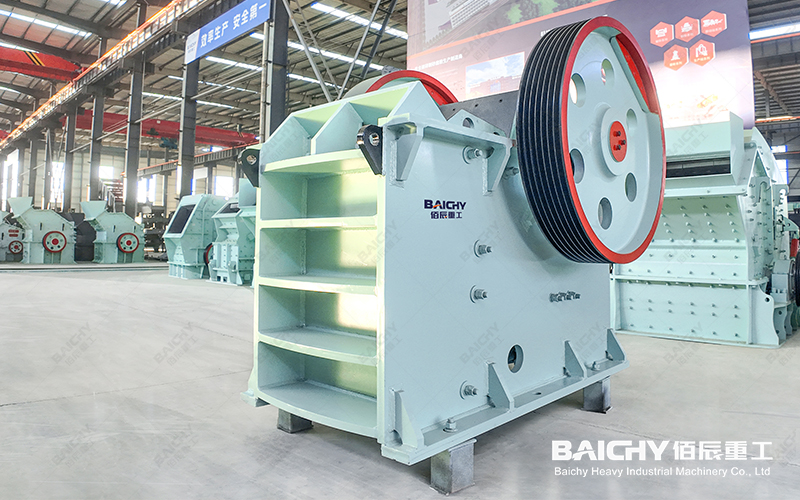
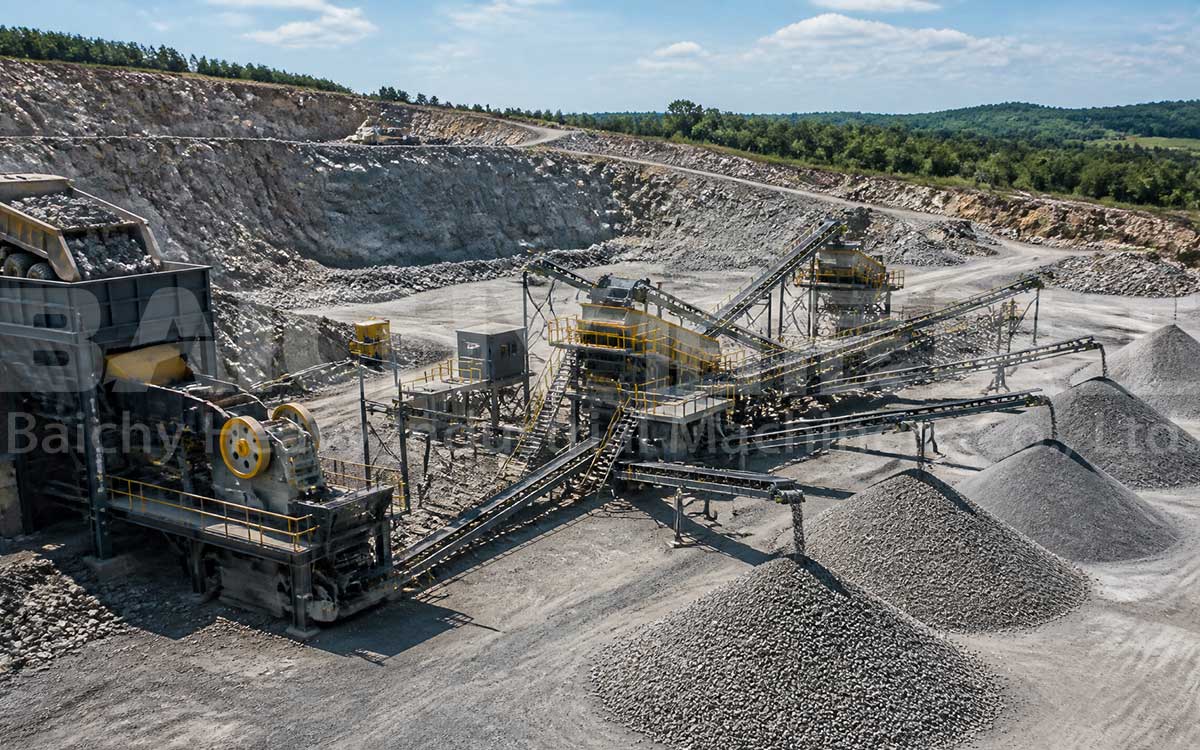
Primary stone crusher - jaw crusher
The primary crusher receives the largest pieces from the quarry or raw-material stockpile. A jaw crusher may be considered when the feed contains large, hard pieces and a robust reduction stage is required. An impact crusher may be evaluated when the feed size and material characteristics are suitable and a different product shape is desired.
The final choice should be based on maximum feed size, required discharge size, dolomite hardness, and the operating schedule. A vibrating feeder before the crusher can regulate the feed and remove unwanted fines where appropriate. The crusher discharge should connect to a covered conveyor leading to the secondary-crushing area.
2. Secondary Crushers — 2 Units at 50 TPH Each
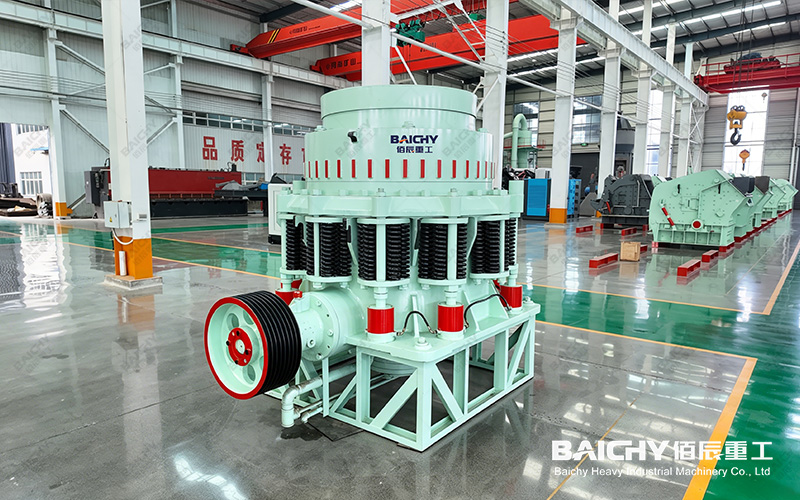
Secondary crushing - cone crusher
The requested arrangement includes two secondary crushers, each rated at approximately 50 TPH. Their theoretical combined capacity is 100 TPH, but actual output depends on feed gradation, crusher setting, moisture, wear-part condition, and operating efficiency.
Two parallel units provide useful flexibility. The plant can adjust the feed between the machines, maintain partial production during maintenance, and distribute the load more evenly. A buffer hopper or intermediate stockpile may be useful when the quarry feed is irregular.
3. Hammer Crushers — 4 Units
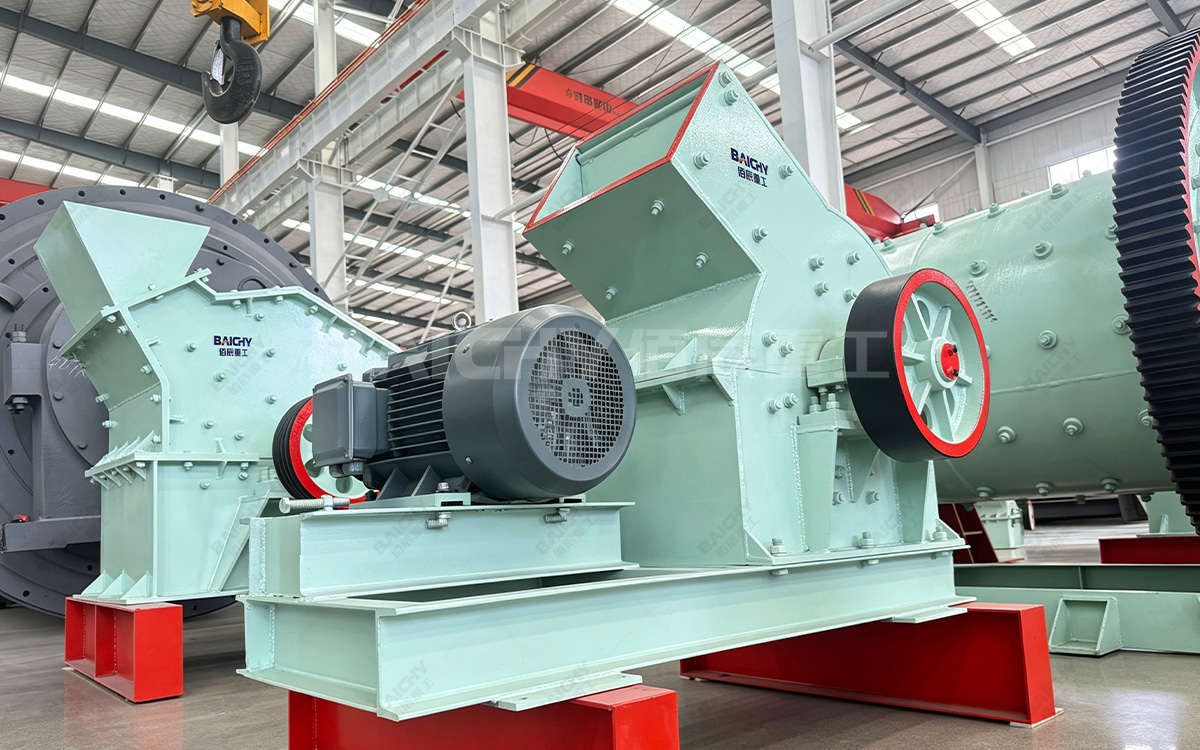
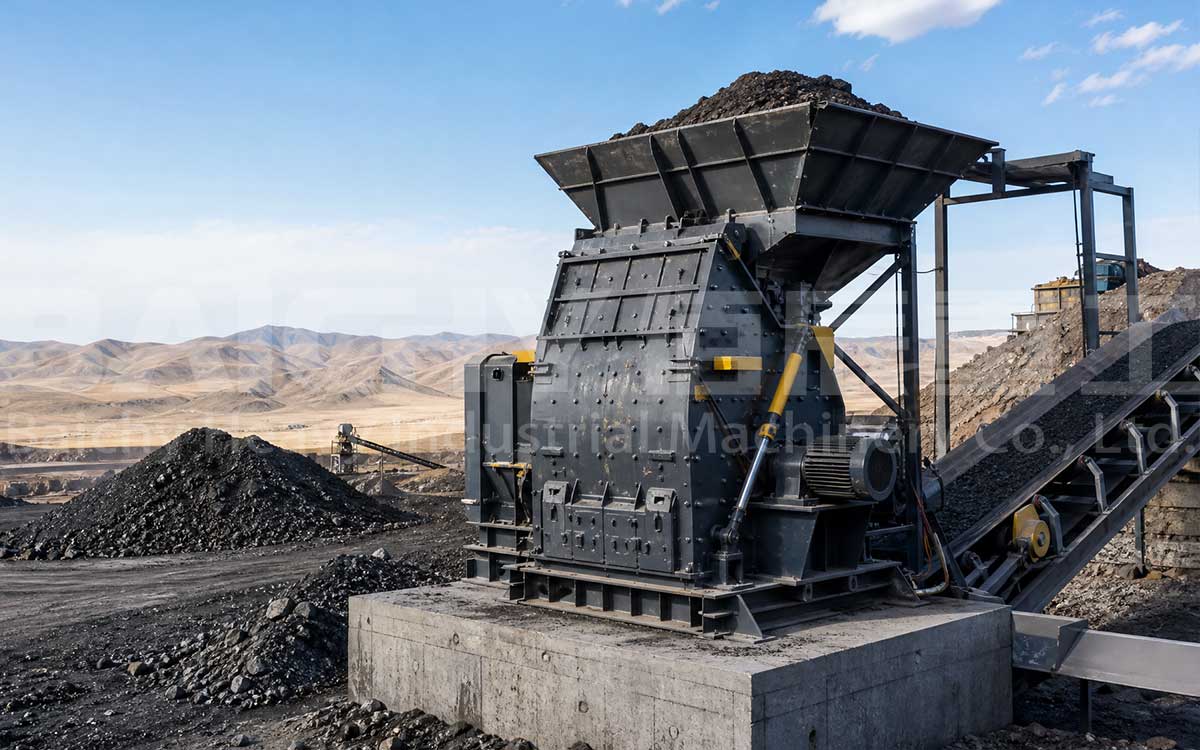
Hammer Crusher
The four hammer crushers provide further size reduction before screening. They may be arranged as four parallel units, two operating lines with two standby machines, or another combination based on the required quantity of fine material.
The four units should not automatically run at their full nameplate capacity. If their combined capacity is much higher than the 100 TPH plant flow, controlled feeders, staged operation, or standby use may be more appropriate. A mass-balance calculation should confirm how much material must be reduced to 5–10 mm.
Each crusher should have adequate access for hammer replacement, inspection, motor maintenance, and safe lifting operations. The support structure should also include suitable walkways and guards.
4. Screening for 5–10 mm Classification
A multi-deck vibrating screen can separate the required product range. The deck arrangement depends on whether the plant produces only 5–10 mm material or several commercial sizes at the same time.
| Screen fraction | Recommended handling | Typical purpose |
|---|---|---|
| Larger than 10 mm | Return to crusher or store separately | Re-crushing or larger aggregate |
| 5–10 mm | Send to a dedicated product conveyor | Main specified product |
| Smaller than 5 mm | Convey to a fine-material stockpile | Filler, agricultural, or other approved use |
Screen selection should consider deck area, aperture size, inclination, vibration, moisture, and required screening efficiency. Wet or sticky dolomite may cause screen blinding and reduce performance. The screen feed should be distributed evenly across the deck.
5. Belt Conveyor System
The conveying system should support continuous flow and include an appropriate capacity margin above the planned 100 TPH throughput. The main conveyors may include:
1. Feeder-discharge and primary-crusher discharge conveyors
2. Transfer conveyors to the two secondary crushers
3. Secondary-crusher discharge conveyors
4. Distribution conveyors for the hammer crushers
5. Hammer-crusher discharge and screen-feed conveyors
6. 5–10 mm finished-product conveyor
7. Fine-material conveyor
8. Oversize return conveyor
9. Stockpile and truck-loading conveyors
Covered transfer points, skirt boards, belt cleaners, emergency pull cords, belt-misalignment switches, and inspection platforms should be considered. Belt width and speed should be calculated from bulk density and lump size, not selected only from the nominal plant capacity.
Recommended Layout for a 100 TPH Factory
A semi-linear layout is a practical starting point for this project. It keeps the material flow clear while allowing the secondary and hammer crushers to operate in parallel.
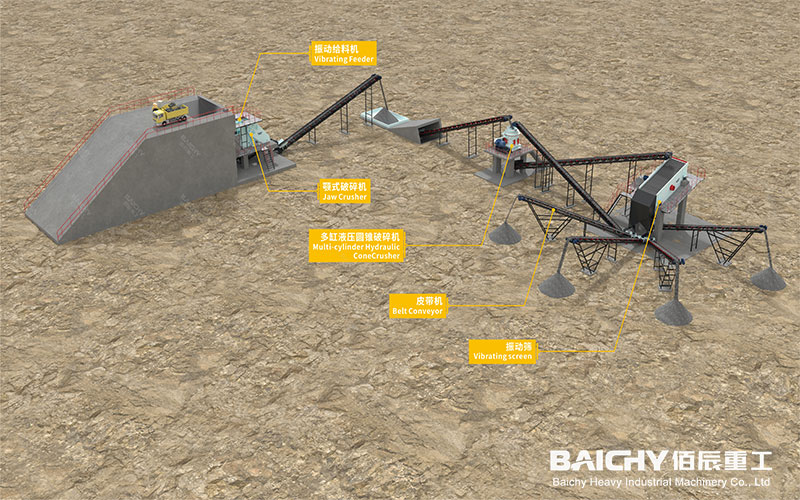
Schematic diagram of a dolomite crushing production line
The main zones can be arranged as follows:
• Raw-material zone: truck unloading, raw dolomite stockpile, and feed hopper
• Primary-crushing zone: vibrating feeder, primary crusher, and discharge conveyor
• Secondary-crushing zone: two parallel 50 TPH crushers and an intermediate buffer
• Fine-crushing zone: four hammer crushers with controlled feeders and maintenance access
• Screening zone: vibrating screens, oversize return, and product discharge points
• Product zone: separate 5–10 mm and fine-material stockpiles
• Support zone: electrical room, control room, workshop, and spare-parts area
Raw material should enter at one end of the site, while finished products leave at the other end. This reduces crossing traffic and makes the process easier to supervise. Product stockpiles should be positioned so loaders and trucks do not need to enter the main crushing area.
A compact layout can reduce conveyor length when land is limited, but it requires careful elevation planning. Screens may be installed above conveyors or stockpiles to use gravity where suitable. Even a compact plant must retain enough space for screen-panel replacement, crusher maintenance, belt splicing, and safe vehicle movement.
Dust, Drainage, and Safety
Dolomite crushing and material transfer can generate airborne dust. Enclosed chutes, water-spray points, local dust collectors, covered conveyors, and regular housekeeping should be considered. The final solution depends on moisture, climate, material handling methods, and local requirements.
Indonesian sites may also experience heavy rainfall. The layout should include surface drainage, protected electrical equipment, stable foundations, sediment control, and all-weather access roads. Stockpiles should be arranged so muddy water does not enter clean drainage channels.
Crusher platforms, stairs, guards, emergency-stop systems, and maintenance walkways should be incorporated at the design stage. Easy inspection and cleaning support safer and more consistent operation.
Capacity Matching and Final Engineering Checks
The primary crusher and the two secondary crushers are specified around a 100 TPH target, but the screen and conveyors must also handle the circulating load. In a closed circuit, the amount passing through the crushing section can be greater than the final product output because oversize is returned.
Before ordering equipment, the supplier should prepare a process flow diagram, mass-balance calculation, equipment list, motor-power summary, foundation loads, and preliminary general-arrangement drawing. The customer should provide site dimensions, a topographic survey, a representative material sample or laboratory data, utility information, and product specifications.
Conclusion
For a 100 TPH dolomite processing factory in Indonesia, the recommended concept is a semi-linear plant with one primary crusher, two parallel 50 TPH secondary crushers, four capacity-matched hammer crushers, multi-deck vibrating screens, a closed-circuit oversize return, and a complete belt-conveyor system.
The key design principle is balance. The hammer crushers, screen area, conveyors, feeders, and stockpiles should be sized according to the real mass flow and required 5–10 mm product ratio. A final quotation and layout should be prepared only after the feed size, material properties, site conditions, and product requirements have been confirmed.
Frequently Asked Questions
1. Can this plant produce 100 tons of dolomite per hour?
The configuration is based on a nominal 100 TPH target. Actual production depends on feed size, dolomite properties, crusher settings, moisture, screen efficiency, maintenance, and operating conditions. A final capacity guarantee requires confirmed test data and a completed mass-balance calculation.
2. Why use two 50 TPH secondary crushers?
Two parallel units provide operating flexibility and easier maintenance. The plant can continue at partial capacity when one crusher is stopped, and the feed can be distributed between the machines. The final choice should still be checked against the feed gradation and product specifications.
3. How is the 5–10 mm dolomite product separated?
A multi-deck vibrating screen separates the material by size. The 5–10 mm fraction is sent to a dedicated conveyor. Material larger than 10 mm can return to the crushing circuit, while material smaller than 5 mm can be stored separately if it meets the intended application requirements.
4. Do all four hammer crushers need to operate at the same time?
Not necessarily. Their operating arrangement depends on the required fine-product volume and the capacity of the screen and conveyors. They may run in parallel, or some may serve as standby units. A process calculation should confirm the number required during normal production.
5. What information is needed for the final plant quotation?
The supplier should receive the maximum feed size, desired product sizes, target percentage of 5–10 mm material, dolomite hardness and moisture, daily working hours, site dimensions, topography, electricity conditions, and required scope of supply. Dust control, steel structures, installation, and automation should also be defined.
Baichy Heavy Industry
Baichy Heavy Industry is a high-tech mining equipment company integrating R&D, manufacturing, sales, and after-sales service. Focusing on crushing, grinding, and mineral processing equipment, we provide professional solutions to our customers. We are ISO9001:2015 Certified, and our products include mobile crushing palnts, crawler crushing plant, construction waste crushing plants, jaw crushers, sand making machines, cone crushers, fine crushers, grinding mills, ball mills, etc., all with reliable performance to meet diverse project needs.
Baichy Heavy Industry – Your Trusted Partner
To ensure optimal performance of your equipment, Baichy Heavy Industry offers:
- Professional on-site installation guidance
- Comprehensive operator training
- 24/7 technical support & maintenance services
Our complete after-sales service system guarantees long-term, stable operation of your machinery with minimal downtime.
Protect Your Rights – Only Use Official Channels
To avoid scams and ensure authentic support, contact us exclusively through:
• Official Website: www.baichychina.com
• WhatsApp: +8615093222637
• Email: [email protected]
Your satisfaction is our priority – expect prompt, professional service every time.
(Note: Beware of unauthorized third parties claiming to represent Baichy. Always verify through official contacts.)