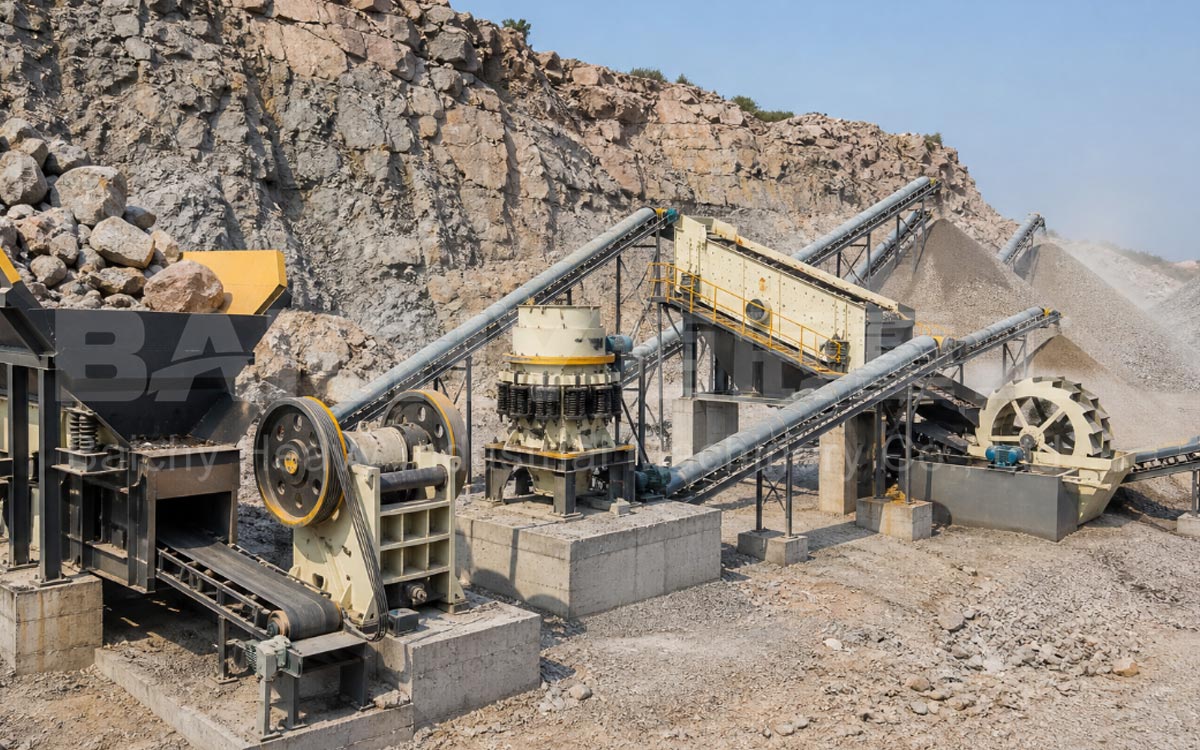
10–30 TPH Granite Crushing, Screening, and Washing Production Line
I. A Single Line Covering the Entire Granite Processing Workflow: Crushing, Screening, and Washing
Designed for granite raw materials, this production line—featuring an hourly capacity of 10–30 tons for crushing, screening, and washing—offers one of the best return-on-investment (ROI) ratios for small-to-medium quarries, commercial concrete plants, and project-supporting facilities. The entire line requires only 1–2 operators, the total investment for the standard configuration is manageable, and equipment costs can typically be recouped within 3–8 months.
Amidst tightening natural river sand supplies and steadily growing demand for manufactured sand, granite—one of the most widely distributed hard rock types—has become a primary raw material for manufactured aggregate production. With a Mohs hardness of 6–7 and a compressive strength of 120–250 MPa, granite is a classic highly abrasive hard rock. This presents both a challenge (requiring high equipment wear resistance) and an advantage: the resulting aggregates offer high strength and low crushing values, making them ideal for C30-grade (or higher) concrete, road base courses, and hydraulic engineering projects, all while commanding stable market prices and strong sales potential.
The 10–30 ton/hour capacity is strategically positioned: it bridges the gap to medium-to-large mines processing hundreds of tons daily, while also serving village-level infrastructure, small-scale projects, and contract processing clients. The "crushing, screening, and washing" process involves a single line executing three core stages in sequence:
• Crushing: Coarse crushing followed by medium-to-fine crushing to reduce raw granite to the target particle size;
• Screening: Multi-deck vibrating screens separate the material into various gradations, such as 0–5mm manufactured sand, 5–10mm, and 10–20mm aggregates;
• Washing: A wheel-type sand washer removes silt and fines to ensure the manufactured sand meets quality standards, while a fine sand recovery unit minimizes material loss.
These three stages are integrated into a single system, enabling fully automated, continuous production from the raw material inlet to the finished product stockpile. The following sections detail application scenarios, process configurations, technical specifications, solution advantages, and typical case studies.
II. Application Scenarios: Who Needs This 10–30 TPH Granite Aggregate Production Line?
2.1 Small-to-Medium Quarries and Contract Processing Operations
Clients who own small mining rights or operate under contract processing models often face the dilemma of having raw material sources but lacking a production line. A granite aggregate production line with an hourly capacity of 10–30 tons features a low investment threshold and a compact footprint (typically 800–1,200 m²). It transforms overburden and off-cuts into high-value crushed stone and manufactured sand, maximizing resource utilization.
2.2 In-house Aggregate Lines for Ready-Mixed Concrete and Dry-Mixed Mortar Plants
Sourcing aggregates externally is often constrained by supplier capacity, transportation costs, and quality fluctuations. Building an in-house 10–30 TPH production line ensures a stable supply of aggregates and manufactured sand, reduces logistics costs per ton, and allows for full control over gradation and silt content—directly improving concrete workability and strength stability.
2.3 Support for Road, Bridge, and Hydraulic Engineering Projects
During the construction of expressways, railways, or hydropower stations, tunnel muck or local granite can be utilized to produce required aggregates on-site. Mobile or modular configurations allow for rapid relocation as the project progresses, eliminating the need for long-distance transport associated with off-site procurement.
2.4 Compliant Production of Manufactured Sand as a Substitute for Natural River Sand
Many regions have implemented controls on river sand mining, making manufactured sand a compliant alternative. The fineness modulus of granite manufactured sand is adjustable (2.3–3.2), and washing processes can keep silt content below 1%, meeting standards for concrete sand—offering a solution that balances regulatory compliance with cost-efficiency.
III. Process Flow and Core Equipment Configuration
3.1 Stage 1: Feeding and Primary Crushing
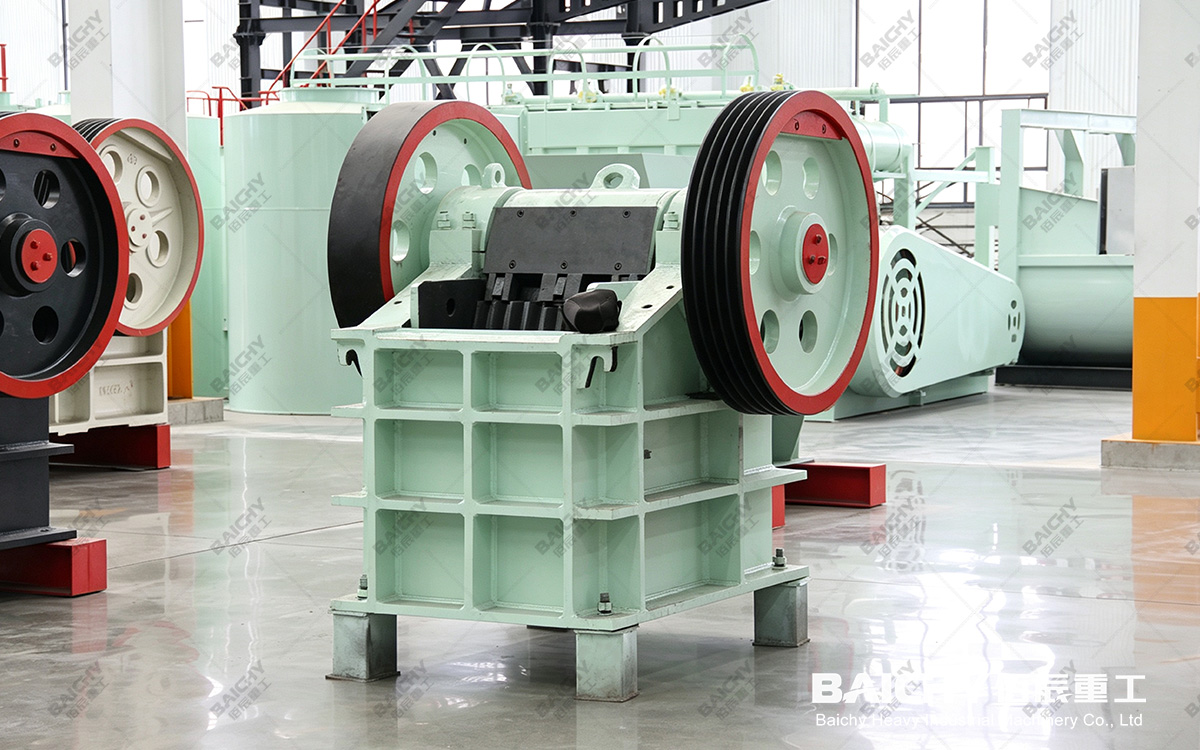
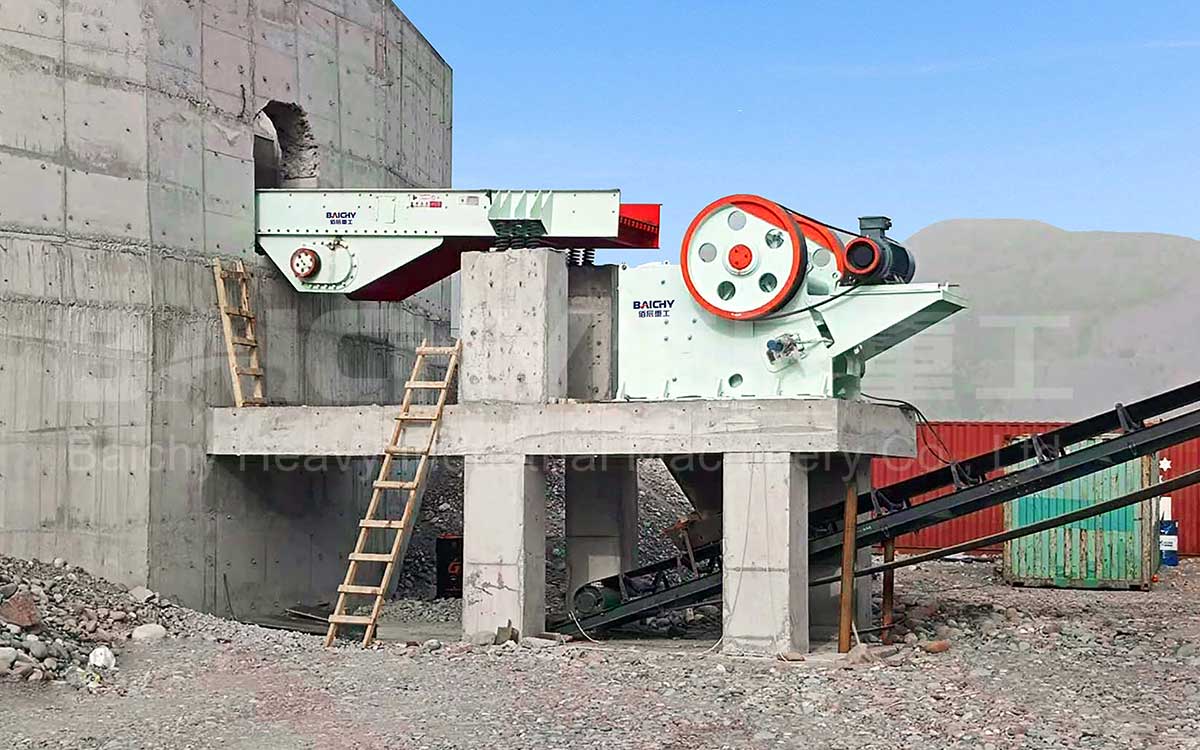
PE400x600 jaw crusher
Raw granite is dumped from trucks into a hopper and evenly fed into a PE-400×600 jaw crusher by a ZSW-380×96 vibrating feeder. The feeder also performs a pre-screening function, allowing fine materials to bypass the crusher directly; this reduces ineffective crushing within the jaw crusher and enhances the efficiency of the entire production line. The PE-400×600 features a 400×600mm feed opening, accepts raw ore up to 340mm in size, and offers an adjustable discharge range of 40–100mm, providing a stable feed for the secondary crushing stage.
3.2 Stage 2: Medium-Fine Crushing—Key Equipment Selection for Granite Processing
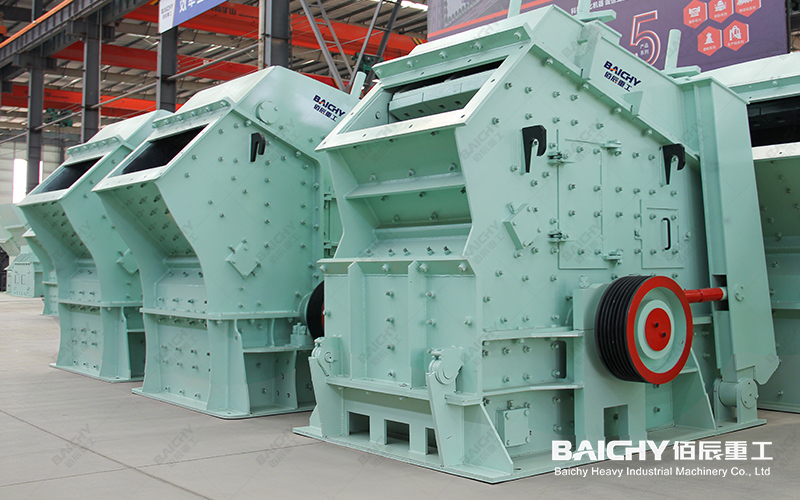
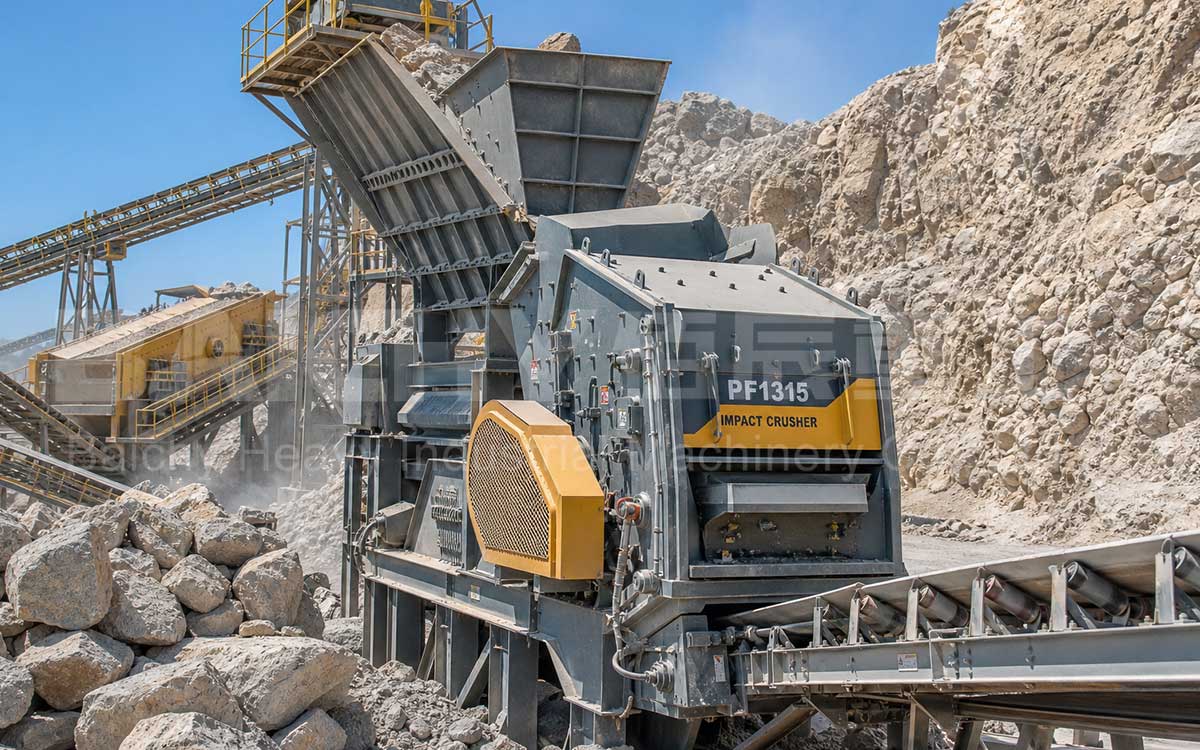
PF Impact Crusher
Due to the high hardness and abrasiveness of granite, a cone crusher is the preferred choice over an impact crusher for the secondary crushing stage. Impact crusher blow bars wear out rapidly when processing granite, potentially resulting in wear costs several times higher per ton. In contrast, the PYB-900 spring cone crusher utilizes the principle of inter-particle (layer-to-layer) crushing—often described as "rock-on-rock" crushing—which significantly reduces metal wear and extends liner lifespan while producing aggregates with more uniform shapes. The PYB-900 accepts feed sizes up to 115mm and offers an adjustable discharge range of 15–50mm; with ample processing capacity, it ensures a stable hourly output of 10–30 tons for the entire line.
3.3 Stage 3: Screening and Classification
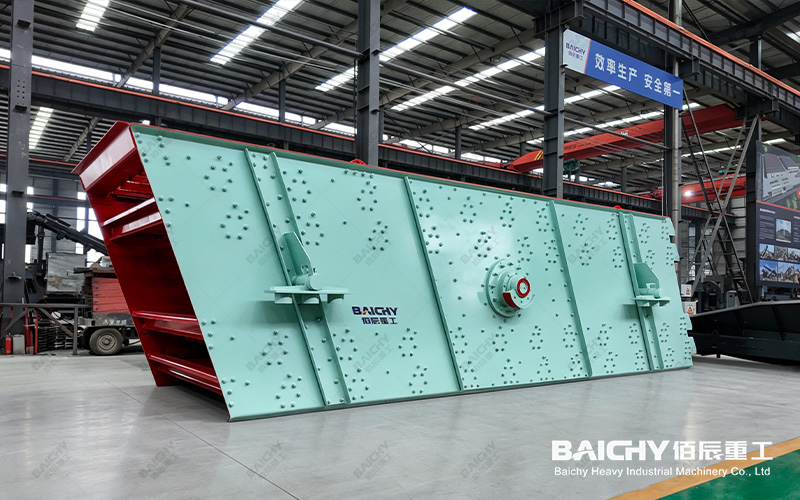
YK Series Vibrating Screen
Discharge from the cone crusher is conveyed to a 3YK-1548 triple-deck circular vibrating screen, which separates the material into four streams: 0–5mm, 5–10mm, 10–20mm, and oversized material for recirculation. Oversized material is returned to the cone crusher via a return conveyor, creating a closed-loop circuit that continues until all material meets size specifications; compliant aggregates are directed to their respective stockpiles or the next processing stage. This closed-loop design is crucial for ensuring classification accuracy and high product yield.
3.4 Stage 4: Washing and Fine Sand Recovery
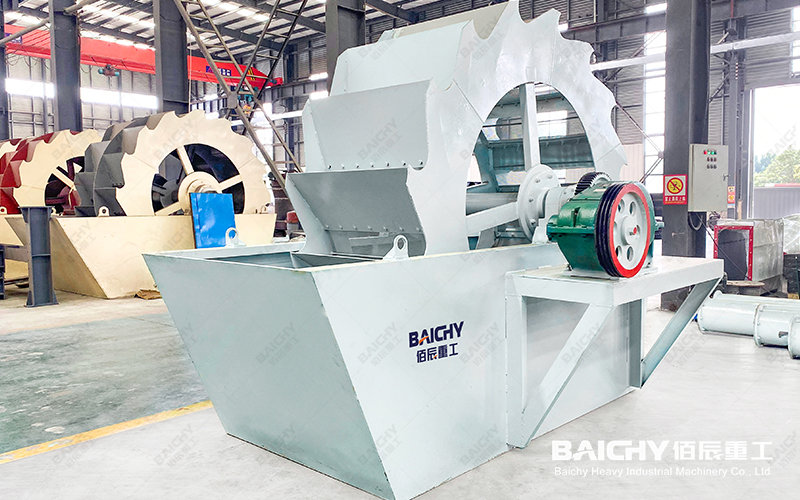
XSD-2610 wheel-bucket sand washer
The 0–5mm manufactured sand is fed into an XSD-2610 wheel-bucket sand washer. Through a combination of bucket scooping and water rinsing, soil, dust, and light impurities are removed, reducing the silt content in the finished sand to below 1%. Fine sand (0.075–0.6 mm) entrained in the sand-washing overflow water is captured and recovered by an integrated fine sand recovery unit; this not only increases the product yield (typically recovering an additional 3%–8% of fine sand) but also significantly reduces the frequency of desilting the sedimentation tank. If the raw material has a high clay content, a spiral sand washer can be installed for secondary washing.
3.5 Electrical Control and System Integration
The entire line is equipped with a centralized electrical control cabinet that manages the interlocking start/stop and overload protection for the feeder, crusher, screening machine, and sand washer; a DCS interface is reserved for future system expansion. The electrical system supports customization for major global standards—such as 380V/50Hz, 400V/50Hz, and 60Hz—to suit target markets in South America, Africa, and Southeast Asia. Conveyor belts, chutes, and electrical control components feature a modular design suitable for shipping in standard containers, allowing for on-site installation and commissioning to be completed within 7–15 days.
IV. Main Equipment Parameter Table for the Production Line
The following are the standard configuration parameters for a granite crushing, screening, and washing production line with an hourly capacity of 10–30 tons (reference values; actual specifications are subject to the technical agreement and equipment nameplate):
| Process | Equipment Model | Feed Size | Processing Capacity | Motor Power | Remarks |
| Feeding | ZSW-380×96 Vibrating Feeder | ≤500 mm | 40–96 t/h | 11 kW | Includes pre-screening; fines bypass |
| Primary Crushing | PE-400×600 Jaw Crusher | ≤340 mm | 16–64 t/h | 30 kW | Adjustable discharge: 40–100 mm |
| Secondary/Fine Crushing | PYB-900 Spring Cone Crusher | ≤115 mm | 50–90 t/h | 55 kW | Inter-particle (lamination) crushing; long liner life |
| Screening | 3YA-1548 Triple-deck Circular Vibrating Screen | ≤100 mm | 30–120 t/h | 15 kW | Grading: 0–5/5–10/10–20 mm |
| Sand Washing | XSD-2610 Wheel-type Sand Washer | ≤10 mm | 20–50 t/h | 7.5–11 kW | Sand discharge silt content <1% |
| Fine Sand Recovery | Integrated Fine Sand Recovery Unit | Overflow Slurry | 30–60 t/h | 3–7.5 kW | Recovers 0.075–0.6 mm fine sand |
| Conveying | Belt Conveyor (per site layout) | - | - | Approx. 15–25 kW (Total) | Length/angle customized to site |
| Electrical Control | Centralized Control Cabinet | - | - | - | Interlocked start/stop + overload protection |
Note: Total installed power for the line is approximately 130–150 kW; actual operating power is about 70%–80% of the installed capacity. Under typical operating conditions—with an hourly output of 25 tons and an electricity cost of $0.08/kWh—the power consumption is approximately 4–5 kWh per ton, resulting in an electricity cost of about $0.35 per ton of finished product; this represents the largest yet most controllable component of operating costs. Actual output figures fluctuate based on feed size, clay content, moisture content, and whether the system operates in an open- or closed-circuit configuration; therefore, practical output estimates during equipment selection should be based on 70%–80% of the nominal capacity.
V. Core Advantages of the Production Line
5.1 Low Investment, Rapid Payback
Compared to medium-to-large-scale production lines, the total investment for this 10–30 ton/hour solution is an order of magnitude lower, making it ideal for customers looking to start with an initial equipment investment and pursue a strategy of rolling development. Based on a monthly output of 6,000–7,500 tons of finished product and a combined ex-factory price of $12–$18 per ton for manufactured sand and crushed stone, the monthly output value is approximately $70,000–$130,000. After deducting costs for electricity, labor, wear parts, and depreciation, the static payback period is approximately 3–8 months.
5.2 Granite-Specific Configuration with Controllable Wear Costs
Selecting a cone crusher rather than an impact crusher for the secondary crushing stage is a critical decision for controlling wear costs across the entire line. Inter-particle (lamination) crushing results in significantly lower wear rates for jaw plates and liners compared to impact crushing. Based on operational data for granite, the service life of jaw plates is approximately 250–400 hours, while cone crusher liners can last 2–3 times longer; this results in less frequent spare part replacement and minimal downtime losses.
5.3 Transparency Regarding Nominal vs. Practical Capacity
We consistently provide both nominal and practical capacity figures in our proposals. Nominal capacity is based on standard conditions (compliant feed size, clay content <3%, and closed-circuit circulation), whereas practical capacity is typically 70%–80% of the nominal figure. By incorporating sufficient safety margins during equipment selection—combined with closed-circuit circulation and variable-frequency drive (VFD) control for the feeder—we ensure that customer acceptance testing reflects actual operating conditions, thereby avoiding the common industry pitfall of inflated specifications that fail to deliver in the field.
5.4 Stable Finished Product Quality; Grading and Silt Content Meet Standards
A three-stage screening process combined with a closed-loop material return system ensures stable grading; a wheel-bucket sand washer and fine sand recovery unit ensure the silt content of manufactured sand remains below 1% and the fineness modulus is adjustable between 2.3 and 3.2. The granite aggregate features a low crushing value and excellent particle shape, directly meeting requirements for C30 (and higher grade) concrete and road base materials, commanding a higher market price than ordinary aggregates.
5.5 Modular Design and Global Power Compatibility
The entire production line is designed in containerized modules, resulting in low ocean freight costs; on-site foundation requirements are minimal, with installation and commissioning completed within 7–15 days. The electrical system supports customization for standards such as 380V/50Hz, 400V/50Hz, and 60Hz, and can be configured with special features—such as moisture protection for rainy seasons or capacity derating for high-altitude operations—to meet specific market demands.
5.6 Low Labor and Maintenance Requirements
The entire line can be operated by just 1–2 personnel; a centralized electrical control system with interlocking functions prevents operational errors; wear parts are standardized and easily replaceable; a standard inventory of spare parts covers 2–3 years of operation; and after-sales service is responsive.
VI. Typical Application Case (Project Review Based on Standard Configuration)
The following is a review of a typical project involving a granite sand and gravel production line with an hourly output of 10–30 tons. The configuration matches the standard scheme described above and serves as a reference for similar clients:
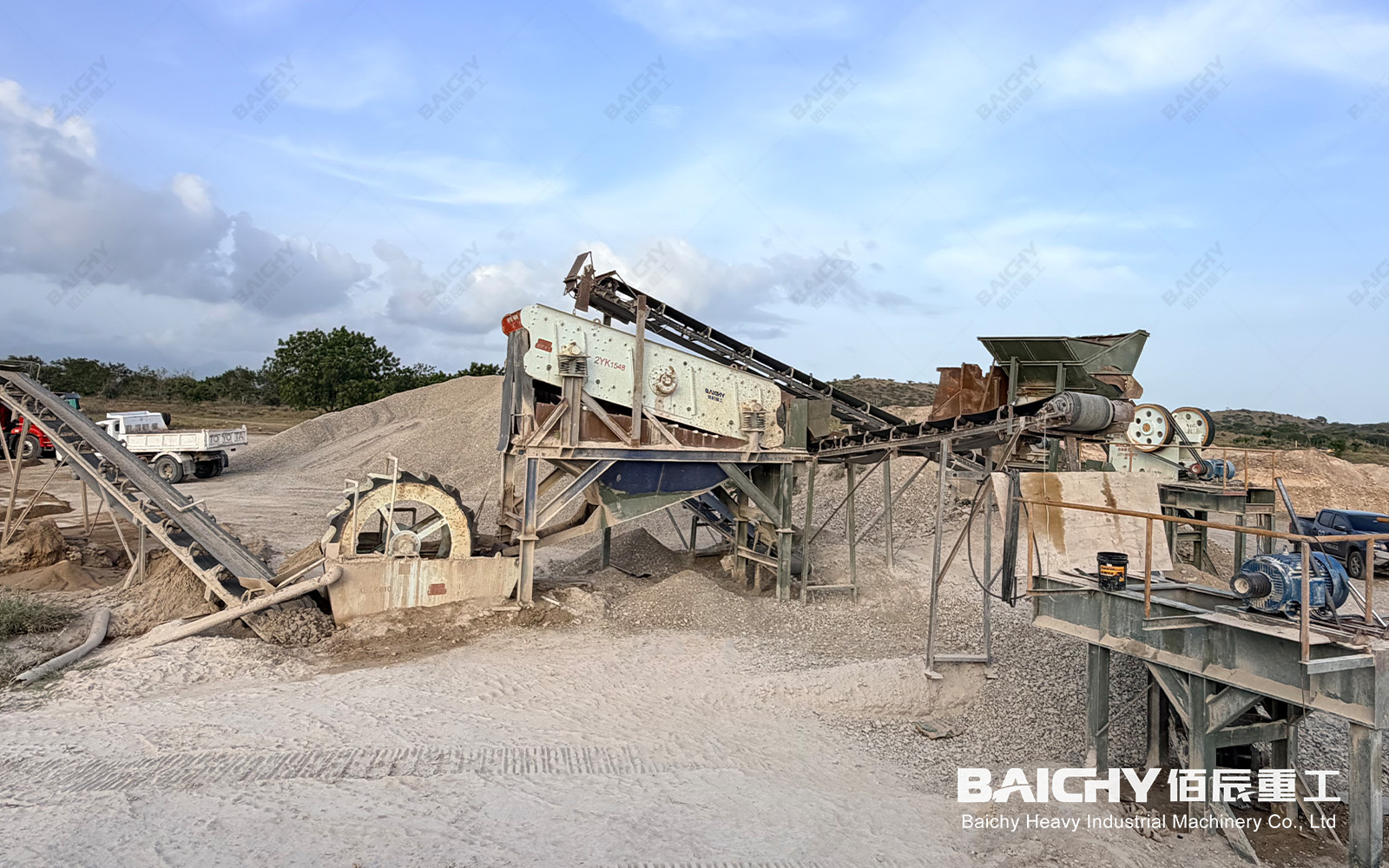
Crushing and sand-washing production line site in the Dominican Republic
Project Background: A small quarry utilizing moderately weathered granite as the raw material source. The raw ore size is ≤340mm, with a silt content of approximately 3%. The original business model involved selling raw stone blocks directly—yielding low added value—so the client sought to process the material on-site into aggregates and manufactured sand to supply local commercial concrete plants.
Configuration Scheme: ZSW-380×96 Vibrating Feeder + PE-400×600 Jaw Crusher + PYB-900 Cone Crusher + 3YA-1548 Vibrating Screen + XSD-2610 Wheel-Bucket Sand Washer + Integrated Fine Sand Recovery Unit + Belt Conveyors and Centralized Electrical Control System; closed-loop circulation; target hourly output of 10–30 tons.
On-site Performance:
Actual stable output: 22–28 t/h (75%–90% of nominal capacity), with a shift output of approximately 180–220 tonnes, meeting design expectations;
Product composition: 0–5mm manufactured sand (fineness modulus 2.6–3.0, silt content <1%) and 5–10mm/10–20mm crushed stone; gradation verified as compliant by third-party testing;
Aggregate crushing value meets C30 concrete mix design requirements; manufactured sand is purchased in bulk by two local commercial concrete plants;
Operational data: Staffing of two personnel per shift; electricity consumption of approximately 4.5 kWh per tonne; replacement of two sets of jaw plates and one set of cone crusher liners in the first year; wear costs align with initial projections;
Economic benefits: Static payback achieved in the fifth month of operation; the composite ex-factory price of finished products is approximately 60% higher than that of raw block stone sales;
Market insights: For clients holding granite mining rights or access to stable raw material sources, upgrading from "selling raw block stone" to "on-site processing into aggregate and manufactured sand" represents one of the paths with the highest return on investment; this project demonstrates that a production line with an hourly capacity of 10–30 tonnes is fully capable of generating profit at a small-to-medium scale.
VII. Recommended Equipment
Based on the process logic outlined above, the following equipment combinations are recommended to suit various budgets and operating conditions:
7.1 Standard Configuration (Recommended; suitable for most granite processing clients)
| Equipment | Model | Rationale |
| Vibrating Feeder | ZSW-380×96 | Features a pre-screening bypass to enhance overall line efficiency |
| Jaw Crusher | PE-400×600 | Primary crusher; wear-resistant with a simple, robust structure |
| Cone Crusher | PYB-900 | Preferred choice for secondary granite crushing; low wear rate |
| Circular Vibrating Screen | 3YK-1548 | Three-deck grading; produces multiple aggregate sizes in a single pass |
| Wheel-type Sand Washer | XSD-2610 | Removes silt and fines; achieves a silt content of <1% |
| Fine Sand Recovery Unit | Integrated type | Minimizes fine sand loss; reduces the frequency of sediment removal |
7.2 Upgraded Configuration
VSI-7611 Sand-making Machine: Install a VSI crusher before the washing stage when there are strict requirements for particle shape and fineness modulus. It utilizes the "rock-on-rock" principle to produce cubical manufactured sand with minimal metal wear, making it ideal for high-end concrete applications.
Spiral Sand Washer: Install as a secondary washing unit if the raw material has a silt content exceeding 8% or contains clay lumps.
Mobile Combination: For sites requiring frequent relocation or short-term projects, a combination of mobile jaw crusher, mobile cone crusher, and mobile screening station is recommended; these units are foundation-free and "plug-and-play."
7.3 Auxiliary Equipment Recommendations
Conveyor belt lengths and angles are customized to the site; wear-resistant liners are installed in hoppers and chutes; dust suppression spray systems are configured for high-dust areas; and anti-freezing measures are implemented for sand washing systems in cold northern regions. All auxiliary equipment is designed and integrated by Baichen Heavy Industry to ensure seamless system coordination.
VIII. FAQ
8.1 Granite is extremely hard; how can wear costs be controlled for a production line with an hourly output of 10–30 tons?
The key lies in the equipment selection for the secondary crushing stage: for granite, a cone crusher (utilizing inter-particle/lamination crushing) must be prioritized over an impact crusher, as metal wear from lamination crushing is significantly lower than that from impact crushing. Secondly, three management measures must be implemented: controlling feed size to prevent limits from being exceeded; removing iron and soil (by installing grizzly screens and iron removers at the feed end); and periodically adjusting the discharge opening and replacing liners based on wear cycles. Based on standard operating experience, jaw plate life for granite processing is approximately 250–400 hours, while cone crusher liners last even longer; wear costs per ton can be controlled within 3%–5% of the finished product's selling price.
8.2 Does "10–30 tons per hour" refer to nominal or actual capacity? How can this target be met?
Nominal capacity is calculated based on standard operating conditions: feed size ≤340 mm, soil content <3%, closed-circuit operation, and continuous feeding. Actual production is influenced by fluctuations in raw ore quality; in practice, the achievable capacity is generally 70%–80% of the nominal capacity. Four measures ensure the target is met: incorporating a 25%–30% margin into equipment selection based on the target output; utilizing a closed-circuit system for material recirculation; employing variable frequency control on the feeder to stabilize the feed rate; and using electrical interlocking controls to prevent overloading....system shutdown. Our proposal will provide estimates for both nominal and actual production capacities, which will serve as the basis for acceptance testing.
8.3 How are water usage and environmental concerns addressed in the wet cleaning process?
The standard configuration features a circulating water system: sand-washing overflow is clarified in a sedimentation tank (or basin) and reused, with make-up water accounting for only 5%–10% of the total circulating volume. A fine sand recovery unit captures fine particles from the overflow, thereby reducing sediment buildup in the tank. Accumulated sludge is removed periodically, with an optional plate-and-frame filter press available to produce sludge cakes for off-site disposal. For regions with strict environmental regulations, a "zero-discharge" solution can be designed: this involves a fully closed-loop wastewater cycle and reduces sludge cake moisture content to below 25%, ensuring compliance with local wastewater discharge and solid waste management standards.