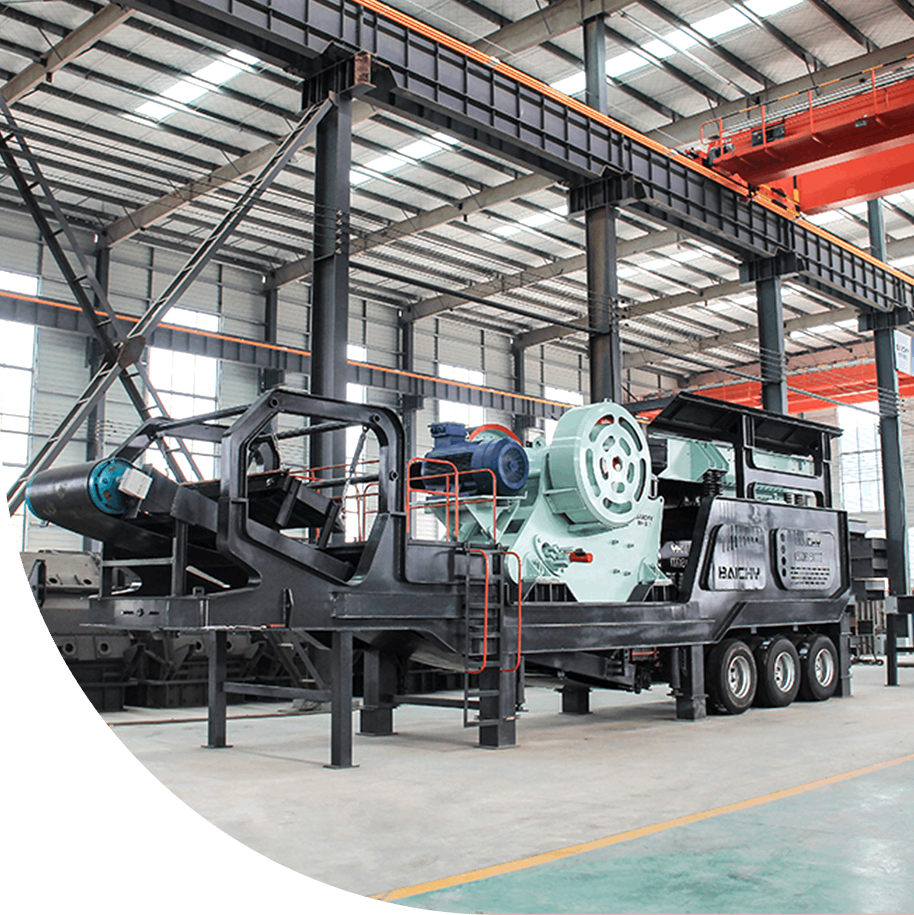

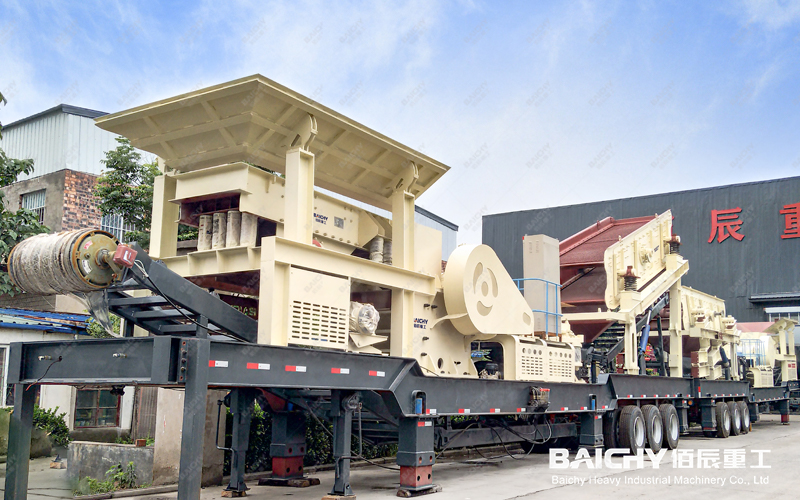
4-in-one Mobile Crushing plant
Within the industry standards for mobile crushing stations, the "Four-in-One Combination" (also referred to as the "4-in-1") does not simply denote a sequence of three crushing stages followed by one screening stage; rather, it signifies the integration of the four core process modules of a crushing production line onto a single chassis.
Regarding the 50–150 t/h capacity equipment you are interested in, its standard configuration combination is as follows:
Standard Four-in-One Combination = Feeding + Primary Crushing + Secondary/Fine Crushing + Screening
These four components form a complete closed-circuit system on a single mobile platform:
1. Feeding Unit (Vibrating Feeder)
• Equipment: Vibrating Feeder (typically equipped with pre-screening grizzly bars).
• Function: Responsible for uniformly feeding raw materials into the primary crusher while simultaneously pre-screening out soil and fine sand via the grizzly bars, thereby preventing inefficient crushing.
2. Primary Crushing Unit (Primary Crusher)
• Equipment: Jaw Crusher.
• Function: Responsible for "tackling" large blocks of raw stone. It serves as the "vanguard" of the entire line; its primary task is to reduce large materials (ranging from 400–600 mm) down to approximately 100 mm.
3. Secondary/Fine Crushing Unit (Secondary Crusher) — *This is the core configuration you specifically mentioned.
• Equipment: Symons Cone Crusher or Impact Crusher.
• Logic of the Symons Cone Crusher: Within the Four-in-One combination, the Symons Cone Crusher typically assumes the role of "secondary crushing." It is responsible for further processing the material—which has already undergone primary crushing—down to the final product size (e.g., 0–30 mm).
Note: Due to the limited spatial constraints of a single mobile unit, a separate "tertiary fine crushing" stage (such as a sand-making machine) is typically *notincluded. Instead, the Cone Crusher works in conjunction with the screening unit to form a closed-circuit loop, allowing for repeated crushing until the material meets the required specifications.
4. Screening Unit (Vibrating Screen)
• Equipment: Circular Vibrating Screen (typically featuring 2 or 3 screen decks).
• Function: To separate the crushed material into different size fractions.
• Qualified Material: Conveyed via a belt conveyor to the stockpile area.
• Oversized Material (Overs): Transported back to the cone crusher via a return conveyor for further crushing.
Why is the "Primary + Secondary + Tertiary Crushing + Screening" Four-Stage Combination Rarely Seen?
If you attempt to fit three crushers (Jaw Crusher + Cone Crusher + Fine Crusher) onto a single chassis, you will encounter the following technical challenges:
1. Excessive Weight: With three crushers, their motors, and the screening unit, the total weight would far exceed 60–80 tons, making standard road transport impossible.
2. Space Constraints: The layout of the conveyor belts would become extremely cluttered, making the system prone to material blockages.
3. Excessive Power Demand: The installed power capacity for a single unit could easily exceed 500 kW, placing extremely high demands on either a mobile generator set or an external power supply.
Regarding the four-stage mobile crushing station you mentioned, it is essential to distinguish between a "Single-Unit Integrated Four-Stage System" and a "Multi-Unit Linked Combination."
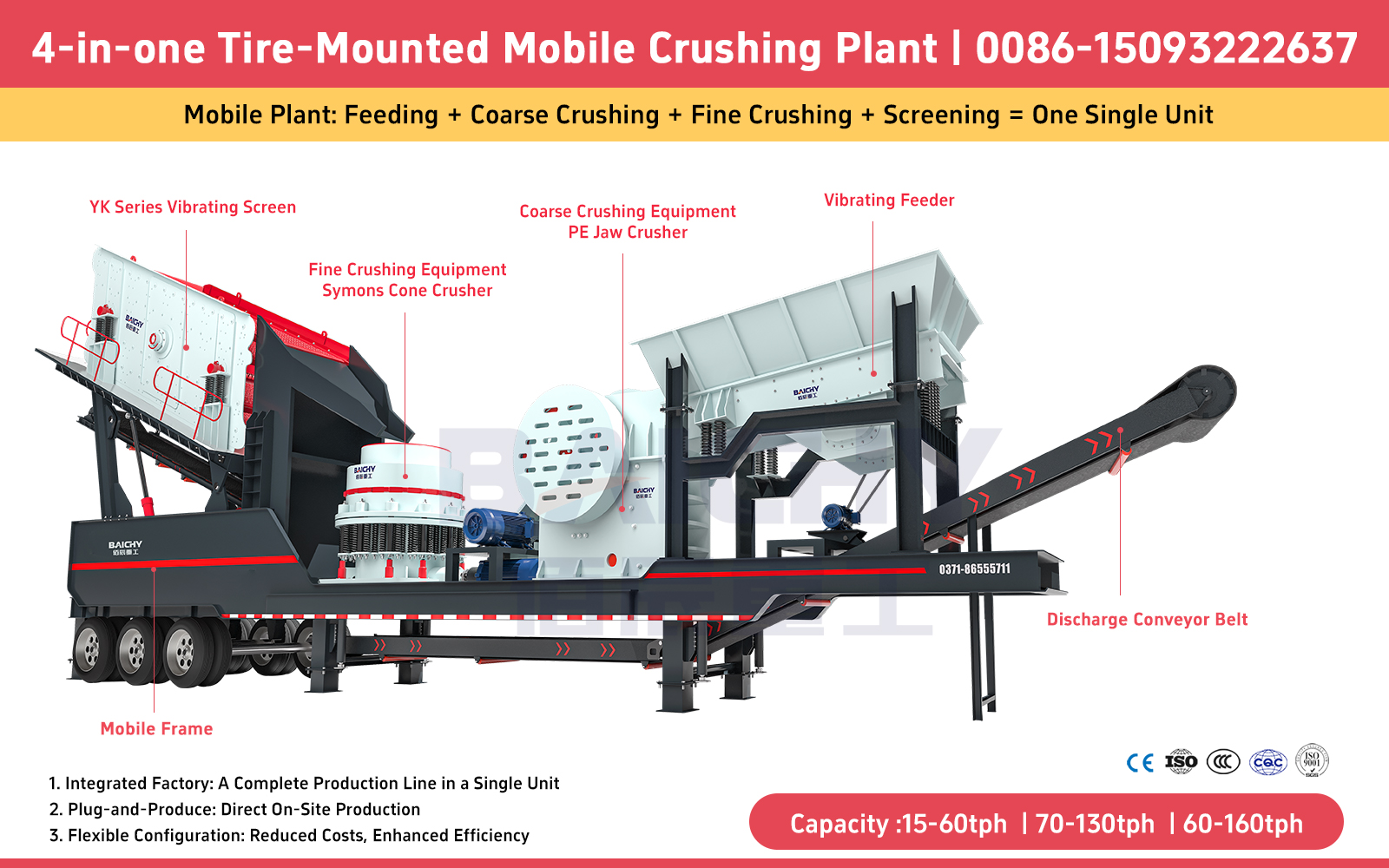
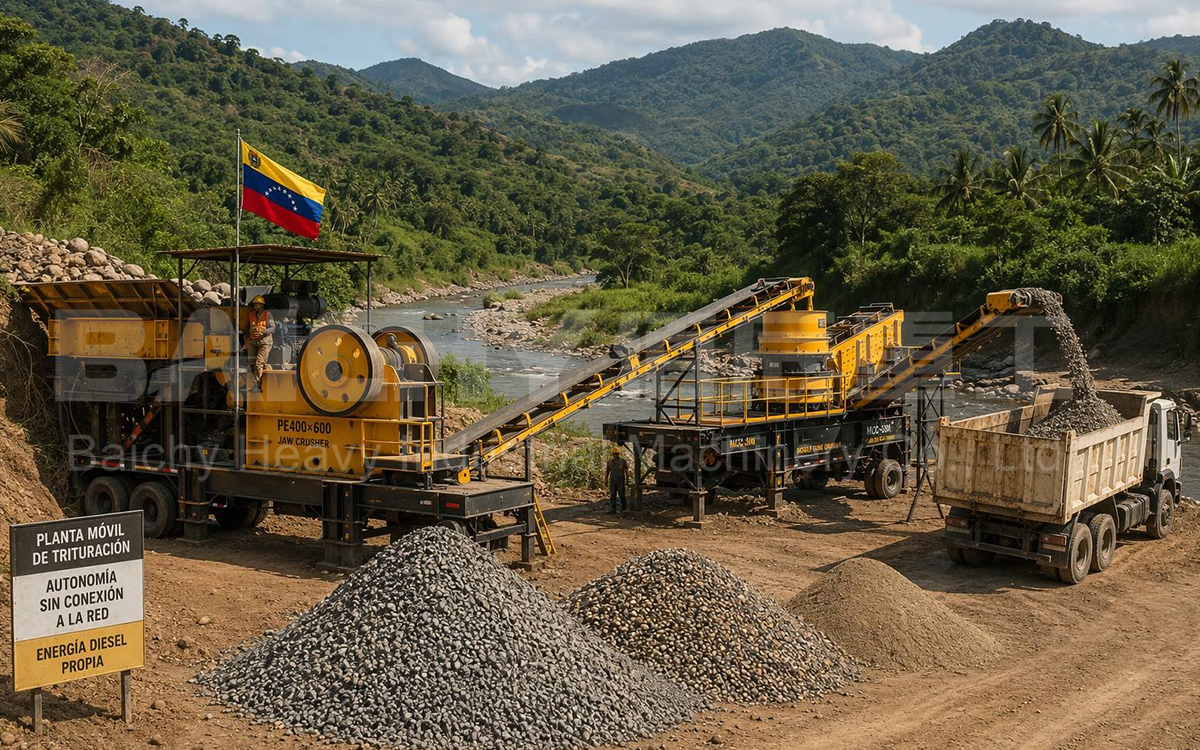
4-in-one Tire-Mounted Mobile Crushing Plant
According to industry standards, a Single-Chassis Integrated four-stage system is limited by the chassis's load-bearing capacity and road transport width; its production capacity typically falls within the range of 50–200 tons per hour (t/h). If you encounter specifications listing a capacity of 150–400 t/h, this typically refers to a "joint operation line" comprising two or more separate mobile crushing stations.
Listed below are the core parameter ranges for Baichy Heavy Industry's Standard Single-Chassis Four-Stage System (Jaw Crusher + Cone Crusher):
1. Processing Capacity
Standard Range: 50 – 150 t/h (tons per hour). Maximum Capacity Limit: 200 t/h (This represents the physical limit for a single chassis-integrated unit; to achieve a capacity of 400 t/h, the system must be split into two separate mobile units: an "Jaw Crushing Station" and a "Cone Crushing Station").
2. Maximum Feeding Size
Dependent on Jaw Crusher Model:
When configured with the PE500×750 model: ≤ 425 mm.
When configured with the PE600×900 model: ≤ 500 mm.
Overall Range: 350 – 500 mm.
3. Core Equipment Specifications
Primary Crushing (Jaw Crusher): Feed opening width: 500–600 mm; Power: 55–75 kW.
Secondary/Tertiary Crushing (Cone Crusher): Utilizes the Symons 900 model (CS75), Power: 75 kW; *Alternatively*, a Compound Cone Crusher may be used, Power: 90–110 kW.
Screening (Vibrating Screen): Common specifications: 1545 or 1848 (3-deck or 4-deck configuration); Power: 15–22 kW.
4. Output Specifications
Typical Sizes: 0–5 mm, 5–10 mm, 10–20 mm, 20–31.5 mm.
Adjustability: The number of distinct output product sizes depends on the number of decks on the vibrating screen (typically 3 decks, capable of producing 4 different material sizes).
5. Installed Power & Weight
Total Power: 220 – 350 kW (Includes all conveyor belts and feeders).
Total Machine Weight: 45 – 65 tons. This weight is a critical factor for the "four-in-one" integrated configuration; exceeding 65 tons makes obtaining road permits—in countries such as Mexico—extremely difficult and costly. 6. Transport and Operational Dimensions
Transport Configuration (L × W × H): Approx. 14,500 × 2,800 × 4,350 mm.
Operational Height: Approx. 6,000 – 8,000 mm.
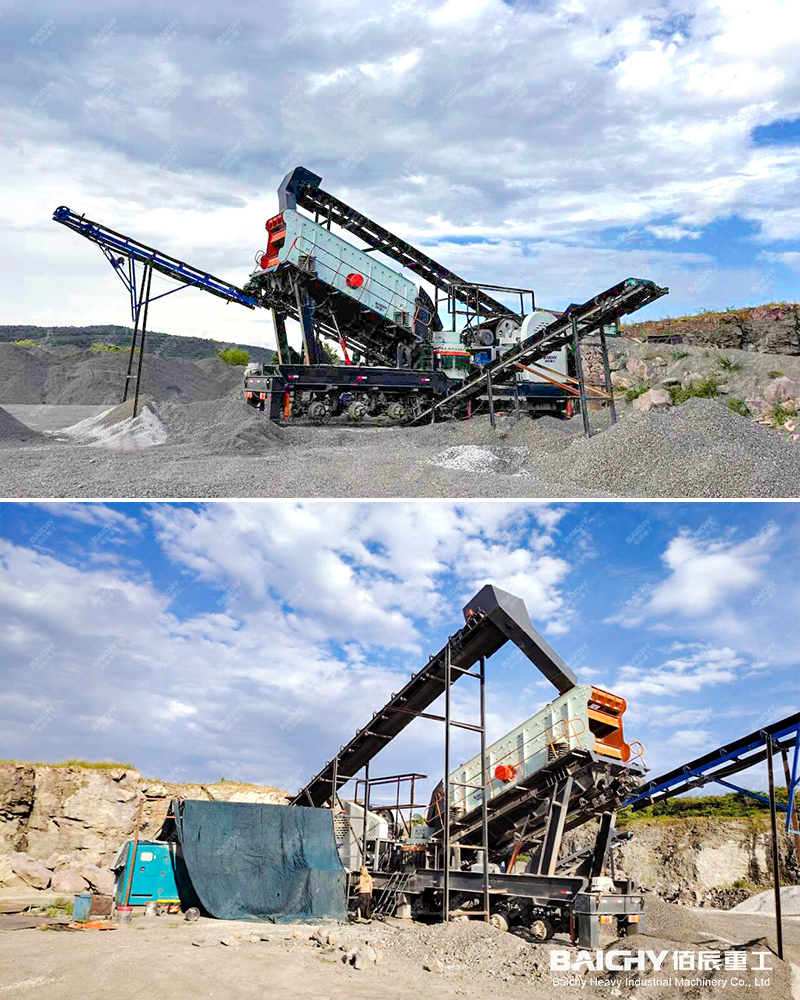
Crushing Site in Mexico Four-Unit Mobile Crushing Station
Parameter Adjustment Advisory:
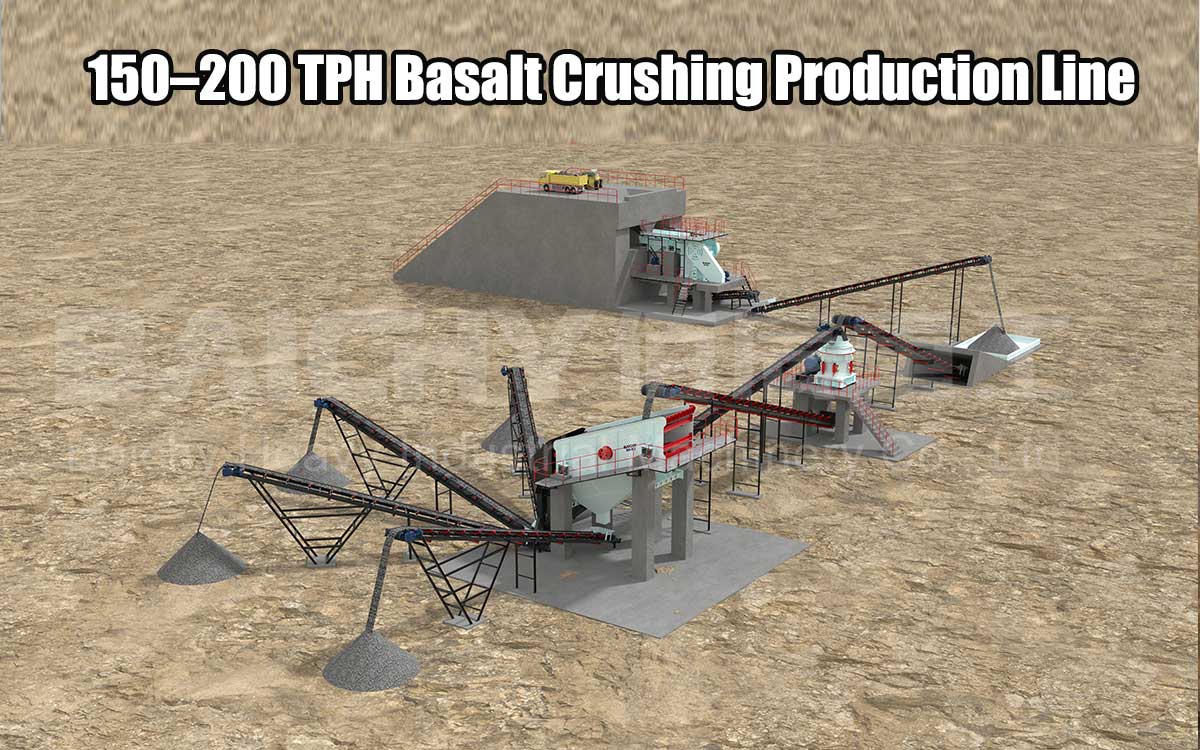
If your objective is a production capacity of 150–400 tons per hour, the equipment configuration will undergo a fundamental shift:
Structure: A "Dual-Station Combination" configuration becomes mandatory (one vehicle carries the Jaw Crusher + Feeder; the other carries the Cone Crusher + Vibrating Screen).
Advantages: The Jaw Crusher can be upgraded to a model larger than the PE750×1060, and the Cone Crusher can be upgraded to a single-cylinder or multi-cylinder hydraulic cone crusher (e.g., HP300/GP300 class).
Disadvantages: Transport requires two tractor units, and the on-site commissioning time will extend from 1 day to 2–3 days.
Summary: For the Mexican client site you initially mentioned, the most mainstream choice remains the 50–150 t/h "Single-Unit Four-in-One" combination. This is because, in terms of both "Return on Investment" and "Site Flexibility," this configuration offers the most compelling value proposition for local small-to-medium-scale mine owners.
When exporting its "Four-in-One" Mobile Crushing Station (such as to markets like Mexico and Latin America), Baichy Heavy Industry offers a comprehensive range of optional configurations and customization options to adapt to diverse local operating conditions—including power shortages, iron-bearing raw materials, and strict environmental regulations.
The following outlines the core customization solutions available for this equipment:
1. Power System Customization (Power Solutions)
Dual-Power System (Diesel-Electric): This is the most popular optional feature for exports to Mexico. When a local power grid is available on-site, the unit connects to the grid to minimize energy consumption; when grid power is unavailable, it utilizes its integrated diesel generator set.
Branded Generator Sets: Customers may select from top-tier brands such as Cummins, Caterpillar, or leading domestic manufacturers (e.g., Yuchai, Weichai), with power outputs typically ranging from 300 to 500 kVA.
Tropical Climate Package: Specifically designed for Mexico's high-temperature environment, the generator set is equipped with a large-capacity water tank and an enhanced heat dissipation system.
2. Core Protection & Material Purity (Material Purity)
Suspended Self-Cleaning Magnetic Separator:
Application: Used to remove steel rebar during construction waste processing, or to extract stray iron objects (such as mining tools) from the feed stream prior to entering the cone crusher.
Value: Protects the moving and fixed cones of the Symons cone crusher, preventing iron blocks from causing "choking" (blockages) or damaging the main shaft.
Pre-screening & Bypass System: Installed at the feeder end, this system screens out fine silt or 0–5 mm aggregates from the raw material *beforeit enters the crushing chamber. By bypassing the crusher, it reduces liner wear and boosts overall production capacity by up to 20%.
3. Intelligent Control & Lubrication (Intelligence & Maintenance)
Automated Lubrication System (Centralized Lubrication):
Option: Integrates the multiple lubrication points of both the jaw crusher and the cone crusher into a single system, with the option to install a fully automated, timed lubrication pump.
Value: In the dusty mining environments typical of Mexico, automated lubrication significantly extends the service life of bearings. PLC Intelligent Touchscreen Control: Replaces traditional button switches, supporting one-touch start/stop, current monitoring, pressure alarms, and language switching (Chinese/English/Spanish).
4. Environmental Protection & Occupational Safety
High-Pressure Spray Dust Suppression System: Atomizing nozzles are installed at conveyor belt transfer points and the inlet/outlet of the crushing chamber; an integrated water pump is utilized to effectively suppress dust.
Silent Environmental Enclosure: Designed for operations in urban or suburban areas, the main crushing unit is fitted with sound-insulating covers to minimize noise pollution.
Foldable Walkways & Guardrails: Compliant with ISO international safety standards, facilitating safe and convenient inspection of all rotating components by operators.
5. Enhanced Structure & Mobility
Hydraulic Supporting Legs:
Customization Feature: Upgraded from traditional mechanical supports to a one-touch hydraulic lifting system.
Value Proposition: Upon arrival at the site, the equipment requires no crane assistance; leveling and stabilization can be completed in just 10 minutes.
Foldable Finished Product Conveyor: The main discharge conveyor features a hydraulic folding mechanism, reducing the overall transport length to comply with road length restrictions mandated by Mexico's SCT (Secretariat of Communications and Transport).
Customized Package" Recommendations for Mexican Clients:
If you are targeting quarry operators in Mexico, the optimal configuration typically consists of the following:
1. Core Setup: Jaw Crusher + Symons Cone Crusher + Screening Unit.
2. Essential Add-on: Diesel Generator Set (critical given the often unstable power supply in remote mining areas).
3. Optional Add-ons: Magnetic Iron Separator (to protect the cone crusher) + Hydraulic Supporting Legs (to accelerate setup/relocation times for frequent site transfers).
4. Software/Interface: Spanish-language operating system interface.
These customized options not only enhance the equipment's durability and performance but also represent a key strategy for Baichy Heavy Industry to boost its competitiveness in overseas markets through "differentiated services."