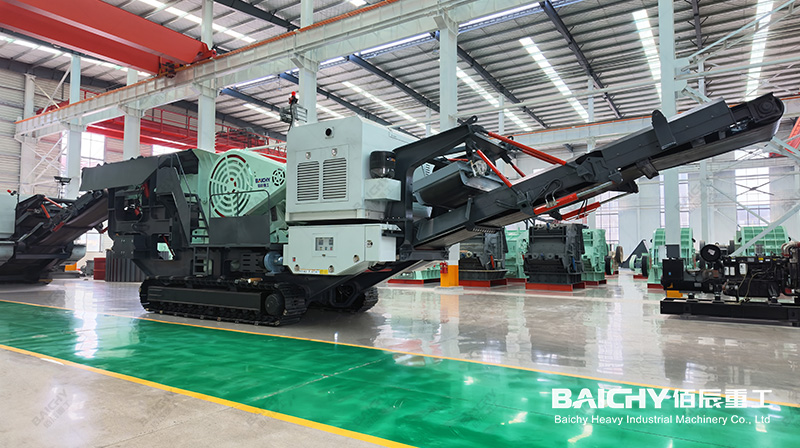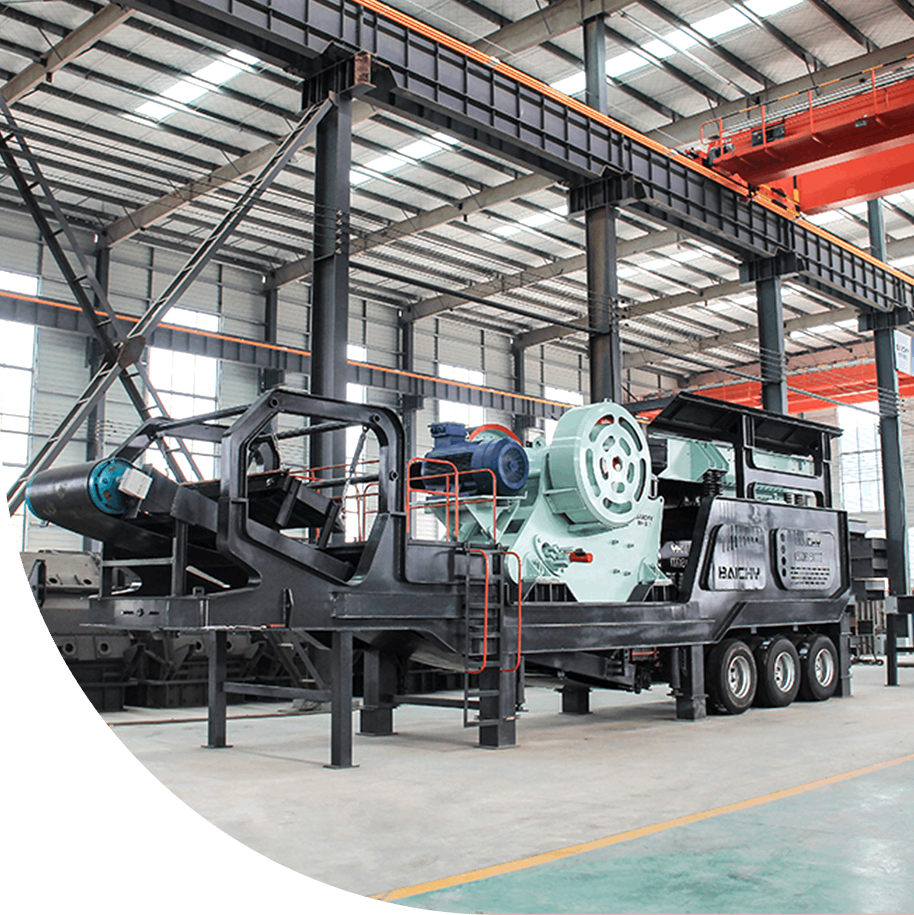

Quick Answer for Buyers: The three most critical drawbacks of an impact crusher are (1) rapid wear part consumption when processing hard/abrasive rock, (2) clogging with high-moisture or sticky feed, and (3) high dust and noise emissions. However, with proper material selection, optimized process design, and preventive maintenance, these limitations can be effectively controlled — and for medium-hard materials like limestone (≤120 MPa), the impact crusher's superior particle shape and high reduction ratio still make it the preferred choice in manufactured sand and aggregate production.
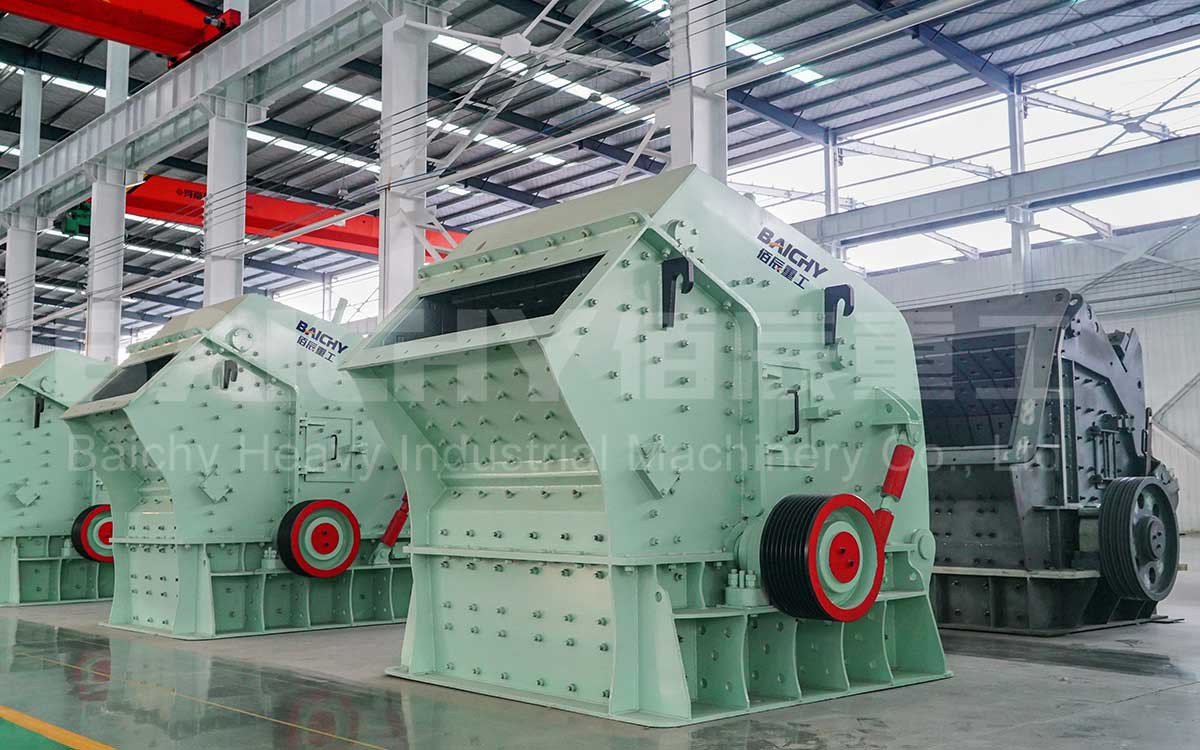
impact crusher
1. Understanding the Impact Crusher: Where It Fits in Your Crushing Circuit
The horizontal shaft impact crusher (HSI) uses a high-speed rotor to propel material against impact plates, achieving size reduction through stone-on-iron or stone-on-stone collision. It serves as a secondary or tertiary crusher, primarily in:
• Manufactured sand production (producing cubic-shaped sand that meets ASTM C33 and Zone II specifications)
• Medium-fine crushing of limestone, dolomite, and other medium-low hardness minerals
• Construction and demolition (C&D) waste recycling
• Aggregate shaping for high-performance concrete and asphalt
Baichy Heavy Industry, with 20 years of R&D and manufacturing expertise in mining crushing equipment, has deployed impact crushers in over 60 countries. This article draws on field data from hundreds of installations to give you an honest, technically grounded analysis.
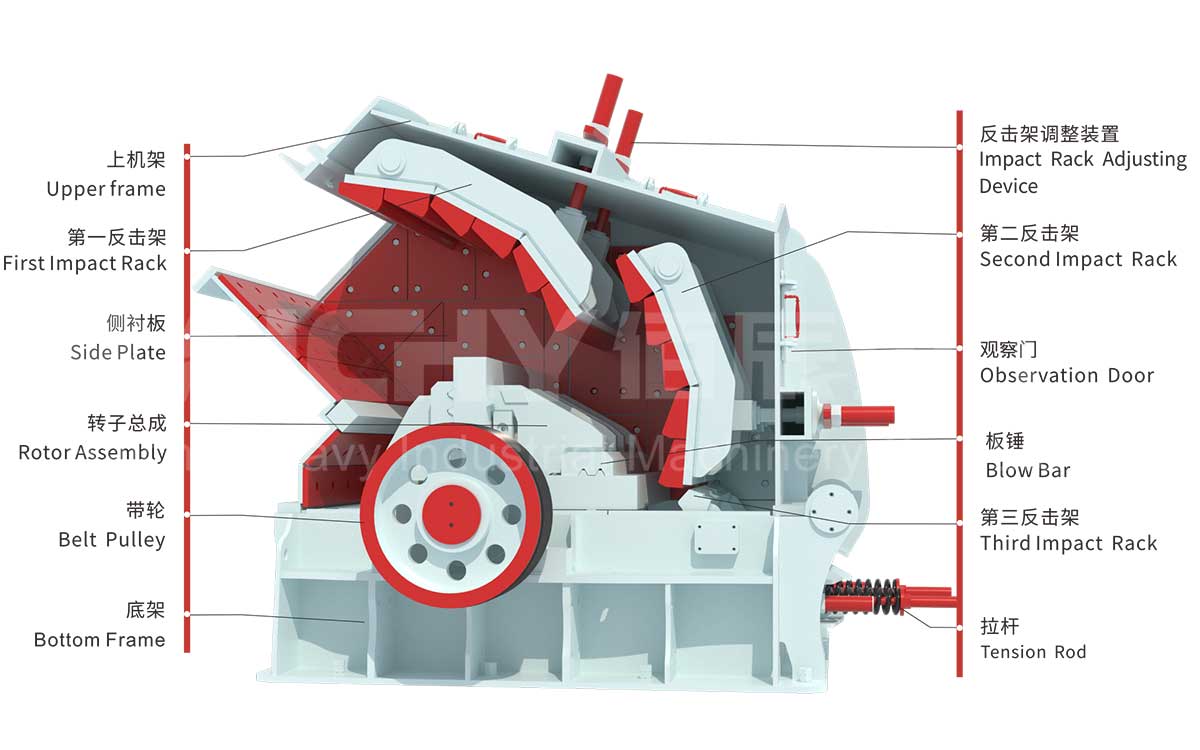
Impact crusher structural diagram
2. The 5 Key Drawbacks of Impact Crushers — and How to Overcome Each
Drawback 1: Rapid Wear on Blow Bars and Impact Plates
The Problem: When crushing materials with Mohs hardness above 6 (granite, basalt, quartzite), blow bars and impact plates wear 3–5x faster than in limestone applications. This drives up the cost-per-ton significantly compared to compression crushers like cone crushers.
The Data:
| Material | Mohs Hardness | Blow Bar Life (hours) | Replacement Cost per 1,000 tons |
| Limestone | 3–4 | 600–800 | $0.08–$0.15 |
| Dolomite | 3.5–4 | 500–700 | $0.10–$0.18 |
| Granite | 6–7 | 120–200 | $0.35–$0.60 |
| Basalt | 6–7 | 100–180 | $0.40–$0.70 |
| Quartzite | 7 | 80–150 | $0.50–$0.85 |
Data based on Baichy PF series impact crushers with standard manganese blow bars. Actual values vary with feed size and operating conditions.
Proven Solutions:
1. Material-specific blow bar selection: For abrasive rock, upgrade to high-chrome martensitic steel or ceramic-insert blow bars — these increase service life by 40–60% compared to standard manganese.
2. Cascade feeding: Maintain a consistent, full-cavity feed to distribute wear evenly across the full rotor width. Partial feeding accelerates localized wear.
3. Preventive rotation schedule: Rotate or flip blow bars at 50% wear (not 80%) to maintain crushing efficiency and protect the rotor body.
4. Process redesign for hard rock: Place the impact crusher after a cone crusher for shaping only, reducing the throughput and impact load it handles. This is the approach Baichy used in a Southeast Asian granite project — blow bar life increased from 150 hours to 260+ hours.
Drawback 2: Material Clogging with High-Moisture or Sticky Feed
The Problem: Feed material with >8% moisture content or high clay/mud content sticks to the blow bars, impact plates, and internal chamber walls. Production drops 30–50%, and in severe cases, the crusher jams completely, requiring 2–4 hours of downtime for manual cleaning.
Root Cause: Impact crushing relies on high-speed kinetic energy transfer. Wet, sticky material absorbs impact energy and adheres to metal surfaces instead of fracturing.
Proven Solutions:
| Condition | Solution | Expected Improvement |
| Moisture 5–10% | Install pre-screening with vibrating grizzly | 70–80% clogging reduction |
| Moisture >10% | Add rotary drum dryer upstream | Near-complete elimination |
| High clay content | Add trommel scrubber + washing stage | 85–90% mud removal |
| Seasonal rain | Heated impact plates (optional add-on) | Prevents condensation adhesion |
For existing installations without pre-treatment, Baichy recommends reducing feed rate by 20–25% during wet seasons and increasing rotor speed by 5–8% to improve self-cleaning through centrifugal force.
Drawback 3: Significant Noise and Dust Emissions
The Problem: Impact crushing generates 95–110 dB(A) at the operator position due to high-speed rotor impact (typically 500–800 RPM). Simultaneously, fine particle dust (PM10 and PM2.5) is released at rates of 50–150 mg/m³ without controls — above the 30 mg/m³ limit in most jurisdictions.
Compliance Solution Package:
1. Enclosure + negative pressure: Fully enclose the crusher with rubber curtains at inlet/outlet, and install a baghouse dust collector (pulse-jet type, ≥99.5% efficiency). This brings emissions below 20 mg/m³.
2. Water spray system: Automated misting nozzles at feed and discharge points suppress airborne dust. Use 0.5–1.5 L of water per ton of material.
3. Sound insulation: Acoustic panels (rock wool, 50 mm thickness) around the crusher housing reduce noise by 15–20 dB(A). Combined with rubber damping mounts under the base frame, total noise drops to 75–85 dB(A).
4. Remote monitoring: Baichy's automated control system allows operators to monitor from a soundproof control room, eliminating direct exposure.
Drawback 4: Particle Shape Sensitivity to Rotor Speed
The Problem: Unlike cone crushers where product size is mechanically set by the closed-side setting (CSS), an impact crusher's output particle size and shape depend heavily on rotor speed, feed gradation, and impact plate clearance. Novice operators often struggle to dial in specifications, leading to inconsistent product quality.
Proven Solutions:
1. VFD (Variable Frequency Drive) installation: A VFD enables precise rotor speed control from the HMI panel. Speeds can be pre-programmed for different product targets — e.g., 650 RPM for coarse aggregate vs. 850 RPM for fine sand.
2. Calibrated impact gap settings: Maintain documented gap-to-product-size curves. For PF series crushers, typical settings:
• Primary impact gap: 80–120 mm (coarse crushing)
• Secondary impact gap: 25–60 mm (medium-fine)
• Tertiary impact gap: 8–25 mm (sand making)
3. Feed gradation control: Feed the crusher with a narrow size distribution (±30% of mean feed size). Wide gradation causes uneven impact and poor shape control.
Drawback 5: Higher Initial Investment vs. Jaw Crushers
The Problem: A new PF-1315 impact crusher (200–300 tph) costs approximately 25–40% more than a PE-750×1060 jaw crusher of similar capacity. This sticker shock leads some buyers to default to cheaper options without evaluating total cost of ownership.
TCO Comparison (3-Year, 300 tph Limestone Line):
| Cost Element | Impact Crusher (PF-1315) | Jaw Crusher (PE-750×1060) |
| Equipment purchase | $48,000 | $35,000 |
| Wear parts (3 years) | $18,000 | $8,500 |
| Power consumption | $22,000 | $19,000 |
| Product value premium* | +$45,000 | Baseline |
| 3-Year Net Cost | $43,000 | $62,500 |
Product value premium reflects the 10–15% higher market price of cubic-shaped aggregate vs. flaky/elongated output from jaw crushers alone.
Conclusion: For limestone, dolomite, and recycled concrete applications where particle shape commands a premium, the impact crusher recovers its higher initial cost within 12–18 months.
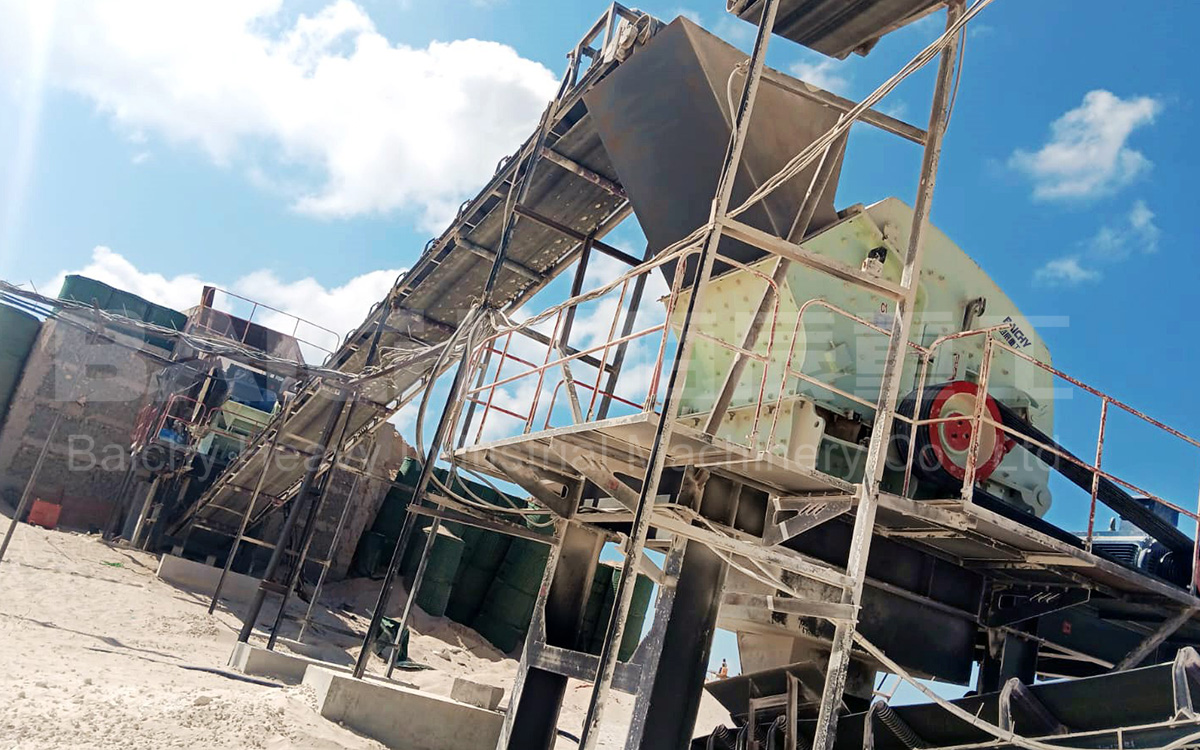
Impact crusher in operation in Somalia
3. When an Impact Crusher Is Still the Right Choice
Despite these drawbacks, the impact crusher remains irreplaceable in the following scenarios due to unmatched advantages:
• Excellent cubic particle shape — <8% flaky and elongated content, ideal for high-performance concrete (meeting ASTM D4791 requirements)
• High reduction ratio — 20:1 to 40:1, often eliminating one crushing stage
• Flexible product adjustment — sand-to-aggregate ratio can be adjusted in minutes via rotor speed
• Compact footprint — simpler foundation requirements than cone crushers of equivalent capacity
4. Baichy Project Case: Overcoming Granite's Abrasiveness in Southeast Asia
Project Background: A large-scale granite aggregate and manufactured sand project in Southeast Asia, requiring 300 tph output with >95% cubic aggregate and Zone II manufactured sand.
Challenge: Granite (Mohs 6–7) is highly abrasive, threatening blow bar service life and project economics. The customer also needed dynamic adjustment of the sand-to-aggregate ratio.
Baichy Solution:
1. Equipment: Deployed the VSI 1145 high-performance impact crusher with heavy-duty rotor and high-chrome composite blow bars — verified 35% longer service life vs. standard manganese.
2. Process: Adopted a "jaw crusher (primary) → cone crusher (secondary) → impact crusher (shaping/sand making)" three-stage circuit. The cone crusher handles the main crushing load; the impact crusher only processes 40% of total throughput for final shaping — dramatically reducing wear exposure.
3. Automation: Real-time rotor balance monitoring, bearing temperature alerts, and hydraulic-assisted opening for blow bar replacement — cutting maintenance downtime by 50%.
4. Results: After 12 months of continuous operation, the line produces 95%+ cubic aggregate and manufactured sand meeting Zone II gradation — fully satisfying high-end commercial concrete specifications.
5. Frequently Asked Questions
Q1: Impact crusher vs. cone crusher — which is better for hard stone?
A: For materials with Mohs hardness above 6 (granite, basalt, quartzite), a multi-cylinder hydraulic cone crusher offers superior wear part life and lower long-term operating costs in the secondary stage. The impact crusher is best deployed as a tertiary shaping crusher after the cone crusher, where it adds value through particle shape improvement without carrying the full crushing load. Our engineers can design the optimal combined circuit for your specific material.
Q2: How can I reduce blow bar replacement frequency?
A: Three levers:
(1) Upgrade to high-chrome martensitic or ceramic-insert blow bars;
(2) maintain uniform full-cavity feeding to spread wear evenly;
(3) rotate or flip blow bars at 50% wear (not 80%) — this prevents uneven wear from damaging the rotor and extends total bar life by 30%