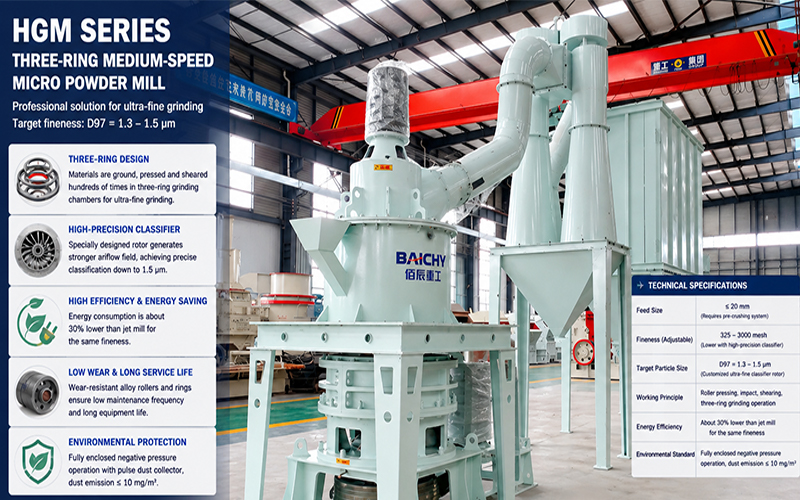
HGM Series Three-Ring Medium-Speed Micro
HGM Series Three-Ring Medium-Speed Micro-Powder Mill + Multi-Stage High-Precision Classification System
To achieve an extreme fineness of 1.5 microns, a single piece of equipment cannot accomplish this "multi-span, multi-stage" task alone. A three-stage process flow is therefore recommended:
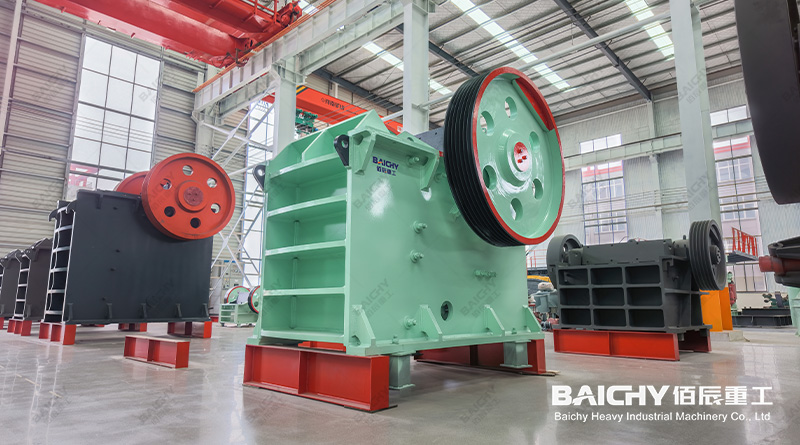
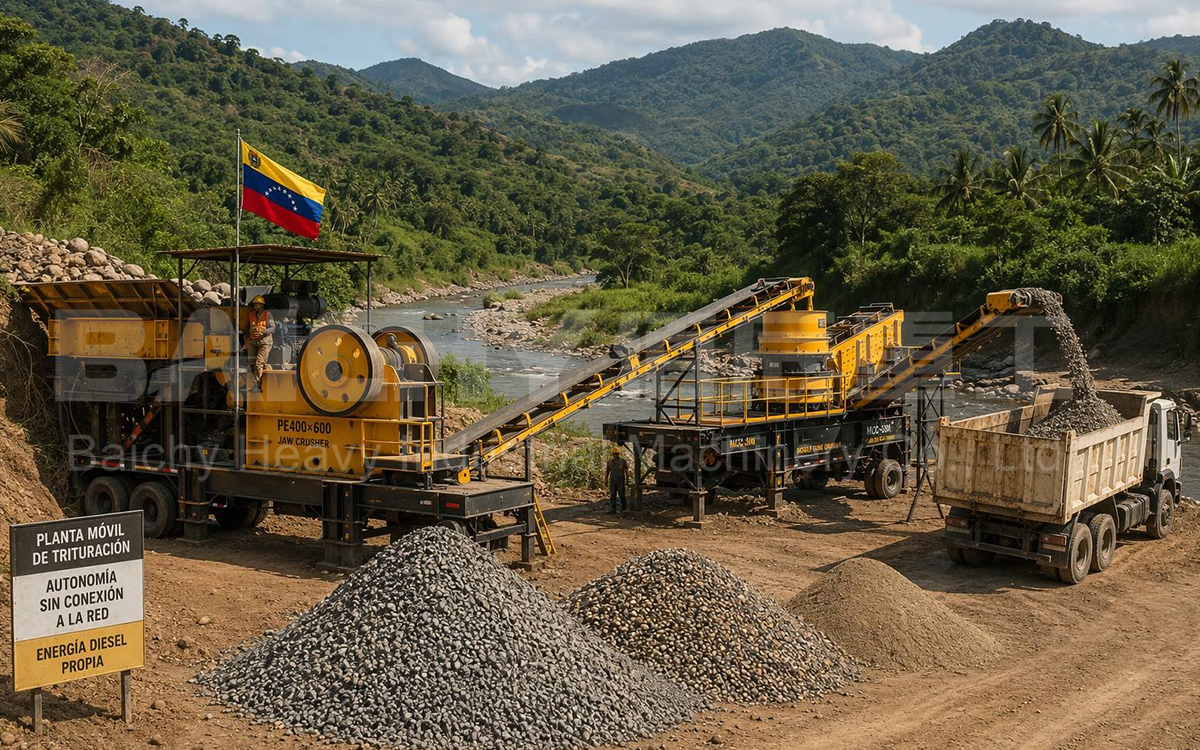
1. Primary/Secondary Crushing: Large blocks of rock (such as calcite, marble, or granite) are reduced to a size of less than 20mm using a PE Jaw Crusher and a CS/HP Cone Crusher.
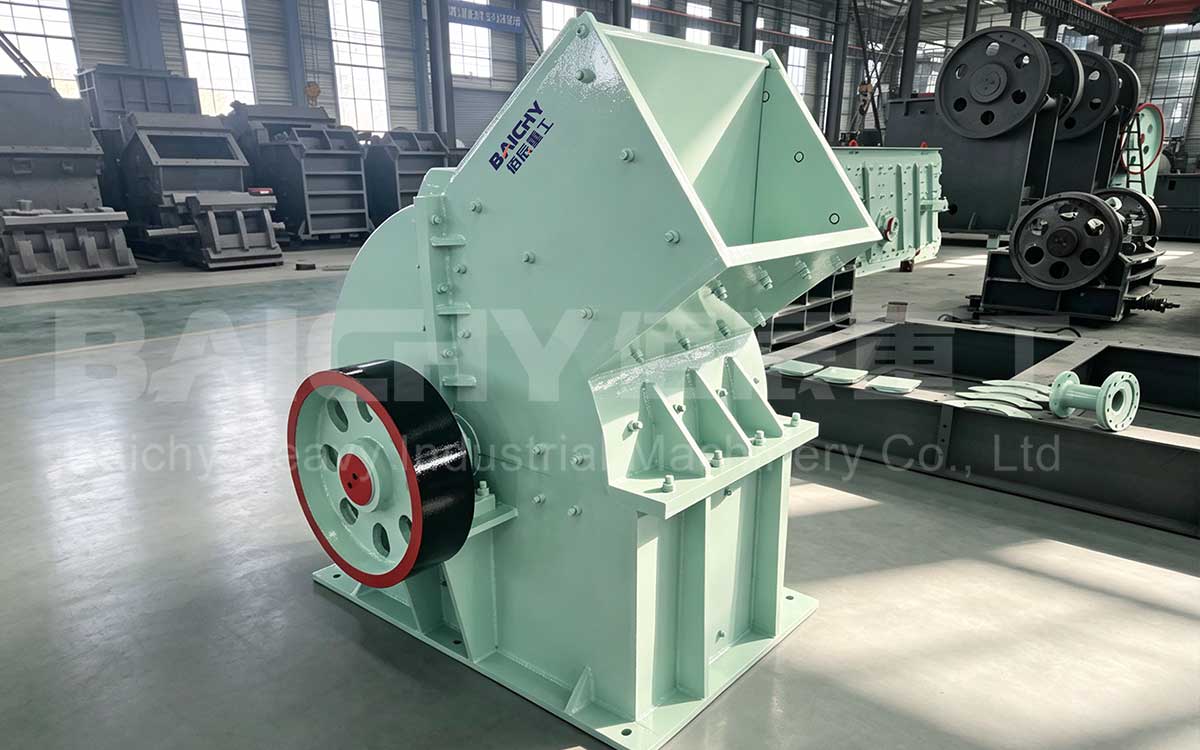
2. Ultra-Fine Grinding: The Baichy HGM Series Ultra-Fine Micro-Powder Mill is employed; its design—featuring three grinding rings and multiple grinding rollers—is the core mechanism for achieving micron-level pulverization.
3. Secondary Classification (Core Stage): The standard high-precision turbine classification system, paired with variable frequency speed control, utilizes the centrifugal force generated by extremely high rotational speeds to separate and retain particles larger than 1.5 microns, thereby ensuring a highly uniform output particle size.
HGM Series Three-Ring Medium-Speed Micro-Powder Mill: Technical Specifications
| Performance Indicators | Technical Parameters / Capacity Specifications |
| Feed Size | ≤20mm (Requires a pre-crushing system) |
| Product Fineness | Adjustable Range: 325 – 3000 Mesh (Finer results achievable with secondary classification) |
| Target Particle Size | D97 = 1.3 – 1.5 μm (Requires a customized ultra-fine classification rotor) |
| Working Principle | Continuous operation via roller compression, impact, shear, and a three-ring grinding track |
| Energy Efficiency | Compared to air-flow mills, energy consumption is reduced by approximately 30% at equivalent fineness levels |
| Environmental Standards | Full negative-pressure operation; equipped with a pulse dust collector; dust emissions:≤10mg/m³ |
Core Advantages: Why Choose the HGM Series for 1.5-Micron Processing?
1. Multi-Ring Grinding Track Design: Materials undergo hundreds of cycles of rolling, grinding, and shearing by the rollers across the three-layer grinding track. Compared to traditional Raymond mills, the pulverization frequency increases exponentially.
2. High-Precision Classifier Rotor: To address the specific requirements for 1.5-micron fineness, we employ a specially designed impeller structure. This design generates a highly stable airflow field, enabling the effective separation of micron-scale fine powders.
3. Low Wear and Extended Service Life: The grinding rollers and rings are forged from a specialized wear-resistant alloy, significantly reducing the frequency of maintenance required when processing hard rocks.
In-Depth Analysis: The Process Chain from Large Rocks to Fine Powder
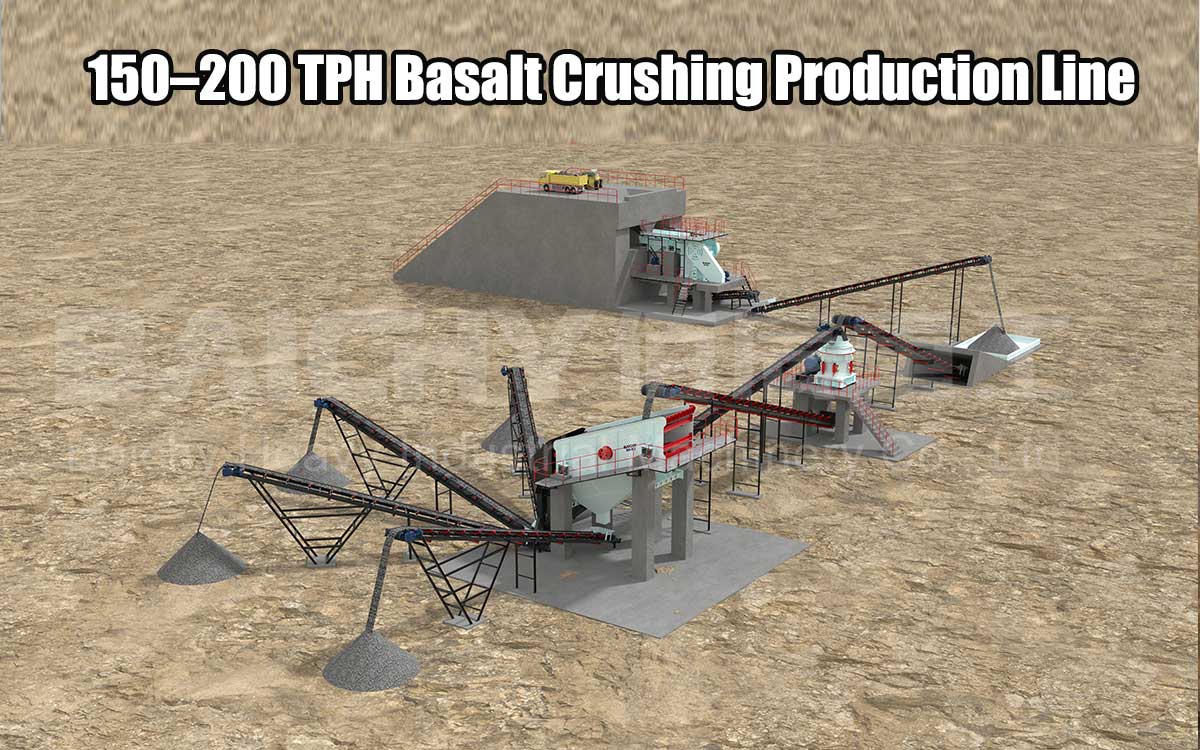
• Crushing Stage: Large rocks → Jaw Crusher (PE) → Cone Crusher (HP) → Storage Silo.
• Feeding Stage: An electromagnetic vibrating feeder delivers the material uniformly into the main grinding unit.
• Grinding Stage: Multiple layers of grinding rollers operate continuously within the main unit, progressively refining the material particles.
• Classifying Stage: An airflow carries the fine powder into the classifier; particles meeting the 1.5μm fineness standard pass through, while oversized particles are returned for further grinding.
• Collecting Stage: A pulse dust collector captures the ultrafine finished product, followed by final bagging.
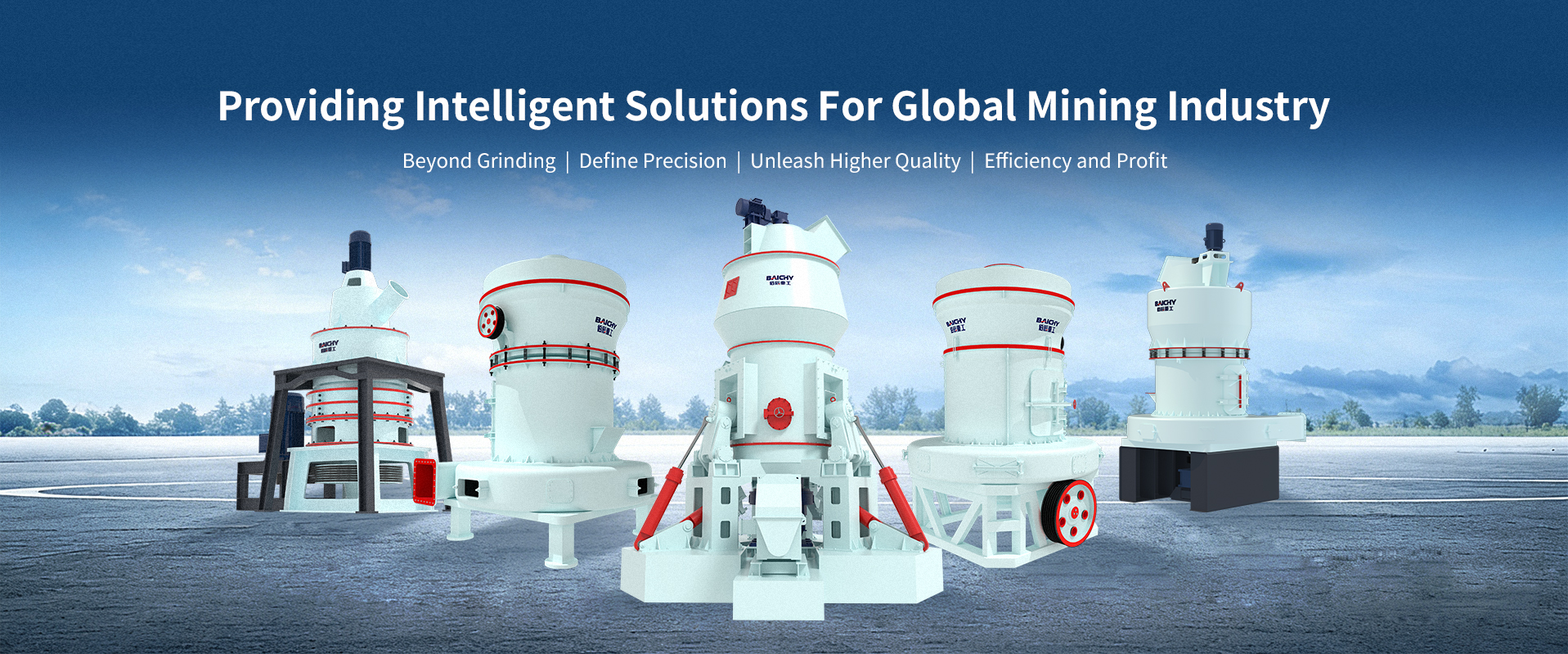
About of Baichy Heavy Industry
Baichy Heavy Industry is a high-tech mining equipment company integrating R&D, manufacturing, sales, and after-sales service. Focusing on crushing, grinding, and mineral processing equipment, we provide professional solutions to our customers. We are ISO9001:2015 銆乧ertified, and our products include mobile crushing palnts, crawler crushing plant, construction waste crushing plants, jaw crushers, sand making machines, cone crushers, fine crushers, grinding mills, ball mills, etc., all with reliable performance to meet diverse project needs.
Our advantages:
• Professional pre-sales support: Free project design and comprehensive solutions to help you accurately select the right equipment;
• Comprehensive on-site service: Providing installation guidance and worker training to ensure smooth equipment commissioning;
• Reliable after-sales guarantee: A complete after-sales system, timely response to technical inquiries and equipment maintenance, ensuring long-term stable operation.
To protect your rights, please contact us through the following official channels for professional service:
Official Website Customer Service
https://wa.me/+8615093222637
Email: [email protected]
We are committed to providing high-quality equipment and full-cycle services to deliver comprehensive intelligent solutions for the global mining industry!
Frequently Asked Questions Regarding 1.5-Micron Ultrafine Grinding
Q: Why is the output volume typically lower when producing 1.5-micron powder?
A: Fundamental physical laws dictate that the smaller the particle size, the higher its surface energy and the larger its specific surface area. At the 1.5-micron level, materials are prone to electrostatic attraction and agglomeration. Consequently, the output volume decreases significantly as fineness increases; we recommend adding an appropriate amount of grinding aid to the process to enhance efficiency.
Q: What is the maximum rock hardness that the HGM grinding mill can process?
A: We recommend processing non-metallic ores with a Mohs hardness of 7 or lower. If processing high-hardness siliceous rocks, wear rates will increase significantly; in such cases, we recommend customizing reinforced wear-resistant components tailored to the specific material.
Q: How can I verify that the discharged product has reached the 1.3–1.5 micron fineness range?
A: Professional laser particle size analyzers (such as Malvern instruments) must be used for spot checks. At the micron scale, "mesh count" is no longer sufficient to accurately describe particle distribution; instead, standard metrics such as D97 or D50 should be utilized.