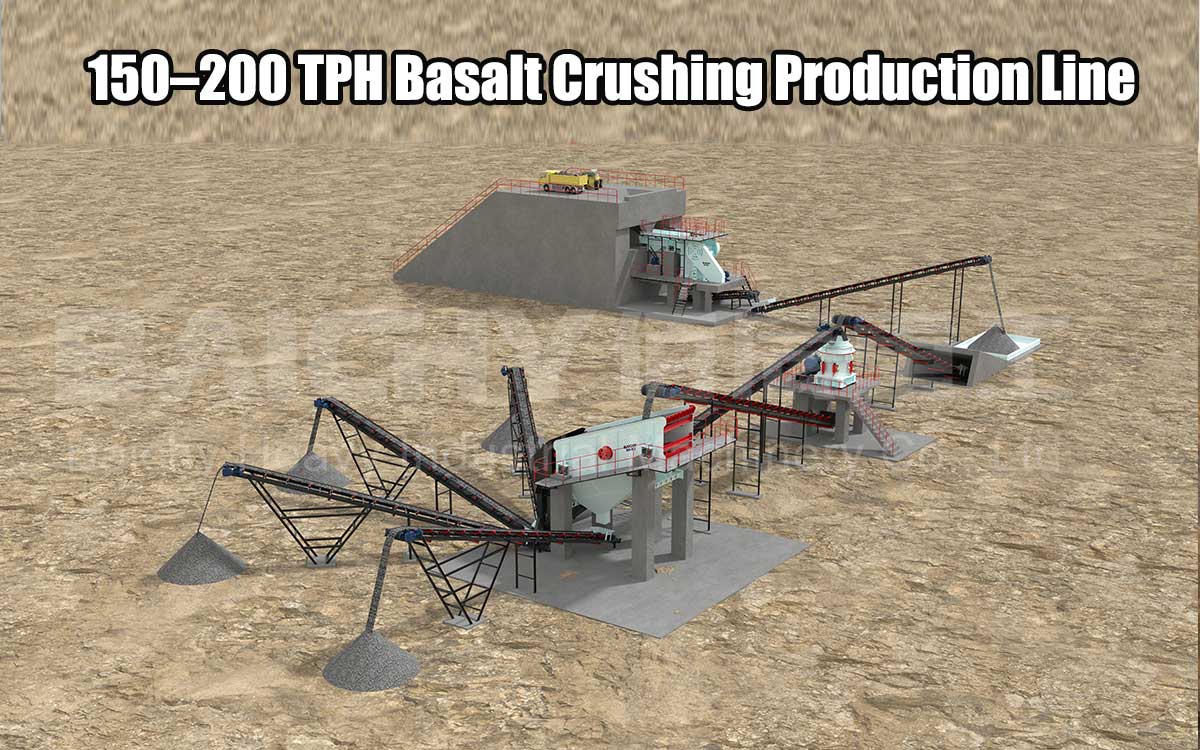

Granite-Crushing-Production-Line---Configuration-&-Process-Flow
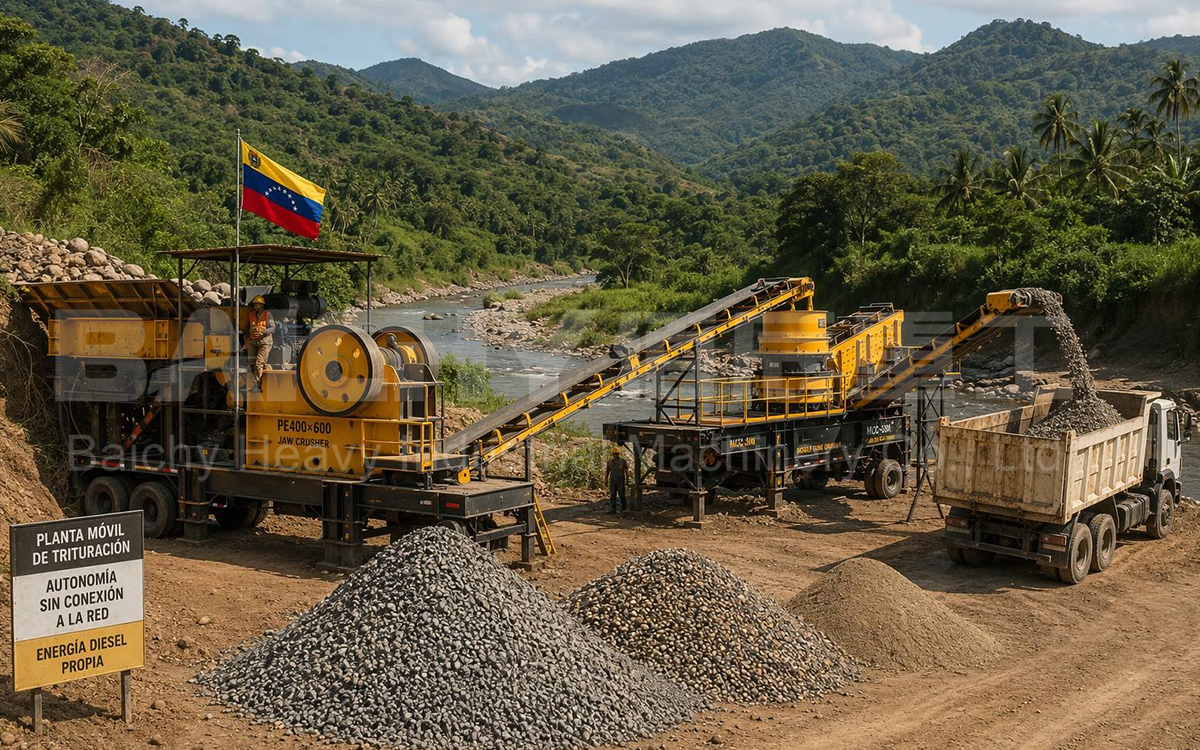
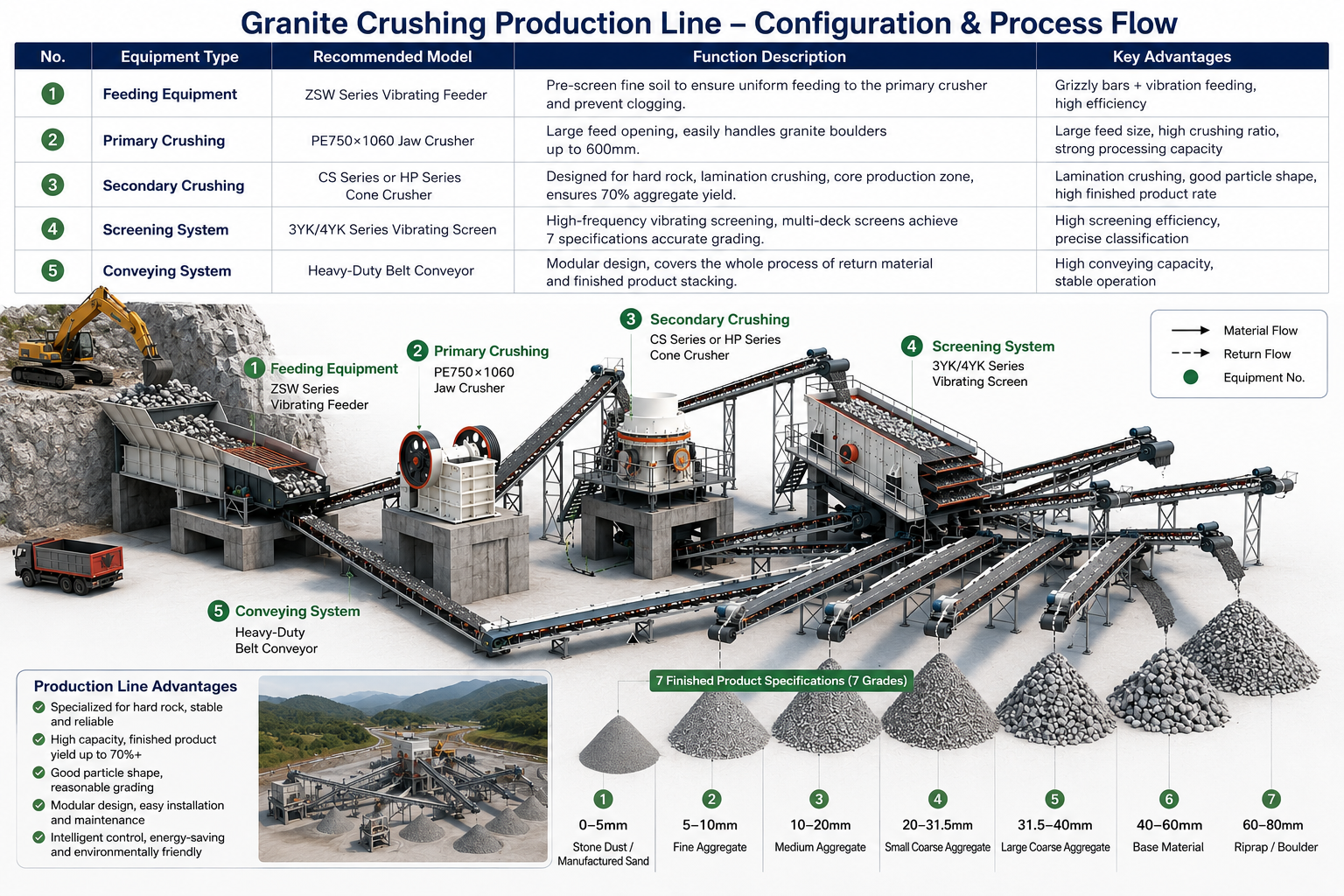
Addressing the inherent hardness and abrasiveness of granite, this solution employs the classic "Jaw Crusher (Primary) + Cone Crusher (Secondary)" configuration—a robust setup specifically designed for a daily production capacity of 500–1000 m³. Utilizing a closed-circuit screening system, the design precisely achieves a high-proportion output of 1/2" (40%) and 3/4" (30") aggregates. This ensures superior particle shape and roundness, thereby meeting the rigorous material standards required for high-quality infrastructure projects.
I. Core Equipment List: Robust Durability for Continuous Operation
When crushing granite, one must not blindly prioritize low initial investment costs. If an impact crusher is mistakenly selected for the secondary crushing stage, the service life of the blow bars may be limited to a mere few dozen hours. Consequently, this solution mandates the use of a cone crusher, leveraging the principle of inter-particle crushing (laminating crushing) to significantly reduce operational costs.
| Equipment Type | Recommended Model | Functional Description |
| Feeding Equipment | ZSW Series Vibrating Feeder | Pre-screens fine soil to ensure uniform feeding into the primary crusher and prevent blockages. |
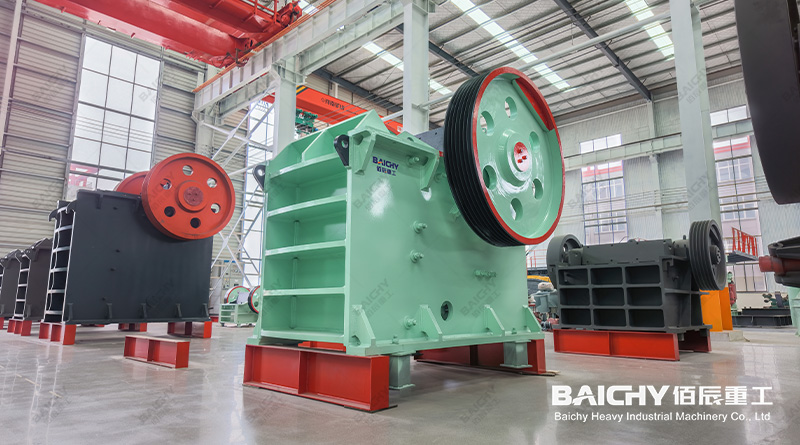
| Primary Crushing | PE750×1060 Jaw Crusher | Features a large feed opening design, capable of effortlessly processing raw granite blocks up to 600 mm in size. |
| Secondary Crushing | CS Series or HP Series Cone Crusher | Specialized for hard rock applications; utilizes inter-particle crushing; serves as the core production unit, guaranteeing a crushed stone yield of 70%. |
| Screening System | 3YK/4YK Series Vibrating Screen | High-frequency vibrating screening; utilizes multi-layer screens to achieve precise classification across 7 distinct aggregate specifications. |
| Conveying System | Heavy-Duty Belt Conveyors | Modular design covering the entire process, from material recirculation to finished product stockpiling. |
II. Output Distribution Comparison: Precise Alignment with Plant Design
By adjusting the Cone Crusher's Closed Side Setting (CSS) and the mesh apertures of the vibrating screens, this solution perfectly aligns with your verified target output ratios:
Core Aggregate Range (70%):
1/2" (12.5 mm): 40% — Maximizes yield; suitable for high-performance concrete applications.
3/4" (19 mm): 30% — The primary aggregate material for infrastructure construction and road paving.
Fine and Powdered Materials (10%):
• Stone Dust (Crusher Dust): 5%
• 3/8" (9.5mm): 5%
Large-Sized and Specialty Aggregates (20%):
• 1" (25mm): 10%
• 1 1/2" (38mm): 8%
• 6" (150mm) Stone: 2% — Specifically segregated for use in gabion baskets or roadbed backfill.
III. Why is This Solution Better Suited for Your Plant?
• Extremely Low Wear Part Consumption: The high silica content of granite is the "natural enemy" of blow bars. Cone crushers utilize a compressive crushing mechanism between the moving cone and the fixed cone; consequently, their wear cycle is 5 to 8 times longer than that of impact crushers, significantly reducing downtime required for part replacement.
• "Laminated Crushing" Improves Particle Shape: Specifically targeting the core aggregate sizes of 1/2" and 3/4", the cone crusher generates a "laminated crushing" effect when fed at full capacity. This process results in finished products with a more cubical shape, and the content of needle-like or flaky particles remains far below industry standards.
• Flexible Closed-Circuit System: Oversized materials rejected during screening (e.g., overflow material > 1 1/2" but < 6") are automatically returned to the cone crusher for re-crushing, ensuring that the finished product mix remains strictly within the designed aggregate ratio specifications.
IV. Technical Parameters Overview (Based on a 10-hour operating shift)
Processing Capacity: 500–1000 m³/day (130–260 t/h)
Maximum Feed Size: ≤ 630 mm
Installed Power: Approx. 280 kW – 450 kW (depending on the level of automation)
Applicable Materials: High-hardness igneous rocks such as granite, basalt, diabase, etc.
About of Baichy Heavy Industry
Baichy Heavy Industry is a high-tech mining equipment company integrating R&D, manufacturing, sales, and after-sales service. Focusing on crushing, grinding, and mineral processing equipment, we provide professional solutions to our customers. We are ISO9001:2015 、certified, and our products include mobile crushing palnts, crawler crushing plant, construction waste crushing plants, jaw crushers, sand making machines, cone crushers, fine crushers, grinding mills, ball mills, etc., all with reliable performance to meet diverse project needs.
Our advantages:
• Professional pre-sales support: Free project design and comprehensive solutions to help you accurately select the right equipment;
• Comprehensive on-site service: Providing installation guidance and worker training to ensure smooth equipment commissioning;
• Reliable after-sales guarantee: A complete after-sales system, timely response to technical inquiries and equipment maintenance, ensuring long-term stable operation.
To protect your rights, please contact us through the following official channels for professional service:
Official Website Customer Service
https://wa.me/+8615093222637
Email: [email protected]
We are committed to providing high-quality equipment and full-cycle services to deliver comprehensive intelligent solutions for the global mining industry!
Frequently Asked Questions
Q: Why is the proportion of 6" stone so low (2%), and how can we guarantee that it can be produced as a separate product?
A: By utilizing pre-screening after primary crushing—or a bypass chute prior to secondary crushing—we can pert stones of this specific size directly into the finished product area, bypassing the secondary crushing stage entirely. This allows us to precisely isolate and retain that specific 2% of large-sized stone material.
Q: The proportion of 1/2" and 3/4" material is quite high; can the cone crusher handle this load?
A: This is precisely where this solution excels. By selecting a cavity profile optimized for "medium crushing" or "fine crushing"—and combining it with a high-stroke frequency design—we can concentrate the crushing force within the 10–25 mm size range, thereby achieving the objective of "more crushing, less grinding."