Sand washing machines are among the most vital pieces of equipment for obtaining clean sand and gravel. Within the sand and gravel processing industry, these machines play a pivotal role. Their primary objective is to effectively remove soil, dust, stone powder, and other impurities from sand and gravel through a series of physical and hydraulic washing processes, thereby significantly boosting both the yield and purity of the finished product. High-quality sand and gravel not only enhance the structural stability of concrete but also satisfy the rigorous raw material requirements of various infrastructure projects.
I. What Are the Mainstream Types of Sand Washing Equipment?
To obtain sand and gravel of the utmost purity, selecting the appropriate washing process is crucial:
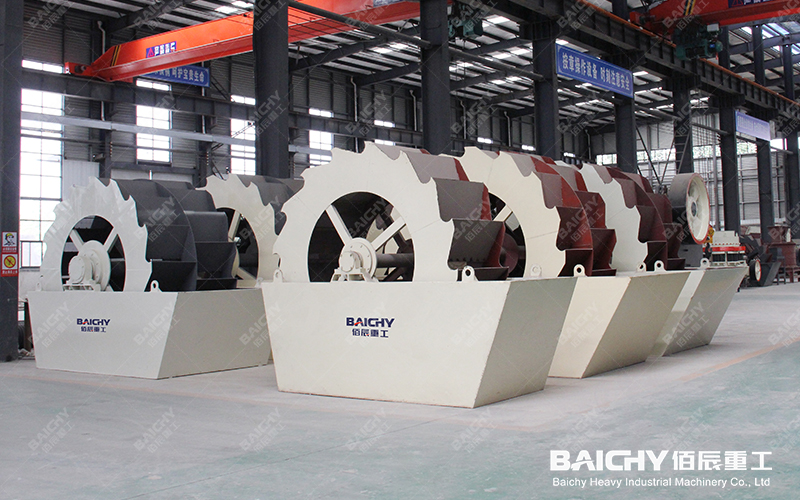
Wheel-Bucket Sand Washer
Wheel-Bucket Sand Washer: This machine utilizes an impeller-agitation principle, featuring a transmission system that is isolated from the water to ensure a low failure rate. Acting like a "fine-toothed comb," it effectively minimizes the loss of fine sand particles (under 0.15 mm) while simultaneously performing the cleaning process.
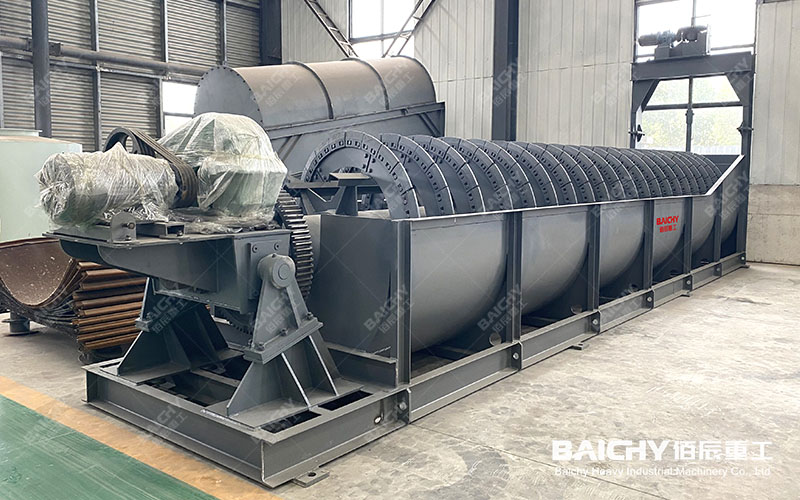
Spiral Sand Washer
Spiral Sand Washer: This machine leverages the powerful agitation and propulsion of spiral blades to extend the material's retention time within the water. Resembling a "heavy-duty washing machine," it excels at breaking down and stripping away highly cohesive clumps of clay and mud.
II. Core Advantages: Why Are Sand Washing Machines the Ultimate Choice for Sand and Gravel Yards?
Utilizing professional sand washing machines for processing offers the following five indispensable advantages:
1. High Cleaning Efficiency: Employing methods such as spiral agitation and hydraulic flushing, these machines can rapidly and thoroughly remove stubborn impurities from the surface of sand and gravel, ensuring the finished product is "spotlessly clean."
2. Excellent Grading Performance: In addition to cleaning, sand washing machines also serve a grading function. They can separate materials based on particle size, systematically sorting sand and gravel of different specifications to meet the specific size requirements of various engineering projects.
3. Exceptional Adaptability: Whether processing natural river sand, mountain sand, or artificial machine-made sand and stone chips, efficient cleaning can be achieved—provided the appropriate machine model is selected.
4. Energy-Efficient and Eco-Friendly: Modern equipment integrates advanced energy-saving technologies and supports the recycling of water resources. By simultaneously reducing energy consumption and minimizing wastewater discharge, these machines foster a harmonious coexistence between industrial production and the environment.
5. Ease of Operation: Highly automated, requiring users only to perform routine maintenance in accordance with the manual to ensure stable and efficient washing operations.
In this era where "quality reigns supreme," a sand washer is not merely a production tool; it is a key factor in enhancing the value of sand and aggregate products. Through scientifically designed washing and beneficiation processes, every grain of sand and aggregate can realize its maximum engineering potential.
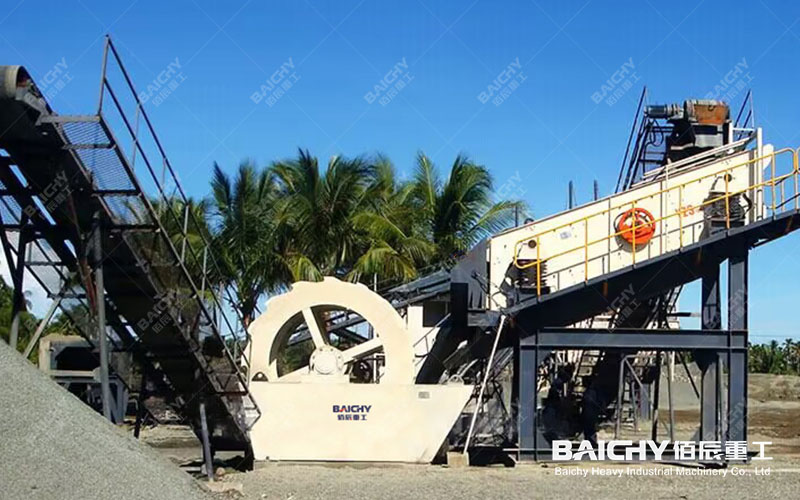
Wheel-Bucket Sand Washer - On-Site Operation
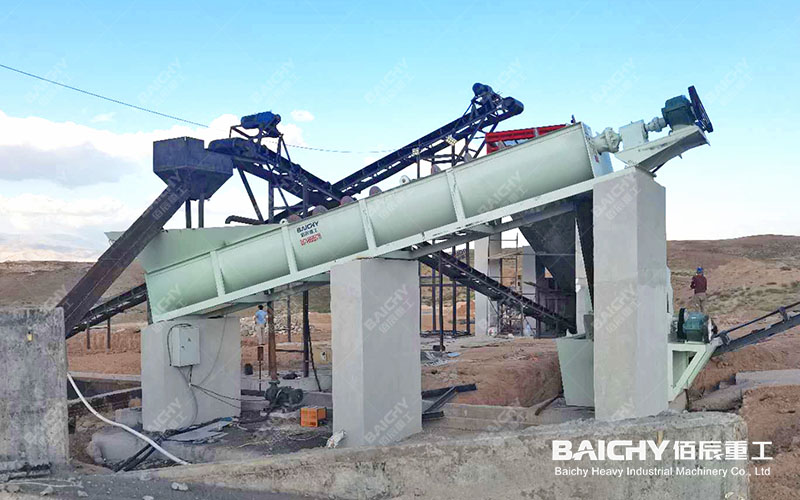
Spiral Sand Washer — On-site Operation
III. How to Choose Between a Wheel-Type and a Spiral-Type Sand Washer?
The choice between a wheel-type sand washer and a spiral-type sand washer depends primarily on the quality of your raw sand (specifically its clay content), your requirements for the finished product, and your investment budget.
To help you make the most informed decision, I have conducted an in-depth comparison across the following five core dimensions:
1. In-Depth Comparison Table: Wheel-Type vs. Spiral-Type
| Dimension | Wheel-Type Sand Washer | Spiral-Type Sand Washer |
| Washing Intensity | Moderate (utilizes impeller tumbling and friction) | High (features long-distance spiral agitation with strong mechanical force) |
| Applicable Materials | Sand and aggregates with low clay content and few impurities | Materials with high clay content or sticky clay lumps |
| Fine Sand Loss Rate | Low (minimal loss; results in reasonable particle size distribution) | High (requires integration with a fine sand recovery unit) |
| Water Consumption | Relatively low | Relatively high |
| Maintenance Costs | Low (transmission components do not come into contact with water, resulting in fewer mechanical failures) | Relatively high (spiral blades and bearings experience relatively faster wear) |
| Footprint | Compact (small area required) | Larger (due to the longer machine body) |
2. Core Selection Logic: Which One Should You Choose?
Scenario A: Choose the Wheel-Type Sand Washer — If You Seek "High Cost-Effectiveness"
Raw Material Conditions: Natural river sand, or manufactured sand with a clay content of 10% or less.
Finished Product Requirements: Strict requirements regarding fine sand content (specifically, a desire to minimize the loss of fine sand carried away by the water flow).
Site and Resource Conditions: Limited site space, and/or scarce local water resources. Budget Considerations: You have a limited initial investment budget and desire simple, cost-effective maintenance in the long run.
Scenario B: Choose a Spiral Sand Washer — If You Seek "Ultimate Cleanliness"
Raw Material Conditions: Mountain sand, materials with a high content of stone powder, or ores containing a significant amount of "sticky clay lumps."
Finished Product Requirements: Extremely high standards for cleanliness—for instance, when supplying sand for high-performance concrete or high-speed rail projects.
Production Demands: High daily processing volume, coupled with a desire for a more thorough separation of clay and sand.
System Integration: You are willing to integrate a fine sand recovery system to address the issue of fine sand loss typically associated with spiral washers.
3. Expert Recommendation: The "Mixed Doubles" Strategy
In actual production settings, many large-scale sand-making plants adopt a dual-configuration approach to achieve "perfect" results:
Stage 1 Washing: Spiral Type. First, the high-intensity thrust of the spiral sand washer is utilized to thoroughly break down clay and mud lumps, performing an initial wash.
Stage 2 Washing: Wheel-Bucket Type. The material then proceeds to a wheel-bucket sand washer for a secondary rinse and dewatering, simultaneously serving to classify the sand and regulate the proportion of fine sand.
Suggestion: If you can provide photos of your raw sand or the percentage of clay content, I can offer you more precise recommendations for the most suitable equipment model.
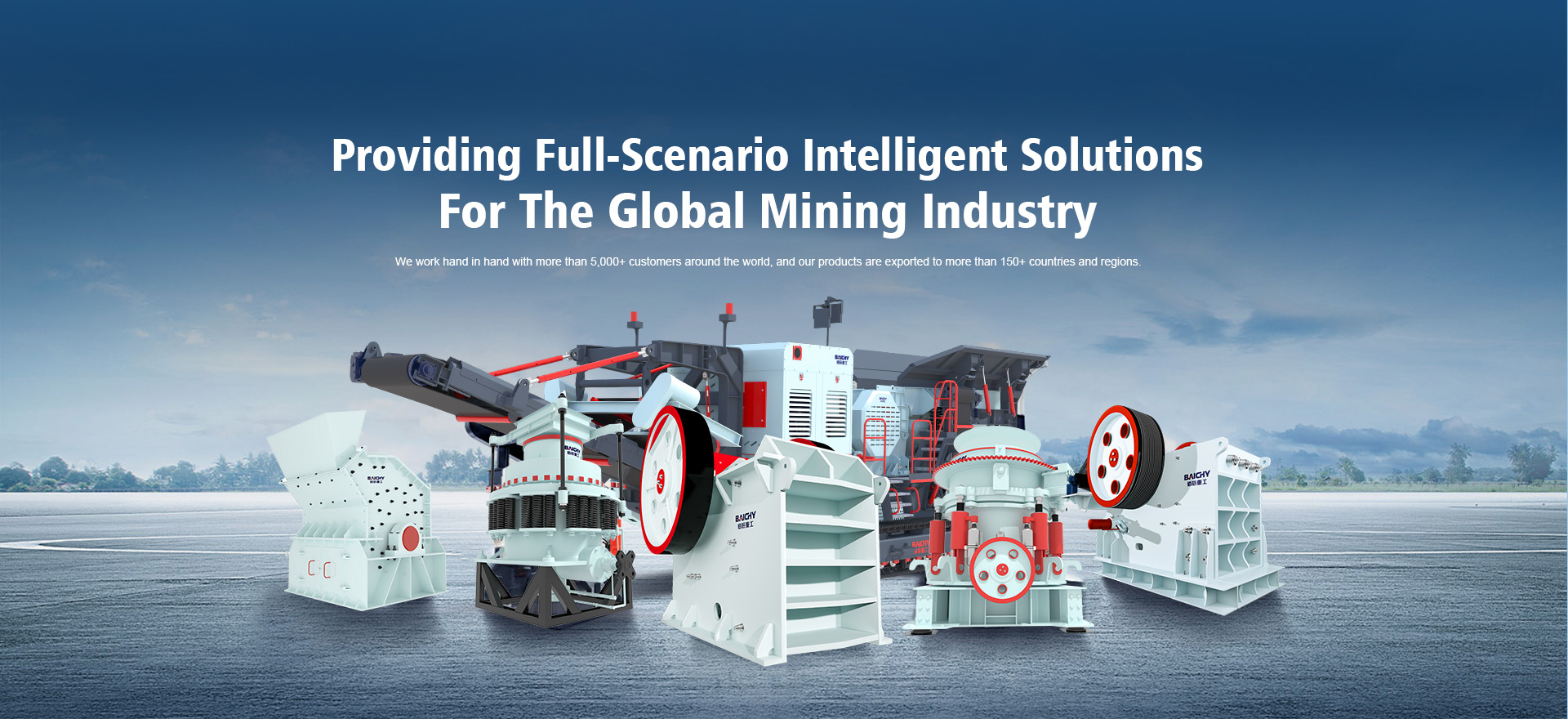
About of Baichy Heavy Industry
Baichy Heavy Industry is a high-tech mining equipment company integrating R&D, manufacturing, sales, and after-sales service. Focusing on crushing, grinding, and mineral processing equipment, we provide professional solutions to our customers. We are ISO9001:2015 、certified, and our products include mobile crushing palnts, crawler crushing plant, construction waste crushing plants, jaw crushers, sand making machines, cone crushers, fine crushers, grinding mills, ball mills, etc., all with reliable performance to meet diverse project needs.
Our advantages:
• Professional pre-sales support: Free project design and comprehensive solutions to help you accurately select the right equipment;
• Comprehensive on-site service: Providing installation guidance and worker training to ensure smooth equipment commissioning;
• Reliable after-sales guarantee: A complete after-sales system, timely response to technical inquiries and equipment maintenance, ensuring long-term stable operation.
To protect your rights, please contact us through the following official channels for professional service:
Official Website Customer Service
https://wa.me/+8615093222637
Email: [email protected]
We are committed to providing high-quality equipment and full-cycle services to deliver comprehensive intelligent solutions for the global mining industry!
IV. FAQ: Frequently Asked Questions
Q1: How does a sand washer balance the goals of "washing thoroughly" and "retaining fine sand"?
A: This is a critical factor in equipment selection. Thanks to its impeller design, the wheel-bucket sand washer inherently offers better protection for fine sand. If you find that your fine sand loss rate remains too high, you can consider adding a "fine sand recovery system" downstream to capture and reclaim the fine sand that overflows during the washing process.
Q2: Do sand and gravel materials of varying hardness (e.g., granite vs. limestone) affect the sand washer?
A: Yes, they do—though the primary impact is on the lifespan of the wear-resistant components. Sand washers possess exceptional adaptability and are capable of processing various types of sand and gravel. For materials with high hardness, we recommend selecting models equipped with thickened blades or wear-resistant liners to extend the equipment's maintenance cycle.
Q3: Environmental inspections are becoming increasingly stringent; how should the wastewater generated by sand washing machines be treated?
A: Modern sand washing machines place a strong emphasis on energy efficiency and environmental protection. We recommend utilizing accompanying equipment, such as sedimentation tanks or filter presses. After treatment, the wastewater from the sand washing process can be recycled back into the machine for reuse, thereby achieving "zero discharge" of production wastewater.