
PE-600x900 Jaw Crusher for 100–150 TPH Stone Crushing
Why the PE-600x900 Jaw Crusher Is the Sweet Spot for a 100–150 TPH Plant
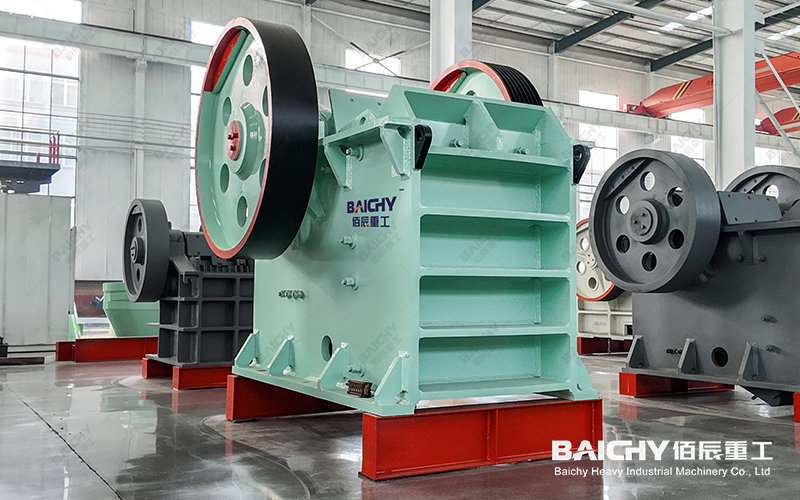
If you are sizing a primary crusher for a 100–150 t/h stone crushing production line, the PE-600x900 jaw crusher is the machine most quarry owners should evaluate first. It is large enough to swallow 500 mm blasted rock straight from the hopper, yet small enough to keep capital cost, foundation work and power demand within the budget of a medium-scale aggregate plant.
Go one size down to a PE-500x750 and you will hit a throughput ceiling of roughly 40–110 t/h, which forces two crushers in parallel to reach 150 t/h. Go one size up to a PE-750x1060 and you pay for capacity you rarely use, plus a heavier foundation and a larger feeder. The PE-600x900 jaw crusher sits in the middle: one machine, one operator, one set of wear parts, and a clean 4–6 reduction ratio that feeds a secondary crusher without choking or starving it.
PE-500x750 vs. PE-600x900 vs. PE-750x1060
| Model | Max feed (mm) | Capacity (t/h) | Motor (kW) | Best for |
|---|---|---|---|---|
| PE-500×750 | 425 | 40–110 | 55 | 60–100 t/h small quarries |
| PE-600×900 | 500 | 50–160 | 75 | 100–150 t/h aggregate lines |
| PE-750×1060 | 630 | 110–320 | 110 | 200 t/h and above |
What Those Numbers Mean on Site
The 600 × 900 mm feed opening determines the largest rock you can dump: a 500 mm boulder is accepted without secondary breaking. The 65–160 mm CSS range is the real throughput lever — open it to 130–150 mm and you push 150 t/h of 0–200 mm material downstream; tighten it to 90–100 mm and output drops to about 110–125 t/h but the product is finer, which lightens the load on your secondary crusher. Stroke and nip angle are fixed by the toggle plate geometry, so correct CSS adjustment and consistent choke feeding matter more than any other operator action.
How 100–150 TPH Is Actually Achieved
CSS vs. Throughput (limestone, bulk density 1.6 t/m³)
| CSS (mm) | Throughput (t/h) | Product top size (mm) | Typical duty |
|---|---|---|---|
| 80 | 90–100 | 0–120 | Fine feed to cone crusher |
| 100 | 115–130 | 0–150 | Standard 120 t/h line |
| 125 | 140–155 | 0–180 | High-volume 150 t/h line |
| 150 | 160–180 | 0–220 | — |
Max capacity, coarse only
For granite, basalt or river pebble, multiply these figures by 0.75–0.85. Hard, abrasive rock also increases jaw plate wear by roughly 30–50%, which is why Baichy specifies Mn18Cr2 plates for high-silica materials.
Feed Control Is Half the Battle
A PE-600x900 jaw crusher only reaches 150 t/h when the crushing chamber stays choke-fed and the feed is graded, not packed with fines. Use a ZSW-380×96 (or GZD-960×3800) vibrating feeder with a 40 m³ hopper and a grizzly section to bypass −40 mm material. Feed the crusher centrally along the 900 mm width, never off to one side, or you will wear one end of the jaw plate twice as fast and lose 10–15% capacity.
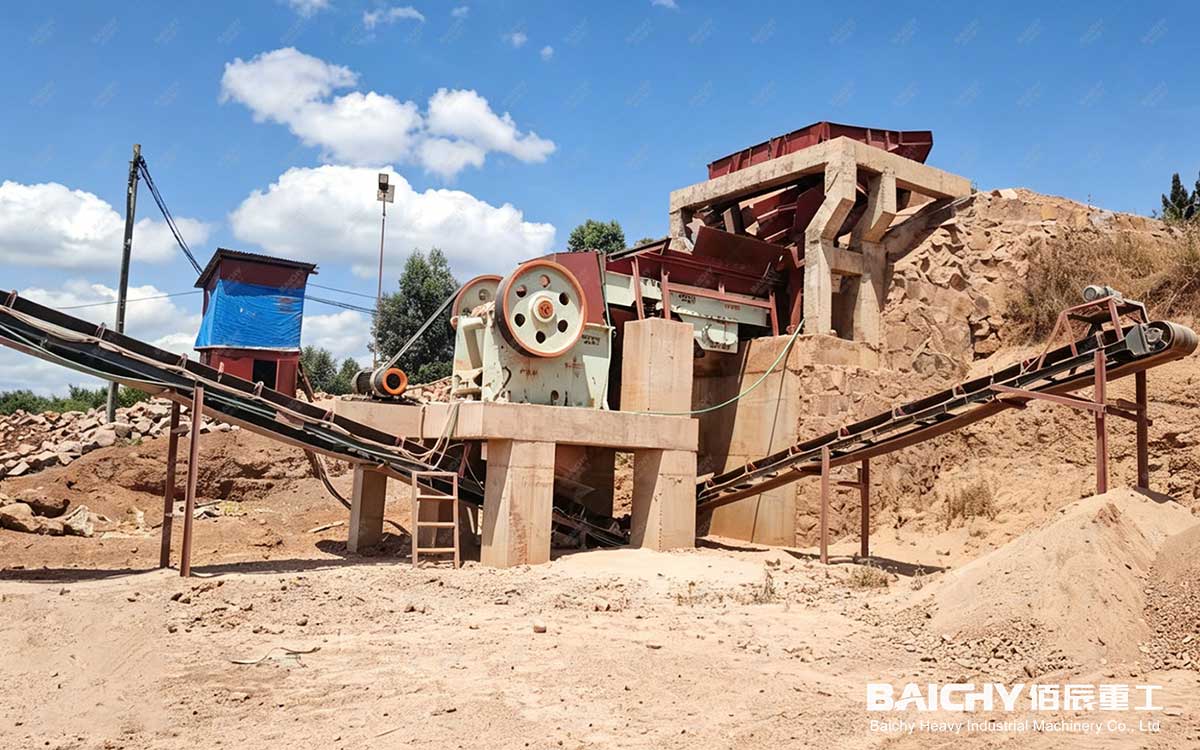
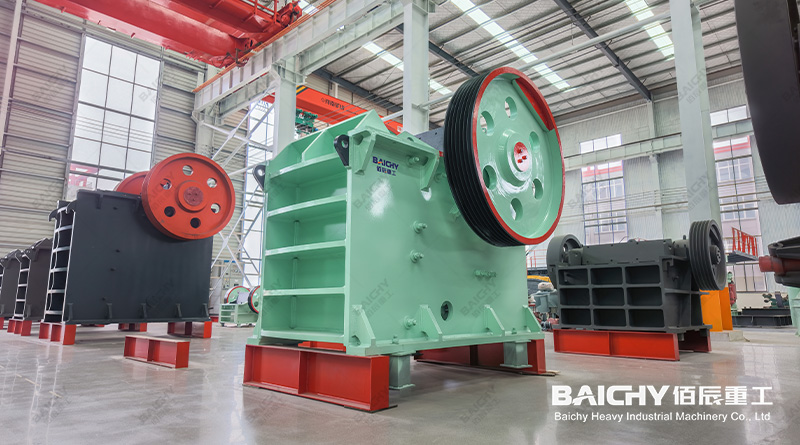
PE-600x900 Jaw Crusher for 100–150 TPH Stone Crushing
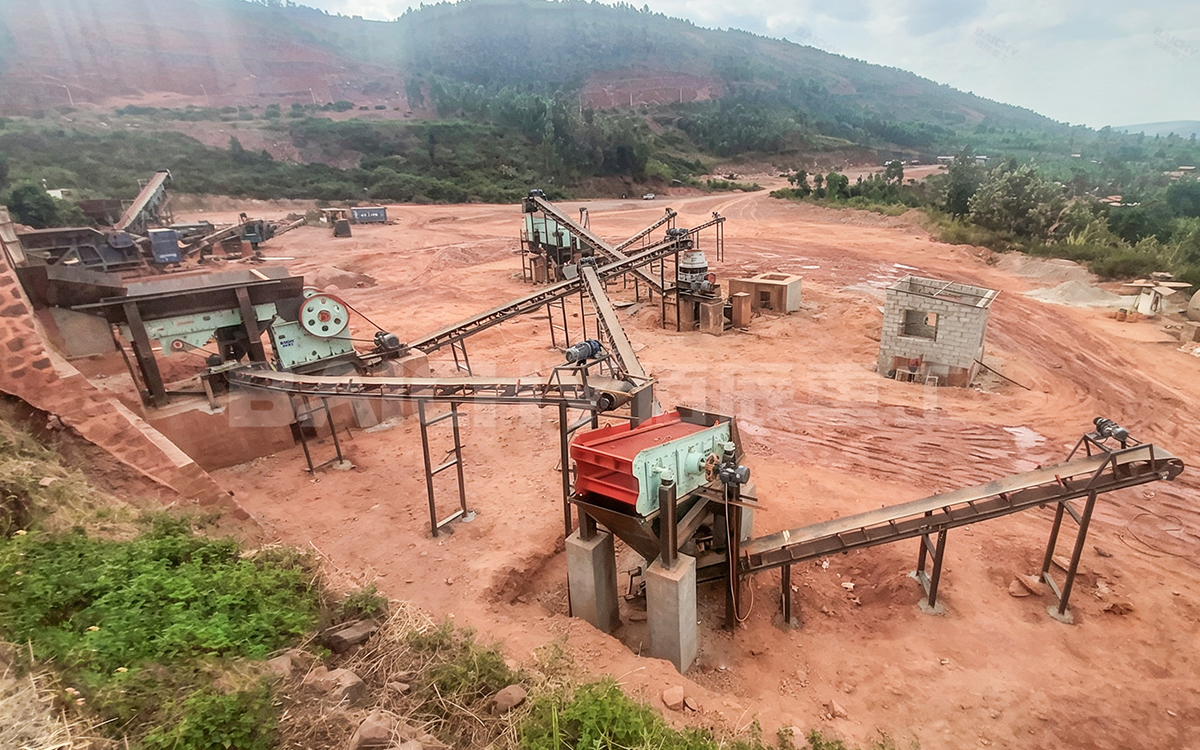
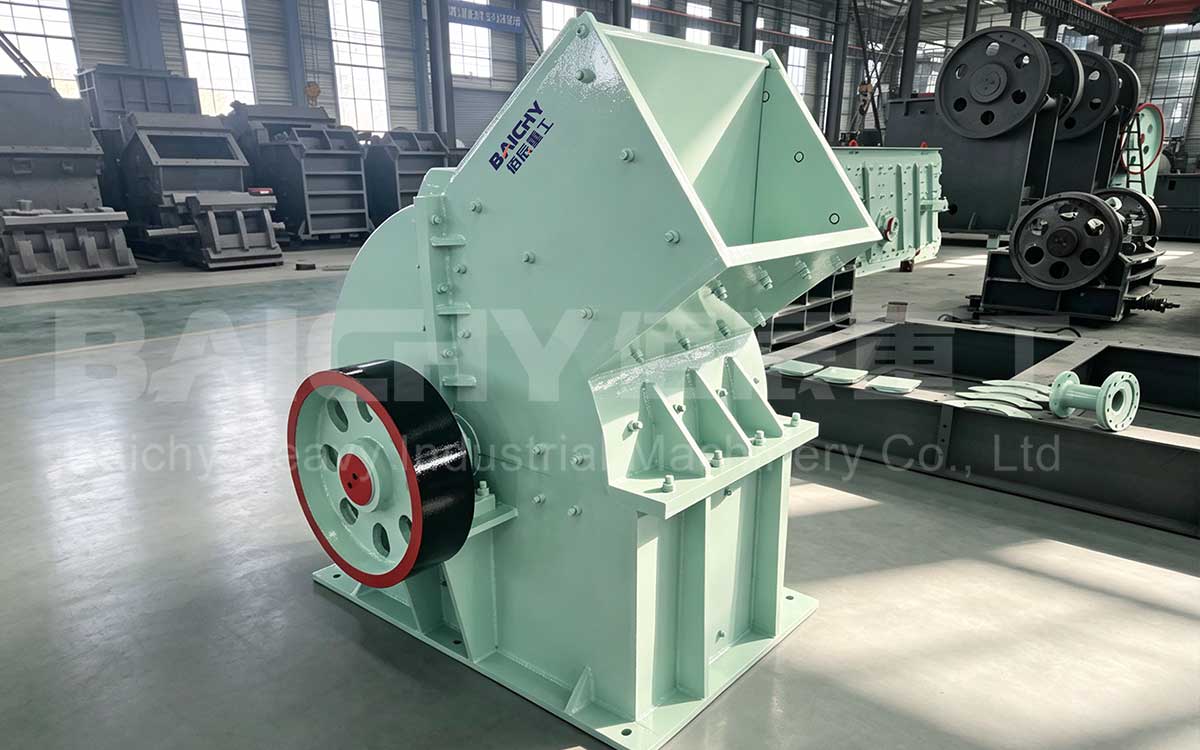
PE-600x900 Jaw Crusher for 100–150 TPH Stone Crushing
Recommended 100–150 TPH Plant Configurations
Two-Stage Line for Limestone and Soft Rock
PE-600x900 jaw crusher → PF-1214 impact crusher → 3YK1860 vibrating screen → B650/B800 conveyors. This setup produces 0–5, 5–10, 10–20 and 20–31.5 mm aggregate in a single crushing pass after the jaw, with a low wear-parts bill thanks to the impactor's high reduction ratio on soft stone.
Three-Stage Line for Granite, Basalt and Hard Rock
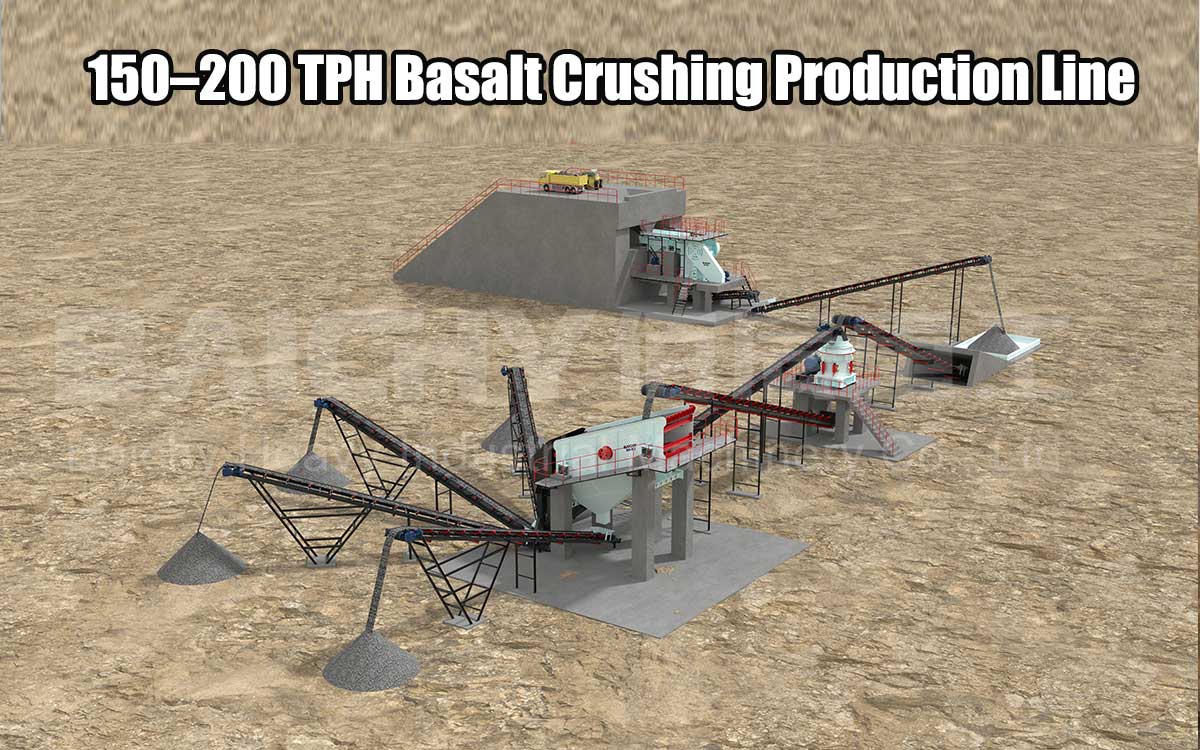
PE-600x900 jaw crusher → HST160 or SMH1200 cone crusher → VSI-8518 sand maker → 3YK2160 screen. Hard rock needs the compressive crushing of a cone rather than an impactor; the VSI adds manufactured sand (0–5 mm) and improves particle shape for concrete and asphalt specs.
Supporting Equipment Checklist
• Vibrating feeder: ZSW-380×96, 11 kW, with grizzly bypass
• Primary crusher: PE-600x900 jaw crusher, 75 kW
• Secondary crusher: PF-1214 (132 kW) or cone crusher (160 kW)
• Screening: 3YK1860 / 3YK2160, 22–30 kW
• Conveyors: B800 main line, B650 product lines
• Total installed power: ~260–300 kW; site consumption 1.5–2.0 kWh per ton, of which the jaw stage uses 0.5–0.7 kWh per ton
Installation, Wear Parts and Running Cost
Pour a reinforced foundation rated for at least 1.5–2× the machine weight (≈ 17.6 t), leave ≥500 mm clearance beneath the discharge for the belt, and fit a belt magnet or tramp-iron detector ahead of the jaw — uncrushable steel is the number-one cause of toggle plate breakage.
Wear parts on the PE-600x900 jaw crusher are the fixed and swing jaw plates (~1.1–1.4 t per set), the toggle plate, the toggle seat and the side liners. On granite, expect 25,000–60,000 tons per jaw plate set; on limestone, 60,000–100,000 tons. Budget US$0.20–0.45 of wear parts per ton for the primary stage, plus routine greasing every 8 working hours and a full eccentric-shaft bearing inspection every 2,000 hours.
Why Buy Your PE-600x900 Jaw Crusher from Baichy Heavy Industry
Baichy Heavy Industry manufactures the full PE, PEW and C6X jaw crusher series in-house, casts its own Mn13Cr2/Mn18Cr2 jaw plates, and supplies complete 100–150 t/h crushing lines — feeder, crusher, screen, conveyor, electrical cabinet and steel structure. Every PE-600x900 jaw crusher is dynamically balanced and test-run before shipment, delivered with CE documentation, a 12-month warranty, on-site commissioning and a lifetime spare-parts supply.
FAQ
1. What is the real capacity of a PE-600x900 jaw crusher?
The factory range is 50–160 t/h. In a 100–150 t/h stone crushing line the crusher normally runs at a 100–130 mm closed side setting, giving 115–155 t/h on limestone and 90–130 t/h on granite or basalt.
2. What feed size can it accept and what product size does it deliver?
It accepts blasted rock up to 500 mm and discharges 65–160 mm material. With a 4–6 reduction ratio, most plants take 0–150 mm from the jaw and let the secondary crusher or impactor finish the sizing work.
3. Which secondary crusher should I pair with a PE-600x900 jaw crusher for 100–150 TPH?
For limestone and other soft-to-medium rock, use a PF-1214 or PF-1315 impact crusher. For granite, basalt and river pebble, use an HST160 single-cylinder or SMH1200 multi-cylinder cone crusher, and add a VSI-8518 if you need manufactured sand.
4. How much power does the crusher need and what is the energy cost per ton?
The crusher itself is driven by a 75 kW motor and uses roughly 0.5–0.7 kWh per ton. A complete 100–150 t/h line draws 260–300 kW installed and consumes about 1.5–2.0 kWh per ton of finished aggregate.
5. How often do jaw plates need replacing?
On granite, a set of Mn18Cr2 jaw plates lasts 25,000–60,000 tons; on limestone, 60,000–100,000 tons. In cost terms that is US$0.20–0.45 of wear parts per ton for the primary crushing stage.
Baichy Heavy Industry
Baichy Heavy Industry is a high-tech mining equipment company integrating R&D, manufacturing, sales, and after-sales service. Focusing on crushing, grinding, and mineral processing equipment, we provide professional solutions to our customers. We are ISO9001:2015 、certified, and our products include mobile crushing palnts, crawler crushing plant, construction waste crushing plants, jaw crushers, sand making machines, cone crushers, fine crushers, grinding mills, ball mills, etc., all with reliable performance to meet diverse project needs.
Baichy Heavy Industry – Your Trusted Partner
To ensure optimal performance of your equipment, Baichy Heavy Industry offers:
- Professional on-site installation guidance
- Comprehensive operator training
- 24/7 technical support & maintenance services
Our complete after-sales service system guarantees long-term, stable operation of your machinery with minimal downtime.
Protect Your Rights – Only Use Official Channels
To avoid scams and ensure authentic support, contact us exclusively through:
• Official Website: www.baichychina.com
• WhatsApp: +8615093222637
• Email: [email protected]
Your satisfaction is our priority – expect prompt, professional service every time.
(Note: Beware of unauthorized third parties claiming to represent Baichy. Always verify through official contacts.)