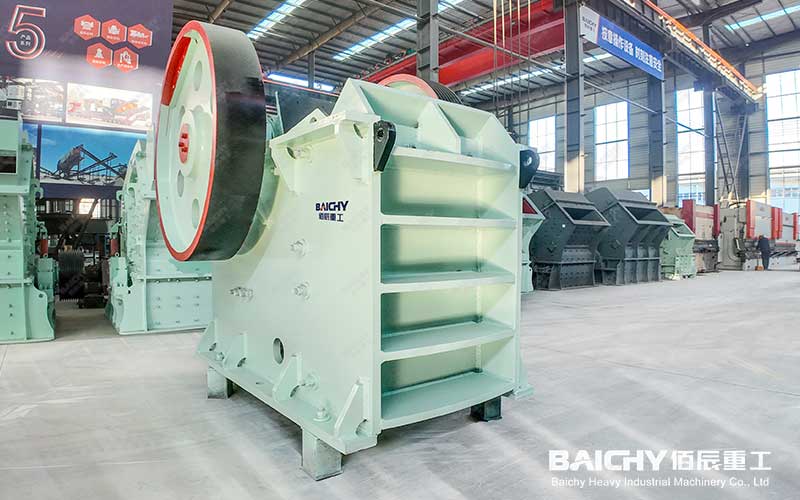
Jaw Crusher
The swing jaw is the beating heart of every jaw crusher. Also called the moving jaw, it is the component that actually crushes rock, transmits crushing force to the fixed jaw, and absorbs the most brutal impact and abrasion in the whole crushing chamber. For a quarry operator, a worn or broken swing jaw means downtime, lost production, and higher maintenance cost. For an engineer, the swing jaw is where material science, mechanical design, and maintenance strategy all meet. In this jaw crusher swing jaw analysis, we break down how the swing jaw works, how it is built, why it wears, how it fails, and — most importantly — how to make your jaw crusher swing jaw last longer and crush more efficiently.
What Is the Swing Jaw in a Jaw Crusher?
The swing jaw (moving jaw) is the vertical crushing element that oscillates toward and away from the fixed jaw inside the jaw crusher crushing chamber. It is mounted on the eccentric shaft and is driven by the toggle plate and pitman. As the swing jaw moves forward, it compresses the rock against the fixed jaw and breaks it; as it retracts, the crushed material falls down the chamber for the next stroke.
The swing jaw must perform several demanding jobs at once:
Crush hard rock — generate high compressive force to fracture granite, basalt, quartz and ores.
Absorb impact — withstand the shock of large feed material entering the chamber.
Resist abrasion — survive continuous sliding and grinding against sharp, hard fragments.
Carry the eccentric motion — convert rotary motion from the motor into a powerful reciprocating stroke.
Because the swing jaw does the hardest work in the crusher, its material, geometry, and maintenance determine the reliability of your entire crushing plant. Understanding jaw crusher swing jaw analysis gives you a clear advantage when selecting, operating, and maintaining your machine.
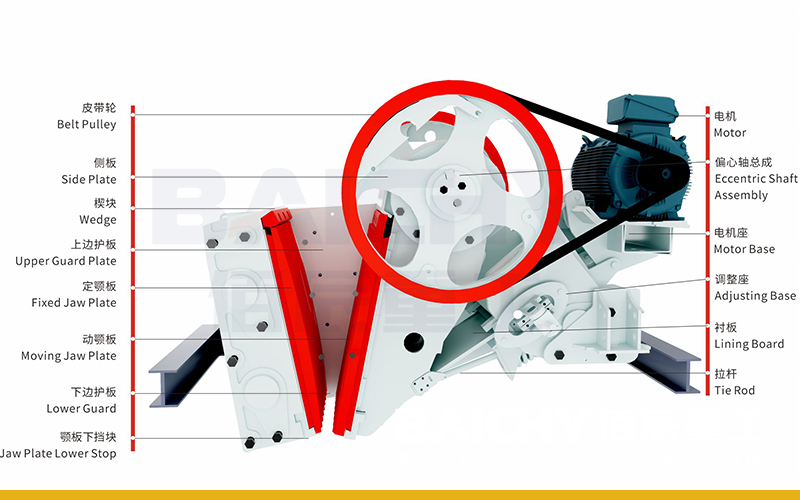
Movable Jaw Analysis of Jaw Crusher
How the Swing Jaw Works: The Crushing Mechanism
The jaw crusher swing jaw operates on a simple but powerful principle. The motor drives the eccentric shaft through V-belts. The eccentric shaft rotates, causing the pitman (the connecting rod) to move up and down. This motion is transmitted through the toggle plate to the swing jaw, forcing it to swing in a complex elliptical path.
In a single-toggle jaw crusher, the swing jaw pivots at the top and moves in an elliptical orbit, giving an aggressive crushing action at the bottom of the chamber. In a double-toggle jaw crusher, the swing jaw hangs from an eccentric shaft and moves in a more vertical, compressive path. The single-toggle design is more common in modern crushing plants because it is simpler, lighter, and more efficient.
The crushing stroke has two phases:
Crushing stroke — the swing jaw moves toward the fixed jaw, compressing rock until it fractures.
Discharge stroke — the swing jaw retracts, allowing crushed material to fall through the discharge opening.
The swing jaw's motion directly controls product size, throughput, and energy consumption. A correctly designed swing jaw delivers maximum crushing force at the discharge opening while minimizing wear on the upper chamber. This is why jaw crusher swing jaw analysis focuses so much on geometry, eccentricity, and toggle angle.
Swing Jaw Design and Construction
Swing Jaw Geometry
The shape of the swing jaw is critical to crushing performance. The working face of the swing jaw is usually corrugated or toothed, with alternating ridges and grooves. These profiles:
• Grip the rock to prevent it from bouncing up or slipping out of the chamber.
• Concentrate crushing force on the rock rather than spreading it across a flat surface.
• Direct the product size by creating a controlled reduction ratio.
Common swing jaw tooth profiles include smooth, corrugated (wavy), and toothed (chevron). The chevron tooth profile is preferred for hard, abrasive rock because it provides better grip and longer wear life. The tooth shape and pitch must be matched to the feed material size and hardness.
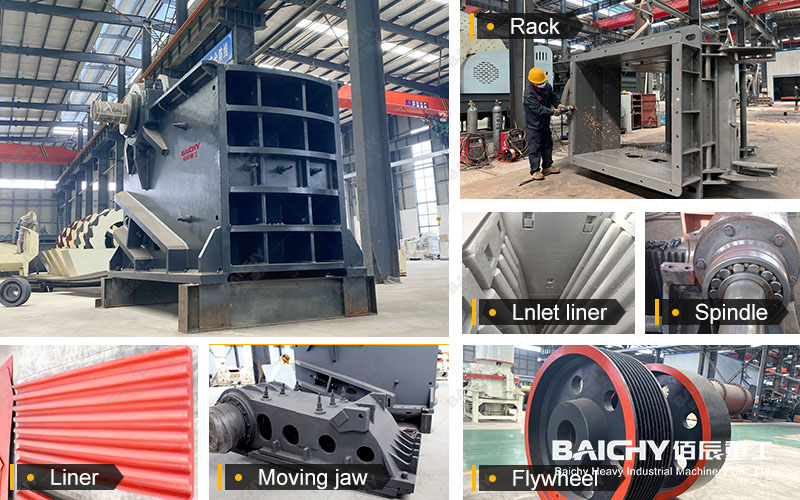
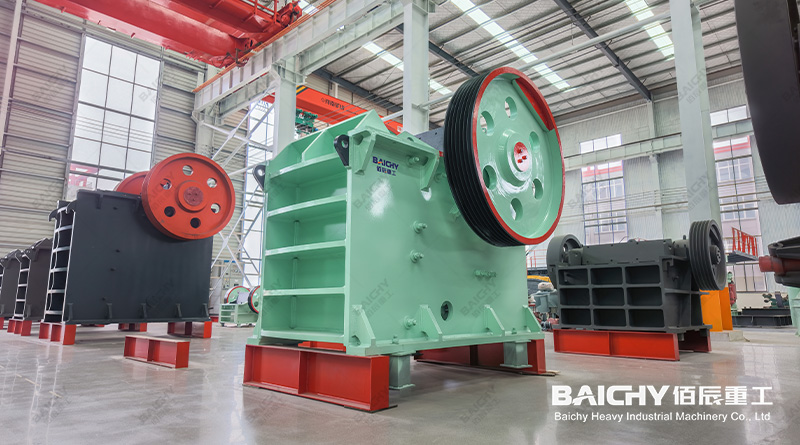
Detailed view of jaw crusher components
Swing Jaw Materials
Material selection is the single most important factor in swing jaw performance. Most swing jaws are cast from high manganese steel, typically Mn13 (13% manganese) or Mn18Cr2 (18% manganese with 2% chromium). High manganese steel is work-hardening steel: it becomes harder and tougher the more it is impacted, which is ideal for a component that takes repeated heavy blows.
Key swing jaw materials:
• Mn13 high manganese steel — the industry standard, offering excellent work-hardening and impact resistance for medium to hard rock.
• Mn18Cr2 manganese steel — higher manganese and chromium content for very hard, abrasive rock such as granite and quartzite; offers superior wear resistance.
• Composite / bimetallic jaw plates — a wear-resistant alloy layer bonded to a tough backing, balancing cost and life.
The swing jaw plate is typically bolted to a cast steel swing jaw body. The body must be rigid enough to resist bending under crushing load, while the replaceable plate absorbs the wear. Choosing the right swing jaw material for your specific rock type can double the working life of the crusher.
Swing Jaw Wear Analysis
Common Wear Patterns
Wear is the swing jaw's main enemy. The wear patterns you see on a worn swing jaw tell you a lot about what is happening inside your crusher:
• Bottom-end wear — the swing jaw wears fastest near the discharge opening because that is where the rock is most compressed and where fines concentrate. This is normal.
• Top-end wear — excessive wear near the feed opening usually means oversized feed material or a poorly matched tooth profile.
• Center grooving — a groove worn down the middle of the swing jaw indicates uneven feed distribution or material channeling.
• Premature plate cracking — often caused by tramp iron (hard foreign objects) or by a loose plate that can flex under load.
Why the Swing Jaw Wears Faster
Several factors accelerate swing jaw wear:
Harder rock — the more abrasive the feed, the faster the plate wears.
Poor feed grading — feeding material that is too large or inconsistently sized increases impact and stress.
Wrong tooth profile — a profile not matched to the feed material causes premature wear.
Loose or misaligned plates — movement between the plate and body grinds both surfaces.
High moisture and fines — clay and fines can pack the chamber and increase friction and wear.
A proper jaw crusher swing jaw analysis identifies these factors so you can correct them before they turn into costly failures.
Failure Modes and Root Causes
Beyond wear, the swing jaw can fail structurally. The most common failure modes are:
Cracking of the swing jaw plate — caused by tramp metal, thermal stress, or a plate that is too hard and brittle for the application.
Bending or fracture of the swing jaw body — caused by overload, a jammed chamber, or excessive feed size.
Tooth breakage — caused by impact from oversized rock or metal objects.
Loss of toggling (stroke reduction) — caused by worn toggle plate, seat, or springs, which reduces crushing efficiency.
Most swing jaw failures are preventable. Regular inspection of the plate, the toggle mechanism, the eccentric shaft bearing, and the feed size catches problems early. Vibration analysis and load monitoring can also flag abnormal conditions before a catastrophic failure occurs.
Swing Jaw Parameters — Typical Reference Table
The following table lists typical swing jaw and crusher parameters for common PE series jaw crushers. Values are representative and for reference only — confirm the exact swing jaw dimensions, weight, and capacity for your specific model with the Baichy Heavy Industry team.
| Model | Feed Opening (mm) | Max Feed Size (mm) | Discharge Range (mm) | Capacity (t/h) | Motor Power (kW) | Approx. Swing Jaw Weight (kg) |
|---|---|---|---|---|---|---|
| PE-400×600 | 400×600 | 340 | 40–100 | 16–65 | 30 | ~700 |
| PE-500×750 | 500×750 | 425 | 50–100 | 45–100 | 55 | ~1,150 |
| PE-600×900 | 600×900 | 500 | 65–160 | 60–160 | 55–75 | ~1,850 |
| PE-750×1060 | 750×1060 | 630 | 80–140 | 110–320 | 90–110 | ~3,200 |
| PE-900×1200 | 900×1200 | 750 | 95–165 | 220–450 | 110–132 | ~5,600 |
How to Extend Swing Jaw Life: Maintenance Tips
Maximizing the life of your jaw crusher swing jaw saves money and prevents unplanned downtime. Follow these proven maintenance practices:
Feed within the rated size — never exceed the maximum feed size of the crusher. Oversized rock is the number one cause of premature swing jaw damage.
Match the tooth profile to your rock — use a chevron or toothed profile for hard, abrasive rock and a smoother profile for softer, less abrasive feed.
Rotate and flip the jaw plates — regularly swap the fixed and swing jaws, and flip plates end-for-end, to even out wear and extend total life.
Keep plates tight — check and re-torque the wedge bolts that hold the swing jaw plate in place. A loose plate wears faster and can crack.
Protect against tramp metal — use a magnetic separator or metal detector ahead of the crusher to remove iron and steel before they reach the chamber.
Monitor feed distribution — keep the feed evenly spread across the full width of the chamber to prevent localized grooving.
Control moisture and fines — avoid packing the chamber with wet fines that increase friction and abrasion.
Schedule regular inspection — inspect the swing jaw, toggle plate, seats, and bearings on a fixed schedule, and document wear trends.
Choosing the Right Swing Jaw for Your Application
Selecting the correct swing jaw for your crushing plant depends on four factors: the hardness of your rock, the feed size, the desired product size, and your abrasion index. For most hard-rock applications, Mn18Cr2 high manganese steel is the recommended swing jaw material. For softer, less abrasive feed, standard Mn13 steel offers a good cost-to-life balance.
Your equipment supplier should provide swing jaw analysis and recommendations based on your specific ore. At Baichy Heavy Industry, our engineers match the swing jaw material, tooth profile, and crusher configuration to your rock type and production target, helping you maximize output and minimize wear cost.
Jaw Crusher Swing Jaw FAQ
1. What is the difference between the swing jaw and the fixed jaw?
The swing jaw (moving jaw) oscillates toward and away from the fixed jaw to crush rock. The fixed jaw is stationary and mounted to the frame. Together they form the crushing chamber. The swing jaw does most of the moving work, while both jaws wear over time and need replacement.
2. What material is a jaw crusher swing jaw made of?
Most swing jaws are cast from high manganese steel, typically Mn13 or Mn18Cr2. High manganese steel work-hardens under impact, becoming harder and more wear-resistant with use, which makes it ideal for the heavy, abrasive duty of a jaw crusher swing jaw.
3. Why does my swing jaw wear faster at the bottom?
The bottom of the swing jaw near the discharge opening crushes the finest, most compressed material and generates the most friction, so it wears fastest. This is normal. To extend life, rotate or flip the plates periodically so wear is distributed evenly.
4. How long should a swing jaw last?
Swing jaw life depends on rock hardness, abrasiveness, feed size, and maintenance. On medium-hard rock, a set of manganese steel jaw plates can last from a few weeks to several months. Good feed control and plate rotation significantly extend service life.
5. How do I know when to replace the swing jaw?
Replace the swing jaw when the tooth profile is worn flat, when the plate cracks, or when capacity drops and product becomes oversized. Regular inspection of the plate thickness and tooth condition lets you schedule replacement before failure causes downtime.

Baichy Heavy Industry
Baichy Heavy Industry is a high-tech mining equipment company integrating R&D, manufacturing, sales, and after-sales service. Focusing on crushing, grinding, and mineral processing equipment, we provide professional solutions to our customers. We are ISO9001:2015 、certified, and our products include mobile crushing palnts, crawler crushing plant, construction waste crushing plants, jaw crushers, sand making machines, cone crushers, fine crushers, grinding mills, ball mills, etc., all with reliable performance to meet diverse project needs.
Baichy Heavy Industry – Your Trusted Partner
To ensure optimal performance of your equipment, Baichy Heavy Industry offers:
- Professional on-site installation guidance
- Comprehensive operator training
- 24/7 technical support & maintenance services
Our complete after-sales service system guarantees long-term, stable operation of your machinery with minimal downtime.
Protect Your Rights – Only Use Official Channels
To avoid scams and ensure authentic support, contact us exclusively through:
• Official Website: www.baichychina.com
• WhatsApp: +8615093222637
• Email: [email protected]
Your satisfaction is our priority – expect prompt, professional service every time.
(Note: Beware of unauthorized third parties claiming to represent Baichy. Always verify through official contacts.)