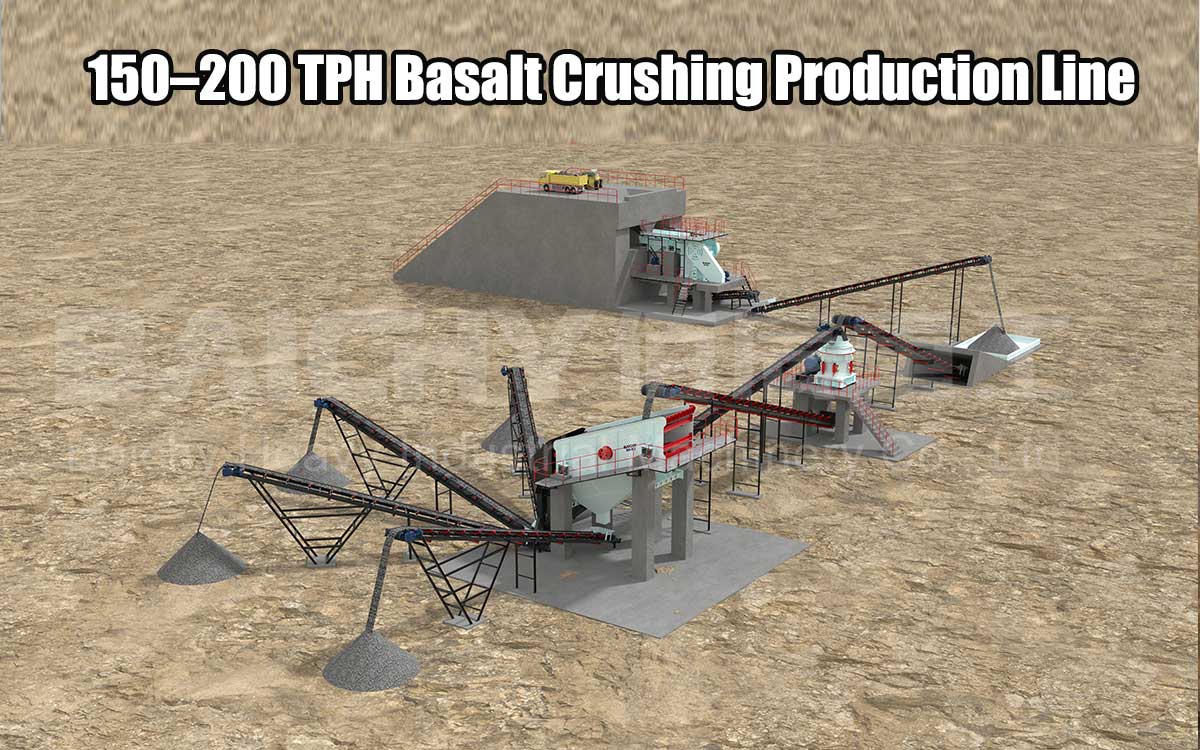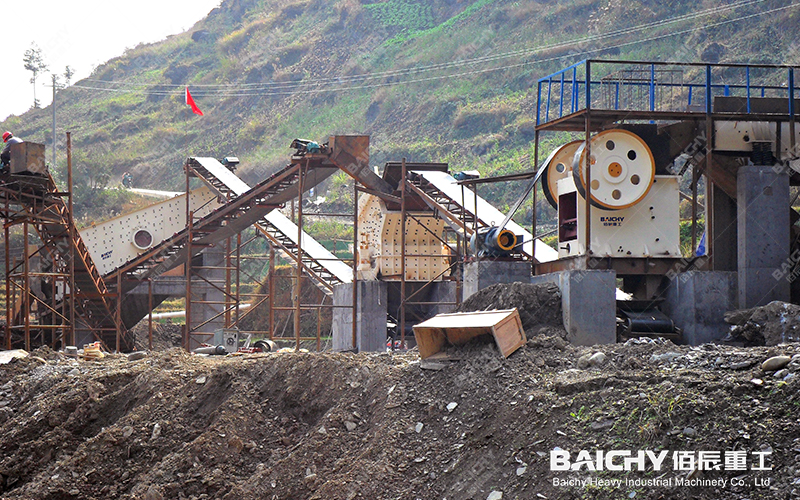
30–60 TPH Crushing Production Line
In the fields of sand and aggregate production, mining operations, and construction waste processing, a stationary crushing production line with a capacity of 30–60 tons per hour represents a widely adopted medium-to-small-scale production solution. This production line typically comprises core equipment such as jaw crushers, impact crushers, vibrating screens, and supporting belt conveyors, forming a classic "two-stage, closed-circuit" crushing process. Characterized by its compact structure and high return on investment, this system is ideally suited for small-to-medium-sized quarries, commercial concrete batching plants, or regional building material production projects. Its primary objective is to provide users with a stable, cost-effective production solution that yields finished materials with superior particle shape.
Core Configuration and Process Flow Analysis
The efficient operation of a standard 30–60 TPH stationary crushing line relies on the precise coordination of its various components. Below, we break down its typical process flow.
Stage One: Coarse Crushing – Jaw Crusher
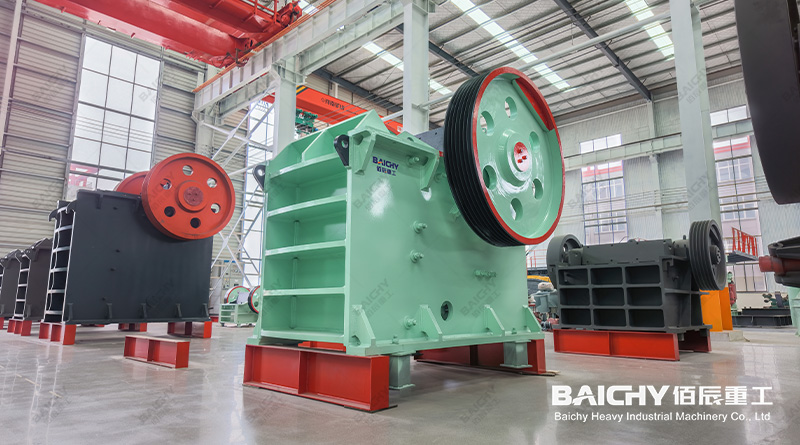
Large raw materials (typically with a particle size of ≤500 mm) are fed uniformly into the jaw crusher via a feeder. Acting as the "pioneer" of the crushing line, the jaw crusher utilizes its powerful compressive force to reduce the raw materials to a particle size of approximately 100–200 mm, thereby preparing them for the subsequent crushing stage. Its robust structural design ensures the reliability of the entire line's coarse crushing phase.
Stage Two: Medium-to-Fine Crushing and Screening – Impact Crusher and Vibrating Screen
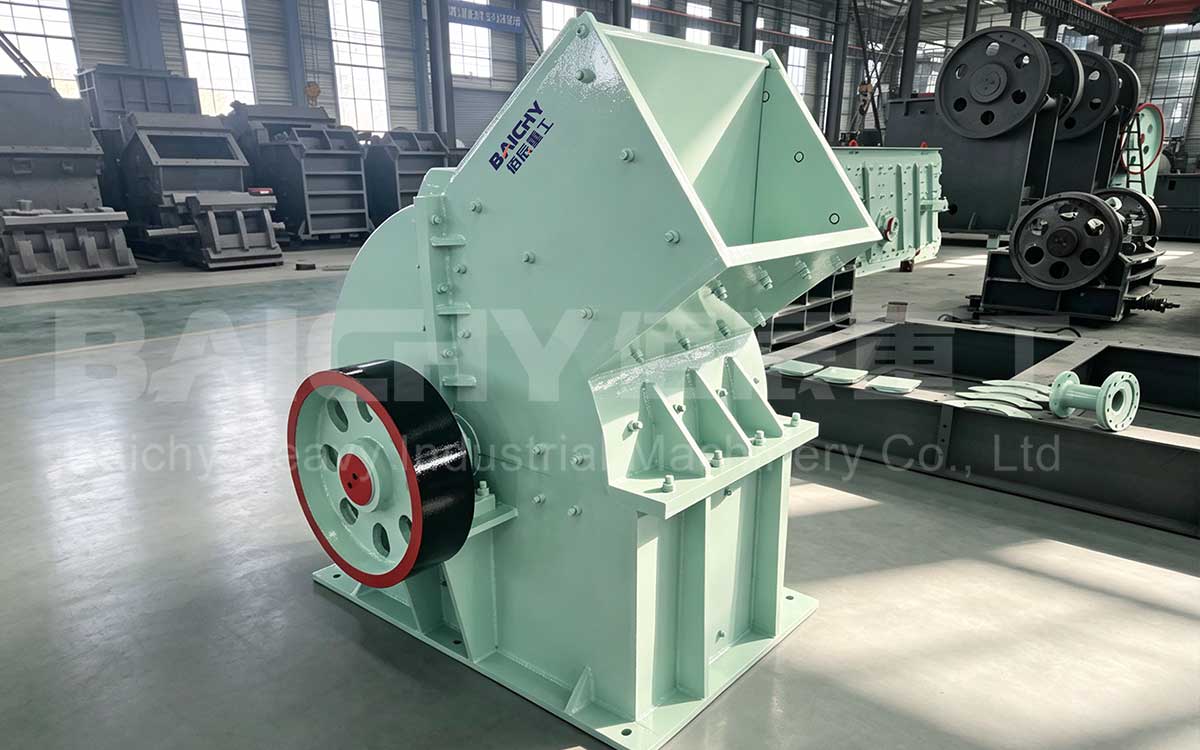
The coarsely crushed material is conveyed via belt conveyor to the impact crusher. The impact crusher employs high-speed rotating blow bars to strike the material, inducing a compound crushing effect—involving both "stone-on-stone" and "stone-on-metal" impacts—within the crushing chamber. This process yields cubic-shaped particles with excellent grain shape.
The crushed mixture is then transported by conveyor to a circular vibrating screen for classification and screening. Materials meeting the specified finished product standards (e.g., 0–5 mm, 5–10 mm, 10–20 mm, etc.) are screened out and deposited into their respective finished material stockpiles. Any oversized, non-compliant particles (oversize returns) are returned to the impact crusher via a return conveyor for further crushing, thereby establishing a "closed-circuit loop" that ensures all final products meet the required quality standards. Key Link: Belt Conveyor System
Belt conveyors serve as the "arteries" of the entire production line, responsible for transporting materials between the various primary processing units. Their smooth and efficient operation forms the foundation for ensuring the continuous workflow of the production line. Depending on the required lifting height and site layout, either flat belt conveyors or steep-angle sidewall belt conveyors can be selected.
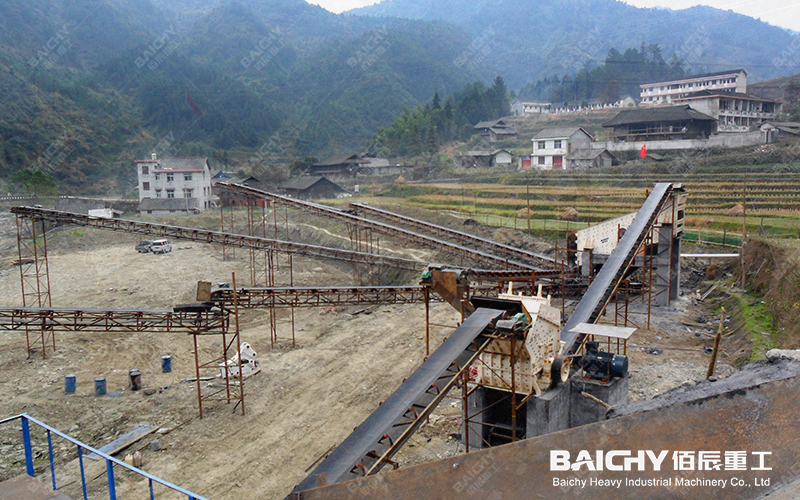
30–60 TPH Crushing Production Line
Key Advantages of This Configuration Scheme
| Advantage Category | Detailed Description |
| Economical Investment Cost | Equipment selection is precisely matched to a production capacity of 30–60 TPH, avoiding waste caused by either equipment redundancy or insufficiency. This results in a lower initial investment threshold and offers excellent value for money. |
| Mature Process Flow | The "Jaw Crusher + Impact Crusher + Closed-Circuit Screening" combination is a time-tested, classic process. It features stable operation, is easy to operate and maintain, and boasts a low failure rate. |
| Superior Finished Product Shape | The crushing principle of the impact crusher ensures that the resulting aggregate particles are predominantly cubical in shape. This results in low needle-and-flaky content, leading to higher compressive strength and greater market value. |
| Flexible and Compact Layout | The stationary production line can be configured in either a "linear" or "L-shaped" layout to suit the specific site topography. It occupies a relatively small footprint, making it suitable for a wide variety of plant site conditions. |
| Energy Consumption & Environmental Protection | The equipment's power configuration is rationally designed, keeping overall energy consumption under control. When combined with necessary water-spraying dust suppression systems, the setup fully meets environmental protection requirements for production operations. |
Classic Application Case Study
Project Location: Limestone Quarry in Xinjiang, China
Raw Material: Limestone; Compressive Strength ≤ 150 MPa; Feed Size ≤ 400 mm
Core Configuration: PE400×600 Jaw Crusher + PF1010 Impact Crusher + 3YK1237 Vibrating Screen + Multiple Belt Conveyors
Finished Product Requirements: Three aggregate specifications: 0–5 mm, 5–10 mm, and 10–20 mm
Operational Results: Since commissioning, the production line has maintained a stable hourly output of 45–50 tons. The finished aggregate features excellent particle shape, fully meeting the high-standard requirements of local commercial concrete plants and asphalt mixing stations. The project owner successfully recouped their entire investment cost within just 18 months. Recommended Ancillary Equipment
In addition to the core configuration outlined above, depending on the characteristics of your raw materials and the requirements for your final products, you may also wish to consider the following adjustments:
• For High-Hardness Materials: You can replace the secondary impact crusher with a cone crusher to achieve superior wear resistance and ensure a more stable output particle size.
• For a Higher Proportion of Fine Powder: You can add a sand-making machine (Vertical Shaft Impact Crusher) after the screening stage to produce high-quality manufactured sand, thereby enhancing the added value of your final products.
• Automation Upgrade: We recommend installing a centralized electrical control system to enable one-touch start/stop operations and remote monitoring of key operating parameters, further reducing labor costs and improving management efficiency.
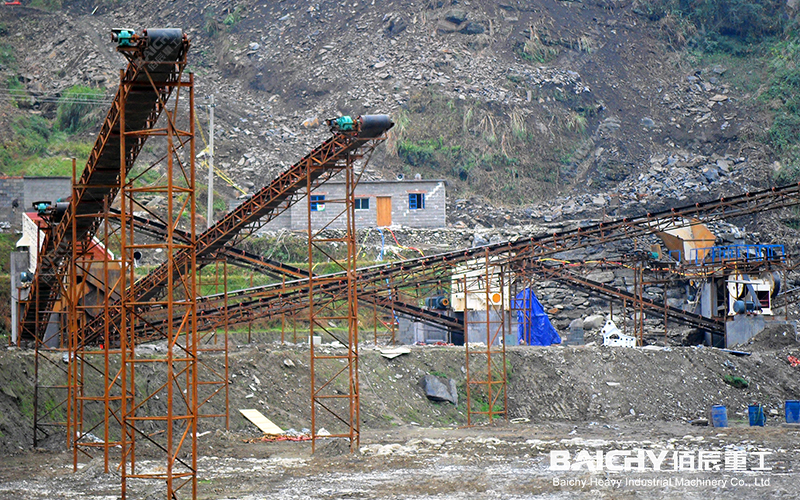
30–60 TPH Stationary Crushing Production Line
Frequently Asked Questions (FAQ)
Q1: Can this production line be used to process construction waste?
A1: Yes, it can; however, pre-treatment is required based on the composition of the construction waste (e.g., the content of rebar, wood, plastics, etc.). Typically, a vibrating feeder screen or a manual sorting platform must be added at the feeding end, and an iron remover should be installed downstream of the primary crusher to remove lightweight debris and metals. This protects the downstream equipment and ensures the purity of the finished products.
Q2: How long does it take to go from installation to full-scale production?
A2: For a standard 30–60 TPH stationary production line—assuming all equipment is on-site and the foundation work has been completed in advance—a professional installation team typically requires 3–5 weeks to complete the mechanical assembly, electrical wiring, and no-load testing. Following this, an additional 1–2 weeks are needed for material-load commissioning and capacity optimization to achieve a stable, full-load production state.
Q3: Aside from the equipment itself, what else do we need to prepare for the production line?
A3: A successful project requires not only high-quality equipment but also comprehensive preliminary preparations: 1) Solid Foundation: The concrete foundation for the equipment must be constructed in advance according to the provided engineering drawings; 2) Power Supply: Ensure that adequate electrical access is secured to meet the total installed power requirements; 3) Raw Materials & Stockyards: Plan designated areas for stockpiling raw materials as well as separate stockyards for sorting and storing the various finished products; 4) Environmental Measures: Plan ahead for dust suppression (e.g., water spraying), dust collection systems, or enclosure solutions to ensure compliance with local environmental impact assessment regulations.