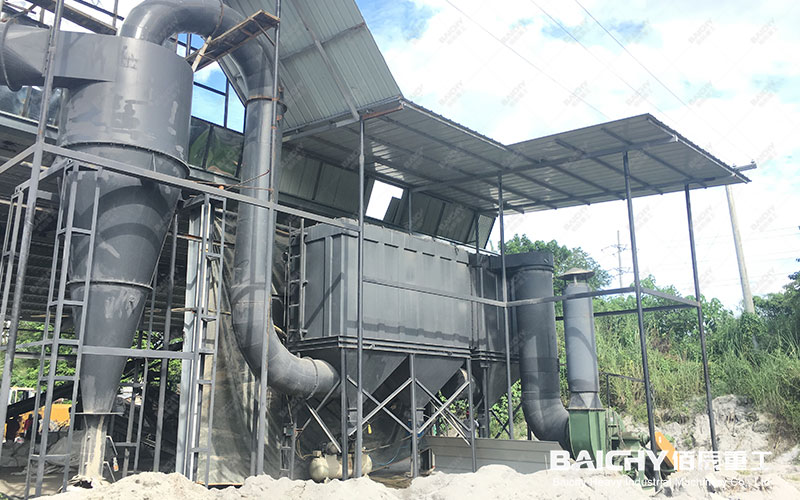
Industrial Dust Collectors
Throughout the various stages of ore processing—including crushing, screening, grinding, and conveying—substantial amounts of dust are generated continuously. This dust not only severely pollutes the working environment and endangers employee health, but it can also trigger explosions, damage precision equipment, and result in material loss. Consequently, industrial dust collectors have become indispensable core environmental protection equipment within modern, intelligent mining crushing and grinding production lines. They are not merely a prerequisite for meeting environmental compliance standards, but also a key factor in helping enterprises reduce costs, enhance efficiency, and achieve sustainable development.
The Core Role of Dust Collection Systems in Production Lines
A well-designed dust collection system offers value that extends far beyond the simple act of "dust removal." Deeply integrated into the production workflow, it serves as a critical pillar for achieving clean production, safe operations, and intelligent management.
Comprehensive Solutions for Dust Control
Dust control is by no means as simple as merely installing a single piece of equipment at a specific location; rather, it is a comprehensive systems engineering project spanning from "source capture" to "terminal purification." An effective solution requires a holistic consideration of factors such as dust source locations, dust characteristics, and airflow dynamics. By utilizing devices such as enclosed hoods and suction hoods, dust-laden air is captured in close proximity to its point of generation; it is then transported via ductwork to a main dust collector unit for purification, ultimately achieving compliant emissions or enabling material recovery.
Enhancing Overall Operational Efficiency
In addition to their obvious environmental and health benefits, highly efficient dust collection systems directly boost operational efficiency. They reduce equipment malfunctions and downtime caused by dust, thereby lowering maintenance costs. Furthermore, the fine dust particles recovered during the process—particularly in the grinding stage—can often be sold as marketable products, thereby generating direct economic value. Simultaneously, a clean working environment enhances the corporate image and helps companies align with increasingly stringent global ESG (Environmental, Social, and Governance) investment standards.
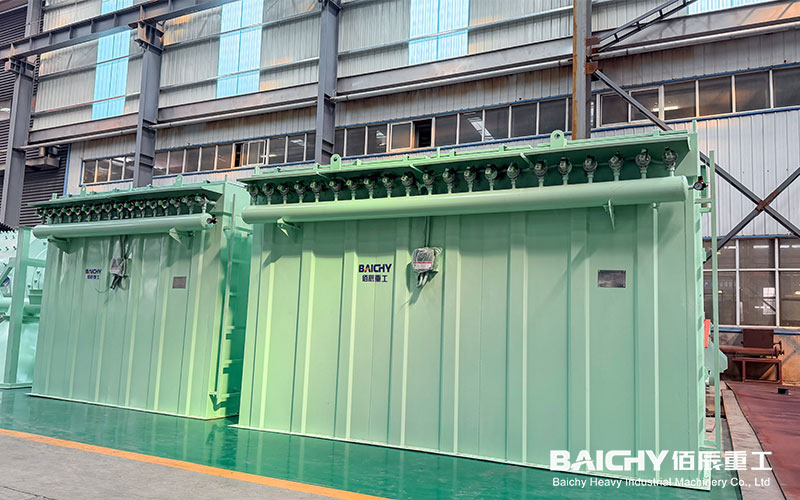
Industrial Dust Collectors
Analysis of Mainstream Industrial Dust Collection Technologies and Their Advantages
Given the specific characteristics of mining operations—namely high dust concentrations, high particle hardness, and the need to handle large air volumes—the following types of dust collectors are the most widely utilized.
Pulse-Jet Baghouse Dust Collectors
This represents the most widely adopted and technologically mature dust collection equipment currently utilized within the mining industry. It employs the filtration action of fibrous fabrics to separate dust particles, utilizing timed pulses of compressed air to periodically clean the filter bags and facilitate their regeneration.
• Advantages: Extremely high dust removal efficiency (typically >99.9%); capable of handling a wide range of air volumes; stable and reliable operation; capable of capturing ultra-fine dust particles at the micron level; and collected dry dust is easily recyclable.
• Applicable Scenarios: Outlets of crushers, vibrating screens, transfer points on belt conveyors, and for the product collection and exhaust gas treatment of grinding mills (such as Raymond mills and vertical mills).
Cartridge Dust Collectors
The operating principle is similar to that of baghouse dust collectors, but these units utilize pleated filter cartridges as the filtration elements, thereby providing a larger filtration surface area within the same footprint.
• Advantages: Compact structure, small physical size, easy installation and maintenance, and effective dust cleaning performance.
• Applicable Scenarios: Operating environments with limited space, or for processing relatively dry dust with smaller particle sizes—such as in packaging workshops or for dust removal at the tops of powder silos.
Wet Dust Collectors (Venturi Scrubbers, Water-Film Dust Collectors, etc.)
These systems achieve dust removal by bringing dust-laden gas into thorough contact with water or other liquids, utilizing liquid droplets to capture dust particles and thereby separate the dust from the gas stream.
• Advantages: Capable of simultaneously treating high-temperature, high-humidity, and flammable/explosive gas streams; also capable of absorbing certain types of harmful gases.
• Applicable Scenarios: Situations where the dust possesses specific electrical resistivity properties that make it unsuitable for electrostatic precipitation, or where the dust is sticky in nature. However, considerations regarding wastewater treatment and equipment corrosion prevention are necessary; additionally, anti-freezing measures are required for operation in cold northern regions.
Technical Selection Comparison Overview
| Dust Collector Type | Key Advantages | Potential Challenges | Optimal Application Conditions |
| Pulse Baghouse | Extremely high efficiency, stable operation, dry material recovery | Not resistant to high temperatures or high humidity (requires special filter media), relatively high equipment resistance | Most dust-generating points within the main process line, particularly finished product collection |
| Cartridge Filter | Compact structure, easy maintenance | High cartridge replacement costs, not resistant to high humidity | Workshops with limited space, silo tops, localized dust extraction |
| Wet Scrubber | High safety, capable of treating specialized flue gases | Generates wastewater requiring secondary treatment, poses corrosion risks | Specialized dusts (e.g., sticky, flammable, or explosive), or used as a secondary dust removal stage |
Successful Application Case Study: Dust Removal System Upgrade for a Granite Sand-Making Production Line
Project Background: A granite sand-making production line at a major domestic building materials enterprise suffered from severe dust dispersion during the crushing and screening stages. The original dust removal equipment was aging, emissions exceeded regulatory limits, and on-site visibility was poor.
Solution: Our company provided a comprehensive, full-process dust removal system design for the facility. We identified and designed dust extraction points at 8 critical locations—including the discharge outlet of the jaw crusher, the inlet and outlet of the cone crusher, and above the sealed hoods of the vibrating screens. A centralized air-box pulse baghouse was selected as the primary dust collection unit, featuring a total filtration area exceeding 4,000 m². The ductwork was designed to ensure balanced airflow across all branch lines, while intelligent control via variable-frequency fans allowed for total airflow adjustment based on production load, thereby achieving significant energy savings.
Implementation Results:
1. Environmental Compliance: In-workshop dust concentration dropped to <4 mg/m³—well below the national standard of 10 mg/m³—and emission concentration remained <20 mg/m³.
2. Economic Benefits: Approximately 20 tons of stone powder (fines <0.15 mm) are recovered daily; this material can be sold as a high-quality additive, generating over one million RMB in additional annual revenue.
3. Social Benefits: The working environment was vastly improved, employee health and safety were safeguarded, and the enterprise successfully obtained "Green Mine" certification.
Recommended Dust Removal Solutions for Your Production Line
When selecting a dust collector, it is essential to ensure it is perfectly matched with your core process equipment. As a professional manufacturer of mining crushing and grinding equipment, we offer not only standalone machines but also comprehensive dust control solutions covering the entire process—from coarse crushing to fine grinding.
• For Coarse/Medium Crushing (Jaw Crushers, Cone Crushers): We recommend utilizing pulse-jet bag filters featuring high airflow and high negative pressure. These units are specifically designed to effectively capture dust generated at material discharge points and conveyor transfer stations.
• For Screening Systems (Vibrating Screens): We suggest fully or partially enclosing the vibrating screens and installing dust hoods above them, connected to a centralized dust collection system.
• For Grinding Systems (Raymond Mills, Vertical Mills): This stage is critical for both dust removal and finished product collection. Typically, a pulse-jet bag filter serves as the primary collector, forming either a closed-loop or open-loop system in conjunction with the mill blower and ductwork to efficiently collect finished powder products and purify exhaust gases.
• Intelligent Control Upgrades: We recommend equipping the dust collection system with a PLC intelligent control cabinet. This enables automated pulse-jet cleaning based on differential pressure, fault alarms, and remote monitoring capabilities, facilitating seamless integration with the main production line and paving the way toward Industry 4.0.
Frequently Asked Questions (FAQ)
1: How often do the filter bags in a bag filter typically need to be replaced? Is the replacement cost high?
The lifespan of filter bags depends on dust characteristics, flue gas temperature and humidity, and the frequency of cleaning cycles; under normal operating conditions, they typically last 2 to 4 years. While replacement costs are a component of operational expenses, they represent a high-return investment when weighed against the environmental benefits, the value of recovered materials, and the avoidance of potential regulatory fines. Selecting high-quality filter bags that are resistant to abrasion and hydrolysis (such as PPS or PTFE-membrane bags) can significantly extend their service life.
2: Our production facility has very limited space; can we still install a dust collection system?
Absolutely. We offer various solutions tailored to space-constrained environments: 1) Utilizing compact cartridge dust collectors; 2) Employing modular-designed bag filters that can be flexibly adapted to the specific shape and layout of the site; 3) Positioning the dust collector outside the main plant building or on the rooftop. Our engineers will thoroughly evaluate your site layout during the solution design phase to ensure an optimal fit.
3: Is the dust collection system energy-intensive? Are there any energy-saving measures available?
The primary energy consumption within a dust collection system comes from the blower (fan). We achieve energy savings through the following methods: 1) precisely calculating airflow requirements to avoid oversizing equipment; 2) utilizing high-efficiency, energy-saving fans and motors; and 3) integrating a variable frequency control system that automatically reduces fan speed during periods of low production line load, resulting in energy savings of 20% to 40%. Over the long term, the energy-saving benefits are substantial.