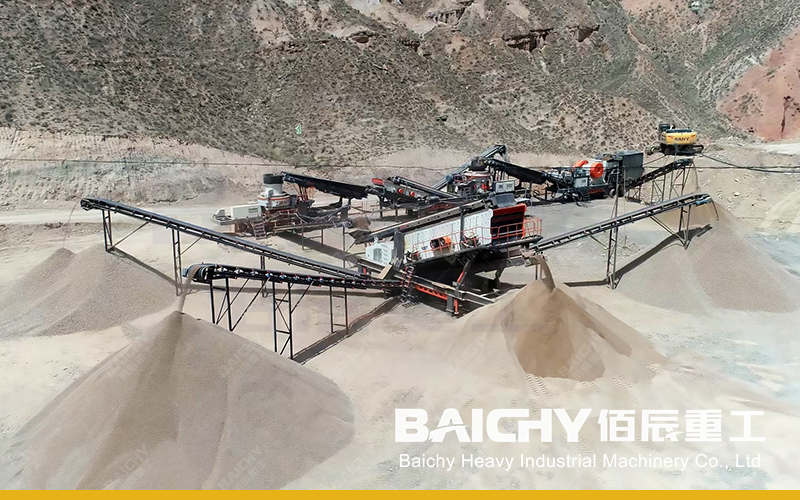
400tph Andesite Mobile Portable Crusher In Indonesia
Indonesia's aggregate demand has been reshaped by toll-road expansion, the Whoosh high-speed rail corridor and the IKN Nusantara build-out. Across Java, Sumatra, Sulawesi and Kalimantan, 400 t/h has become the practical sweet spot — big enough to anchor regional ready-mix and asphalt supply, small enough to keep capital exposure and permitting manageable. A 400 TPH andesite mobile crusher suits Indonesian conditions better than a fixed line: deposits are scattered, mining licences (IUP) are issued per block, and quarry faces move every 18–36 months.
Why 400 TPH Is the Right Capacity Band for Indonesian Andesite Quarries
Demand drivers: infrastructure, not just volume
Public-works specifications increasingly require cubical, low-flakiness coarse aggregate with tight gradation for asphalt concrete and structural concrete. Andesite delivers those properties — Mohs hardness 6–7, UCS 100–180 MPa, SiO₂ 55–62% — but only if the circuit controls particle shape.
What "400 TPH" actually means on site
Read capacity at system level, not at the crusher inlet: 400 t/h sustained at the product conveyor, 430–450 t/h peak, 80–88% availability over 300 working days, and 800,000–950,000 tonnes of effective annual output. Undersizing the feeder, recirculation conveyor or screening area is the number one reason a "400 TPH" plant really delivers 300 t/h.
Andesite properties that shape the flowsheet
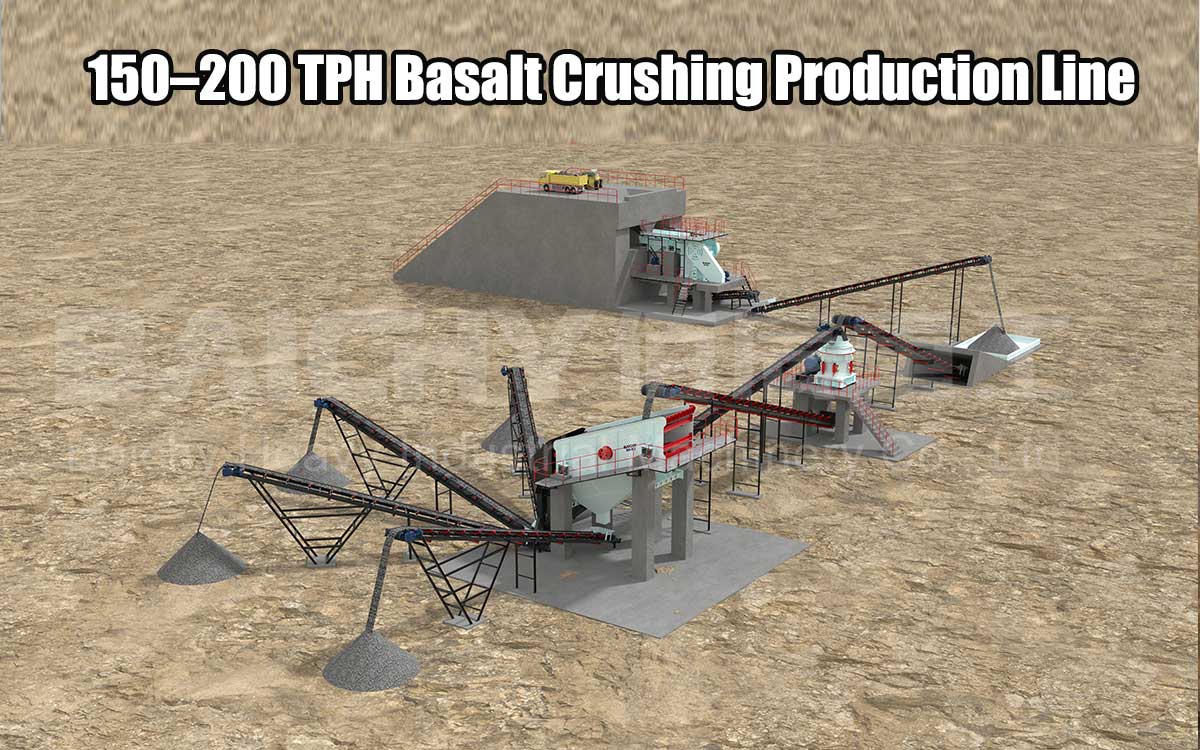
Blasted andesite has a loose bulk density of only 1.5–1.7 t/m³ and 4–9% moisture in the rainy season. Abrasion and toughness rule out impact crushers in the primary and secondary stages, making jaw → cone → optional VSI shaping → multi-deck screening with closed-circuit recirculation the reliable route to 400 t/h of cubical product.
Recommended Configuration for a 400 TPH Andesite Mobile Crusher Plant
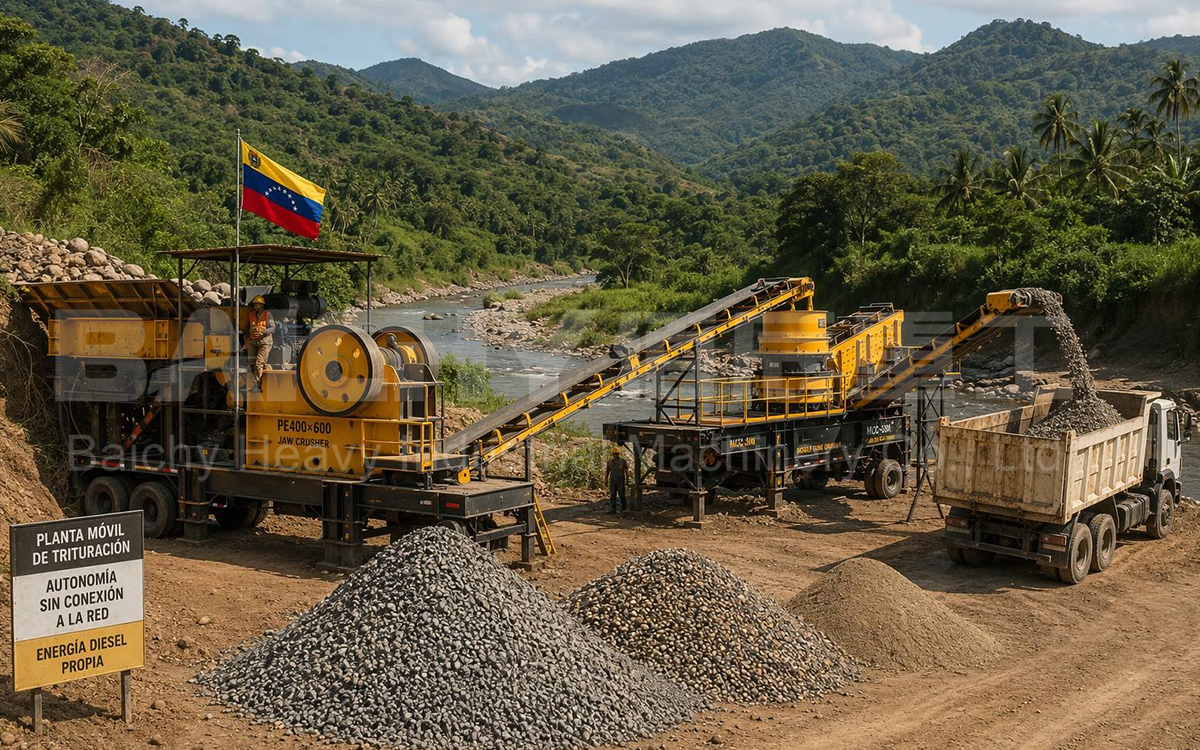
This is the configuration our engineers most often propose for a 400 t/h andesite mobile crusher project in Indonesia: tracked chassis for rough terrain, diesel-electric drive where PLN grid power is unreliable.
| Parameter | Specification — Baichy 400 TPH andesite mobile crusher line |
|---|---|
| Design capacity | 400 t/h sustained, 440 t/h peak |
| Feed material | Andesite / basalt / other hard volcanic rock |
| Max. feed size | ≤700 mm |
| Finished fractions | 0–5, 5–10, 10–20, 20–31.5 mm (3–4 adjustable fractions) |
| Primary unit | Crawler jaw crusher, feed opening 1060 × 700 mm, 132 kW, 380–450 t/h |
| Secondary unit | Crawler multi-cylinder hydraulic cone crusher, 250 kW, CSS 12–38 mm |
| Tertiary / shaping | Crawler VSI shaping unit, 2 × 110 kW (optional, for asphalt sand) |
| Screening | Crawler 3-deck vibrating screen, 2 × 22 kW, screening area ≥18 m² |
| Feeding | Heavy-duty vibrating grizzly feeder, 100 mm grizzly bypass |
| Closed circuit | Recirculation conveyor, 30–40% circulating load back to the cone |
| Total installed power | 620–700 kW (450–520 kW simultaneous demand) |
| Fuel consumption | 55–70 L/h in diesel-electric mode |
| Mobility | Crawler chassis, 20° gradeability, wireless remote travel control |
| Transport envelope | ≤3.4 m wide / ≤3.6 m high folded — no abnormal-load permit |
| Commissioning | No concrete foundation; 4–8 hours from trailer to first rock per unit |
| Control system | PLC + HMI, one-button start/stop, hydraulic overload protection |
| Product shape | Flakiness index <15%, cubical, suitable for AC-WC asphalt |
| Wear-part life | Jaw plates 450–600 h; cone mantle & concave 700–900 h |
| Environment | Pulse-jet dust collector, enclosed conveyors, <75 dB(A) at 15 m |
Stage 1 — Primary crushing: tracked jaw unit
The jaw must swallow 700 mm run-of-quarry feed and choke-feed the cone steadily. A deep cavity with a long stroke keeps throughput stable with slabby blast rock; hydraulic adjustment and reversible jaw plates extend liner life by 20–30%.
Stage 2 — Secondary crushing: hydraulic cone
This is where andesite becomes saleable aggregate. Laminar crushing in a multi-cylinder hydraulic cone yields more cubical particles per kilowatt-hour than an impactor and a far lower wear cost per tonne. Automatic CSS control and hydraulic tramp release protect the chamber daily.
Stage 3 — Shaping, screening and recirculation
Add a crawler VSI when your market includes asphalt or concrete sand; it turns low-value crusher dust into a priced 0–5 mm product. Screening is the circuit's control point and its most common hidden bottleneck: at a 30–40% circulating load the screen handles 520–560 t/h, not 400 t/h, so specify three decks, polyurethane media for damp feed and a full-size recirculation conveyor.
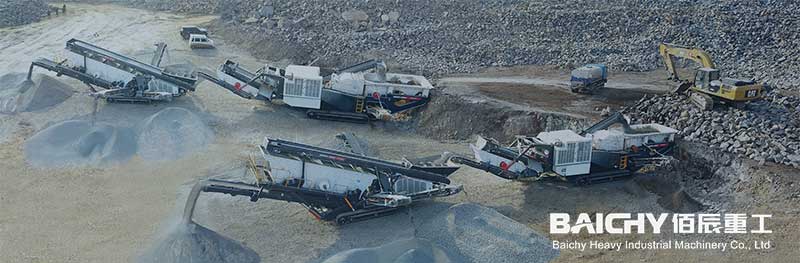
400 TPH Andesite Mobile Crusher Plant in Indonesia
Engineering Factors That Decide Whether You Really Hit 400 TPH
Wear cost per tonne
On andesite, wear parts typically cost USD 0.35–0.70 per tonne, versus USD 0.10–0.25 on limestone — a spread that can make or break a project. Use Mn18Cr2 jaw liners and high-chrome cone liners, keep the cone choke-fed, and hold three months of consumables on site.
Monsoon moisture and clay
Wet-season feed at 4–9% moisture causes screen blinding and conveyor carry-back. Grizzly bypass, rubber-lined chutes, belt scrapers and — where the spec allows — wet screening with a water-recycling pond are the standard countermeasures.
Power strategy and environmental compliance
PLN grid power gives the lowest cost per kWh but needs fixed infrastructure; diesel-electric self-generation (55–70 L/h) keeps the plant fully relocatable; a hybrid — grid for screening and conveying, diesel for crushing — is increasingly common on 5+ year sites. Indonesian AMDAL / UKL-UPL approvals also make dust and noise control non-negotiable: enclosed conveyors, cartridge collectors, water sprays and acoustic enclosures should be specified from day one.
Mobile vs. Stationary: Which Delivers Better ROI in Indonesia?
Mobile 400 TPH andesite mobile crusher: no civil works, production in 3–6 weeks, relocation in 1–2 days, slightly higher fuel cost per tonne, high resale value, payback typically 12–20 months. Best for scattered deposits, contract crushing and multi-block IUP.
Stationary 400 TPH plant: lower machine cost but 8–14 weeks of foundations and 4–7 months to commissioning, lowest kWh cost if grid-connected, payback 24–36 months. Best for a single reserve with 10–15 years of life.
Delivery, Commissioning and Baichy's Support
From enquiry to the 72-hour performance test takes roughly 16–18 weeks: rock sample and 24-hour technical proposal (week 0), 3D layout and power balance (weeks 1–3), factory load testing (weeks 4–12), shipping to Tanjung Priok, Tanjung Perak, Belawan or Makassar (weeks 13–16), then engineer-supervised commissioning and operator training (weeks 17–18).
Baichy Heavy Industry is a factory-direct manufacturer with 200,000 m² of production capacity, 20+ years of experience and 5,000+ projects in 150+ countries, including operating andesite plants in Indonesia at 150 t/h and 350 t/h. You get engineer-led selection from your rock sample, factory-direct pricing, a 12-month warranty, 48-hour wear-part dispatch and remote diagnostics with on-site engineer service.
Conclusion
A 400 TPH andesite mobile crusher plant matches realistic contract volumes, moves with the quarry face, avoids heavy civil works and starts producing in weeks. Three decisions determine success: choose jaw plus cone rather than impact for abrasive andesite, size screens and the recirculation conveyor for the circulating load, and budget wear parts at USD 0.35–0.70 per tonne. Send Baichy your rock sample, target gradation and site conditions for a free process design and quotation within 24 hours.
Frequently Asked Questions
1. How much does a 400 TPH andesite mobile crusher plant cost?
Equipment-only budgets for a complete tracked 400 t/h andesite circuit typically fall between USD 700,000 and USD 1,400,000, depending on component brands, whether a VSI and washing module are included, and the power configuration. Freight, import duty, site works and commissioning are quoted separately.
2. Can one plant produce both asphalt aggregate and concrete sand?
Yes. A three-deck screen plus an optional crawler VSI splits 0–5 mm manufactured sand, 5–10 mm and 10–20 mm fractions simultaneously, with 20–31.5 mm for base course. Product mixes change by swapping screen media and adjusting the cone CSS, usually within a single shift.
3. How long does installation and commissioning take in Indonesia?
Tracked units need no concrete foundation, so set-up takes 4–8 hours per unit and the line normally runs within 5–7 days of site arrival. Including shipping, most projects reach the 72-hour performance test in 16–18 weeks.
4. What is the wear-part cost per tonne when crushing andesite?
Plan for USD 0.35–0.70 per tonne, depending on silica content, feed gradation and product size. High-chrome liners, consistent choke feeding and grizzly bypass of fines before the secondary stage are the three most effective ways to reduce it.
5. Is a mobile or stationary plant better for a 400 t/h andesite quarry?
Choose mobile if your licence covers multiple blocks, the face migrates every few years, or you want production within one quarter — payback is typically 12–20 months. Choose stationary only when a single reserve supports 10–15 years of output and grid power already exists.
Baichy Heavy Industry
Baichy Heavy Industry is a high-tech mining equipment company integrating R&D, manufacturing, sales, and after-sales service. Focusing on crushing, grinding, and mineral processing equipment, we provide professional solutions to our customers. We are ISO9001:2015 、certified, and our products include mobile crushing palnts, crawler crushing plant, construction waste crushing plants, jaw crushers, sand making machines, cone crushers, fine crushers, grinding mills, ball mills, etc., all with reliable performance to meet diverse project needs.
Baichy Heavy Industry – Your Trusted Partner
To ensure optimal performance of your equipment, Baichy Heavy Industry offers:
- Professional on-site installation guidance
- Comprehensive operator training
- 24/7 technical support & maintenance services
Our complete after-sales service system guarantees long-term, stable operation of your machinery with minimal downtime.
Protect Your Rights – Only Use Official Channels
To avoid scams and ensure authentic support, contact us exclusively through:
• Official Website: www.baichychina.com
• WhatsApp: +8615093222637
• Email: [email protected]
Your satisfaction is our priority – expect prompt, professional service every time.
(Note: Beware of unauthorized third parties claiming to represent Baichy. Always verify through official contacts.)