
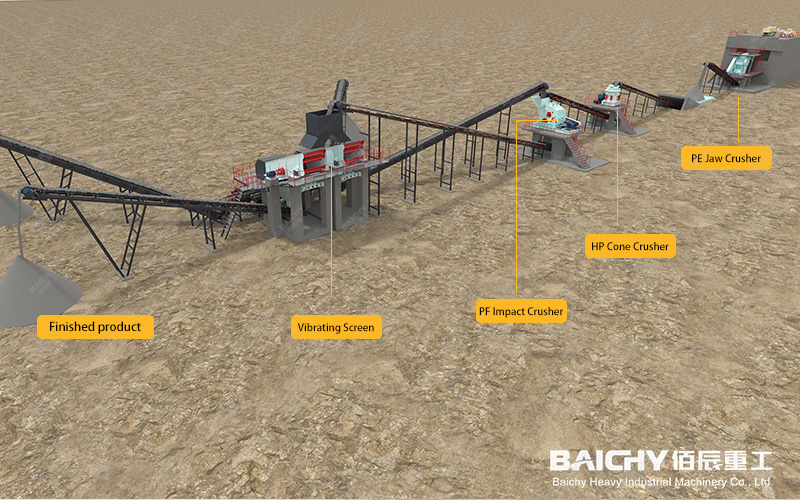
Three-Stage Crushing Circuit Design: Full Process Layout
The rational design of a three-stage crushing process is the foundation for ensuring the efficient and stable operation of a production line. A standard configuration typically comprises primary coarse crushing (jaw crusher), secondary intermediate crushing, and tertiary fine crushing, complemented by screening and closed-circuit circulation systems. This article will provide an in-depth explanation of the layout, equipment configuration, and key design considerations for a three-stage crushing process, helping you plan your ideal crushing production line.
Overview: What is a "Three-Stage, One-Closed-Circuit" Crushing Process?
The "three-stage, one-closed-circuit" crushing process is a classic configuration widely adopted in modern large- and medium-scale stone plants and mining operations. Its core principle lies in meticulously Piding the crushing task into three primary stages and achieving precise particle size control through a "closed-circuit circulation" mechanism.
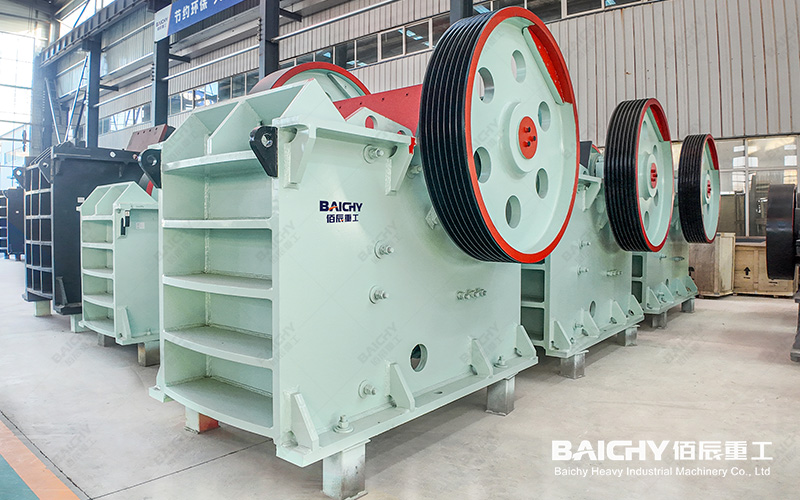
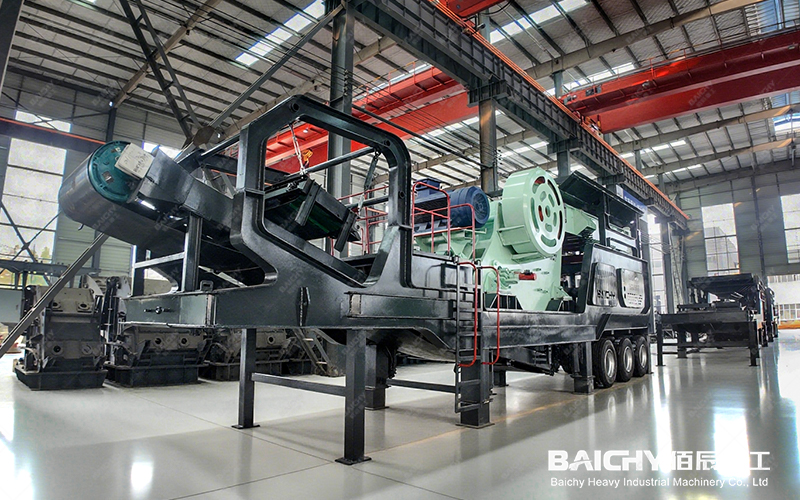
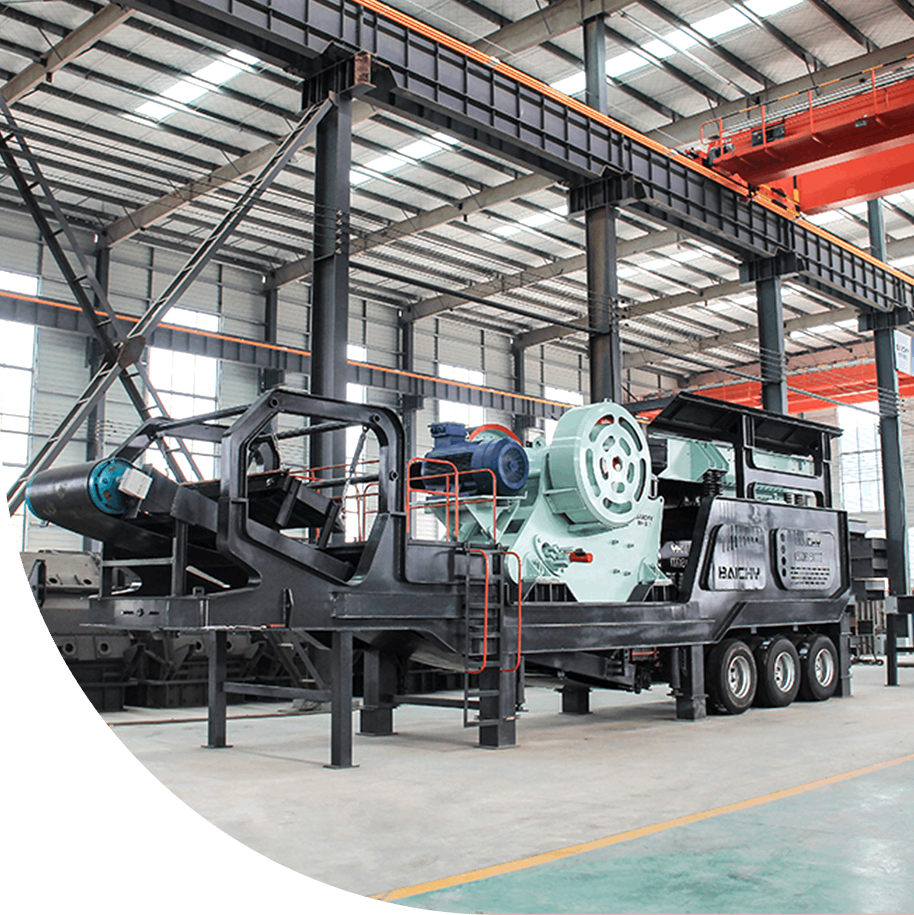
Coarse equipment - Jaw Crusher
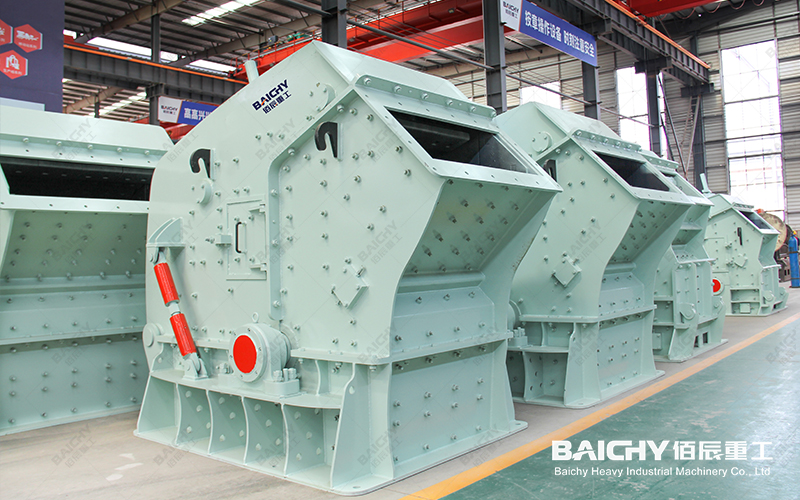
Intermediate equipment - Impact Crusher
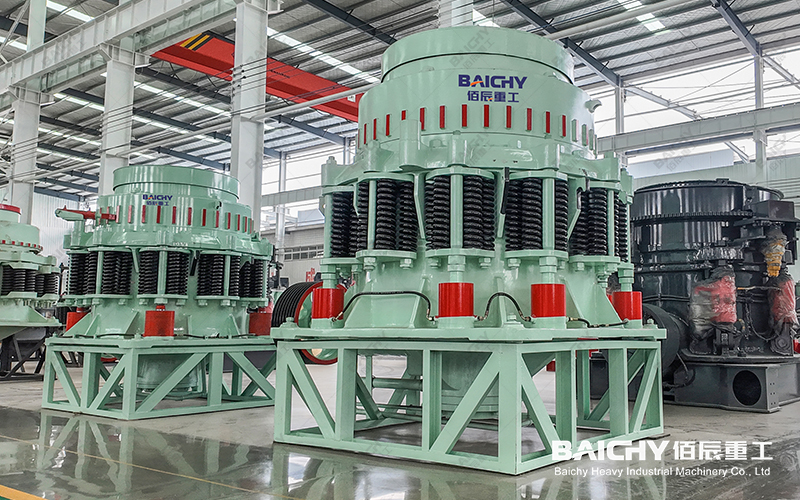
Fine crushing equipment - Cone Crusher
• "Three Stages": Refers to the three consecutive crushing phases—coarse, intermediate, and fine crushing—which progressively reduce large blocks of raw ore to the target particle size.
• "One Closed Circuit": Specifically refers to the addition of screening equipment following the fine crushing stage. Any oversized material remaining on the screen (known as "return material") is conveyed back to the fine crushing equipment for re-crushing, thereby establishing a closed-loop system for continuous inspection and circulation.
The primary advantage of this three-stage crushing model lies in its collaborative Pision of labor, which reduces the load on any single piece of equipment. Furthermore, by utilizing the closed-circuit circulation system to precisely control the final product's particle size, it effectively achieves production goals characterized by high output, superior quality, and low consumption.
Recommended Reading:
How to Select the Right Tertiary Crusher for Your Project?
Mobile Tertiary Crusher: Benefits & Applications for Quarrying
Detailed Process Flow and Core Equipment Layout
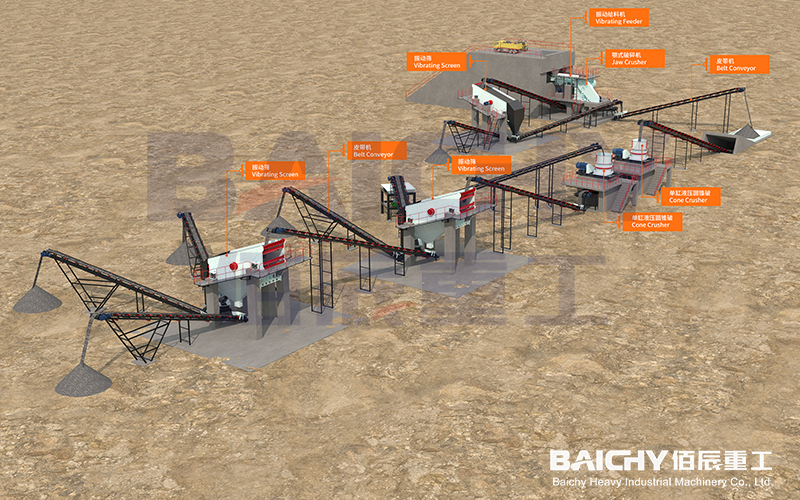
In a typical "three-stage, one-closed-circuit" crushing process, the equipment layout adheres to a "crushing–screening–conveying" assembly-line logic, aiming to ensure smooth material flow, a compact footprint, and ease of maintenance.
1. Stage One: Coarse Crushing (Jaw Crusher)
• Task: To receive large blocks of raw ore from the feed hopper (with particle sizes potentially reaching several hundred or even a thousand millimeters) and perform the initial, powerful crushing operation, reducing the material size to below 250–300 mm.
• Core Equipment: Jaw Crusher. Characterized by its robust structure and high throughput capacity, the jaw crusher excels at processing high-hardness materials and raw ores of varying sizes; it serves as the indispensable "first gateway" in the crushing process flow.
• Layout Considerations: Typically positioned at the very front of the plant site—proximal to the raw material stockpile—in order to minimize the transport distance for the raw ore. A receiving hopper and a heavy-duty feeder must be installed underneath.
2. Stage Secondary Crushing (Cone Crusher / Impact Crusher)
• Task: To receive material from the primary crushing stage and perform further reduction; the discharge particle size typically ranges from 40 to 100 mm.
• Core Equipment: Secondary cone crusher or impact crusher.
◦ Cone Crusher: Suitable for crushing materials of medium to high hardness; offers excellent wear resistance and low operating costs, though the shape of the finished product may be slightly inferior.
◦ Impact Crusher: Suitable for materials of medium to low hardness; utilizes impact energy for crushing, producing a finished product with excellent, cubic particle shape.
• Layout Considerations: Positioned immediately after the primary crushing stage and connected via conveyor belts. Sufficient space must be allocated around the equipment to facilitate maintenance and inspection.
3. Stage Fine Crushing and Closed-Circuit Screening (The Core Stage)
• Task: To crush the material from the secondary stage down to the final product specifications (e.g., 0–5 mm, 5–10 mm, 10–20 mm, etc.).
• Core Equipment:
◦ Fine Crushing Equipment: Multi-cylinder hydraulic cone crushers (for high-hardness materials) or vertical shaft impact crushers/shapers (for applications requiring superior particle shape) are the preferred choices.
◦ Screening Equipment: Circular vibrating screens or multi-deck linear vibrating screens, responsible for classifying the mixed material discharged from the fine crushing stage.
• "Closed-Circuit" Process: Material from the fine crushing stage—along with a portion of the material from the secondary crushing stage—is fed into the vibrating screens. Material that meets the specified size requirements is screened out and collected as the finished product. Oversized material (the "overs") acts as "return material" and is conveyed back to the fine crusher via a return conveyor belt for further reduction. This continuous loop constitutes the "closed circuit."
• Layout Considerations: This stage forms the core of the screening and circulation system. The screening tower is typically constructed as a multi-story steel structure. The fine crushers and screens may be arranged side-by-side or vertically (stacked); precise calculations regarding the angle and length of the return conveyor belts are essential to ensure a smooth and unobstructed flow of material.
Summary Table of a Typical Three-Stage, One-Closed-Circuit Process Layout
| Process Stage | Key Equipment | Typical Feed Size | Typical Discharge Size | Core Function |
| Coarse Crushing | Jaw Crusher | ≤800mm | ≤300mm | Powerful primary crushing; prepares material for subsequent processes. |
| Medium Crushing | Single-Cylinder/Multi-Cylinder Cone Crusher | ≤300mm | ≤100mm | Intermediate crushing; serves as a transitional link between stages. |
| Fine Crushing | Multi-Cylinder Cone Crusher / Impact Crusher | ≤100mm | ≤31.5mm | Precision crushing; brings material close to final product specifications. |
| Screening | Circular Vibrating Screen (Multi-layer) | | Mixed Feed | Multiple Finished Product Specifications | Particle size classification and control; enables closed-circuit circulation. |
Recommended Reading:
Best Tertiary Crushers for Hard Rock, Granite & Basalt
Application Scenarios and Core Advantages
Primary Application Scenarios
• Large-scale Sand and Aggregate Production Lines: Producing high-standard crushed stone and manufactured sand for construction, highways, and railways.
• Medium-to-Large Scale Metal Mines: Preparing qualified crushed material for subsequent grinding and beneficiation workshops.
• Projects with Strict Requirements for Product Particle Shape and Grading: Such as hydropower engineering projects and the production of aggregates for high-grade concrete.
The Four Core Advantages of This Process
1. High Efficiency and High Output: The three stages feature clear Pisions of labor, allowing each piece of equipment to operate under optimal conditions, resulting in high system capacity.
2. Superior and Controllable Product Particle Size: The closed-circuit circulation ensures stable finished product particle sizes and rational grading, while minimizing over-crushing.
3. Economical Operating Costs: Compared to single-stage or two-stage crushing, the load distribution is more balanced, and equipment wear is more uniform; in the long run, the overall cost is lower.
4. Stable System Operation: The closed-circuit circulation acts as a buffer and regulator; this enhances system stability, particularly when feed rates fluctuate. Recommended Equipment Configuration Schemes
Based on material hardness and product requirements, we offer the following classic equipment combination schemes:
| Scheme Type | Applicable Material Hardness | Coarse Crushing Equipment | Medium Crushing Equipment | Fine Crushing Equipment | Scheme Features |
| Scheme A | High Hardness (Granite, Basalt) | C Series Jaw Crusher | CH Single-Cylinder Cone Crusher | HP Multi-Cylinder Hydraulic Cone Crusher | Wear-resistant and durable; low power consumption costs; long service life. |
| Scheme B | Medium Hardness (Limestone, Dolomite) | PE Series Jaw Crusher | CI Series Impact Crusher | VSI6X Vertical Shaft Impact Crusher (Sand Maker) | Excellent finished product shape; controllable stone powder content. |
| Scheme C | Mixed/Flexible Output | HD Series Jaw Crusher (German Version) | Multi-Cylinder Hydraulic Cone Crusher | Impact Crusher + VSI Crusher Combination | Flexible adjustment of product ratios; strong market adaptability. |
Showcase of Success Stories
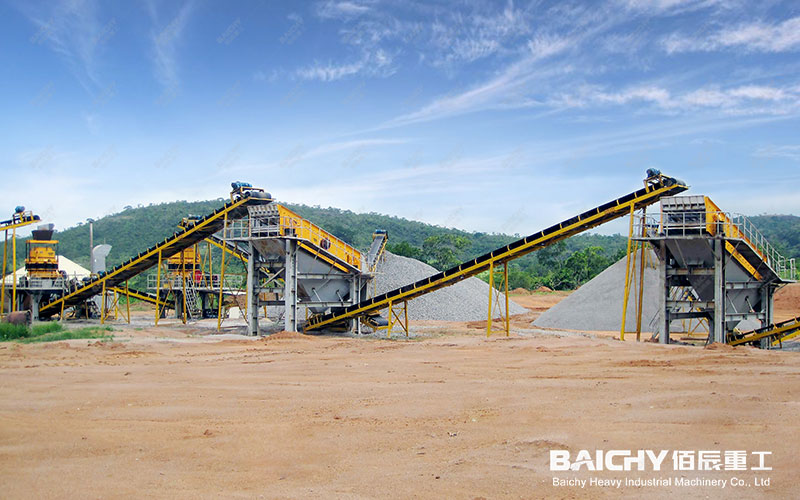
Cone Crusher Structure Diagram - Aggregate Fine Crushing
• Case Study 1 (Shandong Granite Crushing): Employing a "Jaw Crusher (C110) + Single-Cylinder Cone Crusher (CH160) + Multi-Cylinder Cone Crusher (HP300)" three-stage closed-circuit process, this project achieves an hourly output of 500 tons. The finished products are primarily used for high-grade commercial concrete, with a cubic particle shape content exceeding 90%, resulting in extremely high client satisfaction.
• Case Study 2 (Henan Limestone Sand Making): Utilizing a "Jaw Crusher (PE900*1200) + Impact Crusher (CI132) + VSI Crusher (VSI6X1263)" process, this project focuses on producing high-quality manufactured sand in the 0–5mm range. The three-stage closed-circuit crushing system ensures that the fineness modulus remains stable between 2.8 and 3.0, allowing the manufactured sand to completely replace natural river sand.
Frequently Asked Questions (FAQ)
Q1: Under what circumstances should I consider adopting a three-stage closed-circuit crushing process?
A1: When you have a large processing volume (typically an hourly output exceeding 200 tons), the raw materials consist of large lumps with high hardness, and you have clear, strict requirements regarding the particle shape and gradation of the final product, a three-stage closed-circuit system is the optimal choice. While the initial investment is relatively higher, the long-term returns—in terms of both operational efficiency and product quality—are significantly more substantial.
Q2: What is the appropriate ratio for "return material" in a closed-circuit loop? How is it controlled?
A2: The return ratio (the ratio of the material returned to the fine crusher relative to the volume of fresh feed entering the fine crusher) typically ranges between 100% and 200%. The volume of return material—and, consequently, the final product's particle size—can be controlled by adjusting the mesh specifications and inclination angle of the vibrating screen, as well as the discharge opening of the fine crusher. A well-designed system should be capable of maintaining the return material volume in a state of dynamic equilibrium.
Q3: Compared to a two-stage, one-closed-circuit process, where do the primary additional costs lie in a three-stage, one-closed-circuit process?
A3: The primary additional costs stem from the following factors:
1) The inclusion of an extra piece of intermediate crushing equipment, along with the associated costs for its foundation and electrical control systems;
2) A potentially more complex plant layout, which may necessitate an increase in the number of conveyor belts;
3) Higher initial capital investment. However, the benefits derived from this approach—including lower wear-and-tear on inPidual machines, greater system flexibility, and a significant improvement in product compliance rates—may result in more advantageous overall operating costs over the long term.
Summary
The three-stage, one-closed-circuit crushing process establishes the core of a high-yield, high-quality, and stable aggregate production line through the precise coordination of three distinct crushing stages—coarse, intermediate, and fine—combined with an efficient closed-circuit screening loop. The design philosophy underpinning this process centers on the principles of "specialized function" and "precise control." For mining and aggregate enterprises striving for large-scale, industrialized, and sustainable production, a thorough understanding and effective application of this process represent a pivotal step toward securing a competitive edge in the market.
About of Baichy Heavy Industry
Baichy Heavy Industry is a high-tech mining equipment company integrating R&D, manufacturing, sales, and after-sales service. Focusing on crushing, grinding, and mineral processing equipment, we provide professional solutions to our customers. We are ISO9001:2015 、certified, and our products include mobile crushing palnts, crawler crushing plant, construction waste crushing plants, jaw crushers, sand making machines, cone crushers, fine crushers, grinding mills, ball mills, etc., all with reliable performance to meet diverse project needs.
Our advantages:
• Professional pre-sales support: Free project design and comprehensive solutions to help you accurately select the right equipment;
• Comprehensive on-site service: Providing installation guidance and worker training to ensure smooth equipment commissioning;
• Reliable after-sales guarantee: A complete after-sales system, timely response to technical inquiries and equipment maintenance, ensuring long-term stable operation.
To protect your rights, please contact us through the following official channels for professional service:
Official Website Customer Service
https://wa.me/+8615093222637
Email: [email protected]
We are committed to providing high-quality equipment and full-cycle services to deliver comprehensive intelligent solutions for the global mining industry!