Tertiary Crusher Selection Guide
In mining operations and sand & aggregate production lines, the tertiary crusher serves as a critical link that determines the final product's particle shape, gradation, and overall system capacity. Scientific selection of this equipment requires a comprehensive assessment of material characteristics, feed and discharge particle sizes, capacity requirements, site conditions, and investment budgets; there is no single "universal" model suitable for all applications. Drawing upon practical engineering experience, this article outlines the key considerations for equipment selection, aiming to assist mining and aggregate projects in identifying the most suitable tertiary crushing equipment to maximize operational efficiency and profitability.
Detailed Analysis of Key Selection Factors
Successful selection of a tertiary crusher is by no means a simple matter of cross-referencing model numbers; rather, it is a systematic matching process. The following four core factors must be prioritized during the evaluation phase:
Material Characteristics: The Fundamental Basis for Selection
The material's hardness, moisture content, clay content, and abrasiveness (specifically, its silica content) constitute the primary criteria for determining the appropriate crushing principle.
• High-Hardness Materials (e.g., granite, basalt): Priority should be given to cone crushers, which primarily utilize a compression crushing principle. These machines feature long-lasting wear parts and offer controllable operating costs.
• Medium-to-Low Hardness Materials (e.g., limestone, bluestone): Impact crushers, which employ an impact crushing principle, are a suitable choice. They produce finished products with excellent particle shape and a low content of needle-like or flaky particles.
• High-Moisture and High-Clay Content Materials: Caution is required regarding potential issues such as material sticking within the chamber or blockages. It may be necessary to consider specialized crushing chamber designs or incorporate pre-screening processes.
Capacity and Particle Size Requirements: Determining Equipment Specifications
Production capacity (measured in tons per hour) and the target final product particle size (e.g., 0–5 mm, 5–10 mm, 10–20 mm) serve as the direct basis for determining the specific model and size of the equipment required.
• Capacity Matching: The designed capacity of the production line should be slightly higher than the actual required capacity (typically incorporating a buffer of 10–15%) to accommodate peak demand fluctuations and variations in equipment performance.
• Feed and Discharge Particle Sizes: It is essential to clearly define both the feed size entering the tertiary crusher (i.e., the output from the preceding crushing stage) and the target discharge size. These parameters directly influence the selection of critical machine specifications, such as the crushing chamber profile, eccentric throw, and the gap settings for components like blow bars or concave liners.
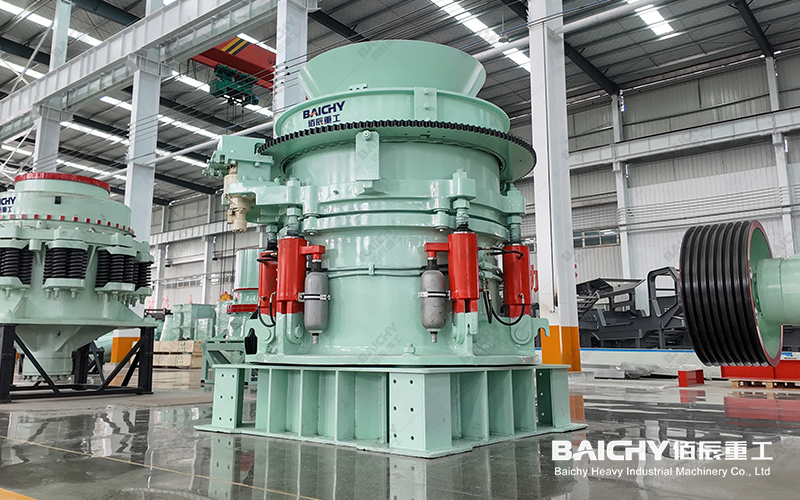
Multi-cylinder Hydraulic Cone Crusher
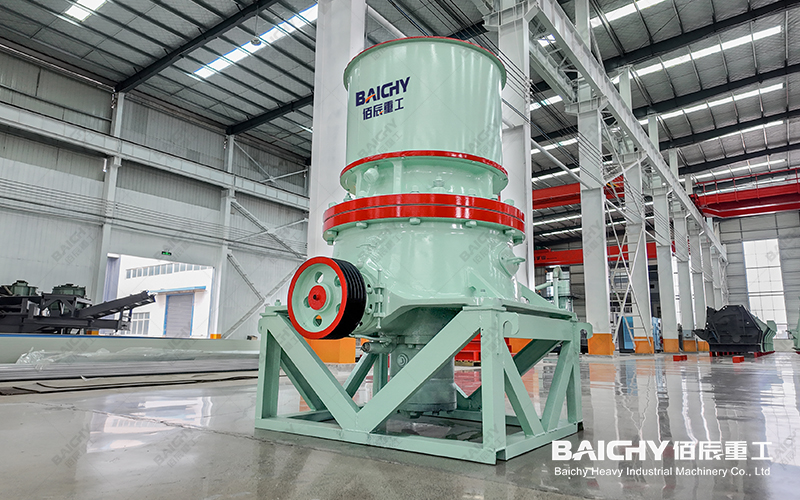
Single-cylinder Hydraulic Cone Crusher
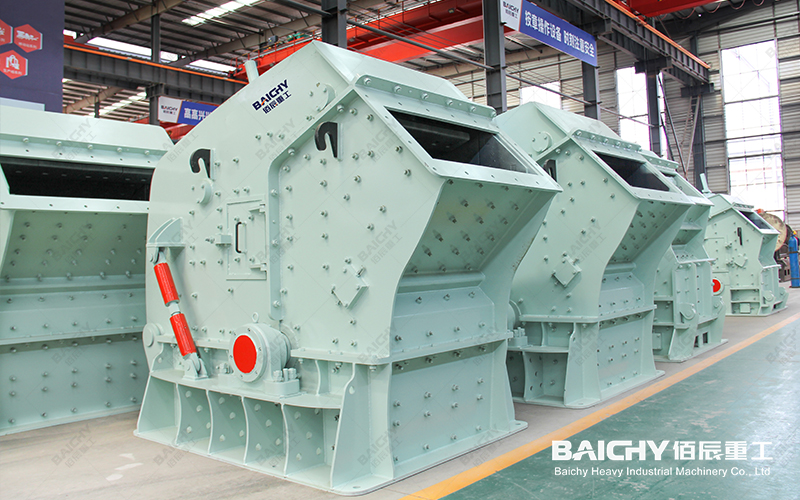
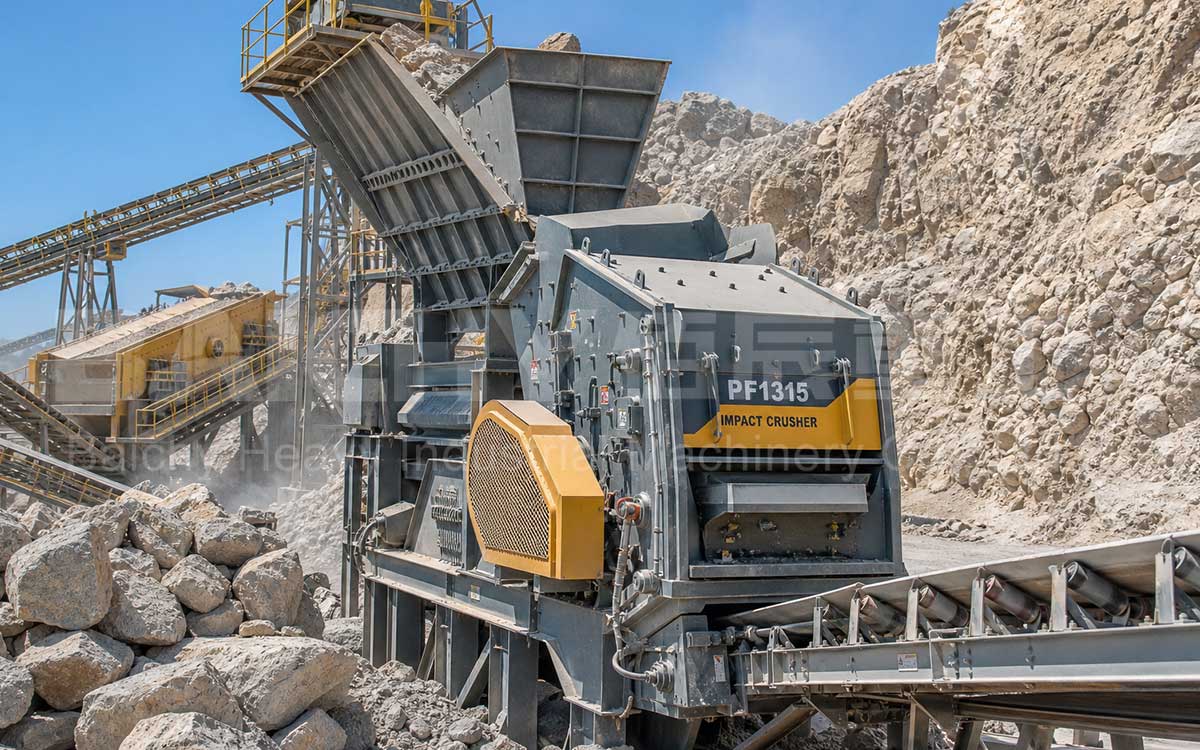
Impact Crusher
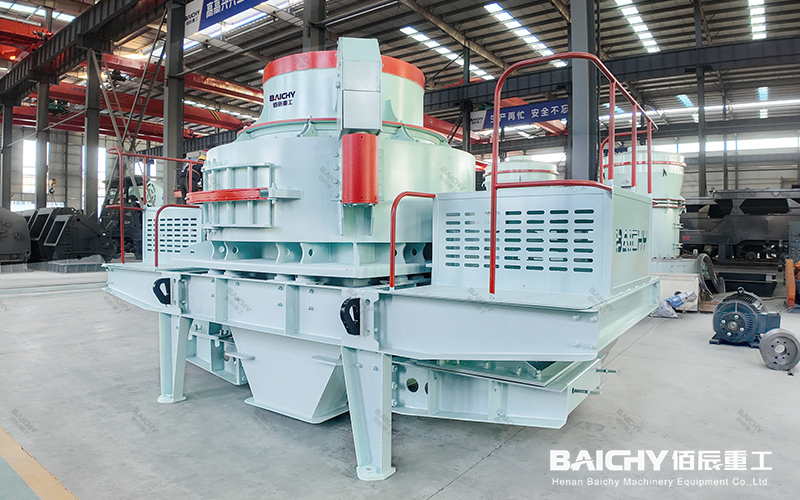
Sand Making Machine
The table below lists the theoretical capacities and particle size ranges for common equipment models:
| Equipment Type | Model Example | Max. Feed Size (mm) | Discharge Opening Adjustment Range (mm) | Theoretical Throughput (t/h) | Applicable Material Hardness |
| Multi-cylinder Hydraulic Cone Crusher | HP300 | 240 | 13–51 | 120–580 | High Hardness, Medium Hardness |
| Single-cylinder Hydraulic Cone Crusher | CH200 | 185 | 10-38 | 90-440 | High Hardness, Medium Hardness |
| Impact Crusher | PF-1620 | 500 | Adjustable Blow Bar Gap | 200–350 | Medium-to-Low Hardness |
| Vertical Shaft Impact Crusher (Sand Making) | VSI-1140 | 45 | 0–8 (Sand Making) | 200–380 |
Site Conditions and Investment Budget
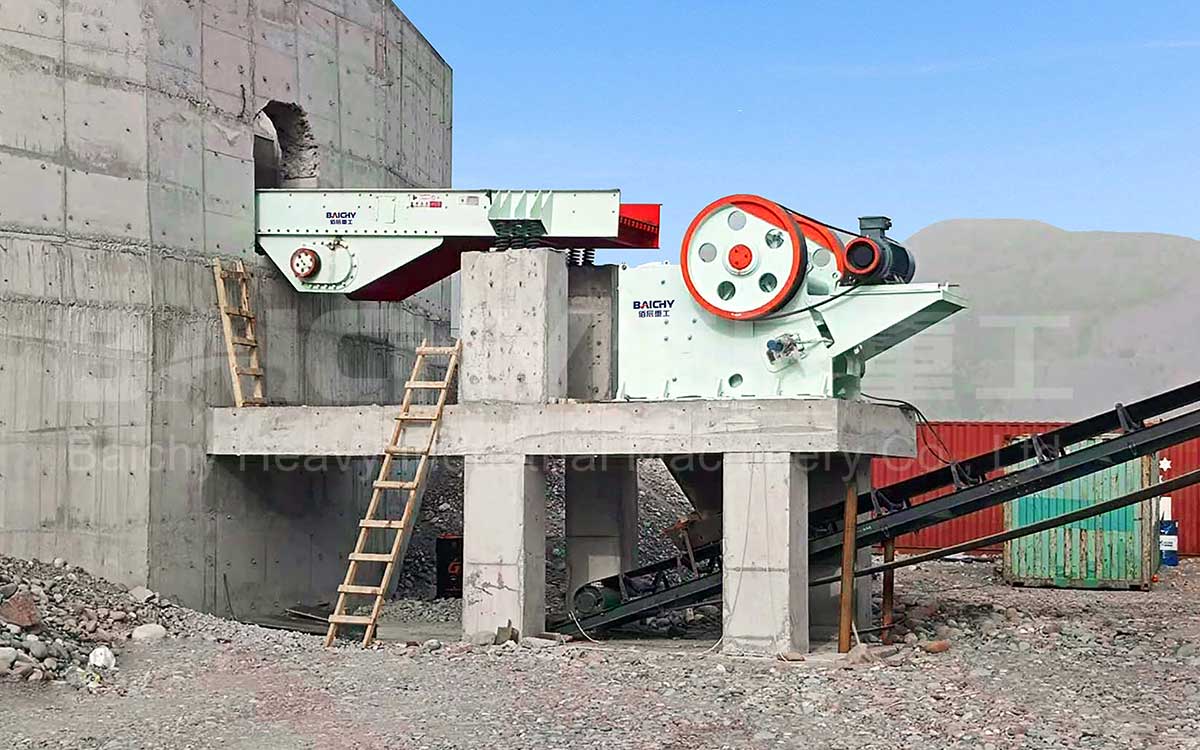
• Site Conditions: Is the site confined? Is frequent relocation required? A fixed production line is suitable for long-term, large-scale projects; however, for dispersed, short-cycle projects, [The Advantages of Mobile Tertiary Crushing Stations and Their Application in Sand & Gravel Yards] offers a more economical and efficient solution.
• Investment Budget: Do not consider only the initial equipment purchase cost; you must also evaluate long-term operating costs (such as wear parts/consumables, energy consumption, and maintenance labor). Generally, cone crushers involve a higher initial investment but lower operating costs, whereas impact crushers present the opposite scenario.
Comparison and Selection of Mainstream Tertiary Crusher Models
The primary equipment used in the tertiary crushing stage consists of cone crushers and impact crushers; choosing between the two is the core decision point in the equipment selection process.
• Cone Crusher: Its core advantage lies in its stability and wear resistance when processing high-hardness materials. Utilizing a laminated crushing mechanism, it delivers high output and uniform product particle size; however, the shape of the finished product is slightly inferior to that produced by impact crushers, and the initial system investment is higher.
• Impact Crusher: Its core advantages lie in producing well-shaped finished particles, minimizing stone dust content, and offering relatively low energy consumption. However, it experiences rapid wear when processing high-hardness materials, resulting in higher replacement frequency and costs for wear parts.
In-Depth Model Comparison: Still undecided? Please check out our feature article: [Tertiary Cone Crusher vs. Tertiary Impact Crusher: Which One Should You Choose?].
Practical Application Scenarios and Success Stories
Application Scenarios:
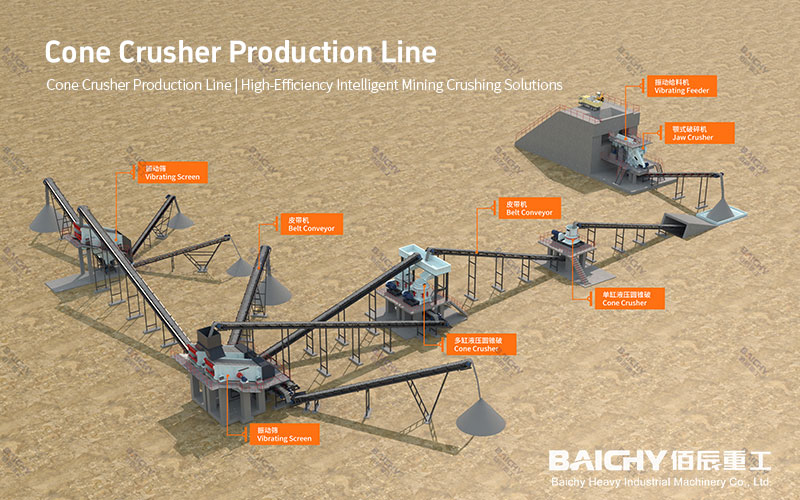
• Large-scale Sand and Aggregate Projects: Typically utilize a stationary production line configuration—"Jaw Crusher + Cone Crusher (Secondary Crushing) + Cone/Impact Crusher (Tertiary Crushing) + Sand Making Machine"—to achieve high throughput, exceptional stability, and superior aggregate gradation.
• Construction Waste Recycling: Frequently employs a process involving a "Mobile Jaw Crusher + Mobile Impact Crusher (or Integrated Mobile Crushing and Screening Unit)," leveraging the impact crusher's ability to produce well-shaped particles and effectively remove impurities.
• Mine Tertiary Crushing System Upgrades: Involves replacing older spring-type cone crushers with new, high-efficiency multi-cylinder hydraulic cone crushers to boost production capacity and increase the proportion of fine-grained material while maintaining the same power consumption.
Success Story:
A large-scale granite aggregate project in East China faced an issue where the finished product from their original tertiary crushing equipment exceeded the permissible limit for needle-like and flaky particles. Following our diagnosis, we recommended replacing the existing machinery with an HPT multi-cylinder hydraulic cone crusher. By optimizing the crushing chamber profile and utilizing inter-particle lamination crushing, we successfully maintained a production capacity of 650 t/h while reducing the content of needle-like and flaky particles in the finished product from 12% to below 8%. This resulted in a higher proportion of premium-quality aggregates, a significant increase in market selling price, and a full return on the client's investment within just one year.
Recommended Equipment Models
Based on various application scenarios, we recommend the following series of tertiary crushers:
1. HP Series Multi-cylinder Hydraulic Cone Crusher: Recommended for the tertiary crushing of high-hardness rocks (such as granite, basalt, and river pebbles) in large-scale, high-throughput operations. Its unique inter-particle lamination crushing chamber and multi-cylinder hydraulic chamber-clearing system ensure high production capacity, fine particle output, and a long service life.
2. CH Series Single-cylinder Hydraulic Cone Crusher: Featuring a compact structure and a high degree of automation, this series represents a cost-effective choice for secondary and tertiary crushing applications in medium-to-large-scale projects, while also offering convenient maintenance.
3. PF/PFW Series Heavy-Duty Impact Crushers: Recommended for the tertiary crushing or shaping of medium-to-low hardness materials—such as limestone, bluestone, and construction waste—these units are the preferred choice for projects where the shape of the finished product is a critical priority.
4. VSI Series Vertical Shaft Impact Crushers (Sand Making Machines): When the objective of tertiary crushing is the production of high-quality manufactured sand, this equipment serves as the core choice; it integrates the functions of crushing, shaping, gradation adjustment, and stone powder control.
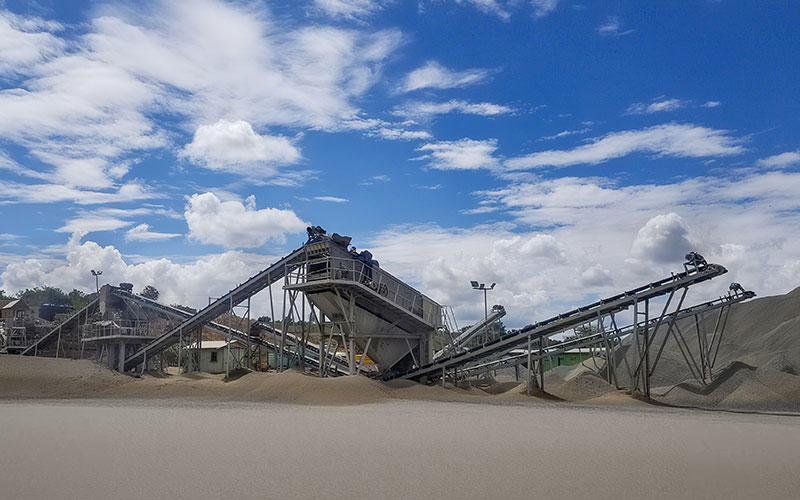
Aggregate-Crushers,-for-Rock,-Ore-&-Minerals
Frequently Asked Questions (FAQ)
Q1: What could be the reasons if the discharge particle size from the tertiary crusher does not meet specifications?
A1: Possible reasons include:
1) Severe wear on consumable parts (such as blow bars, mantle liners, or bowl liners), which require inspection and replacement;
2) Improper setting of the discharge opening gap, requiring readjustment;
3) Feed particle size that is too large, or changes in material characteristics that exceed the equipment's design parameters;
4) Belt slippage resulting in insufficient rotor or main shaft rotational speed.
Q2: Both cone crushers and impact crushers can be used for tertiary crushing; which one entails a higher initial investment?
A2: Generally, for crushers with equivalent processing capacities, the initial purchase cost of a cone crusher is higher than that of an impact crusher. This is because cone crushers feature a more complex structure and impose higher requirements regarding materials and manufacturing technology. However, when crushing high-hardness materials, the long-term cost of wear parts for a cone crusher is significantly lower than that of an impact crusher, potentially making the total cost of ownership more advantageous in the long run.
Q3: If I want to increase the production line's capacity from 300 t/h to 500 t/h, is it sufficient to simply replace the tertiary crusher?
A3: Typically, no. A production line functions as an integrated system; increasing capacity requires a holistic approach based on the "Barrel Principle" (identifying and addressing the weakest link). Merely replacing the tertiary crusher with a higher-capacity model may result in overloading upstream equipment (feeders, secondary crushers) or create bottlenecks due to insufficient capacity in downstream screening and conveying systems. A comprehensive systemic assessment and redesign are therefore required.