
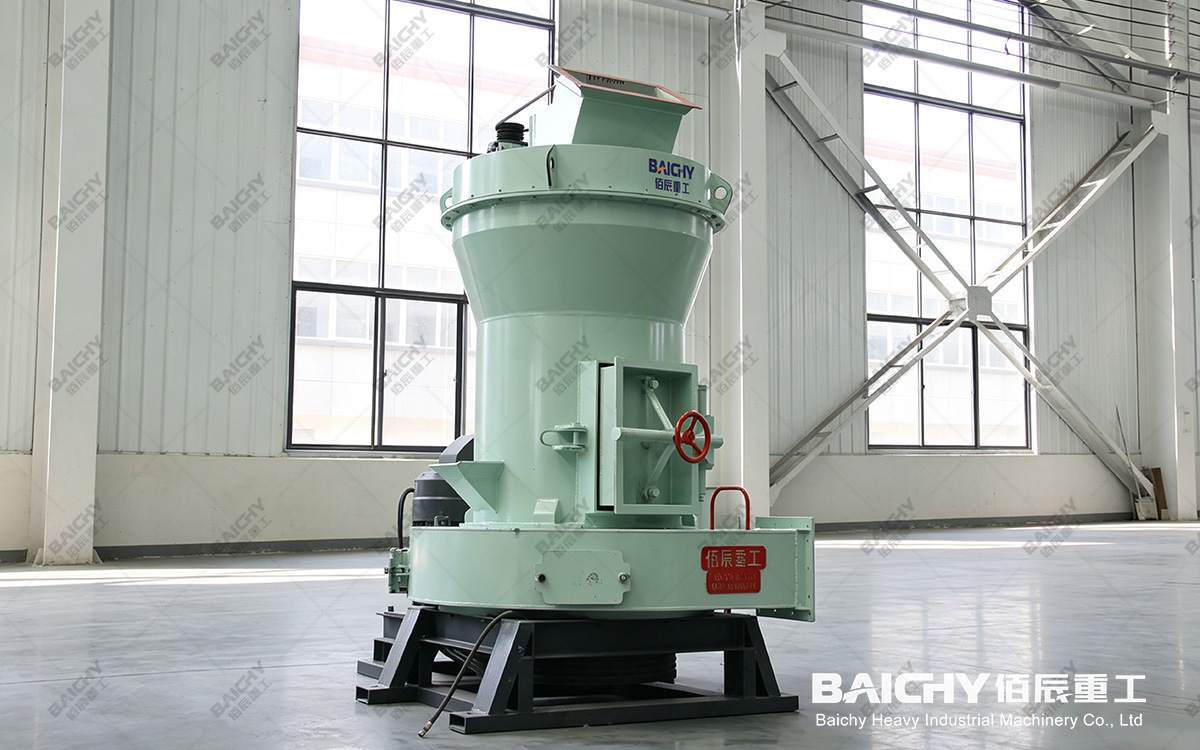
Raymond mill for copper ore
If you are specifying a small copper processing line and the sales engineer on the other end of the phone suggests a Raymond mill, your first reaction is probably skepticism. After all, Raymond mills are famous for limestone, calcite, and barite—not hard, abrasive metal ores. The honest answer is: a Raymond roller mill can dry-grind copper ore in the right duty, but it is the wrong tool for a full concentrator. This article breaks down exactly where the line is drawn.
How a Raymond mill grinds?
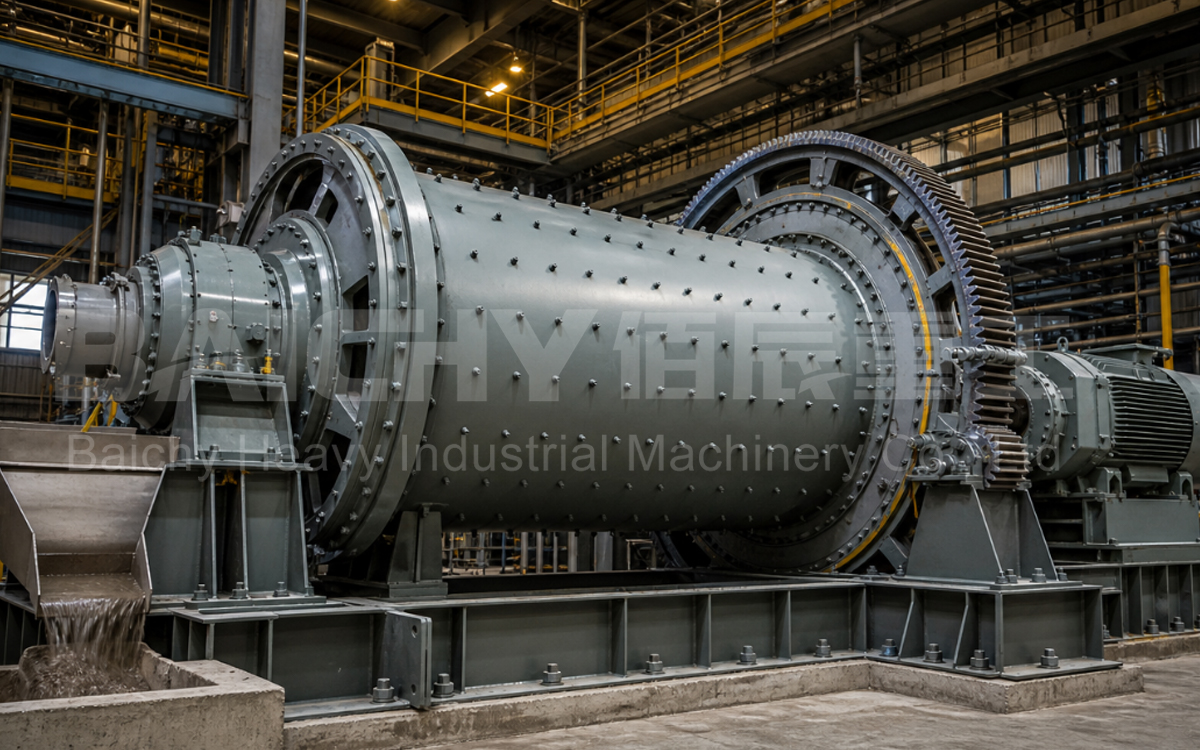
Inside a Raymond mill, several hanging grinding rollers swing outward under centrifugal force and press against a fixed ring. Material is scooped up by a shovel blade and wedged between roller and ring, where it is crushed and sheared into fines. An air current sweeps the fines up through a rotating classifier; particles too coarse drop back for another pass, while finished powder exits to a bag filter. No water is introduced at any point, which is why the machine is classified as a dry pulverizer.
Standard R-series units cover:
• Feed: 15–30 mm of pre-crushed material
• Output: 80–325 mesh by default, up to ~600 mesh on reinforced models
• Material hardness: Mohs ≤7 for the classic design, up to ~9.3 on heavy-duty versions
• Feed moisture: ≤6%
• Throughput: 0.5–20 t/h
Copper ore: soft mineral, hard rock
The copper minerals themselves are not the problem. Chalcopyrite, bornite, chalcocite, and malachite all sit between Mohs 2.5 and 4—softer than many of the non-metals a Raymond mill handles every day. What makes copper ore difficult is the gangue matrix. Porphyry and skarn orebodies are bound in quartz, feldspar, and quartzite that can run Mohs 6–7, with silica mass fractions of 60–80%. Free silica is one of the most abrasive minerals in industrial processing, and it attacks rollers, rings, and shovel blades.
• Before selecting any mill, ask for three numbers:
• Bond ball mill work index (kWh/t) — sets the energy and size.
• Bond abrasion index (Ai) — predicts liner/roller wear rate.
• Natural ore moisture — decides whether you need a dryer.
With effective bulk hardness at Mohs ≤6–7, moisture under 6%, and a target of a few tonnes per hour at 80–325 mesh, copper ore sits inside the Raymond mill's operating window. Several manufacturers already list copper ore and copper slag in their applicable-material tables.
Good fit applications
A Raymond mill is a sensible choice when:
• You run a small or pilot-scale plant (a few t/h) and want to de-risk before buying a ball mill.
• You are reprocessing copper slag, smelter residue, or flotation tails that are already friable.
• You produce copper powder or copper-oxide pigment directly, where dry powder at 200–400 mesh is the saleable product.
• The site is in an arid region where fresh water for wet ball milling is expensive or unavailable.
• You need a compact, low-CapEx unit that can be installed quickly with civil works.
The dry, pneumatic product is easy to bag, convey, or feed straight into a leaching or roasting step, which is a real operational advantage.
Poor fit applications
Look elsewhere when:
• Tonnes per hour climb past ~20. Industrial concentrators process hundreds of tonnes per hour; Raymond mills simply are not scaled for that duty.
• The ore is silica-rich and abrasive. High Ai values wear rollers and rings in a few hundred to a couple of thousand hours, and replacement cost can consume the entire capital saving.
• Moisture exceeds 6%. Ore cakes on the ring, airflow drops, and output collapses. A rotary dryer becomes mandatory.
• You need ultrafine liberation below ~20 µm. Traditional pendulum mills cannot reach that range; use a vertical roller mill, stirred mill, or ball mill with fine media.
• The downstream process is conventional wet flotation at P80 75–150 µm. A ball mill in closed cyclone circuit is still the industry default.
Building a working dry circuit
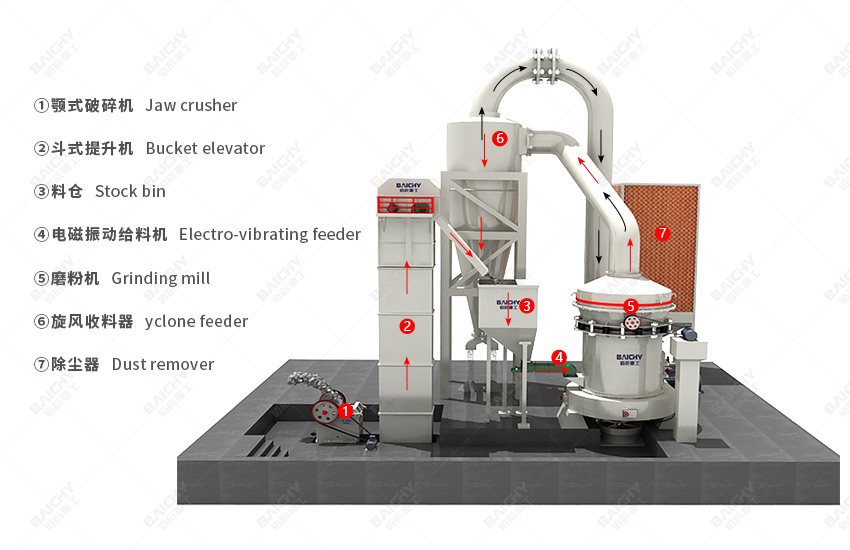
Schematic diagram of the Raymond mill process flow
To make a Raymond roller mill last on copper ore, treat the mill as one node in a dressed-up circuit:
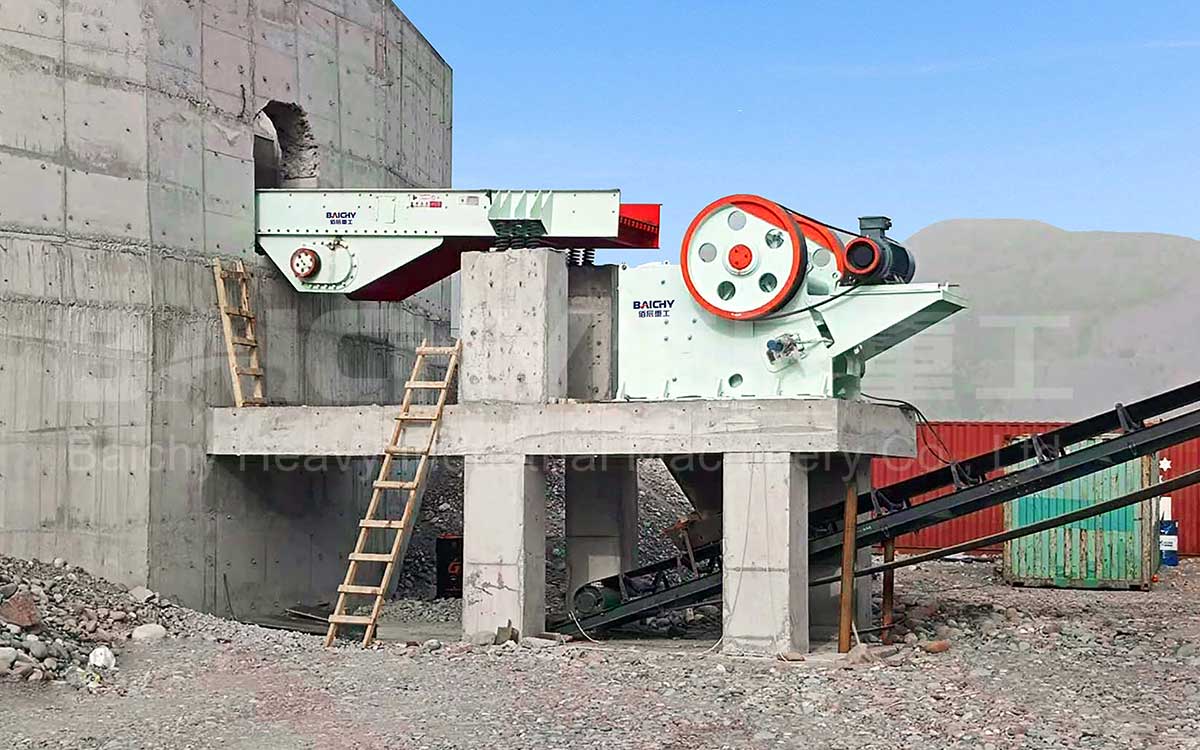
1. Pre-crush to ≤25 mm. Jaw + cone or impact crusher upstream. Oversize feed is the fastest way to kill throughput.
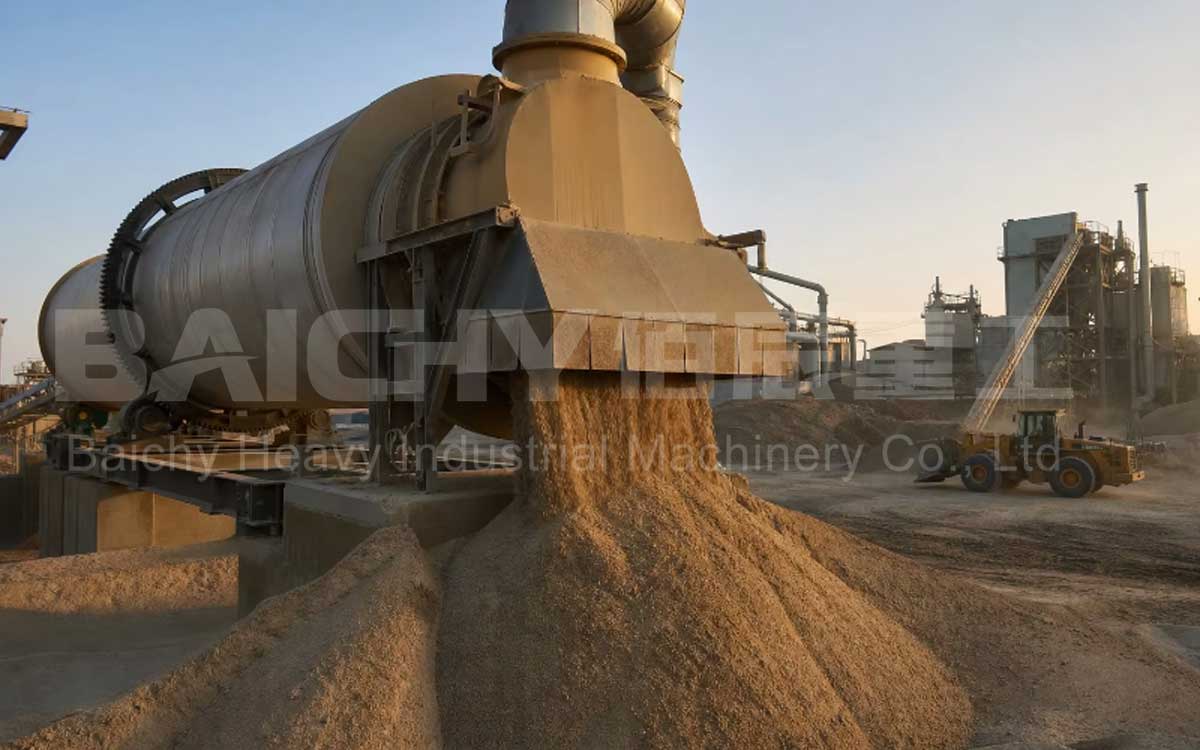
2. Dry the ore. Add a rotary dryer or inject hot air into the fan loop if surface moisture drifts above 5%.
3. Specify chrome iron or Ni-hard wear parts for rollers, rings, and shovels, and track hours to schedule replacement.
4. Fit a turbo classifier instead of static blades to hold a 325-mesh passing rate of ≥95%.
5. Run the plant under negative pressure with a baghouse; copper dust is oxidizable and must not accumulate in ductwork.
6. Do metallurgical test work first. A Bond work index and abrasion index test costs a fraction of a wrong mill purchase.
Raymond mill vs. ball mill at a glance
| Point | Raymond Mill | Ball Mill |
|---|---|---|
| Process | Dry roller compression | Wet or dry impact/attrition |
| Feed | ≤25–30 mm | ≤25–50 mm |
| Product | 80–600 mesh | 35 mesh down to ~10 µm |
| Capacity | 0.5–20 t/h | 10–1,000+ t/h |
| CapEx | Lower | Higher |
| Wear on abrasive Cu ore | High on rollers/rings | Lower per tonne |
| Water needed | None | High (slurry) |
| Best role | Small dry fine powder | Large concentrator flotation feed |
Verdict
A Raymond mill is a viable dry grinder for copper ore when the ore is dry, low-to-medium hardness, pre-crushed to 25 mm or finer, and the circuit is small (under ~20 t/h) with aggressive wear-part budgeting. It is not a substitute for the ball mill that a multi-thousand-tonne concentrator relies on. Choose it for pilot plants, slag reprocessing, copper powder production, and water-scarce sites; choose a ball mill for everything that looks like a real mine.
Baichy Heavy Industry
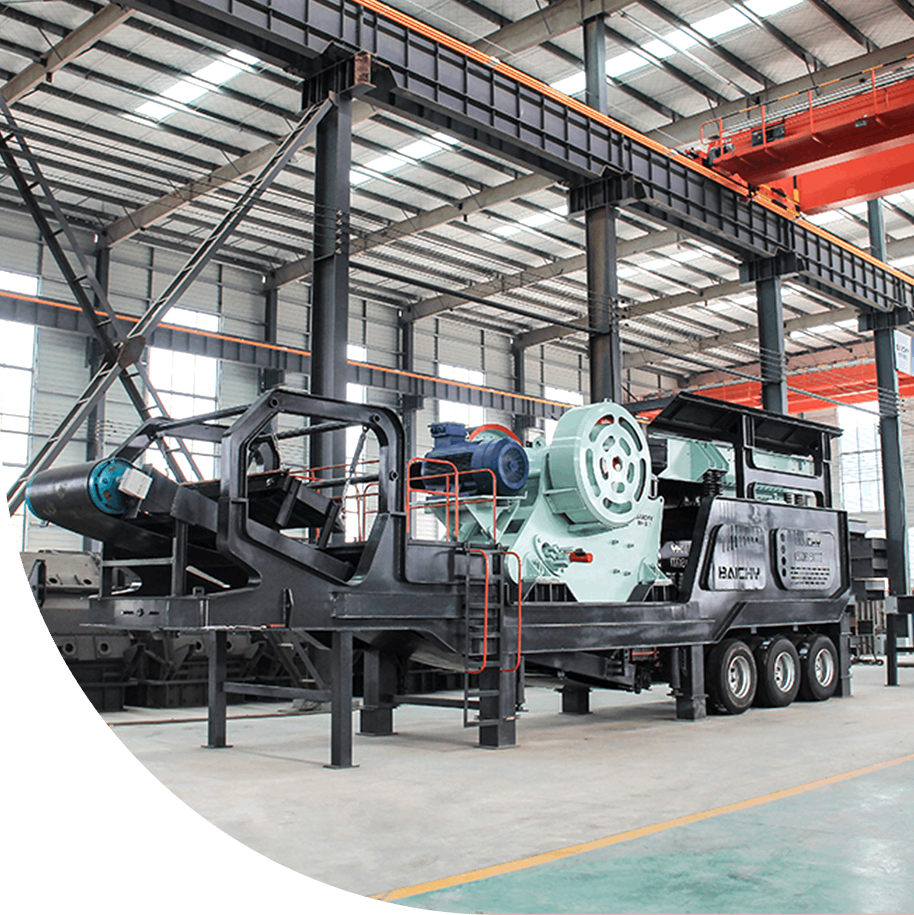
Baichy Heavy Industry is a high-tech mining equipment company integrating R&D, manufacturing, sales, and after-sales service. Focusing on crushing, grinding, and mineral processing equipment, we provide professional solutions to our customers. We are ISO9001:2015 、certified, and our products include mobile crushing palnts, crawler crushing plant, construction waste crushing plants, jaw crushers, sand making machines, cone crushers, fine crushers, grinding mills, ball mills, etc., all with reliable performance to meet diverse project needs.
Baichy Heavy Industry – Your Trusted Partner
To ensure optimal performance of your equipment, Baichy Heavy Industry offers:
- Professional on-site installation guidance
- Comprehensive operator training
- 24/7 technical support & maintenance services
Our complete after-sales service system guarantees long-term, stable operation of your machinery with minimal downtime.
Protect Your Rights – Only Use Official Channels
To avoid scams and ensure authentic support, contact us exclusively through:
• Official Website: www.baichychina.com
• WhatsApp: +8615093222637
• Email: [email protected]
Your satisfaction is our priority – expect prompt, professional service every time.
(Note: Beware of unauthorized third parties claiming to represent Baichy. Always verify through official contacts.)