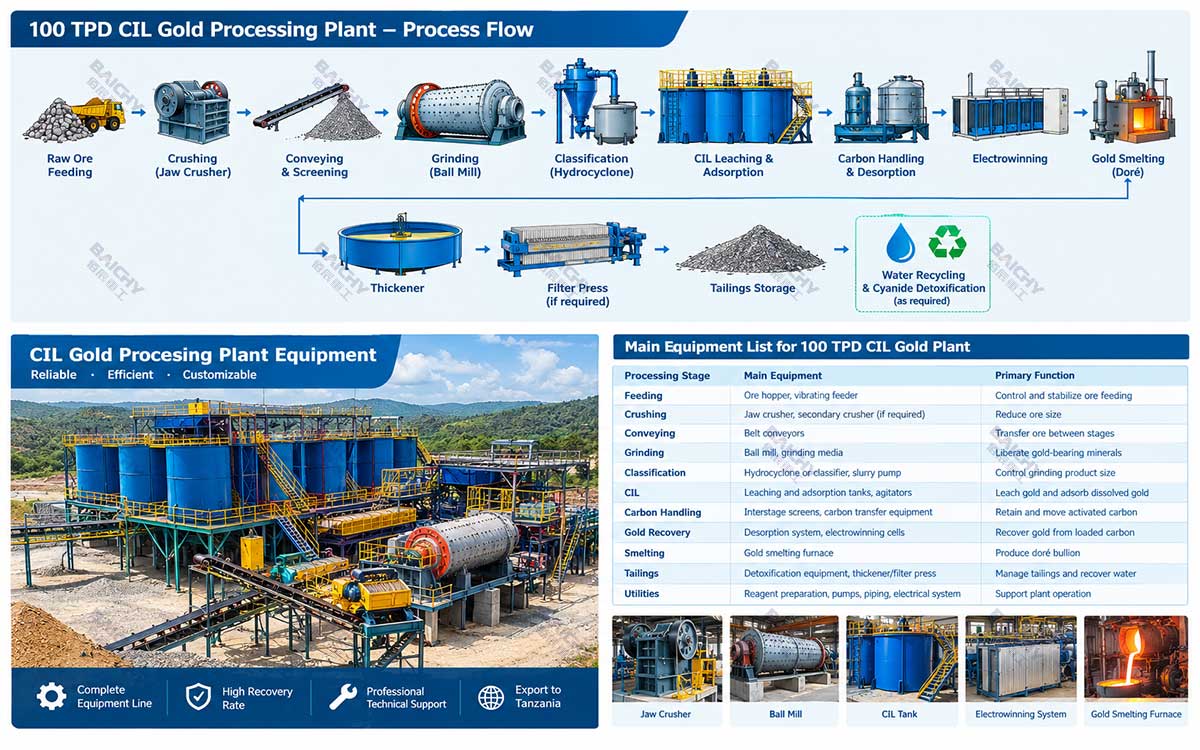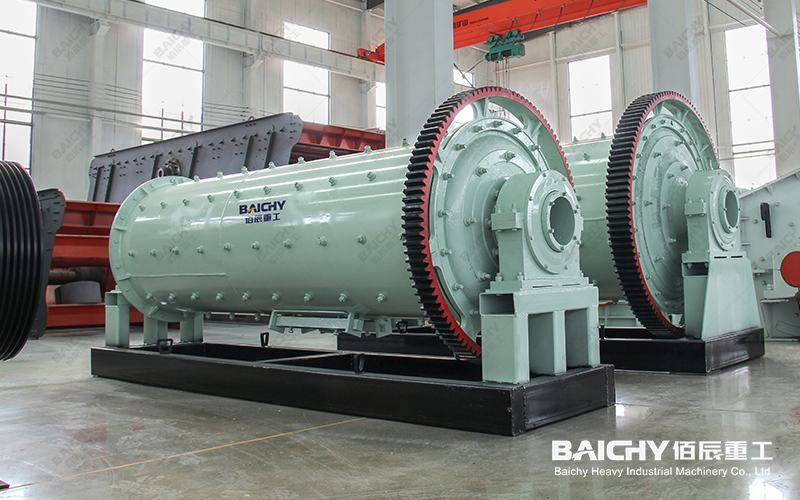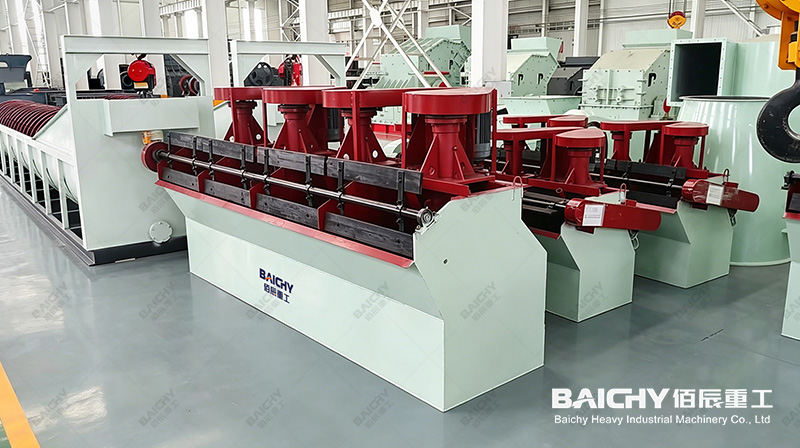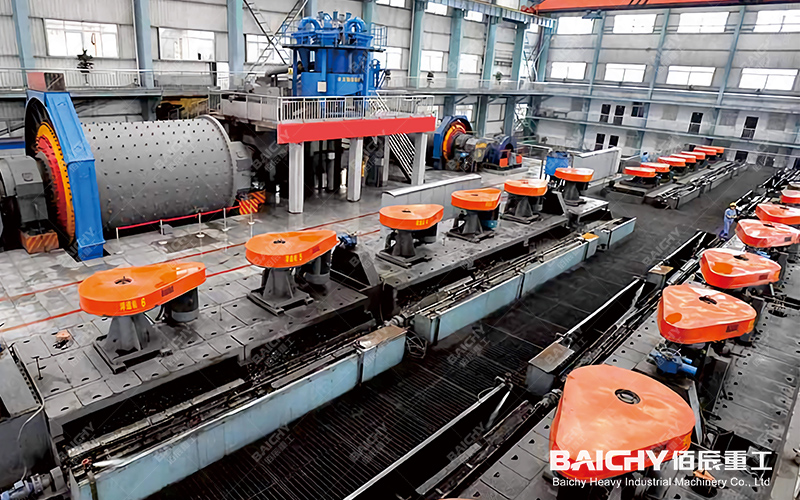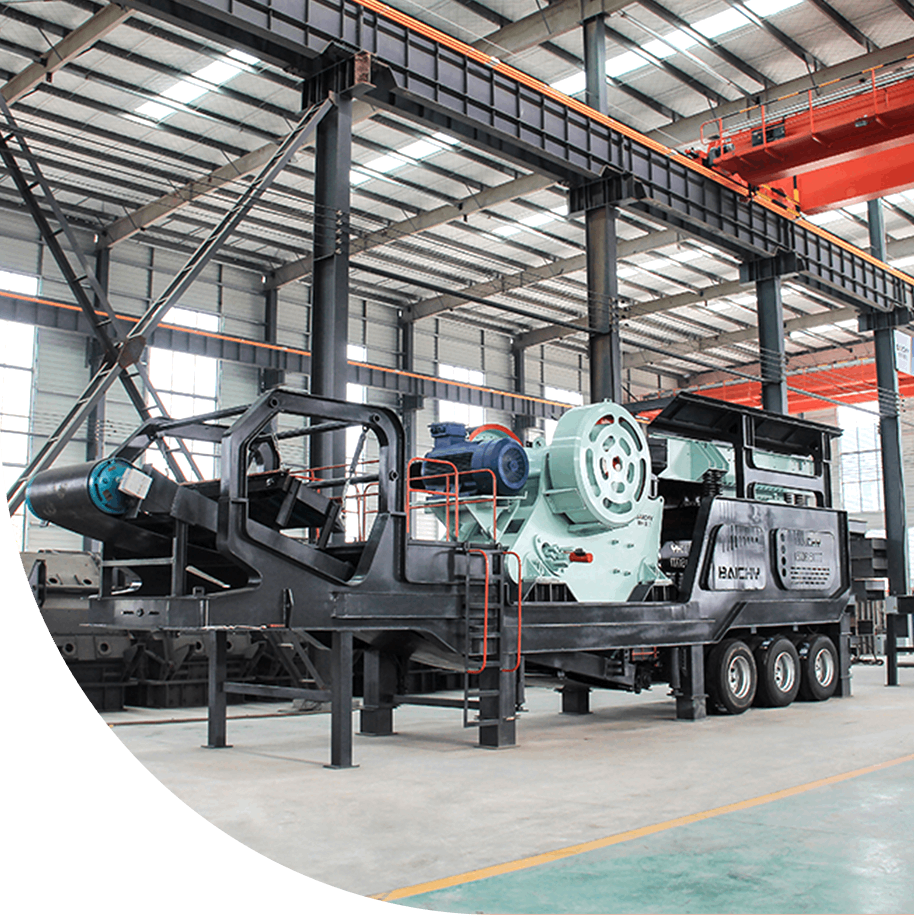

VSI Sand Maker
When selecting a vertical shaft impact crusher, many buyers focus on two questions: How much material can the machine process, and what particle size will it produce? These questions are closely related. A VSI sand maker does not produce one fixed size under every operating condition. Its output depends on the model, feed gradation, rotor speed, rock properties, feeding method, crushing chamber configuration, and the screening circuit connected to the machine.
A properly designed VSI circuit can produce high-quality manufactured sand, improve aggregate shape, and reduce the proportion of elongated or flaky particles. It can also produce several saleable sizes when combined with a multi-deck vibrating screen. This guide explains the typical output range, expected product sizes, and the main ways to control the final gradation.
What Does “Output Range” Mean for a VSI Sand Maker?
The term “output range” can refer to two different measurements:
• Capacity: the amount of material processed per hour, usually stated in tonnes per hour.
• Product size: the size distribution of the material discharged from the crusher and classified by the downstream screen.
These values should not be confused. A machine may have a high nominal capacity, but the actual capacity can decrease when the feed is hard, the required product is finer, or the circuit has a high recirculating load. Likewise, a VSI may discharge a broad mixture of sizes, while the final 0–5 mm manufactured sand is produced after screening and, if necessary, returning oversize material to the crusher.

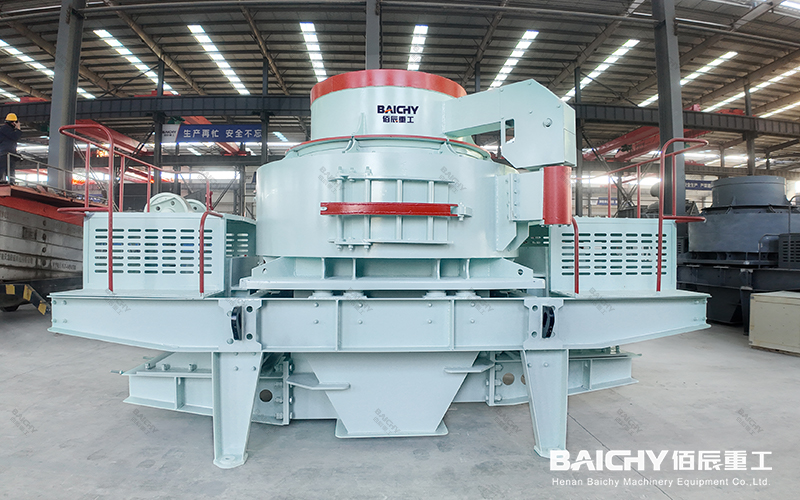
Structural diagram of a sand-making machine
Main factors affecting capacity
The following conditions have the greatest influence on VSI output:
• VSI model, rotor diameter, and motor power
• Feed size and feed gradation
• Rock hardness, abrasiveness, and moisture content
• “Rock-on-rock” or “rock-on-steel” crushing mode
• Rotor speed and feed rate
• Percentage of material returned through the recirculation loop
• Screen efficiency and the number of product sizes required
For this reason, a supplier should confirm capacity against the actual material and target product specification rather than quote a single number without conditions.
What Finished Particle Sizes Can a VSI Produce?
A VSI sand maker is commonly used to produce manufactured sand in the 0–5 mm range. With appropriate control and classification, the circuit can also target a finer 0–3 mm fraction or separate the material into several products, such as 0–3 mm, 3–5 mm, and 5–10 mm. The exact percentage in each fraction depends on the feed and operating settings.
The crusher itself normally produces a mixed discharge. The vibrating screen determines which particles become final products and which particles are returned for additional crushing. Therefore, the final particle size should be evaluated from the complete crushing and screening plant, not from the VSI alone.、
| Product target | Typical use | Main control point | Recommended circuit consideration |
|---|---|---|---|
| 0–3 mm | Fine manufactured sand, mortar, selected concrete applications | Rotor speed and fine screening | Use efficient fine screening and control dust or excess fines |
| 0–5 mm | General manufactured sand and concrete sand | Balanced rotor speed and feed rate | Use a closed circuit when stable gradation is required |
| 3–5 mm | Coarse sand or fine aggregate | Screen aperture and recirculation | Separate this fraction after crushing |
| 5–10 mm | Fine aggregate and aggregate blending | Screen classification | Combine with other sizes according to the required mix design |
These size ranges are common product categories rather than guaranteed results for every installation. Final gradation should be confirmed through sample testing and a site-specific process design.
How Is the Particle Shape of VSI Sand?
The main advantage of a vertical shaft impact crusher is its ability to improve particle shape. High-speed impact breaks and reshapes the feed material, often producing more cubical particles with fewer elongated or flaky pieces than a conventional compression-only process.
Better particle shape can improve packing behavior and aggregate performance in concrete and asphalt mixtures. However, shape quality is influenced by the feed gradation, the type of rock, rotor condition, crushing chamber design, and operating speed. A VSI cannot compensate for unsuitable feed material or poor screening by itself.
In a well-controlled operation, the VSI may help to:
• Produce more cubical manufactured sand and fine aggregate
• Reduce elongated particles in the final product
• Improve the surface texture and particle interlocking of aggregate
• Create a more useful feed for concrete and asphalt blending
• Make the final gradation easier to adjust through closed-circuit screening
The best result is achieved when the VSI is used as part of a complete process that includes controlled feeding, screening, conveying, dust management, and quality testing.
What Controls VSI Particle Size?
1. Rotor speed
Rotor speed changes the impact energy applied to the material. Increasing the speed generally increases the crushing intensity and can raise the proportion of fine particles. Reducing the speed may preserve more coarse material and lower energy use, but the product may become too coarse if the speed is reduced excessively.
Speed should be adjusted gradually while monitoring motor current, vibration, product gradation, and wear. The highest possible speed is not automatically the best setting because it may increase fines, power consumption, and wear-part consumption.
2. Feed rate
Stable, continuous feeding is essential for consistent particle size. If the feed rate is too low, the crushing chamber may not maintain the desired material flow and the product can become less stable. If the feed rate is too high, the machine may overload, the discharge may become coarser, and the crushing chamber may not operate efficiently.
A variable-speed feeder can help maintain a steady feed and reduce sudden changes in the product curve.
3. Feed size and gradation
Oversized feed places greater stress on the rotor and wear parts and can increase the amount of coarse product. The upstream jaw crusher, cone crusher, or impact crusher should produce a controlled feed that meets the VSI's maximum feed-size requirement.
A more consistent feed gradation usually makes it easier to stabilize the final sand curve and avoid excessive recirculation.
4. Rock-on-rock or rock-on-steel operation
In rock-on-rock operation, particles collide with other particles inside the crushing chamber. This mode is often selected when a good shape and lower wear rate are important, especially for suitable hard and abrasive rock.
In rock-on-steel operation, material impacts a wear surface more directly. This can provide stronger crushing action in certain applications, but it may also increase wear and change the amount of fines produced. The correct mode depends on rock properties and the required product specification.
5. Screening and return load
The screen is one of the most important components for final product control. A multi-deck screen can separate the discharge into different commercial sizes. Oversize material can be returned to the VSI to form a closed circuit, while acceptable products are sent to separate stockpiles or bins.
If the screen is blinded, damaged, incorrectly tensioned, or overloaded, the final particle size will become unstable even when the VSI is operating correctly.

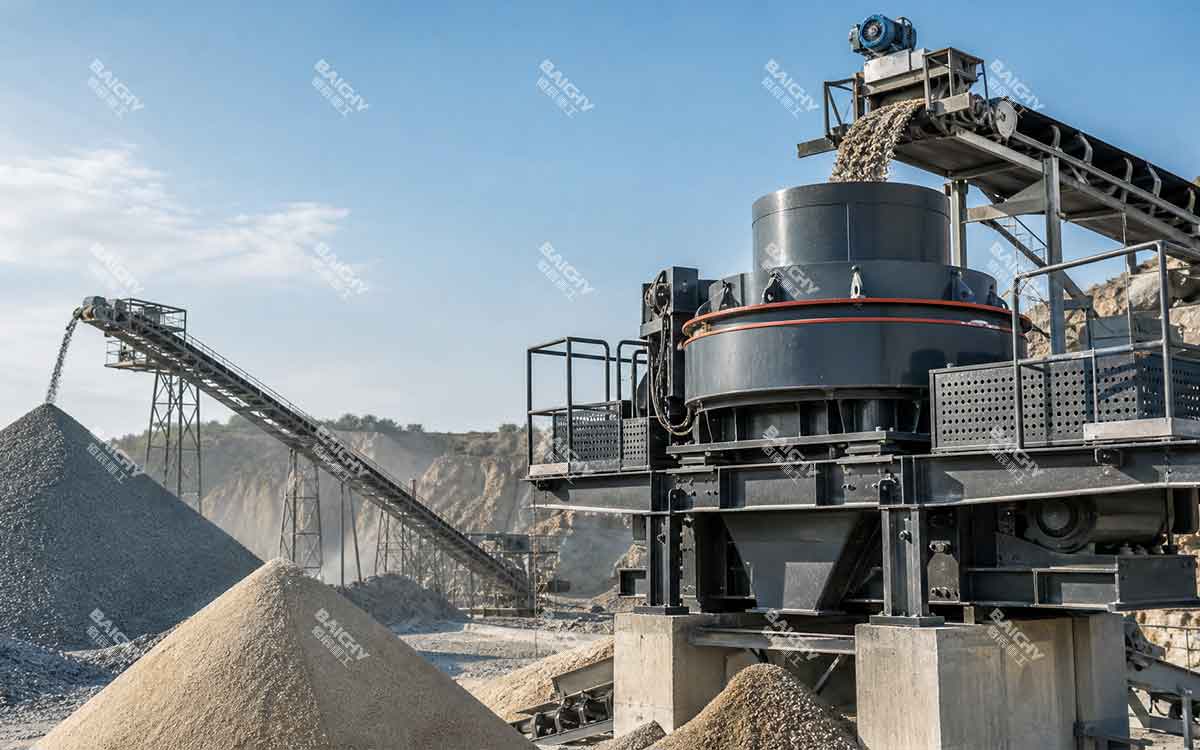
Customer site featuring a sand-making machine
How to Produce More Consistent 0–5 mm Manufactured Sand?
A practical closed-circuit arrangement may include a feed hopper, vibrating feeder, primary and secondary crushing equipment, VSI sand maker, vibrating screen, conveyors, and a return conveyor for oversize material. Depending on the application, the plant may also include a sand washer, air classifier, dust collector, or moisture-control system.
To improve consistency:
• Keep the feed rate steady and avoid sudden surges.
• Control the maximum feed size before material enters the VSI.
• Start with a moderate rotor speed and adjust it after checking test results.
• Select screen apertures according to the required product gradation.
• Return oversize material instead of allowing it to enter the final sand stockpile.
• Inspect the rotor tips, distributor plates, anvils, and other wear parts regularly.
• Test the finished sand for grading, fines, moisture, and contamination.
The correct setting is not determined by visual appearance alone. Laboratory testing and regular sieve analysis provide a more reliable basis for process adjustment.
Why Is VSI Output Particle Size Unstable?
Unstable product size usually indicates a change somewhere in the feed, crusher, or screening system. Common causes include:
• Irregular or interrupted feeding
• A sudden change in feed hardness or moisture
• Excessive feed size from the upstream crusher
• Incorrect rotor speed
• Worn rotor tips or other wear parts
• Screen blockage, broken mesh, or excessive screen loading
• An increase in return load
• Material build-up in the chute or transfer point
The troubleshooting process should begin with the feed and screen because these areas can create symptoms that appear to be caused by the VSI. Operators should compare current motor current, vibration, feed rate, screen performance, and product test results with normal operating data.
VSI-Sand-Maker-Output-Range-&-Particle-Size-Guide
How Should Buyers Choose a VSI Sand Maker?
Before requesting a quotation, prepare the following information:
• Raw material type and estimated hardness
• Maximum feed size and feed gradation
• Required capacity in tonnes per hour
• Target product sizes, such as 0–3 mm or 0–5 mm
• Required percentage of fine sand
• Whether aggregate shaping is also required
• Moisture content and presence of clay or other impurities
• Number of final products and available stockpile space
• Whether washing, air classification, or dust collection is needed
A supplier can then recommend a suitable VSI model and supporting equipment. A sample test is especially valuable when the customer has strict requirements for fineness modulus, fines content, particle shape, or product grading.
Conclusion
A VSI sand maker can commonly be used to produce 0–5 mm manufactured sand, 0–3 mm fine sand, and several screened aggregate fractions. However, the final particle size is not fixed by the crusher model alone. Rotor speed, feed rate, feed size, rock properties, crushing mode, screen efficiency, and return load all influence the result.
The main strength of a VSI is its ability to combine fine crushing with particle shaping. To obtain stable, saleable products, the machine should be installed in a properly designed closed-circuit plant and operated with regular feed control and sieve analysis. When selecting equipment, provide the raw material, capacity, and target gradation so the process can be matched to the actual application.
Frequently Asked Questions
1. Can a VSI sand maker produce 0–5 mm manufactured sand?
Yes. A VSI is widely used for producing a 0–5 mm manufactured sand fraction. The final percentage in this range depends on the feed material, rotor speed, screen configuration, and whether oversize is returned to the crusher.
2. Can a VSI produce 0–3 mm fine sand?
Yes, but a higher fine-sand proportion may require appropriate rotor-speed adjustment, efficient fine screening, and a controlled recirculation loop. A sand washer or air classifier may also be needed when the specification limits dust or requires tighter control of fines.
3. Is a finer VSI product always better?
No. The best gradation depends on the end use. Excessive fines can increase water demand, affect workability, change the mix design, and raise energy consumption. The target should be based on the requirements of concrete, mortar, asphalt, or another application.
4. Why does the same VSI produce different particle sizes at different times?
Changes in feed size, hardness, moisture, feed rate, rotor speed, wear-part condition, screen performance, or return load can all change the product curve. Regular feed control and sieve analysis help identify the cause.
5. How can I improve VSI particle shape and product consistency?
Use a properly prepared feed, maintain steady feeding, select the appropriate crushing mode, keep the rotor and wear parts in good condition, and use a correctly sized closed-circuit screen. A sample test can help confirm the most suitable operating parameters for the material.
Baichy Heavy Industry
Baichy Heavy Industry is a high-tech mining equipment company integrating R&D, manufacturing, sales, and after-sales service. Focusing on crushing, grinding, and mineral processing equipment, we provide professional solutions to our customers. We are ISO9001:2015 Certified, and our products include mobile crushing palnts, crawler crushing plant, construction waste crushing plants, jaw crushers, sand making machines, cone crushers, fine crushers, grinding mills, ball mills, etc., all with reliable performance to meet diverse project needs.
Baichy Heavy Industry – Your Trusted Partner
To ensure optimal performance of your equipment, Baichy Heavy Industry offers:
- Professional on-site installation guidance
- Comprehensive operator training
- 24/7 technical support & maintenance services
Our complete after-sales service system guarantees long-term, stable operation of your machinery with minimal downtime.
Protect Your Rights – Only Use Official Channels
To avoid scams and ensure authentic support, contact us exclusively through:
• Official Website: www.baichychina.com
• WhatsApp: +8615093222637
• Email: [email protected]
Your satisfaction is our priority – expect prompt, professional service every time.
(Note: Beware of unauthorized third parties claiming to represent Baichy. Always verify through official contacts.)