As the characteristics of global gold ores become increasingly complex, achieving large-scale, low-energy production while maintaining high recovery rates has become a core objective for mining investments. Recently, Baichy Heavy Industry officially unveiled the process flow diagram for a complete CIL (Carbon-in-Leach) gold processing system designed for a capacity of 2,000 TPD (tonnes per day). Utilizing an advanced process—featuring multi-stage crushing, closed-circuit grinding, and parallel fine separation and carbon leaching—this system marks a new milestone in the integrated delivery of large- and medium-scale gold processing plants.
I. Process Logic: Six Technical Closed-Loop Stages from Hard Rock to Gold Bullion
This 2,000 TPD gold CIL production line employs the mature and highly efficient Carbon-in-Leach process, combining cyanide leaching with activated carbon adsorption. The process flow encompasses the following six core stages:
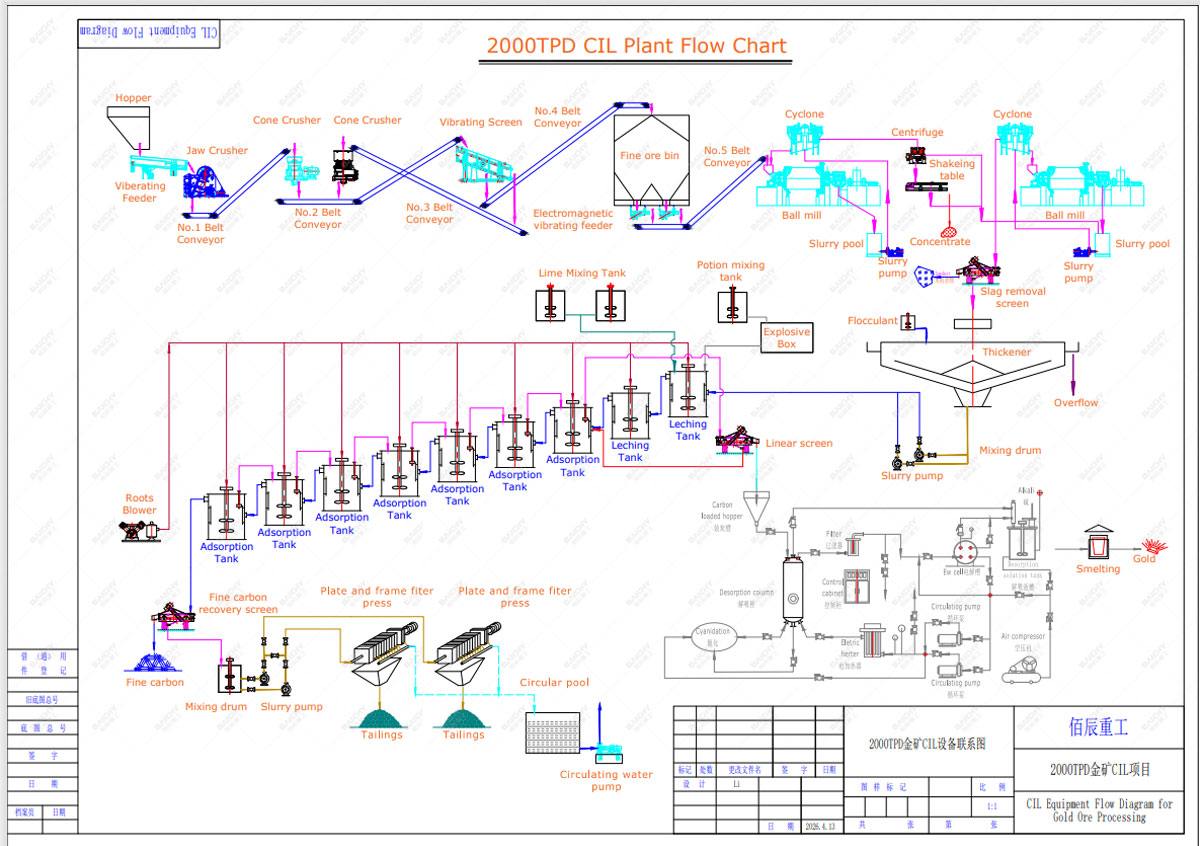
2000TPD Gold CIL Plant Flow Chart by Baichy Heavy Industry
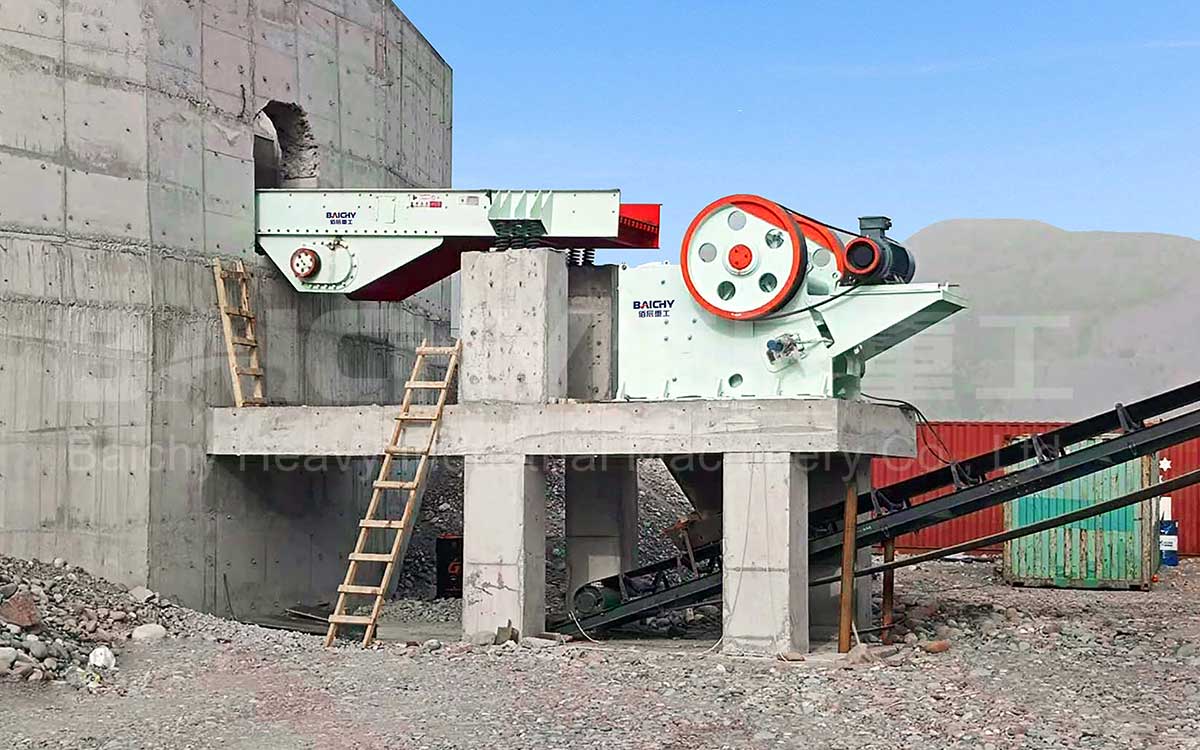
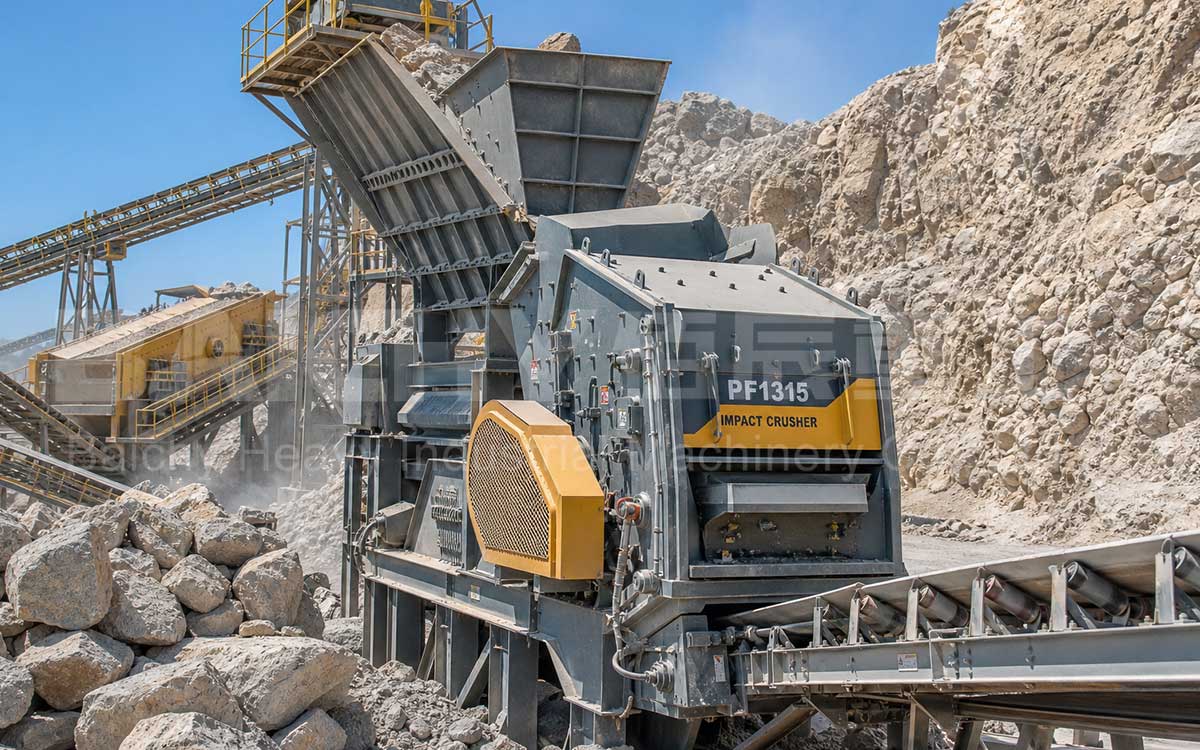
1. "Jaw Crusher + Cone Crusher" Three-Stage Crushing System: To address the high hardness of gold ore, the system utilizes a jaw crusher for primary crushing, followed by two cone crushers for secondary and tertiary closed-circuit crushing. Through a screening feedback loop, the feed size for the grinding stage is controlled to below 12 mm, significantly reducing electricity consumption during grinding.
2. Dual Ball Mill Closed-Circuit Grinding and Classification: The system is configured with two high-efficiency ball mills operating in a closed circuit with hydrocyclone clusters. The slurry fineness (P80) reaches 200 mesh (75 μm) or finer, providing the physical basis for the complete liberation of gold.
3. Gravity Separation (Pre-recovery) Module: Centrifugal concentrators and shaking tables are integrated into the grinding circuit. By recovering a portion of coarse-grained free gold before the slurry enters the leaching system, the load on the subsequent CIL system is effectively reduced.
4. CIL Core Array: The system features a series of leaching and adsorption tanks. High-pressure air supplied by Roots blowers ensures vigorous agitation and oxygenation of the slurry within the tanks, allowing the cyanidation reaction and activated carbon adsorption to proceed simultaneously.
5. High-efficiency desorption-electrolysis system: Gold-loaded carbon enters the desorption column, where gold ions are rapidly stripped under high-temperature and high-pressure conditions (using non-cyanide or low-cyanide reagents). Gold powder is subsequently produced in a high-frequency electrolytic cell, enabling high-purity gold recovery within a timeframe of just a few hours.
6. Eco-friendly dry stacking and reagent recycling: Thickeners are used to increase slurry concentration, followed by plate-and-frame filter presses to achieve dry stacking of tailings. Filtrate is returned to the circulation tank, enabling process water recycling and "zero discharge" of reagents.
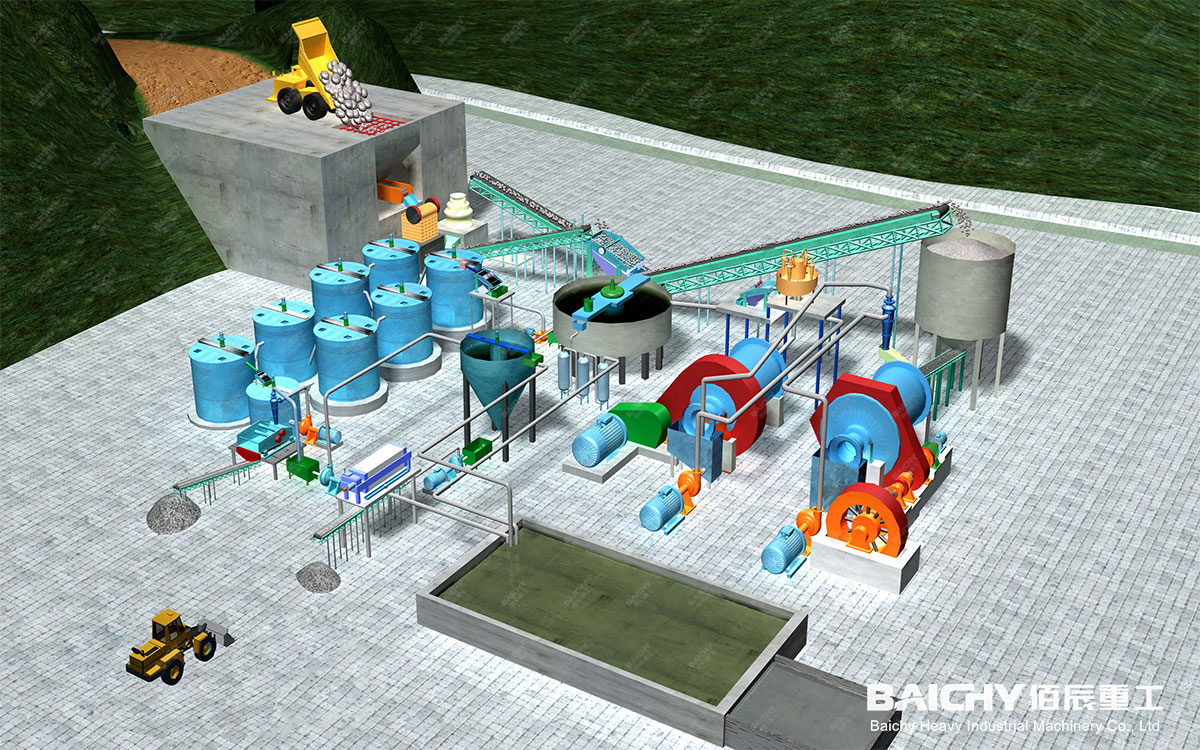
2000TPD Gold CIL Plant Flow Chart by Baichy Heavy Industry
II. Core Equipment Configuration List (2000 TPD Capacity)
| Stage | Core Equipment | Key Technical Functions |
| Crushing & Screening | Jaw crusher / Cone crusher / Vibrating screen | Three-stage closed-circuit crushing; handles hard rock feed and produces ultra-fine particle sizes. |
| Grinding & Classification | Overflow ball mill (x2) / Hydrocyclone cluster | Closed-circuit fine grinding; ensures full mineral liberation and improves leaching rates. |
| Gravity Separation | Centrifugal concentrator / Shaking table | Pre-recovery of coarse gold; shortens recovery cycles and reduces reagent loss. |
| Leaching & Adsorption | High-efficiency agitated leaching tank / Adsorption tank / Roots blower | Dual-action pneumatic and mechanical agitation; ensures efficient leaching kinetics. |
| Gold Sludge Recovery | Desorption column / Electric heater / Electrolytic cell (EW Cell) | High-temperature, high-pressure desorption and electrolysis; produces high-purity gold sludge with a high degree of automation. |
| Tailings Treatment | Thickener / Plate-and-frame filter press | Solid-liquid separation for dry tailings stacking; closed-loop circulation of reagents and process water. |
III. Core System Advantages: Data-Driven Mine Profitability
1. Ultra-high recovery rate: Through the combined assurance of gravity separation and CIL (Carbon-in-Leach), the comprehensive gold recovery rate for both oxidized and primary ores is maintained at a high level of 92%–98%.
2. Logistics and Energy Optimization: The conveyor belt systems (Nos. 1–5) feature precisely calculated gradients and belt speeds; combined with a ship-style chassis or a compact layout, they significantly reduce the processing plant's footprint.
3. Reagent Consumption Control: An automated reagent mixing system precisely controls the dosage ratios of cyanide and lime. By integrating reclaimed water from tailings pressure filtration, operating costs are reduced by over 15%.
4. Environmentally Friendly Design: Designed to meet the environmental regulations of major mining jurisdictions worldwide, the solution natively supports dry-stack tailings processing, eliminating leakage risks and complying with green mine construction standards.
IV. Conclusion
Baichy Heavy Industry offers more than just inpidual pieces of equipment; we provide full-lifecycle delivery for mining projects, ranging from ore sample testing and process design to equipment installation and commissioning. The launch of this 2,000 TPD gold CIL (Carbon-in-Leach) process solution embodies our spirit of "hardcore technology and pragmatic industrial practice."
2000 TPD Gold CIL Processing Plant: Frequently Asked Questions (FAQ)
Q1: What are the advantages of a 2000 TPD production scale regarding gold recovery rates?
A: A capacity of 2000 TPD (tonnes per day) represents a medium-to-large scale of mineral processing. At this scale, the system integrates a redundant design featuring "dual ball mills + gravity separation + multi-stage CIL," ensuring that the ore achieves a mineral liberation degree of over 80% (P80 < 75μm) during the grinding and classification stage. Combined with the simultaneous adsorption characteristics of the CIL process, this solution stabilizes the overall recovery rate for oxidized and medium-grade ores between 92% and 98%; compared to smaller plants, it significantly lowers unit processing costs and gold loss rates.
Q2: What types of gold ore is this CIL solution suitable for?
A: This comprehensive process solution is highly adaptable and particularly suitable for:
1. Oxidized ores requiring high recovery rates.
2. Gold ores with high clay content or friable characteristics (the CIL carbon-in-leach method effectively overcomes filtration challenges caused by slurry viscosity).
3. Deposits containing associated coarse-grained gold: Our solution incorporates a centrifugal gravity separation module prior to leaching, allowing for the early recovery of 30%–50% of liberated gold and reducing the load on the cyanidation system. Note: For highly refractory gold ores (such as those with high arsenic and sulfur content), we recommend combining this with pre-oxidation or roasting processes.
Q3: How does the system meet environmental compliance requirements regarding the use of cyanide?
A: Environmental protection is a fundamental priority for Baichen's mineral processing solutions. We integrate the following three core environmental technologies:
• Tailings filter-press and dry-stacking system: Plate-and-frame filter presses reduce tailings moisture content to below 15%, while filtrate and residual reagent solutions are 100% recycled into the process water tank, achieving zero discharge during production.
• High-efficiency desorption system: Employs a high-temperature, high-pressure cyanide-free or low-cyanide desorption process, thereby reducing the total volume of reagents used.
• Automated Reagent Dosing Control: Precisely calculates the ratio of lime to cyanide, eliminating discharge pressures caused by excessive dosing at the source.
Q4: What are the primary operating costs (OPEX) for this system?
A: For a 2,000 TPD capacity plant, operating costs consist mainly of the following three components:
• Power Consumption: High-efficiency cone crushers enable a "more crushing, less grinding" approach, significantly reducing the proportion of electricity consumed by ball mills.
• Steel Ball and Liner Wear: The use of highly wear-resistant alloy components (such as Mn18Cr2) extends the maintenance intervals for the grinding system.
• Reagent Costs: Chemical procurement costs can be reduced by approximately 15% through reagent recovery within the CIL process and the recycling of process water.
Q5: How long does the process take from design to full production?
A: As an integrated delivery project, the typical timeline is as follows:
• Solution Customization and Optimization: 1–2 weeks (based on test reports of the client's ore samples).
• Equipment Manufacturing and Assembly: 8–12 weeks (this period can be shortened if standard components are available in stock).
• On-site Installation and Commissioning: 4–8 weeks. Baichy Heavy Industry can provide on-site guidance from overseas technical experts to ensure a rapid transition from "design drawings" to "finished gold ingots."