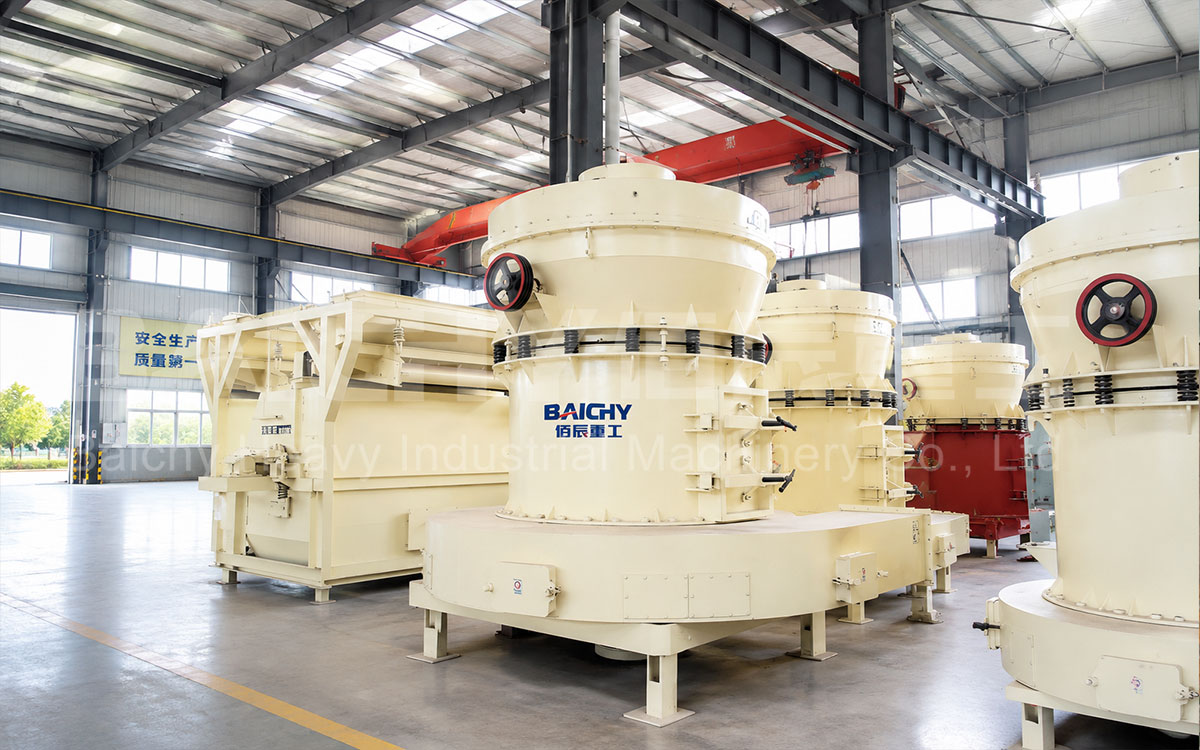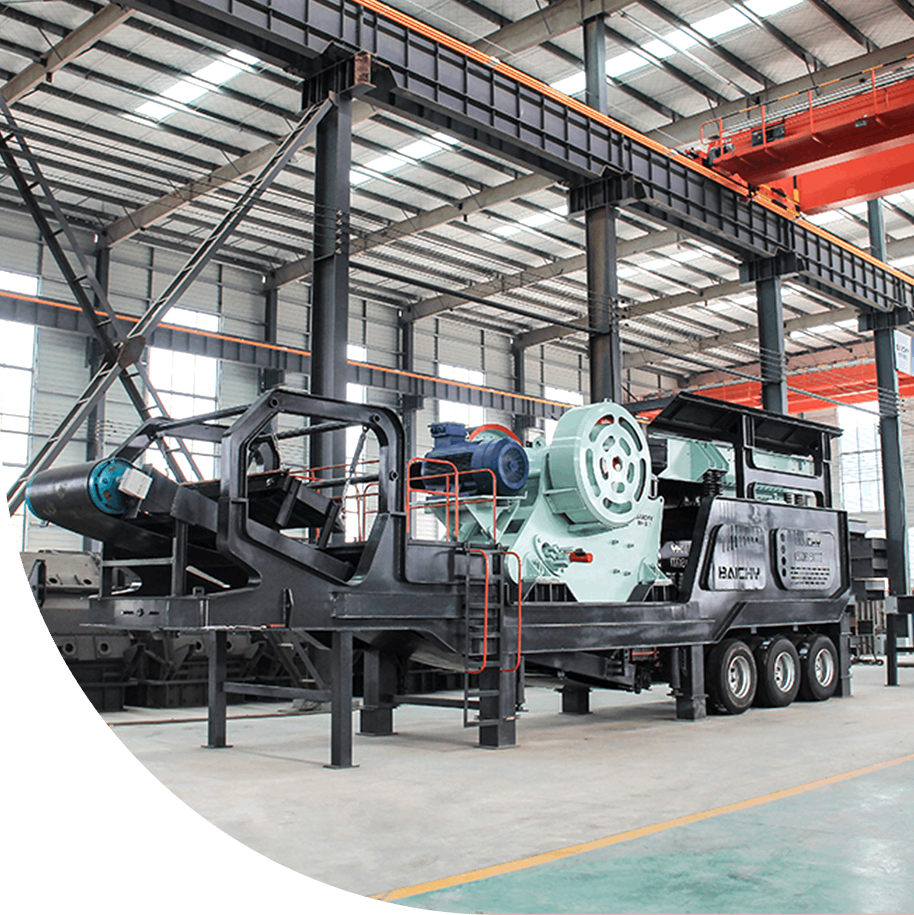

A "stone crusher" is not merely a single machine but an equipment system defined by processing stages, operating principles, and physical configurations. To understand the types of stone crushers available, one need only focus on three key aspects: processing stage (primary, secondary, tertiary, and sand-making); operating principle (compression, impact, inter-particle crushing/lamination, and shearing); and equipment configuration (fixed vs. mobile units, encompassing specific types such as jaw, cone, impact, hammer, VSI sand-making, and roller crushers).
I. Overview: Why Understanding "Classification" Matters More Than "Model Numbers"
1.1 Criterion 1: Processing Stage
Transforming raw quarry stone into finished aggregate typically involves a sequence of two or three crushing stages: primary crushing handles large blasted rocks (up to 1250mm); secondary crushing reduces them to 30–80mm; and tertiary crushing or sand-making brings the material to the final target size. A mismatch in stages—such as using tertiary equipment for primary crushing or having insufficient primary crushing capacity—will cause the entire production line's output to be bottlenecked by its weakest link. Since any given stone crusher operates most efficiently at a specific stage, this serves as the primary rule of classification. Consequently, the first step in categorizing stone crushing equipment is determining its position within the production line.
1.2 Criterion 2: Operating Principle and Material Hardness
The four operating principles correspond to four types of "material characteristics": compression-type crushers are most reliable for hard materials (granite, basalt, iron ore); impact-type crushers offer the lowest cost for medium-to-soft materials (limestone, dolomite); inter-particle crushing (lamination) balances hard rock processing with good particle shape; and shearing/grinding types are suitable for brittle materials or those with high moisture content. The cost of choosing the wrong operating principle lies not in the initial purchase price, but in the wear parts. For instance, when processing granite, the service life of an impact crusher's blow bar is only 120–200 hours—roughly one-sixth to one-tenth that of a cone crusher's mantle and bowl liner. This disparity is precisely why many stone crushers are "affordable to buy but expensive to operate."
II. Analysis of Mainstream Stone Crusher Types
2.1 Jaw Crusher (PE / PEX / C Series) — The Primary Workhorse for Primary Crushing
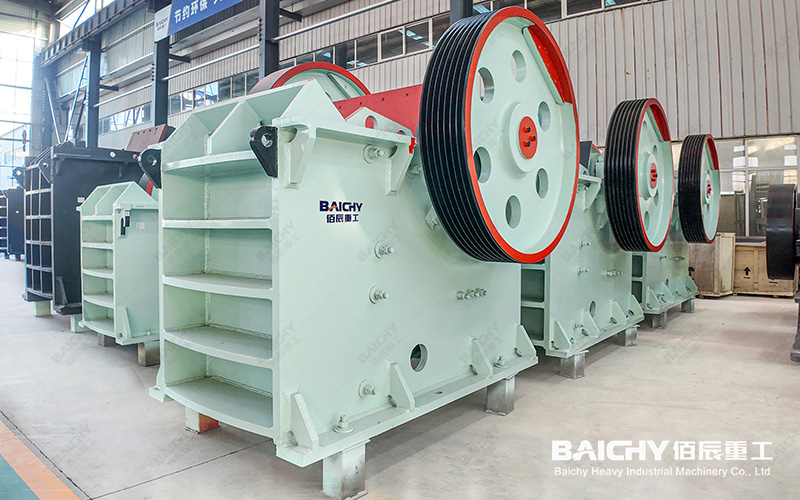
Primary Jaw Crusher
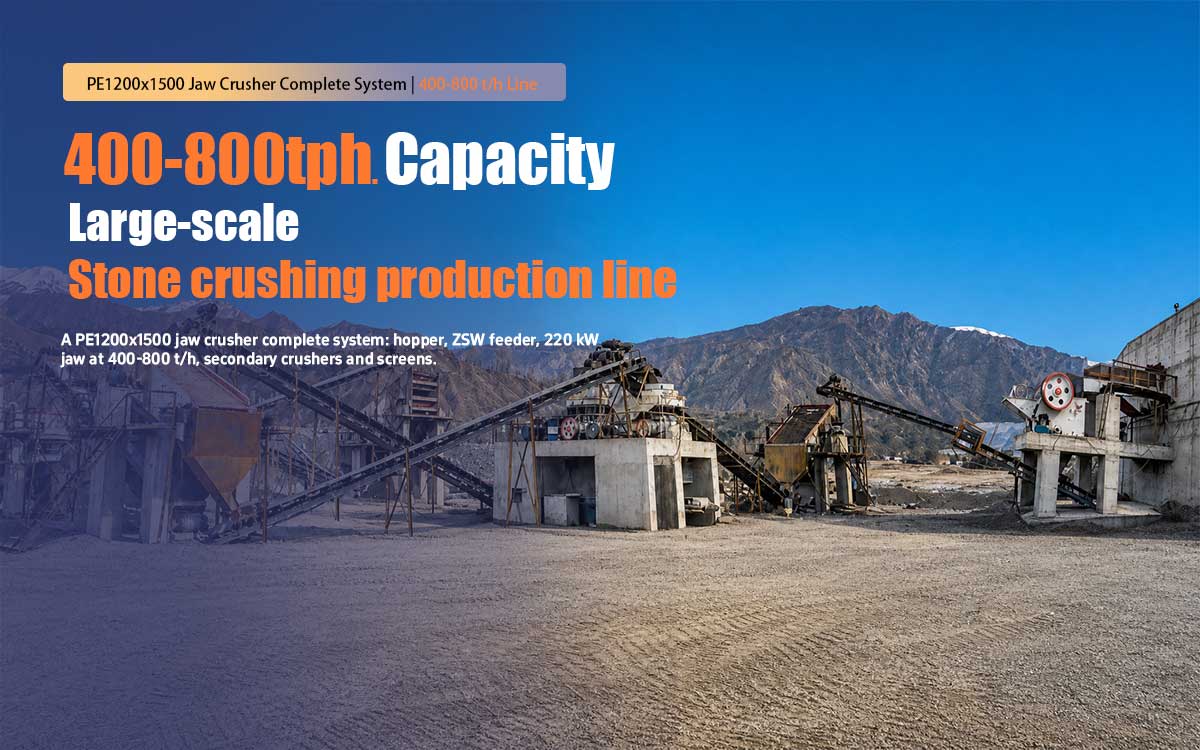
These crush material through the periodic compression of a moving jaw against a fixed jaw. They handle feed sizes up to 1,250 mm and offer adjustable discharge sizes of 40–300 mm. Key features include a deep crushing chamber, a high reduction ratio, a simple structure, and low operational requirements; they are suitable for both hard and soft rock. Over 90% of stone crushing production lines worldwide use a jaw crusher as the first stage—its fundamental role is to "devour the mountain" first.
2.2 Cone Crusher (PYB / CS / HP Series) — The Specialist for Medium and Fine Crushing of Hard Rock
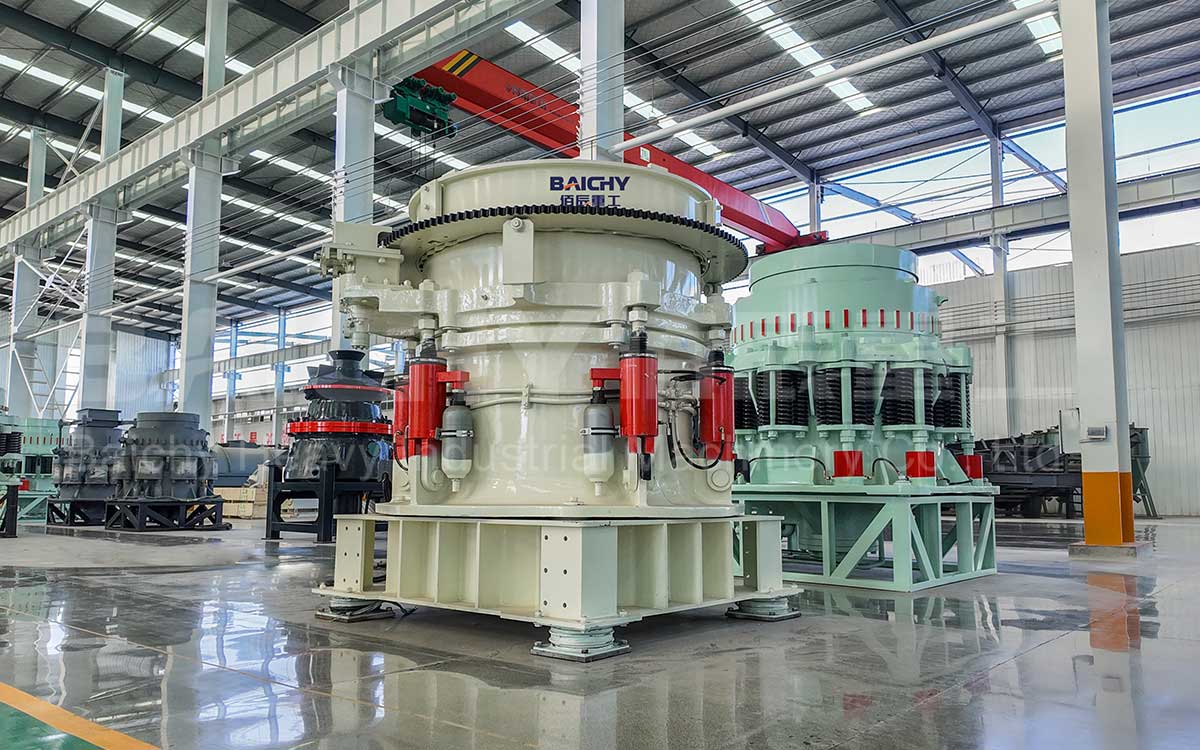
Hydraulic Cone Crusher
Operating on the principle of inter-particle (lamination) crushing, these units feature liners that last 1,200–2,000 hours when processing granite. They produce aggregate with excellent cubical shape and low flakiness/elongation indices, making them the preferred choice for medium-to-fine crushing and shaping of granite, basalt, and diabase. Hydraulic models (CS/HP series) offer features like one-touch discharge setting adjustments and tramp iron protection, making them ideal for commercial aggregate lines requiring continuous feeding.
2.3 Impact Crusher (PF Series) — The Shaping Expert for Medium-Hard to Soft Rock
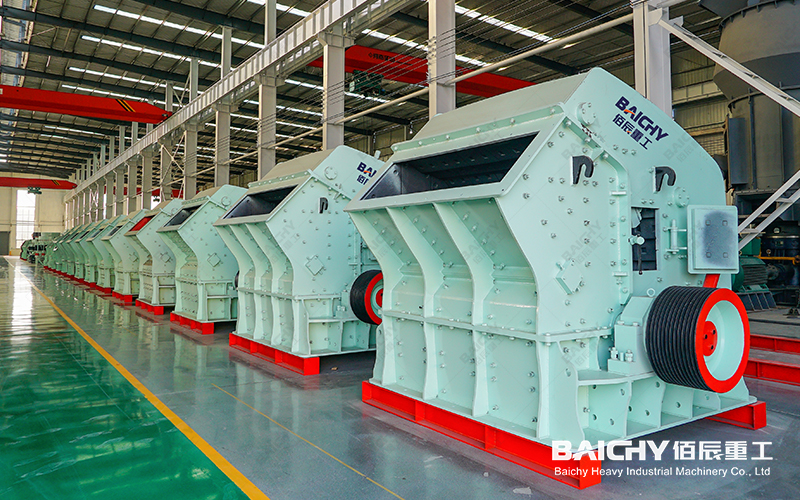
PF series Impact Crusher
These crushers utilize high-speed blow bar impacts combined with rebound action against impact plates to produce high-quality cubical particles in a single pass. Both initial investment and power consumption are lower than those of cone crushers. They offer exceptional cost-performance when processing limestone, dolomite, or coal gangue; however, wear part consumption spikes sharply when processing hard rock with a Mohs hardness above 6, so rock properties must be tested before selection.
2.4 Hammer Crusher (PC / PCK / 2PC Series) — Single-stage shaping for brittle materials
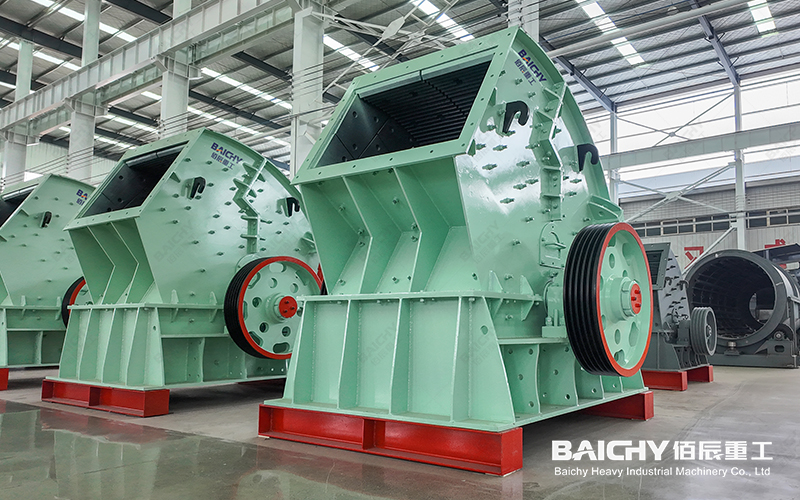
Heavy Hammer Crusher
With a single-stage reduction ratio of up to 20–30, it can reduce limestone (≤600mm) to under 25mm in one pass, eliminating the need for an intermediate crushing stage. It is highly efficient for processing brittle materials such as limestone, gypsum, and coal. For high-moisture or clay-rich materials, the PCK reversible model is available; it automatically reverses the rotor direction when hammer wear occurs, effectively doubling hammer utilization.
2.5 VSI Sand-Making Machine — The ultimate solution for aggregate shaping and manufactured sand production
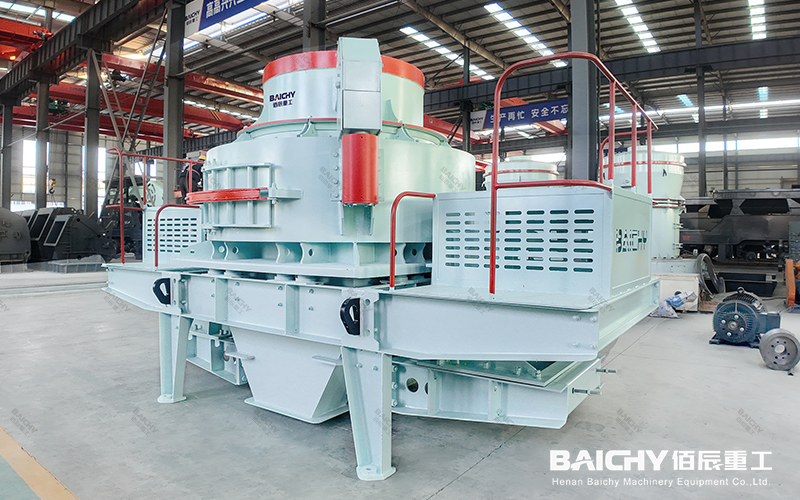
Sand Crusher Machine
Featuring "rock-on-rock" and "rock-on-iron" crushing chamber options, it produces 0–5mm manufactured sand while simultaneously shaping the aggregate, keeping the flaky and elongated particle content below 5%. In markets facing natural sand depletion and river sand mining bans, the VSI sand-making machine is a key component for adding value to the entire crushing production line and offers the fastest return on investment among the various crushing units.
2.6 Roller Crusher (2PG / 2PGY Series) — A low-energy-consumption choice for fine crushing
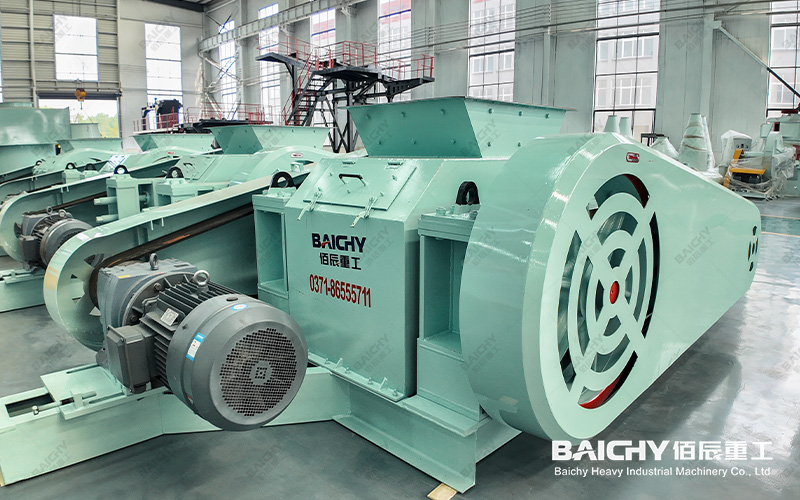
Double Roller Crusher
Utilizing twin-roll compression, this machine offers adjustable output size and a low over-crushing rate. Its electricity consumption per ton is approximately 1/2 to 2/3 that of impact-type equipment. It delivers stable performance when processing river pebbles, shale, coke, and high-moisture materials, making it a cost-effective choice for low-capacity fine crushing and sand-making operations.
III. Core Parameter Comparison Table: Cross-comparison of Six Types of Stone Crushing Equipment
The table below summarizes the operating principles, material suitability, and parameter ranges of six mainstream stone crushers for reference during the initial project selection phase (capacities are calibrated based on medium-hardness limestone):
| Equipment Type | Crushing Principle | Suitable Materials | Feed Size (mm) | Output Size (mm) | Typical Capacity (t/h) | Optimal Process Stage |
|---|---|---|---|---|---|---|
| Jaw Crusher | Compression | Various rock types (including hard rock) | ≤1250 | 40–300 (adjustable) | 5–800 | Primary Crushing |
| Cone Crusher | Inter-particle Crushing | Hard rock (e.g., granite, basalt) | ≤350 | 5–60 (adjustable) | 45–700 | Secondary/Tertiary Crushing |
| Impact Crusher | Impact | Medium-soft rock (e.g., limestone, dolomite) | ≤500 | 10–80 | 30–450 | Secondary Crushing/Shaping |
| Hammer Crusher | Impact + Shearing | Brittle materials (e.g., limestone, gypsum, coal) | ≤600 | ≤25 (single-stage reduction) | 10–350 | Secondary Crushing (Single-stage) |
| VSI Sand Maker | "Rock-on-Rock" Impact | Medium-hard to hard rock | ≤55 | 0–5 (manufactured sand) | 30–600 | Sand Making/Shaping |
| Roller Crusher | Twin-roll Compression | River pebbles, shale, coke, wet materials | ≤100 | 1–20 (adjustable) | 5–100 | Fine Crushing/Sand Making |
Capacity Conversion Basis (Limestone = 1.0): Granite ×0.6–0.7, Basalt ×0.6, River Pebbles ×0.7–0.8; apply these factors to design capacity calculations to avoid discrepancies where "nominal capacity is 200 tph but actual output is 150 tph." Providing rock samples and particle size distribution allows manufacturers to issue a verified conversion report—a key indicator of a supplier's professionalism.
IV. Typical Application Scenarios: Equipment Selection Solutions for Various Operating Conditions
High-grade granite/basalt aggregate lines (for highways, dams, and airports): "Jaw crusher (primary) + cone crusher (secondary/tertiary) + circular vibrating screen (closed-circuit)"; ensures continuous, stable feed and a finished product with a flakiness/elongation index ≤12%.
Limestone (cement raw materials and power plant desulfurization): Two-stage "jaw crusher + impact crusher" or single-stage "hammer crusher" for one-pass shaping; offers the lowest investment cost for main equipment.
River pebble/cobble manufactured sand (markets replacing natural river sand, e.g., Philippines, Vietnam): Jaw or double-roll crusher for pre-crushing + sand-making machine with closed-circuit shaping; produces 0–5mm sand that directly replaces natural sand.
Construction waste and remote mining sites (mobile operations): YDPZ wheeled or tracked mobile crushing stations; require no concrete foundations, allow for rapid relocation, and integrate crushing and screening into a single line.
High-moisture materials, weathered rock, and shale: Toothed-roll or double-roll crushers offer superior resistance to clogging, with roll surfaces treated to prevent material adhesion.
While scenarios vary, the core selection logic remains consistent: first, test rock hardness; next, define the target particle size distribution; finally, determine the crushing stage configuration based on required capacity. This logical approach applies to all stone crushing equipment and represents the most direct path to avoiding costly mistakes—such as purchasing the wrong model or having to rework the entire production line.
V. Equipment Advantages: Baichy’s "Comprehensive Portfolio" Explained in Operational Terms
Full-spectrum coverage; no forcing a single model to fit every scenario—we manufacture the entire range, from primary jaw crushers to VSI sand-making machines. We offer specialized crushers for soft rock, hard rock, and high-moisture materials, tailoring solutions to rock properties rather than pushing existing inventory;
Nominal capacity ≈ actual operational capacity—each configuration includes conversion factors based on rock properties; feeding, screening, and closed-circuit systems are designed correctly from the start, with on-site performance compliance rates consistently exceeding 95%;
Wear-part lifespan backed by data—actual performance figures (e.g., 1,200–2,000 hours for cone crusher liners in granite applications, 300–800 hours for hammer heads) are provided with the proposal, ensuring transparent spare parts budgeting;
Global power standard compatibility—supports 380V/50Hz, 400V/50Hz, 440V/60Hz, and diesel generator power supplies, eliminating the need for local electrical modifications on export projects;
End-to-end service—a single entity handles process design, installation, commissioning, remote O&M, and spare parts supply, preventing the accountability issues often associated with piecemeal production lines.
VI. Relevant Case Studies (On-site records; data anonymized)
Case Study 1: River Pebble Sand-Making Project in the Philippines (80–120 tph class)
Facing the depletion of natural sand and bans on river sand extraction, the client utilized a combination of "jaw crusher (primary) + sand-making machine (shaping) + vibrating screen (closed-circuit)" to process river pebbles:
• Actual stable capacity of 85–110 t/h with a 96% compliance rate;
• 0–5mm manufactured sand features <5% fines content and <8% needle-flake particle ratio, meeting local ready-mix concrete plant acceptance standards;
• Electricity consumption per ton is approximately 30% lower than nearby operations using impact crushers; the cost difference for the equipment was recouped within eight months of commissioning.
Case Study 2: African Granite Aggregate Project (200 tph class)
The rock mass consists of granite/gneiss with a compressive strength of 200–300 MPa; the configuration features a "PE750×1060 Jaw Crusher + HP300 Cone Crusher + 4YK2160 Closed-Circuit Screen":
The initial set of cone crusher liners remained usable after 1,400 hours of continuous operation, extending the spare parts procurement cycle from monthly to quarterly;
The measured flakiness and elongation index for the 10–20 mm finished product was ≤12%, meeting acceptance standards for highway concrete aggregates;
A Phase II capacity expansion assessment was initiated in the sixth month of operation—demonstrating that selecting the right type of crushing equipment provides a clear path for future capacity growth.
VII. Recommended Equipment
PE/PEX/C Series Jaw Crushers — Mainstay for primary crushing; handles both hard and soft rock; adjustable discharge size;
HP/CS/PYB Series Cone Crushers — For medium-to-fine crushing and shaping of hard rock; hydraulic models feature tramp iron protection and one-touch discharge setting adjustment;
PF Series Impact Crushers — For secondary crushing and shaping of medium-soft rock; the top choice for budget-sensitive projects;
PC/PCK Series Hammer Crushers — Single-stage crushing of limestone; reversible models available for high-moisture applications;
VSI Sand-Making Machines — For manufactured sand production and final aggregate shaping; a profit driver for natural sand replacement projects;
2PGY Hydraulic Double-Roll Crushers — For river pebble sand-making and small-capacity fine crushing; low power consumption and high cost-effectiveness;
YDPZ Mobile Crushing Stations — Complete line solutions for mobile operations; wheeled or tracked models selected based on mining rights and site conditions.
VIII. FAQ
Q1: What are the different categories of stone crushers?
A: There are hundreds of stone crusher models on the market, but they generally fall into four functional categories: primary crushing (coarse), secondary crushing (medium), tertiary crushing (fine), and sand making. The six mainstream machine types are: Jaw Crusher (primary/coarse), Cone Crusher (secondary/tertiary for hard rock), Impact Crusher (secondary for medium-soft rock), Hammer Crusher (single-stage for brittle materials), VSI Sand Maker (sand making and shaping), and Roller Crusher (fine crushing/sand making). They can also be classified by configuration as either stationary or mobile. The most efficient approach is to first narrow down the category based on "crushing stage + rock properties," and then compare specific models from different manufacturers within that category.
Q2: Which crushing equipment should be selected for hard stones like granite and basalt?
A: For hard rock (compressive strength >150 MPa, high abrasiveness), the recommended route is "Jaw Crusher (primary) + Cone Crusher (secondary/tertiary)": the Jaw Crusher handles large blocks, while the Cone Crusher uses inter-particle crushing to produce good particle shapes, with a liner lifespan of 1,200–2,000 hours. Impact and Hammer Crushers experience rapid wear-part consumption when processing hard rock (blow bars last only 120–200 hours) and are recommended only for materials of low-to-medium hardness, such as limestone. If manufactured sand is required, a VSI Sand Maker is added after the Cone Crusher for closed-circuit shaping.
Q3: How many crushing stages are standard for a stone crushing production line? Can operations start with just a single crusher?
A: Conventional aggregate lines typically use two or three stages: a "Jaw Crusher + Impact/Cone Crusher" setup suffices for small-to-medium capacities, while a third stage is added for high capacities or when superior particle shaping is required. For limestone, a single Hammer Crusher can produce material under 25mm in one pass; however, producing a full range of aggregate gradations from hard rock in a single step is unrealistic. Overloading the machine not only results in poor particle shape but also drastically shortens the lifespan of wear parts. The combination of stages is determined by the crushing ratio—calculated as "raw stone size &pide; finished product size"—with a ratio of 4:1 to 6:1 per stage being the most economical.
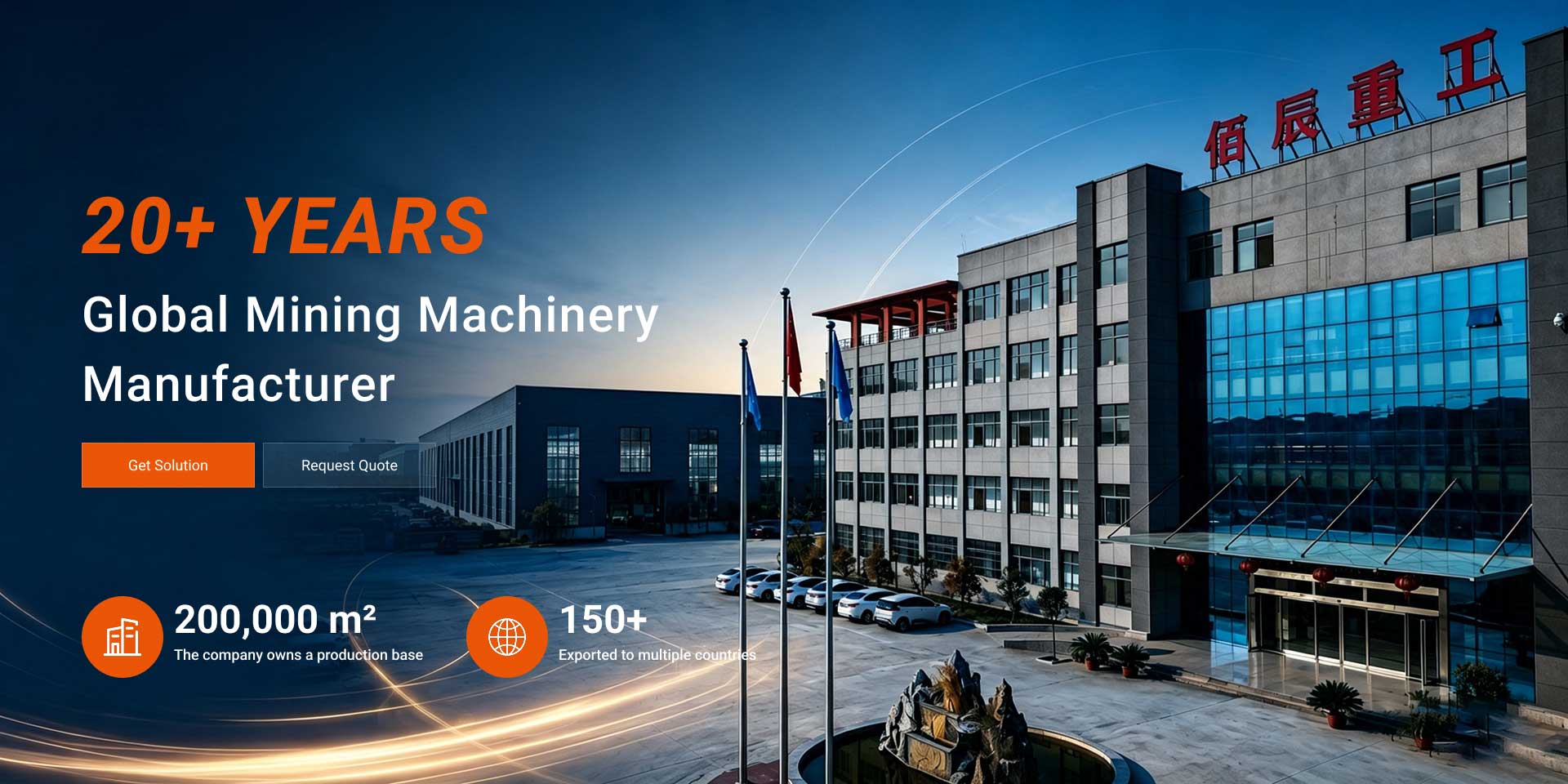
Baichy Heavy Industry
Baichy Heavy Industry is a high-tech mining equipment company integrating R&D, manufacturing, sales, and after-sales service. Focusing on crushing, grinding, and mineral processing equipment, we provide professional solutions to our customers. We are ISO9001:2015 、certified, and our products include mobile crushing palnts, crawler crushing plant, construction waste crushing plants, jaw crushers, sand making machines, cone crushers, fine crushers, grinding mills, ball mills, etc., all with reliable performance to meet diverse project needs.
Baichy Heavy Industry – Your Trusted Partner
To ensure optimal performance of your equipment, Baichy Heavy Industry offers:
- Professional on-site installation guidance
- Comprehensive operator training
- 24/7 technical support & maintenance services
Our complete after-sales service system guarantees long-term, stable operation of your machinery with minimal downtime.
Protect Your Rights – Only Use Official Channels
To avoid scams and ensure authentic support, contact us exclusively through:
• Official Website: www.baichychina.com
• WhatsApp: +8615093222637
• Email: [email protected]
Your satisfaction is our priority – expect prompt, professional service every time.
(Note: Beware of unauthorized third parties claiming to represent Baichy. Always verify through official contacts.)