Slag is not waste, but a resource in the wrong place. According to the World Steel Association (worldsteel), the blast furnace ironmaking process generates approximately 400 kg of slag for every tonne of crude steel produced; global annual slag output runs into the hundreds of millions of tonnes (approximately 190–290 million tonnes in 2023). A well-designed slag crushing production line enables this "waste" to re-enter the construction material supply chain in the form of slag powder, recycled aggregate, and manufactured sand—and the choice of equipment for the crushing stage directly determines the line's output, power consumption, and long-term profitability.
I. What is slag? What problems does a slag crushing production line solve?
Slag is a solid byproduct of iron and steel smelting, categorized by source into three types: blast furnace slag (an ironmaking byproduct; when water-quenched, it becomes granulated blast furnace slag, which possesses the highest reactivity), steel slag (a byproduct of converter or electric arc furnace steelmaking; characterized by high hardness and iron content), and special slags such as ferronickel slag. These three types share common characteristics: they are harder and more abrasive than ordinary limestone, and steel slag contains embedded metallic iron particles, all of which impose specific requirements on crushing equipment.
The cost of inaction is evident: land occupation for slag yards, environmental fines, and transportation costs steadily erode steel mills' profits. Conversely, the value of processing is equally clear: granulated blast furnace slag can be ground to replace 30%–50% of cement clinker (significantly reducing the cement's carbon footprint), while crushed and screened steel slag can serve as road base material and concrete aggregate. This constitutes the business rationale for slag crushing production lines: transforming raw slag (sized 0–80 mm) into industrial raw materials that meet specifications for particle size and iron content.
II. Core application scenarios for slag crushing production lines
2.1 Preparation of raw material for slag powder (dual objectives: carbon reduction and cost savings)
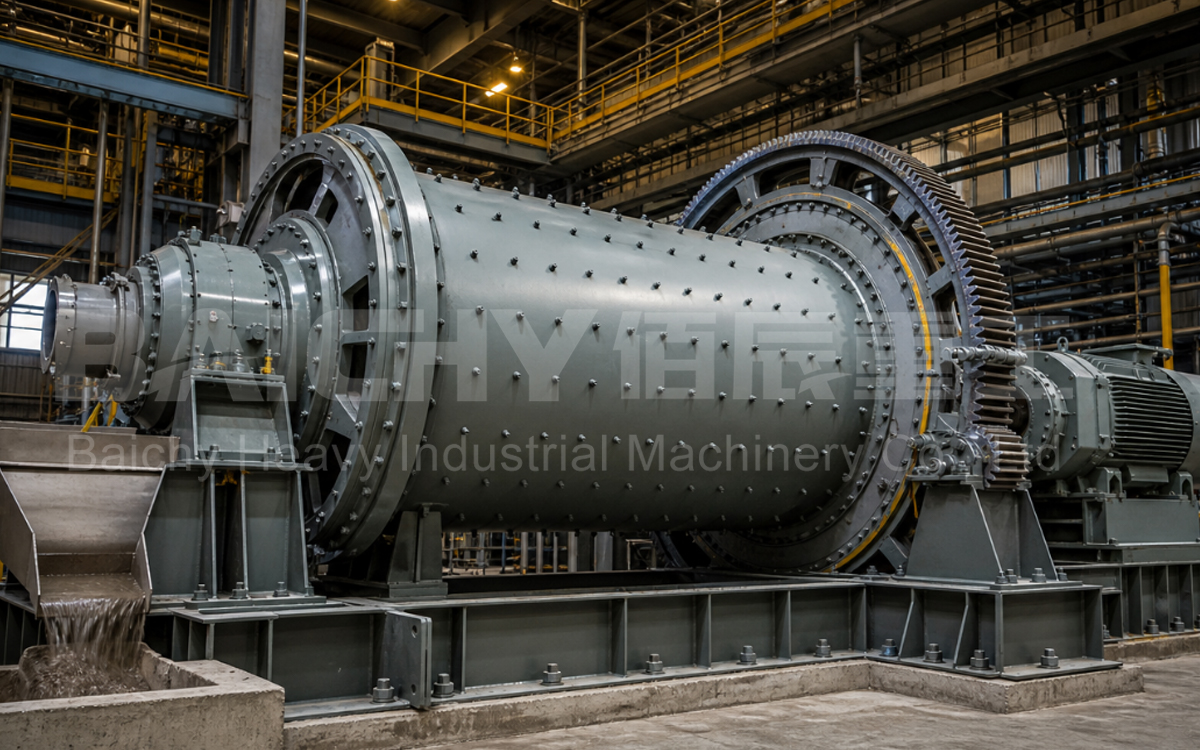
Granulated blast furnace slag is crushed to a size of 0–25 mm and subsequently fed into a ball mill or vertical mill for grinding, yielding slag powder (S95 grade) with a specific surface area of 400–450 m²/kg. Amidst increasingly stringent carbon emission regulations in the cement and concrete industries, ground granulated blast-furnace slag (GGBS) stands out as the most mature low-carbon alternative to clinker, thereby directly driving demand for upstream slag crushing production lines.
2.2 Production of Recycled Aggregate and Manufactured Sand
Crushed and screened slag aggregates can be supplied to markets for ready-mixed concrete, dry-mixed mortar, and precast components; following VSI (Vertical Shaft Impact) sand making and shaping, 0–5mm slag sand can partially replace natural sand. For regions facing high sand and gravel prices, this offers a low-cost source of raw materials utilizing local resources.
2.3 Steel Slag Tailings Processing and Metal Recovery
The unique aspect of steel slag crushing lies in the sequence: "iron removal first, then crushing, followed by magnetic separation." After primary crushing, metallic iron is recovered in multiple stages using suspended iron removers and magnetic pulleys (with recovery rates reaching 60%–90%); the remaining tailings then undergo fine crushing and screening. This transforms the business model from simply "selling waste slag" to "selling iron plus slag," resulting in a completely different profit structure.
2.4 Road Engineering and Solid Waste Utilization in Building Materials
Due to their high strength and wear resistance, crushed steel slag aggregates are suitable for use in roadbeds, water-stabilized base layers, and asphalt pavements. When paired with mobile crushing stations, processing can be performed on-site at the slag yard, eliminating the costs associated with transporting slag materials.
III. Typical Process Flow and Equipment Configuration (Parameter Table)
A standard slag crushing production line employs a closed-loop process: "Feeding → Primary Crushing → Iron Removal → Secondary/Fine Crushing → Screening → Shaping/Magnetic Separation." Blast furnace slag is relatively brittle, making impact crushers suitable for the task; conversely, steel slag is hard and contains iron, so cone crushers are preferred for secondary crushing, while double-roll crushers are suitable for fine crushing to minimize the production of excessive fines. The following are two typical configurations (nominal capacities; actual figures are determined based on material characteristics and local operating conditions):
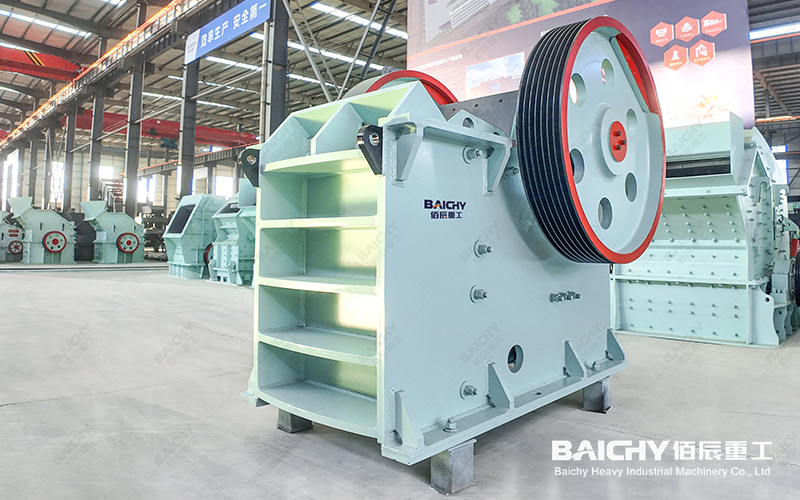
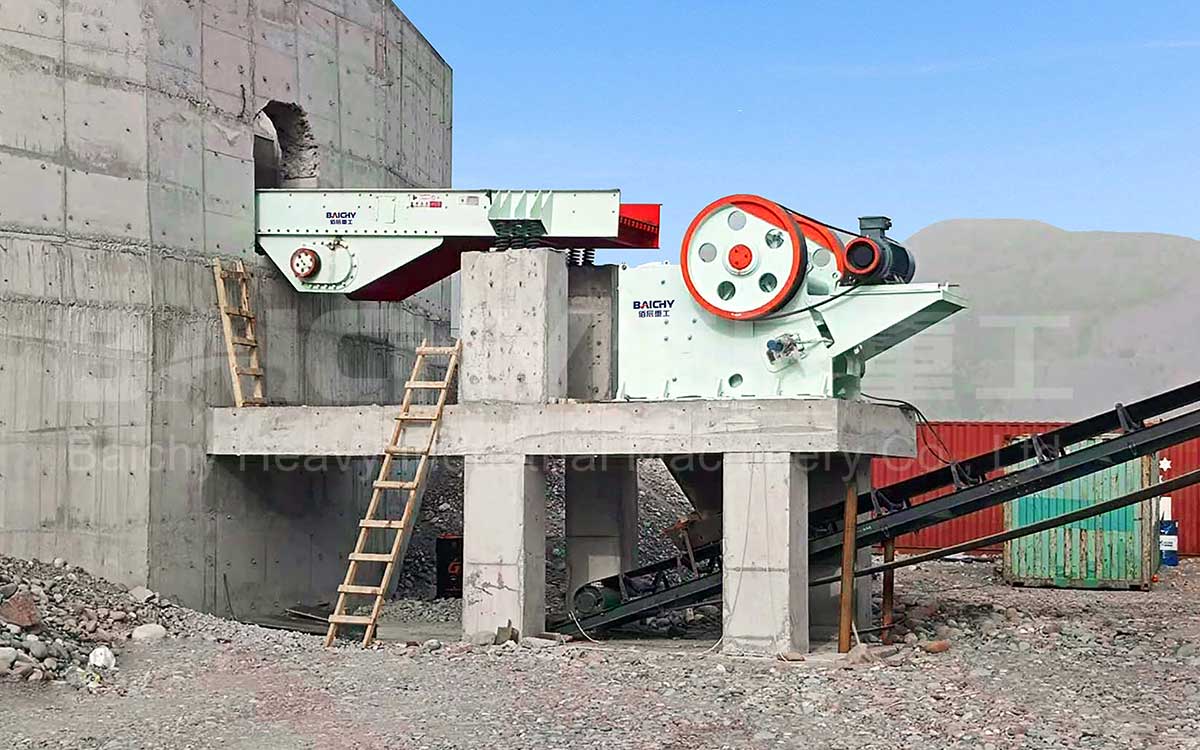
PE600x900 Jaw Crusher
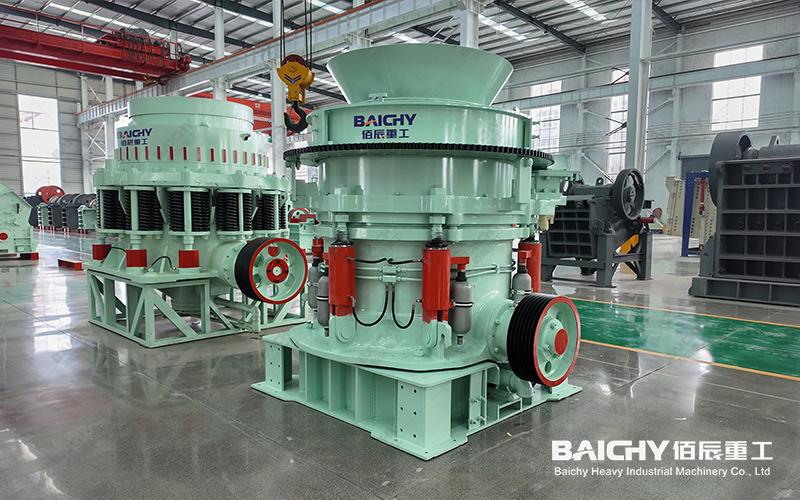
Hydraulic Cone Crusher
| Process Step | 100–150 t/h Configuration (Water-quenched Blast Furnace Slag) |
200 t/h Class Configuration (Steel Slag / Mixed Slag) |
|---|---|---|
| Feeding | ZSW Series Vibrating Feeder (≤500 mm) | ZSW Heavy-duty Vibrating Feeder (≤630 mm) |
| Primary Crushing | PE-600×900 Jaw Crusher (Feed size ≤480 mm) | PE-750×1060 Jaw Crusher (Feed size ≤630 mm) |
| Iron Removal | RCYD Suspended Iron Remover (post-primary crushing) | RCYD Suspended Iron Remover + Belt-type Magnetic Separator (Two-stage) |
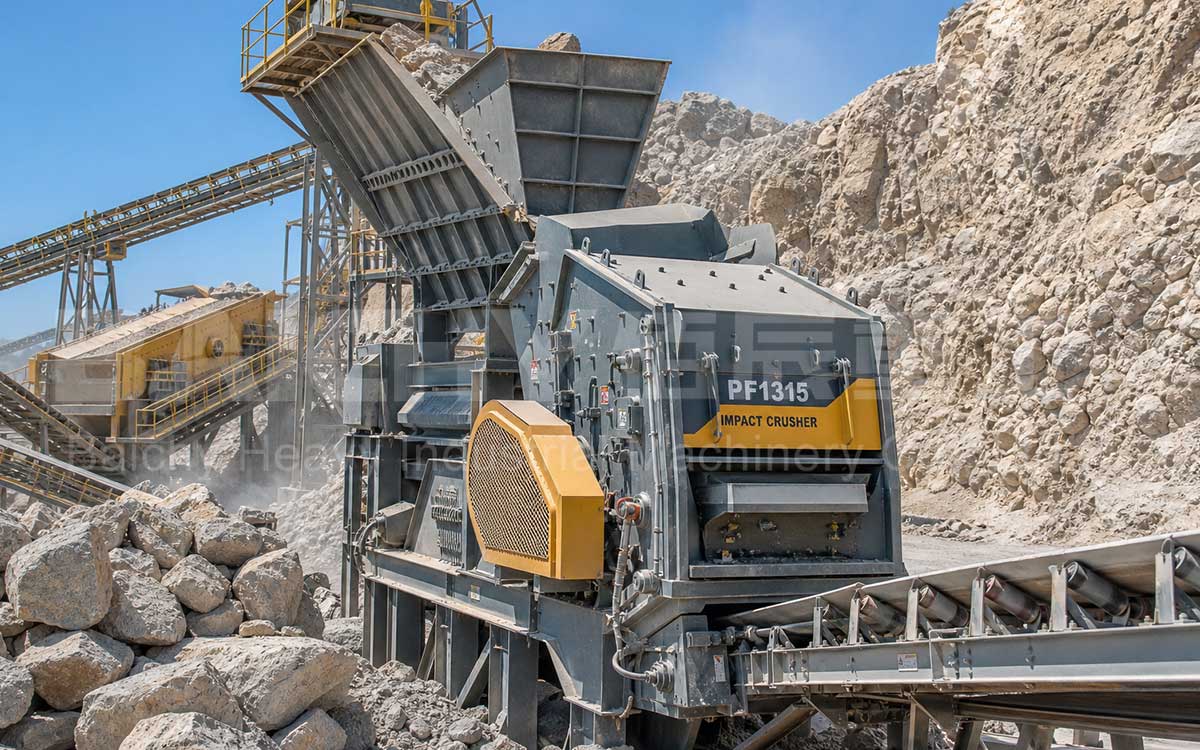
| Secondary Crushing | PF Series Impact Crusher | CS Series Cone Crusher (Hydraulic adjustment) |
| Fine Crushing / Shaping | — | Double-roll Crusher or VSI Sand-making Machine (0–5 mm shaping) |
| Screening | YK Series Circular Vibrating Screen (Two-stage classification) | 2YK Series Circular Vibrating Screen (Closed-circuit material return) |
| Finished Products | 0–5 / 5–15 / 15–25 mm Aggregate | Iron particle recovery + 0–5 / 5–20 mm Tailings Aggregate |
| Reference Installed Power | Approx. 180–250 kW | Approx. 320–400 kW |
Key Points: Steel slag lines must be equipped with two-stage iron removal and wear-resistant liners; for blast furnace slag lines, equipment selection should prioritize "minimizing over-crushing and maximizing sand yield," avoiding the use of high-energy-consumption machinery for low-hardness materials.
IV. Equipment Advantages: Four Key Design Features of the Slag Crushing Production Line
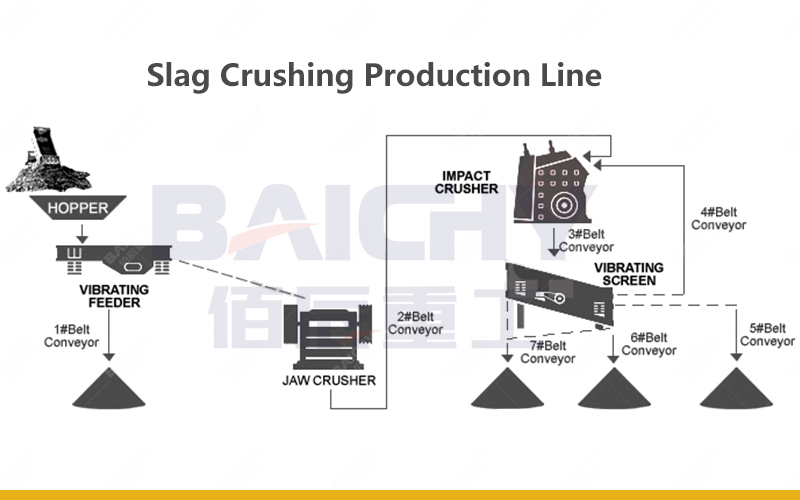
Slag Crushing Production Line
First, iron removal comes first to protect downstream equipment. Metallic iron within steel slag acts as a "silent killer" for jaw plates, liners, and screen meshes. A suspended iron remover is installed immediately after primary crushing, followed by a magnetic separator before fine crushing, to minimize equipment wear caused by iron—a fundamental design advantage distinguishing slag processing lines from standard aggregate lines.
Second, wear resistance is a matter of cost economics. Slag has a high abrasiveness index; the service life of jaw plates, blow bars, and screen meshes directly determines maintenance costs per ton of material. By selecting high-manganese steel or high-chromium wear-resistant parts, the spare parts cost per ton can be reduced by 20%–40%; the cumulative savings over three years are sufficient to offset the initial price difference of the equipment.
Third, a closed-loop circuit ensures consistent particle size. Oversized material from the vibrating screen is automatically recirculated for re-crushing, guaranteeing stable output gradation. This provides uniform raw material for downstream grinding or concrete mixing and reduces energy waste caused by over-crushing.
Fourth, power consumption is matched to operating conditions. The entire line supports customizable electrical standards (380V/400V/440V and 50/60Hz) and features variable-frequency feeders and centralized electrical controls, making the "electricity cost per ton of finished product" a measurable and optimizable figure.
V. Reference Case and Economic Benefits (Illustrative Calculation)
Based on a blast furnace slag processing project for a steel plant in Southeast Asia (data reflects industry averages for similar projects and serves as a reference for equipment selection): raw slag size 0–80mm; target capacity 120 t/h; finished products comprising 0–5mm slag sand and 5–25mm aggregate; utilizing a closed-loop production line configured with a PE-600×900 crusher, PF-1214 impact crusher, and YK vibrating screen.
• Output Structure: Aggregates and manufactured sand account for approximately 85% of the total output; the remaining fines are fed into a ball mill to be ground into raw material for slag powder.
• Unit Cost: The comprehensive cost of the crushing stage (electricity, spare parts, and labor) is approximately $2–4 per ton, varying based on local electricity rates.
• Comparative Logic: Discarding slag incurs disposal and transportation fees of $3–5 per ton, whereas processed aggregates sell locally for $6–10 per ton. This transforms a disposal cost into revenue, creating a net swing of $8–12 per ton.
• Payback Analysis: Based on an operation schedule of 20 hours/day and 300 days/year (processing ~720,000 tons annually), the investment payback period is typically 18–30 months, depending on local market prices for aggregates and slag powder.
Conclusion: The value of a slag crushing line lies not in the equipment itself, but in the price differential—turning "negative-cost" slag into "positive-revenue" product.
VI. Three Equipment Selection Recommendations for Owners
• Analyze Before Selecting: Submit samples to test for hardness, abrasiveness index, and iron content; blast furnace slag and steel slag must never share the same crushing process parameters.
• Avoid Over-specifying: Low-hardness granulated slag does not require a cone crusher; an impact crusher combined with iron removal is sufficient. Lower installed power means lower electricity costs.
• Include Magnetic Separation in the Contract: For steel slag lines, omitting two-stage iron removal often results in downstream equipment wear and downtime losses that exceed the initial equipment cost savings.
VII. FAQ
Q1: How does slag crushing differ from standard limestone crushing?
The differences center on three points: First, slag (especially steel slag) is highly abrasive, causing faster wear on crushing components; wear-resistant materials must be selected based on these abrasive conditions. Second, steel slag contains metallic iron; iron removal and magnetic separation stages are essential to protect downstream equipment. Third, water-quenched blast furnace slag is prone to over-crushing; crushing ratios and closed-circuit screening designs require greater precision to prevent excessive fines from reducing the aggregate yield.
Q2: Can blast furnace slag and steel slag share the same slag crushing production line?
Sharing the same primary crushing equipment is not recommended. Water-quenched blast furnace slag has low hardness and high reactivity, allowing for efficient processing with an impact crusher; conversely, steel slag is hard and contains iron, requiring a configuration of jaw crusher + cone crusher + two-stage iron removal. Mixing the materials leads to either wasted power or excessive equipment wear. If site constraints necessitate a shared line, a setup involving upstream material persion and switchable secondary crushing processes should be used, and the manufacturer should be consulted to verify the process design.
Q3: How long does it take to recoup the investment in a slag crushing production line?
Taking a production line with a capacity of 100–150 t/h as a typical example: with a daily throughput of 2,000–3,000 tons, a waste slag disposal cost of approximately $3–5/ton, and a processed aggregate selling price of $6–10/ton, the payback period is typically 18–30 months. The actual payback time depends on four factors: local slag supply, aggregate prices, electricity costs, and the volume of iron recovered via magnetic separation. It is recommended to conduct a cash flow analysis based on local, real-time prices before proceeding with the project.
Baichy Heavy Industry
Baichy Heavy Industry is a high-tech mining equipment company integrating R&D, manufacturing, sales, and after-sales service. Focusing on crushing, grinding, and mineral processing equipment, we provide professional solutions to our customers. We are ISO9001:2015 、certified, and our products include mobile crushing palnts, crawler crushing plant, construction waste crushing plants, jaw crushers, sand making machines, cone crushers, fine crushers, grinding mills, ball mills, etc., all with reliable performance to meet diverse project needs.
Baichy Heavy Industry – Your Trusted Partner
To ensure optimal performance of your equipment, Baichy Heavy Industry offers:
- Professional on-site installation guidance
- Comprehensive operator training
- 24/7 technical support & maintenance services
Our complete after-sales service system guarantees long-term, stable operation of your machinery with minimal downtime.
Protect Your Rights – Only Use Official Channels
To avoid scams and ensure authentic support, contact us exclusively through:
• Official Website: www.baichychina.com
• WhatsApp: +8615093222637
• Email: [email protected]
Your satisfaction is our priority – expect prompt, professional service every time.
(Note: Beware of unauthorized third parties claiming to represent Baichy. Always verify through official contacts.)