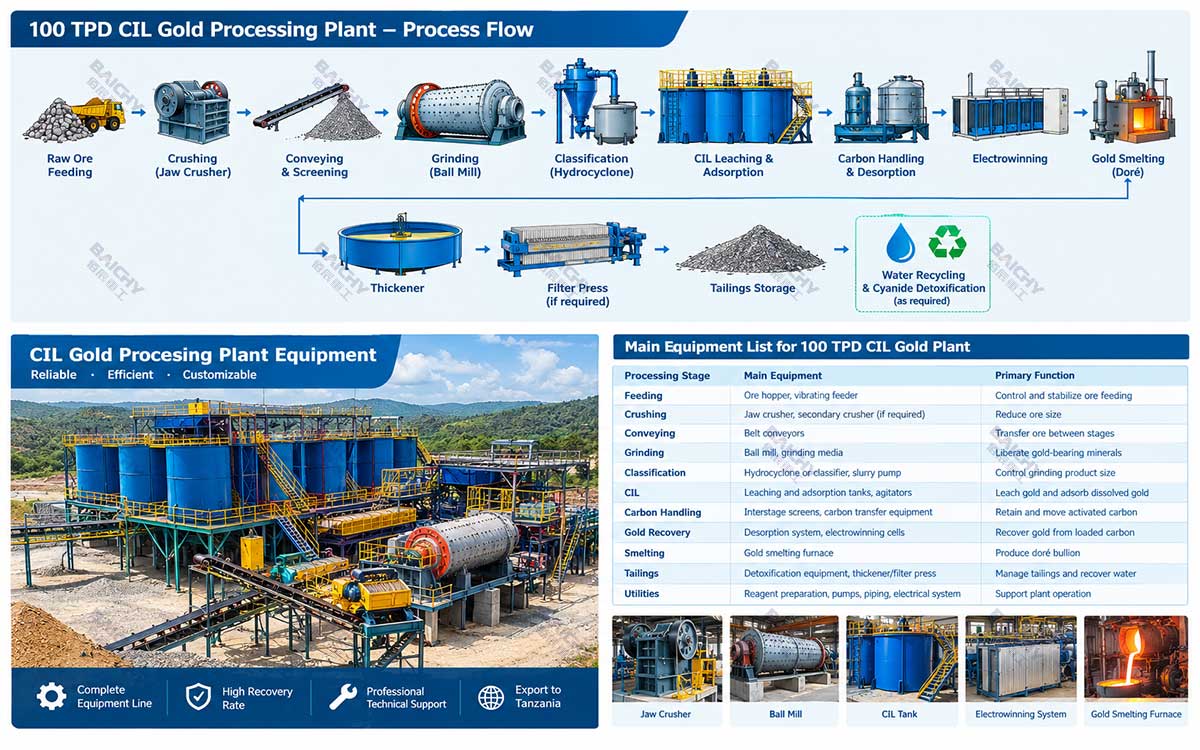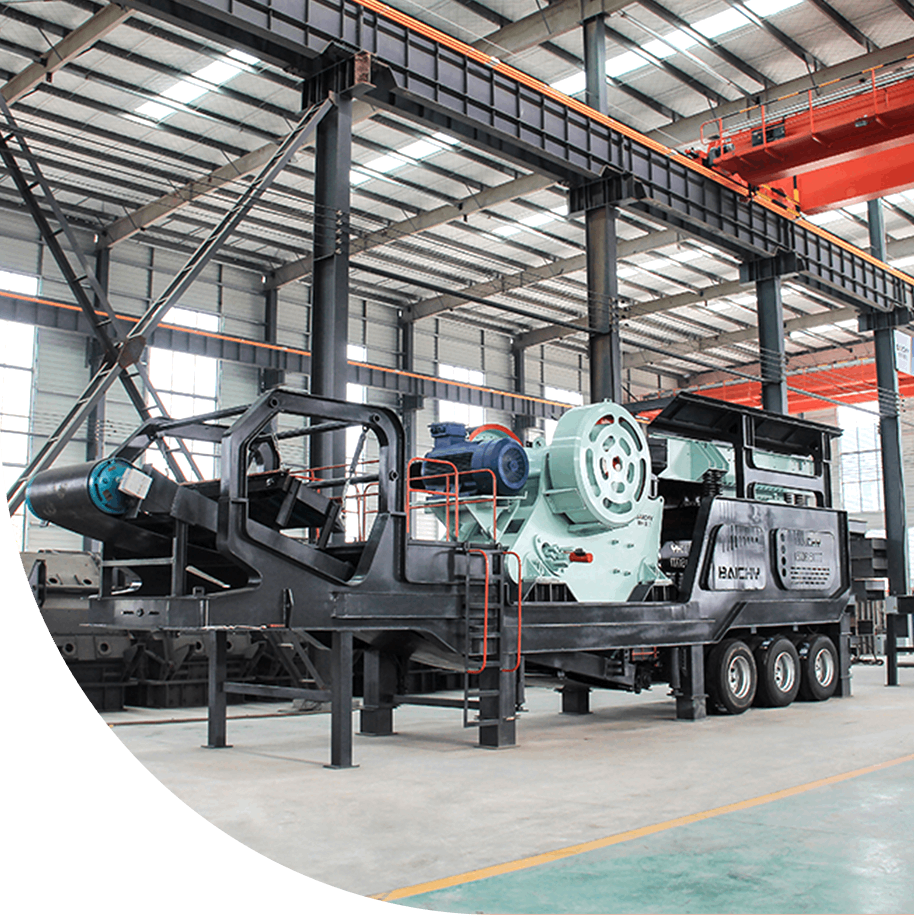

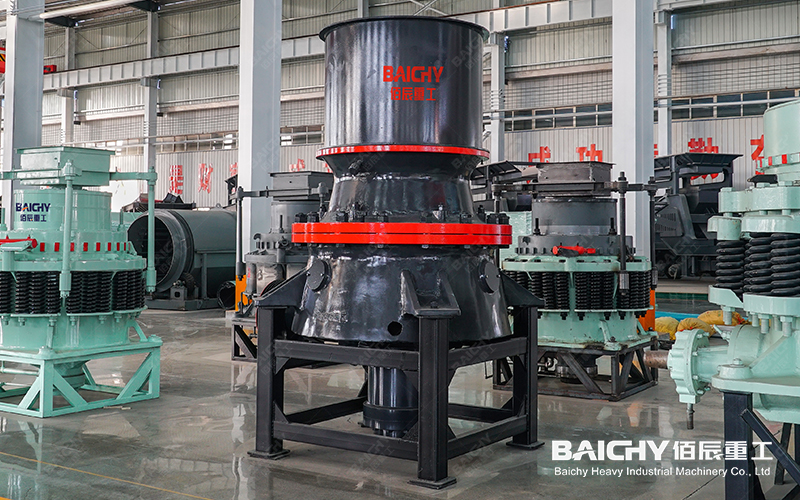
Single-cylinder hydraulic Cone Crusher
Introduction
Hard rock crushing is one of the most demanding tasks in aggregate production and mining. Materials such as granite, basalt, diabase, and quartzite have high compressive strength and can contain abrasive minerals. If the crushing equipment is not selected correctly, the result may be low capacity, excessive liner wear, high energy consumption, and unstable product size.
A single-cylinder hydraulic cone crusher is a practical solution for many hard rock applications. It is commonly used for secondary and fine crushing after a jaw crusher. With a strong crushing chamber, hydraulic adjustment, overload protection, and a relatively simple structure, it can help quarry and mining operators achieve reliable production with easier maintenance.
This guide explains why a single-cylinder cone crusher is suitable for hard rock, how it works, how to select the right configuration, and how to improve long-term crushing efficiency.
Why Is Hard Rock Crushing Difficult?
High Compressive Strength
Hard rocks resist compression and require a powerful, stable crushing force. A crusher must maintain sufficient pressure throughout the crushing cycle while handling continuous feed. If the chamber design or operating parameters are unsuitable, the machine may suffer from reduced capacity and increased mechanical stress.
Strong Abrasion
Granite, basalt, and quartz-rich rocks can wear down the mantle, bowl liner, and other contact surfaces. Liner wear changes the shape of the crushing chamber over time. This can make the product coarser, reduce throughput, and increase the amount of recirculating material.
Strict Product Requirements
Aggregate producers often need a controlled size range and good particle shape for road construction, concrete, asphalt, and railway applications. The crushing process must therefore balance capacity, reduction ratio, product grading, and the percentage of flaky particles.
Continuous Operation
Quarries and mines usually operate for long shifts. Frequent shutdowns reduce production and increase labor costs. The ideal hard rock crusher should provide stable performance, convenient adjustment, effective protection, and accessible maintenance points.
What Is a Single-Cylinder Cone Crusher?
A single-cylinder cone crusher is a hydraulic cone crusher that uses one main hydraulic cylinder to support, adjust, and protect the crushing system. Its main components typically include the frame, main shaft, moving cone, mantle, bowl liner, eccentric assembly, transmission system, lubrication system, and hydraulic control system.
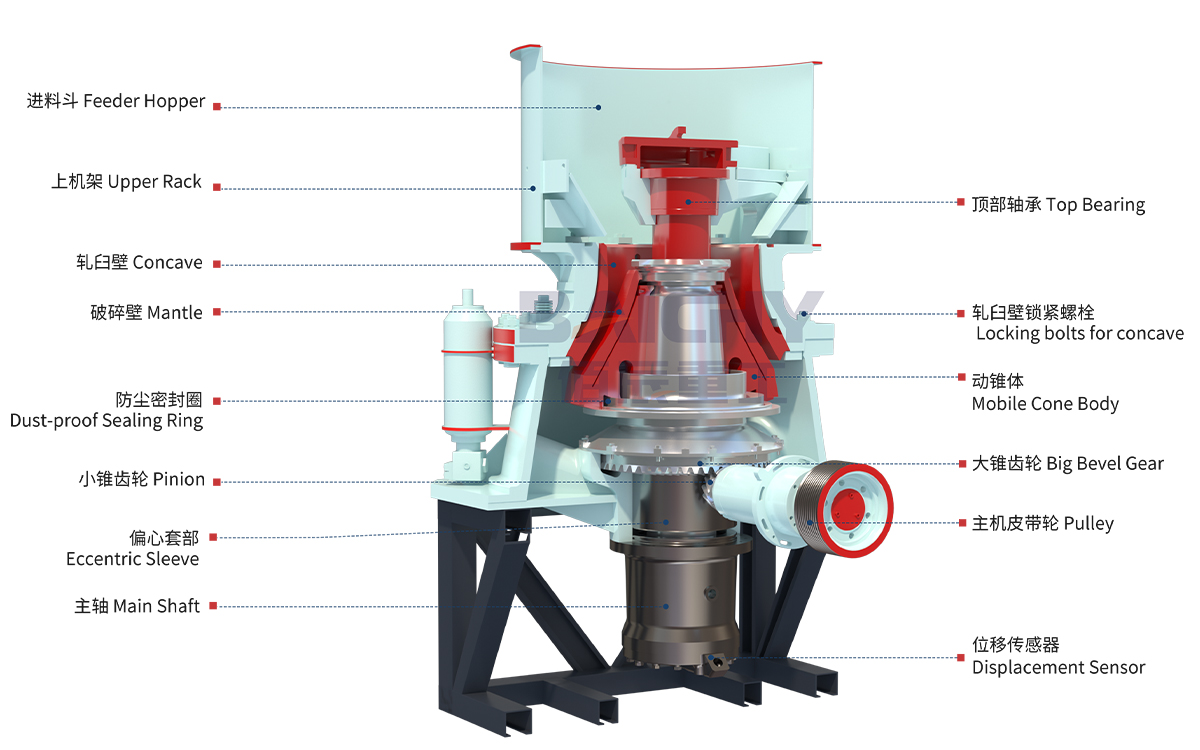
Structural diagram of a single-cylinder hydraulic cone crusher
During operation, the motor drives the eccentric assembly. The moving cone then swings around the centerline of the crusher. Material entering the crushing chamber is compressed between the mantle and bowl liner. The rock is broken through repeated compression, bending, and interparticle crushing before it leaves through the discharge opening.
The hydraulic system allows operators to adjust the closed-side setting, control the discharge size, clear the chamber, and provide protection if uncrushable material enters the machine. The exact adjustment range and capacity depend on the selected model, chamber type, feed size, rock properties, and operating conditions.
Why Choose a Single-Cylinder Cone Crusher for Hard Rock?
1. Effective Crushing Force
A properly selected single-cylinder cone crusher can handle hard and highly resistant rock in secondary or tertiary crushing. Its compression-based crushing action is well suited to materials that are too abrasive for some impact-crushing applications.
2. Efficient Use of Crushing Chamber Volume
The crushing chamber is designed to keep material under pressure as it moves through the machine. When the chamber is properly filled, interparticle crushing can improve reduction efficiency and help produce a more consistent product.
3. Hydraulic Discharge Adjustment
Operators can adjust the discharge opening hydraulically to meet different product requirements. This is useful when a plant produces several aggregate sizes or when the feed properties change during the season.
4. Overload Protection
Hard rock plants may occasionally receive steel, tools, or other uncrushable objects. A hydraulic protection system can allow the crusher to release the foreign material and return to operation after the chamber is cleared. This reduces the risk of severe damage compared with an unprotected system.
5. Convenient Maintenance
A single-cylinder design can simplify access to important components and routine inspection points. Hydraulic clearing can also reduce the time needed to remove packed material after a power interruption or blockage.
6. Adaptability to Fixed and Mobile Plants
The crusher can be used in stationary quarry lines, semi-mobile plants, and some mobile crushing systems. This makes it suitable for permanent aggregate production as well as road, tunnel, and infrastructure projects that require equipment relocation.
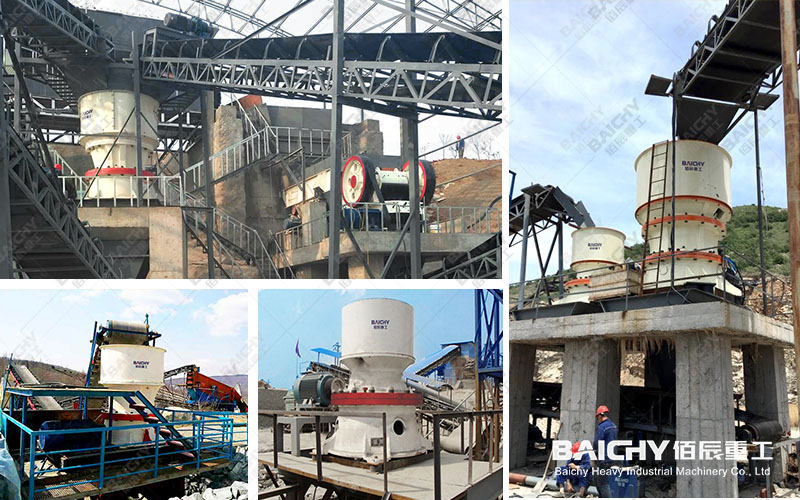
Customer site featuring a single-cylinder hydraulic cone crusher
What Hard Rocks Can It Process?
The following materials are common candidates, although final selection should be based on laboratory testing and actual operating conditions.
Rock type Typical characteristics Common products or applications Granite High strength and abrasive mineral content Road base, concrete aggregate, manufactured sand feed Basalt Dense, tough, and highly resistant to crushing High-quality aggregate and railway ballast Diabase Hard and wear-intensive Road stone, construction aggregate Andesite Strong, dense volcanic rock Concrete and asphalt aggregate Quartzite Very hard and strongly abrasive Mining applications and high-strength aggregate
A rock’s name alone is not enough for equipment selection. Moisture, natural fractures, feed gradation, abrasiveness, and the required final product all influence performance. A supplier should evaluate these factors before recommending a model and liner configuration.
How Does It Fit into a Hard Rock Crushing Plant?
A typical hard rock production line may use the following arrangement:
Vibrating Feeder → Jaw Crusher → Single-Cylinder Cone Crusher → Vibrating Screen → Finished Aggregate
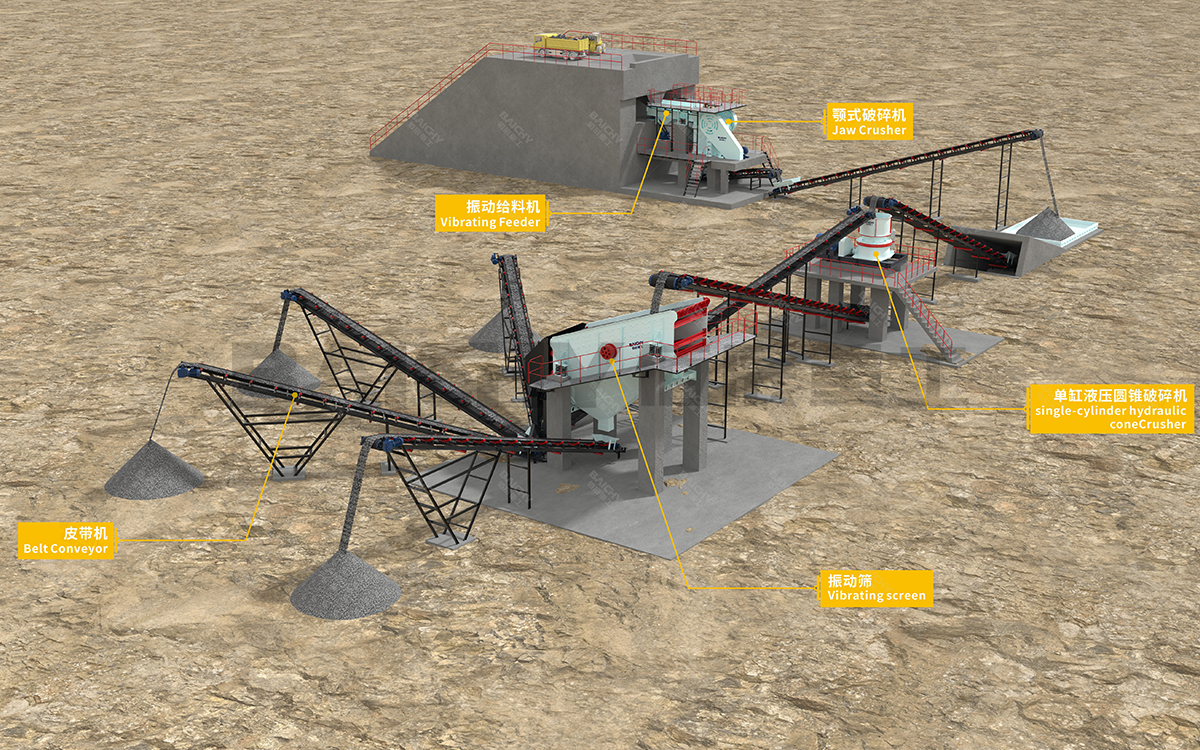
Schematic diagram of the process for a single-cylinder hydraulic cone crusher
The vibrating feeder delivers a controlled flow of raw material to the jaw crusher. The jaw crusher performs primary reduction. The single-cylinder cone crusher then reduces the material to a smaller size for aggregate production. A vibrating screen separates the final products according to the required grading.
Open-Circuit Crushing
In an open circuit, crushed material moves directly to the next process. This arrangement can be suitable when the required product size is relatively broad or when a downstream stage will perform additional classification.
Closed-Circuit Crushing
In a closed circuit, material larger than the screen opening returns to the cone crusher for another pass. This helps control the top size and can improve product consistency. The screen, conveyor, and crusher must be matched so that recirculating load does not exceed the practical capacity of the plant.
Pre-Screening
Removing fine material before the cone crusher can prevent unnecessary crushing and reduce the load on the chamber. Pre-screening may be especially useful when the raw feed contains a significant amount of natural fines.
Key Factors for Selecting the Right Model
Feed Size
Check the maximum feed size after primary crushing. Oversized feed can block the chamber, reduce capacity, and accelerate liner wear. The feed should be properly graded and distributed across the chamber.
Required Capacity
Define the required hourly output based on actual production conditions rather than only the nominal capacity in a catalog. Consider the rock type, moisture, feed gradation, operating hours, and expected recirculating load.
Final Product Size
The desired product size determines the chamber type, discharge setting, and whether a closed-circuit arrangement is needed. A crusher producing several fine products may require a different setup from one making a single coarse aggregate.
Hardness and Abrasiveness
Use material test data whenever possible. High abrasiveness may require a suitable liner material and a maintenance plan with regular wear measurement. Operating a worn liner too long can reduce both capacity and product quality.
Motor Power and Energy Use
Motor power should be considered together with throughput, reduction ratio, and utilization rate. A larger motor does not automatically mean a more efficient plant. The best configuration uses the available power effectively while preventing choking, overload, and unnecessary recirculation.
Automation and Protection
Useful control functions may include hydraulic setting adjustment, overload release, cavity clearing, lubrication monitoring, oil-temperature alarms, and automatic shutdown. These features can improve safety and make production easier to manage.
Recommended Supporting Equipment
| Equipment | Main function | Selection focus |
|---|---|---|
| Vibrating feeder | Controls and meters the feed | Feed rate, maximum lump size, wear resistance |
| Jaw crusher | Primary reduction | Feed opening, capacity, discharge size |
| Single-cylinder cone crusher | Secondary or fine crushing | Chamber, capacity, setting, liner type |
| Vibrating screen | Separates products by size | Deck area, screen openings, number of decks |
| Belt conveyor | Transfers material between stages | Belt width, distance, incline, dust control |
| Control system | Coordinates plant operation | Interlocks, alarms, monitoring, automation |
Every component affects the performance of the cone crusher. A high-capacity crusher cannot compensate for unstable feeding, undersized screening, insufficient conveying, or poor material distribution.
Single-Cylinder Cone Crusher vs. Other Options
A jaw crusher is normally used for primary crushing because it accepts larger feed sizes. A cone crusher is more suitable for secondary and fine crushing when a controlled product and high compression force are required. An impact crusher may provide good shaping for softer or moderately hard materials, but highly abrasive hard rock can cause faster wear and higher operating costs in some applications.
Compared with a multi-cylinder cone crusher, a single-cylinder model often offers a simpler hydraulic arrangement and convenient adjustment. A multi-cylinder machine may be preferred for particular fine-crushing, high-pressure, or high-capacity requirements. The choice should be based on feed size, product specifications, production targets, service conditions, and total operating cost rather than on the machine name alone.
How to Improve Hard Rock Crushing Efficiency
Keep the Feed Stable
A continuous, evenly distributed feed helps maintain a full crushing chamber. Avoid sudden surges, long interruptions, and feeding only one side of the chamber. Stable feeding improves capacity and reduces uneven liner wear.
Set the Correct Discharge Opening
A setting that is too large may produce an excessively coarse product. A setting that is too small can increase power draw, recirculating load, and wear. Adjust the setting according to the target grading and actual operating conditions.
Control Feed Gradation
Remove excessive fines when appropriate and prevent large unbroken lumps from entering the chamber. Consistent feed gradation allows the crusher to work closer to its intended operating range.
Monitor Lubrication and Hydraulic Systems
Check oil level, oil temperature, pressure, filters, and possible leaks. Clean lubrication protects bearings and moving components, while a healthy hydraulic system supports adjustment and overload protection.
Measure Liner Wear
Do not wait until the liner is severely worn. Measure wear at regular intervals and replace components when the chamber profile can no longer maintain the required product size or capacity.
Record Production Data
Track feed rate, motor load, product grading, liner life, downtime, and maintenance events. These records help identify problems early and support better settings and spare-parts planning.
Maintenance Checklist
A practical maintenance program should include:
• Inspecting the mantle and bowl liner for uneven wear.
• Checking lubrication oil level, temperature, and cleanliness.
• Inspecting hydraulic hoses, cylinders, valves, and seals for leakage.
• Checking the main shaft, eccentric assembly, bearings, and drive components.
• Verifying that safety guards and emergency stops are functional.
• Cleaning filters and checking the cooling system.
• Inspecting conveyors, screens, and feed equipment for material buildup.
• Comparing current product grading with previous production records.
• Planning liner replacement before a critical shutdown occurs.
Maintenance intervals depend on operating hours, rock abrasiveness, feed conditions, and the manufacturer’s recommendations. Always follow the service manual for the selected model.
Frequently Asked Questions
1. Is a single-cylinder cone crusher suitable for granite?
Yes. It can be used for granite secondary or fine crushing when the model, chamber, liner material, and operating parameters match the rock’s strength and abrasiveness. The feed size and required final product should be confirmed before selection.
2. Can it crush basalt?
Yes. Basalt is commonly processed with compression-based equipment. A suitable single-cylinder cone crusher can reduce basalt for road aggregate, concrete aggregate, or other applications. Because basalt can be highly abrasive, wear-part selection and regular inspection are important.
3. What is the difference between a single-cylinder and multi-cylinder cone crusher?
The two designs differ in hydraulic arrangement, adjustment method, protection system, maintenance characteristics, and typical application range. A single-cylinder model may be attractive when simple adjustment and practical maintenance are priorities, while a multi-cylinder model may suit specific high-pressure or fine-crushing requirements.
4. How do I select the right cone crusher model?
Provide the supplier with the rock type, maximum feed size, required capacity, target product sizes, operating hours, moisture level, and whether the plant is open or closed circuit. These details are more useful than selecting a crusher by feed size alone.
5. Can a single-cylinder cone crusher be used in a mobile plant?
It can be integrated into some mobile and semi-mobile crushing plants. The final design must consider chassis space, total weight, power supply, feeding arrangement, conveyor layout, and the required production capacity.
Baichy Heavy Industry
Baichy Heavy Industry is a high-tech mining equipment company integrating R&D, manufacturing, sales, and after-sales service. Focusing on crushing, grinding, and mineral processing equipment, we provide professional solutions to our customers. We are ISO9001:2015 Certified, and our products include mobile crushing palnts, crawler crushing plant, construction waste crushing plants, jaw crushers, sand making machines, cone crushers, fine crushers, grinding mills, ball mills, etc., all with reliable performance to meet diverse project needs.
Baichy Heavy Industry – Your Trusted Partner
To ensure optimal performance of your equipment, Baichy Heavy Industry offers:
- Professional on-site installation guidance
- Comprehensive operator training
- 24/7 technical support & maintenance services
Our complete after-sales service system guarantees long-term, stable operation of your machinery with minimal downtime.
Protect Your Rights – Only Use Official Channels
To avoid scams and ensure authentic support, contact us exclusively through:
• Official Website: www.baichychina.com
• WhatsApp: +8615093222637
• Email: [email protected]
Your satisfaction is our priority – expect prompt, professional service every time.
(Note: Beware of unauthorized third parties claiming to represent Baichy. Always verify through official contacts.)