
Roller Crusher for Sand Making
The sand-making roll crusher (2PG series twin-roll configuration) replaces high-speed impact with low-speed twin-roll compression. When processing medium-hard materials such as limestone, river pebbles, andesite, and coal gangue, it consistently produces 0–5mm graded sand. It consumes over 30% less electricity per ton compared to hammer or impact crushers and keeps the stone powder content below 8%. For enterprises in the aggregate, construction waste recycling, and mineral processing sectors seeking low operating costs and high sand yields, it offers one of the fastest investment payback periods.
I. Overview of the Sand-Making Roll Crusher: Working Principle and Equipment Composition
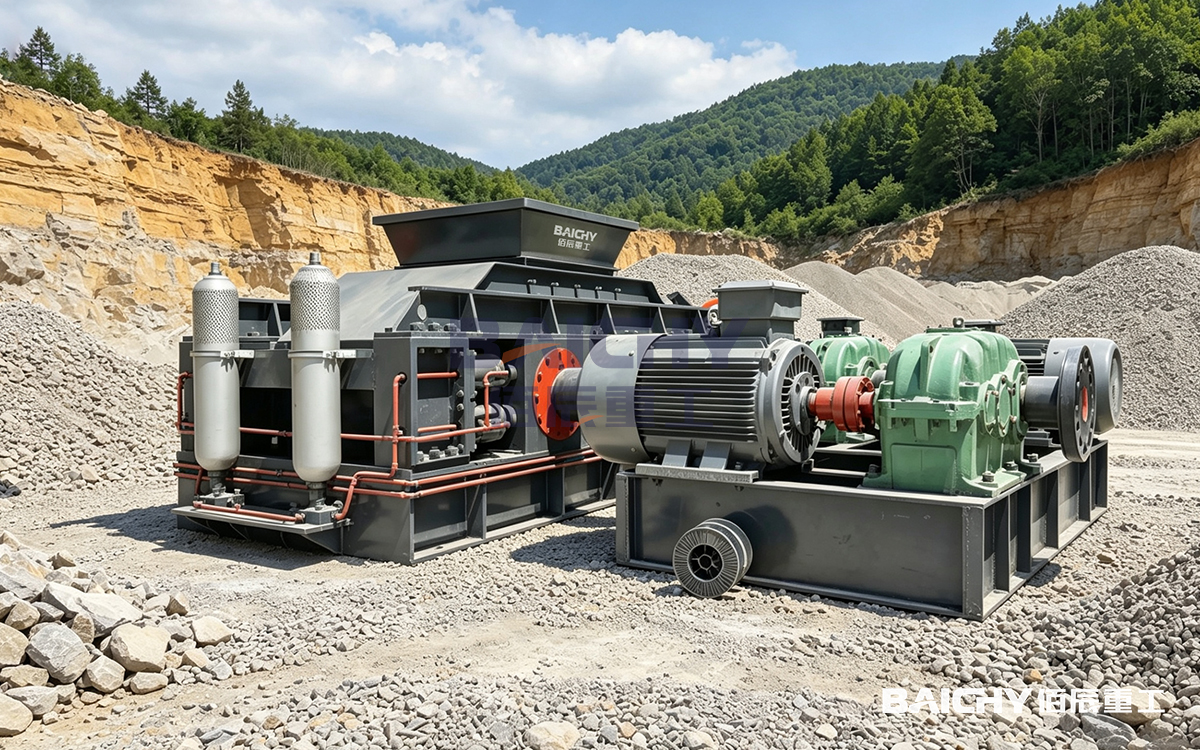
The sand-making roll crusher is a specialized variant of roll crushing equipment, featuring two counter-rotating crushing rolls as its core structure. Material enters the gap between the rolls from the top inlet and is crushed through multiple compression and shearing actions—occurring both between the roll surfaces and the material, and between the material particles themselves. The final particle size is precisely controlled by the gap between the rolls (discharge opening); this is the fundamental characteristic distinguishing it from other sand-making equipment and the technical basis for the "crushing-instead-of-grinding" process.
Its sand-making logic differs entirely from that of impact crushers (VSI). While VSIs rely on high-speed rotors to strike material—resulting in high energy consumption, significant dust, and excessive fines—roll crushers utilize low-pressure, slow-speed compression. This results in a simple structure, minimal over-crushing, uniform particle shape, and stable gradation. The equipment comes standard with spring or hydraulic buffering devices; if uncrushable objects (such as metal debris) enter the machine, the rolls automatically retract to protect the unit from damage.
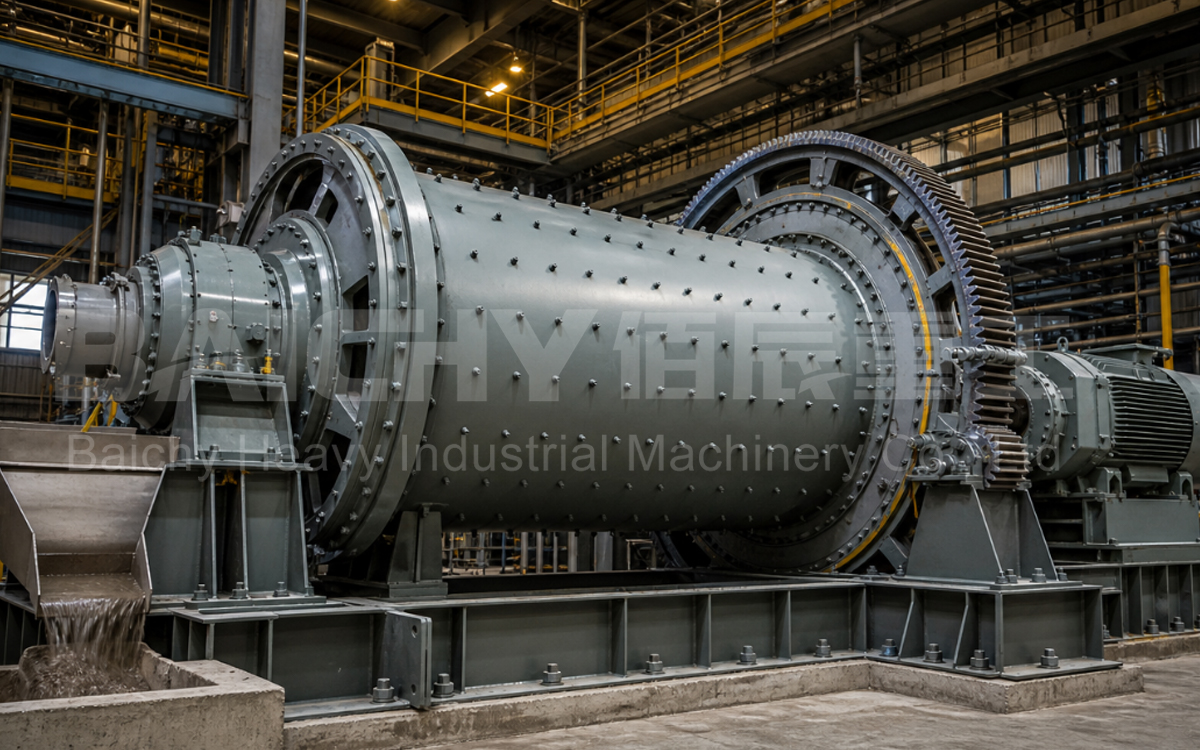
Key components include: crushing rolls, wear-resistant roll shells, the frame, the drive system, spring or hydraulic roll-gap adjustment mechanisms, and a dust-proof sealing system. Roll surface profiles (smooth, grooved, or toothed) and shell materials (high-manganese steel, high-chromium alloy, or hard-faced composites) can be selected based on material abrasiveness; sand-making applications typically utilize smooth or grooved rolls paired with high-chromium or hard-faced composite shells.

Roller Sand-Making Machine
II. Typical Application Scenarios for Roll Crushers in Sand Making
1. Manufactured Sand from Aggregates: Production of manufactured sand from medium-hard materials such as limestone, dolomite, and river pebbles. The resulting 0–5mm sand can be used directly in concrete and mortar, replacing natural river sand and alleviating the pressure caused by river sand mining bans.
2. Recycled Sand from Construction Waste: Waste concrete and brick rubble are crushed into recycled sand aggregates by double-roll sand-making machines. This aligns with policies promoting the resource utilization of construction waste and the circular economy, achieving a closed-loop operation of "waste in, sand out."
3. Auxiliary Equipment for Mineral Processing (Secondary/Tertiary Crushing): Acts as secondary or tertiary crushing equipment to reduce ore to a finer feed size for the mill. This lowers energy consumption in downstream ball mills and boosts the plant's overall production capacity—a classic example of "crushing instead of grinding."
4. Granulation of Coal-based Materials: Fine crushing and granulation of brittle materials such as coal gangue, coke, and raw coal; widely used in the building materials, chemical, and metallurgical industries.
5. Wet Sand Mining and High-Moisture/High-Clay Materials: Uses compression crushing without high-speed material ejection channels, making it resistant to clogging when processing raw materials with 8%–10% moisture content. Suitable for scenarios such as wet river sand mining and tailings recovery.
III. Core Advantages of Double-Roll Sand-Making
1. Low Electricity Consumption per Ton and Controllable Operating Costs: Low-speed compression crushing results in significantly lower electricity consumption per unit of output compared to impact or hammer crushers. For a 50 t/h production line, annual electricity savings can range from tens of thousands to hundreds of thousands of yuan, making it a cost-reduction measure with a highly tangible return on investment over the long term.
2. Low Over-Crushing Rate and High Sand Yield: Precise adjustment of the discharge opening and a moderate crushing ratio prevent over-crushing. Under typical operating conditions, the yield of finished sand (0–5mm) can reach 70%–85%, while the stone powder content (below 0.075mm) is kept under 8%. This results in a low recirculating load in the screening circuit, and the overall sand yield is significantly superior to that of hammer crushers.
3. Precisely adjustable output granularity; one line produces multiple product grades: Hydraulic roll gap adjustment allows for fine-tuning without stopping the machine, enabling a single production line to switch between various sand specifications (e.g., 0–3mm, 0–5mm, 3–8mm) and flexibly meet the sand requirements for different grades of concrete and mortar.
4. Simple structure and low maintenance costs: With no hammers or high-speed rotors, routine maintenance focuses primarily on the wear and replacement of roll shells. The split-design roll shells allow for localized replacement or repair via hardfacing; repair costs are only 20%–30% of the price of new shells, and the labor time required for a single maintenance session is significantly lower than that needed to replace a full set of hammers in a hammer crusher.
5. Strong adaptability to materials with high moisture and clay content: The system resists clogging when processing raw materials with moisture content of 8%–10% or high clay content, reducing the need for upstream dewatering processes and making it suitable for applications such as wet sand mining.
6. Environmentally friendly: The machine operates in a fully enclosed manner; combined with a bag-type dust collector, it achieves low-dust operation, meeting the standards for "green mines" and environmental impact assessments.
IV. Technical Parameters (Typical Configuration for 2PG Series Sand-Making)
| Model | Roll Diameter × Width (mm) | Feed Size (mm) | Discharge Size (mm) | Capacity (t/h) | Motor Power (kW) | Roll Surface Type |
|---|---|---|---|---|---|---|
| 2PG400×250 | 400×250 | ≤25 | 2–8 | 5–10 | 2×5.5 | Smooth Roll |
| 2PG610×400 | 610×400 | ≤40 | 2–10 | 13–35 | 2×15 | Smooth/Grooved Roll |
| 2PG750×500 | 750×500 | ≤40 | 2–20 | 20–60 | 2×22 | High-Cr/Hard-faced Composite |
| 2PG1000×700 | 1000×700 | ≤50 | 3–30 | 30–90 | 2×37 | Hard-faced Composite |
Note: Capacity is calculated based on limestone (bulk density approx. 1.6 t/m³); actual capacity varies with material hardness, moisture content, and discharge opening settings. Please provide details on material lithology, feed size, and target product specifications; Baichy Heavy Industry offers one-on-one model selection and free test-run support.
V. Customer Case Studies
Case 1: Cost-Reduction Retrofit for an Indonesian Andesite Sand-Making Line. An andesite (Mohs hardness 6–7) sand-making line supporting a concrete batching plant in Indonesia originally utilized a hammer crusher, resulting in monthly hammer replacements and high power consumption. After switching to the 2PG750×500 roll crusher, the fineness modulus of the finished sand stabilized at 2.6–3.0, power consumption per ton of sand dropped by approximately 35%, and the service life of the roll shells extended to over six months. Overall operating costs decreased significantly, and the investment for the retrofit was recouped in about nine months.
Case Study 2: Construction Waste Recycling Project in Ulaanbaatar, Mongolia. This project processes approximately 300 tons of waste concrete and brick rubble daily. Utilizing a roll crusher as the primary equipment for producing manufactured sand, the process yields sand with low fines content and uniform particle shape. The recycled sand is used directly for road base layers and masonry mortar, achieving a closed-loop operation of "waste in, sand product out" and shortening the investment payback period by approximately eight months.
Note: The above summarizes typical operational scenarios; specific parameters vary by project. Detailed technical proposals tailored to specific rock types and production capacities are available upon request.
VI. Recommended Equipment
Beyond the sand-making unit itself, a complete manufactured sand production line typically requires the following equipment working in concert to form a "feeding–crushing–screening–washing" closed loop:
• Vibrating Feeder (ZSW Series): Ensures uniform, continuous feeding to keep the sand-making machine running stably at full load.
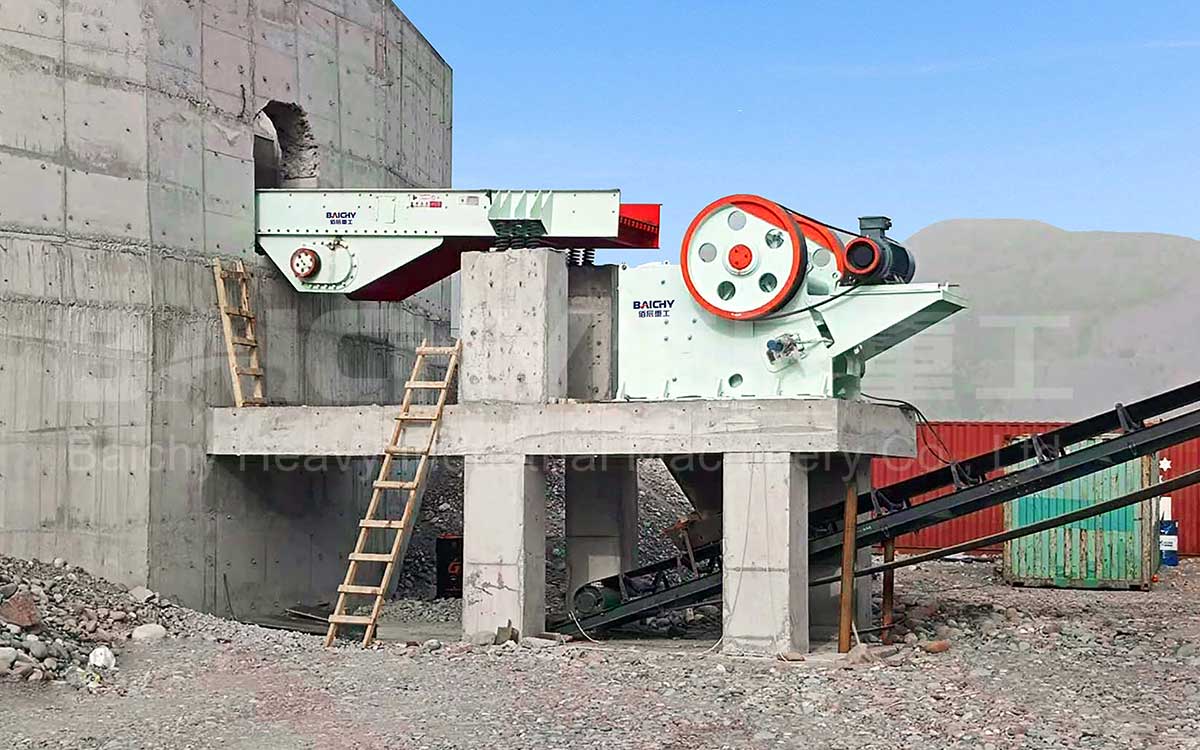
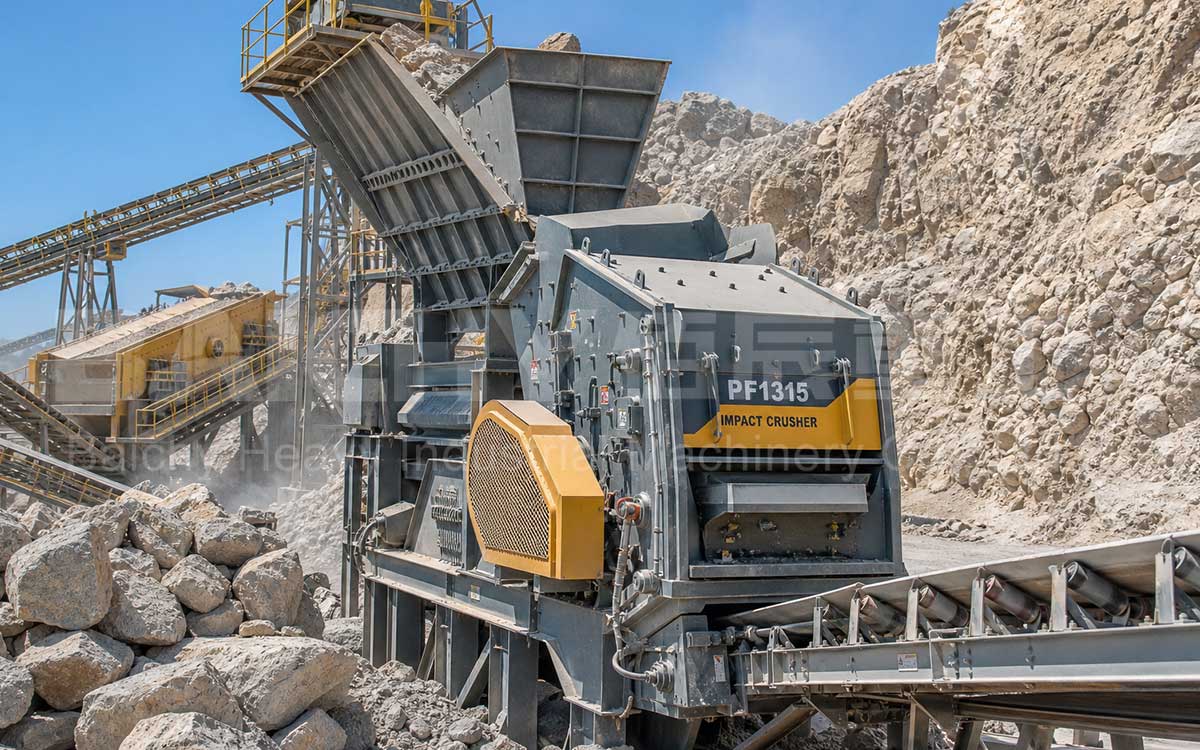
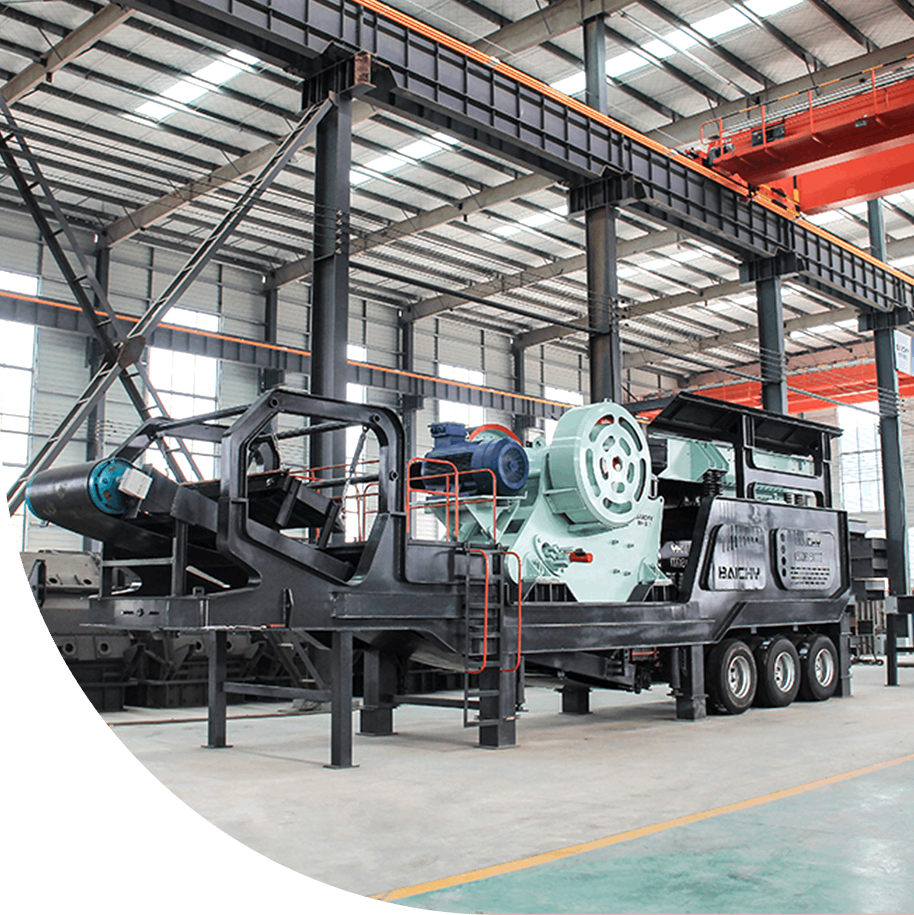
• Jaw Crusher (PE/PEX Series): Primary coarse crushing; reduces raw material size to meet the sand-making machine's feed requirements.
• Impact Crusher/Cone Crusher (PF/CS Series): Secondary medium crushing and shaping; produces high-quality intermediate material from medium-hard rock.
• Circular Vibrating Screen (YK Series): Classifies finished products and enables closed-circuit screening to control sand gradation.
• Sand Washer (XSD Wheel-bucket/Spiral Type): Removes surface silt and fines from the sand, enhancing quality and market value.
• Fine Sand Recovery Machine: Recovers fine sand lost during the washing process, increasing overall sand yield and reducing waste.
VII. FAQ (Frequently Asked Questions)
Q1: How do I choose between a roll sand-making machine and an impact sand-making machine (VSI)?
A: The choice depends primarily on material hardness and operational cost priorities. Roll sand-making machines are suitable for medium-hard or softer materials (e.g., limestone, river pebbles, coal gangue); they feature low-speed crushing, low electricity consumption per ton, simple maintenance, and low stone powder generation. VSI sand-making machines are suitable for hard materials (e.g., granite, basalt) and applications requiring premium aggregates with superior particle shapes. If the raw material consists of highly abrasive hard rock, it is recommended to prioritize evaluating a VSI crusher or a "cone crusher plus shaping unit" configuration.
Q2: Can roller sand-making machines process materials with high moisture content? Will they clog?
A: Yes, they can. Roller sand-making machines utilize compression crushing rather than high-speed material projection; consequently, they are significantly better suited for handling raw materials with 8%–10% moisture or clay content compared to impact-type equipment. However, excessive moisture reduces crushing efficiency and accelerates roller surface wear, so it is advisable to keep the raw material moisture content below 10%. If moisture levels are high, a vibrating screen can be used for preliminary dewatering, or the roller gap can be appropriately widened.
Q3: What is the service life of the roller shells, and is the replacement cost high?
A: The service life of roller shells depends on material abrasiveness, the roller gap setting, and the shell material. For limestone, the typical lifespan is 6–12 months, whereas for abrasive materials (such as andesite or river pebbles), it is approximately 3–6 months. The roller shells feature a modular design, allowing for partial replacement or repair via hardfacing; repair costs are only 20%–30% of the price of new shells. Both the cost of a single replacement and the downtime involved are lower than replacing a full set of hammers in a hammer-type sand maker, resulting in more controllable long-term maintenance expenses.
Baichy Heavy Industry
Baichy Heavy Industry is a high-tech mining equipment company integrating R&D, manufacturing, sales, and after-sales service. Focusing on crushing, grinding, and mineral processing equipment, we provide professional solutions to our customers. We are ISO9001:2015 、certified, and our products include mobile crushing palnts, crawler crushing plant, construction waste crushing plants, jaw crushers, sand making machines, cone crushers, fine crushers, grinding mills, ball mills, etc., all with reliable performance to meet diverse project needs.
Baichy Heavy Industry – Your Trusted Partner
To ensure optimal performance of your equipment, Baichy Heavy Industry offers:
- Professional on-site installation guidance
- Comprehensive operator training
- 24/7 technical support & maintenance services
Our complete after-sales service system guarantees long-term, stable operation of your machinery with minimal downtime.
Protect Your Rights – Only Use Official Channels
To avoid scams and ensure authentic support, contact us exclusively through:
• Official Website: www.baichychina.com
• WhatsApp: +8615093222637
• Email: [email protected]
Your satisfaction is our priority – expect prompt, professional service every time.
(Note: Beware of unauthorized third parties claiming to represent Baichy. Always verify through official contacts.)