
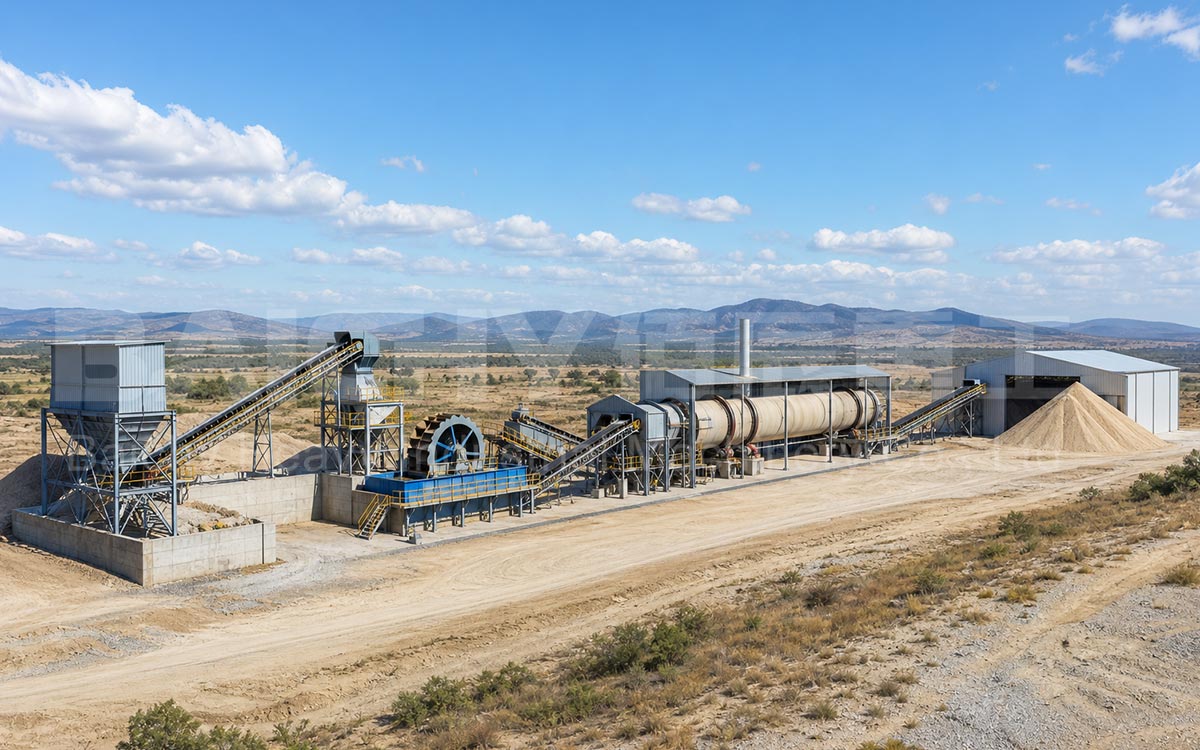
Rotary dryer fuel cost per ton
For rotary dryers, fuel costs typically account for 60%–70% of the entire drying line's operating expenses, making them the single largest variable in operating costs. For two units with identical production capacities, differences in thermal efficiency and operational management can lead to a 20%–30% variance in cost per ton; based on an annual output of 200,000 tons, a difference of 4 yuan per ton translates to an annual cost gap of 800,000 yuan. Controlling this expense relies on two key strategies: first, using a standardized metric—specifically "fuel cost per ton of water evaporated"—for benchmarking, rather than being misled by superficial figures like "fuel cost per ton of finished product"; and second, strictly managing variables such as the heat source, thermal efficiency, feed moisture content, temperature profiles, air leakage, and thermal insulation.
I. Why Fuel Cost Per Ton Is the Primary Metric for the Drying Workshop
• The essence of drying lies in using fuel to "burn off" moisture. While equipment depreciation, electricity consumption, and labor costs remain relatively fixed, fuel consumption fluctuates drastically depending on operating conditions:
• Unit fuel prices are market-driven and beyond the buyer's control; however, specific fuel consumption (coal or gas consumed per ton of material) is determined by equipment selection and operation, making it the only lever that can be controlled in the long term.
• The cost of the main equipment is a one-time expense, whereas fuel costs recur daily and annually; over three years, fuel expenses often exceed the initial purchase price of the equipment.
• For drying and upgrading projects involving materials like coal slime, sludge, sawdust, or mineral powder, profit margins are slim; a mere 10% increase in specific fuel consumption can wipe out the majority of the gross profit.
Therefore, when selecting or retrofitting equipment, the critical question to scrutinize is not merely "how much does this machine cost," but rather "what is the fuel cost per ton, and what factors make it low?"
II. Measurement Metrics: Standardizing the Benchmark Before Comparing
The question "what is the fuel cost?" can yield vastly different answers depending on the calculation method; there are three common metrics used in the industry:
2.1 Metric 1: Fuel Cost Per Ton of Finished Product
Hourly fuel cost &pide; Hourly finished product output. The advantage is its alignment with financial statements; the disadvantage is that the figure becomes distorted whenever feed moisture content changes—comparing the fuel cost per ton of finished product for drying river sand (5% moisture) versus coal slime (25% moisture) is meaningless. 2.2 Metric 2: Fuel cost per tonne of evaporated water (Recommended; specifically for cross-comparison)
Hourly fuel cost &pide; Hourly water evaporation rate. The evaporation rate is calculated using the formula:
Evaporation rate Q (t/h) = Wet material quantity G1 × (Input moisture M1 − Output moisture M2) &pide; (100 − M2)
This metric eliminates variables such as the material's origin or the target dryness level, directly measuring the fuel consumed to convert one tonne of water into steam. It serves as a fair benchmark for comparing fuel cost efficiency across different equipment models and manufacturers.
Calculation example: Drying 15 t/h of coal slime from 25% moisture to 12% moisture results in Q = 15 × 13 &pide; 88 ≈ 2.2 t/h. With an actual coal consumption of 440 kg/h and a coal price of 900 RMB/tonne, the fuel cost per tonne of evaporated water is 0.44 × 900 &pide; 2.2 ≈ 180 RMB, which translates to approximately 26 RMB per tonne of wet coal slime. Comparing this figure against competitors operating under similar conditions provides a meaningful basis for assessment.
2.3 Comparison of Metrics
| Metric | Calculation Formula | Applicable Scenarios | Common Pitfalls |
|---|---|---|---|
| Fuel cost per ton of finished product | Hourly fuel cost ÷ Hourly finished product output | Internal cost accounting; product quoting | Distorted figures if comparing inputs with varying moisture content |
| Fuel cost per ton of evaporated water | Hourly fuel cost ÷ Hourly water evaporation rate | Cross-model or cross-manufacturer price comparison | Requires accurate calculation of water evaporation rate based on the formula |
| Unit heat consumption (kcal/kg water) | Hourly heat supply ÷ Hourly water evaporation rate | Technical agreements; acceptance testing | Requires a standardized baseline for fuel net calorific value (NCV) |
III. Fuel Baseline Table: Comparability is only possible when different heat sources are converted to a "per ton of water" basis
Calculated based on a theoretical heat requirement of approx. 620,000 kcal/ton of water and thermal efficiency of 60%–75% (prices reflect typical market ranges for 2025–2026, intended for scheme comparison):
| Heat Source | Net Calorific Value (NCV) | Typical Unit Price | Consumption per Ton of Evaporated Water | Fuel Cost Range per Ton of Water |
|---|---|---|---|---|
| Bituminous coal | Approx. 5000 kcal/kg | 800–1000 CNY/ton | 170–230 kg | Approx. 140–230 CNY |
| Natural gas | Approx. 8500 kcal/Nm³ | 3.0–4.2 CNY/Nm³ | 100–135 Nm³ | Approx. 300–570 CNY |
| Biomass pellets | Approx. 4000 kcal/kg | 600–900 CNY/ton | 210–290 kg | Approx. 130–260 CNY |
| Diesel | Approx. 10200 kcal/kg | 6.5–7.5 CNY/L | 85–115 L | Approx. 550–860 CNY |
| Electric hot air heating | 860 kcal/kWh | 0.6–1.0 CNY/kWh | 720–1000 kWh | Approx. 430–1000 CNY |
The conclusion is straightforward: in countries with abundant coal resources, coal and biomass offer the lowest fuel costs per tonne of water evaporated. While natural gas has a higher unit price, its high thermal efficiency, clean emissions, and controllable temperature make it suitable for production lines with strict quality and environmental standards. Diesel and electric heating are worth considering only in special scenarios, such as locations lacking fuel supplies or small-scale pilot lines. Selecting a heat source also requires factoring in the costs of the hot-blast stove and environmental compliance equipment; for a comprehensive financial breakdown, refer to the "Rotary Dryer Cost Analysis: TCO Ledger."
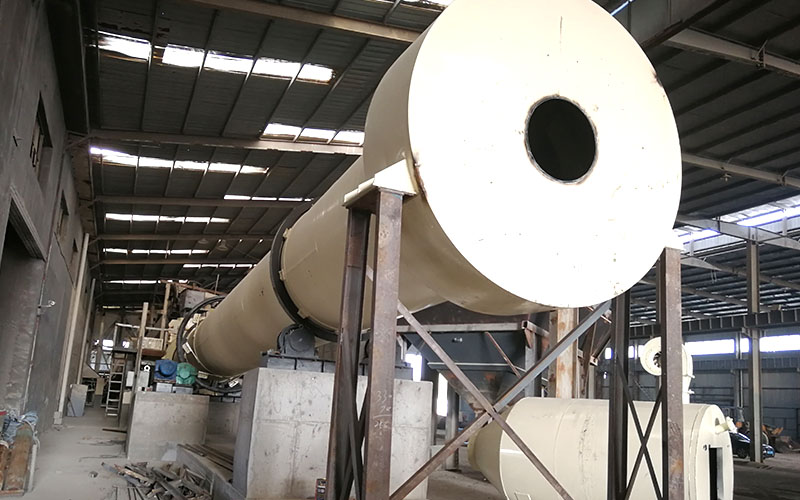
specific fuel consumption of rotary dryers
IV. Seven Variables Affecting Specific Fuel Consumption
Specific fuel consumption is not a fixed figure stated on the nameplate; rather, it is the result of the interplay between seven variables:
4.1 Feed Moisture Content vs. Target Moisture Content
For every 1 percentage point increase in feed moisture, fuel costs rise based on the "cost per tonne of water × evaporation volume" formula. Conversely, setting the discharge moisture standard too low (over-drying) results in wasted money—stopping the process once the target moisture is reached is the most cost-effective form of energy conservation.
4.2 Heat Source and Hot-Blast Stove Efficiency
Pairing the same equipment with an 85% efficient hot-blast stove versus an older 65% efficient model results in a 20% difference in fuel costs per tonne of water evaporated. Combustion completeness and heat exchange efficiency act as the primary determinants of specific fuel consumption.
4.3 Equipment Thermal Efficiency and Flue Gas Flow
Single-drum dryers typically have a thermal efficiency of 60%–75%. Three-drum models utilize a multi-pass flue gas flow for heat exchange; for the same production capacity, they usually consume 20%–30% less fuel, making them the preferred choice for loose, fine-grained materials like sand and mineral powder (for structural differences, see the comparison between three-drum and single-drum dryers).
4.4 Drum Insulation and System Air Leakage
Air leakage acts as a cold-air short circuit: it dilutes the hot air temperature, slows down the drying process, and increases heat loss through the exhaust gas. Aging seals and damaged flues are the hidden culprits behind the "ever-increasing fuel consumption" seen in many older production lines.
4.5 Material Lifters and Material Dispersion
The design of the material lifters determines the extent to which the material is exposed to the hot air. If the design lacks mechanisms for breaking up and back-mixing wet, sticky materials, the material tends to clump and roll while the hot air dries only the surface, leading to abnormally high specific fuel consumption.
4.6 Temperature Regime and Residence Time
The inlet temperature and the flow arrangement (co-current vs. counter-current) must match the material's heat sensitivity. Excessively low temperatures result in insufficient drying intensity and wasted hot air ("idling"), while excessively high temperatures can cause surface crusting on certain materials, trapping moisture inside.
4.7 Operational Management: Air Distribution, Load, and Online Monitoring
Improper air volume ratios, prolonged operation below full load, and relying on experience to "dry a bit longer" without online moisture meters can all cause specific fuel consumption to creep upward.
V. Practical Checklist for Reducing Specific Fuel Consumption
Cost-effective measures to reduce consumption without replacing the main unit, ranked by value:
• Include specific fuel consumption in technical agreements: Require the manufacturer to provide a written commitment regarding the "maximum fuel consumption per tonne of water evaporated," and specify baseline operating conditions (material type, inlet/outlet moisture content, ambient temperature) and acceptance measurement methods—this is the most effective way to hold "theoretical thermal efficiency" accountable;
• Install online moisture meters and implement closed-loop control based on outlet temperature: Avoid over-drying "just to be safe"; every percentage point of reduced drying represents pure cost savings;
• Optimize hot-air furnace combustion and air distribution: Switch to automatic air distribution and oxygen-level interlocking to further lower specific fuel consumption;
• Improve insulation and seal leaks: Systematically inspect the drum insulation layer, inlet/outlet seals, and flue flanges; energy savings are immediate;
• Recover flue gas waste heat: Use waste heat from exhaust gases to preheat combustion air or the feed material—one of the retrofits with the highest return on investment;
• Feed pretreatment: Employ mechanical dewatering and crushing/uniform distribution to keep excess free water out of the drum;
• Upgrade lifters and material-breaking structures: For wet, sticky materials, switch to a combination of lifters and breaking devices to improve gas-solid contact.
Based on engineering experience, a combination of measures 1, 3, and 4 can typically reduce specific fuel consumption by 5%–15%, with a payback period of less than one year (depending on operating conditions and fuel prices). To analyze cost reductions across the board, one can compare the per-ton cost structure of the ore dryer against the configuration of the complete rotary drying system.
VI. Quick Reference for Typical Operating Conditions: Fuel Cost per Ton of Material
The table below is calculated based on empirical benchmarks (coal at 900 RMB/ton; evaporation cost at approx. 180 RMB per ton of water removed) to allow for quick material-based estimates; please recalculate based on your specific operating conditions.

Single-drum dryer Shipment
| Material & Moisture Conditions | Water Evaporated (per 100t wet material) | Coal: Fuel Cost per Ton of Material | Natural Gas: Fuel Cost per Ton of Material | Notes |
|---|---|---|---|---|
| River sand 5% → 0.8% | Approx. 4.2 t | 6–10 RMB | 18–25 RMB | Fine, loose particles; high thermal efficiency |
| Quartz sand/Mineral powder 8% → 0.5% | Approx. 7.5 t | 11–17 RMB | 30–45 RMB | Requires high-efficiency dust removal |
| Coal slime 25% → 12% | Approx. 14.8 t | 25–35 RMB | Calculated based on local gas prices | Specific consumption depends on anti-clumping performance |
| Sawdust 45% → 12% | Approx. 37.5 t | 55–75 RMB (biomass self-heating) | Not recommended (cost too high) | Biomass furnace self-heating commonly used |
| Municipal sludge 80% → 60% | Approx. 50 t | 90–120 RMB | 150–290 RMB | Back-mixing or staged drying process recommended |
VII. FAQ
Q1: What is the typical fuel cost per ton for a rotary dryer? How should the cost be quoted to avoid being overcharged?
A: There is no standard "flat rate"; the cost is determined by a combination of material moisture content, the heat source, and the equipment's thermal efficiency. Based on the metric of "fuel consumed per tonne of water evaporated," costs are approximately 140–230 RMB for coal and 300–570 RMB for natural gas (at 2025–2026 price levels); when allocated to the finished product, the cost for river sand (reducing moisture from 5% to 0.8%) is about 6–10 RMB per tonne (using coal). When comparing prices or conducting acceptance checks, insist that manufacturers quote based on "fuel consumed per tonne of water evaporated" and specify the baseline operating conditions; otherwise, the figures cannot be meaningfully compared.
Q2: Why do different manufacturers quote vastly different specific fuel consumption figures for rotary dryers of the same specifications?
A: The differences stem primarily from three areas: the definition of thermal efficiency (e.g., whether heat loss from exhaust gas, air leakage, and heat radiation is deducted); whether the water evaporation volume is based on theoretical values or actual measurements; and variations in internal drum structure and the hot-blast stove configuration. The solution is to specify the baseline material, input/output moisture content, ambient temperature, and the upper limit of specific fuel consumption in the technical agreement, while requiring real operational data from similar conditions as supporting evidence.
Q3: For rotary dryers already in operation, how can specific fuel consumption be reduced without replacing the main unit?
A: Prioritize measures based on cost-effectiveness: first, install online moisture analyzers and outlet temperature controls to prevent over-drying; next, optimize combustion and airflow distribution in the hot-blast stove; then, improve thermal insulation and seal leaks; subsequently, consider flue gas waste heat recovery and modifications to the material lifting flights; and finally, address mechanical dewatering and particle size uniformity at the feed end. Based on engineering experience, a combination of the first three measures can typically reduce specific fuel consumption by 5%–15%, with an investment payback period of usually less than one year.
Baichy Heavy Industry
Baichy Heavy Industry is a high-tech mining equipment company integrating R&D, manufacturing, sales, and after-sales service. Focusing on crushing, grinding, and mineral processing equipment, we provide professional solutions to our customers. We are ISO9001:2015 、certified, and our products include mobile crushing palnts, crawler crushing plant, construction waste crushing plants, jaw crushers, sand making machines, cone crushers, fine crushers, grinding mills, ball mills, etc., all with reliable performance to meet diverse project needs.
Baichy Heavy Industry – Your Trusted Partner
To ensure optimal performance of your equipment, Baichy Heavy Industry offers:
- Professional on-site installation guidance
- Comprehensive operator training
- 24/7 technical support & maintenance services
Our complete after-sales service system guarantees long-term, stable operation of your machinery with minimal downtime.
Protect Your Rights – Only Use Official Channels
To avoid scams and ensure authentic support, contact us exclusively through:
• Official Website: www.baichychina.com
• WhatsApp: +8615093222637
• Email: [email protected]
Your satisfaction is our priority – expect prompt, professional service every time.
(Note: Beware of unauthorized third parties claiming to represent Baichy. Always verify through official contacts.)