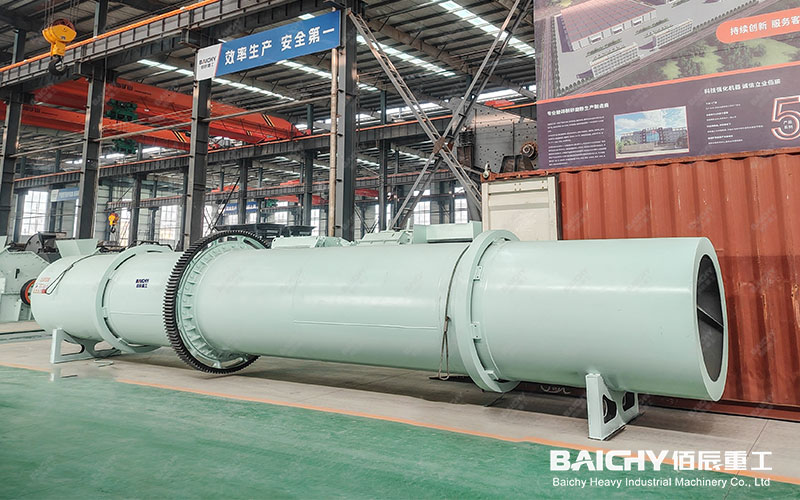
Rotary Sand Dryer
With wet sand containing 15% moisture, 14 out of every 100 tons transported is water—meaning you are paying to ship water. A triple-pass rotary sand dryer reduces the moisture content of wet sand (typically 8–20% from washing lines) to below 1%, cutting transport weight by approximately 7–14%. It boasts a thermal efficiency of 45% (compared to ~35% for traditional single-pass dryers, saving about 20% on fuel for the same amount of water evaporation) and is roughly 60% shorter than a single-pass dryer of equal capacity. For manufactured sand plants, dry-mixed mortar facilities, and mineral processing enterprises, this represents the fastest return on investment (ROI) upgrade within the entire sand washing line.
1. Wet sand isn't just a raw material issue; it’s a recurring daily expense.
The cost of wet sand doesn't appear on the initial purchase invoice; instead, it accumulates with every truckload, storage silo, and batch mix:
• Shipping costs cover the water. A 15% moisture content means that in every 100 tons of wet sand, 14 tons is water (based on drying down to 1%). Every ton of water moved by truck or ship represents a pure transportation expense.
• Storage is at the mercy of the seasons. In winter, wet sand clumps, freezes, and causes "bridging" in silos; dry sand flows freely, allowing production lines to run year-round and simplifying silo management.
• Quality fluctuates with the weather. Moisture content variations disrupt mortar mix ratios, concrete mixing, and the stability of downstream screening processes. Dry-mixed mortar plants and foundry sand buyers require moisture levels ≤1% and are willing to pay a premium for this guarantee.
• Unsellable fines become waste. High-moisture fines are difficult to sell or stockpile, resulting in inventory write-downs. Drying transforms them back into marketable products.
2. Triple-Drum Structure: Utilizing the Same Drum Section Three Times
The triple-drum rotary dryer houses three concentrically nested drums within a single unit, allowing hot air and material to make full contact three times:
• Inner Drum (Co-current flow): High-temperature hot air (700–750°C) mixes with wet sand in the same direction, rapidly evaporating the majority of the moisture.
• Middle Drum (Counter-current flow): Lifting flights repeatedly scoop up the material to form a uniform curtain; the material moves in a "two steps forward, one step back" pattern, contacting the hot air in the opposite direction—most of the drying occurs here.
• Outer Drum (Rectangular loop): Final conditioning and drying stage. Dry sand exits rapidly with the airflow, while wetter particles remain longer due to gravity.
• Key Engineering Results: The triple-drum structure acts as an insulating shell for the other drums, significantly reducing heat dissipation surface area. Baichy triple-drum dryers achieve a thermal efficiency of 45%, compared to approximately 35% for traditional single-drum dryers of the same diameter; for the same production capacity, the total machine length is reduced by about 60%, directly minimizing the factory footprint and civil engineering investment.
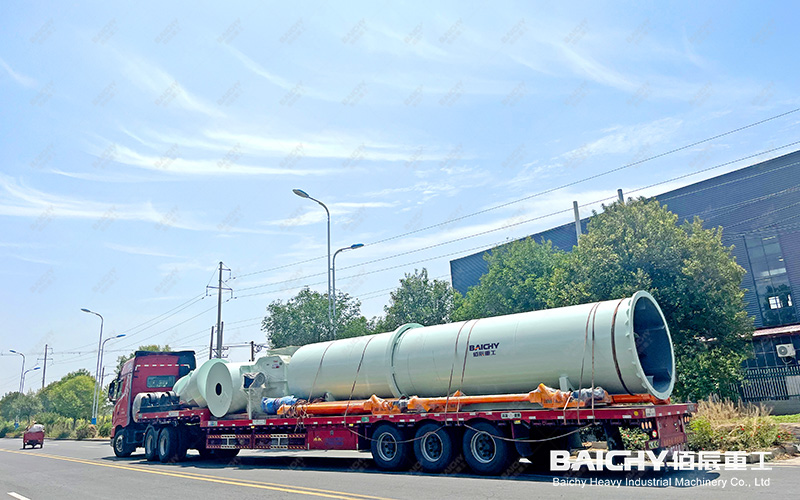
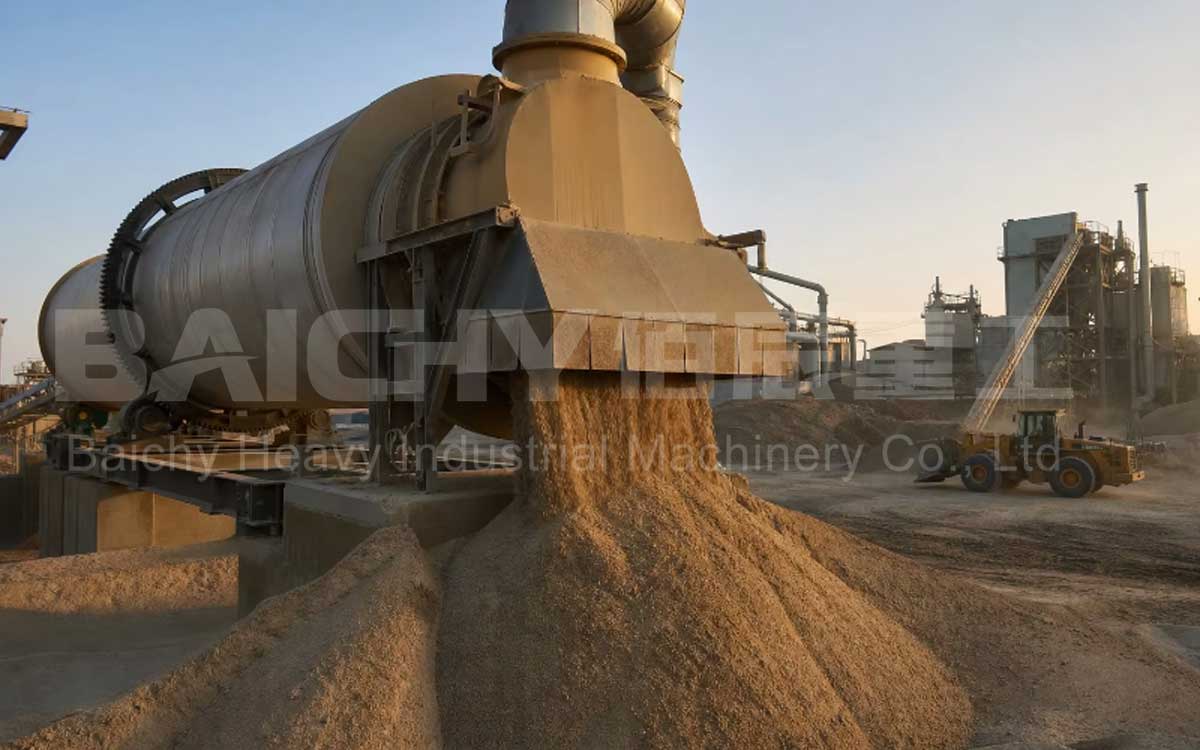
Dryers shipped to Vietnam
3. What These Parameters Mean for You
A thermal efficiency of 45% versus 35% means fuel consumption is about 20% lower for the same amount of water evaporation—a factory spending 500,000 RMB annually on fuel could save around 100,000 RMB (estimated example; verify against actual operating conditions); reducing moisture content from 8–20% to below 1% means a weight reduction of approximately 14 tons for every 100 tons of wet sand (at 15% moisture), directly cutting transport costs by 7–14%; a 60% reduction in length means the drying line can be installed even in limited spaces; fuel options include coal, natural gas, diesel, biomass, or waste heat, meaning you are never held hostage by a single energy market; trunnion roller drive (eliminating large/small gears) means fewer drive components, lower noise levels, and reduced maintenance frequency and spare part costs; compatibility with lump, granular, and powdery materials (≤20mm) means a single machine can handle river sand, manufactured sand, mineral powder, coal slime, and slag.
| Spec. (Dia.x Length mm) |
Volume(m³) | Capacity (t/h) | Gradient(%) | Highest Inlet Air Temperature(℃) |
Rotate Speed(r/min) | Main Motor(kw) |
| Φ600x6000 | 1.7 | 0.5-1.5 | 3~5 | 700~800 | 3~8 | 3 |
| Φ800x8000 | 4.1 | 0.8-2.0 | 3~5 | 700~800 | 3~8 | 4 |
| Φ800x10000 | 5.1 | 0.8-2.5 | 3~5 | 700~800 | 3~8 | 4 |
| Φ1000x10000 | 7.9 | 1.0-3.0 | 3~5 | 700~800 | 3~8 | 7.5 |
| Φ1000x12000 | 9.4 | 1.2-3.2 | 3~5 | 700~800 | 3~8 | 11 |
| Φ1200x8000 | 9 | 1.9-2.4 | 3~5 | 700~800 | 3~8 | 7.5 |
| Φ1200x10000 | 11.3 | 2.2-3.0 | 3~5 | 700~800 | 3~8 | 7.5 |
| Φ1200x12000 | 13.6 | 2.4-3.2 | 3~5 | 700~800 | 3~8 | 7.5 |
| Φ1500x12000 | 21.2 | 4.5-5.7 | 3~5 | 700~800 | 2~6 | 15 |
| Φ1500x14000 | 24.7 | 5.3-6.6 | 3~5 | 700~800 | 2~6 | 15 |
| Φ1500x16000 | 26.5 | 5.7-7.1 | 3~5 | 700~800 | 2~6 | 15 |
| Φ1800x12000 | 30.5 | 6.5-8.1 | 3~5 | 700~800 | 2~6 | 18.5 |
| Φ1800x14000 | 35.6 | 7.6-9.5 | 3~5 | 700~800 | 2~6 | 18.5 |
| Φ1800x16000 | 40.7 | 7.8-10.2 | 3~5 | 700~800 | 2~6 | 18.5 |
| Φ2000x18000 | 56.5 | 8.4-12.3 | 3~5 | 700~800 | 1.5~6 | 22 |
| Φ2000x20000 | 62.8 | 9.0-13.6 | 3~5 | 700~800 | 1.5~6 | 22 |
| Φ2200x16000 | 60.8 | 11.4-15.8 | 3~5 | 700~800 | 1.5~6 | 22 |
| Φ2200x18000 | 68.3 | 12.8-16.2 | 3~5 | 700~800 | 1.5~6 | 22 |
| Φ2200x20000 | 75.9 | 13.0-16.5 | 3~5 | 700~800 | 1.5~6 | 30 |
| Φ2400x16000 | 72.3 | 13.5-16.9 | 3~5 | 700~800 | 1.5~5 | 37 |
| Φ2400x18000 | 81.4 | 17.4-21.7 | 3~5 | 700~800 | 1.5~5 | 45 |
| Φ2400x20000 | 90.4 | 19.3-24.1 | 3~5 | 700~800 | 1.5~5 | 55 |
| Φ2600x24000 | 127.4 | 27.2-34.0 | 3~5 | 700~800 | 1.5~5 | 75 |
| Φ2600x28000 | 148.6 | 28.6-36.2 | 3~5 | 700~800 | 1.5~5 | 75 |
| Φ3000x20000 | 141.3 | 30.1-37.7 | 3~5 | 700~800 | 1.5~5 | 85 |
| Φ3000x25000 | 176.6 | 37.7-47.1 | 3~5 | 700~800 | 1.5~5 | 90 |
| Φ3200x25000 | 201 | 42.9-53.6 | 3~5 | 700~800 | 1.5~5 | 110 |
Maximum inlet air temperature: 700–750°C. Production capacity is rated based on typical washed sand operating conditions; high moisture content or sticky materials will reduce actual throughput, so please allow for a margin when selecting the model.
4. How to Choose: Four Key Criteria
• Raw Material: Confirm initial moisture content (typically 8–20% after sand washing), particle size (the three-drum structure requires ≤20mm), and stickiness/clay content. Materials with high clay content require pre-screening or blending processes—please specify this when inquiring.
• Capacity: Select the model based on the target hourly output of dry sand. Rule of thumb: If the incoming material's moisture content is at the high end of the range, step up to the next model size—material with 15% moisture can reduce actual throughput by 20–30% compared to drier material.
• Heat Source: Compare costs for coal, natural gas, diesel, biomass pellets, and waste heat based on local unit energy prices. Flexible fuel capability (coal/oil/gas) means you aren't locked into the price fluctuations of any single energy source.
• Environmental Compliance: Confirm local emission standards and the associated dust removal system (cyclone dust collector, baghouse filter) before placing an order. Retrofitting later always costs more than getting the right setup from the start.
5. FAQ
Q1: How much does a rotary sand dryer cost?
It depends on the model, heat source, dust removal configuration, and auxiliary equipment. Send us your raw material moisture content, target capacity, and fuel type, and we will reply with a matching model and quote within 24 hours.
Q2: To what level can the moisture content be reduced?
Under typical conditions, it drops from 8–20% to 1% or lower, depending on residence time, inlet air temperature (max. 700–750°C), and material characteristics. The guaranteed final moisture content is confirmed during the system design phase.
Q3: Which is better: a three-drum or a single-drum rotary dryer?
For sand, gravel, and granular materials, the three-drum dryer outperforms the single-drum type in three key areas: higher thermal efficiency (approx. 45% vs. 35%), a significantly shorter footprint (reducing space requirements and civil engineering costs by about 60%), and lower fuel consumption per ton of water evaporated. Single-drum dryers remain competitive only in scenarios where space is not a constraint and operations involve continuous, high-volume processing of materials with low initial moisture content.
Q4: What fuels can be used?
Coal, natural gas, diesel, biomass pellets, or waste heat are all viable options; the specific choice depends on local availability and energy costs—this selection is included in the complimentary production line design proposal.
Q5: What capacity do I need?
Match your target dry sand output against the specifications table: standard models range from Ф2.0×4m (8–15 t/h) to Ф4.0×10m (70–100 t/h). Baichy also provides customized auxiliary equipment (feeders, dust collectors, and coolers) tailored to your specific production line.