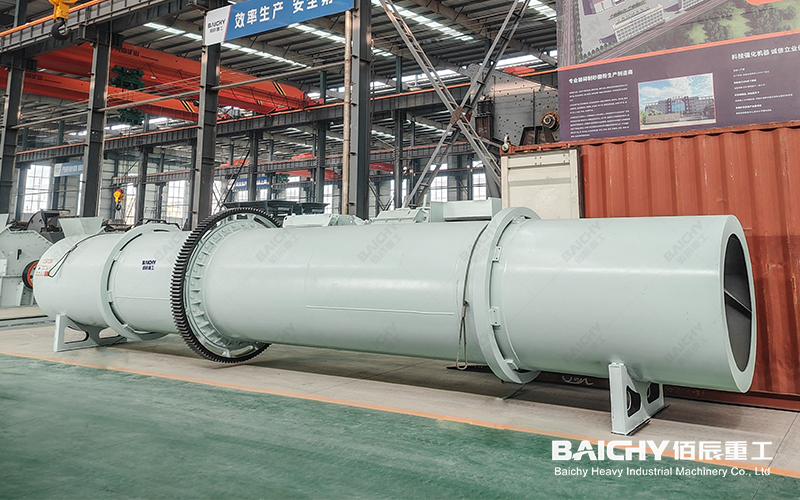
Phosphate Concentrate Drying Equipment
While the drying of phosphate rock and fertilizer raw materials appears to be merely a process of "removing water," it is fundamentally a matter of two distinct arithmetic calculations. Phosphate concentrate filter cakes typically contain 12%–16% moisture; this leads to billing based on wet tonnage, mass freezing during winter transport, and silo blockages during the rainy season. For an annual throughput of 100,000 dry tons, every additional percentage point of moisture results in transporting roughly 1,000 tons of "pure water" annually, turning freight costs and losses from frozen loads into hidden expenses. Meanwhile, fertilizer raw materials such as ammonium chloride, ammonium sulfate, and urea have low critical relative humidity (CRH) thresholds (typically 75%–85% RH at room temperature); failure to control moisture leads to caking, scale clogging, and uneven blending—problems that propagate all the way to the finished product stage.
I. Overview: Costs Arise Wherever Moisture Is Present
Phosphate rock undergoes a long processing chain—mining, crushing, beneficiation (flotation), thickening/filtration, drying, acidulation, and granulation—before becoming phosphate fertilizer. Fertilizer raw materials, conversely, undergo only a brief holding period prior to blending or granulation. The moisture-related cost dynamics differ between these two stages:
1. Phosphate Rock: After flotation, thickening, and pressure filtration, phosphate concentrate filter cakes retain 12%–16% moisture. Before entering wet-process phosphoric acid or single superphosphate (SSP) units, any fluctuation in moisture levels—whether at the grinding or acidulation stage—causes instability in acid concentration, reaction temperatures, and gypsum filtration performance. In high-altitude or cold mining regions, winter transport can result in the entire load freezing solid, causing unloading costs to skyrocket.
2. Fertilizer Raw Materials: Salts such as ammonium chloride, ammonium sulfate, potassium chloride, and monoammonium phosphate (MAP) are prone to moisture re-absorption and caking in silos or on conveyor belts, particularly when their critical relative humidity is low. If high-moisture raw materials enter NPK granulation or blending processes, the liquid phase becomes uncontrollable and granule strength diminishes, ultimately resulting in customer complaints regarding finished product caking. According to 2024 data from the U.S. Geological Survey (USGS), global annual phosphate rock production stands at approximately 220 million tons. China firmly holds the top spot with an annual output exceeding 110 million tons, followed closely by Morocco. Consequently, phosphate rock dryers and fertilizer raw material drying equipment are expanding in tandem with global phosphate chemical production capacity, becoming a fundamental process shared by beneficiation plants, phosphate fertilizer facilities, and compound fertilizer plants.
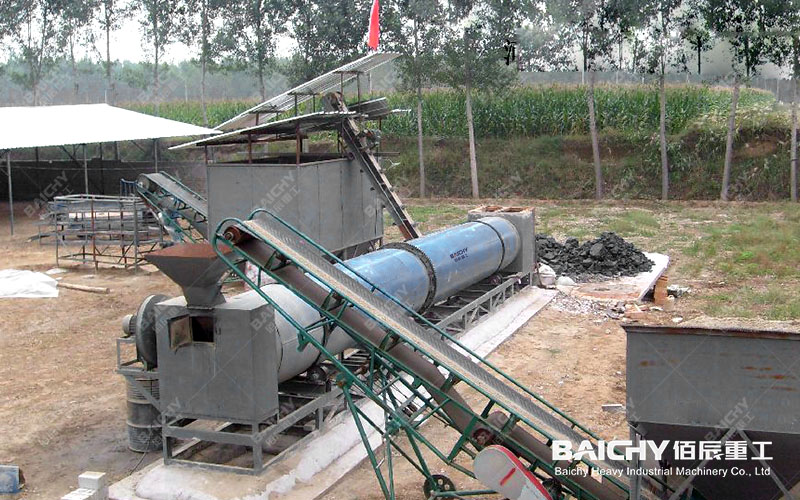
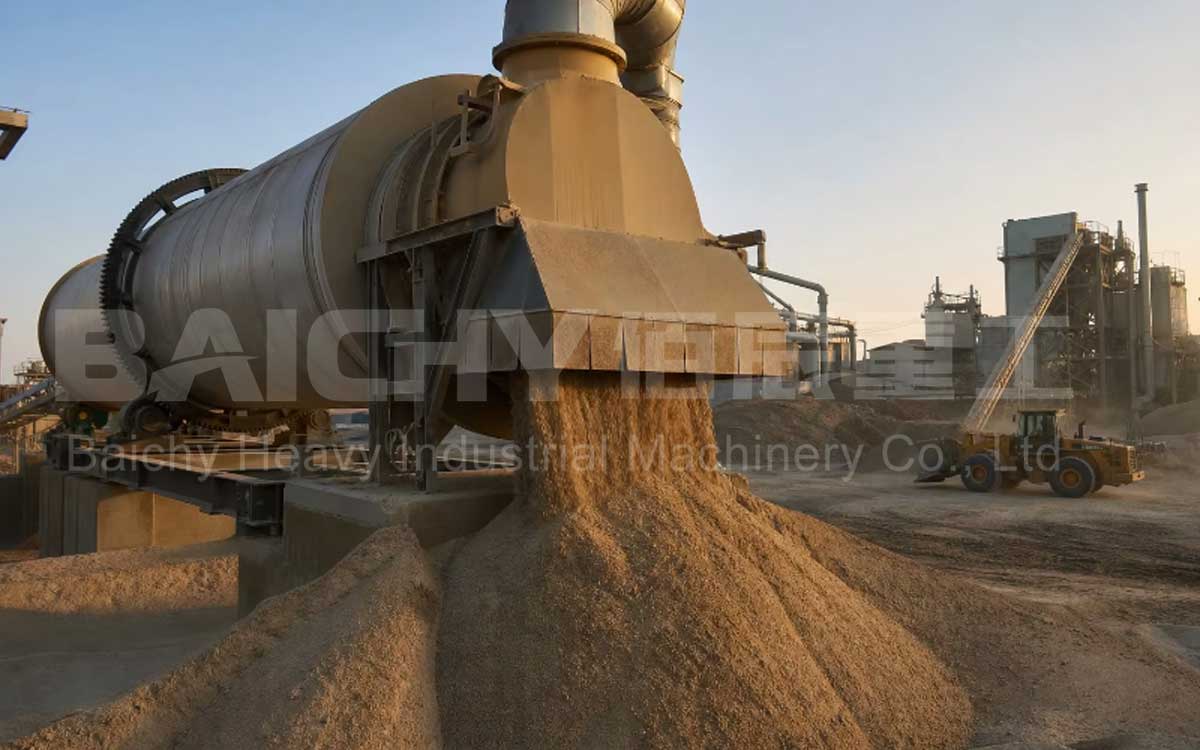
Customer site featuring a single-drum dryer.
II. Two Types of Materials, Two Drying Strategies
1. Phosphate Concentrate and Phosphate Rock Powder: Drying objectives are "total quantity control" and "abrasion/corrosion resistance."
Phosphate rock is insensitive to material temperature and can withstand rapid drying at high temperatures; the real challenges for the equipment are twofold: first, the high abrasiveness caused by siliceous gangue and quartz, which leads to rapid wear on the dryer shell and lifting flights; and second, the release of fluorides from fluorine-bearing minerals into the flue gas upon heating—if the temperature drops below the dew point, these fluorides dissolve into the condensate, creating a highly corrosive medium. The drying strategy for these conditions involves "high capacity, high temperature differential, wear-resistant lining, and anti-corrosion flue gas handling."
2. Fertilizer Raw Materials (e.g., Ammonium Chloride, Ammonium Sulfate): Drying objectives are "uniformity control" and "prevention of moisture re-absorption."
Fertilizer raw materials are predominantly water-soluble salts; high moisture content causes the particle surfaces to dissolve and form salt bridges, leading to caking or clumping upon cooling. The drying strategy here relies on "low temperature with high airflow" followed by "thorough cooling of the discharge": the goal is to rapidly remove free moisture without subjecting the material to deep drying at high temperatures. Cooling the discharged product to below 40°C before packaging is essential to ensure the material does not re-absorb moisture.
III. Typical Application Scenarios
| Scenario | Feed Form | Feed Moisture | Target Moisture | Drying Objective |
|---|---|---|---|---|
| Phosphate flotation concentrate dewatering | Phosphate concentrate filter cake | 12%–16% | ≤3% | Prevent freezing during stockpiling; reduce weight for transport; condition material for export shipping |
| Dry ore for MAP/DAP or wet-process phosphoric acid plants | Phosphate rock powder / crushed ore | 6%–12% | 2%–4% | Stabilize moisture for milling/acidulation; ensure accurate batching/metering |
| Drying raw materials for NPK blending/granulation | Ammonium chloride, ammonium sulfate, potassium chloride, MAP/DAP | 1.5%–4% | 0.5%–1.5% | Prevent caking/scale clogging; ensure blending uniformity |
| Integrated phosphate grinding and drying (hot-air mill) | Crushed phosphate rock | 6%–10% | ≤1% (completed inside the mill) | Produce fine powder for acidulation; eliminate separate drying step |
Feed moisture ranges reflect typical filtered cake and raw material conditions; target moisture is set by downstream storage, transport and process requirements. For heat-sensitive fertilizer salts, drying is paired with discharge cooling below 40°C to prevent re-caking. Confirm the final moisture window against the free sample drying test.
IV. Baichy Rotary Dryer: Six Design Details Tailored to Phosphate and Fertilizer Operating Conditions
1. Customized for abrasive conditions: The drum features wear-resistant liners and thickened lifters; the feed section is designed to handle filter cake adhesion; wear parts are engineered based on actual material lifespan, allowing for predictable liner replacement and controlled downtime.
2. Corrosion prevention and dew point management: For fluoride-containing flue gas, exhaust temperature and negative pressure are strictly controlled, and the shell material is selected for corrosion resistance; for fertilizer raw materials involving chloride ions, corrosion-resistant internals or linings are used, significantly extending the drum's service life.
3. Co-current low-temperature thermal processing: Rapid evaporation of phosphate concentrate via high temperature differential; inlet air temperatures for heat-sensitive materials (like ammonium chloride) are customized within specific ranges, ensuring controlled discharge temperatures to prevent melting, sticking, or decomposition.
4. Dust recovery with zero particle loss: Two-stage dust collection (cyclone + bag filter) achieves a recovery rate of ≥99%. Phosphate and fertilizer powders represent value—recovery preserves P₂O₅ and nutrient content while ensuring compliance with emission standards.
5. Exhaust Gas Scrubbing (Fluorine & Ammonia Removal): Designed to handle fluorides from phosphate rock and ammonia from fertilizer ammonium salts; utilizes a wet scrubbing tower to ensure emissions meet compliance standards and to mitigate environmental and occupational health risks.
Data-Driven Delivery: Supports free drying tests for 5–10 kg samples; provides "moisture vs. time" curves, recommended air temperatures, and residence time windows, allowing process parameters to be finalized prior to full-scale production.
V. Technical Parameters for Phosphate Rock and Fertilizer Raw Material Dryers (Baichy Typical Configuration)
The following details Baichy’s typical series of single-drum rotary dryers (capacities based on wet basis). Inlet air temperatures for phosphate rock applications typically range from 550–750°C (equipment limit: 700–800°C), while heat-sensitive fertilizer raw materials are processed at customized temperatures of 250–450°C; specific parameters are determined by drying test results.
| Specifications (Diameter × Length, m) | Drum Volume (m³) | Reference Capacity (t/h) | Installation Slope | Max. Inlet Gas Temp. (°C) | Main Motor (kW) | Typical Production Line Application |
|---|---|---|---|---|---|---|
| Φ1.5×12 | 21.2 | 4.5–5.7 | 3–5% | 700–800 (Equipment limit) | 15 | 50,000–100,000 t/a phosphate rock powder; small-scale compound fertilizer raw material line |
| Φ1.8×14 | 35.6 | 7.6–9.7 | 3–5% | 700–800 (Equipment limit) | 18.5 | 100,000–200,000 t/a phosphate concentrate; compound fertilizer raw material line |
| Φ2.0×16 | 50.24 | 9.5–13 | 3–5% | 700–800 (Equipment limit) | 18.5 | 200,000–300,000 t/a centralized phosphate concentrate drying |
| Φ2.2×16 | 60.8 | 13–16.2 | 3–5% | 700–800 (Equipment limit) | 22 | 300,000–500,000 t/a phosphate beneficiation plant auxiliary unit |
| Φ2.4×20 | 90.4 | 19.3–24.1 | 3–5% | 700–800 (Equipment limit) | 45 | 500,000–800,000 t/a large-scale phosphate rock/fertilizer base |
| Φ2.6×24 | 127.4 | 27.2–34 | 3–5% | 700–800 (Equipment limit) | 55 | >800,000 t/a phosphate chemical industry cluster |
Reference capacity is rated on a wet basis for general materials. "700–800 (Equipment limit)" is the maximum allowable inlet gas temperature; for phosphate rock duties the inlet gas is typically set at 550–750°C, while heat-sensitive fertilizer raw materials (ammonium chloride, ammonium sulfate, urea, etc.) are customized at 250–450°C with discharge temperature controlled to prevent re-caking. High-moisture filter cakes reduce dry throughput by 20–30% — confirm the final model against the moisture-reduction curve from free sample testing.
Key Points: Three factors to consider when selecting a phosphate rock dryer—feed moisture range determines the need for a material-breaking or recycle system (recommended if >15%); target moisture level determines heat consumption (for every additional 1 percentage point reduction, heat consumption per ton increases by approximately... ...8%–12%); abrasion and corrosiveness dictate the specifications for liners, lifters, and anti-corrosion measures. Phosphate concentrate filter cake is wet and sticky; direct feeding into the drum typically yields only 60% of the design capacity, so equipment selection must be verified against the worst-case feed material conditions.
VI. Relevant Application Cases
Case A: Phosphate beneficiation plant in North Africa—reducing filter cake moisture from 15% to under 3%
The plant’s flotation phosphate concentrate filter cake had a moisture content of 14%–16%. Issues included material caking in storage piles during the rainy season and financial losses due to shipping based on "wet tonnage"; a drying capacity of 20–25 t/h was required. After adopting the Baichy phosphate drying line solution (Φ2.4×20 single-drum rotary dryer + gas-fired hot air furnace + cyclone/baghouse dust collection), the discharge moisture stabilized at 2.5%–3% (with fluctuations of ±0.3 percentage points). Shipping measurements shifted from "wet tonnage" to a "dry tonnage basis," and complaints regarding stockpile caking were eliminated. (Client name omitted due to confidentiality agreement.)
Case B: BB (Bulk Blending) fertilizer plant in Southeast Asia—resolving ammonium chloride scale-up/clogging issues within one season
The plant produced blended fertilizers using ammonium chloride, potassium chloride, and ammonium phosphate. During the rainy season, raw materials caked in storage silos, causing frequent clogging of the weighing scales and significant fluctuations in blend uniformity. After installing a Φ1.8×14 drying line and a rotary cooler, raw material moisture was reduced from 3%–4% to under 1%, and discharge temperatures were controlled below 40°C before storage. The system operated through a rainy season without scale clogging, and complaints regarding finished product caking dropped by approximately 80%. (Client name omitted per confidentiality agreement)
VII. Recommended Equipment
The phosphate ore dryer is the core unit of the complete phosphate chemical drying line, configured as a system comprising: "Main Unit + Heat Source + Cooling + Dust/Fluorine Removal + Conveying."
| Equipment | Recommended Configuration | Application/Positioning |
|---|---|---|
| Single-cylinder rotary dryer | Φ1.5×12 ~ Φ2.6×24 | Main unit for drying phosphate concentrate, phosphate ore powder, and fertilizer raw materials |
| Three-cylinder rotary dryer | Sized based on capacity | For sites with space constraints or energy-saving retrofits; footprint is approx. 1/2 that of a single-cylinder unit |
| Gas/Coal/Biomass hot air furnace | Sized based on evaporation load | Supplies hot air at 250–750°C; flexible heat source configuration |
| Rotary cooler | Matched to dryer series | Cools discharge to ≤40°C; prevents moisture re-absorption and caking |
| Cyclone dust collector + Baghouse filter | Recovery rate ≥99% | Recovers phosphate/fertilizer fines; ensures emissions compliance |
| Wet-process exhaust scrubber | Sized based on airflow | Removes fluorine and ammonia; mitigates corrosion and environmental risks |
| Hot-air Raymond mill (integrated drying & grinding) | Sized based on fineness/capacity | For fine powder feed to acidulation; drying and grinding completed in one step |
The single-cylinder rotary dryer is the core unit of a phosphate drying line; the complete package covers heat source, cooling, dust collection, fluorine/ammonia scrubbing and conveying. For acidulation-grade fine powder, the hot-air Raymond mill combines drying and grinding in one step and eliminates a separate drying stage. Supply the material type, feed moisture, target moisture and capacity for a free sample drying test and a tailored equipment list.
Related Reading: Complete rotary drying systems (from wet material feed to dried product); fertilizer rotary dryers (low-temperature, high-airflow process for heat-sensitive granules). For equipment selection, please provide material type, feed moisture content, target moisture content, and capacity requirements. Baichy provides free drying test reports and delivers drying solutions and quotations within 5 working days.

Single-drum dryer shipment
FAQ
Q1: How is the target moisture content for phosphate ore drying determined? Is reducing it to 3% sufficient?
A: The discharge moisture specification for phosphate ore dryers is determined by downstream usage: for stockpiling/transport and subsequent grinding/acidulation, ≤3% is generally sufficient; for mines in extremely cold regions or maritime shipping, 2–3% is targeted, often combined with insulated conveying; if using a hot-air Raymond mill for grinding, the "integrated drying and grinding" process can reduce moisture to below 1% directly inside the mill. Lower moisture content is not necessarily better—over-drying increases energy consumption and dust generation. The engineering optimum is to stabilize moisture levels within the range defined by the "safety threshold for storage and transport" and the "process requirement line." We recommend conducting drying tests with 5–10 kg samples to establish targets based on actual measured curves.
Q2: Phosphate rock contains fluorine; will the drying flue gas corrode equipment or pollute the environment?
A: Yes, it will; this is a key difference between drying phosphate rock and drying ordinary mineral materials. Fluorine-containing minerals release fluorides when heated. If the flue gas temperature drops below the dew point, these fluorides dissolve in the condensate to form a highly corrosive medium. Mitigation strategies include rapid cooling via co-current flow, maintaining exhaust temperatures above the dew point, selecting corrosion-resistant materials for the equipment shell, using cyclone and baghouse systems for dust recovery, and employing wet scrubbing towers for fluorine removal to ensure emissions meet standards. Chloride ion corrosion—relevant to fertilizer raw materials—follows the same principle; corrosion-resistant internal components or linings must be selected based on the specific medium. This distinction represents the fundamental difference between specialized phosphate chemical drying systems and general-purpose drying equipment.
Q3: Will raw materials like ammonium chloride and potassium chloride re-absorb moisture and cake after drying?
A: It is possible. Drying only addresses the initial moisture content. Re-caking can still occur if the product is packaged without sufficient cooling (residual heat in the granules causes "steaming" and moisture re-absorption), if packaging seals are inadequate, or if storage humidity exceeds the salt's critical hygroscopic humidity. The standard engineering configuration involves "drying + rotary cooling + humidity-controlled packaging and storage": lowering the discharge temperature to below 40°C before storage, combined with humidity-controlled environmental management, can significantly reduce complaints regarding caking. Baichy configures systems based on the material's specific hygroscopic properties and verifies performance using actual measured data prior to delivery.

Baichy Heavy Industry
Baichy Heavy Industry is a high-tech mining equipment company integrating R&D, manufacturing, sales, and after-sales service. Focusing on crushing, grinding, and mineral processing equipment, we provide professional solutions to our customers. We are ISO9001:2015 、certified, and our products include mobile crushing palnts, crawler crushing plant, construction waste crushing plants, jaw crushers, sand making machines, cone crushers, fine crushers, grinding mills, ball mills, etc., all with reliable performance to meet diverse project needs.
Baichy Heavy Industry – Your Trusted Partner
To ensure optimal performance of your equipment, Baichy Heavy Industry offers:
- Professional on-site installation guidance
- Comprehensive operator training
- 24/7 technical support & maintenance services
Our complete after-sales service system guarantees long-term, stable operation of your machinery with minimal downtime.
Protect Your Rights – Only Use Official Channels
To avoid scams and ensure authentic support, contact us exclusively through:
• Official Website: www.baichychina.com
• WhatsApp: +8615093222637
• Email: [email protected]
Your satisfaction is our priority – expect prompt, professional service every time.
(Note: Beware of unauthorized third parties claiming to represent Baichy. Always verify through official contacts.)