Bentonite Dryer
The challenge in drying bentonite lies not merely in "driving off the water," but in managing two interconnected issues: the intense viscoplasticity caused by montmorillonite swelling upon contact with water—which leads to wall adhesion, agglomeration, and material clogging within the drying drum—and the degradation of swelling properties due to improper control of temperature and final moisture content. Once drilling-grade bentonite is "heat-damaged" during drying, its swelling volume and viscosity metrics fail to meet standards, forcing it to be sold as a lower-grade product. Baichy’s bentonite dryer addresses these challenges through three design features: a chain-based anti-sticking lifting system, a co-current flow design with a high temperature gradient, and graded moisture management. This allows raw ore with 25%–35% moisture to be stably dried to 8%–12% (adjusted according to downstream grade requirements) while keeping the discharge temperature below 110°C to preserve swelling performance. The following sections detail this process across five dimensions: mechanism, process flow, parameters, application scenarios, and case studies.
I. Why Bentonite is Difficult to Dry: Viscoplasticity and Heat Sensitivity Pose Two Major Process Challenges
1.1 Wall Adhesion and Agglomeration: The "Water Absorption–Swelling–Adhesion" Chain Reaction of Montmorillonite
The primary mineral in bentonite is montmorillonite, which possesses strong interlayer adsorption forces; it can swell to several times—or even more than ten times—its original volume upon contact with water, a characteristic particularly pronounced in sodium-based bentonite. Raw ore with 25%–40% moisture behaves like a highly viscoplastic paste: when standard lifting flights scoop up the wet material, it sticks to the blades, accumulating into a thick, clogging layer as it rolls. Meanwhile, the surface of material clumps dries quickly into a hard shell while internal moisture remains trapped, causing the material to form "partially cooked" agglomerates that are dry on the outside but wet on the inside. Consequently, the primary task in drying bentonite is ensuring the equipment structure itself remains non-stick.
1.2 Heat Sensitivity: Swelling Properties are Compromised by Over-burning or "Over-drying"
The swelling capability of montmorillonite stems from its crystal layer structure and the exchangeable cations located between the layers. Localized overheating or excessively high discharge temperatures can damage the interlayer structure, directly resulting in a decline in swelling volume and colloid value—a critical flaw for drilling-mud grade and organoclay-grade bentonite. Conversely, driving the target moisture content below 3% not only wastes fuel unnecessarily but also exacerbates static-induced dust generation and increases material loss due to airborne dispersion during storage. Bentonite drying requires "controlled dehydration based on grade" rather than "extreme dehydration"; strict limits must be set for both temperature and final moisture content.

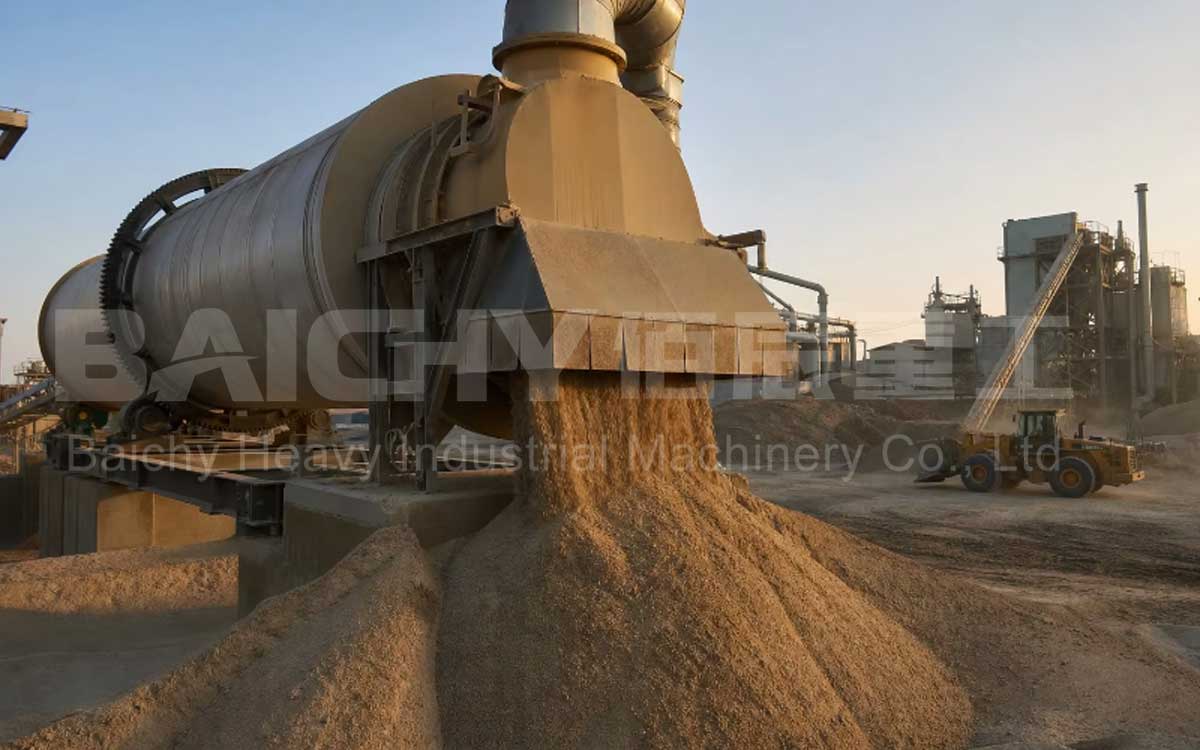
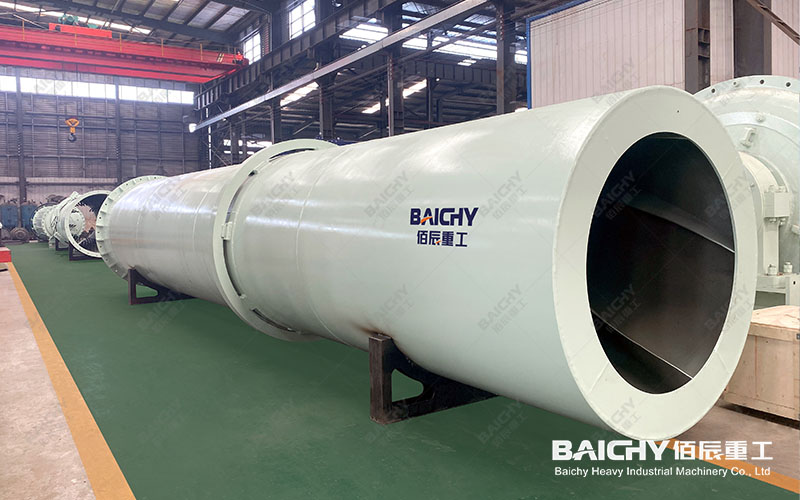
Customer site featuring a single-drum dryer.
II. How Baichy Bentonite Dryers Prevent Wall Adhesion and Preserve Material Properties
2.1 Chain/Knocker-style Material Lifting: Designing Out the "Stickiness"
The internal lifting mechanism utilizes chains or a knocking system (sticky materials can be fitted with impact devices to prevent wall adhesion). As the drum rotates, the chains continuously strike the drum walls and the material bed, dislodging adhering wet clay back into the falling material curtain. A breaking device can be installed at the feed section to disintegrate wet clay clumps. Combined with a drum inclination of 3%–5% and variable-frequency speed control, the residence time can be adjusted to meet specific moisture targets. By structurally resolving the "stickiness" issue, the hot air can effectively contact every clay particle.
2.2 Co-current Flow with High Temperature Differential: Wet Clay Acts as a "Thermal Buffer"
The machine employs a co-current flow configuration: hot air reaching 700–800°C (upper limit of specifications) enters at the feed end and travels in the same direction as the high-moisture clay. When the material is in the highest-temperature zone, its moisture content is at its peak; the latent heat of evaporation "pins" the material temperature close to the wet-bulb temperature—meaning the high heat acts on the water, not the clay itself. As the material advances and moisture decreases, the air temperature drops correspondingly, ensuring controllable discharge temperatures. For heat-sensitive montmorillonite, the co-current flow eliminates the risk of "dry material encountering high heat," serving as the primary physical safeguard for preserving swelling properties.
2.3 Grade-Specific Moisture Management: Aiming for "Compliance and Stability" Rather Than an Arbitrary 1%
Moisture requirements vary across downstream industries: drilling grade (≤10%), pelletizing and foundry grades (8%–10%), raw materials for cat litter and waterproofing liners (8%–12%), and activated bleaching earth (set according to specific processing requirements). Dryer discharge targets are set based on product grade to avoid two extremes: under-drying (resulting in sticky finished products, caking during storage, and mill clogging) and over-drying (wasting fuel, compromising product performance, and increasing dust emissions). For the bentonite business, "compliance and stability" is a more logical objective than simply "the drier, the better."
2.4 Low Maintenance and Closed-Loop Dust Removal: The Other Half of Continuous Production
The drive system utilizes replaceable pin-type gears; worn pins can be replaced on-site, eliminating the need for lengthy shutdowns associated with replacing the entire gear ring. Given the high volume of fine bentonite powder generated during drying, the system employs a closed-loop exhaust configuration featuring both cyclone and bag-type dust collectors to recover fines and ensure exhaust emissions meet regulatory standards.
2.5 Bentonite Operating Parameters (Nominal Specifications vs. Adjusted Operating Conditions)
The table below lists actual parameters for the rotary dryer series (drum diameter × length, volume, nominal capacity, and main motor specifications are sourced from official data sheets; the maximum inlet gas temperature of 700–800°C represents the equipment's upper limit). The "Bentonite Operating Conditions" column lists estimated values calculated based on an input moisture content of 25%, an output moisture content of 10%, and an evaporation intensity of approximately 35 kg/(m³·h) for viscous materials; actual capacity depends on material testing and local fuel conditions.
| Specifications (Diameter × Length, mm) | Volume (m³) | Nominal Capacity (t/h)* | Bentonite Processing Capacity (t/h)** | Main Motor (kW) |
|---|---|---|---|---|
| Φ1500×12000 | 21.2 | 4.5–5.7 | 3.5–4.5 | 15 |
| Φ1800×14000 | 35.6 | 7.6–9.5 | 6–7.5 | 18.5 |
| Φ2000×18000 | 56.5 | 8.4–12.3 | 9.5–12 | 22 |
| Φ2200×18000 | 68.3 | 12.8–16.2 | 11.5–14 | 22 |
| Φ2400×20000 | 90.4 | 19.3–24.1 | 15–19 | 55 |
| Φ2600×24000 | 127.4 | 27.2–34.0 | 21–27 | 75 |
| Φ3000×25000 | 176.6 | 37.7–47.1 | 30–37 | 90 |
* Nominal capacity is rated on generic materials such as sand, coal and mineral powder with feed moisture of about 10%.
** Bentonite processing capacity is estimated for feed moisture 25% to discharge moisture 10% under sticky-clay conditions; actual capacity depends on material testing and local fuel conditions.
III. Typical Application Scenarios
| Scenario | Feed State | Target Moisture | Selection Key Points |
|---|---|---|---|
| Drilling mud grade (oil/geothermal drilling, sodium-based clay) | Raw ore 25%–35% | ≤10% | Low-temperature co-current drying; discharge temp ≤110°C to preserve swelling capacity; paired with Raymond mill (ground to 200 mesh) |
| Iron ore pellet binder | Raw ore 20%–30% | 8%–10% | High throughput, narrow moisture tolerance; requires online moisture monitoring and stable heat source |
| Foundry green sand binder | Raw ore 20%–30% | ≤10% | Standard medium-temperature range; priority on discharge uniformity |
| Cat litter / Impermeable liner raw material (sodium-activated) | Post-extrusion/granulation 18%–25% | 8%–12% | Drying after granulation; gentle material turnover to prevent breakage |
| Activated bleaching earth / Feed carrier | Post-acid activation & washing 25%–35% | ≤10%–15% | Low-temp hot air to prevent scorching; high dust removal requirements |
IV. Equipment Advantages: Translating Process Design into Operational Profit
1. Non-sticking performance → High continuous operation rate: Chain/vibration lifting mechanisms eliminate the "sticking-shutdown-cleaning" cycle; continuous processing is the foundation for 24-hour production schedules in bentonite plants.
2. Preservation of swelling properties → Premium pricing: Per-ton prices for drilling and pellet grades are significantly higher than for foundry grades; consistent quality determines supply eligibility and bargaining power, whereas a single batch of "scorched" material can force the product into the low-end market.
3. Grade-specific moisture management → No fuel waste: Avoid paying for over-drying; fuel costs per ton are optimized based on target moisture levels, and the cost difference between natural gas and coal becomes significant over long production cycles.
4. Low maintenance → Low downtime costs: Pin-type gears and standardized support rollers ensure interchangeable spare parts and minimal maintenance points. 5. Transparent capacity specifications: Nominal capacity and capacity calculated based on specific bentonite operating conditions are listed separately (see table above); calculations based on evaporation load can be performed prior to contract signing, ensuring that generic material capacity figures are not used to inflate performance claims.
V. Relevant Case Studies
1. Sodium-based bentonite processing plant in Inner Mongolia (iron ore pellet binder grade): The discharge moisture content from the original drying equipment fluctuated between 9% and 14%, leading to repeated shipment rejections by downstream steel mills due to excessive moisture. After switching to a Φ2200×18000 rotary dryer equipped with chain lifters and a coal-fired hot blast stove, discharge moisture stabilized at 9%–11%. Batch pass rates and bonding strength per ton remained consistent, securing the supplier a place on the client's long-term supply list.
2. Bentonite mine in Liaoning (drilling mud grade): During winter, raw ore moisture levels exceeded 30%; the old production line suffered frequent shutdowns due to material sticking to the walls, and spot checks occasionally revealed failure to meet swelling volume standards. A Φ1800×14000 unit was installed with a dry material back-mixing system to keep feed stickiness within a manageable range; discharge temperature was controlled at ≤110°C. Swelling volume metrics remained stable over consecutive quarters, effectively resolving the issue of winter production curtailment.
3. Bentonite enterprise in Kutch, Gujarat, India (foundry grade; under negotiation): A 20 t/h production line is proposed, configured for local 400V/50Hz power and a natural gas-fired hot blast stove. The design utilizes a Φ2400×20000 dryer with a closed-loop baghouse dust collection system; the project is currently in the technical clarification stage.
Market Reference: According to IMARC Group (2026) data, the global bentonite industry is valued at approximately US$2.2 billion in 2025; Towards Chem & Materials estimates the value at approximately US$3.3 billion for the same period, with a projected compound annual growth rate (CAGR) of about 6.25% through 2034. On the demand side, Dataintelo cites industry data indicating that global iron ore pellet production exceeded 500 million tons in 2024, corresponding to a direct consumption of over 2 million tons of bentonite. The stability of the drying process directly determines whether the material meets the moisture and performance thresholds required for pellet binders and drilling-mud-grade applications.
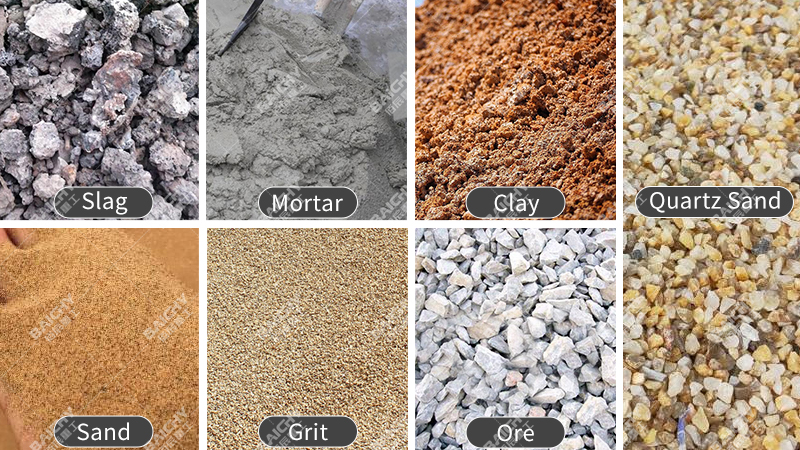
Materials that can be dried by the dryer
VI. Recommended Equipment for This Application
| Recommended Equipment | Function | Applicable Stage |
|---|---|---|
| Rotary Bentonite Dryer (featured model) | Drying raw ore/granules; prevents wall adhesion and performance degradation | Post-extrusion/granulation; pre-milling |
| Triple-pass Rotary Dryer | High-capacity, low-energy-per-ton alternative | Large-scale pellet-grade production lines |
| Hot Air Furnace (Coal/Natural Gas/Biomass) | Stable heat source and temperature control; supports grade-specific processing | Drying system auxiliary |
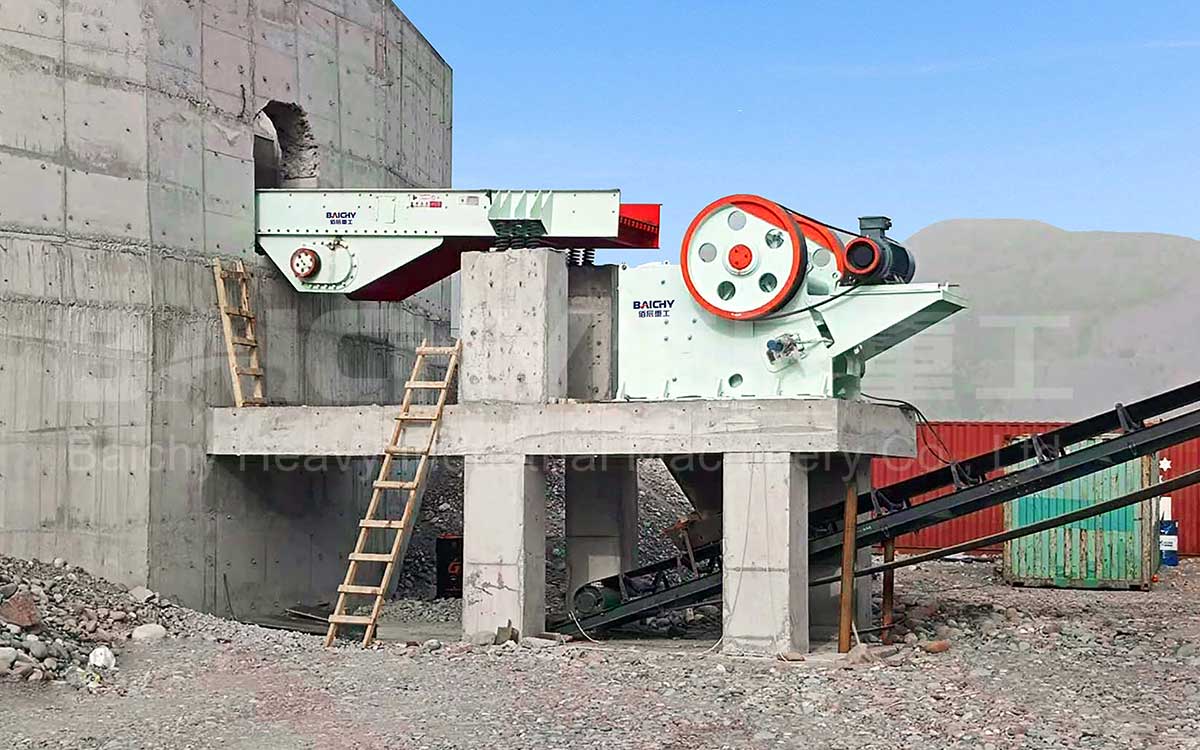
| Jaw Crusher / Double-roll Crusher | Pre-crushing raw ore to <10 mm for feeding | Pre-drying stage |
| Raymond Mill | Grinding dried material into 200–325 mesh bentonite powder | Post-drying powder production |
| Cyclone Dust Collector + Baghouse | Fine powder recovery and emissions compliance | Drying system closed-loop |
VII. FAQ
Q1: Will the bentonite dryer "kill" the clay (cause loss of swelling properties)?
Generally, no—provided that temperature control and moisture targets are reasonable. Loss of swelling performance typically stems from two errors: material over-burning (excessive discharge temperature or localized overheating) and over-drying (driving off interlayer structural water). These issues can be avoided by using a co-current flow layout, controlling discharge temperature (≤110°C recommended for drilling grade), and setting target moisture levels based on grade (usually 8%–12%; there is no need to aim for below 1%). When purchasing, focus on inlet air temperature specifications and internal lifting flight design rather than just the equipment's maximum temperature rating.
Q2: How do I handle wet bentonite sticking to the walls or clogging the machine? What is the maximum allowable feed moisture content?
Material sticking to the dryer wall is a direct result of the high plasticity and adhesiveness of montmorillonite; the solution lies in the structural design: chain or knocker-style lifting flights continuously strike the cylinder wall and the material layer, and a breaking device can be installed in the feed section. If the feed moisture content exceeds 30%, a dry material back-mixing method can be used (mixing in approximately 10% dry material to reduce feed stickiness). Standard raw ore with 25%–35% moisture can be fed directly; for higher moisture levels or paste-like materials, please provide a material analysis report so engineers can evaluate the back-mixing ratio and pretreatment configuration.
Q3: How do I select a bentonite dryer model? How is production capacity estimated?
Select the model based on "evaporation load" rather than material tonnage: first, calculate the hourly water evaporation volume, then pide it by the empirical evaporation intensity for sticky materials (approximately 30–40 kg/(m³·h)) to determine the required cylinder volume; finally, consult the specifications table to select the model. Example: To dry 10 t/h of wet clay from 25% to 10% moisture, approximately 1.67 t of water must be evaporated per hour, requiring an effective volume of about 42–56 m³, which corresponds to the Φ2000×18000 model size. By submitting details on feed moisture, particle size, and grade requirements, you can obtain a selection proposal from Baichy that includes evaporation capacity calculations.
Baichy Heavy Industry
Baichy Heavy Industry is a high-tech mining equipment company integrating R&D, manufacturing, sales, and after-sales service. Focusing on crushing, grinding, and mineral processing equipment, we provide professional solutions to our customers. We are ISO9001:2015 、certified, and our products include mobile crushing palnts, crawler crushing plant, construction waste crushing plants, jaw crushers, sand making machines, cone crushers, fine crushers, grinding mills, ball mills, etc., all with reliable performance to meet diverse project needs.
Baichy Heavy Industry – Your Trusted Partner
To ensure optimal performance of your equipment, Baichy Heavy Industry offers:
- Professional on-site installation guidance
- Comprehensive operator training
- 24/7 technical support & maintenance services
Our complete after-sales service system guarantees long-term, stable operation of your machinery with minimal downtime.
Protect Your Rights – Only Use Official Channels
To avoid scams and ensure authentic support, contact us exclusively through:
• Official Website: www.baichychina.com
• WhatsApp: +8615093222637
• Email: [email protected]
Your satisfaction is our priority – expect prompt, professional service every time.
(Note: Beware of unauthorized third parties claiming to represent Baichy. Always verify through official contacts.)