
Gold mining equipment
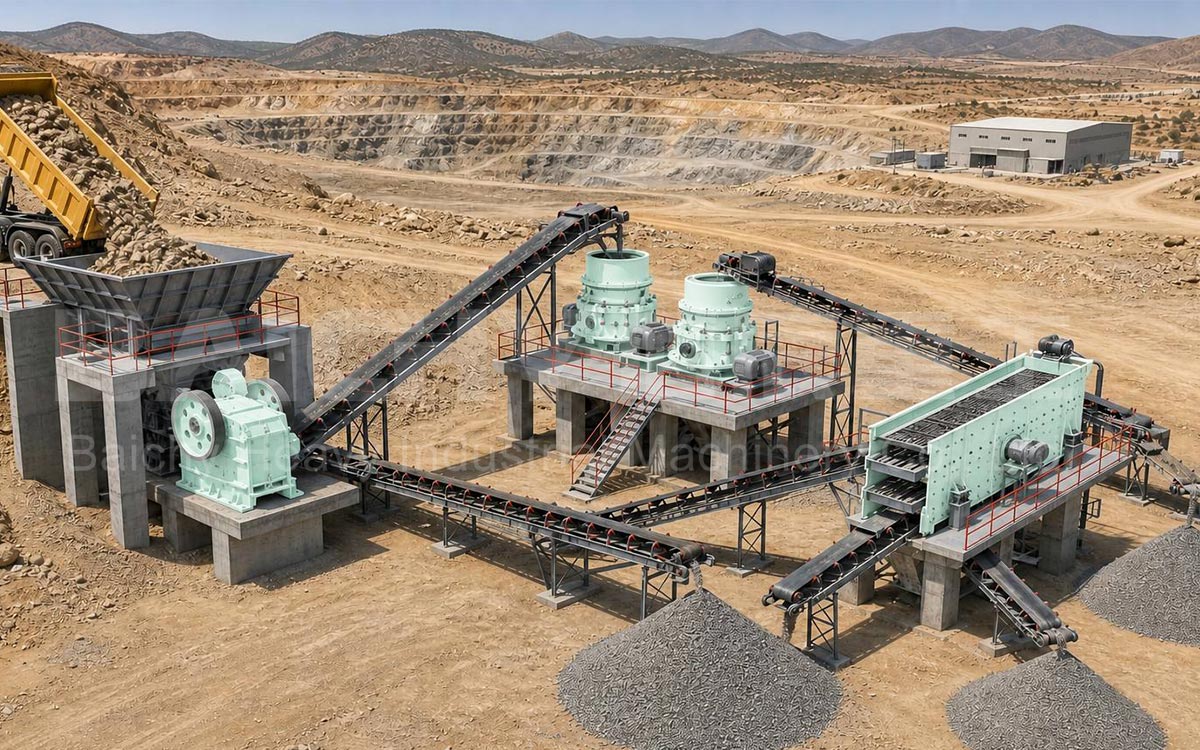
The recovery rate and cost-per-ton of a gold processing plant are largely determined at the crushing stage. Gold typically occurs as fine particles within hard rock formations such as quartz veins and altered rock, with grades ranging from only 1 to 10 g/t. Before gold extraction can occur, rock crushers must reduce the ore to a particle size that allows for gold liberation and is suitable for milling. For hard-rock gold mines, the standard configuration is "PE jaw crusher (primary crushing) + fine jaw crusher or cone crusher (secondary/tertiary crushing) + ball mill," whereas oxidized ores and ASGM (Artisanal and Small-scale Gold Mining) sites often utilize a "jaw crusher + hammer crusher" setup for single-stage reduction.
Baichy Heavy Industry is a specialized manufacturer of mining crushing, grinding, and beneficiation equipment; its full range of machinery is currently operational in gold mining projects across markets such as Sudan, Zimbabwe, and South Africa.
I. Overview: Why Gold Mining Must Begin with "Crushing"
1.1 The First Link in the Gold Extraction Chain Determines the Efficiency of Downstream Equipment
The processing chain for hard-rock gold mines follows the sequence: Crushing → Grinding → Beneficiation/Leaching. The primary function of crushing is not gold extraction itself, but rather preparing the particle size for grinding and leaching. When the feed size for the mill is reduced from 50mm to ≤15–20mm, ball mill productivity typically recovers from 60–70% of design capacity to over 95%; simultaneously, steel ball consumption drops by approximately 0.5–0.8 kg/t, and grinding electricity consumption decreases by about 30%. In other words, if the rock crusher is undersized—resulting in a coarser output—subsequent high-quality mills and leaching tanks will operate sub-optimally (or "under strain"). Conversely, every extra penny invested in the crushing stage pays for itself many times over through improved productivity and reduced energy consumption in the grinding stage. Recognizing the crushing stage as the one link in the gold mining production line where cost-cutting should be avoided is the key distinction between seasoned mine owners and novice investors.
1.2 A Period of High Gold Prices Amplifies the Investment Value of Crushing Equipment
As of early September 2026, the international gold price stood at approximately $4,400 per ounce, a year-on-year increase of about 24% (Trading Economics); J.P. Morgan forecasts the average price to reach $6,000 per ounce by the fourth quarter of 2026. Meanwhile, the World Gold Council estimates that at least 20% of newly produced global gold originates from artisanal and small-scale gold mining (ASGM). High gold prices, combined with the high activity levels of small- and medium-sized mining sites, have directly stimulated demand for two categories of gold mining equipment: low-cost, small-scale crushers for ASGM sites, and complete crushing and grinding equipment sets for processing plants with capacities of 50–500 tonnes per day (tpd). This represents a prime window of opportunity characterized by robust demand and rapid conversion rates for rock crushers in gold mining applications. For investors planning new processing plants, the primary question should be: Can this rock crusher handle the ore body's actual maximum feed size? This is the universal starting point for selecting equipment across the entire gold mining value chain.
1.3 Three-Stage pision of Labor in Crushing: Primary, Secondary/Fine, and Pre-Grinding Fine Crushing
| Crushing Stage | Common Equipment | Typical Feed → Discharge |
|---|---|---|
| Primary Crushing | PE Series Jaw Crusher | ≤500mm Run-of-Mine Ore → ≤100mm |
| Secondary/Fine Crushing | PEX Fine Jaw Crusher / CS & HP Cone Crushers | ≤100mm → 15–40mm |
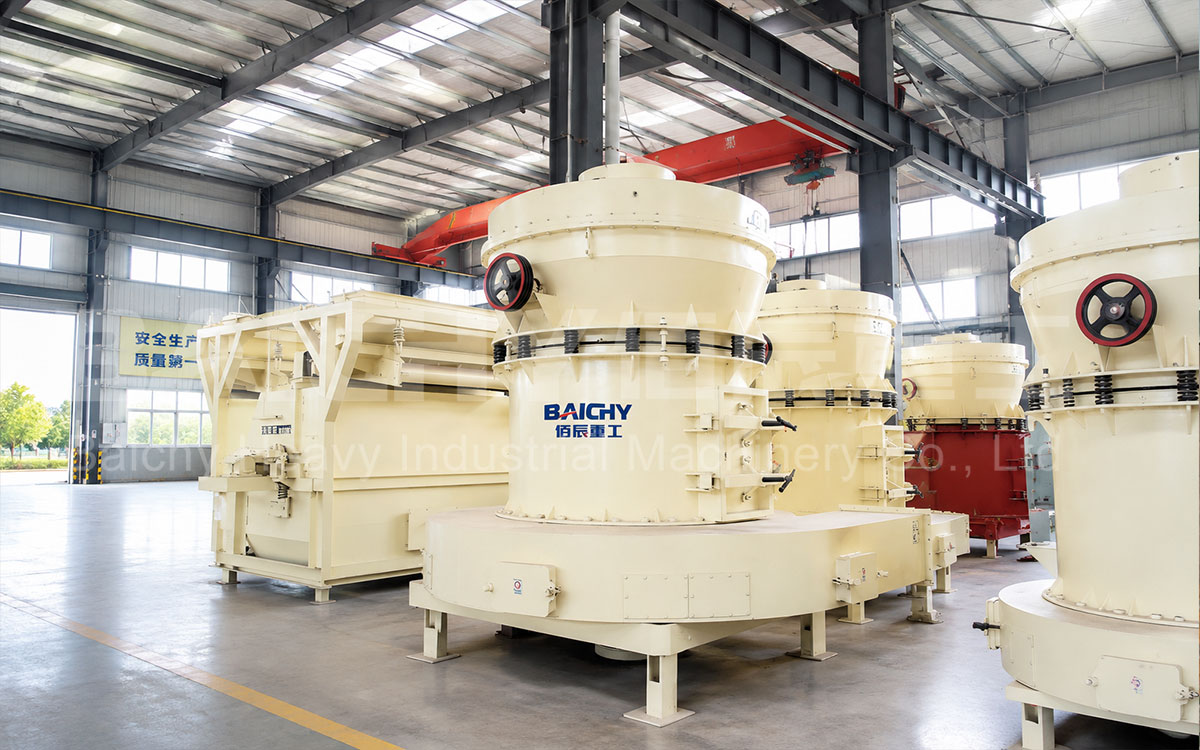
| Pre-Grinding Fine Crushing | PC/PCZ Hammer Crusher | 50–100mm → ≤15mm (Direct Feed to Mill) |
The choice of equipment route depends on ore hardness and moisture content: High-silica quartz vein gold ores (Mohs hardness ≥6.5) require the "jaw crusher + cone crusher" inter-particle crushing route; conversely, oxidized ores and medium-hard altered rocks can be processed in a single stage using a hammer crusher, with an investment cost for the crushing section that is approximately one-third of that required for a two-stage configuration. The general rule of thumb in practice is: determine the process flow based on hardness, the number of stages based on particle size, and the model based on production capacity; any equipment selection that skips ore sample testing is a gamble.
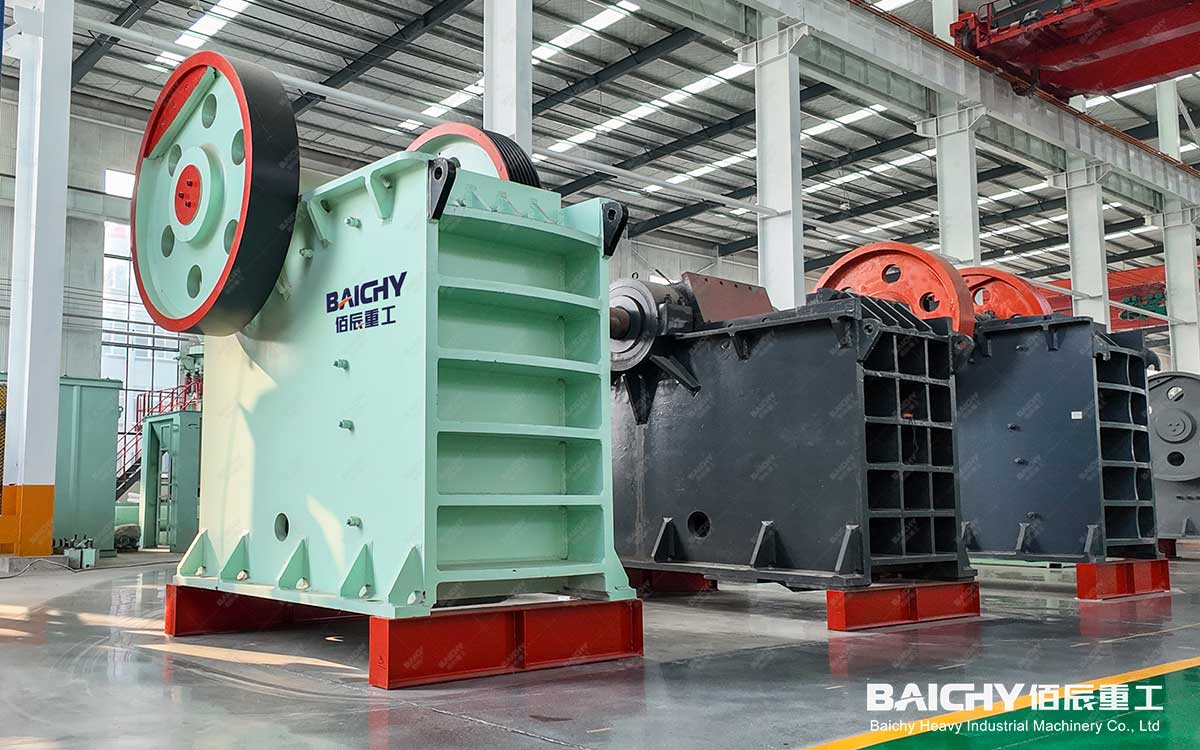
Primary Jaw Crusher
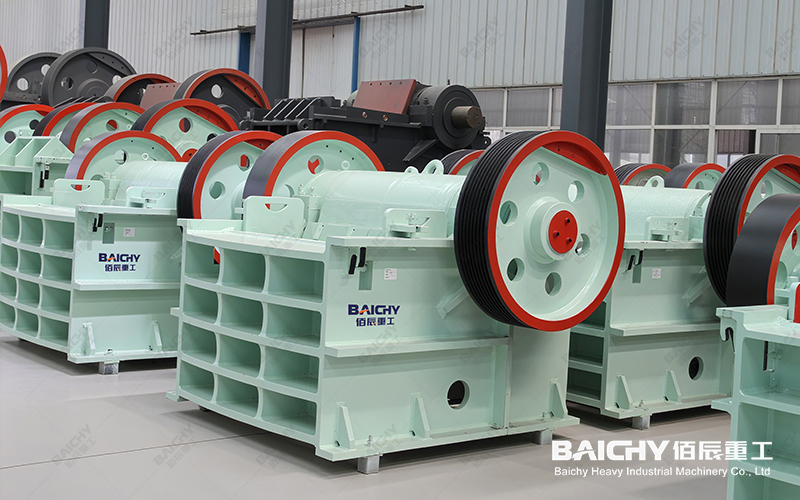
Fine Jaw Crusher
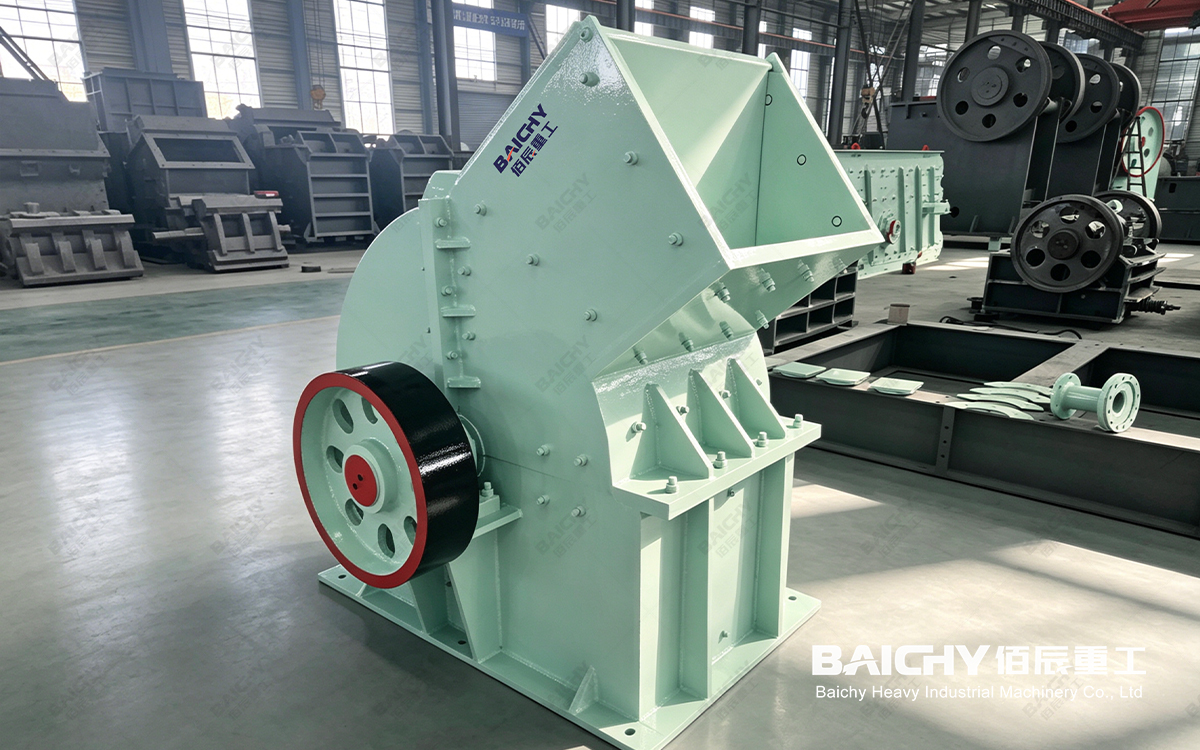
PC series Hammer Crusher
II. Typical Application Scenarios
The following four scenarios represent the most common configurations for rock crushers and similar equipment in gold mining projects:
| Scenario | Project Characteristics | Mainstream Crushing Configuration |
|---|---|---|
| ASGM (Artisanal & Small-scale Gold Mining) | Mining areas in Sudan, Ghana, Tanzania, etc.; 5–20 tpd capacity; often off-grid | PE250×400/PE400×600 Jaw Crusher → 1100/1200 Wet Gold Grinding Mill (Diesel-driven) |
| Oxidized Ore & Weathered Crust Gold Ore | High clay content, low hardness; 30–60 tpd capacity | PE Jaw Crusher (primary) → PC Series Hammer Crusher (product ≤15mm) → Ball Mill |
| Quartz Vein Hard-Rock Gold Processing Plant | 100–200 tpd; CIL/CIP process; continuous ore body | PE500×750/PE600×900 → PEX250×1200 or Cone Crusher → Ball Mill → Carbon-in-Leach (CIL) System |
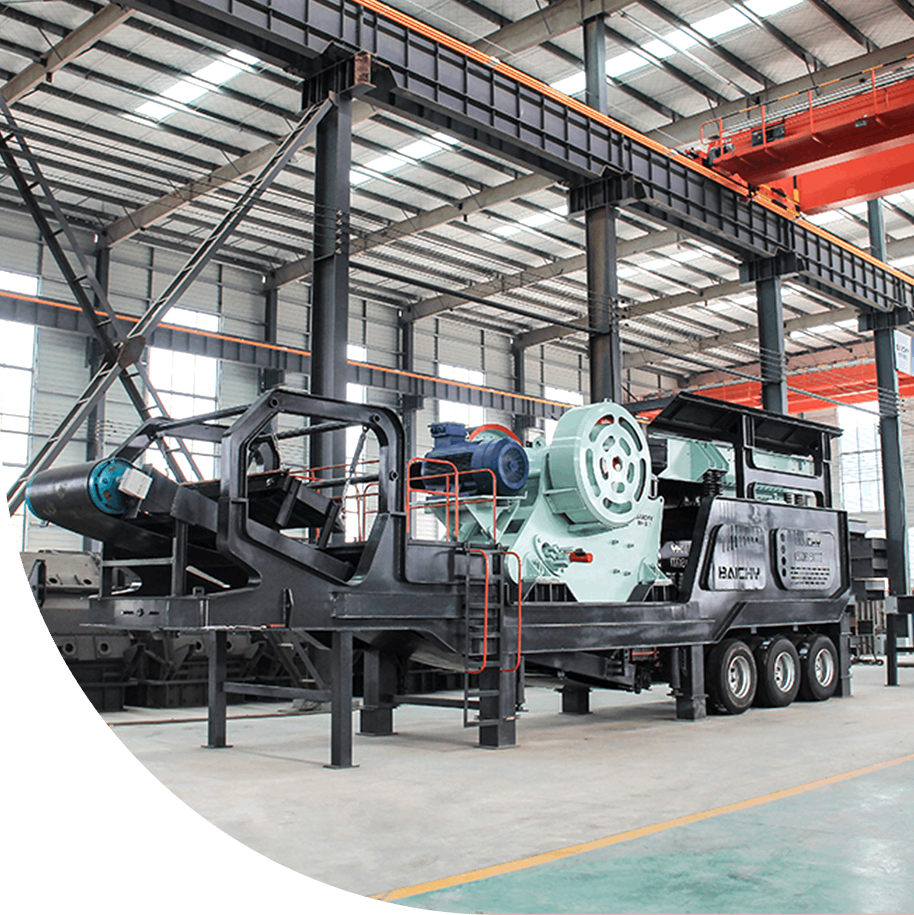
| Large-scale Gold Mining & Tailings Retreatment | >500 tpd or old tailings pond recovery | Multi-stage Jaw Crusher (starting from PE750×1060) + Cone Crusher in closed circuit; supported by mobile stations for on-site processing |
III. Core Parameter Table for Gold Mining Crushing Stages
The following are reference parameters for mainstream primary, secondary, and tertiary gold ore crushing equipment. Capacities are nominally rated based on limestone (bulk density approx. 1.6 t/m³); gold ore has a bulk density of 2.6–2.7 t/m³ and compressive strength generally ranging from 100–250 MPa. Actual capacity must be adjusted by a factor of 0.5–0.75, with final figures determined by ore sample testing.
| Model | Crushing Stage | Feed Size | Adjustable Discharge Opening | Capacity (Limestone Basis) | Gold Ore Conversion Reference | Motor Power |
|---|---|---|---|---|---|---|
| PE250×400 | ASGM Primary Crushing | ≤210mm | 20–60mm | 5–20t/h | 3–12t/h | 15kW |
| PE400×600 | Small-scale Plant Primary Crushing | ≤340mm | 40–100mm | 16–64t/h | 8–35t/h | 30kW |
| PE500×750 | Medium-scale Plant Primary Crushing | ≤425mm | 50–100mm | 45–100t/h | 25–60t/h | 55kW |
| PE600×900 | 100–200tpd Line Primary Crushing | ≤500mm | 65–160mm | 50–160t/h | 30–95t/h | 75kW |
| PEX250×1200 | Fine Crushing (Secondary) | ≤210mm | 25–60mm | 20–60t/h | 12–40t/h | 37kW |
| PC800×600 | Pre-grinding Fine Crushing (Oxidized Ore) | ≤350mm | ≤15mm (Adjustable Grate Bars) | 20–40t/h | 12–28t/h | 55kW |
Quick Selection Guide: For daily processing under 10 tons, choose PE250×400; for 20–60 tons, choose PE400×600 or PE500×750; for over 100 tons, start with PE600×900. If a cone crusher is required for secondary/fine crushing, models such as CS75/PYB900 (100tpd class) and HP300 (200tpd class) can be selected for the subsequent stage.
IV. Core Advantages: Translating Specifications into Profit for Mine Owners
When it comes to rock crushers, "more expensive" does not mean "better"; the key is finding the best match for the application. The following five points highlight the advantages consistently demonstrated by Baichy Heavy Industry in gold mining projects:
1. Feed size is the "hidden switch" for recovery rates — When the crusher output is ≤15–20 mm, the ball mill operates at full capacity with stable grinding fineness, allowing both CIL leaching rates and gravity separation recovery rates to meet design targets; if particle size control is lost, both recovery rates and production capacity suffer.
2. Jaw crushers are the most durable primary crushers for hard rock — PE series jaw plates offer a lifespan of 1,200–2,000 hours when processing granite-hosted gold ore—6 to 10 times that of impact crusher blow bars (120–200 hours). Their simple, non-hydraulic structure allows for maintenance by standard mechanics on-site.
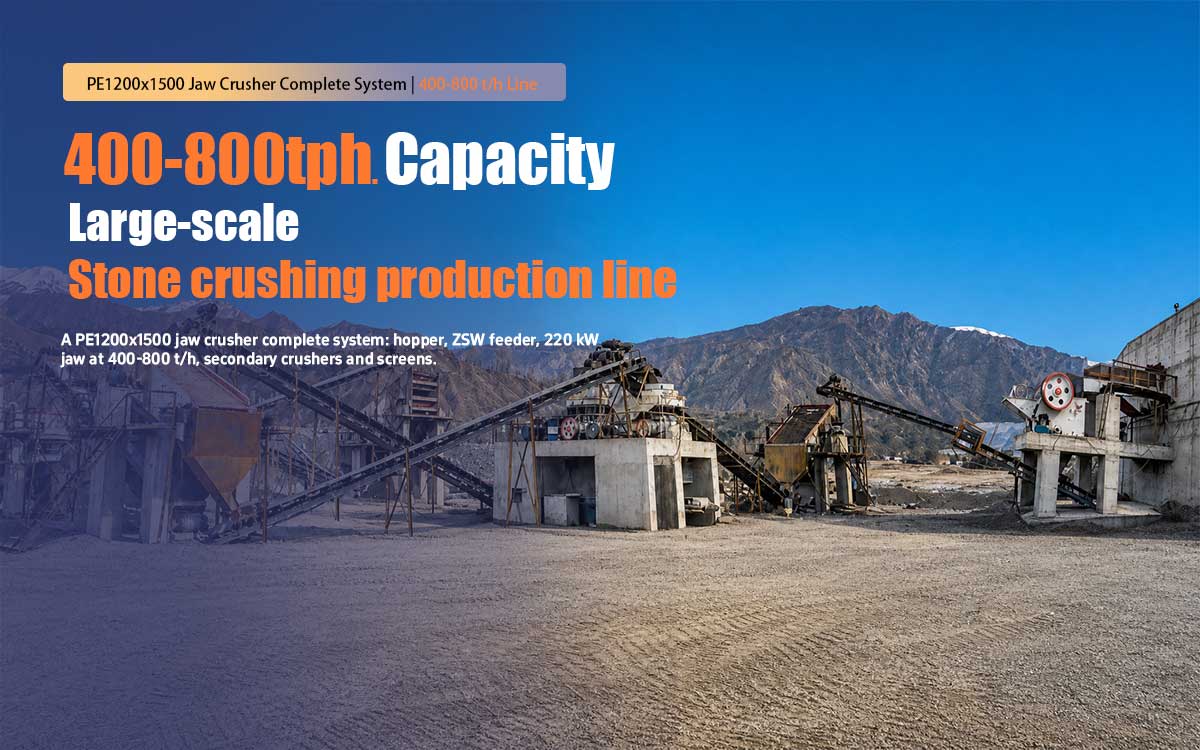
3. Nominal capacity ≈ actual operational capacity — Pairing the crusher with a ZSW vibrating feeder and a buffer bin eliminates the timing mismatch between the jaw crusher’s intermittent discharge and the mill’s continuous feed. Uniform feeding also ensures balanced wear within the crushing chamber, extending jaw plate life by an additional 20–30%.
4. Compatible with global power standards and off-grid conditions — Supports 380V/50Hz, 400V/50Hz, and 440V/60Hz configurations. ASGM (Artisanal and Small-Scale Gold Mining) sites can opt for diesel-driven versions; the PE250×400 model requires only 15 kW, meaning it can be powered by a single 20–30 kVA generator set.
5. Modular capacity expansion without a complete overhaul — Operators can start by verifying the ore body using a "jaw crusher + gold grinding mill" setup, then expand by adding hammer crushers in parallel or upgrading to a ball mill and CIL system. Main equipment foundations and conveyor systems remain reusable, so investment is focused solely on the additional equipment.
V. Relevant Case Studies (Typical Configuration Examples; Data Anonymized)
The following three cases illustrate typical equipment configurations for rock crushers in gold mining operations:
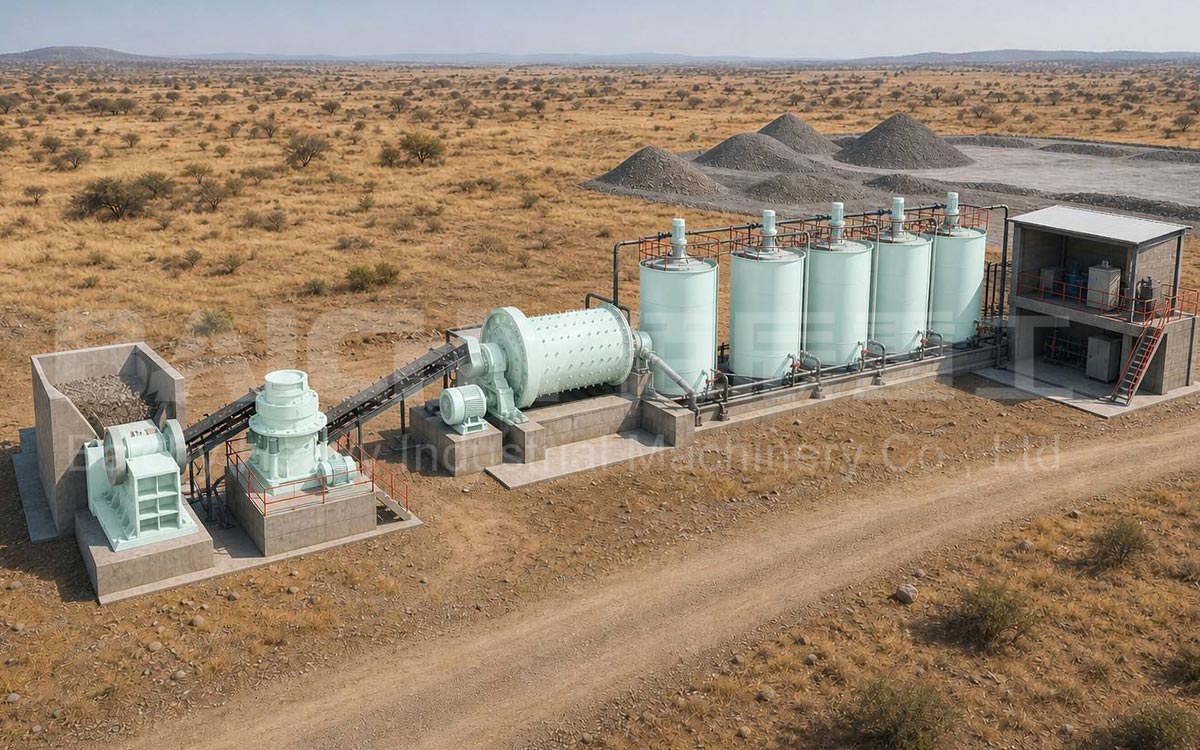
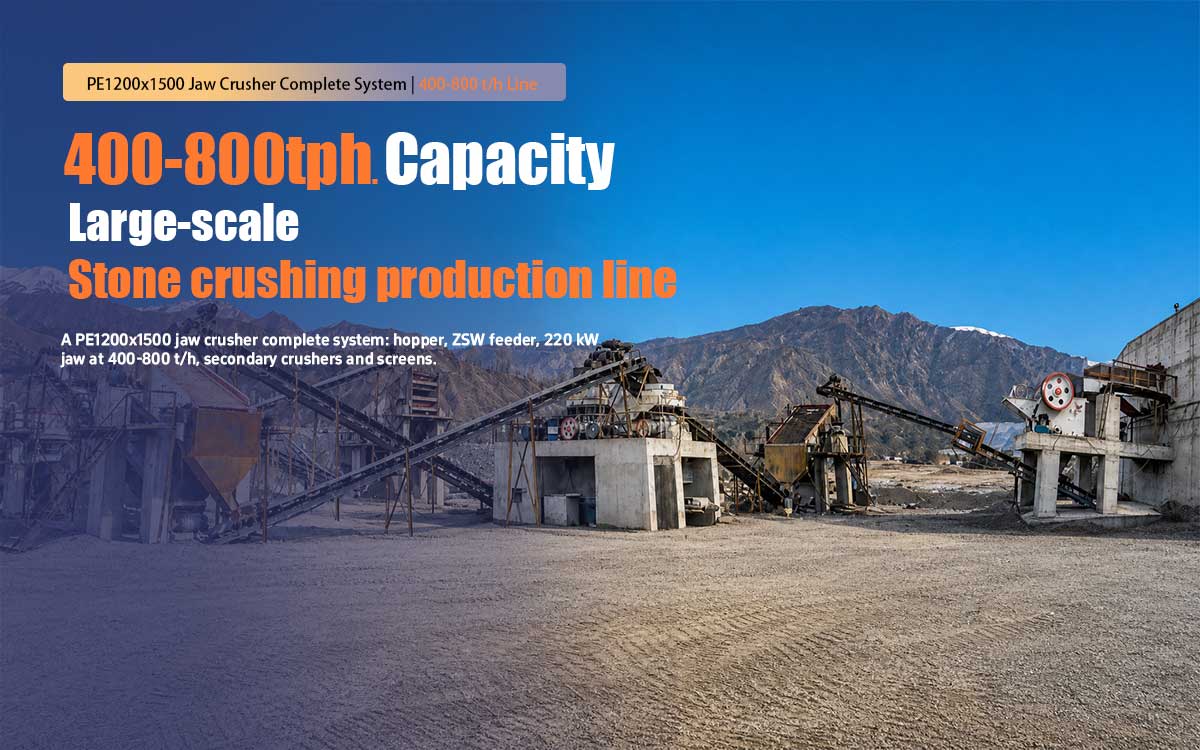
hard rock gold crushing process
Case 1: ASGM (Artisanal and Small-Scale Gold Mining) site in River Nile State, Sudan (8–10 t/d capacity)
Oxidized gold ore with a grade of 2–4 g/t. Configuration: ZSW feeder → PE250×400 jaw crusher (primary crushing to ≤50 mm) → 1100 wet-type gold grinding mill for extraction. Total investment for main equipment: approx. $12,000–$18,000; diesel-powered. With a daily recovery of 15–25 g of raw gold and a current price of approx. $4,400/oz, the daily gross output value is approx. $2,000–$3,500, and the equipment payback period is approx. 3–6 weeks. Production capacity was subsequently doubled by adding a second hammer crusher in parallel without altering the existing foundation.
Case 2: 30 t/h hard rock crushing line in Zimbabwe
Replaced the original "jaw crusher + impact crusher" setup with a PE500×750 primary jaw crusher and a PC800×600 hammer crusher for pre-grinding fine crushing. The output (≤15 mm) feeds directly into a 1500×3000 ball mill. Savings on main crushing equipment investment: approx. $25,000; crushing section footprint reduced from approx. 120 m² to approx. 70 m²; measured power consumption in the crushing section: approx. 0.9 kWh/t (a reduction of approx. 25% compared to the two-stage scheme).
Case 3: 100 tpd CIL/CIP processing plant in South Africa (EPC delivery)
Designed for small-to-medium mining concessions on the periphery of the Witwatersrand Basin. Main process flow: PE jaw crusher (primary crushing) → cone crusher (secondary/fine crushing) → ball mill → full CIL/CIP gold extraction process. Based on a grade of 3.5 g/t and a recovery rate of 88%, the daily gold recovery is approximately 9.9 ounces; at a price of $4,400/oz, the daily gross output value is around $43,000. Equipment investment ranges from $350,000 to $550,000, with a payback period of 6–10 weeks at current gold prices.
The above case study represents a typical configuration and investment estimate; specific parameters depend on on-site material testing and equipment selection design.
VI. Recommended Equipment
Rock crushers are only valuable when integrated into a complete "crushing–grinding–gold extraction" chain. Baichy Heavy Industry supplies complete sets of equipment tailored to each process stage, ensuring every rock crusher operates at full capacity within the gold mining line:
| Process Stage | Recommended Equipment | Selection Rationale |
|---|---|---|
| Feeding | ZSW Vibrating Feeder | Ensures uniform feeding; extends jaw plate and hammer lifespan by 20–30% |
| Primary Crushing | PE Series Jaw Crusher | Core equipment for this application; most durable for hard rock conditions |
| Secondary/Fine Crushing | PEX Fine Jaw Crusher / CS or HP Cone Crusher | Utilizes inter-particle (lamination) crushing for hard quartz vein rock; offers long liner lifespan |
| Pre-grinding Fine Crushing | PC/PCZ Hammer Crusher | Reduces oxidized ore to ≤15mm in a single pass; eliminates the need for an additional primary unit |
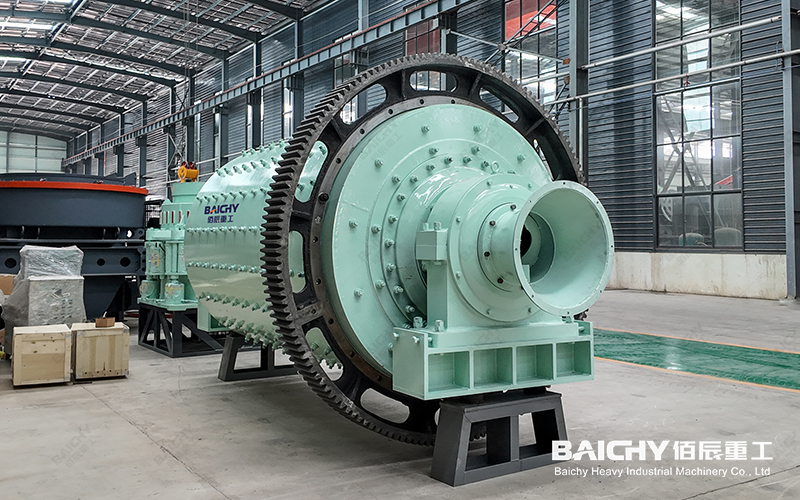
| Grinding | Ball Mill / 1100 Wet Gold Grinding Mill | Ball mills for large-scale operations; gold grinding mills for ASGM (Artisanal and Small-Scale Gold Mining) sites |
| Gold Extraction | Shaking Table, Flotation Machine, CIL/CIP Systems | Gravity separation, flotation, or cyanidation routes selected based on ore characteristics |
| Iron Removal/Protection | Suspended Iron Remover | Prevents tramp iron from entering the crushing chamber; protects jaw plates and grate bars |
VII. FAQ
Q1: What standards should be used to select the primary rock crusher model for a gold processing plant?
Selection is based on two input parameters: maximum feed particle size and daily processing capacity. For run-of-mine ore ≤210mm and a daily capacity under 10 tons, select the PE250×400; for ≤340mm and 20–60 tons/day, select the PE400×600; for ≤500mm and over 100 tons/day, start with the PE600×900. Also, verify ore hardness: for quartz vein ore with a Mohs hardness ≥6.5, design the circuit using a "jaw crusher + cone crusher" configuration; for oxidized ore, consider a hammer crusher for single-stage reduction. Providing 5–10 kg of representative ore samples for crushing tests prior to signing a contract—using empirical data rather than estimates—is the most cost-effective way to avoid costly pitfalls.
Q2: How does equipment selection differ between high-silica quartz vein gold ore and oxidized ore?
The difference lies in the crushing principle and the cost of wear parts. Quartz vein gold ore is hard and highly abrasive, requiring the inter-particle (lamellar) crushing action provided by a jaw crusher followed by a cone crusher; the service life of jaw plates and liners can reach 1,200–2,000 hours. Oxidized ore is soft and has high clay content, making a hammer crusher suitable; it offers a high reduction ratio and single-stage processing, with an investment cost about one-third that of a two-stage setup. However, hammer heads wear out rapidly when processing high-silica ore, potentially pushing wear-part costs above $0.15 per ton. The deciding factor is simple: first measure the ore's Mohs hardness and moisture content, then determine the appropriate processing route.
Q3: Can rock crushers be put into operation at a mine site without a power grid connection? How long does it take to recoup the investment?
Yes. Baichy offers diesel-powered crushers: the PE250×400 requires only 15 kW and can be powered by a single 20–30 kVA generator set. When paired with a wet-grinding gold mill, the system allows for "delivery to site and operation within one week," eliminating the need for grid connections or infrastructure upgrades. The payback period depends on ore grade and production capacity: based on calculations for an ASGM site with a capacity of 8–10 tonnes per day and an ore grade of 2–4 g/t—and assuming a gold price of approximately $4,400/oz in September 2026—the gross output value can cover the investment cost of the main equipment within a period of about 3 to 6 weeks; for mining areas with a stable power grid, the electric version is recommended due to its lower operating cost per tonne.
Baichy Heavy Industry
Baichy Heavy Industry is a high-tech mining equipment company integrating R&D, manufacturing, sales, and after-sales service. Focusing on crushing, grinding, and mineral processing equipment, we provide professional solutions to our customers. We are ISO9001:2015 、certified, and our products include mobile crushing palnts, crawler crushing plant, construction waste crushing plants, jaw crushers, sand making machines, cone crushers, fine crushers, grinding mills, ball mills, etc., all with reliable performance to meet diverse project needs.
Baichy Heavy Industry – Your Trusted Partner
To ensure optimal performance of your equipment, Baichy Heavy Industry offers:
- Professional on-site installation guidance
- Comprehensive operator training
- 24/7 technical support & maintenance services
Our complete after-sales service system guarantees long-term, stable operation of your machinery with minimal downtime.
Protect Your Rights – Only Use Official Channels
To avoid scams and ensure authentic support, contact us exclusively through:
• Official Website: www.baichychina.com
• WhatsApp: +8615093222637
• Email: [email protected]
Your satisfaction is our priority – expect prompt, professional service every time.
(Note: Beware of unauthorized third parties claiming to represent Baichy. Always verify through official contacts.)