
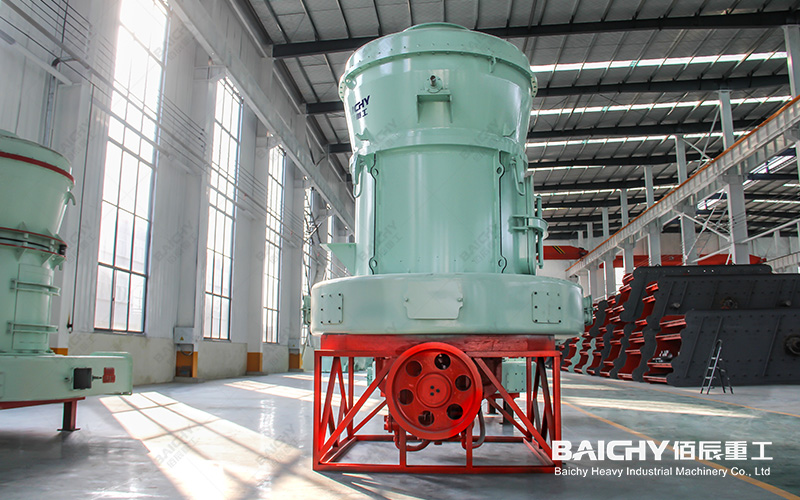
MTW European-Style Trapezium Mill
Disputes regarding the procurement of grinding equipment usually stem from the gap between "nominal capacity" and "actual achieved capacity," rather than the quality of the equipment itself. The MTW European-style Trapezium Mill has become a mainstream choice for calcium carbonate and non-metallic mineral grinding lines (producing 80–400 mesh powder) not because of a single standout parameter, but because of three structural features—integral bevel gear transmission, an internal variable-frequency classifier, and centralized thin-oil lubrication—that effectively control the three variables most critical to the bottom line: product fineness stability, continuous operation rate, and specific energy consumption (power consumed per ton).
I. Understanding the Model: What Do "Trapezium" and "European-style" Mean?
The naming conventions in the grinding mill market can be confusing, but the name "MTW European-style Trapezium Mill" answers just two questions: how the grinding is performed, and what ensures long-term, stable output.
1. "Trapezium" refers to the grinding geometry
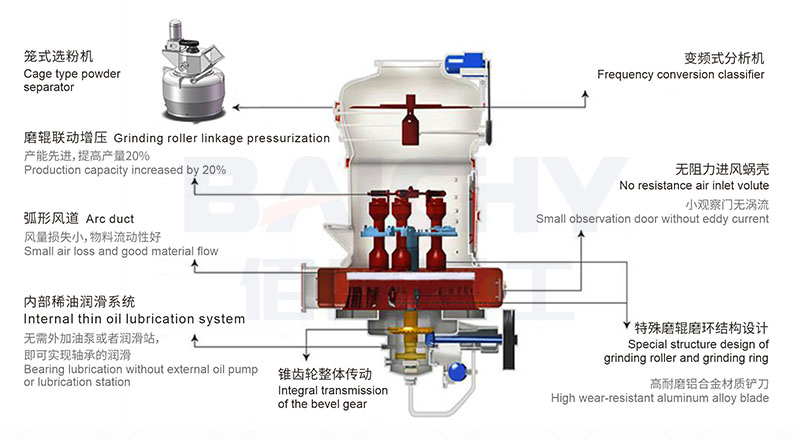
Structural Diagram of MTW European-Style Trapezium Mill
The working surfaces of the grinding rollers and rings utilize a multi-stage, interlocking trapezium design. After being crushed, the material naturally rolls onto the next working stage, forming a stepped, thin material layer for progressive grinding. Compared to the line contact found in traditional cylindrical grinding rings, the trapezium design offers a larger contact area, a more uniform material layer, and reduced over-grinding; as powder meeting the required fineness exits the mill quickly, the specific energy consumption of the main unit decreases. This is the most visible design change distinguishing it from the older Raymond mill, and it is the origin of the name.
2. "European-style" refers to the transmission and structural lineage
"European-style" indicates that the machine's structure incorporates European roller mill technology, specifically featuring two generational upgrades.
First, transmission: The grinding roller assembly uses an integral bevel gear drive, replacing the spring-loaded suspended shaft structure of the Raymond mill. This eliminates the need for repeated shutdowns to adjust pressure as rollers wear, ensuring the fineness curve remains stable despite wear—a crucial factor for powder plants where acceptance is based on sieve residue and D97 values, as it directly impacts batch pass rates.
Second, lubrication: The main shaft and roller assemblies are connected to a centralized thin-oil station for forced circulation lubrication. With online monitoring of oil temperature and pressure and alarms for out-of-limit readings, forced shutdowns are transformed into scheduled maintenance, enabling continuous production schedules exceeding 20 hours per day.
3. Related to the Raymond mill, but with a different level of reliability
The MTW European-style Trapezium Mill belongs to the same family of roller mills as the Raymond mill; its upgrade lies in "stability during long-term operation" rather than the "range of grindable materials." Their operational limits are virtually identical: Mohs hardness ≤7, non-flammable and non-explosive materials, and feed moisture content ≤5%. Understanding this distinction prevents misjudgments regarding its capabilities and avoids attempts to grind high-hardness materials like quartz sand or corundum—which would drastically shorten the service life of the grinding rollers and rings.
II. Core Parameters: Typical Specifications for the MTW Series
The table below outlines the typical parameter ranges for the Baichy MTW European-style Trapezium Mill series under standard operating conditions for medium-to-soft minerals (based on a 200-mesh product size). Actual production capacity varies depending on the fineness of the finished product, feed moisture content, and impurity levels; the technical agreement for the specific model governs the final contract terms.
| Parameter Dimension | MTW Series Typical Range | Significance for Milling Operations |
|---|---|---|
| Finished Product Fineness | 80–400 mesh (D97 continuously adjustable) | Single unit covers coarse to medium-fine powder; flexible grade switching |
| Single-Unit Capacity | Approx. 3–20 t/h (at 200 mesh; varies by model) | Achieves target output for medium-sized lines with one unit; reduces need for parallel setups |
| Feed Particle Size | ≤ 35 mm (requires jaw/roll crusher pre-crushing) | Matches standard crushed feed sizes; protects grinding rollers and rings |
| Feed Moisture Content | ≤ 5% (drying or dry material blending required if exceeded) | Prevents mill clogging and classifier blockage; ensures continuous operation |
| Material Hardness | Mohs ≤ 7; non-flammable / non-explosive | Suitable for calcium carbonate and most non-metallic minerals |
| Main Motor Power | 90–400 kW (varies by model) | High-power range supports continuous, high-volume production lines |
| Drive Mechanism | Integrated bevel gear drive | Fineness remains stable despite roller wear; consistent batch quality |
| Lubrication Method | Centralized forced-circulation thin-oil system | Oil temperature and pressure monitored; supports 24-hour continuous operation |
| Classification System | Built-in VFD-controlled turbine classifier | Online fineness adjustment; stable batch D97 values |
| Dust Collection Loop | Cyclone collector + pulse-jet bag filter | Negative-pressure operation; recovers fines and ensures emissions compliance |
Note: Values are typical ranges for industry reference, not a commitment for a single model. Actual capacity and fineness vary with target mesh, feed moisture and impurities; final configuration is subject to material grinding tests and the signed technical agreement.
III. Capacity Analysis: Why do quoted capacities for the same model vary by up to 100%?
Parameter tables are static, whereas capacity is dynamic. This section breaks down the concept of "capacity" and is the most valuable part of this article to save.
1. Capacity changes with the fineness specification
For the same machine, the capacity difference between grinding to 200 mesh and 325 mesh can range from 20% to 40%. A significant number of cases in the industry involving "winning bids with low prices followed by disputes over actual output" stem from a fundamental mismatch: quoting capacity based on a 200-mesh standard while the actual requirement is for 325-mesh. Therefore, before discussing capacity, define the acceptance criteria for fineness: desulfurization agents are accepted based on 250-mesh sieve residue; heavy calcium carbonate powder is priced based on 325-mesh D97; and construction material powder requires only 200-mesh. Different standards dictate different machine configurations and price quotes.
2. Feed particle size and moisture content are hidden variables.
In operating conditions where feed particle size approaches the 35 mm upper limit or moisture consistently exceeds 5%, the effective grinding time of the rollers is compromised by idling and material caking (coating the rollers), causing actual output to fall significantly below the nominal rating. Particular caution is needed with raw ore during the rainy season and materials stored outdoors; adding a pre-drying step or blending in dry material before grinding is usually far more cost-effective than upgrading to a larger machine later.
3. Convert a 1 t/h capacity gap into an annual financial loss.
Consider this illustrative calculation: assuming an annual effective runtime of 6,000 hours and a 2 t/h gap between nominal and actual output, the annual production shortfall is 12,000 tons. With an estimated gross profit of approximately 50 RMB per ton for low-to-mid-grade powder, the annual loss is around 600,000 RMB—an amount exceeding the price difference between most machine models (this is an illustrative example; actual figures depend on specific product grades and electricity costs). This is why procurement contracts should specify "actual output achieved at the target fineness" rather than the nominal capacity listed on the machine's nameplate.
IV. Five Essential Questions for Inquiries: Five Inputs Determine Price and Output
Clearly define these five parameters before requesting a quote from any grinding mill manufacturer. The more precise the input data, the more accurate the quote, and the lower the risk of failing to meet output targets after signing the contract:
What material is being ground, and what is its Mohs hardness? This determines the machine model and the wear-resistant material specifications for the grinding rollers and rings; highly abrasive materials require upgraded configurations.
What are the feed particle size and moisture content? This determines whether pre-crushing or drying stages are needed before grinding.
What is the target fineness for acceptance (in mesh size or D97)? The basis for pricing capacity and power must be calculated using a consistent standard;
What is the target operational capacity (in tons/hour)? Note that this refers to the actual operational output, not the nominal capacity of the main unit;
Grid specifications and explosion-proof requirements? Standards such as 380V/50Hz or 440V/60Hz, as well as whether materials (like coal dust) require explosion-proof configurations, directly determine the motor and electrical control system specifications.
| Requirement Item | Information Needed | Impact on Quotation |
|---|---|---|
| Material Properties | Material name, Mohs hardness, impurity content | Determines machine model and wear-resistant part material grade |
| Mill Feed Conditions | Particle size distribution, surface moisture, rainy season operation | Determines if pre-crushing and drying sections are needed |
| Finished Product Requirements | Target mesh size or D97 value, batch-based acceptance | Basis for pricing capacity and power |
| Capacity Requirements | Target operational capacity (t/h), annual operating hours | Determines main unit model and auxiliary equipment scale |
| Site Conditions | Grid specifications, altitude, explosion-proof & environmental requirements | Determines motor, electrical control, and dust collection configurations |
Tip: Send the five items above together with your site conditions to Baichy to receive a configuration-based quotation (requirement → machine model → configuration → price) instead of a generic price list.
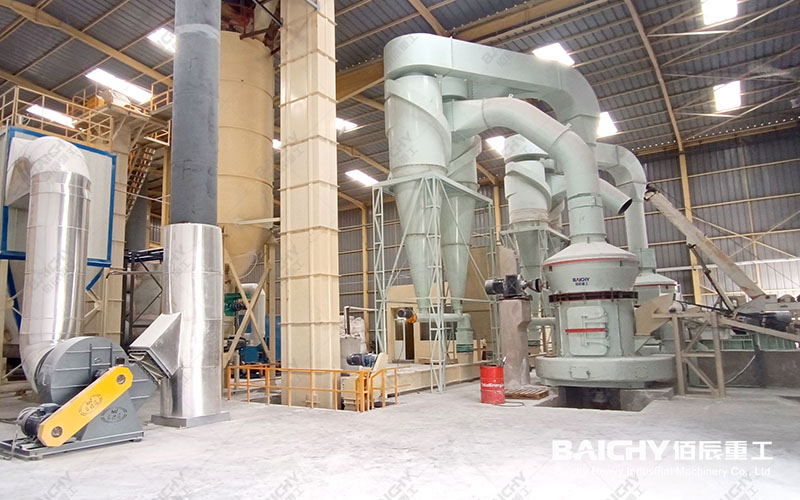
Customer Site: MTW European-Style Trapezium Mill
V. FAQ: Three Most Common Pre-purchase Questions
Q1: Why is there often a significant gap between the nominal and actual capacity of the MTW European-style Trapezium Mill? How should the contract be structured to avoid losses?
A1: The discrepancy arises from inconsistent standards. First, the fineness standard: nominal capacity is usually based on 200-mesh output; capacity naturally drops when grinding to 325 mesh. Second, the raw material standard: feed particle size, moisture content, and impurity levels all reduce actual output. When signing the contract, it is recommended to lock in three points: negotiate capacity based on your target fineness (e.g., 325 mesh D97) rather than the standard 200-mesh benchmark; require the manufacturer to conduct free material testing and use the measured data as the standard; and base contract acceptance on "operational capacity at the target fineness," while clearly specifying the commissioning period and performance verification method. Including these three points in the contract is far more effective than a verbal promise to "guarantee target output."
Q2: How do the MTW European-style Trapezium Mill, Vertical Mill, and HGM Ultrafine Mill differ? When should one switch to a different type?
A2: Selection is based on fineness and production capacity. For medium-sized grinding plants requiring 80–400 mesh output and a single-line capacity of 3–20 t/h, the MTW European-style Trapezium Mill offers the best cost-performance ratio. If the requirement calls for ultrafine output (above 600 mesh) or a high-capacity line integrating drying and grinding, consider the Vertical Mill or HGM Ultrafine Mill. For small plants with capacities under 5 t/h that produce only coarse powder and are highly budget-sensitive, the Raymond Mill remains a viable option. Conversely, forcing an MTW mill to produce 800-mesh powder or using an HGM mill for high-capacity 200-mesh production would be disastrous for per-ton costs; there is no "good" or "bad" equipment—only the right fit for the application.
Q3: Why can price quotes for "Trapezium Mills" vary by as much as 30%? What are the shortcomings of low-priced options?
A3: Price differences usually stem from five areas: the material and heat treatment of grinding rollers and rings (wear-resistant alloy vs. standard castings; service life can differ twofold); the drive mechanism (integrated bevel gear drive vs. the belt drive and "pseudo-suspension" structures found in low-end models); the classifier type (variable-frequency turbine classifier vs. low-end external impeller classifiers with limited precision); the lubrication system (centralized thin-oil lubrication vs. low-end grease lubrication, which risks uncontrolled temperature rise during continuous operation); and the inclusion of dust collection and electrical control systems. The way to identify quality is simple: ask the supplier for a detailed breakdown of specifications and a free material test, and insist that production capacity and fineness targets be written into the contract. Only quotes that meet all three criteria are worth considering in your comparison.
Baichy Heavy Industry
Baichy Heavy Industry is a high-tech mining equipment company integrating R&D, manufacturing, sales, and after-sales service. Focusing on crushing, grinding, and mineral processing equipment, we provide professional solutions to our customers. We are ISO9001:2015 、certified, and our products include mobile crushing palnts, crawler crushing plant, construction waste crushing plants, jaw crushers, sand making machines, cone crushers, fine crushers, grinding mills, ball mills, etc., all with reliable performance to meet diverse project needs.
Baichy Heavy Industry – Your Trusted Partner
To ensure optimal performance of your equipment, Baichy Heavy Industry offers:
- Professional on-site installation guidance
- Comprehensive operator training
- 24/7 technical support & maintenance services
Our complete after-sales service system guarantees long-term, stable operation of your machinery with minimal downtime.
Protect Your Rights – Only Use Official Channels
To avoid scams and ensure authentic support, contact us exclusively through:
• Official Website: www.baichychina.com
• WhatsApp: +8615093222637
• Email: [email protected]
Your satisfaction is our priority – expect prompt, professional service every time.
(Note: Beware of unauthorized third parties claiming to represent Baichy. Always verify through official contacts.)