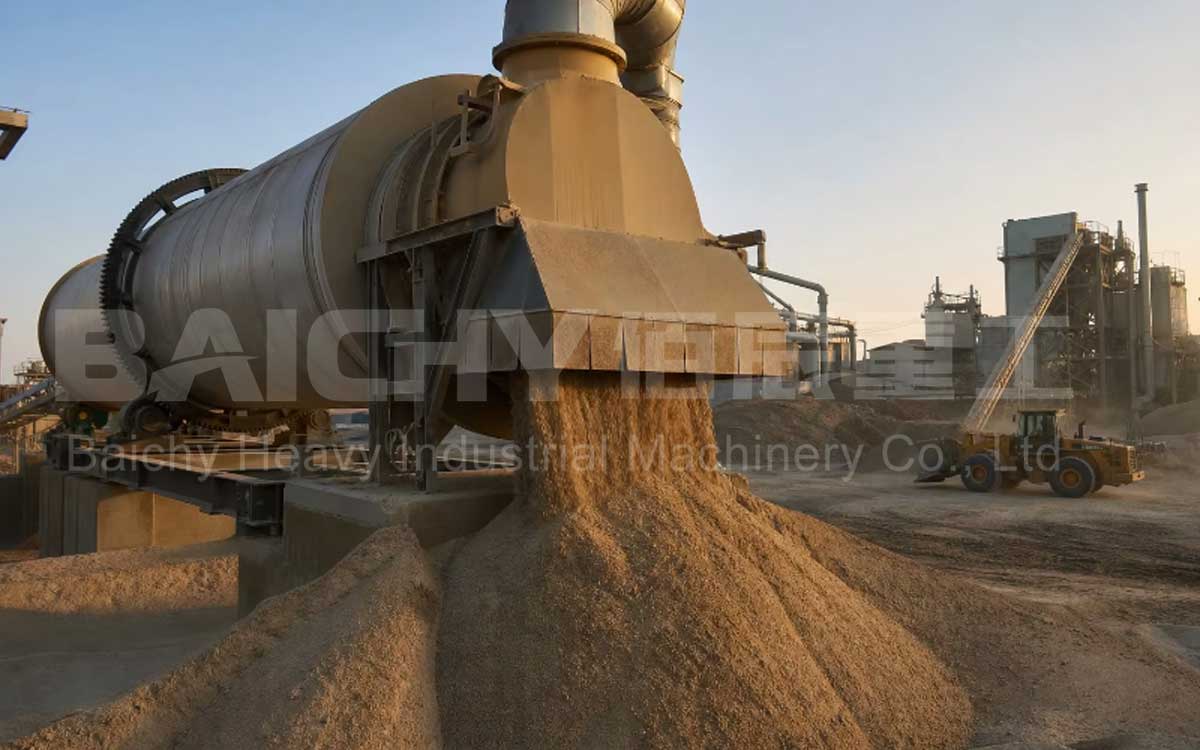
Mining Rotary Dryer
Mining rotary dryers process materials that carry an inherent risk of ignition—such as coal slime, sulfide concentrates, and metal ore fines. With high-temperature hot air, airborne dust, and combustible media all sharing the same space within the drum, fire and explosion are not merely low-probability accidents; they are engineering risks that can be predicted, categorized, and intercepted. Baichy Heavy Industry’s mining safety solution is summarized in three points: temperature interlocking leaves no room for overheating; CO monitoring ensures smoldering cannot hide; and protective design prevents accidents from escalating into fires, explosions, or spreading beyond the source.
I. Overview: Why the Mining Rotary Dryer Requires the Strictest Fire Management in Mineral Processing Plants
1.1 Nature: Mining Drying as a "Boundary-Constrained Combustion Reactor"
Mining rotary dryers inject hot air at temperatures of several hundred degrees Celsius directly into a rotating drum, where it shares the airflow path with the tumbling material. When the material consists of mining intermediates—such as coal slime, lignite, sulfide concentrates, coke fines, or iron ore fines—the equipment effectively becomes a boundary-constrained combustor. The three essential elements for combustion—heat, fuel, and oxygen—are naturally present within the drum, leaving the safety system as the only "brake." Furthermore, mining dust explosions are chain reactions: an initial explosion kicks up accumulated dust, triggering a secondary explosion that propagates through air ducts and dust collectors, exponentially amplifying the destruction.
1.2 The Reality of the Risk: Three Ignition Pathways in Mining Drying
According to the *Combustible Dust Hazard Study* by the U.S. Chemical Safety Board (CSB), 281 combustible dust fire and explosion incidents occurred in the United States between 1980 and 2005, resulting in 119 fatalities and 718 injuries; notably, most of these incidents involved ignition sources that could have been identified beforehand. Examining the actual conditions of mineral drying operations, the pathways to ignition are clearly identifiable:
• Localized Overheating: Caused by material blockages, malfunctioning lifters, or airflow imbalances; heat accumulates in a stationary material bed until it surpasses the material's self-heating threshold—this is the most common precursor to fires in mineral processing lines.
• Self-Heating and Smoldering: The self-heating threshold for low-rank coal can be as low as 250–300°C; pyrite undergoes slow, exothermic oxidation even at ambient temperatures, and the spontaneous combustion of high-sulfur concentrates is classified as a Class B risk under the IMSBC Code. Mineral drying essentially subjects materials that "carry their own ignition source" to additional high-temperature stress.
• External Ignition Sources: Sparks introduced via hot-blast stove flashback, static electricity from conveyor belts, heat generated by mechanical friction, and impact sparks from foreign objects embedded in the raw coal feed.
Perspective: Explosions in mineral drying operations are rarely "sudden"; they are simply "undetected." Smoldering precedes open flames by minutes or even tens of minutes, and smoldering is detectable—this is precisely the rationale behind temperature interlocks and CO monitoring systems.
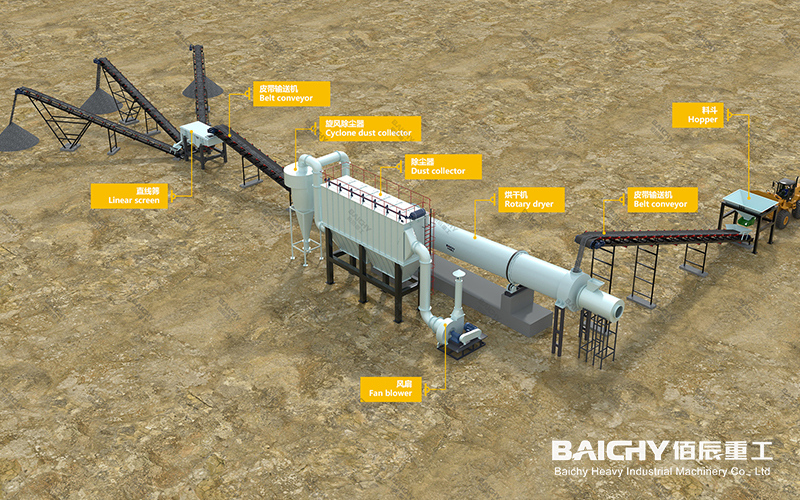
Process flow diagram of the single-drum dryer
II. Temperature Interlocks: Tiered Response to Halt Overheating Before Ignition
2.1 Monitoring Locations: Multi-point deployment; avoiding reliance on single-point data
Typical monitoring points for mining-grade drying equipment include: hot-air inlet temperature, exhaust gas outlet temperature, discharge material temperature, and the temperatures of the dryer shell and trunnion/roller bearings. Single-point measurements can be misleading due to localized operating conditions—for instance, a surface thermometer might show no change while the material bed is overheating internally. Therefore, a dual-criterion approach—"absolute threshold + trend analysis"—is employed: temperatures must neither exceed the upper limit nor deviate from the steady-state baseline by rising continuously.
2.2 Interlock Strategy: Four-Level Response with Automatic Escalation
| Response Level | Trigger Condition (Example) | Automatic Action |
|---|---|---|
| Level 1 · Early Warning | Temperature approaching the upper limit; CO concentration rising. | Audible and visual alarm + Central control notification |
| Level 2 · Load Reduction | Temperature exceeds limits or continues to rise. | Reduce fuel, lower inlet air temperature, and decrease rotational speed and feed rate. |
| Level 3 · Shutdown | Temperature or CO reaches the interlock value. | Cut off the heat source and interlock the fan to shut down. |
| Level 4 · Protection | Confirm fire/smoldering inside the cylinder. | Initiate steam or nitrogen inerting; isolate the air supply. |
Two Golden Rules: Hard interlocks must operate independently of the PLC (using relay circuits so they remain functional even if software crashes); shutdown interlocks must not be bypassed arbitrarily (bypassing requires approval and is time-limited). Avoid halting production if load reduction suffices, yet never hesitate to shut down when necessary—losses from unplanned shutdowns in mining operations are measured in days, whereas losses from erroneous shutdowns are measured in hours at most.
III. CO Monitoring: Detecting the Invisible "Prelude to Smoldering"
Smoldering is a slow oxidation process occurring in oxygen-deficient conditions; while there is no open flame, the rate of carbon monoxide (CO) generation is far higher than in normal combustion. When material smolders in "dead zones" or deep within the material bed inside the drum, CO travels with the airflow toward the exhaust outlet before surface temperature sensors can register the heat—often appearing minutes or even tens of minutes before an open flame emerges. Consequently, temperature interlocks and CO monitoring serve as a dual-safety system for mining drying operations. Preferred monitoring point: The main exhaust duct upstream of the dust collector—smoldering byproducts must pass through here. The difference in CO concentration between the inlet and outlet of the baghouse indicates smoldering dust accumulation on the filter bags; the dust collector is the point of highest risk for secondary explosions in the mineral processing line.
Instrument selection: Extractive infrared/electrochemical analyzer; sampling lines must feature heated designs to prevent condensation and clogging, and require periodic calibration.
Threshold setting: Typical engineering values are in the range of tens of ppm (e.g., a warning in the 50–100 ppm range), supplemented by a "rate of rise" criterion—triggering an alarm even if the absolute threshold isn't reached but levels are steadily climbing. Interlock shutdown values are determined based on material smoldering tests and risk assessments, rather than simply adopting default values.
IV. Protection design: Ensuring accidents "cannot ignite, cannot explode, and cannot propagate."
Explosion protection is not about thickening vessel walls; it is about providing a controlled outlet for energy and interrupting secondary explosion propagation along the path.
Protection is implemented across four layers:
• Pressure relief and isolation: Install explosion vents on vessel bodies and dust collectors, directing discharge away from personnel areas and main structural components; install explosion isolation valves in ducts to prevent propagation—refer to NFPA 654 and GB/T 15605-2008 *Guide for Dust Explosion Venting*.
• Fire suppression and inerting: Provide connection points for steam/nitrogen inerting; automatically cut off oxygen upon fire detection; install rapid-shutoff valves between hot-blast stoves and dryers; for mineral processing lines, install spark detection and extinguishing devices at vessel inlets.
• Electrical explosion protection and static control: Select explosion-proof electrical equipment in accordance with GB 50058-2014 and ATEX zoning standards; ensure continuous static grounding for air ducts; use anti-static filter media for bags—coal preparation plants and sulfide concentrate workshops often present environments with both gas and dust explosion risks, so zoning and classification are mandatory.
• Process-based error prevention: Use a co-current layout so high-moisture material contacts the hottest air, avoiding "dry material meeting high heat"; employ material-breaking devices to prevent clogging; maintain stable negative pressure to suppress dust cloud formation.
V. Application Scenarios: Typical Operating Conditions and Risk Classification for Mining Dryers
A rotary dryer for mining is not merely a single piece of equipment; rather, it serves as the platform for a safety system configured in stages based on material-related risks. When selecting equipment, first classify the material's risk level, then determine the minimum safety investment requirements:
| Mining Scenario | Typical Materials | Primary Risks | Key Safety Configurations |
|---|---|---|---|
| Coal Slurry / Low-Rank Coal Upgrading | Coal slurry, lignite, flotation clean coal | Low spontaneous heating threshold; coal dust explosion lower limit of only tens of g/m³ | Inlet air temp ≤650°C; CO monitoring; explosion venting; explosion-proof electrical components |
| Sulfide Concentrate Drying | Copper/zinc/sulfur concentrates, pyrite | Sulfide oxidation/spontaneous heating; discoloration/grade degradation | Co-current low-temp flow; discharge temp ≤90°C; dual interlock (temp + CO) |
| Metal Ore Powder Drying | Iron concentrate powder, manganese ore powder, fluorite powder | Fine dust generation; static electricity accumulation | Concentration control; anti-static grounding; over-temperature interlock |
| Tailings Dry Stacking & Processing Sludge | Tailings filter cake, press-filtered sludge cake | High-moisture sticky material; secondary dust generation after drying | Material breaking/back-mixing; secondary dust removal; over-temperature shutdown |
| Coal-based & Coking By-products | Coke breeze, semi-coke fines, carbon associated with gangue | High volatile content; poor thermal stability | Low temp/high airflow; inerting interface; online CO monitoring |
VI. Main Unit Parameters: Core Parameter Table for Baichy Mining Rotary Dryer
The table below lists actual parameters for the standard rotary dryer series (inlet temp of 700–800°C represents the equipment's upper limit and standard specification for general materials). For combustible mining materials, the inlet air temperature must be adjusted downward based on the material (e.g., coal slurry: 550–650°C; sulfur concentrate: 500–700°C with co-current flow). Safety configurations are customized according to material risk, and actual production capacity is determined by material drying tests:
| Specifications (Shell Dia. × Length, mm) | Volume (m³) | Nominal Capacity (t/h)* | Inclination (%) | Max. Inlet Air Temp. (°C) | Rotation Speed (r/min) | Main Motor (kW) |
|---|---|---|---|---|---|---|
| Φ1200×12000 | 13.6 | 2.4–3.2 | 3–5 | 700–800 | 3–8 | 7.5 |
| Φ1500×12000 | 21.2 | 4.5–5.7 | 3–5 | 700–800 | 2–6 | 15 |
| Φ1800×14000 | 35.6 | 7.6–9.5 | 3–5 | 700–800 | 2–6 | 18.5 |
| Φ2000×18000 | 56.5 | 8.4–12.3 | 3–5 | 700–800 | 1.5–6 | 22 |
| Φ2200×18000 | 68.3 | 12.8–16.2 | 3–5 | 700–800 | 1.5–6 | 22 |
| Φ2400×20000 | 90.4 | 19.3–24.1 | 3–5 | 700–800 | 1.5–5 | 55 |
| Φ2600×24000 | 127.4 | 27.2–34.0 | 3–5 | 700–800 | 1.5–5 | 75 |
| Φ3000×25000 | 176.6 | 37.7–47.1 | 3–5 | 700–800 | 1.5–5 | 90 |
* Official specifications are based on standard materials such as sand, coal, and mineral powder, with an initial moisture content of approximately 10%. When processing combustible mineral materials configured according to the temperature limits in the table above, production capacity will fluctuate based on moisture content and material properties; material test data shall prevail prior to contract signing.
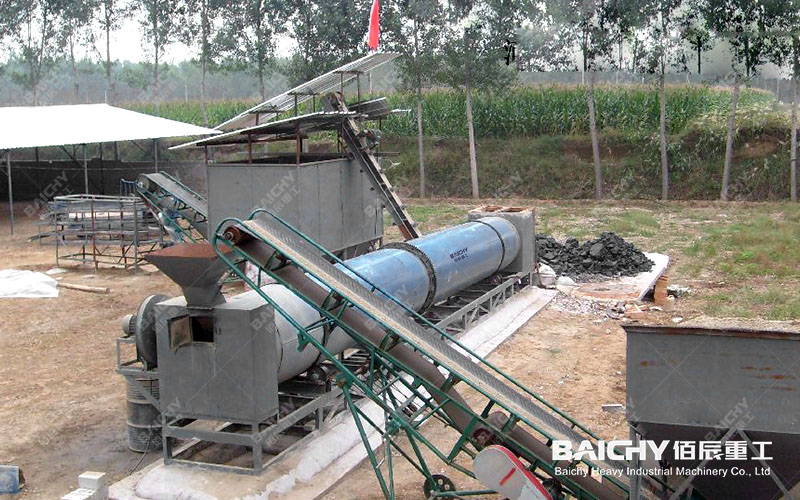
Mining Drying Equipment
Safety Configuration Tiers (for price comparison and avoiding ambiguous "extra-cost add-on" tactics):
| Configuration Tier | Coverage | Applicable Materials |
|---|---|---|
| Basic Standard | Temperature monitoring points, over-temperature alarms, discharge temperature control | Low-fire-risk materials (e.g., quartz sand, slag) |
| Recommended | Basic features + Temperature-based tiered interlocks | Dusty minerals (e.g., iron concentrate, bentonite) |
| High-Risk Custom | Recommended features + Online CO monitoring, explosion venting/isolation, inerting interfaces, explosion-proof electrical components | Coal slime/lignite, sulfide concentrates, coke breeze |
VII. Equipment Advantages: Translating safety design into operational profitability
• Safety Ensures Continuous Production: Interlocks transform scenarios where "one fire causes a two-week shutdown" into "one alarm requires only 10 minutes of handling"—production losses from dust-related accidents in mining often far exceed the cost of the equipment itself.
• Inherent Safety via Co-current Low-Temperature Operation: Discharge temperatures are controlled below 90°C, eliminating the heat accumulation conditions that drive sulfide oxidation and coal self-heating, while preserving concentrate grade by preventing heat-induced alteration.
• Secondary Explosion Prevention: Early detection of smoldering via upstream CO monitoring combined with explosion isolation valves cutting off propagation paths neutralizes the industry's greatest threat: chain-reaction explosions involving dust collectors.
• Compliance and Global Market Readiness: Designs align with NFPA 654/86, GB/T 15605, GB 50058, and ATEX zoning standards, facilitating higher pass rates for safety assessments and acceptance inspections in overseas mining projects.
• Low-Maintenance Structure + High-Reliability Instrumentation: Features such as pin-type gears, spiral lifters, and material-breaking devices reduce downtime costs; hardware-based interlocks operate independently of central control software, remaining functional during power or network outages.
VIII. Relevant Case Studies (Anonymized)
Surface coal slime drying station at a coal mine in Inner Mongolia: A Φ2400×20000 rotary dryer equipped with a bag-type dust collector. During long-term winter operation, exhaust CO levels rose from approximately 20 ppm to 80 ppm within a single night shift. The system issued an early warning based on the rate-of-rise criterion; the unit was shut down for cleaning after smoldering dust was confirmed on the filter bags, thereby averting a typical dust collector ignition accident (according to plant operational records).
Copper concentrate drying project in South America: Feedstock contained approximately 22% sulfur and 14% moisture; the client prioritized "preventing spontaneous combustion" and "maintaining product grade" as the primary technical requirements. The design utilized a low-temperature co-current flow process, keeping discharge material temperature at or below 85°C throughout. Dual interlocks (temperature and CO) were calibrated based on the material's smoldering characteristics, and a steam inerting interface was installed. The project passed local safety regulatory reviews, with the safety configuration specifications proving critical to winning the bid.
Explosion-proof retrofit for a domestic iron concentrate plant: The original drying system lacked explosion venting and CO monitoring capabilities. Retrofitting was completed in accordance with GB/T 15605, incorporating explosion vents and explosion isolation valves, as well as tiered temperature interlocks and anti-static grounding. The system passed safety acceptance inspections, and the retrofit cost was lower than the potential production losses from a single near-miss accident (according to plant data).
IX. Recommended Equipment for This Application
| Recommended Equipment | Function | Applicable Stage |
|---|---|---|
| Mining Rotary Dryer (Model featured here) | Drying of coal slime/concentrate/mineral powder; equipped with comprehensive safety interlocks | Drying stage (post-filtration/thickening) |
| Three-cylinder Rotary Dryer | Alternative for high-capacity needs or space-constrained sites | Large-scale production lines / Retrofitting & capacity expansion |
| Hot Air Furnace (Coal/Natural Gas/Biomass/Waste Heat) | Stable heat source; linked with temperature control interlocks | Drying system auxiliary equipment |
| Cyclone + Baghouse Dust Collector (incl. explosion venting/isolation) | Exhaust gas dust recovery; secondary explosion prevention | Drying system auxiliary equipment |
| Online CO & Temperature Monitoring Instrumentation | Early warning for smoldering & tiered interlock response | Safety Instrumented System (SIS) |
| Steam/Nitrogen Inerting & Fire Suppression Unit | Automatic protection upon fire confirmation | Specialized for high-risk mineral materials |
X. FAQ
Q1: Can mining rotary dryers really explode when drying coal slime or concentrates? Which materials are the most dangerous?
An explosion requires the simultaneous presence of a dust cloud, an oxygen-containing atmosphere, and an ignition source; while the conditions are stringent, the risk is fully controllable. Coal slime, lignite, coke breeze, and sulfide concentrates pose the highest risk: low-rank coals have low self-heating temperatures and low dust explosion limits (tens of g/m³), while sulfide concentrates generate heat through oxidation. The correct approach is not to avoid drying, but to configure temperature interlocks, CO monitoring, and explosion venting structures based on material risk, thereby breaking the chain of events leading to an accident.
Q2: What are the appropriate alarm thresholds for CO monitoring and temperature interlocks? Are there industry-standard default values?
There are no fixed default values. Typical engineering practice involves setting a pre-warning threshold in the tens of ppm range (e.g., 50–100 ppm) for the exhaust manifold, combined with a criterion based on the rate of concentration rise; the interlock shutdown value is determined through material smoldering characteristic tests and risk assessments. When requesting a quote, you should ask the manufacturer for an interlock logic diagram that includes the rationale for the settings, rather than just a statement that "CO alarms are included."
Q3: Can this safety system be retrofitted onto existing drying lines in mineral processing plants?
Yes, it can. For materials posing a low fire risk, basic temperature control suffices; however, for combustible materials, the "temperature-based interlocking + CO monitoring + explosion venting and isolation" safety package must be fully implemented. Retrofitting existing lines does not require complete equipment replacement—Baichy can install monitoring points, hard-wired interlocking circuits, explosion vents, and explosion isolation valves on in-service shells, while also assisting with the technical documentation required for safety acceptance.
Baichy Heavy Industry
Baichy Heavy Industry is a high-tech mining equipment company integrating R&D, manufacturing, sales, and after-sales service. Focusing on crushing, grinding, and mineral processing equipment, we provide professional solutions to our customers. We are ISO9001:2015 、certified, and our products include mobile crushing palnts, crawler crushing plant, construction waste crushing plants, jaw crushers, sand making machines, cone crushers, fine crushers, grinding mills, ball mills, etc., all with reliable performance to meet diverse project needs.
Baichy Heavy Industry – Your Trusted Partner
To ensure optimal performance of your equipment, Baichy Heavy Industry offers:
- Professional on-site installation guidance
- Comprehensive operator training
- 24/7 technical support & maintenance services
Our complete after-sales service system guarantees long-term, stable operation of your machinery with minimal downtime.
Protect Your Rights – Only Use Official Channels
To avoid scams and ensure authentic support, contact us exclusively through:
• Official Website: www.baichychina.com
• WhatsApp: +8615093222637
• Email: [email protected]
Your satisfaction is our priority – expect prompt, professional service every time.
(Note: Beware of unauthorized third parties claiming to represent Baichy. Always verify through official contacts.)