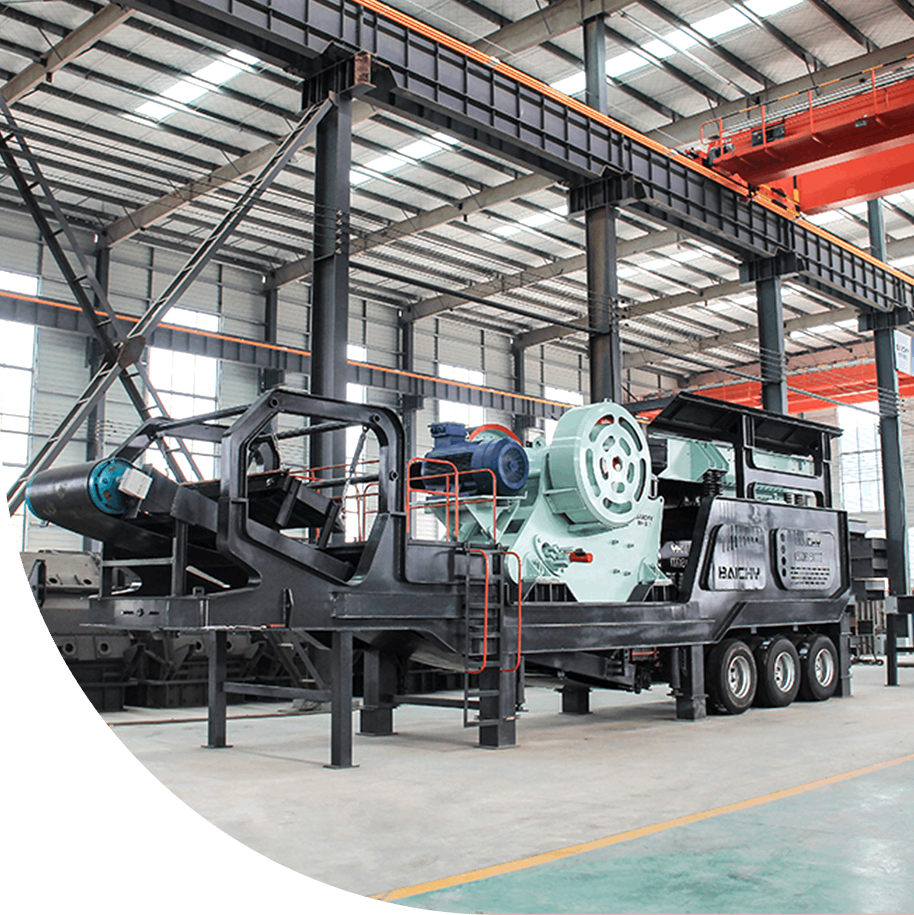

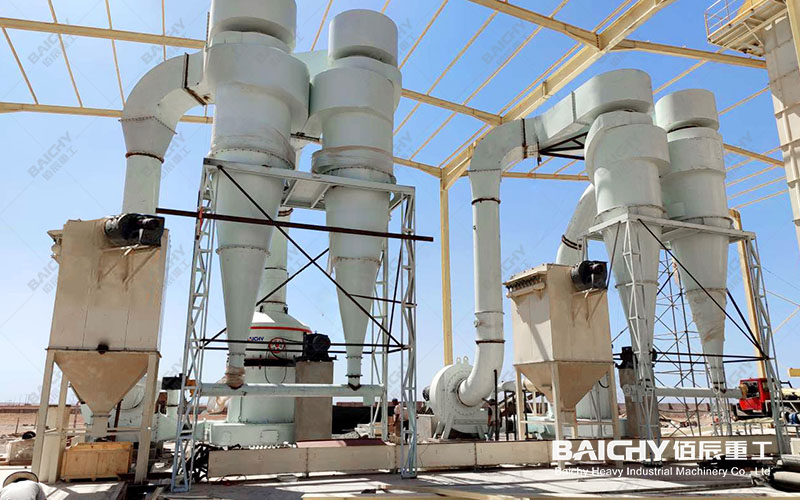
Manganese ore grinding mill
Processing 200 mm manganese raw ore into a 200-mesh product at a rate of 5–8 t/h is not merely a matter of selecting a single grinding mill; it requires the configuration of a complete "crushing-and-grinding" production line. Since the maximum feed size for the mill is approximately 35 mm, the 200 mm lump ore must first undergo two stages of crushing (primary crushing via jaw crusher followed by secondary fine crushing in a closed circuit with a double-roll crusher) before the ≤35 mm material is fed into the MTW grinding mill. To determine the appropriate model, the upper limit of the target output range (8 t/h of -200 mesh product) should be used as the baseline, while also accounting for a 10%–20% reduction in capacity caused by the quartz often associated with manganese ore. The following sections outline the process flow, equipment configuration list, capacity verification, and investment calculation framework.
I. Requirement Breakdown: A 200 mm feed size signals the need for a "complete production line," not just a single grinding mill
1.1 Calculating the crushing ratio: Two stages are required to reduce 200 mm to 35 mm
The MTW grinding mill requires a feed size of ≤35 mm (exceeding this limit can damage the grinding rollers and feeding mechanism). Reducing 200 mm raw ore to ≤35 mm entails a crushing ratio of approximately 6:1, which is difficult to achieve in a single stage using a jaw crusher; the output from primary jaw crushing typically falls within the 40–100 mm range. Therefore, the standard configuration involves two stages: a jaw crusher handles primary crushing (reducing 200 mm to 40–100 mm), and a double-roll crusher (or fine-crushing jaw crusher) handles secondary fine crushing in a closed circuit (reducing material to ≤35 mm). Depending on the clay content of the raw ore, screening and impurity removal steps may be inserted between these stages.
1.2 Verifying capacity specifications: The 5–8 t/h figure refers to the "target output of 200-mesh product," not the mill's nominal capacity
Manganese powder is inspected in batches and priced based on fineness. The 5–8 t/h figure refers to the stable production output of -200 mesh manganese powder; the mill's actual capacity at 200-mesh fineness is typically significantly lower than its nominal capacity for coarse grinding (80–200 mesh) and is further reduced by 10%–20% depending on silicon content. The system's main and auxiliary equipment are designed for an upper limit of 8 t/h to ensure stable output within the 5–8 t/h range, avoiding the mismatch between "nominal 8 t/h" and "actual 5 t/h" performance.
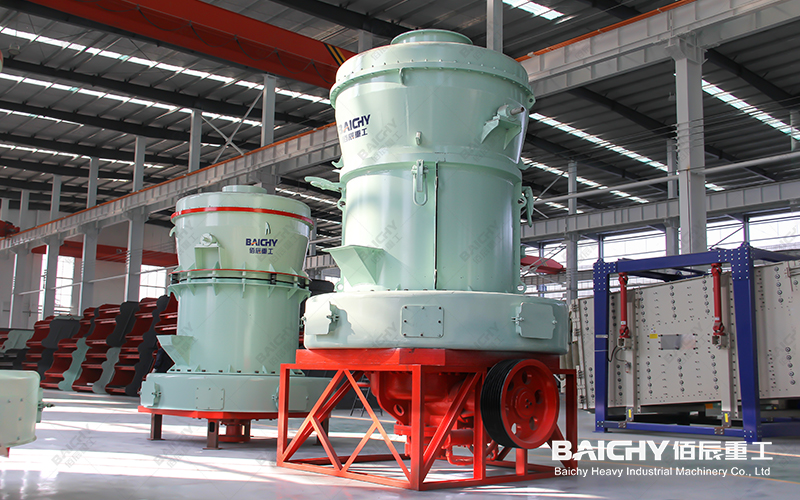
MTW grinding
II. Complete Process Flow (System Configuration)
Manganese raw ore (200 mm)
│ ZSW Vibrating Feeder (uniform feeding and buffering)
▼
PE Jaw Crusher (primary crushing: 200 mm → 40–100 mm)
│ Belt Conveyor No. 1
▼
2PG Double-Roll Crusher (fine crushing: gap-adjusted output ≤35 mm; closed-circuit screening)
│ Belt Conveyor No. 2
▼
Intermediate Storage Bin (buffers ≤35 mm qualified material; stabilizes mill load)
│ Bucket Elevator + Electromagnetic Vibrating Feeder
▼
MTW Mill (roller grinding)
│ Built-in Variable-Frequency Turbo Classifier (200 mesh; D97 adjustable online)
▼
Cyclone Collector + Pulse Bag Dust Collector (negative-pressure closed-circuit dust collection)
│
▼
200-Mesh Manganese Powder Finished Product Bin (for bagging or bulk transport)
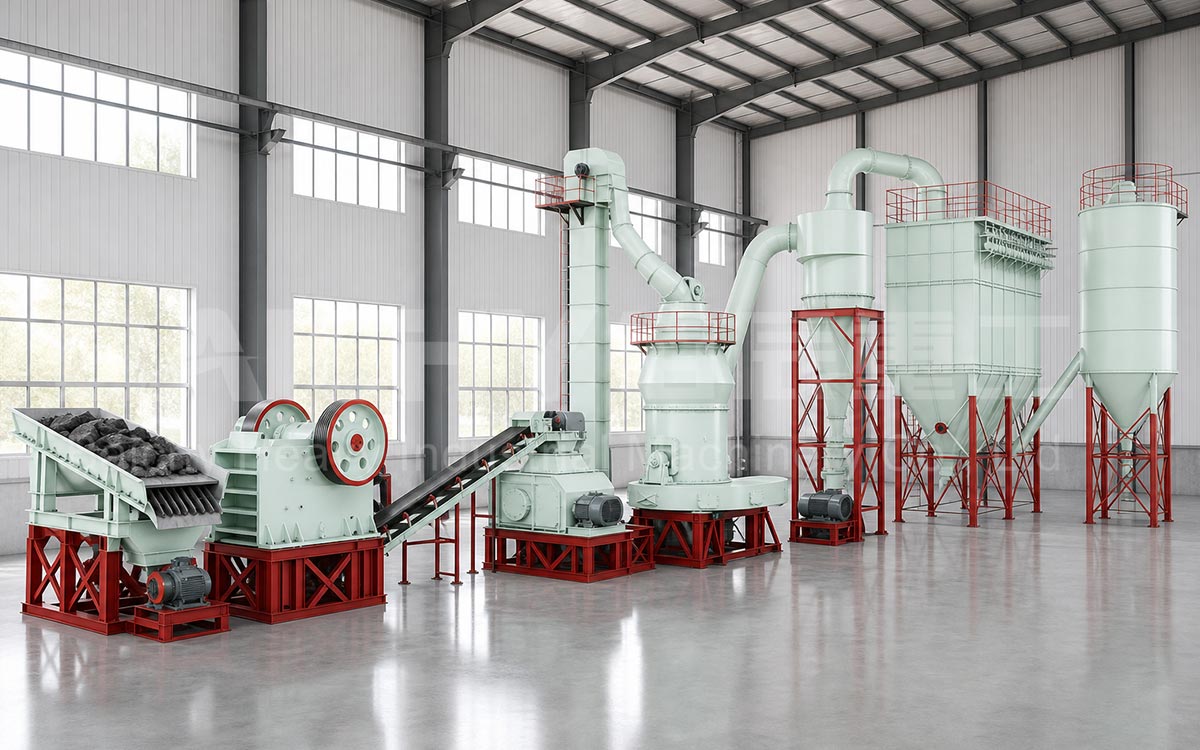
Manganese Ore Grinding Line Solution
Design Highlights: Crushing capacity is sized at 1.5–2 times the mill's consumption rate to ensure the mill never runs out of feed; an intermediate bin and electromagnetic feeder are installed upstream of the mill to control feed moisture and uniformity, which are prerequisites for consistent 200-mesh screening results.
III. Equipment Configuration List and Selection Basis (Key Parameters)
| Section | Equipment | Key Parameters / Selection Basis | Configuration Details |
|---|---|---|---|
| Feeding | ZSW Vibrating Feeder | Capacity ≥ 20 t/h; includes grizzly bars for pre-screening | Buffers impact from large ore blocks; removes fine mud/silt |
| Primary Crushing | PE Series Jaw Crusher | Inlet size ≥ 400×600 class (feed size ≤340 mm); capacity > 8 t/h for medium-hard manganese ore | High-silicon manganese ore; jaw plates configured with wear-resistant high-manganese steel |
| Fine Crushing | 2PG Double-Roll Crusher | Output size ≤35 mm (adjustable roll gap); single-unit capacity ≥15 t/h (oversized configuration) | Roll shearing action suits manganese ore; minimizes over-crushing; closed-circuit screening optional |
| Screening (Optional) | YK Circular Vibrating Screen | Single-deck 35 mm screen; closed-circuit return to fine crusher | Installed if raw ore has high mud content or acceptance standards are strict |
| Conveying | Belt Conveyor / Bucket Elevator | Selected for 10 t/h conveying capacity | Belt conveyors preferred for short distances; bucket elevator + feeder used for mill inlet section |
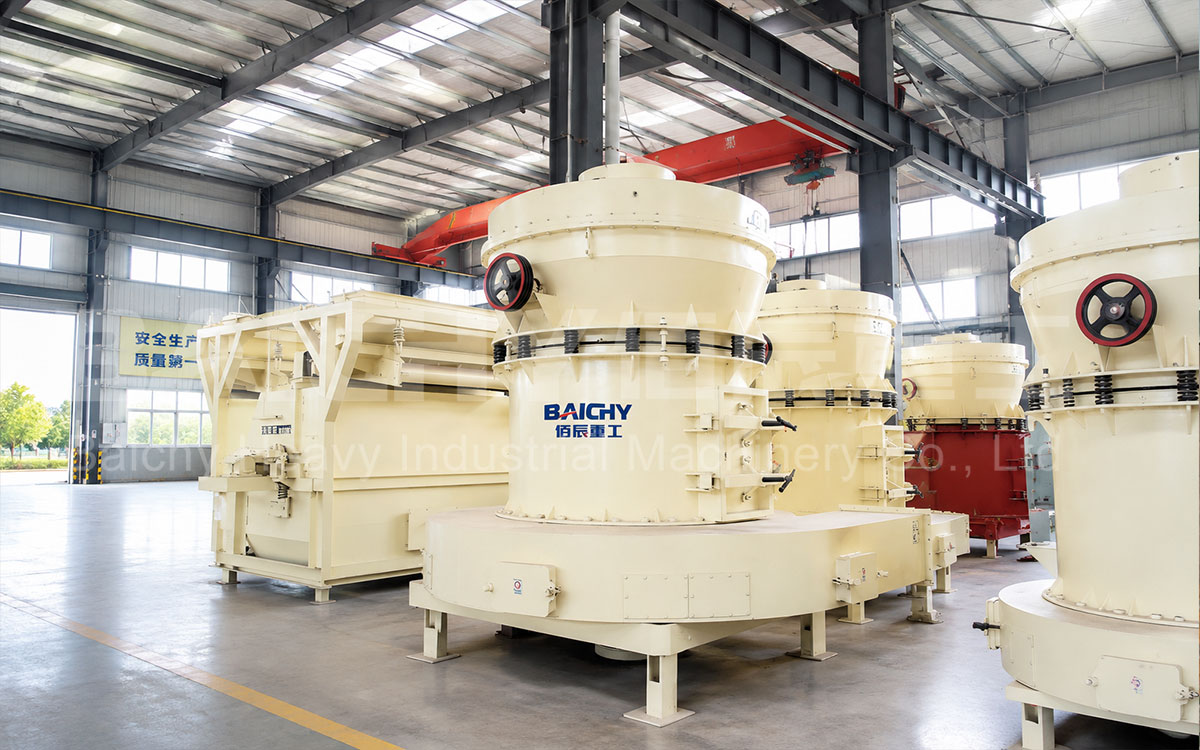
| Main Grinding | MTW Grinding Mill (Medium-sized model) | Design capacity 8 t/h at 200 mesh; main motor approx. 132–160 kW; integrated bevel gear drive | Specific model finalized based on free manganese ore grinding test report |
| Classification | Built-in VFD Turbo Classifier | 200-mesh D97 adjustable online; switchable to -325 mesh production | Stable batch residue; grade switching without stopping the machine |
| Lubrication | Centralized Thin-Oil Station | Oil temperature and pressure monitoring; supports 24-hour continuous production | Ensures continuous operation for high-volume manganese powder production |
| Dust Collection | Cyclone Collector + Pulse Bag Dust Collector | Negative-pressure closed-circuit system; explosion-proof relief and isolation valves available | Fine manganese powder is combustible; configured per on-site dust explosion safety standards |
| Electrical Control | Centralized electrical control cabinet (VFD/PLC options available) | Interlocked start/stop for main unit, fan, and feeder | Customized for local grid standards (50/60 Hz; 380/400/440 V) |
Note: Values are typical ranges for industry reference, not a commitment for a single model. Capacity varies with target fineness, feed moisture and silica content of the manganese ore; final configuration is subject to material grinding tests and the signed technical agreement.
IV. Selection Logic and Capacity Verification (Moving from "sufficient" to "quantifiable")
• Nominal vs. Actual Performance: Quotes and contracts for the manganese ore mill are based on an output of 5–8 t/h for -200 mesh powder; the main unit's nominal rating serves only as a reference. Actual capacity fluctuates based on target fineness, feed moisture content, and silica content—details of which are specified in the technical agreement.
• Capacity Derating Factors: Quartz associated with manganese ore (Mohs hardness 7) accelerates wear on grinding rollers and rings, forcing the mill to operate at reduced loads to maintain fineness. Derating rates are 0–10% for silica content <5%, 10–20% for 5–15%, and pre-grinding silica removal is recommended for content >15%.
• Production Scheduling and Daily Output: 8 t/h × 20 h = 160 t/d (adjusted based on two- or three-shift schedules); with the inclusion of thin-oil lubrication and online monitoring, continuous 24-hour operation is the standard mode.
• Cost-per-Ton Framework (for customer calculation): Cost per ton ≈ (Power consumption kWh/t × Electricity price) + (Amortized cost of grinding rollers/rings in CNY/t) + Labor + Depreciation. For the same product fineness, the MTW mill offers lower power consumption and requires fewer maintenance hours compared to traditional Raymond mills (industry estimates suggest a reduction of approximately 20–30%, though specific figures depend on actual grinding tests). When requesting a quote, ask the manufacturer to provide both the "power consumption at 200-mesh fineness" and the "wear part lifespan," rather than just the price of the main unit.
V. FAQ
Q1: Why can't 200mm raw manganese ore be fed directly into the MTW mill? How should the feed material be processed?
A1: The maximum feed size for the mill is approximately 35 mm; feeding 200 mm lumps directly would damage the grinding rollers and the feeding mechanism. The correct approach involves two-stage crushing: first, coarse crushing to 40–100 mm using a PE jaw crusher, followed by fine crushing to ≤35 mm using a 2PG double-roll crusher (with adjustable roll gaps). A closed-circuit screening process can be added to ensure product quality, after which the material enters an intermediate hopper for steady feeding into the mill. The crushing section should be sized with a capacity 1.5 to 2 times that of the mill's consumption rate to ensure continuous operation.
Q2: What product specification is the 5–8 t/h output based on? How can it be guaranteed that the mill will actually achieve this?
A2: The output is calculated based on producing manganese powder with a fineness of -200 mesh (75 μm), using 8 t/h as the baseline for model selection; if the silica content is high, the capacity estimate is adjusted downward by 10–20% to provide a safety margin. The only reliable way to determine if a mill can meet production targets is by reviewing the manufacturer's material grinding test report and capacity curve for the "target fineness," rather than relying on the nominal coarse-grinding capacity of the main unit. Baichy offers free manganese ore grinding tests; the resulting report includes estimated capacity at 200-mesh fineness, power consumption, and wear part lifespan. A technical agreement is signed only after the test results are confirmed.
Q3: What other equipment is included in this production line besides the mill? Should the crushing section use a jaw crusher plus a double-roll crusher, or something else?
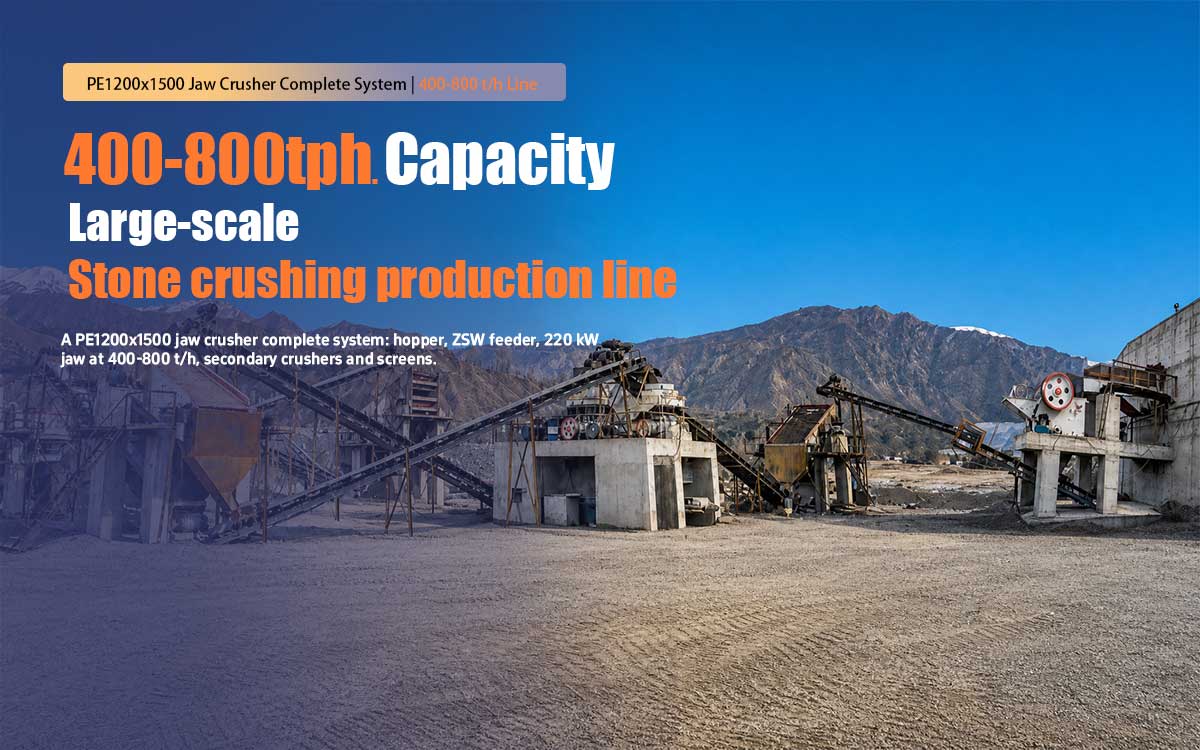
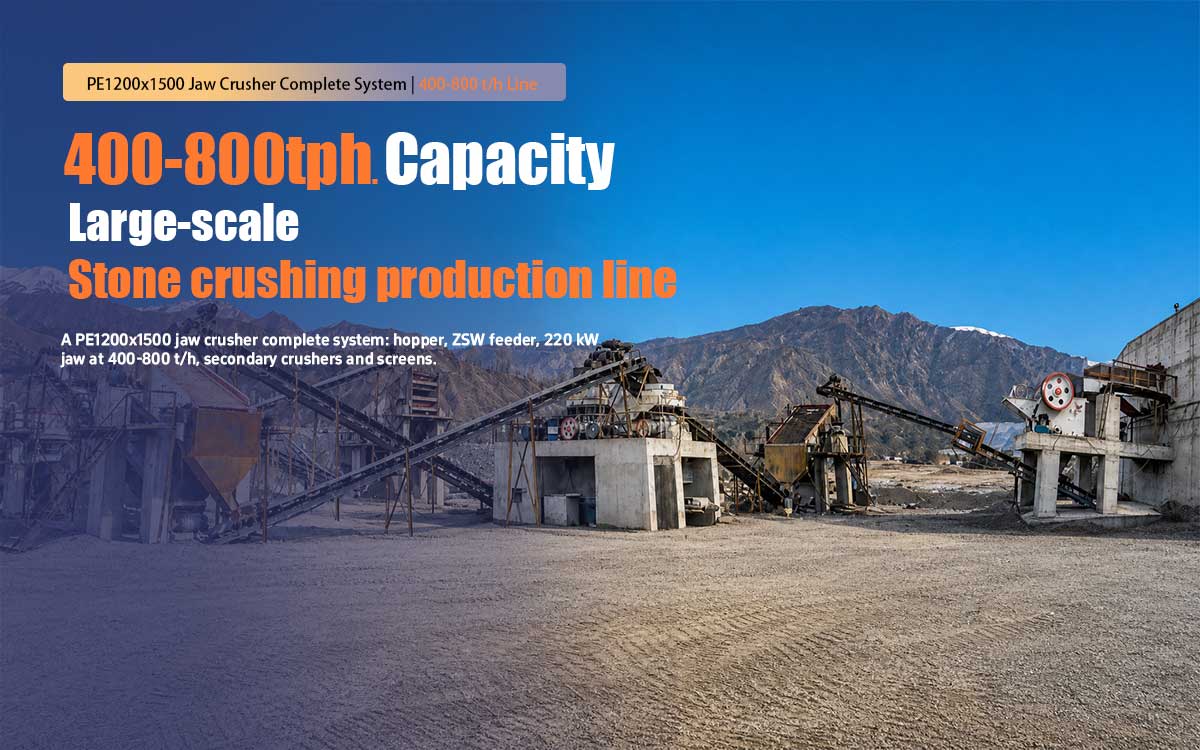
A3: The complete production line comprises a ZSW feeder, PE jaw crusher (primary crushing), 2PG double-roll crusher (closed-circuit fine crushing), intermediate storage bin, bucket elevator and electromagnetic feeder, MTW grinding mill, variable-frequency classifier, cyclone and pulse dust collection systems, and a centralized electrical control system. A double-roll crusher is recommended for the fine crushing stage; for medium-hard, silica-bearing materials like manganese ore, it offers shearing-based crushing that minimizes over-grinding, allows for adjustable output size, and consistently reduces material to under 35 mm. If the raw ore has a high clay content, a YK vibrating screen can be added after primary crushing to remove impurities. The system is quoted as a complete line, with clearly defined scopes for civil works, electrical controls, and installation.
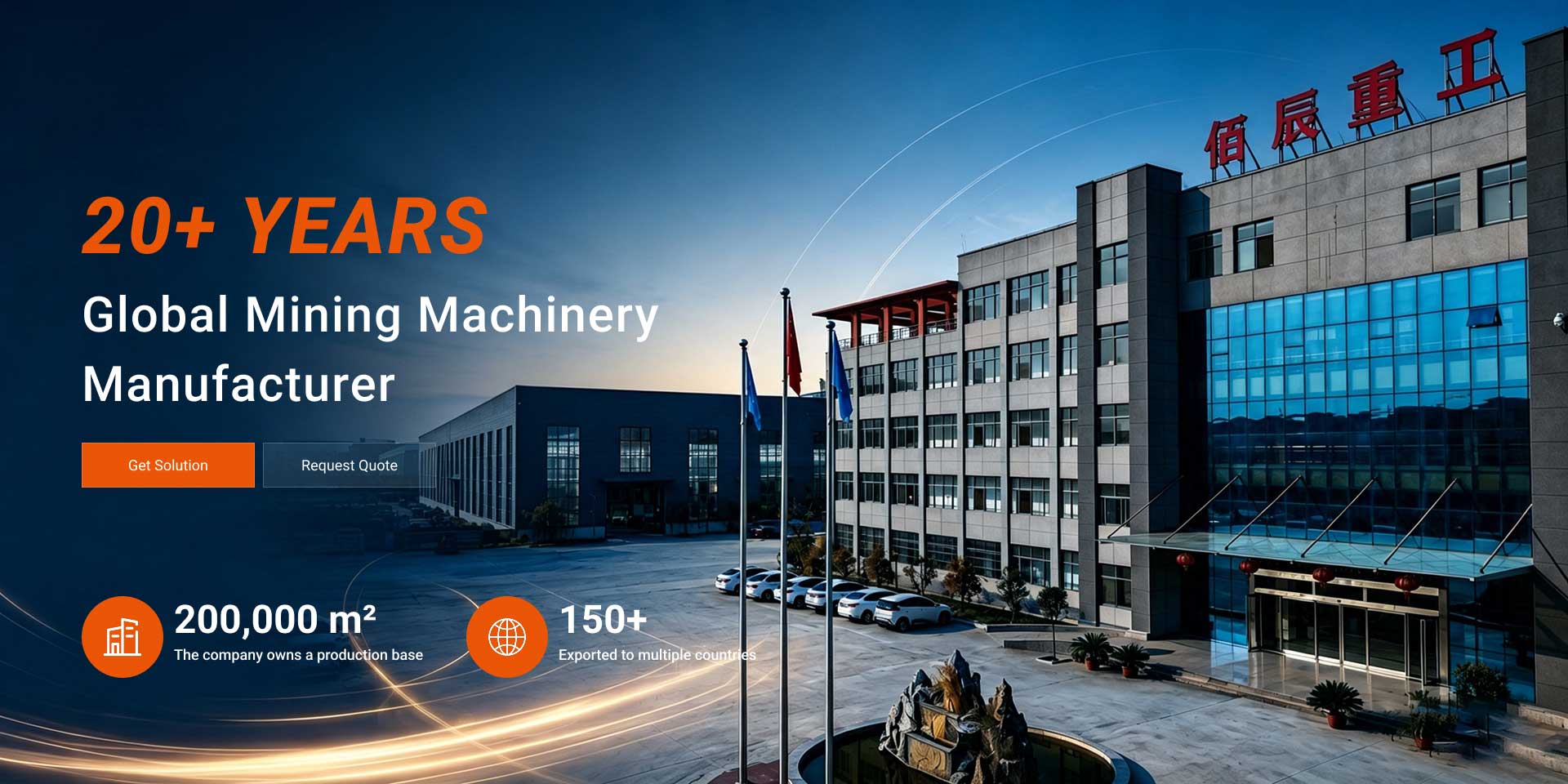
Baichy Heavy Industry
Baichy Heavy Industry is a high-tech mining equipment company integrating R&D, manufacturing, sales, and after-sales service. Focusing on crushing, grinding, and mineral processing equipment, we provide professional solutions to our customers. We are ISO9001:2015 、certified, and our products include mobile crushing palnts, crawler crushing plant, construction waste crushing plants, jaw crushers, sand making machines, cone crushers, fine crushers, grinding mills, ball mills, etc., all with reliable performance to meet diverse project needs.
Baichy Heavy Industry – Your Trusted Partner
To ensure optimal performance of your equipment, Baichy Heavy Industry offers:
- Professional on-site installation guidance
- Comprehensive operator training
- 24/7 technical support & maintenance services
Our complete after-sales service system guarantees long-term, stable operation of your machinery with minimal downtime.
Protect Your Rights – Only Use Official Channels
To avoid scams and ensure authentic support, contact us exclusively through:
• Official Website: www.baichychina.com
• WhatsApp: +8615093222637
• Email: [email protected]
Your satisfaction is our priority – expect prompt, professional service every time.
(Note: Beware of unauthorized third parties claiming to represent Baichy. Always verify through official contacts.)