Tracked Jaw Crusher
In projects such as mining and construction waste treatment, selecting the right crushing equipment is crucial for ensuring production efficiency and cost control. Tracked jaw crushers, as a highly efficient and flexible mobile crushing solution, have their superior performance closely related to the site environment. This article will delve into the specific requirements of tracked jaw crushers for the operating site and, based on practical applications, provide you with a comprehensive selection and deployment guide.
I. Core Overview: Why are Site Requirements Crucial?
Tracked jaw crushers integrate feeding, crushing, and conveying, possessing high mobility and integration. Their initial design purpose is to cope with complex and ever-changing operating scenarios, enabling direct access to material sources and achieving "crushing on the go." However, this mobility does not mean it can completely ignore site conditions. A reasonable site environment is fundamental to ensuring stable equipment operation, extending service life, ensuring operational safety, and controlling overall costs. Ignoring site requirements may lead to poor equipment mobility, foundation settlement, low production efficiency, and even safety accidents.
II. Detailed Analysis of Site Environmental Requirements
To fully utilize the efficiency of tracked jaw crushers, a comprehensive assessment of the following types of site conditions is necessary. 1. Topography and Geological Requirements
Topography and geological conditions are the primary factors determining whether equipment can be brought to the site and operate stably.
Surface Slope and Flatness
• Maximum Climbing Capacity: Most tracked jaw crushers have a maximum designed climbing angle between 15° and 20°. The actual driving slope within the site should be lower than this value, especially during heavy loads or long-distance travel.
• Working Surface Flatness: The working area should be relatively flat when the equipment is in place for crushing operations. Severely uneven ground can cause instability in the equipment's center of gravity, affecting the normal operation of the crusher and vibrating feeder, exacerbating structural stress, and posing a risk of overturning. When operating on slopes, reliable braking and support measures must be taken.
Foundation Bearing Capacity
Although the tracked design disperses the ground pressure, certain requirements still apply to the foundation.
• Soft Soil Foundation: When operating on soft foundations such as silt or backfill, steel plates must be laid or simple hardening treatment must be carried out to prevent the equipment from sinking or tilting.
• Rock Foundation: Direct movement on exposed rock requires attention to the abrasion of the track plates by sharp rocks. It is recommended to clean the area or lay a layer of fine material.
2. Space and Layout Requirements
Sufficient operating space is essential for efficient and safe production.
Equipment Operation and Turning Space
Equipment requires sufficient space for movement, turning, and positioning. The operating radius and height of loading equipment (such as excavators and loaders), as well as the placement of the discharge conveyor belt and the passageway for transfer vehicles, must be considered. A cluttered layout will severely restrict production efficiency.
Safe Operating Space
A clear safety warning zone must be ensured around the equipment, especially on the sides of the swing jaw plates and below the discharge port. Unauthorized personnel are prohibited from entering these areas. The site layout should also meet ventilation requirements, especially when working in relatively enclosed tunnels or workshops, where dust dispersion must be considered.
3. Environmental and Other Requirements
External environmental factors are equally important.
Climate and Temperature
• Extremely cold regions: Pay attention to the antifreeze properties of hydraulic oil and fuel. The equipment may need to be equipped with a low-temperature starting device and insulation measures.
• Rainy regions: The site must have good drainage conditions to prevent the equipment from getting stuck in mud. The waterproof performance of the electrical system also needs to be carefully checked.
• High-altitude regions: Altitudes above a certain level (usually above 1000 meters) will cause a decrease in engine power. It is necessary to confirm with the manufacturer in advance whether the equipment has undergone high-altitude adaptation.
Power Supply and Water Supply
• Tracked jaw crushers are usually driven by diesel engines, which have low dependence on fixed power sources and high flexibility. However, if there is a need for electricity for lighting or auxiliary equipment, temporary power lines must be planned.
• If wet dust collection is used, or if dust suppression spraying is required on site, a usable water source should be ensured.
III. Core Advantages for Meeting Site Requirements
Choosing a tracked jaw crusher adapted to your site conditions will bring the following significant advantages:
| Advantage Category | Specific Manifestations | Value Brought |
| Maximized Production Efficiency | Direct access to the mining area or construction waste pile, reducing material handling distances and achieving "materials to equipment." | Reduced transportation costs and increased output per unit time. |
| Flexible and Quick Deployment | Minimal reliance on fixed infrastructure, convenient relocation, one machine can serve multiple dispersed work sites. | Quick project start-up, high equipment utilization, and short investment payback period. |
| Adaptable to Complex Terrain | The tracked walking mechanism has low ground pressure and strong climbing ability, adapting to rugged and soft construction site surfaces. | Expands the equipment's application scenarios, enabling operation in areas inaccessible to traditional fixed production lines. |
| Reduced Overall Costs | Reduces or even eliminates the costs of constructing fixed foundations, large silos, and long-distance conveyor corridors. | Significantly reduces initial civil engineering investment and overall operating costs. |
IV. Case Study: Limestone Mine Crushing Project in Southeast Asia
• Site Challenges: The mining area features undulating terrain, multiple dispersed mining faces, high rock hardness, and temporary dirt roads that become muddy during the rainy season.
• Equipment Selection: A heavy-duty tracked jaw crusher was selected, equipped with a pre-screening vibrating feeder to remove mud and fine materials.
• Site Adaptability Measures:
1. A solid, level working platform was pre-leveled at each mining face using an excavator.
2. The temporary roads connecting the platforms were paved with crushed stone for simple hardening, ensuring smooth equipment movement.
3. After the equipment was in place, its built-in hydraulic outriggers were used for leveling and locking to ensure the main unit was horizontal.
• Results: The equipment could flexibly move between multiple mining faces, achieving on-site crushing. The produced aggregate was directly loaded onto trucks and transported off-site by a mobile conveyor belt, significantly reducing the number of raw ore transport vehicles and energy consumption, and increasing overall production efficiency by approximately 30%. V. Equipment Selection and Related Recommendations
When selecting a tracked jaw crusher, in addition to considering crushing capacity (feed size, discharge size, hourly output), you must inform the equipment supplier of your specific site conditions as a key input parameter. Pay particular attention to the following points:
1. Track Specifications: Inquire about the track plate width and ground contact length, as this directly affects ground contact pressure and mobility.
2. Equipment Dimensions: Verify the transport dimensions (length, width, height) and operating dimensions of the equipment to ensure it meets your site space constraints and road transport conditions.
3. Optional Configurations: Depending on environmental needs, select options such as an enhanced dust collection system (suitable for urban areas with high environmental requirements), a cooling kit, or a soundproof enclosure.
VI. Frequently Asked Questions (FAQ)
1: Can a tracked jaw crusher work on very soft mud?
A: Direct operation is not recommended. Although the tracked design reduces ground contact pressure, there is still a risk of sinking on extremely soft ground (such as swamps or deep silt). The standard practice is to lay roadbed boxes, thick steel plates, or harden the ground to provide sufficient load-bearing capacity. When purchasing, consult the manufacturer about whether there are widened track options for ultra-soft foundations.
2: What are the requirements for road width and load-bearing capacity when moving equipment?
A: When the equipment is in tracked mode, its speed is slow (usually <1 km/h), making it suitable only for short-distance relocation within a work site. Long-distance relocation requires the use of low-bed transport vehicles. In this case, the temporary roads within the site must meet the width and turning radius requirements of the transport vehicles, and the foundation load-bearing capacity must be sufficient. Transportation on official highways must comply with local regulations on oversized and overweight transport.
3: What special precautions should be taken when using equipment in rainy southern regions?
A: First, ensure the work site has a good drainage system to prevent the equipment from being submerged in water. Second, regularly check the waterproof sealing performance of electrical joints and components. Third, pay attention to the sealing of track rollers and carrier rollers to prevent mud and water from entering and accelerating wear. Finally, excessively wet materials may affect crushing efficiency and cause blockage at the discharge port. It is necessary to pay attention to the moisture content of the materials and adjust the process if necessary.
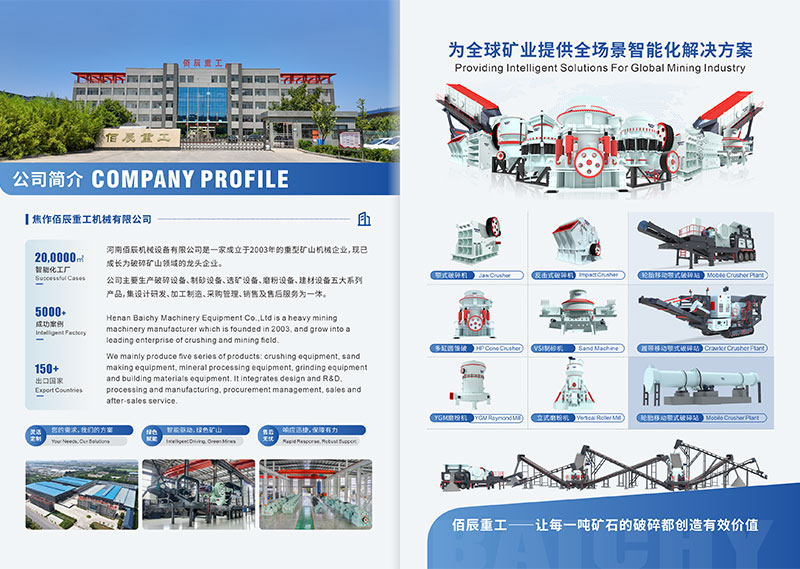
About of Baichy Heavy Industry
Baichy Heavy Industry is a high-tech mining equipment company integrating R&D, manufacturing, sales, and after-sales service. Focusing on crushing, grinding, and mineral processing equipment, we provide professional solutions to our customers. We are ISO9001:2015 、certified, and our products include mobile crushing palnts, crawler crushing plant, construction waste crushing plants, jaw crushers, sand making machines, cone crushers, fine crushers, grinding mills, ball mills, etc., all with reliable performance to meet diverse project needs.
Our advantages:
• Professional pre-sales support: Free project design and comprehensive solutions to help you accurately select the right equipment;
• Comprehensive on-site service: Providing installation guidance and worker training to ensure smooth equipment commissioning;
• Reliable after-sales guarantee: A complete after-sales system, timely response to technical inquiries and equipment maintenance, ensuring long-term stable operation.
To protect your rights, please contact us through the following official channels for professional service:
Official Website Customer Service
WhatsApp: 0086-15093222637
Email: [email protected]
We are committed to providing high-quality equipment and full-cycle services to deliver comprehensive intelligent solutions for the global mining industry!