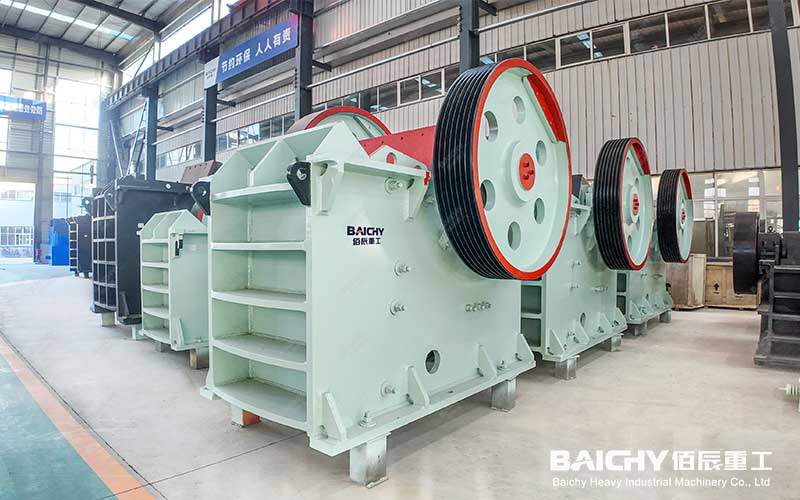
Jaw Concrete Crusher
The jaw concrete crusher serves as the standard primary processing equipment in construction waste recycling lines. Featuring a large feed opening (340–630 mm), it can directly process demolition debris—such as concrete beams and columns containing rebar—and offers an adjustable discharge size of 0–150 mm. Its processing capacity for concrete can reach 1.2–1.5 times its rated capacity for hard rock; when paired with iron removal and screening units, it produces high-quality recycled aggregate. For resource recovery projects processing over 100,000 tons annually, the static investment payback period is typically around two years.
I. What is a Jaw Concrete Crusher?
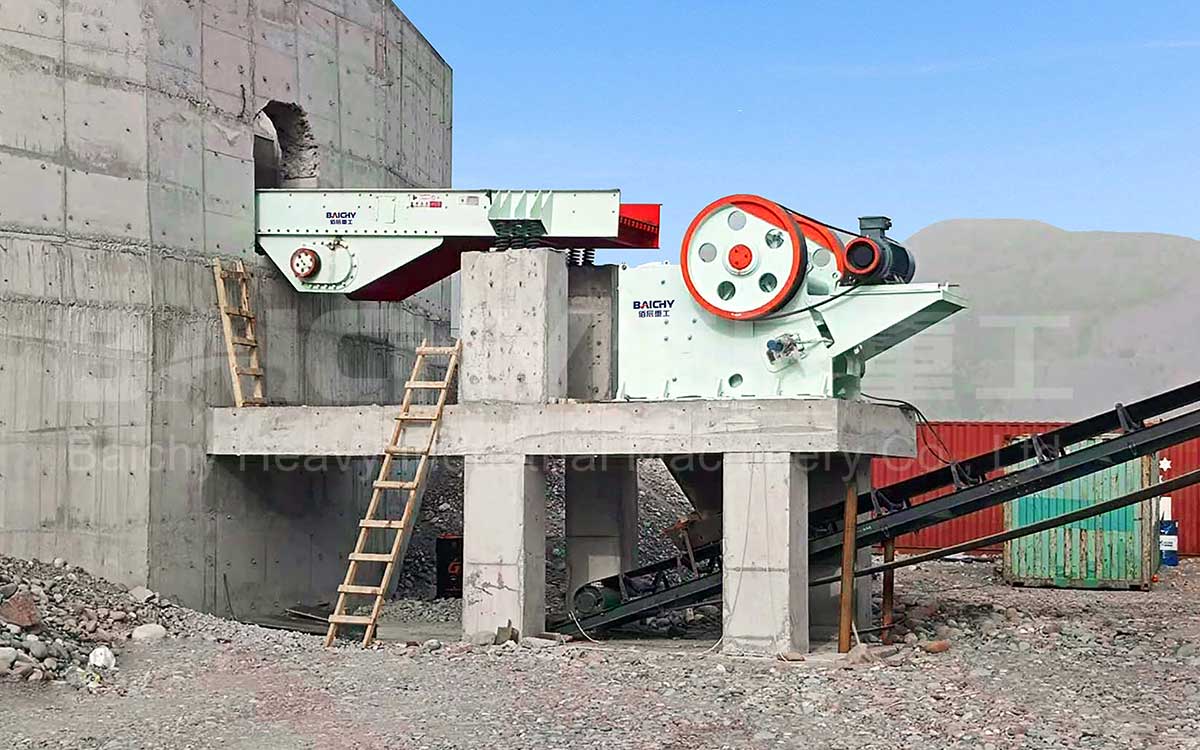
The jaw concrete crusher is specialized primary crushing equipment designed for concrete and brick-concrete waste, utilizing a jaw crusher as the core unit. The movable jaw plate periodically compresses the stationary jaw plate, exerting pressure to split the material. This compression-based crushing principle effectively exploits a mechanical weakness of concrete—specifically, that its tensile strength is only one-tenth of its compressive strength. Consequently, crushing efficiency exceeds that of mineral ores of similar hardness. Furthermore, the machine handles rebar by bending and squeezing it out rather than cutting it, preventing damage to the jaw plates under normal operating conditions. Compared to standard jaw crushers, this concrete-specific configuration features three enhancements: thicker wear-resistant liners in the crushing chamber, an enlarged feed opening to accommodate reinforced concrete components, and integration into a "crushing–iron removal–screening" system comprising magnetic separators and vibrating screens.
II. Typical Application Scenarios
• Urban construction waste resource recovery centers: These facilities centrally receive demolition debris, using the jaw crusher for primary crushing followed by an impact crusher for shaping and screening, thereby establishing a production line that supplies recycled aggregate consistently. my country generates over 2 billion tons of construction waste annually, yet the resource utilization rate remains below 5% (according to the Ministry of Housing and Urban-Rural Development); this sector represents a scenario with the clearest subsidy policies and most mature operational models.
• On-site crushing at demolition sites: For short-cycle projects—such as urban village redevelopment or factory dismantling—mobile jaw crushing stations can be deployed without foundations and operate alongside demolition activities. This eliminates the need to transport debris off-site, allowing aggregates to be reused locally for backfilling and bedding layers.
• Road and bridge renovation: Materials from old road surfaces and bridge decks are crushed into 0–50 mm graded aggregates for reuse in roadbed base courses. This process has been proven over two decades in Europe and the US; the EU’s construction waste recycling rate approaches 90% (Eurostat).
• Concrete mixing plants and precast component factories: Residual materials, test blocks, and defective components are crushed on-site. Recycled aggregates are reused in low-grade concrete or masonry blocks, transforming disposal costs into aggregate value.
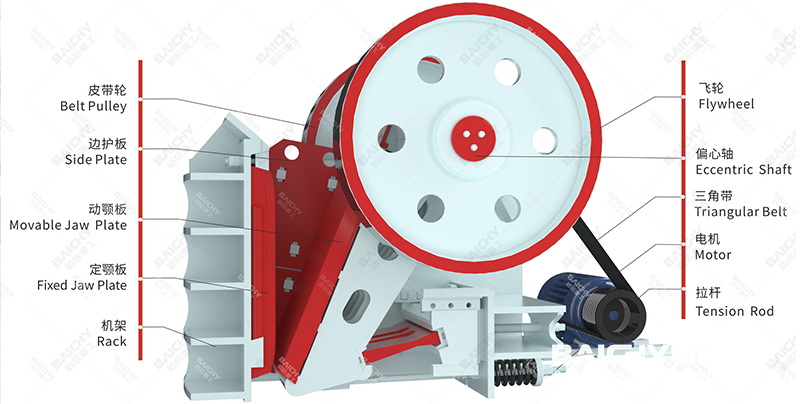
Structural diagram of a concrete jaw crusher
III. Core Advantages: Why the Jaw Crusher is the Top Choice for Primary Crushing
Tolerance for rebar and low failure rate: Compression-based crushing naturally tolerates foreign objects like rebar and bolts, making it the only safe primary crushing option for reinforced concrete.
• Increased capacity: Due to concrete's low density (2.2–2.4 t/m³) and low abrasiveness, the capacity of a given model is 1.2–1.5 times its hard-rock rating, while jaw plate service life extends by 20%–40%.
• Flexible discharge: The discharge opening is easily adjustable, producing 0–150 mm material ready for secondary crushing or direct sale.
• Low cost per ton: Electricity consumption and spare part costs per ton are lower than those of other mobile stations or impact crushers, offering clear long-term operational advantages.
• Rugged durability and high residual value: The PE series is the most widely used globally, ensuring ample spare parts availability and low maintenance requirements.
IV. Key Specifications: Baichy Jaw Crusher Selection Chart (Concrete Application)
| Model | Feed Opening (mm) | Max. Feed Size (mm) | Concrete Processing Capacity (t/h)* | Main Motor (kW) | Typical Applications |
|---|---|---|---|---|---|
| PE400×600 | 400×600 | 340 | 25–60 | 30 | Small-scale disposal stations; auxiliary equipment for commercial concrete plants |
| PE500×750 | 500×750 | 425 | 45–100 | 55 | Medium-scale resource recovery lines; road material recycling stations |
| PE600×900 | 600×900 | 500 | 70–180 | 75 | 100 t/h class processing centers |
| PE750×1060 | 750×1060 | 630 | 120–280 | 110 | Large-scale disposal sites; 200 t/h class production lines |
*Note: Based on demolition concrete with a compressive strength of 30–45 MPa and low rebar content; capacity is 1.2–1.5 times the rated capacity for hard rock, varying with discharge settings and debris/soil content; final specifications are subject to the Baichy factory configuration sheet.
V. Relevant Case Study and ROI Analysis
Case Study: Urban renewal project in a North China city (Combination of mobile and stationary lines)—Primary crushing on-site using a YDPZ mobile jaw crushing station; centralized production using a PE600×900 stationary jaw crusher, self-discharging magnetic separator, PF1214 impact crusher, and 2YK1860 vibrating screen.
Calculation parameters (typical values for a Tier-2 city): Capacity 100 t/h, two shifts (16 h/day), 300 operating days/year, 80% utilization rate, and an aggregate yield of approximately 85%:
| Metric | Value |
|---|---|
| Annual concrete processing volume | Approx. 380,000 tons |
| Annual recycled aggregate production | Approx. 320,000 tons |
| Savings on spoil transport/disposal fees (at 25 CNY/t) | Approx. 9.5 million CNY/year |
| Recycled aggregate sales revenue (at 40 CNY/t) | Approx. 12.8 million CNY/year |
| Equipment and auxiliary investment (estimated) | Approx. 6–9 million CNY |
| Static payback period | Approx. 1.5–2 years |
Conclusion: By combining revenue from disposal fees and aggregate sales, the payback period is generally under 2 years; with the addition of resource recovery subsidies, this can be reduced to around 1 year.
VI. Recommended Equipment (Complete Recycling Line Setup)
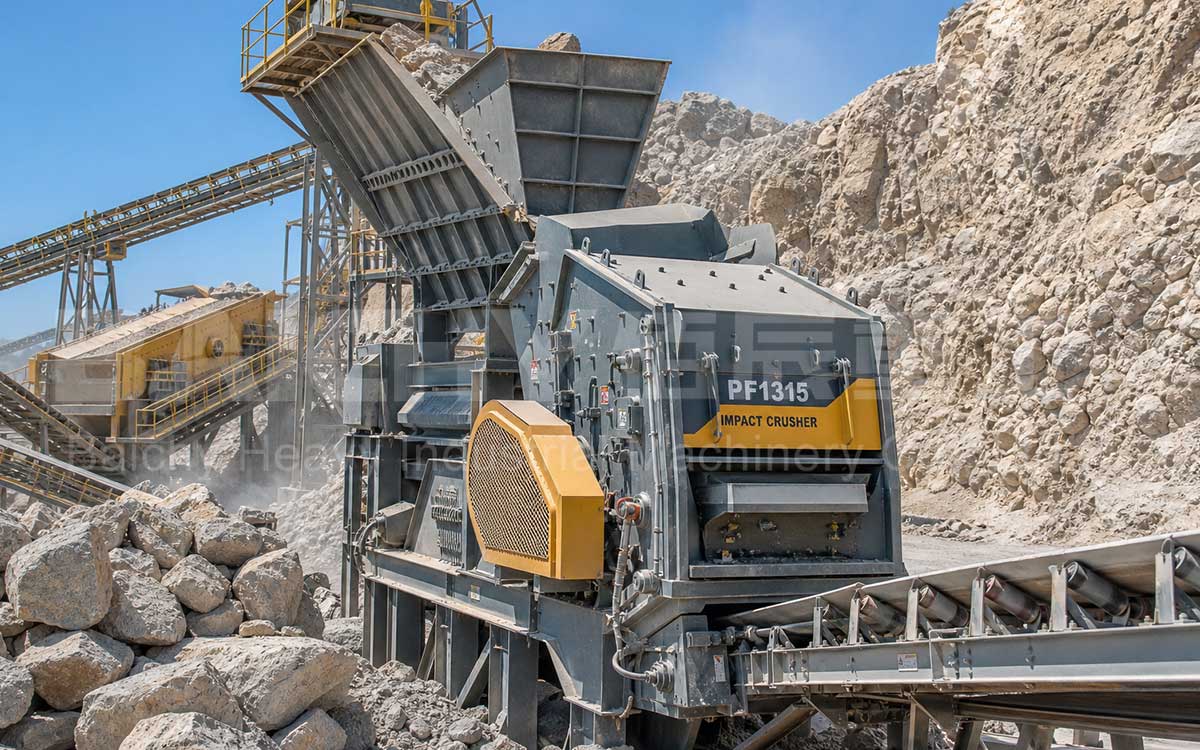
Primary crushing is merely the first step in the production line; Baichy offers a full suite of equipment: PF Series Impact Crusher (secondary crushing and shaping; produces 0–40 mm cubical aggregates); Self-discharging/Permanent Magnetic Separator (rebar separation; essential for concrete processing); 2YK/3YK Vibrating Screen (multi-stage screening: 0–5, 5–10, 10–31.5 mm); ZSW Vibrating Feeder with grizzly bars (pre-screens spoil to prevent chamber clogging); YDPZ Mobile Jaw Crushing Station (ideal for short cycles and rotating between multiple sites; requires no foundation and is ready for immediate operation upon arrival).
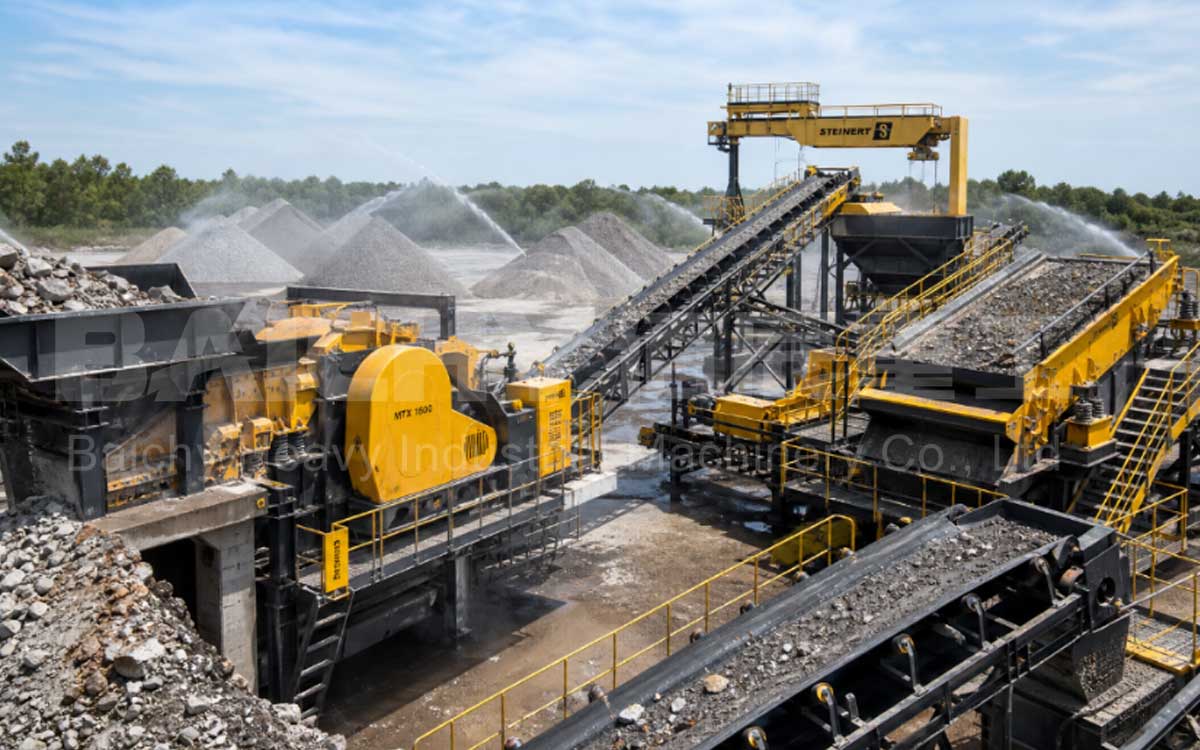
Jaw Concrete Crusher
VII. FAQ (3 Questions)
Q1: Should I choose a jaw crusher or an impact crusher for primary crushing?
Jaw crushers must be used for coarse (primary) crushing. Impact crushers are sensitive to foreign objects like rebar and require frequent replacement of wear parts; they are suitable only for secondary crushing and shaping of the material discharged by the jaw crusher. The jaw crusher handles the "intake and crushing" phase, while the impact crusher ensures "good shape and fine granularity"; they serve sequential roles rather than being interchangeable alternatives.
Q2: How do I choose between mobile and stationary jaw crushers for concrete crushing?
Consider the project duration and site conditions: For facilities with a fixed operational lifespan of over three years—such as dedicated disposal sites or commercial concrete plants with low electricity costs—choose a stationary setup (offering 20%–30% lower cost per ton). For short-term demolition sites or projects requiring rotation across multiple work zones, opt for a mobile setup (which requires no foundation and allows for immediate production upon arrival). Large-scale urban renewal projects typically employ a hybrid approach: on-site primary crushing using mobile units combined with centralized production via stationary lines.
Q3: Can reinforced concrete (containing rebar) be fed directly into a jaw crusher?
Yes. Jaw crushers crush and bend rebar—squeezing it out rather than shearing it—so they do not damage the jaw plates under normal operating conditions. However, long pieces of rebar entering an impact crusher or screening equipment can cause severe damage; therefore, a magnetic separator must be installed at the jaw crusher's discharge point—a standard configuration that distinguishes concrete processing lines from mining lines.
Baichy Heavy Industry
Baichy Heavy Industry is a high-tech mining equipment company integrating R&D, manufacturing, sales, and after-sales service. Focusing on crushing, grinding, and mineral processing equipment, we provide professional solutions to our customers. We are ISO9001:2015 、certified, and our products include mobile crushing palnts, crawler crushing plant, construction waste crushing plants, jaw crushers, sand making machines, cone crushers, fine crushers, grinding mills, ball mills, etc., all with reliable performance to meet diverse project needs.
Baichy Heavy Industry – Your Trusted Partner
To ensure optimal performance of your equipment, Baichy Heavy Industry offers:
- Professional on-site installation guidance
- Comprehensive operator training
- 24/7 technical support & maintenance services
Our complete after-sales service system guarantees long-term, stable operation of your machinery with minimal downtime.
Protect Your Rights – Only Use Official Channels
To avoid scams and ensure authentic support, contact us exclusively through:
• Official Website: www.baichychina.com
• WhatsApp: +8615093222637
• Email: [email protected]
Your satisfaction is our priority – expect prompt, professional service every time.
(Note: Beware of unauthorized third parties claiming to represent Baichy. Always verify through official contacts.)