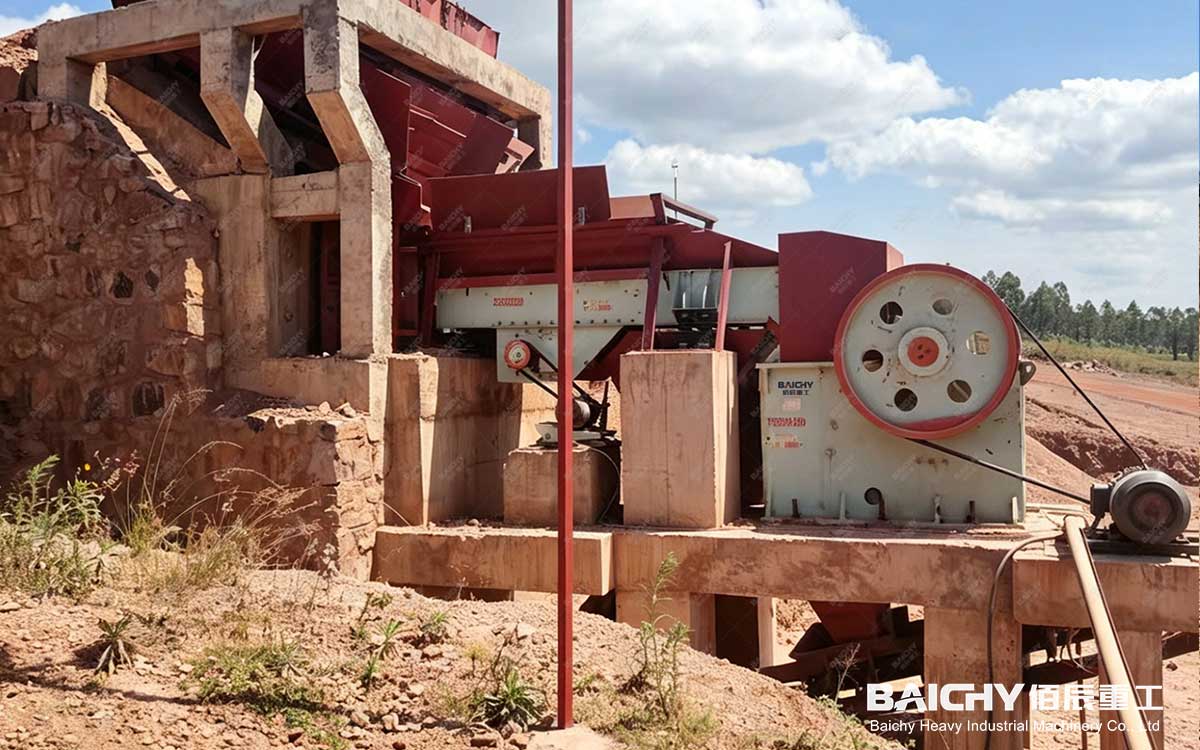
Double-toggle jaw crusher
If your feed material consists of highly abrasive, hard rock with a Mohs hardness of 7 or higher—such as granite, basalt, or iron ore—the double-toggle jaw crusher is the primary model to consider for the primary crushing stage. It offers lower cost-per-ton crushing by delivering greater crushing force and extending wear-part lifespan by 30%–50% compared to single-toggle models.
I. What is a Double-Toggle Jaw Crusher?
Originating in 1858 (the Blake design), this machine represents the foundational structure of modern jaw crushers. Its core mechanism involves a moving jaw driven by an eccentric shaft; motion is transmitted via two toggle plates (thrust plates), creating an elliptical swing trajectory. The upper section features a large stroke to grip and tear apart large material blocks, while the lower section moves in a nearly vertical stroke to discharge material through "compression crushing" rather than "abrasive grinding."
This structure yields two key benefits: it delivers superior crushing force throughout the entire stroke, making it ideal for hard rock; and it minimizes over-crushing while producing uniform particle shapes, thereby saving energy in downstream screening and grinding processes. The toggle plates also serve as an overload protection mechanism, fracturing first when encountering uncrushable objects to safeguard the moving jaw and main frame.

hard rock crusher
II. Typical Application Scenarios
1. Primary Crushing in Metal Mines (Iron Ore, Gold Ore, Manganese Ore)
Primary mine crushing requires the ability to continuously process run-of-mine blocks sized 800–1000 mm. With a crushing ratio of 4:1 to 6:1, this machine effectively reduces the workload for the secondary (intermediate) crushing stage.
2. Construction Aggregate Production (Granite, Basalt)
High-grade concrete and highway surface aggregates demand strict particle shape quality. As this machine relies primarily on compression crushing, the initial aggregate product has a low proportion of elongated and flaky particles, providing superior feed material for downstream impact crushers or sand-making machines.
3. Metallurgical Slag and Highly Abrasive Materials
Materials such as steel slag and calcium carbide slag have high abrasiveness, causing rapid wear on standard jaw plates. This machine utilizes high-manganese steel or composite alloy jaw plates, with replaceable tooth profiles to suit different material characteristics. 4. Aggregates for Infrastructure and Hydropower Projects
Remote projects demand high equipment reliability and spare part interchangeability. This machine features a proven structural design and requires fewer types of wear parts, making it easier to maintain in settings lacking specialized maintenance teams.
III. Core Technical Advantages
1. High Crushing Force; No Stalling on Hard Rock
The moving jaw applies continuous pressure throughout its entire stroke; the peak crushing force exceeds that of single-toggle models of the same size, ensuring smoother processing of large, hard rock fragments.
2. Long Wear-Part Lifespan; Lower Cost Per Ton
Benefit: The service life of the jaw plates has been extended from 3,000 to 4,500 hours, reducing wear-part costs by approximately 30% per ton of material. For a production line with an output of 200 tons per hour, savings on jaw plates alone amount to tens of thousands of dollars annually.
3. Uniform Particle Shape; Low Over-Crushing Rate
The vertical crushing action in the lower chamber minimizes abrasive friction at the discharge opening, resulting in fewer fines and a higher yield of quality product, thereby reducing wasted energy consumption in downstream processes.
4. Overload Protection; Controllable Downtime Costs
The toggle plate acts as a "safety fuse," automatically breaking upon encountering foreign objects. Replacement takes only a few hours—compared to weeks for main shaft repairs—keeping downtime costs manageable.
5. Real-World Capacity Matches Nominal Ratings
Industry standards calibrate capacity based on limestone (1.6 t/m³). Thanks to its optimized nip angle and stroke design, this machine experiences minimal capacity drop-off when processing hard rock (retaining 85%–95% of rated capacity).
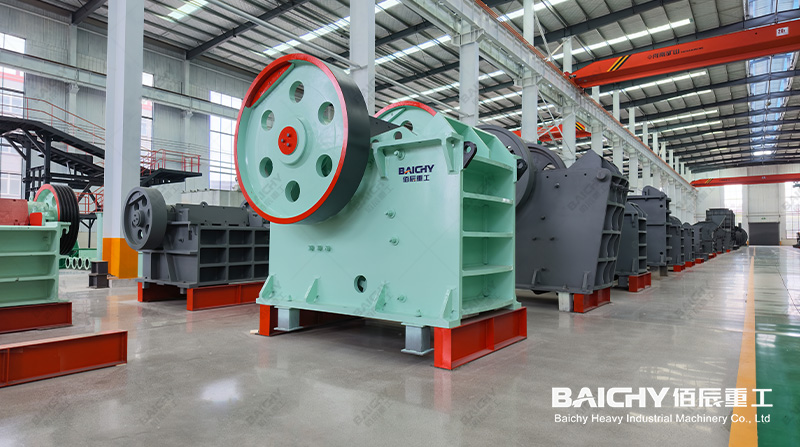
jaw crusher selection
IV. Technical Parameters (Typical Configuration)
| Model | Feed Opening (mm) | Max. Feed Size (mm) | Capacity (t/h) | Power (kW) | Weight (t) |
|---|---|---|---|---|---|
| DTJ-400×600 | 400×600 | 350 | 15–65 | 30–37 | 7 |
| DTJ-500×750 | 500×750 | 425 | 40–110 | 45–55 | 12 |
| DTJ-600×900 | 600×900 | 500 | 60–160 | 55–75 | 17 |
| DTJ-750×1060 | 750×1060 | 630 | 90–220 | 90–110 | 29 |
| DTJ-900×1200 | 900×1200 | 750 | 140–320 | 110–132 | 50 |
Note: Capacity is rated based on medium-hardness rock with a density of 1.6 t/m³; apply a factor of 0.85–0.95 for granite/basalt, and 0.75–0.85 for dense materials like iron ore. Actual performance depends on specific model selection.
V. Application Case Studies (On-site Records)
Case 1: Primary Crushing Section Upgrade at an Iron Mine in South America
Material: Magnetite;
Feed size: 0–700 mm; Mohs hardness 6.5–7;
Configuration: Double-toggle jaw crusher (750×1060) + cone crusher + vibrating screen;
Results: Capacity reached 92% of the design value; jaw plate service life extended by approximately 40%; annual spare parts costs reduced by over 25%; downtime caused by material jamming reduced by 70%.
Case Study 2: Southeast Asia Granite Aggregate Project
Material: Granite;
Feed size: 0–600 mm; Target capacity: 120 t/h;
Configuration: Double-toggle jaw crusher (600×900) + Impact crusher + Sand-making machine;
Results: Flakiness and elongation index of finished product <8%; crushing ratio 4.5:1; electricity consumption per ton reduced by approximately 12%.
(The above is an engineering estimate based on similar operating conditions; specific project data depends on actual on-site conditions.)
VI. Recommended Equipment
Double-toggle jaw crushers typically serve as the primary crushing unit in a production line. The following configuration is recommended:
| Production Line Stage | Recommended Equipment | Function |
|---|---|---|
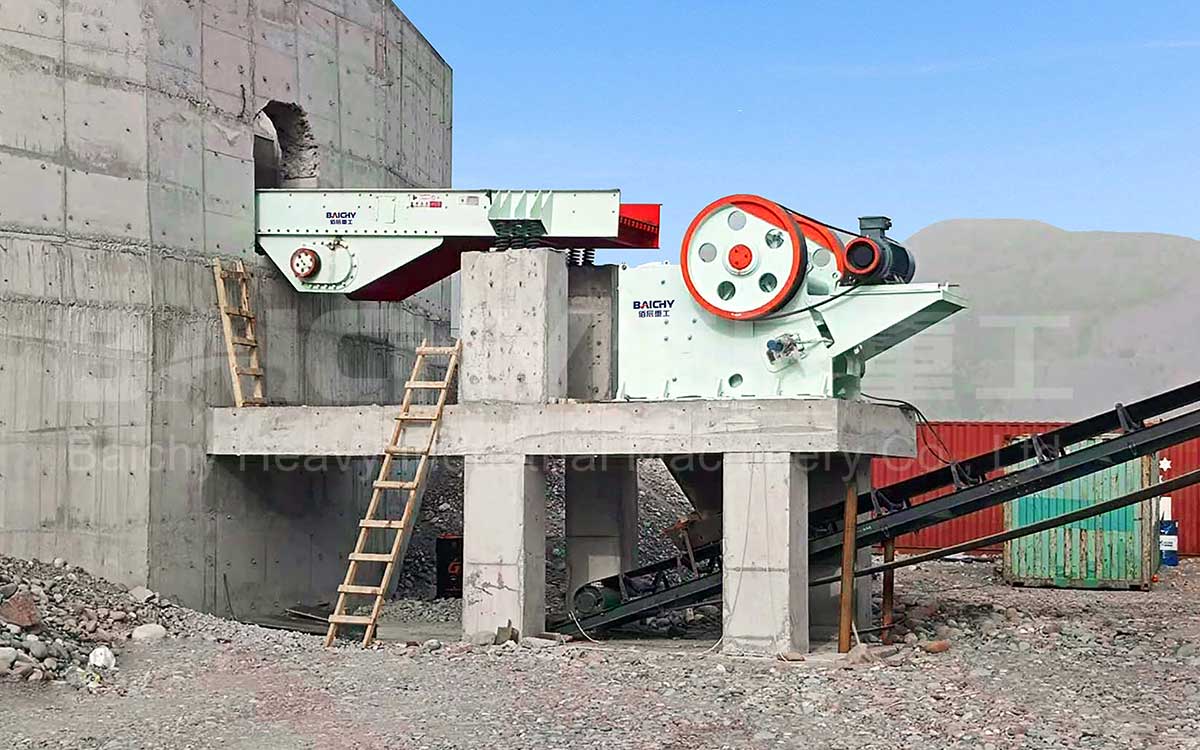
| Feeding | ZSW Vibrating Feeder | Uniform feeding; protects the jaw crusher |
| Secondary Crushing | CS/HP Cone Crusher | Handles secondary crushing of hard rock |
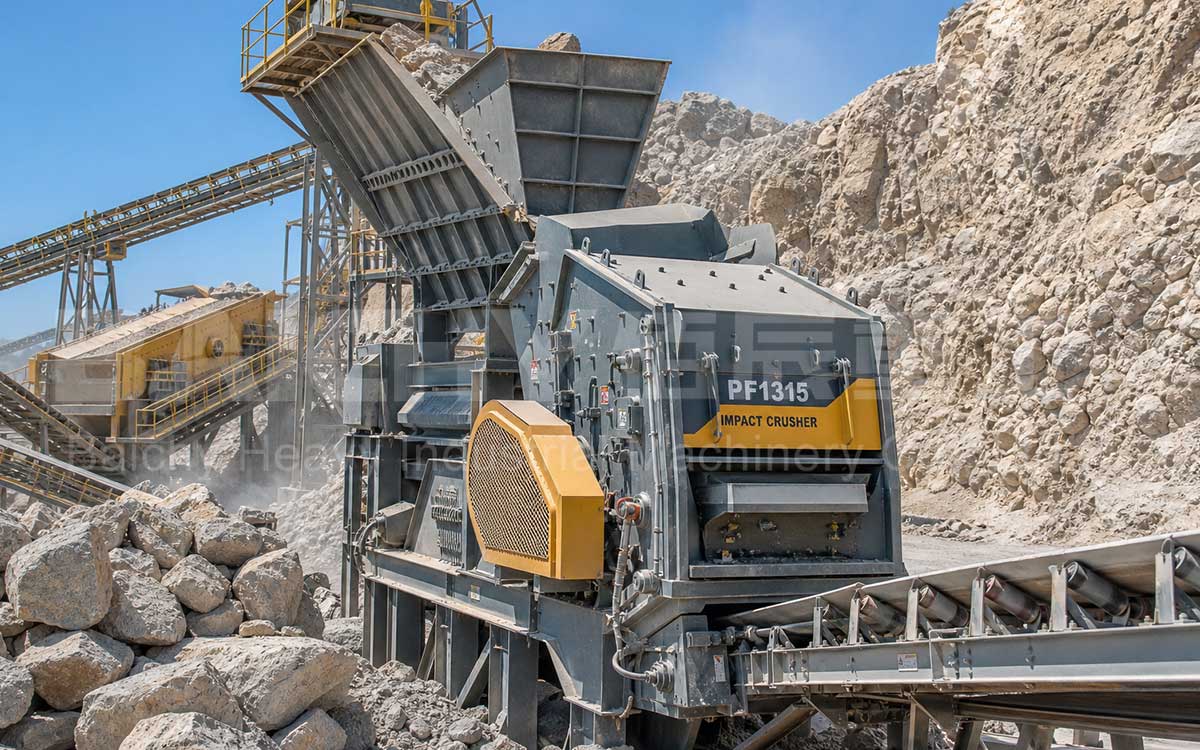
| Fine Crushing/Sand Making | PF Impact Crusher / VSI Sand-making Machine | Aggregate shaping and manufactured sand production |
| Screening | Circular Vibrating Screen | Grading and closed-circuit circulation |
| Mobile Solution | YDPZ Mobile Crushing Station | Integrated station for projects requiring frequent relocation |
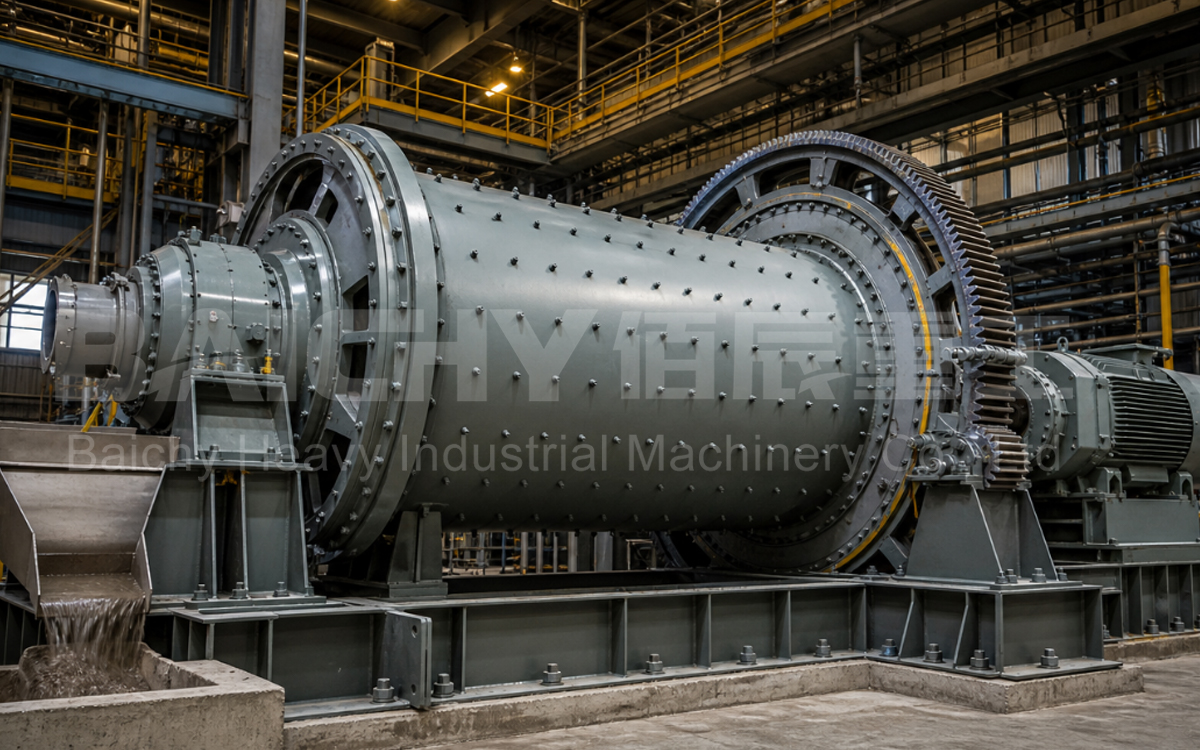
| Grinding Support | Raymond Mill / Ball Mill | Ore grinding and mineral processing preparation |
VII. FAQ (Frequently Asked Questions)
Q1: What is the difference between a double-toggle jaw crusher and a single-toggle jaw crusher? How should I choose?
Single-toggle jaw crushers feature a simple structure, high capacity, and low cost, making them suitable for medium-hardness materials. Double-toggle jaw crushers offer high crushing force, long wear-part lifespan, and minimal over-crushing, making them ideal for highly abrasive, hard rocks such as granite, basalt, and iron ore. The harder and more abrasive the material, the more significant the Total Cost of Ownership (TCO) advantage of the double-toggle jaw crusher becomes.
Q2: What is the service life of the jaw plates (teeth) on a double-toggle jaw crusher? Is maintenance costly?
The lifespan of the jaw plates depends on material abrasiveness: for granite or basalt applications, high-manganese steel plates can operate for 3,000–5,000 hours; for iron ore applications, the lifespan is approximately 2,000–3,000 hours. The jaw plates are reversible, and the overall maintenance cost is typically lower than that of single-toggle models of the same specifications.
Q3: Can double-toggle jaw crushers directly process large ore blocks of 800mm?
Yes, but this is limited by the feed opening dimensions: the 750×1060 model accepts ore blocks up to 630mm, while the 900×1200 model accepts blocks up to 750mm. If the feed size exceeds these limits, a hydraulic breaker or grizzly screen must be used upstream for pre-crushing.
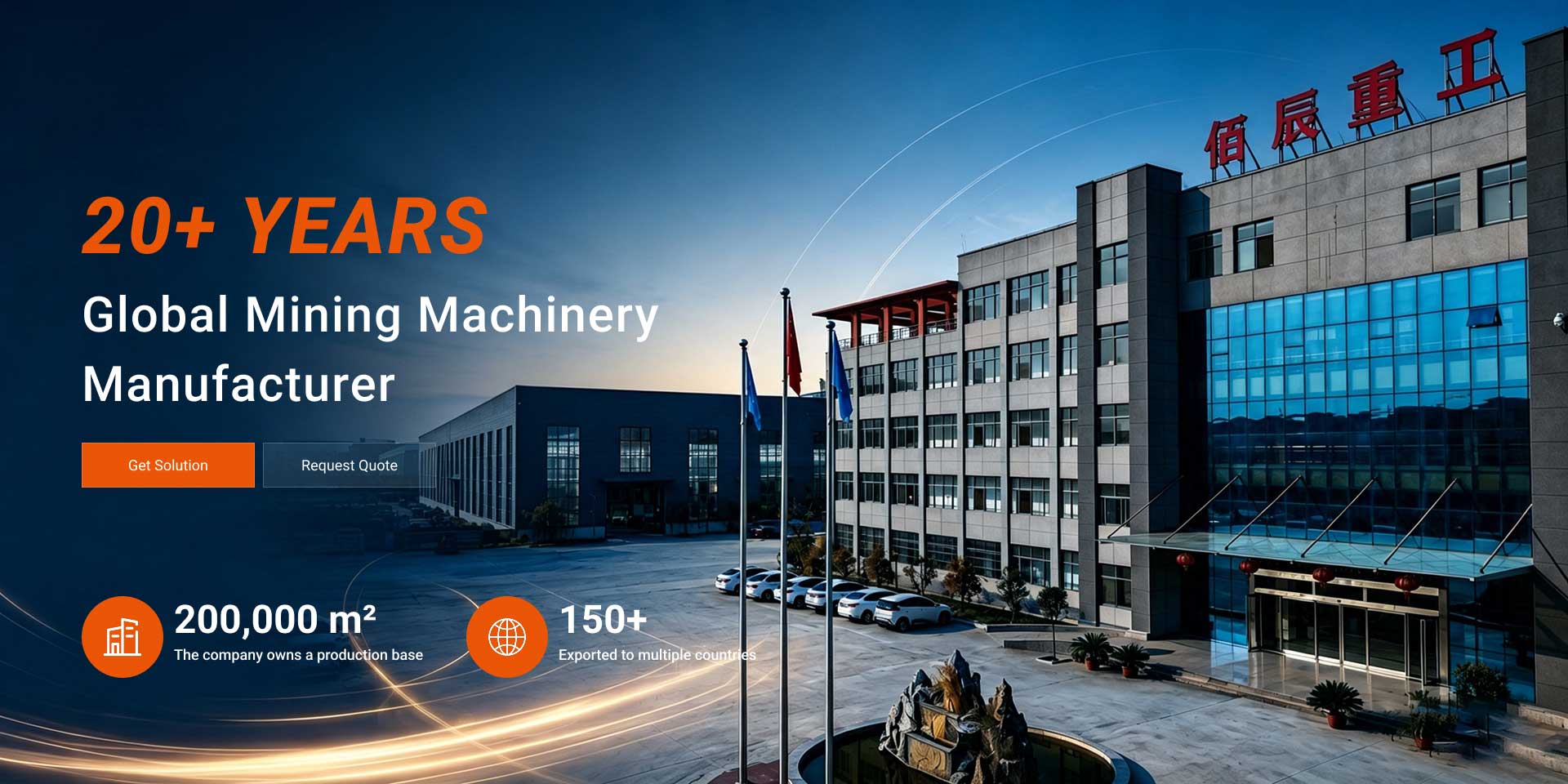
Baichy Heavy Industry
Baichy Heavy Industry is a high-tech mining equipment company integrating R&D, manufacturing, sales, and after-sales service. Focusing on crushing, grinding, and mineral processing equipment, we provide professional solutions to our customers. We are ISO9001:2015 、certified, and our products include mobile crushing palnts, crawler crushing plant, construction waste crushing plants, jaw crushers, sand making machines, cone crushers, fine crushers, grinding mills, ball mills, etc., all with reliable performance to meet diverse project needs.
Baichy Heavy Industry – Your Trusted Partner
To ensure optimal performance of your equipment, Baichy Heavy Industry offers:
- Professional on-site installation guidance
- Comprehensive operator training
- 24/7 technical support & maintenance services
Our complete after-sales service system guarantees long-term, stable operation of your machinery with minimal downtime.
Protect Your Rights – Only Use Official Channels
To avoid scams and ensure authentic support, contact us exclusively through:
• Official Website: www.baichychina.com
• WhatsApp: +8615093222637
• Email: [email protected]
Your satisfaction is our priority – expect prompt, professional service every time.
(Note: Beware of unauthorized third parties claiming to represent Baichy. Always verify through official contacts.)