

Iron ore dryers
Wet iron ore materials (such as filter-pressed iron concentrate cakes or dewatered concentrate slurry) typically have a moisture content of 12–20%. If fed directly into a rotary dryer without pretreatment, issues like agglomeration, wall adhesion, and material blockage are almost inevitable: "mud cakes" accumulate at the dryer inlet, and lifters fail to function due to material buildup, often resulting in an actual production capacity that is only 50–60% of the design value. The true determinants of success for an iron ore dryer are not the drying drum itself, but the two processes preceding drying: feed pretreatment and mixing with recycled dry material. By breaking the filter cake into 10–50mm granules and mixing them with dry material from the discharge end—thereby coating the wet material's surface with dry powder and transforming the material properties from "plastic mud clumps" into "loose granules"—the rotary dryer can consistently achieve its designed capacity.
I. Why wet iron ore requires feed pretreatment and mixing with recycled material
The challenge posed by wet iron ore lies not in the moisture content figure itself, but in the state in which the moisture exists. Iron concentrate filter cakes discharged from filter presses form dense mud cakes with internal moisture trapped by fine mineral particles; similarly, magnetically separated concentrate slurry remains highly sticky after thickening and dewatering.
Such materials exhibit three specific drying characteristics:
• Agglomeration and clumping: When the filter cake enters the drum intact, the surface dries and hardens first, trapping internal moisture and creating "pseudo-dry" pellets that are dry on the outside but wet on the inside.
• Wall adhesion and ring formation: Wet material repeatedly sticks to and accumulates on the drum walls and lifters; in mild cases, this reduces the efficiency of material lifting and cascading, while in severe cases, it forms a ring-like buildup that forces a complete line shutdown for cleaning.
• Retention and short-circuiting: Sticky material accumulates at the feed end instead of moving forward with the drum; this leads to uncontrolled actual residence times and drastic fluctuations in discharge moisture content. Feed pretreatment and the mixing of recycled dry material serve as the process solutions addressing the three failure modes mentioned above: the pretreatment stage mechanically breaks the filter cake into small granules, thereby increasing the specific surface area and shortening the path for internal moisture diffusion; the back-mixing stage returns 30–60% of the dried product from the discharge end to the feed end to mix with the wet material, coating the wet granules with dry powder particles to prevent direct adhesion between granules, which restores efficient tumbling and gas-solid heat exchange within the drum.
II. Typical Application Scenarios for Iron Ore Dryers
• Iron concentrate filter cake drying (beneficiation plants): Concentrates from magnetic and flotation separation typically have a moisture content of 15–20% after filter-press dewatering; drying them to below 8% facilitates stockpiling, handling, and long-distance transport, while significantly reducing the energy required for moisture evaporation during subsequent smelting. This represents the highest-volume application for rotary dryers in the iron ore sector, with major markets including iron ore beneficiation plants in Brazil, India, and South Africa.
• Concentrate blending and pelletizing pretreatment: Prior to sintering or pelletizing, the moisture content of the concentrate powder must be stabilized at 6–8%. Controlling the dryer's discharge moisture fluctuation to within ±0.5 percentage points is a prerequisite for consistent blending quality; excessive moisture leads to uneven mixing and reduced bed permeability.
• Freeze prevention for wet ore at ports and stockyards: In Russia and other frigid regions, wet iron ore stored or transported during winter can freeze into a solid mass, making unloading difficult. Reducing the surface free moisture content of the wet material via dry material back-mixing before stockpiling significantly mitigates freezing and caking—an added value of the back-mixing process in cold-climate markets.
• Pre-drying of hard-to-filter ore types: Certain ultra-fine iron concentrates exhibit slow filtration rates and high filter cake moisture (>20%); pre-drying them in a rotary dryer before returning them to the filtration stage can improve the system's overall dewatering efficiency.
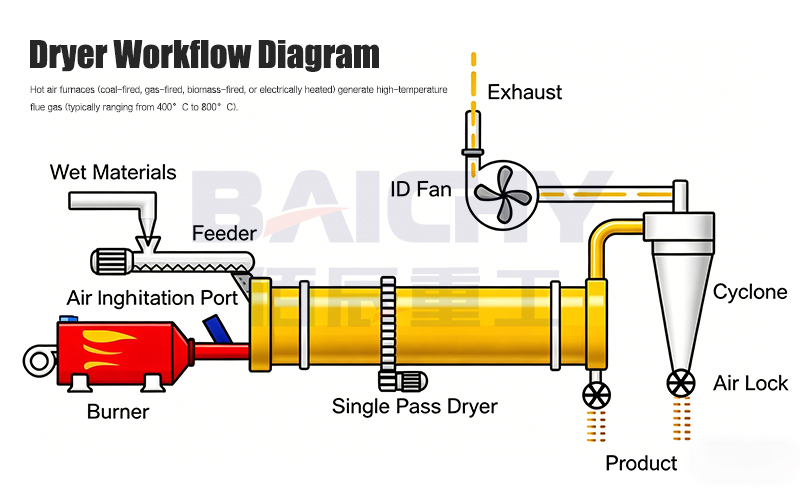
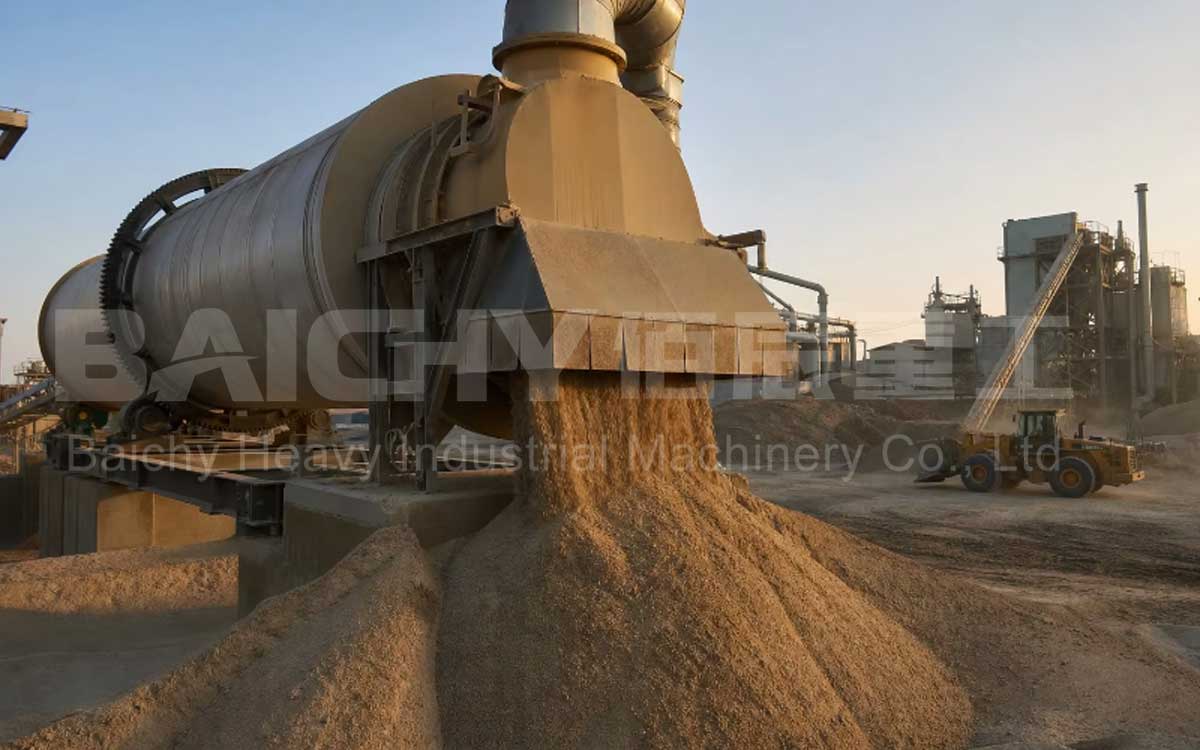
Working principle of the single-drum dryer
III. Feed Pre-treatment System: The Initial Stage Before Wet Material Enters the Rotary Dryer
Taking Baichy’s iron ore drying line as an example, the pre-treatment unit is arranged as follows:
| Unit | Equipment | Function |
|---|---|---|
| Material Intake | Filter cake hopper + Vibrating feeder | Buffer storage and metered discharge |
| Disaggregation | High-intensity disaggregator (filter cake crusher) | Breaks down mud cakes (up to 500mm) into 10–50mm granules |
| Material Return | Return material hopper + Metering belt | Stores and supplies metered dry material for back-mixing |
| Mixing | Twin-shaft mixing screw conveyor | Uniformly blends dry and wet materials before feeding into the dryer inlet |
| Control | PLC batching control system | Automatically adjusts the return material ratio based on feed moisture and internal drum load |
The selection of the disaggregator is based on the filter cake's viscosity and initial lump size: higher viscosity and density require a disaggregation structure with high rotational speed and strong shear force; highly abrasive iron ores also necessitate the use of high-chromium wear-resistant materials for the disaggregation teeth and liners. The pre-treatment system has a single objective: to ensure that the material entering the rotary dryer has uniform lump size, a loose surface structure, and consistent moisture distribution.
IV. Process Parameters for Return Material Mixing: Determining Ratios and Evaluating Results
The core parameter of the back-mixing process is the return material ratio (dry material to wet material, by mass). If the ratio is too low, the wet material surface is not fully coated, leaving a risk of material sticking to the drum walls; if the ratio is too high, the volume of circulating dry material increases, effectively diluting the drum's processing capacity relative to output, which paradoxically leads to higher thermal and electrical energy consumption. In engineering practice, initial values are selected based on the table below, followed by calibration using online moisture monitoring and on-site trial runs:
| Feed Moisture | Mixed Moisture | Recommended Recycle Ratio (Dry:Wet) | In-Drum Operating Conditions |
|---|---|---|---|
| 18–20% (Rainy season filter cake) | 9–11% | 1.2–1.5:1 | Requires powerful breaking/disaggregation to prevent accumulation at the feed end |
| 15–17% (Standard filter cake) | 7–9% | 0.8–1.0:1 | Standard configuration; stable, high output |
| 12–14% (Pre-dewatered concentrate) | 6–8% | 0.5–0.8:1 | Range of lowest heat consumption |
Mixing dry material back into the feed yields three quantifiable benefits: first, material dispersion improves the efficiency of the lifting flights, restoring production capacity to design levels; second, the moisture content of the mixture becomes uniform, narrowing discharge moisture fluctuations from ±2% to ±0.5%; and third, the dry and wet materials undergo initial low-temperature heat exchange during mixing, raising the temperature of the material entering the drum and reducing heat consumption per ton. \
V. Baichy Iron Ore Rotary Dryer: Key Specifications
The following are typical selection parameters for processing iron concentrate filter cake (feed moisture: 15–18%; discharge moisture: ≤8%):
| Model/Spec. | Filter Cake Capacity (t/h) | Feed Moisture | Discharge Moisture | Recycle Ratio | Inlet Air Temp. | Installed Power |
|---|---|---|---|---|---|---|
| φ1.8×14m | 8–12 | 15–18% | ≤8% | 0.8–1.0:1 | 600–750°C | 37–55 kW |
| φ2.2×18m | 15–22 | 15–18% | ≤8% | 0.8–1.0:1 | 600–750°C | 55–90 kW |
| φ2.4×20m | 22–35 | 15–18% | ≤8% | 0.8–1.0:1 | 600–750°C | 90–132 kW |
| φ3.0×22m | 40–60 | 15–18% | ≤8% | 1.0–1.2:1 | 650–800°C | 132–200 kW |
| φ3.6×25m | 60–90 | 15–18% | ≤8% | 1.0–1.2:1 | 650–800°C | 200–280 kW |
Capacity is calculated based on wet-basis filter cake throughput and varies according to material particle size, bulk density, and viscosity. Due to the highly abrasive nature of iron ore, wear-resistant materials are used for the dryer shell, lifting flights, and feed chute. When selecting a model, please choose the next size up to accommodate peak moisture content during the rainy season.
VI. Key Advantages of Wet Material Processing for Rotary Dryers
• Realized Production Capacity: By breaking up material and back-mixing with dry product to eliminate wall adhesion and ring formation, the rotary dryer’s actual capacity approaches its design value—an increase of 40–60% compared to operations without pre-treatment. This effectively achieves "increased output without replacing the dryer drum."
• Reduced Thermal and Electrical Consumption: Uniform moisture distribution and smooth material flow within the drum ensure efficient heat exchange between the hot air and the material curtain, achieving system thermal efficiencies of 70–85%. Thermal consumption per ton drops by 15–25% compared to operations prone to agglomeration; for an annual output of 300,000 tons of concentrate, this results in significant annual fuel cost savings.
• Stable Discharge Moisture: Online moisture monitoring combined with PLC-controlled automatic adjustment of the back-mixing ratio keeps discharge moisture fluctuations within ±0.5 percentage points, meeting stringent consistency requirements for ore blending, pelletizing, and transport.
• Wear Resistance and Low Maintenance: The drum and lifters are custom-engineered to withstand the highly abrasive nature of iron ore. The frequency of shutdowns for cleaning material rings is reduced from "weekly" to "scheduled maintenance intervals," drastically cutting unplanned downtime.
• Flexible Heat Source and Power Compatibility: Compatible with coal, gas, or biomass hot-blast stoves, as well as waste heat recovery from smelting processes. Electrical systems are customized to local standards (e.g., 400V/50Hz, 380V/60Hz, 440V), ensuring direct compatibility for overseas projects.
VII. Application Case Study
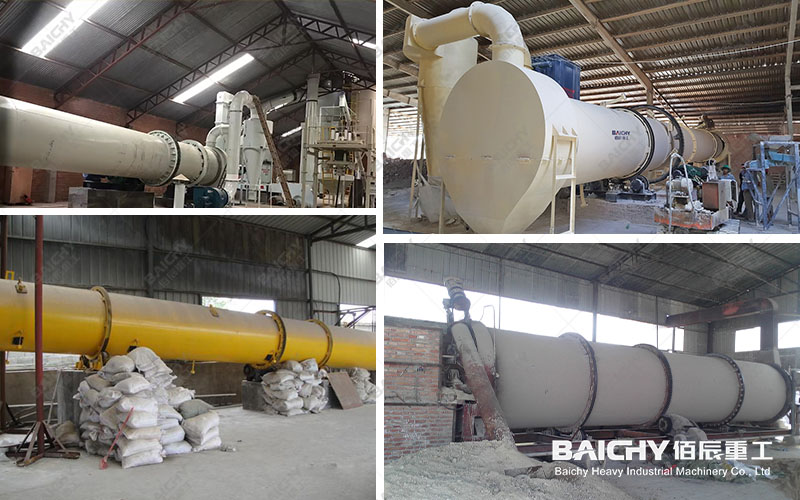
iron concentrate filter cake drying
Case A (Iron Ore Beneficiation Plant in Brazil): A magnetic separation iron concentrate project processed filter cake with 16–18% moisture content. The original direct-drying process suffered from frequent wall adhesion, requiring 4–5 shutdowns per month for cleaning. After retrofitting with a complete Baichy iron ore drying line (featuring a high-intensity material breaker and a back-mixing system), discharge moisture stabilized at 7–8%, and production capacity reached the design target of 30 t/h. Shutdowns for cleaning were virtually eliminated, and the investment cost was recouped within two years.
Case B (Indian Monsoon Conditions): During the monsoon season, the moisture content of the filter cake rises to 19–20%. The client operates with a 1.4:1 recycle ratio; after mixing, the moisture level of the material entering the dryer drops to approximately 11%. Combined with an inlet air temperature of 750°C, the system consistently produces dry concentrate with ≤8% moisture, ensuring shipping schedules are met despite the rainy season.
Case C (South Africa Cold-Climate Stockyard Anti-Freezing): Freezing of wet concentrate stockpiles is a major issue in winter. The project employs a dry material back-mixing process to reduce moisture to below 7% before stockpiling. Additionally, low-temperature startup capabilities and thermal insulation measures are implemented, resulting in a year-over-year reduction in loading losses caused by frozen, caked ore.
VIII. Recommended Equipment
For iron ore wet material drying projects, Baichy offers the following equipment combinations:
| Recommended Equipment | Specifications/Type | Application Stage |
|---|---|---|
| Rotary Dryer (Single-drum) | φ1.8×14m – φ3.6×25m | Bulk drying of concentrate filter cake/ore fines |
| High-Intensity Disintegrator | Customized based on cake viscosity | Filter cake crushing and disintegration |
| Dry Material Back-mixing System | Recycle bin + metering belt + twin-shaft mixing screw | Dry material back-mixing and automatic proportioning |
| Hot Air Furnace | Coal/Gas/Biomass/Waste heat | Heat supply unit |
| Cyclone + Baghouse Dust Collector | Matched to exhaust gas volume | Dust recovery and compliant emissions |
Selection Tip: Submit 5–10kg of material samples, and Baichy will conduct free drying and back-mixing tests. A report containing moisture curves, back-mixing ratio recommendations, and a complete system proposal will be issued within 5 working days. Customization based on local fuel, electricity, and environmental standards is available, along with installation guidance for the entire system.
FAQ
Q1: Can iron concentrate filter cake with 15–20% moisture be dried directly without back-mixing?
A: Technically possible, but economically inefficient. Direct drying causes wet filter cake to form lumps and stick to the dryer walls; actual production capacity is usually only 50–60% of the design value, and frequent shutdowns are required to clear material buildup (rings). Dry material back-mixing involves returning 30–60% of the dried material to the feed end to pre-mix with the wet feed. This process discretizes the material, restoring production capacity and reducing heat consumption; the investment cost for the back-mixing system is typically recouped within one year through increased output and energy savings.
Q2: Does the back-mixing ratio dilute production capacity? What is the typical ratio used?
A: While the recirculated material does occupy some of the dryer's processing capacity, the result is stable, high-volume output, making it cost-effective overall. Initial engineering estimates are based on feed moisture content: 0.5–0.8:1 for 12–14% moisture; 0.8–1.0:1 for 15–17%; and 1.2–1.5:1 for 18–20%, with fine-tuning performed during trial runs. The ratio is automatically adjusted by the PLC based on real-time moisture readings, eliminating the need for manual intervention during fluctuations in wet material moisture.
Q3: What information must be provided to the manufacturer to obtain an accurate quote for an iron ore dryer?
A: Four key pieces of information are required: material samples (5–10 kg, specifying origin and particle size distribution); feed moisture content and fluctuation range (including peak values during the rainy season); target discharge moisture content; and available fuel and power supply conditions. Based on the samples, Baichy conducts drying and back-mixing tests to generate moisture curves, recommend back-mixing ratios, select equipment, and provide a quote for the complete line. For overseas projects, please also specify local voltage/frequency and environmental emission standards.
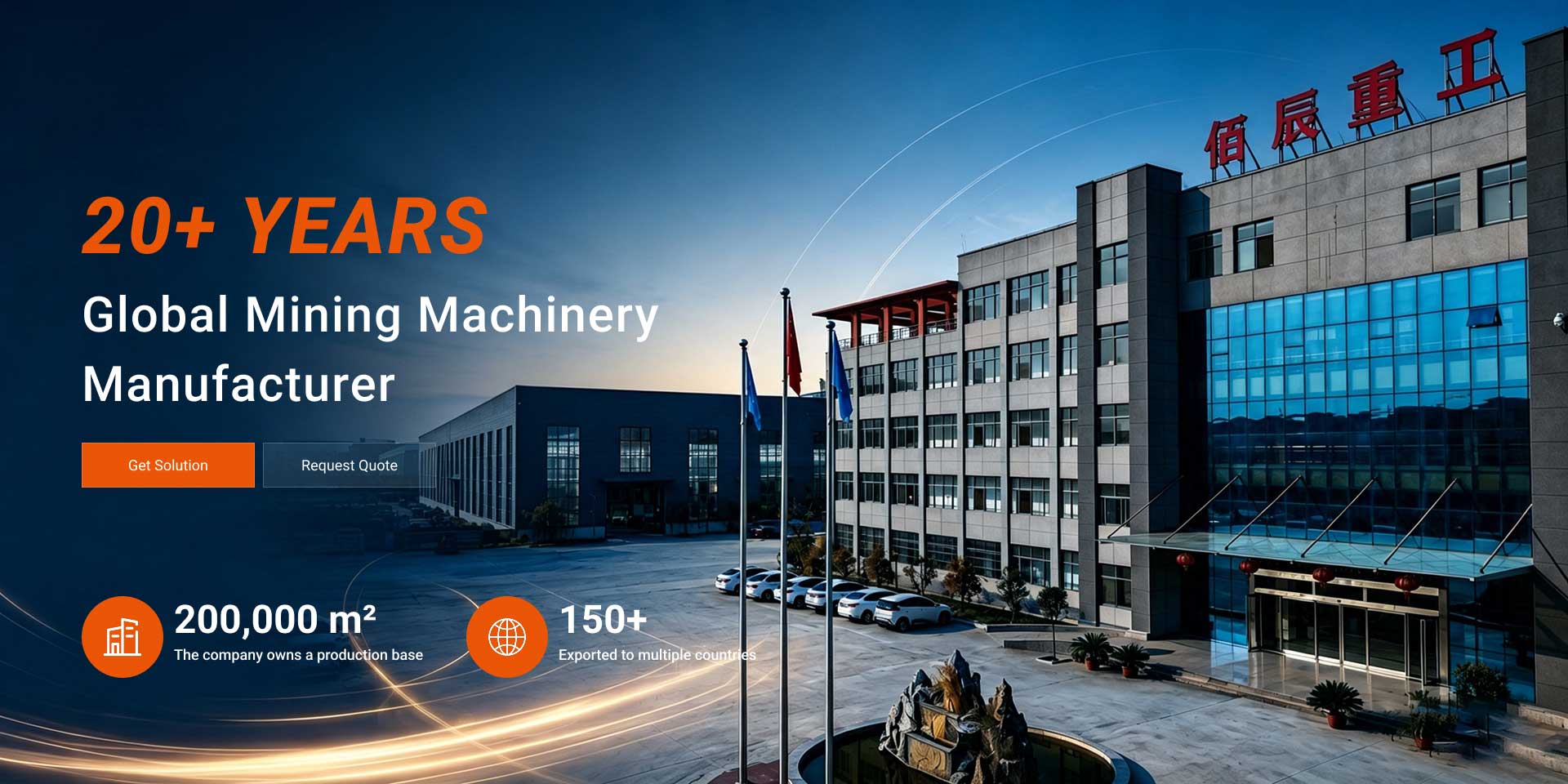
Baichy Heavy Industry
Baichy Heavy Industry is a high-tech mining equipment company integrating R&D, manufacturing, sales, and after-sales service. Focusing on crushing, grinding, and mineral processing equipment, we provide professional solutions to our customers. We are ISO9001:2015 、certified, and our products include mobile crushing palnts, crawler crushing plant, construction waste crushing plants, jaw crushers, sand making machines, cone crushers, fine crushers, grinding mills, ball mills, etc., all with reliable performance to meet diverse project needs.
Baichy Heavy Industry – Your Trusted Partner
To ensure optimal performance of your equipment, Baichy Heavy Industry offers:
- Professional on-site installation guidance
- Comprehensive operator training
- 24/7 technical support & maintenance services
Our complete after-sales service system guarantees long-term, stable operation of your machinery with minimal downtime.
Protect Your Rights – Only Use Official Channels
To avoid scams and ensure authentic support, contact us exclusively through:
• Official Website: www.baichychina.com
• WhatsApp: +8615093222637
• Email: [email protected]
Your satisfaction is our priority – expect prompt, professional service every time.
(Note: Beware of unauthorized third parties claiming to represent Baichy. Always verify through official contacts.)